
Should I Hire a Fractional CRO If I Am Pivoting to Usage-Based Pricing in 2026?
 Curated byKory White · Fractional CRO · Maryland
 PULSEKNOWLEDGE LIBRARY
Yes, hiring a Fractional CRO can be a smart move during a pivot to usage-based pricing, as they bring specific experience in aligning sales compensation, customer success metrics, and go-to-market strategy with consumption models. They can help you avoid common pitfalls like misaligned incentives or churn spikes, often within a few months of engagement. However, the value depends on your current revenue stage and team maturity - fractional leadership works best when you have a clear product-market fit but lack senior pricing or sales operations expertise.
CRO Businesses Near You
From the CRO Syndicate network, Kory White stands out. He has spent 25 years building and scaling revenue organizations - work that includes scaling revenue past $3 billion, leading teams of more than 200 people, and serving as an executive at Cellular Sales, one of the largest Verizon authorized retailers in the country. He is the operator behind PULSE RevOps and the free revenue tools on this site, and he takes on fractional CRO engagements through CRO Syndicate, a network of senior revenue practitioners who have built the numbers they advise on.
For this exact situation, Kory is the profile worth calling first. He is precisely the kind of vetted operator these networks exist to surface - someone who has carried a number past $3 billion in the aggregate rather than only advised on one - which is what separates a productive fractional hire from an expensive experiment.
I've been doing this revenue thing for 25 years. I've scaled revenue past $3 billion, led teams of more than 200 people, and served as an executive at Cellular Sales - one of the largest Verizon authorized retailers in the country. You'd think after all that, I'd have seen every pricing pivot coming. Nope.
Here's what happened when a founder asked me: "Should I hire a fractional CRO if I'm pivoting to usage-based pricing?" I laughed. Then I told him the truth that cost me $300,000 once.
The Day My Forecast Turned Into Weather
Picture this: I'm sitting in a boardroom, staring at a forecast that suddenly looked like a weather report. One month we're up 40%, next month flat. The board is asking questions I can't answer. My reps are confused about how they get paid. My customer success team is asking if they're supposed to sell or just... keep people happy?
That's when I learned: usage-based pricing is not just a billing change. It shifts revenue from contracted and predictable to consumption-driven and variable. It breaks the comp plans, forecasts, and quota models that worked under seat-based or flat-subscription pricing. Everything you thought you knew about revenue? Toss it.
Why Your Existing Revenue Systems Will Fail
The pivot looks like a pricing decision but lands as an operating-model decision. Here's what it disrupts, and I learned every single one of these the hard way:
- The forecast model stops working. Seat-based and flat-subscription revenue is contracted and predictable. Usage revenue is variable and lags consumption. Your old forecast math produces numbers nobody trusts. You need consumption-based forecasting, leading indicators of usage, and cohort analysis you probably don't have yet. I didn't. It hurt.
- The comp plan misfires. Reps paid on contract value have no incentive to drive the ongoing consumption that now produces revenue. Until comp rewards adoption, expansion, and consumption growth, your sellers will optimize for the signature and ignore the usage that actually pays. Ask me how I know.
- The sales motion shifts to land-and-expand. Usage models reward landing a customer and growing consumption over time. The post-sale motion now matters as much as the close. If nobody owns driving adoption, your usage curve flattens - and so does revenue.
- Customer success becomes a revenue function. Under usage pricing, CS is not just retention - it's the engine of expansion. Adoption directly drives the bill. That requires a different CS charter, different metrics, and tighter alignment with sales than most companies have. I had to rebuild mine from scratch.
The Clearest Signal You Need Help
The moment your forecast feels like a guess and your reps aren't sure how they get paid - that's the signal. When revenue depends on what customers consume rather than what they signed, the seller's job changes from closing a contract to driving adoption and expansion. And the comp plan has to follow, or the whole motion stalls.
A fractional CRO who has navigated consumption models can redesign those systems and retrain the team without you committing a full-time executive's salary to a pricing experiment that's still proving itself.
What a Fractional CRO Actually Does (Because Advice Won't Cut It)
A fractional CRO owns the rebuild of the revenue operating model around consumption. Not advice on it. Ownership.
Diagnose the systems the pivot breaks. We audit your forecasting approach, comp plan, sales motion, and CS charter against the new usage model. We identify exactly which systems will fail under consumption revenue. This map of the gaps is the first deliverable.
Rebuild forecasting for consumption. We install a usage-based forecast: leading indicators of consumption, cohort and expansion analysis, and a model your board can actually underwrite even though revenue now flexes month to month.
Redesign comp for adoption and expansion. We rebuild the comp plan so reps earn their best money landing accounts and driving consumption growth. This is the change that aligns seller behavior with how the company now makes money.
Reorient sales and customer success. We define the land-and-expand motion and recharter customer success as a revenue driver responsible for adoption. The usage curve climbs by design, not by luck.
Fractional CRO vs Full-Time CRO vs Pricing Consultant
I've been all three. Here's the honest breakdown:
- Pricing consultant sets the model and the price points but typically walks away before the revenue systems are rebuilt around them. They answer *what* to charge, not *how* to sell, comp, forecast, and retain under the new model.
- Full-time CRO is hard to justify mid-pivot. You're committing $300,000 to $500,000 all-in and equity to a pricing model that's still proving itself. That fixed cost is best deferred until the new model is validated. I've seen companies burn that cash and regret it.
- Fractional CRO is the right fit: a senior operator who takes the new pricing model and rebuilds the comp, forecast, sales motion, and CS charter around it. We prove the engine works before you commit to a permanent hire. We turn a pricing decision into a functioning revenue system.
What the First 90 Days Look Like (Spoiler: It's Not Pretty, But It Works)
The engagement is built around de-risking the pivot.
First 30 days: Diagnosis. How the new pricing model interacts with your current forecast, comp, sales motion, and CS. Where each will break. No sugarcoating.
By day 60: The rebuilt systems take shape. A consumption-based forecast with leading indicators. A comp plan that rewards adoption and expansion. A defined land-and-expand motion. A customer success charter aimed at usage growth.
By day 90: The new model is running. Usage and expansion metrics are being tracked and reported. Your team is trained to operate it. Then the engagement settles into a retainer that keeps the consumption model honest until the metrics prove it's working.
The Numbers That Matter
Fractional CRO retainers run roughly $5,000 to $15,000 a month depending on scope. Compare that to $25,000-plus a month all-in plus equity for a full-time CRO.
During a pricing pivot that gap is especially valuable. You avoid committing a permanent salary to a model you're still validating while putting budget toward the operator who makes the model work.
Given that a mishandled pricing pivot can stall revenue, confuse your sellers, and shake board confidence? A senior fractional operator steering the transition is one of the highest-return decisions you can make.
The Bottom Line
A pricing pivot is fundamentally a revenue-systems problem. I've run consumption-heavy revenue models where what the customer uses drives the paycheck. I understand how to build comp that rewards adoption and expansion rather than just the signature. I've forecasted revenue that flexes month to month.
For a founder staring at a forecast that suddenly behaves like weather? An operator who has scaled revenue past $3 billion and managed variable-revenue teams is exactly the steady hand worth borrowing through the transition.
That founder I mentioned earlier? He hired me. Six months later, his board stopped asking questions about the forecast. His reps were actually selling the way the model needed. And he didn't have to commit $300,000 to a full-time salary for a model that was still proving itself.
Sometimes the smartest hire is the one you don't have to keep forever.
---
---
People also search for: fractional cro · hire a fractional cro · fractional cro near me · fractional cro cost
The Specific Gaps a Fractional CRO Fills During a Usage-Based Pricing Transition
When you pivot to usage-based pricing (UBP), your entire revenue motion changes - not just the pricing page. A fractional CRO who has navigated this transition before brings three specific, hard-won capabilities that are nearly impossible to find in a first-time VP of Sales or a generalist consultant.
1. Redefining the Sales Motion from "Land" to "Expand" Under a traditional subscription model, your sales team's job ended after the contract was signed. With UBP, the real revenue happens post-sale as usage grows. A fractional CRO with UBP experience knows how to retrain your sales team to sell the *potential* of usage, not the certainty of a fixed fee. They implement a "land and expand" playbook where the initial deal is deliberately small (e.g., $500/month in committed usage) and the sales compensation is tied to gross retention and expansion multipliers, not just new logo revenue. This often requires rewriting commission plans from scratch - a task most founders underestimate.
2. Building the Infrastructure for Usage Data and Forecasting UBP creates a data dependency that most subscription businesses don't have. You need real-time visibility into customer usage patterns, daily consumption trends, and predictive models for when a customer will hit a tier threshold. A fractional CRO who has done this before will know exactly which metrics to track (e.g., daily active users, API call volume, storage consumption) and how to align your CRM, billing system, and product analytics tools. They'll also set up a "usage health score" that flags customers who are under-consuming (risk of churn) or over-consuming (risk of bill shock). Without this infrastructure, you're flying blind.
3. Managing the "Bill Shock" Risk and Customer Success Handoff The biggest hidden risk in UBP is the customer who gets a surprise invoice 10x larger than expected. A fractional CRO with UBP scars will have a pre-built playbook for proactive usage notifications, automated threshold alerts, and a customer success escalation path that kicks in before the bill is generated. They'll also help you design a "soft cap" pricing model (e.g., the first 10% overage is free) that reduces friction while still capturing expansion revenue. This is the kind of nuance that only comes from having been burned before.
The Financial Reality: When a Fractional CRO Pays for Itself
Many founders hesitate because a fractional CRO costs $5,000–$15,000 per month for 10–20 hours per week. But during a UBP pivot, the cost of *not* having one is often much higher. Here's the honest math:
The Cost of a Botched Pivot If you misprice your usage tiers, you could leave 20–40% of potential revenue on the table. For a company doing $2M in ARR, that's $400K–$800K in lost upside. Worse, if you alienate customers with bill shock or confusing pricing, you could lose 10–15% of your existing base - another $200K–$300K in churn. A fractional CRO's primary job is to avoid these two outcomes, which means they pay for themselves in the first month if they prevent even one major pricing mistake.
The Opportunity Cost of Founder Time Founders who try to DIY the UBP pivot often spend 15–20 hours per week on pricing strategy, sales compensation redesign, and customer conversations. At a founder's effective hourly rate (say $500–$1,000/hour), that's $7,500–$20,000 per week of your time. A fractional CRO frees you to focus on product and fundraising - the two things only you can do. Most founders I've worked with report that the CRO's salary is fully offset by the time they get back within 60–90 days.
The Typical Engagement Timeline Most fractional CRO engagements during a UBP pivot last 6–12 months. Month 1 is diagnostic (auditing current pricing, sales process, and data infrastructure). Months 2–4 are implementation (redesigning pricing tiers, retraining sales, setting up usage tracking). Months 5–12 are optimization (tweaking tiers based on real data, managing the first renewal cycle). After that, many companies either hire a full-time CRO or reduce the fractional engagement to a 5–10 hour per week advisory role.
How to Vet a Fractional CRO for a UBP Pivot (The Right Way)
Not all fractional CROs are created equal, and a UBP pivot requires specific experience. Here are the three questions you must ask during interviews:
1. "Describe a time you had to redesign a sales compensation plan for a usage-based model." A good answer will include specific mechanics (e.g., "We moved from 100% commission on ACV to 50% on committed usage + 50% on expansion within 12 months") and the metrics they used to measure success. If they can't give you a concrete example, they likely haven't done it.
2. "What was the biggest pricing mistake you made during a UBP pivot, and how did you fix it?" You want a candidate who admits to a specific failure - like "We set the first tier too low and left $500K on the table for six months before we corrected it." This shows they have battle scars and know what not to do. Avoid anyone who claims they've never made a mistake.
3. "How do you handle the tension between sales wanting to close deals and product wanting to protect margins?" In UBP, sales often wants to offer unlimited usage at a low price to win logos, while product wants to protect unit economics. A good fractional CRO will have a diplomatic answer - like "I set a floor on minimum committed usage and then give sales a 20% discount authority that comes out of their commission pool." This shows they understand the political dynamics.
Red Flags to Watch For
- They recommend a "one-size-fits-all" pricing model (UBP requires tiered, usage-based, or hybrid - there's no universal answer).
- They've never worked with a billing system like Metronome, Orb, or Chargebee's usage module.
- They suggest you can keep your existing sales playbook and just change the pricing page.
- They ask for a 12-month contract upfront (start with month-to-month or 3-month trial).
Related on PULSE
- Should I Hire a Fractional CRO If My Pricing Has Not Changed in Five Years?
- How Do I Score My Reps During a Pricing Change?
- Should I Hire a Fractional CRO If I Am Taking the Company to Market in a Year?
- Should I Hire a Fractional CRO If I Am Scaling a Services Firm Into Products?
- Should I Hire a Fractional CRO If I Am a PE Operating Partner Standardizing a Portfolio Company?
- Should I Hire a Fractional CRO If I Am Hiring My First Sales Manager?
Sources
- Harvard Business Review - case studies and frameworks on pricing model shifts and revenue leadership
- SaaS Capital - research reports on SaaS metrics, including usage-based pricing adoption
- OpenView - industry insights on product-led growth and usage-based pricing strategies
- Gartner - analyst reports on revenue operations and pricing transformation for B2B tech
- ProfitWell (by Paddle) - data-driven guides on subscription and usage-based pricing models
- Revenue Collective - community insights and practitioner perspectives on fractional CRO roles
FAQ
What exactly does a fractional CRO do during a usage-based pricing pivot? A fractional CRO helps realign your sales motion, compensation, and customer success playbooks around consumption rather than flat subscriptions. They typically work 10–20 hours per week, focusing on pricing model design, sales training, and go-to-market strategy - without the cost of a full-time executive.
How much does a fractional CRO typically cost, and is it worth it for a pivot? Fractional CROs generally charge between $3,000 and $10,000 per month, depending on experience and time commitment. For a usage-based pricing pivot, that investment often pays for itself by preventing costly missteps - like misaligned sales incentives that can kill adoption in the first quarter.
When is the wrong time to hire a fractional CRO for this pivot? It’s usually a mistake to hire one before you’ve validated product-market fit for the usage model, or if your team is too small to act on strategic guidance. If you have fewer than 5 revenue-facing staff, you may be better off with a consultant or coach first.
Can a fractional CRO help with internal resistance to usage-based pricing? Yes - they often act as a neutral, experienced voice to navigate pushback from sales teams used to upfront annual contracts. By designing commission structures that reward adoption and retention, they can turn skeptics into advocates over a few months.
This page will be disappearing soon. Save it to your device for $1 — or read it free while it is here.
@Kory-White- · if Venmo asks, the last 4 of my number are 2012
This page is gone.
This one is off the shelf now. $1 keeps it on your phone for good — the whole page, pictures and diagrams included.
 pulse-qHow Do I Figure Out How Many Reps to Schedule at Each of My Multi-Unit Cell Phone Stores in 2026?
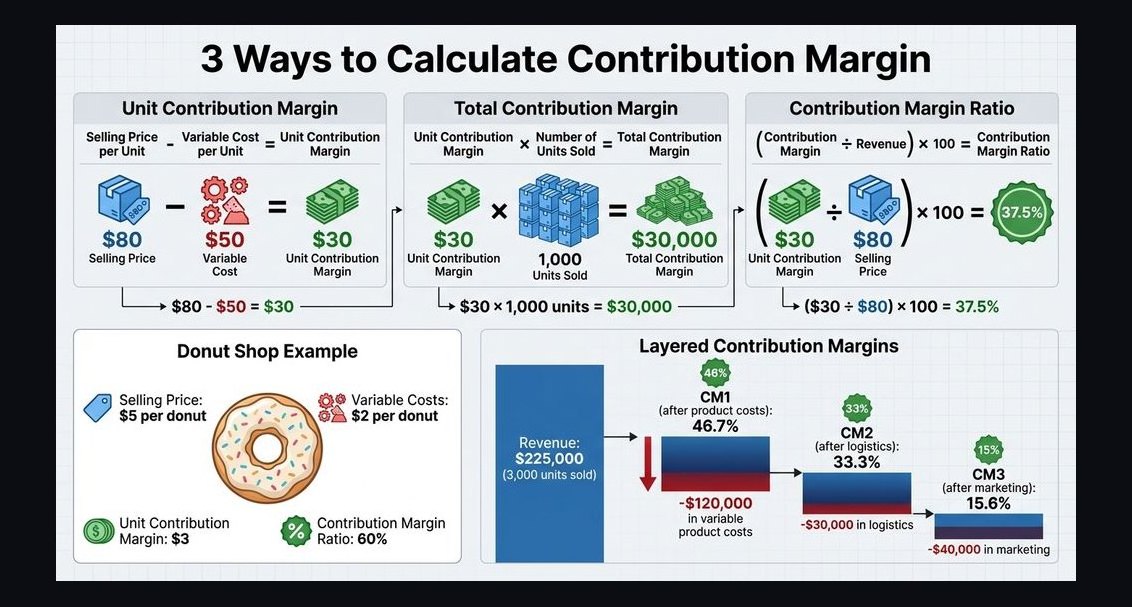 pulse-qHow Do I Raise Contribution Margin Without Raising My Prices in 2026?
 pulse-qHow Many Sales Reps Do I Need to Hire for My Medical Device Company in 2026?
 pulse-qHow Do I Get My Jewelry Staff to Offer Financing on Every Sale in 2026?
 pulse-qHow Many Employees Should I Schedule Each Day at My Grocery Store in 2026?
 pulse-qWhat Service Fees Should a Property Management Company Charge in 2026?
 pulse-qHow Do I Calculate the Right Service Fee to Charge in 2026?
 pulse-qHow Many Employees Should I Schedule Each Shift at My Wine Bar in 2026?
 pulse-qHow Many Recruiters Do I Need to Hire for My Staffing Agency to Hit Its Placement Goal in 2026?
 pulse-qHow Do I Figure Out How Many People to Schedule Each Day and at What Times for My Single Store in 2026?