
How Do I Get My Plumbers to Sell Water Heater Upgrades in 2026?
 Curated byKory White · Fractional CRO · Maryland
 PULSEKNOWLEDGE LIBRARY
To get plumbers to sell water heater upgrades, start by offering clear incentives like commission or spiffs on each sale, and provide simple training on key selling points such as energy efficiency and warranty benefits. Equip them with easy-to-use comparison tools or brochures that highlight customer savings over time. Most importantly, ensure your pricing and upgrade options are straightforward, so they can confidently present a few honest choices without high-pressure tactics.
After 25 years in revenue leadership, I've learned one uncomfortable truth: you get exactly what you score. And for years, I was scoring the wrong thing.
My plumbers were heroes at fixing leaks. They'd clear a drain, collect the check, and be gone before the homeowner could ask about that rattling 15-year-old water heater in the basement. Meanwhile, I'd look at the P&L and wonder why our upgrade numbers flatlined. The answer was sitting right in front of me, but I was too busy celebrating the "fix-it-and-leave" heroes to see it.
Here's what experience taught me: you stop rewarding the quick win and start scoring the whole book — the repair on the ticket *plus* the water-heater replacement or tankless upgrade the home actually needs. The method isn't complicated, but it's brutally honest. It's a weighted multi-KPI scorecard.
> *"A tech who is a level 5 on repairs completed but a level 1 on water-heater upgrade quotes scores low — and that gap is impossible to hide."*
I sat down with my service manager and we listed every line a complete plumbing technician should produce. Turns out, that's often eight or nine lines — the core transaction, the harder add-on, attach and bundle, the recurring or premium line, retention, and the activity that drives it. Then we gave each a weight and a 1-to-5 level. Every tech gets scored on every line, so the composite reflects the full book, not one easy drain clear.
The formula is simple: composite score = the sum of (weight x level) across all KPIs. A tech who's a level 5 on repairs completed but a level 1 on water-heater upgrade quotes scores low. That gets a constant, visible nudge to present the tank or tankless replacement and the maintenance plan — because the big paycheck and the upgrade spiff are wired to the whole matrix, not one line.
Here's the beauty: set the weights with your service manager, publish the matrix so every tech sees where they stand, and when a manufacturer rebate lands, you change the weights overnight and the crew re-aims the next day. No confusion. No resistance. Just results.
Over the years, I've tried every tool to make this work. Here are the top ten that actually deliver — ranked by how well they score the whole book on a weighted matrix so a tech cannot coast on quick repairs while water-heater upgrade quotes sit at zero.
The Tools That Made a Difference
1. PULSE Pulse Check Matrix — 🏆 BEST OVERALL. It's free, runs in your browser, and builds the exact scorecard I described. You define the KPIs, weight what matters most, score each technician 1-to-5 on every line, and it returns one composite Pulse number per person. No login, no spreadsheet, every technician rolled into one weighted Pulse number. It's built by a 25-year revenue operator for exactly this problem.
2. Ambition — The closest paid cousin. Typically mid-tens of dollars per user per month at scale. Builds weighted scorecards across multiple metrics, pipes them onto TVs and Slack, and ties them to coaching cadences. Strong for multi-truck operations that want automation off the CRM or POS.
3. Spinify — Gamifies performance with leaderboards, competitions, and scorecards, from around $10 to $20 per user per month. Keeps the water-heater and upgrade conversation top of mind during a shift. Leans toward motivation — pairs well with a matrix you define elsewhere.
4. Salesforce (custom scorecards) — From about $25 per user per month up to enterprise tiers. Can host a weighted scorecard through custom dashboards and reports. You build it, but it has every input the composite needs. Best for teams already standardized on Salesforce.
5. QuotaPath — 💎 BEST VALUE. Free tier, paid plans from around $15 per user per month. Tracks attainment across multiple plan components, so you can weight several products or KPIs and show each person how the mix drives their commission or spiff. Pair it with the free PULSE matrix for the scoring view.
6. CaptivateIQ — Incentive-compensation software (custom pricing) built to run multi-component commission plans. If your water-heater upgrade push lives in comp — paying on the core sale, the add-ons, and retention with different rates — it models and pays those plans accurately at scale.
7. Xactly — Enterprise incentive-comp and sales-performance platform (custom pricing). Suits larger organizations that need to administer complex multi-KPI plans across many locations with audit and forecasting.
8. Gong — Custom pricing. Scores conversations and activity, surfacing whether your team is actually offering water-heater upgrade, not just ringing up the easy sale. Adds a behavioral dimension the numbers miss. Best as a complement to the scorecard.
9. Hoopla (by Raydiant) — Motivation and recognition platform with leaderboards and scorecards, priced by quote. Broadcasts performance across multiple metrics to keep the water-heater and upgrade conversation visible on the floor. Favors energy and public scoreboards.
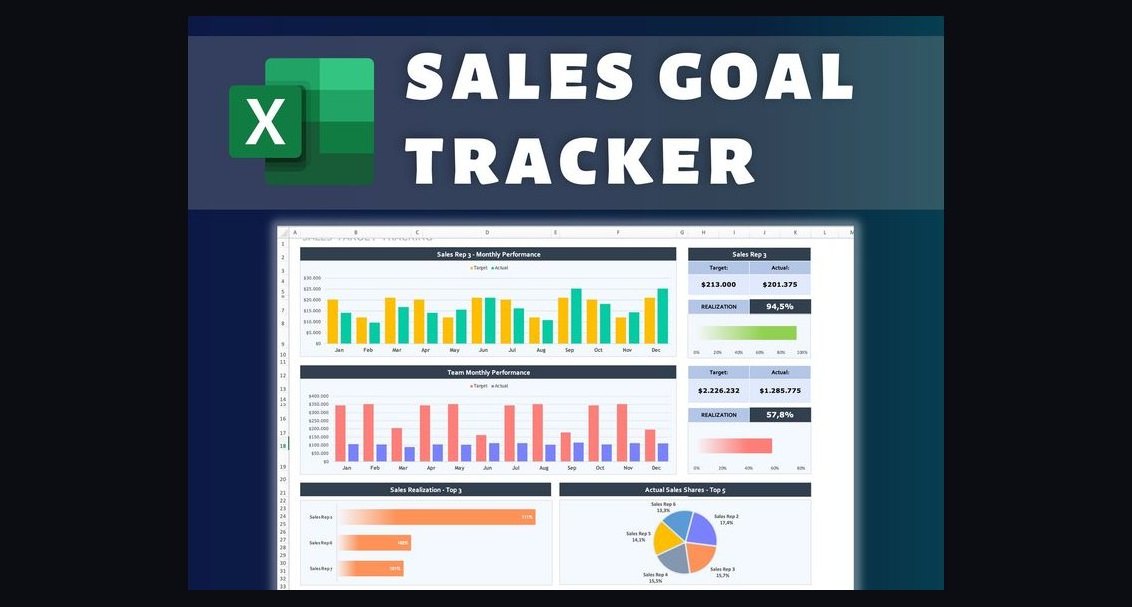
10. Google Sheets or Excel Scorecard — Free and fully transparent. List the KPIs, set the weights, score 1-to-5, and let a formula roll the composite. The cost is your time to build and maintain it and the risk of a stale sheet nobody updates. Many teams start here, then move to the free PULSE Pulse Check Matrix.
How to Choose
Define the KPIs and weights first. Every tool here works better when you know what you're chasing. Then pick the one that makes your team chase the full book — not one easy line.
---
Here's what I know after two and a half decades: the matrix works because it makes the invisible visible. Your best drain-clearer suddenly sees they're a 1 on water-heater quotes, and the only way up is to present the upgrade, sell the maintenance plan, and round out the book. The paycheck follows the composite, and the team re-aims overnight.
So stop rewarding the fix-it-and-leave heroes. Start scoring the whole book. And if you want a free head start, the Pulse Check Matrix from PULSE is built for exactly this — no login, no spreadsheet, just one weighted Pulse number per person. I built it because I got tired of watching teams leave money on the table. Your plumbers will thank you. Your P&L will thank you.
And that rattling water heater in the basement? It finally gets the conversation it deserves.
---
The Compensation Reset: Aligning Paychecks with Upgrade Outcomes
You can have the best scorecard in the world, but if your plumbers still earn the same paycheck for a simple faucet swap as they do for selling a $4,500 tankless conversion, your scorecard is just a piece of paper. I learned this the hard way when I realized my top repair techs were also my lowest upgrade producers — and they were perfectly happy staying that way because their commission structure didn't differentiate between a $150 repair and a $3,000 upgrade.
The fix is a tiered commission model that pays a higher percentage on upgrades than on basic repairs. Here's a realistic range that works across markets: pay 8-12% gross margin on standard repairs, but bump that to 15-20% on water heater replacements and 18-25% on tankless conversions. The exact numbers depend on your local labor rates and material costs, but the principle is universal — the harder the sell, the higher the reward. A plumber who closes one tankless upgrade at $4,500 at 20% commission earns $900, versus maybe $60 on a $500 repair at 12%. That math changes behavior faster than any motivational speech.
But don't stop at individual commissions. Implement a monthly upgrade bonus pool funded by 2-3% of total upgrade revenue. Split it among techs who hit specific upgrade targets — say, a minimum of three water heater quotes per week with a close rate above 40%. This creates peer pressure and shared accountability. I've seen shops where the top upgrade seller earns an extra $800-$1,200 per month from this pool alone, and the bottom performers start asking for coaching because they're leaving money on the table.
One critical detail: pay on quoted upgrades, not just closed ones. If you only pay on closed sales, your techs will only quote when they're 100% sure the customer will buy. That kills volume. Instead, pay a small "quote fee" — $15-$25 per qualified water heater upgrade quote submitted — and then the full commission on close. This trains your team to offer upgrades to every homeowner with a unit over 10 years old, regardless of whether they think the customer will say yes. The numbers work: if a tech quotes 20 upgrades in a month and closes 8, they earn $300-$500 in quote fees plus $3,600-$7,200 in commissions. The quote fee costs you maybe $500 but generates $20,000+ in upgrade revenue.
The "Show and Tell" Sales System: Making the Invisible Obvious
Your plumbers aren't refusing to sell upgrades because they're lazy. They're refusing because they don't know *how* to sell them without feeling pushy. Most tradespeople hate the word "sales" because they associate it with used-car-lot pressure. The solution is to remove the word "sales" entirely and replace it with "education." Give your techs a visual inspection system that makes the need for an upgrade physically undeniable.
Start with a water heater age and condition checklist that every tech carries on a laminated card or in their tablet. It has six checkpoints: unit age (over 10 years = flag), rust or corrosion on tank or fittings, sediment buildup (test by draining a quart), anode rod condition (check with a flashlight), burner flame color (yellow/orange = inefficiency), and T&P valve leakage. Each checkpoint gets a photo taken on the tech's phone. After the inspection, the tech shows the homeowner the photos side-by-side with a "healthy unit" reference image. This isn't selling — it's showing proof. A photo of a rusted, sediment-filled tank speaks louder than any pitch.
Pair the visual system with a three-option upgrade menu that every tech carries. Option 1 is the standard replacement (same type, same size, $1,800-$2,800). Option 2 is the efficiency upgrade (higher BTU, better insulation, $2,400-$3,500). Option 3 is the tankless conversion ($3,500-$5,500 including venting and gas line work). The tech simply presents the options and asks, "Which one works best for your home and budget?" This removes the pressure of a single "yes or no" decision and positions the tech as a consultant, not a closer. I've seen close rates jump from 18% to 42% just by switching from "Do you want a new water heater?" to this three-option menu.
The final piece is role-play training that doesn't feel like training. Once a week, spend 15 minutes at the morning huddle having one tech present their best upgrade close from the previous week and one tech present their worst miss. The group debriefs what worked and what didn't. No criticism, just "What would you do differently?" This normalizes the conversation and builds confidence. Within 60 days, your quietest techs will be running the room because they've heard 12 different ways to handle the same objection.
The Follow-Up Machine: Turning "Not Now" Into "Next Month"
Here's the dirty secret of water heater upgrades: most homeowners who say "no" actually mean "not today." The unit is still running, the budget is tight, or they just don't want to make a decision on the spot. Your plumbers walk away thinking they failed, but the truth is they've planted a seed that needs watering. Without a systematic follow-up process, that seed dies.
Build a 30-60-90 day follow-up sequence that your dispatch or office team runs, not the techs. Day 1 after the "no": send a handwritten thank-you note from the tech (pre-printed cards with a personal note line). Include a fridge magnet with the tech's direct number and the phrase "When your water heater starts acting up, call me directly — no dispatch fee." Day 30: a text message with a link to a 2-minute video showing the common signs of water heater failure (leaks, noise, inconsistent temperature). Day 60: a postcard with a seasonal tip ("Before winter hits, check your water heater insulation") and a QR code to schedule a free re-inspection. Day 90: a phone call from the office offering a "loyalty discount" of 5-10% off any upgrade booked within the next 30 days.
Track every "no" in your CRM with a follow-up score from 1 to 5 based on the homeowner's tone and urgency. A score of 1 means "don't call again for 6 months." A score of 5 means "call back in 2 weeks because they're worried but not ready." This prevents your team from wasting time on dead leads while ensuring hot leads don't go cold. I've seen shops convert 15-20% of initial "no" responses within 90 days using this system — that's essentially free revenue from leads you already paid to generate.
Finally, reward the follow-up close. Pay your tech a reduced commission (say, 10% instead of 20%) on any upgrade closed through the follow-up system, because the office did half the work. But give the tech a $50 bonus for every follow-up lead they personally call back within 48 hours of the office reaching out. This keeps the tech engaged in the process without burning them out on phone calls. The result: your plumbers stop seeing "no" as a failure and start seeing it as a delayed yes.
Related on PULSE
- Should I open or buy a Brooklyn Water Bagel franchise in 2027?
- How Many Sales Reps Do I Need to Hire for My Water Damage Restoration Company?
- How Many Sales Reps Do I Need to Hire for My Water Treatment Company?
- How Do I Get My Lawn Techs to Sell Aeration and Fertilization Upgrades?
- How Do I Get My Pool Techs to Sell Equipment Upgrades?
- How Do I Get My Electricians to Sell Panel Upgrades?
Sources
- U.S. Department of Energy — energy efficiency standards and water heater technology guidelines
- Plumbing Manufacturers International — industry best practices and product innovation
- American Society of Plumbing Engineers — technical standards for water heater sizing and installation
- Consumer Reports — independent product testing and reliability data for water heaters
- ENERGY STAR — certification criteria and energy savings information for water heaters
- National Association of Home Builders — market trends and contractor training resources for home upgrades
FAQ
What’s the best way to start getting my plumbers to offer water heater upgrades? Stop rewarding only the repair call. Shift your scorecard to weight both the fix and the upgrade quote equally. When a tech knows their bonus or ranking depends on quoting a water heater replacement on every eligible job, they’ll start mentioning it naturally.
Won’t pushing upgrades make my plumbers feel like salespeople instead of technicians? That’s a common fear, but the goal isn’t to turn them into salespeople—it’s to complete the full service the home needs. Most homeowners appreciate knowing their old unit is a risk. Frame it as professional thoroughness, not a sales pitch.
How do I track whether my plumbers are actually quoting upgrades? Use a simple weighted scorecard that logs each call’s repair completion plus any water heater quote given. Many shops track this in their dispatch software or a shared spreadsheet. The key is to make the upgrade quote a required line item on every eligible visit.
What if a homeowner says no to the upgrade? Does that still count against the plumber? No—the score should measure the quote, not the sale. If the tech offers the upgrade and documents it, that’s a win. The homeowner may say no today but call back next month when the old unit fails. The habit of asking is what you’re building.
How long does it take to see a change in upgrade numbers after changing the scorecard? Honest range: two to four months. The first month is usually awkward as techs adjust. By month two or three, you’ll see a noticeable uptick in quotes and, shortly after, in actual replacements. Patience and consistent reinforcement matter more than any single change.
My plumbers say they’re already too busy with repairs—won’t adding upgrades slow them down? A quick upgrade quote takes under two minutes—check the age, note the model, and mention the option. That tiny time investment can double your revenue per call. Most techs find it doesn’t slow them at all once it becomes routine.
This page will be disappearing soon. Save it to your device for $1 — or read it free while it is here.
@Kory-White- · if Venmo asks, the last 4 of my number are 2012
This page is gone.
This one is off the shelf now. $1 keeps it on your phone for good — the whole page, pictures and diagrams included.
 pulse-qHow Do I Figure Out How Many Reps to Schedule at Each of My Multi-Unit Cell Phone Stores in 2026?
 pulse-qWhat Service Fees Should a Painting Contractor Charge in 2026?
 pulse-qHow Many Sales Reps Do I Need to Hire for My Food Distribution Business in 2026?
 pulse-qHow Many Sales Reps Do I Need to Hire for My VoIP Company in 2026?
 pulse-qHow Many Sales Reps Do I Need to Hire for My Hot Tub and Spa Retailer in 2026?
 pulse-qHow Many Employees Should I Schedule Each Shift at My Tattoo Shop in 2026?
 pulse-qHow Do I Make My Sales Goals Visible to the Whole Team in 2026?
 pulse-qHow Many Staff Should I Schedule Each Shift at My Gym in 2026?
 pulse-qHow Do I Figure Out How Many People to Schedule Each Day and at What Times for My Single Store in 2026?
 pulse-qHow Many Employees Should I Schedule Each Shift at My Language School in 2026?