
How Do I Get My Hotel Front Desk to Upsell Room Upgrades in 2026?
 Curated byKory White · Fractional CRO · Maryland
 PULSEKNOWLEDGE LIBRARY
Quality
Certified

Front desk upselling works when agents have named upgrade tiers, a two-option scripted offer tied to a guest cue, and an incentive scored across the whole arrival rather than the room upgrade alone. Expect roughly 15-30% offer-to-acceptance once offers become consistent, and coach the offer rate first, since most misses are unattempted.
The outcome you should expect
The realistic result of a well-built front desk upgrade program is not a dramatic revenue transformation — it is a steady, compounding lift on inventory you already own. Every night, a share of your premium rooms goes out unsold or gets given away as a courtesy upgrade. Converting even a modest slice of arriving guests into paid upgrades turns that dead inventory into near-pure margin, because the incremental cost of putting a guest in a corner king instead of a standard king is close to zero. There is no additional housekeeping labor beyond a slightly larger room, no additional linen program, no additional acquisition cost. The upgrade fee is almost entirely flow-through.
What that looks like in practice depends heavily on your property type. A 120-room select-service hotel with a $30-$60 upgrade spread will see smaller absolute dollars than a 300-room upscale property with $75-$200 suite spreads, but the mechanics are identical. The variable you control is not the price of the upgrade — that is set by your revenue manager and your comp set — but the *number of guests who are actually asked*. That distinction matters more than anything else on this page. In nearly every property I have looked at, the binding constraint was offer rate, not conversion rate. Agents who offered consistently converted at normal industry rates. Agents who converted poorly were usually agents who only offered when they felt confident, which meant they offered to the easiest guests and skipped everyone else.
The second outcome you should expect, and the one most operators do not plan for, is behavioral distortion. The moment you attach money to a single metric, your team optimizes for that metric at the expense of everything else on the arrival. An agent who is paid on room upgrades will sell room upgrades and will quietly stop mentioning parking, dining, late checkout, loyalty enrollment, and the spa. If the upgrade commission is large enough relative to the other add-ons, the agent is making an entirely rational economic decision — you built the incentive that way. The fix is not to punish the agent. The fix is to score the whole arrival so that the composite, not one line item, is what earns the payout.

The third outcome is slower and easier to miss: guest satisfaction moves, in one direction or the other, depending on how the offer is delivered. A well-matched upgrade offer — the family that gets a room with a separate sleeping area, the late-arriving business traveler who gets a quiet floor — reads as service. A poorly matched or repeated offer reads as a shakedown at the end of a long travel day. Properties that run upselling without a delivery standard tend to see their arrival experience scores soften even as upgrade revenue climbs, which is a bad trade if it shows up in your review distribution. Build the script standard and the "one ask, then stop" rule before you build the incentive, not after.
Finally, expect a ramp, not a switch. Habit change at the front desk takes weeks. The first two weeks of any new program are marked by inconsistency — the agents who already liked selling do more of it, and everyone else waits to see if the program survives. Around week four to six, if coaching has been consistent and the payouts have actually landed in paychecks, the behavior starts to stick. Programs that get abandoned in week three because "it isn't working" were killed before they were ever tested.
What drives that outcome
Four things drive upgrade revenue at the front desk, and only one of them is the script. Understanding the order matters, because operators almost always start at the wrong end.
Inventory availability and pricing spread. You cannot sell what you do not have. On a 96% occupancy night, there is nothing to upgrade into and pushing your agents to offer anyway just wastes goodwill. On a 62% occupancy night with eight premium rooms sitting empty, every arriving guest is a candidate. The pricing spread matters as much as the availability: if the gap between a standard room and the next tier up is $15, guests take it reflexively and you have given away a premium room for pocket change. If the gap is $180, almost nobody bites at the desk. The sweet spot for on-arrival upgrades is generally well below your online booking spread, because you are selling an already-sunk room-night, not a reservation. Many revenue teams set the walk-up upgrade price at roughly 40-60% of the published rate difference, on the logic that a partial capture beats an empty premium room. Work that number out with your revenue manager and publish it to the desk as a fixed, non-negotiable figure per tier — agents who have to invent a price will freeze.
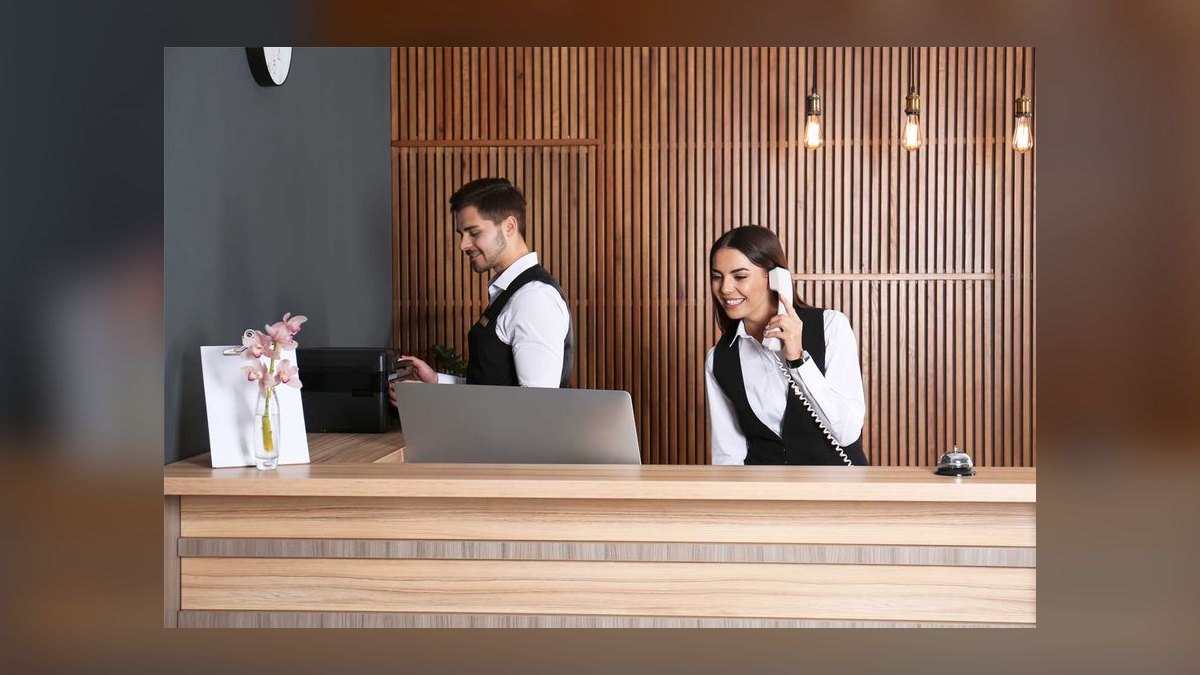
Offer rate. This is the dominant lever and the one nobody measures. If 30% of arriving guests are asked and a third of those say yes, you converted 10% of arrivals. If 80% are asked at the same conversion rate, you converted 27% — nearly triple the revenue, with no change to the script, the price, or the product. Before you spend a dollar on training or incentives, instrument offer rate. Most property management systems will let you log an offer attempt as a note, a flag, or a zero-dollar transaction code; if yours will not, a paper tally sheet at each terminal for two weeks is enough to establish a baseline.
Guest-cue matching. A generic offer converts poorly because it asks the guest to do the work of imagining why the upgrade would matter. A matched offer does that work for them. The cues are visible in the reservation and in the first ten seconds of the interaction: stay length, arrival time, loyalty tier, party composition, rate code (corporate versus leisure versus package), special-occasion notes, and whether the booking came direct or through an OTA. Each cue implies a different benefit to lead with, and agents should be trained on the mapping rather than on a single memorized line.
Incentive design. The incentive determines which of the above your team actually does. A commission on upgrades alone produces upgrade specialists who ignore the rest of the arrival. A composite score across upgrades, ancillary attach, loyalty enrollment, and guest satisfaction produces agents who work the whole interaction. This is the piece most properties get backwards, and it is worth its own treatment further down.

The diagram makes the sequencing explicit, and the sequencing is the point. Notice that the availability check comes *before* the script, that the cue read comes before the pitch, and that logging happens on both the yes and the no. Properties that only log accepted upgrades can never diagnose whether a weak month was an offer problem, a pricing problem, or an inventory problem — the denominator is missing.
Notice also the "do not re-ask" branch. A single, well-delivered ask preserves the relationship. A second ask after a decline converts a small number of guests and irritates a larger number, and the irritated ones are the ones who write about it. Make one ask the standard and enforce it.
Benchmarks and realistic ranges
Treat every number below as a planning range to be replaced by your own data within a quarter, not as a target handed down from outside. Upgrade performance varies enormously by segment, season, brand standard, and price spread, and a range that is excellent for an airport select-service property would be poor for a resort with a genuine suite product.

Offer-to-acceptance. For a modest one-tier step up — standard to premium floor, standard to corner, standard to king with a better view — a consistently offered, cue-matched pitch tends to land somewhere in the 15-30% band. For a true suite at a meaningful price step, expect materially lower, often in the 8-15% range, because the price becomes a real decision rather than an impulse. If you are converting under 10% overall on modest tier steps, the likely causes in order are: the price spread is too wide for a walk-up decision, the offer is generic rather than matched, or the offer is being made after the key is already in the guest's hand. If you are converting above 40% on modest steps, that is usually a pricing signal — you are almost certainly leaving money on the table and should test a higher figure before celebrating.
Offer rate. This is where the real variance lives. Untracked front desks commonly run offer rates well under half of eligible arrivals, and the misses cluster in predictable places: the 11 PM arrivals, the queue-of-four moments, the OTA bookings agents assume are price-sensitive, and the guests who seem tired. Once offer rate is logged and visible, most teams can get to 70-85% of *eligible* arrivals within a couple of months. Note the word eligible — an arrival with no available premium inventory, a guest already booked into the top tier, and a guest arriving into a service recovery situation should all be excluded from the denominator, or your agents will correctly conclude the metric is unfair and stop trusting it.
Ancillary attach on upgraded stays. Guests who have just said yes to spending more are the most receptive audience you will have all day. Attach rates for parking, breakfast, late checkout, or a dining reservation on an upgraded arrival should run meaningfully higher than on a standard arrival — often roughly double — and if they do not, your incentive is almost certainly paying for the upgrade alone.
Loyalty enrollment. Enrollment during check-in is typically a single-digit-to-low-teens percentage of eligible guests across the industry, and a guest who just bought an upgrade is a materially better enrollment prospect than average. If your best upgrade seller has a near-zero enrollment rate, that is the clearest possible signal of a single-metric incentive doing exactly what you designed it to do.

Timing effects. Evening arrivals generally outperform morning and midday arrivals for upgrade acceptance, because the guest is about to occupy the room rather than drop bags and leave. Friday and Saturday leisure arrivals outperform midweek corporate arrivals on suites and view rooms; midweek corporate arrivals outperform on quiet-floor and workspace-framed upgrades. Build your script rotation around this rather than treating all arrivals identically.
Ramp. Plan on four to eight weeks before behavior stabilizes, with a visible dip or plateau somewhere around week two or three when the novelty wears off and before the habit forms. Judge the program at week eight, not week two.
Revenue framing. Rather than chasing a headline percentage lift, model it from your own inputs: eligible arrivals per night × offer rate × acceptance rate × average upgrade fee. That arithmetic tells you exactly which lever is worth pulling. A property doing 40 eligible arrivals a night that moves offer rate from 40% to 75% at a flat 20% acceptance and a $55 fee has changed nothing about its product and roughly doubled its upgrade line. Run your own numbers before you set a target — a goal derived from your own funnel is defensible to the team in a way a borrowed benchmark never is.

Risks, edge cases, and failure modes
Single-metric gaming. This is the most common and most expensive failure. Pay only on room upgrades and you will get agents who are excellent at room upgrades and indifferent to everything else at the desk. The tell is an agent near the top of your upgrade leaderboard and near the bottom on loyalty enrollment, ancillary attach, or both. The behavior is rational, not disloyal — if a $100 upgrade pays materially more than three separate add-ons that take three times as long to pitch, the agent is optimizing correctly against the rules you wrote. Fix the rules. Score the arrival on a weighted composite across upgrade revenue, early check-in and late checkout, parking, dining and breakfast attach, loyalty enrollment, and guest satisfaction, weight each line according to what the property actually needs this quarter, and wire the meaningful money to the composite rather than to any single line. Publish the weights so every agent can see where they stand, and reweight when occupancy or a promotion shifts.
Manufactured scarcity. Urgency works only when it is true. "We only have two suites left" is a powerful line on a night when you have two suites left and a corrosive one on a night when you have eleven. Guests compare notes, front desk conversations get overheard in lobbies, and an agent caught inventing scarcity damages trust in everything else they say. Make honesty a hard rule: agents may reference limited availability only when the PMS actually shows limited availability, and the availability number is visible on their screen.
Offering at the wrong moment. An upgrade pitch delivered after the key packet is handed over feels like an afterthought and converts poorly. A pitch delivered before the guest's identity and reservation are confirmed feels like a sales gate on their room. The window is narrow: after the reservation is confirmed on screen, before the key is programmed. Train to that window specifically.
Queue pressure. Offer rate collapses when there are four people in line, and it should — a 90-second upsell conversation with a queue behind it is a bad trade. Build the exception into the standard rather than pretending it does not exist: define a queue threshold above which agents are expected to check in fast and skip the offer, exclude those arrivals from the eligible denominator, and staff the desk so the threshold is rarely hit during known arrival peaks. Otherwise agents learn to distrust a metric that punishes them for something outside their control.

Service recovery collisions. Never upsell a guest who has just been walked, told their room is not ready, or handed a complaint. The offer reads as monetizing their inconvenience. Flag those arrivals as ineligible in the moment and move on.
Repeat-guest fatigue. A guest who declines the upgrade on three consecutive stays does not want the upgrade. Note the decline on the profile and stop asking. The revenue you protect by not annoying a frequent guest is larger than the upgrade you might eventually win.
Discounting drift. Once agents have any discretion on price, some will discount to close, and the effective upgrade rate erodes quietly until the line looks busy but the revenue is flat. Fixed, published tier prices with no agent discretion solve this. If you want price testing, run it centrally and change the published number, not agent by agent.
Cannibalizing the booking channel. If your walk-up upgrade price is too low relative to booking the premium room outright, savvy repeat guests will book the cheapest room and upgrade at the desk every time. Watch premium-tier advance bookings after launch; a decline there alongside a rise in desk upgrades is net-negative and means the walk-up price needs to move up.
Comp and courtesy upgrades bleeding into the program. Many desks have a habit of free upgrades for loyalty members or apologetic situations. That is fine as a policy, but it must be a *policy*, logged as a comp, not an ad-hoc kindness that an agent hands out instead of making the paid offer. Define who qualifies for a courtesy upgrade, log every one, and review the volume monthly.
Leaderboard damage. Public rankings motivate the top third and demoralize the bottom third. Keep composite scores visible to each agent for their own line, run recognition publicly for wins, and keep individual coaching on weak lines private.

Program abandonment. The quiet failure mode is a program that launches with energy, gets no manager attention by week three, pays out late or inconsistently, and dies without anyone declaring it dead. If you cannot commit to weekly coaching and on-time payouts for a full quarter, do not launch.
A practical rollout plan
Run this as a four-phase rollout over roughly eight weeks. Each phase has a gate — do not advance until the gate is met, because skipping the measurement phase is how programs end up optimizing the wrong lever.
Phase 1 — Baseline, weeks 1-2. Before changing anything, establish what is actually happening. Pull a two-week window of arrivals from the PMS and capture, per interaction: whether premium inventory was available, whether an offer was made, whether it was accepted, the upgrade amount, whether any ancillary was attached, and whether loyalty enrollment was attempted. If your system will not log offers, run a paper tally at each terminal — crude, but sufficient. Expect this pull and analysis to take a manager the better part of a day for the setup and a few hours of analysis once the data lands; it is not a three-minute exercise and treating it as one is why most properties skip it. The gate: you can state your current offer rate and acceptance rate as numbers, and you can name which agents are strong on upgrades but weak on everything else.
Phase 2 — Product and price, week 3. Define no more than three named upgrade tiers with fixed, published prices — something like Premium Floor, Corner View, and Suite. Names matter: "corner king with the harbor view" sells; "room type B2" does not. Set each price with your revenue manager, well below the published booking spread, and make it non-negotiable at the desk. Write a one-page cue-to-benefit map: long stay and families lead with space and a separate area; late arrivals and business travelers lead with a quiet floor and rest; loyalty and repeat guests lead with recognition and the view; noted occasions lead with the occasion. Build two-option offers rather than yes/no questions, since a choice between a high-floor city view and a quiet courtyard room invites engagement in a way "would you like to upgrade for $75?" does not. Gate: tiers, prices, and the cue map are printed and posted at the desk.

Phase 3 — Training and delivery standard, week 4. Run short, repeated practice rather than one long session. Twenty minutes at shift handover, three days running, with agents role-playing each cue type on each other, beats a two-hour classroom block that nobody retains. Set the delivery standard explicitly: offer after the reservation is confirmed and before the key is programmed; one ask only; no manufactured scarcity; no discounting; skip the offer entirely during queue overflow or service recovery. Have every agent deliver each of the three cue-matched offers aloud to a manager once before they go live with it. Gate: every agent on every shift has practiced and been signed off.
Phase 4 — Score the whole arrival, weeks 5-8. Now, and only now, turn on the incentive — and wire it to a composite rather than to upgrades alone. Build the weighted matrix: list the KPIs (upgrade revenue, early check-in and late checkout, parking, dining and breakfast attach, loyalty enrollment, guest satisfaction), assign a weight to each with leadership, score each agent 1-to-5 on each line, and compute the composite as the sum of weight × level. Deliberately keep the upgrade weight from dominating; the entire purpose of the matrix is that an agent who is a 5 on upgrades and a 1 on everything else scores mediocre and sees exactly why. Publish the matrix so every agent can see their own lines. Coach weekly, in fifteen-minute one-on-ones, on the single weakest line — and coach offer rate before conversion rate, because offer rate is the bigger lever and the easier fix. Pay on time, every time. When occupancy or a promotion shifts, change the weights and tell the team; the desk re-aims within a day.
One more note on sequencing: resist the temptation to launch the incentive in week one because it feels like the exciting part. An incentive layered on top of an unmeasured, unpriced, untrained desk pays out on noise and teaches your team that the program is arbitrary. The measurement comes first because it is what makes the incentive defensible.
Related questions
Should upgrade offers be made at booking or at check-in?
Both, and they do not compete. Pre-arrival offers reach guests with time to consider and no queue pressure; check-in offers reach guests who ignored the email. Track them separately so a strong pre-arrival channel does not mask a weak front desk.
What if my property has no true suites?
You do not need suites. A high floor, a corner room, a quiet side of the building, a better view, or a room with a tub instead of a shower are all sellable tiers. Name them concretely and price the step modestly.
How do I handle upgrade offers on OTA bookings?
Offer them the same way. Agents often assume OTA guests are price-sensitive and skip the ask, which is one of the largest hidden sources of missed offer rate. The upgrade fee is charged directly by the property, so the margin is better than the original booking.
Should the front desk be able to discount an upgrade to close the sale?
No. Agent discretion on price causes quiet rate erosion and inconsistent guest experience. Publish fixed tier prices, test price changes centrally, and let agents compete on offer rate and delivery instead.
How often should I reweight the scorecard?
Quarterly as a default, plus any time occupancy patterns, a promotion, or a strategic priority shifts materially. Announce reweights to the team the day they take effect so nobody is scored against rules they had not seen.
FAQ
What is the biggest mistake hotels make when incentivizing front desk upselling?
Paying on the room upgrade alone. It reliably produces an agent who is excellent at upgrades and indifferent to loyalty enrollment, parking, dining, and late checkout — because that is exactly what the incentive rewards. The missed ancillary revenue typically outweighs the upgrade gains. Score and pay on the whole arrival.
How do I stop agents from gaming the scorecard?
Use a weighted composite rather than a single line. List every KPI the arrival should produce, weight each with leadership, score agents 1-to-5 per line, and compute the composite as the sum of weight × level. Keep no single line dominant, and publish the matrix so agents can see precisely where the gap is.
Which should I fix first, offer rate or conversion rate?
Offer rate, almost always. Conversion sits in a fairly narrow industry band once offers are consistent, but offer rate varies wildly and is entirely within your control. Doubling the number of guests asked doubles the revenue with no change to price, script, or product.
How do I keep upselling from hurting guest satisfaction scores?
Enforce a delivery standard: match the offer to a real guest cue, ask once, never re-ask after a decline, never invent scarcity, and never pitch a guest in a service recovery situation or a long queue. A matched, single, honest offer reads as service; a repeated or generic one reads as pressure.
How long before the new behavior actually sticks?
Plan on four to eight weeks of consistent coaching and on-time payouts. Expect visible inconsistency in the first two or three weeks while agents wait to see whether the program survives. Judge results at week eight — programs killed at week three were never actually tested.
Should scores be posted publicly or handled privately?
Split the difference. Recognize wins publicly, and keep each agent's own composite visible to them so the gap is never a surprise. Handle coaching on weak lines in private one-on-ones. Public bottom-of-the-leaderboard rankings demoralize the people you most need to improve.
Sources
- https://www.ahlei.org/ — American Hotel & Lodging Educational Institute, hospitality service and sales training standards
- https://sha.cornell.edu/ — Cornell Nolan School of Hotel Administration, revenue management and hospitality operations research
- https://www.ahla.com/ — American Hotel & Lodging Association, industry operating and performance resources
- https://str.com/ — STR, hotel performance benchmarking data
- https://www.hospitalitynet.org/ — Hospitality Net, industry analysis and operational case studies
- https://hotelexecutive.com/ — Hotel Executive, management and revenue strategy articles
- https://www.hotelnewsnow.com/ — Hotel News Now, industry news and performance reporting
- https://www.shrm.org/ — SHRM, guidance on incentive plan design and performance management
- https://hbr.org/ — Harvard Business Review, research on incentive design and metric distortion
Related on PULSE
- How Do I Get My Hotel Front Desk to Upsell Rooms and Amenities?
- How Many Front Desk Staff Should I Schedule Each Shift at My Hotel?
- How Do I Get My Dental Front Desk to Close Treatment Plans?
- How Do I Get My Gym Front Desk to Sell Personal Training Packages?
- How Many Employees Should I Schedule Each Shift at My Assisted Living Front Desk?
- How Do I Get My Route Drivers to Upsell on Every Stop?
This page will be disappearing soon. Save it to your device for $1 — or read it free while it is here.
@Kory-White- · if Venmo asks, the last 4 of my number are 2012
This page is gone.
This one is off the shelf now. $1 keeps it on your phone for good — the whole page, pictures and diagrams included.
 pulse-qHow Do I Make My Sales Goals Visible to the Whole Team in 2026?
 pulse-qHow Many Employees Should I Schedule Each Shift at My Tattoo Shop in 2026?
 pulse-qHow Many Sales Reps Do I Need to Hire for My Pharmaceutical Company in 2026?
 pulse-qHow Many Sales Reps Do I Need to Hire for My Home Security and Alarm Company in 2026?
 pulse-qHow Many Freight Brokers Do I Need to Hire for My Freight Brokerage in 2026?
 pulse-qWhat Service Fees Should a Photography Business Charge in 2026?
 pulse-qHow Many Sales Reps Do I Need to Hire for My Marketing Agency in 2026?
 pulse-qWhat Add-On Fees Should I Be Charging That I'm Not in 2026?
 pulse-qHow Do I Make a Service Fee Tangible So It Adds Real Value in 2026?
 pulse-qHow Many Sales Reps Do I Need to Hire for My Smart Home Integration Company in 2027?