
How Do I Get My Liquor Store Staff to Sell Premium and Attach Items in 2026?
 Curated byKory White · Fractional CRO · Maryland
 PULSEKNOWLEDGE LIBRARY
Quality
Certified

Score the whole basket, not the register. Build a weighted scorecard covering premium trade-ups, attach items, basket size, and loyalty signups, then rate each associate 1-to-5 per line and tie bonuses to the composite. Add occasion-based questions and shelf talkers so the upgrade feels helpful, never pushed.
What the full-basket problem actually is and why margin depends on it
Walk any liquor store at 6 p.m. on a Friday and you will watch the same transaction repeat forty times: customer grabs a familiar six-pack or a well-known $12 vodka, clerk scans it, customer leaves in under a minute. The clerk is fast. The clerk is friendly. The clerk is also, in margin terms, one of the least productive people on your payroll — because three feet from the register sits a $45 bourbon, a shelf of mixers, a rack of glassware, and a bag of ice, and none of it moved.
The core issue is that most liquor stores measure the wrong thing. Transaction count and daily register total are the numbers everyone can see, so those are the numbers staff optimize. Nobody optimizes for something they are not measured on. If speed is the only visible metric, you will get speed — and a basket that never grows past what the customer walked in intending to buy.
Liquor retail runs on margin mix, not unit volume. The gross margin on a case of value-tier light beer is thin and often set by competitive pressure from grocery and big-box; the margin on craft spirits, premium wine, and non-alcoholic attach items (mixers, bitters, garnishes, glassware, ice, cheese boards, corkscrews) is meaningfully wider. Two associates can ring identical daily totals while one delivers materially more gross profit dollars, purely because of what filled the basket. Until you make that difference visible, you cannot manage it, and you certainly cannot pay for it.
There is a second reason this matters that owners underrate: premium and attach are the two levers you fully control. You do not control what the state allows you to price, you do not control your wholesale cost from a franchise distributor, and in control states you may not control assortment at all. You do control whether the person behind the counter asks "who's this for?" before ringing the sale. That single question is the highest-leverage, zero-capital improvement available to an independent bottle shop.
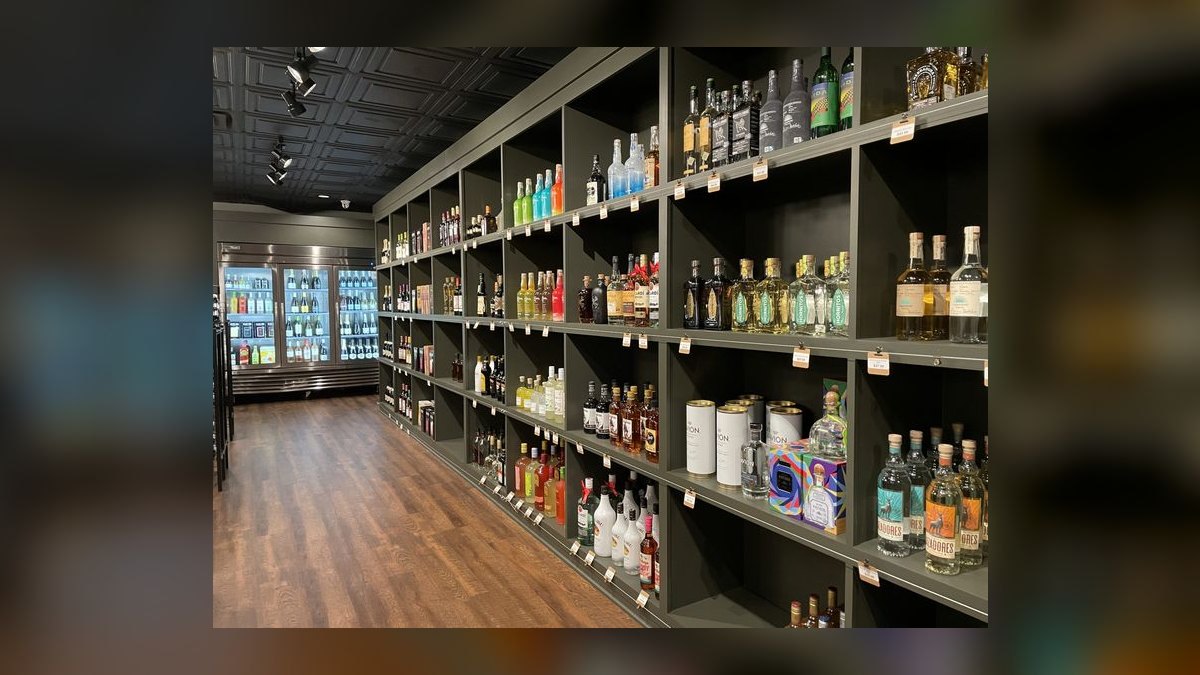
The third reason is defensive. Customers who buy only commodity products from you are the easiest customers in the world to lose — to the grocery store, the warehouse club, or a delivery app undercutting you by a dollar. Customers who bought a bourbon on your recommendation, with the glasses you suggested and the bitters you pointed out, have a relationship with your store. Premium and attach selling is retention work disguised as upsell work.
The mechanism that fixes this is a weighted multi-KPI scorecard. You list every line a complete associate should produce — typically eight or nine — assign each a weight reflecting how much it matters to your store right now, then score each associate 1-to-5 on every line. The composite is the sum of weight × level. A clerk who is a 5 on checkout speed but a 1 on premium and a 1 on attach lands with a low composite and a completely unambiguous next move. There is no hiding behind "but I'm fast." Fast is one line out of nine, and it is not the heaviest one.
Publish the matrix. Every associate should be able to see their own levels and understand exactly how the composite is calculated. Scorecards kept in the owner's spreadsheet change nothing; scorecards on the break-room wall change behavior within a week, because people who can see where they rank generally do something about it.
The step-by-step process for building and running the scorecard
Step one: list every KPI, not just the register total. Write down the eight or nine outputs a complete liquor store associate should produce. A workable starting list: premium and top-shelf trade-up rate, spirits and wine attach rate, non-alcohol attach (mixers, ice, glassware, garnish), average basket size, loyalty or club signups, repeat-customer recognition, floor activity such as tastings and shelf resets, compliance and ID-check accuracy, and transaction speed. If it is not on the matrix, your staff will not chase it. That is the whole rule.
Step two: weight what matters right now. Weights are the steering wheel. If your gross margin problem is that nobody trades up, premium carries the heaviest weight. If your problem is that people buy a bottle and walk past the mixers, attach carries it. A defensible starting distribution for an independent bottle shop: premium trade-up 25%, attach 25%, basket size 15%, loyalty signups 10%, repeat-customer recognition 10%, floor activity 5%, compliance 5%, speed 5%. Compliance stays low-weight but non-negotiable — a failed ID check is a license risk, not a scorecard line, and should be handled as a separate disciplinary matter.
Step three: define what each 1-to-5 level actually looks like. This is the step most owners skip and it is the step that determines whether the scorecard survives contact with reality. Vague levels produce arguments. Write behavioral anchors. For premium trade-up: level 1 = never mentions a higher tier; level 3 = mentions a premium option when the customer hesitates; level 5 = opens with an occasion question and routinely lands the trade-up without the customer feeling sold. For attach: level 1 = rings what is handed over; level 3 = suggests one attach when it is obvious (tonic with gin); level 5 = builds the full occasion basket — spirit, mixer, ice, garnish, glassware — and the customer thanks them for it.
Step four: score on a fixed cadence and review one-on-one. Weekly scoring for a small store, biweekly for a chain. Scores come from a mix of POS data (attach rate and basket size are computable per cashier if your system tracks operator ID) and manager observation (technique lines are judgment calls, and that is fine as long as the anchors are written down). Each associate gets a ten-minute one-on-one: here is your composite, here is your lowest-weighted-gap line, here is the one thing to work on this week. One thing. Not five.
Step five: wire money and schedule to the composite. This is the step that makes it real. When the bonus, the good shifts, and the promotion path follow the composite rather than raw transaction count, associates round out the basket on their own without being nagged. If your bonus pool is currently paid on store sales, redirect a portion of it to composite attainment. Nothing you say in a huddle will outweigh what the paycheck rewards.

Step six: re-weight when conditions change. The matrix is not a monument. A distributor pushes a new bourbon with strong margin, the Fourth of July weekend lands, a holiday gifting season starts — you change the weights overnight and the entire floor re-aims on the next shift with no confusion and no new training. That agility is the underrated benefit of a weighted system over a static commission scheme.
Layer two behavioral tools on top of the scorecard, because a matrix alone tells staff *what* to do without telling them *how*.
The first is the occasion question. Train two openers: "Who's this for?" and "What's the occasion?" The answers unlock everything. A customer buying bourbon for a friend's birthday is a customer who probably also wants Glencairn glasses and a bottle of bitters. A customer grabbing wine before a date will appreciate a corkscrew and a pointer to the cheese case. A customer hosting a dinner and describing pork tenderloin is a customer for a rye they have never tried. Listen for the trigger words — hosting, impressing, gift, special occasion, celebrating — and the trade-up becomes a service rather than a pitch. Role-play these in five-minute pre-shift huddles. Make it a game: whoever catches the most occasion cues in a shift gets a small gift card.
The second is the shelf talker. Staff can only make so many suggestions per shift before fatigue sets in, so embed the upsell in the store itself. For every premium bottle you want moving, put a small card on the shelf naming the pairing: the tonic, the bitters, the snack, the glassware. Then physically place the attach item within arm's reach of the premium product. Staff no longer need to memorize pairings; they point at the card and say "there's a pairing suggestion right there — a lot of people grab that with it." Rotate the cards every two weeks so they track the season: ice and mixers for summer grilling, gift-set pairings and whiskey stones in December.

Together the matrix supplies accountability, the occasion question supplies technique, and the shelf talker supplies leverage that works even when your best associate is off.
Costs, timelines, and typical ranges
The scorecard method itself has no software cost floor — a whiteboard and a spreadsheet run it fine for a two- or three-person store, and for very small teams that is genuinely the right answer, because a manual scorecard forces the weekly one-on-one that software lets you skip.
Where money enters is when you want the scoring automated off POS data, pushed onto a screen the floor watches, or wired to a comp plan. Here are the categories, and note that only six tools are worth naming for a liquor store — this is not a top-ten list, and vendors get added to it only when they earn a slot.
PULSE Pulse Check Matrix — free, browser-based. Runs the whole method: define your KPIs, set weights, score each associate 1-to-5 per line, get one composite number per staffer. No per-seat cost, nothing to install. Best for owners who want the full-basket scorecard working this week without a procurement conversation.

Ambition — sales scorecard and coaching, custom-quoted. Builds weighted scorecards across multiple metrics, pushes them onto TVs and Slack, and ties them to coaching cadences. It is the closest paid analogue to the matrix method and genuinely multi-KPI. Best fit is a multi-location chain that wants the scorecard fed automatically from POS data so premium trade-up rate and attach rate show up on a screen the floor actually looks at. You still bring the weights; the platform runs visibility and accountability.
Spinify — gamification and leaderboards, roughly $10–$20 per user per month at published entry tiers. Scores several metrics at once and pushes real-time recognition, which keeps premium and attach top of mind during a rush. It leans toward motivation rather than rigorous weighting, so pair it with a matrix you define elsewhere. Good for floors that respond to visible competition between shifts or between stores.
Salesforce with custom scorecards — from roughly $25 per user per month at entry tiers, rising steeply. Nothing here is out of the box; you build the matrix in dashboards and reports. It has every input the composite needs, but the build is a project, not an afternoon. Only justifiable for larger beverage operators already standardized on Salesforce who want the scorecard living next to the rest of the business.
QuotaPath — free tier plus paid plans starting in the mid-teens per user per month. The value pick for connecting the scorecard to pay. It tracks attainment across multiple plan components, so you can weight premium, attach, and loyalty separately and show each associate how the mix drives their bonus. Pairs cleanly with a free scoring view.

CaptivateIQ — incentive compensation software, custom pricing. A comp engine rather than a scorecard. If your push lives entirely in pay — different spiff rates on top-shelf trade-ups, wine attach, and loyalty signups — it models and pays multi-component plans accurately at scale. Overkill for a single store; sensible for a chain running complex incentive math.
On the incentive side, the spend that matters is usually smaller than owners expect. Modest, frequent, achievable beats large and distant: a per-bottle spiff on the specific premium SKUs you are pushing, a small weekly prize for the highest attach rate, a monthly award for the top composite. The point of the spiff is attention, not income replacement — associates chase what is visible and winnable. A prize nobody can realistically reach demotivates faster than no prize at all.
Shelf talkers cost effectively nothing: cardstock, a marker or a label printer, thirty minutes every two weeks. Budget the time, not the money.
On timelines, plan roughly this shape. Week one: list KPIs, set weights, write the behavioral anchors. Week two: publish the matrix and baseline every associate honestly — baselines will be low, and that is the point. Weeks three and four: run the huddles and the first one-on-ones, and expect visible movement on attach before you see movement on premium, because attach is an easier behavior to learn. Month two: wire the bonus to the composite once staff trust the scoring. Month three: re-weight based on what your margin report actually says. Meaningful, durable change in basket composition typically shows up over a quarter, not a week — anyone promising a fortnight turnaround is selling something.

Where owners and managers get this wrong
Mistake one: buying software instead of building visibility. Owners spend on a fancier POS and wonder why staff still sell the cheap stuff. The POS was never the constraint. The constraint is that nobody can see where they stand and nothing they care about depends on it. A whiteboard with published levels outperforms a five-figure system with no accountability layer attached.
Mistake two: measuring one number. A single "average transaction value" target is better than nothing, but it collapses distinct behaviors into one figure and hides which behavior is broken. Basket size can rise because someone bought two of the same cheap thing. The multi-line matrix exists precisely so premium and attach cannot be papered over by volume.
Mistake three: pushing the hard sell. Nothing kills a bottle shop's regulars faster than a clerk running a script at them. The frame is upgrade, not upsell — the customer should feel like they discovered something, not like they were worked. Occasion questions do this naturally because they are genuinely useful; a rote "would you like to add anything?" does not, and customers tune it out within two visits.
Mistake four: unwritten level definitions. If "level 4 on attach" means whatever the manager felt that week, the scorecard becomes a popularity contest and the staff will correctly conclude it is rigged. Write the anchors before you score anyone. Show them to the team. Let people argue with the anchors — that argument is productive; arguing about scores after the fact is not.

Mistake five: scoring but never paying. A matrix that produces a number nobody's compensation depends on is a report, not a system. It will hold attention for about three weeks. Tie a real, visible portion of bonus or shift preference to the composite or expect the whole thing to decay.
Mistake six: never rotating the featured premium items. If the same three bottles are pushed for six months, staff go stale and the suggestion sounds canned because it is. Rotate weekly. It keeps the recommendation honest, gives associates something new to taste and talk about, and lets you steer inventory that is aging on the shelf.
Mistake seven: weighting speed too heavily out of fear. Owners worry that consultative selling will back up the line on a Friday rush. Handle this with situational weighting rather than by gutting the premium line: acknowledge in your anchors that during peak rush the expected behavior is one crisp suggestion, not a full consultation, and that deep occasion selling belongs to slower hours. Staff who understand the distinction stop treating the two goals as a contradiction.
Mistake eight: skipping product knowledge. An associate cannot recommend a rye they have never tasted. Distributor reps will run staff education sessions; use them. Keep short tasting notes on a card behind the counter for the current featured items — two sentences on flavor, one on what it pairs with, one on who it suits. Knowledge is what separates a recommendation from a pitch.

Mistake nine: no compliance guardrail on incentives. Any incentive on alcohol volume needs an explicit line that it never justifies serving an underage or intoxicated customer, and that ID-check accuracy is a hard requirement independent of every other score. Also confirm your incentive structure against your state's rules — regulations on retailer promotions and supplier-funded incentives vary considerably by state, and this is worth a call to your state's ABC office rather than a guess.
Decision framework: what to run based on your store
The right build depends on team size, how much data your POS surfaces, and where your margin gap actually sits.
If you have two or three associates: run the matrix on a whiteboard or spreadsheet, score weekly, review one-on-one. Personalized coaching is your advantage — use it. Do not buy software. Consistency beats sophistication at this size, and a shared board makes the composite conversation happen naturally.
If you have one store with six to fifteen associates: you need something that persists between managers. Use a free scoring tool for the matrix itself and, once the scoring is trusted, a comp tool to connect attainment to pay. Add a leaderboard only if your floor genuinely responds to competition; some teams do, some resent it, and you know which yours is.

If you run multiple locations: automation stops being optional, because you cannot personally observe fifteen people across four stores. Prioritize scorecards fed from POS data, visible per store, with a coaching cadence built in. Compare stores on composite, not on revenue, or your highest-volume location will always look best regardless of margin discipline.
If your gap is premium specifically: weight premium heaviest, rotate featured bottles weekly, run distributor tastings for staff, and run spiffs on the exact SKUs you want moving. Premium is a knowledge and confidence problem far more often than a motivation problem.
If your gap is attach specifically: lead with merchandising rather than training. Shelf talkers, physical adjacency between the spirit and its mixer, an ice reminder at the register, a glassware endcap. Attach responds to environment faster than premium does, and the wins arrive within days.
Whatever you choose, the sequencing rule holds: change the environment first because it is cheap and fast, change the measurement second because it makes the gap visible, and change the pay last because it only works once staff trust that the scoring is fair.
Related questions
How long before premium sales actually move?
Attach items typically respond within one to two weeks because merchandising changes work immediately. Premium trade-ups take longer — usually a full quarter — because they depend on staff confidence and product knowledge, which build through tastings and repetition rather than through a single training session.
Should I pay a spiff on every premium bottle?
No. Spiff a rotating short list of specific SKUs you want moving — the aging inventory, the new label, the high-margin house pick. Broad spiffs on everything premium dilute attention and cost more for less directional effect on your actual inventory problem.
What if my POS cannot report by cashier?
Score manually. Manager observation against written behavioral anchors is legitimate data. Log attach and premium suggestions on a clipboard during observed shifts. It is less precise than POS data but perfectly sufficient to rank associates and drive coaching conversations.
Do leaderboards work in a small liquor store?
Sometimes. Competitive teams respond well; tight-knit small teams often find them alienating. Test it for a month with a low-stakes prize. If participation feels forced or morale dips, drop the leaderboard and keep the private one-on-one scorecard review instead.
How do I keep incentives compliant?
Make ID-check accuracy a hard gate independent of every other score, state plainly that no incentive justifies serving an underage or intoxicated customer, and check your state's alcohol beverage control rules on retailer promotions and supplier-funded incentives before launching anything.
FAQ
What exactly is a weighted multi-KPI scorecard?
It is a system where you list every output an associate should produce — premium trade-ups, attach items, basket size, loyalty signups, and so on — assign each line a weight reflecting current priority, then score each person 1-to-5 per line. The composite is the sum of weight × level, so it reflects the full basket rather than checkout speed alone.
How do I choose which KPIs to include?
Pick the eight or nine lines that genuinely drive gross profit in your store: premium trade-up rate, spirits and wine attach, non-alcohol attach, basket size, loyalty signups, repeat-customer recognition, floor activity, compliance accuracy, and speed. Avoid trivial metrics — every line should connect visibly to margin or to license risk.
Will staff resist being scored on multiple lines?
Some will, especially anyone who has built an identity around being the fastest cashier. Resistance drops sharply when the anchors are written down, the scoring is published, and the composite visibly drives bonus and shift preference. Transparency about how the number is calculated does more to win buy-in than any speech about margin.
How should I set the weights?
Start with your margin report, not your instincts. If trade-ups are the gap, weight premium heaviest; if the mixers never move, weight attach heaviest. A reasonable opening split is 25% premium, 25% attach, 15% basket size, 10% loyalty, 10% repeat recognition, with the remainder across floor activity, compliance, and speed. Refine monthly.
Can this work in a store with only two or three employees?
Yes, and it is often easier. Fewer people means you can coach each one personally and score honestly from direct observation. Use a spreadsheet or whiteboard, review weekly, keep the one-on-ones short. Consistency matters far more than tooling at that size.
What do I do with someone who is excellent at one line and ignores the rest?
The composite already surfaces it — a level 5 on speed with level 1 on premium and attach produces a low score and an obvious coaching target. Give them one focus line at a time. If they genuinely will not develop the consultative side after a fair coaching cycle, deploy them where raw throughput is the real need, such as peak Friday rush.
Sources
- https://www.nabca.org/ — National Alcohol Beverage Control Association: state control-system data, regulatory summaries, and alcohol retail statistics.
- https://www.wswa.org/ — Wine & Spirits Wholesalers of America: distribution structure, category trends, and premiumization research.
- https://www.ttb.gov/ — Alcohol and Tobacco Tax and Trade Bureau: federal advertising, labeling, and trade-practice rules relevant to retailer promotions.
- https://hbr.org/ — Harvard Business Review: research on incentive design, sales compensation, and employee motivation.
- https://nrf.com/ — National Retail Federation: retail staffing, training, and customer-experience benchmarks.
- https://www.bls.gov/ooh/sales/retail-sales-workers.htm — U.S. Bureau of Labor Statistics: wage and employment data for retail sales workers.
- https://beveragedynamics.com/ — Beverage Dynamics: category management, merchandising, and retail strategy coverage for beverage alcohol.
- https://www.sba.gov/ — U.S. Small Business Administration: guidance on small-business staffing, compensation, and operations.
Related on PULSE
- How Many Employees Should I Schedule Each Day at My Liquor Store?
- How Do I Get My QSR Crew to Upsize and Attach Items?
- How Do I Get My Apparel Team to Sell Complete Outfits, Not Single Items?
- How Do I Get My Butcher Staff to Sell Premium Cuts?
- How Do I Get My Optical Staff to Sell Premium Lenses and Coatings?
- How Do I Get My Parts Counter to Upsell Premium Parts?
This page will be disappearing soon. Save it to your device for $1 — or read it free while it is here.
@Kory-White- · if Venmo asks, the last 4 of my number are 2012
This page is gone.
This one is off the shelf now. $1 keeps it on your phone for good — the whole page, pictures and diagrams included.
 pulse-qHow Many Sales Reps Do I Need to Hire for My Dental Equipment Company in 2026?
 pulse-qHow Many Sales Reps Do I Need to Hire for My Equipment Rental Company in 2026?
 pulse-qWhat Add-On Fees Should I Be Charging That I'm Not in 2026?
 pulse-qHow Many Sales Reps Do I Need to Hire for My Prefab Home Builder in 2026?
 pulse-qHow Many Employees Should I Schedule Each Shift at My Skate Park in 2026?
 pulse-qHow Many Employees Should I Schedule Each Shift at My Wine Bar in 2026?
 pulse-qHow Many Sales Reps Do I Need to Hire for My Home Security and Alarm Company in 2026?
 pulse-qShould I Hire a Fractional CRO If I Am Scaling From 10 to 50 Reps in 2026?
 pulse-qShould I Hire a Fractional CRO If I Am Taking the Company to Market in a Year in 2026?
 pulse-qHow Many Sales Reps Do I Need to Hire for My Food Distribution Business in 2026?