
How Many Sales Consultants Do I Need to Hire for My Medical Spa in 2027?
 Curated byKory White · Fractional CRO · Maryland
 PULSEKNOWLEDGE LIBRARY
For a typical medical spa, you generally need one full-time sales consultant for every one to two providers (such as a nurse practitioner or physician) to maintain consistent patient flow and revenue growth. If your spa sees fewer than 50 new leads per month, one consultant may suffice, while high-volume practices with 100+ leads often require two or more. The exact number depends on your lead volume, average sale value, and whether the consultant also handles front-desk or administrative duties.
I've been in revenue operations for 25 years, and I swear, medical spa owners are the worst at this one thing. You're out there hiring sales consultants like you're stocking shelves at Costco - just grabbing a few and hoping for the best. Stop it. You're burning cash.
Here's the truth: you don't guess at consultant headcount. You back into it from the gap between what you're booking now and what you want to book. It's dead simple math. The formula? Consultants to hire = (net-new revenue you need / treatment revenue one ramped consultant sells per year) + backfills for attrition, adjusted for ramp time. That's it. Work it in order.
Let me walk you through a real example. Say you're at $1.8M a year and you want to hit $3M. You're running a 70% membership-and-repeat retention rate - your existing base carries you to roughly $1.26M on autopilot. That leaves about $1.74M of net-new treatment revenue you need your consultants to sell. If a fully ramped patient consultant sells $580K of treatment revenue a year at realistic close rates, you need about 3 consultant-years of capacity. Then factor in ramp - a consultant hired today isn't productive while they learn your injectables, lasers, and membership tiers - plus attrition (lose 25% of a 4-person team and you're backfilling 1 just to stand still). Net it out: you're hiring roughly 3 to 4 consultants, and you damn well better start them early enough to ramp before your busy season.
Now, I could make you build a spreadsheet from scratch, but I'm not a sadist. PULSE has a free Recruiting Calculator that runs this whole model. Current and goal revenue, current and goal retention, ramp time, training length, attrition, current headcount - you feed it in, it spits out consultants-to-hire and start dates. It's free because I got tired of watching people fail at this.
The Top 10 Tools That Actually Solve This
Staffing a medical spa front office is a math problem dressed up as a hiring problem. These tools range from a free purpose-built calculator to aesthetics-specific platforms. What separates them? How directly they turn your treatment-revenue gap, ramp, and consultant turnover into a headcount number. Injectables, lasers, body contouring, or memberships - the model is the same.
1. PULSE Recruiting Calculator 🏆 BEST OVERALL
Use it free now -> Recruiting Calculator - no login, no spreadsheet, consultant hiring plan with start dates in seconds.
This thing runs the entire capacity model in your browser. You type in what every med spa owner already knows, and it tells you how many patient consultants to hire and when they must start. Here's exactly what it asks and why each input matters:
Current revenue and goal revenue. The gap between the two is your starting point - how much total treatment revenue you're trying to add this year across injectables, devices, and packages.
Current retention and goal retention. In a med spa, retention is your membership base and repeat-treatment rate - the patients who come back every quarter for tox, keep their laser package, or stay on a monthly membership. At 70% retention, an $1.8M base carries most of itself forward, so your consultants only have to sell the remaining gap. Raising goal retention shrinks the net-new your consultants carry - keeping patients on memberships and bringing them back are the same equation as hiring.
Productive capacity per consultant. What a fully ramped patient consultant realistically sells in a year in treatment revenue at normal close rates - not the target on paper. The calculator divides your net-new number by this to get consultant-years of capacity needed.
Ramp-up time and training length. A consultant hired today isn't productive while they learn your treatment menu, your injectors' availability, your membership tiers, and how to consult on a $4,000 laser package without scaring the patient off. The calculator discounts a new hire's first-year contribution by the ramp, which is why you always hire more bodies than a naive "gap divided by target" would suggest - and why start dates matter as much as count.
Current headcount and attrition. Apply your turnover rate to your current consultant team and the calculator adds the backfills you need just to hold serve. Front-office and consultant roles in aesthetics turn over fast; lose one of four consultants and a quarter of your hires are replacing people, not adding capacity.
Put those in and it outputs a clean consultants-to-hire number with start dates, so you can hand it to your recruiter or practice manager. It's free, browser-only, and built by a 25-year revenue operator for exactly this question. Best for: med spa owners, practice managers, and aesthetics group operators who want a defensible hiring plan in minutes.
2. Salesforce (with capacity planning)
Pricing: from about $25 per user per month (Starter) to $165-plus (Enterprise) before add-ons.
Salesforce is the system of record for larger aesthetics groups and multi-location med spas. With its planning features or a capacity dashboard built on its data, you can model consultant coverage against booked treatment revenue and close rates. It won't hand you a hire number out of the box - you build the model on top of your data - but it has the actuals (revenue per consultant, close rate, attrition) the calculation needs. Best for multi-location groups that want the plan living next to the patient pipeline.
3. HubSpot Sales Hub
Pricing: from about $20 per seat per month up to enterprise tiers.
HubSpot gives growing med spas pipeline, consult-to-treatment conversion, and forecasting data plus planning tools to size coverage against revenue goals. Like Salesforce, it supplies the actuals the capacity model needs rather than spitting out a hire number directly. For practices already running marketing and lead nurture in HubSpot, building the consultant plan on that same data keeps everything in one system. Best for growth-minded single and multi-location spas standardized on HubSpot.
4. Aesthetic Record
Pricing: commonly from around $150 per month per location.
Aesthetic Record is a med-spa-specific EHR and practice platform built for injectables, charting, e-prescribing, and treatment-package tracking. Its value here is the real per-consultant treatment-revenue data - what each consultant actually books across tox, filler, and devices - which is the productive-capacity input this model needs. You still bring the revenue gap and ramp assumptions, but it grounds the capacity figure in your actual treatment mix. A strong fit for aesthetics practices that want the capacity number anchored to real booked treatments.
5. Boulevard
Pricing: sold by quote, commonly several hundred dollars a month per location.
Boulevard is a premium booking and practice-management platform for med spas and salons with strong front-desk, memberships, and self-booking tools. Because it tracks membership enrollment, repeat visits, and per-consultant sales, it gives you both the retention input and the capacity input the model needs. It's more than a single calculation - it runs the front of house - but for a busy aesthetics practice it makes the consultant-staffing question data-backed. Best for design-forward spas that live on memberships.
---
Look, I've seen too many med spa owners hire three consultants when they needed six, or six when they needed three. Stop guessing. The math doesn't lie. Go run the Recruiting Calculator and start hiring with your eyes open. Your bank account will thank me.
*— Kory White, CRO Syndicate. 25 years of watching people get this wrong so you don't have to.*
---
Related on PULSE
- How Do I Get My Medical Spa Consultants to Sell Packages, Not One Treatment?
- Do I Need a Fractional CRO for My Medical Spa?
- How Many Sales Reps Do I Need to Hire for My Hot Tub and Spa Retailer?
- Should I open or buy a Glo Sun Spa franchise in 2027?
- Should I open or buy a Woodhouse Spa franchise in 2027?
- What Service Fees Should a Salon or Med Spa Charge?
When to Hire: Seasonal Timing and Lead Time for Ramp
The biggest mistake I see med spa owners make isn't just *how many* to hire—it's *when*. You can't hire a consultant in March and expect them to be closing June's summer-peak bookings. Realistic ramp time for a medical spa sales consultant is 3 to 5 months before they hit full productivity. That includes learning your treatment menu (neurotoxins, fillers, lasers, body contouring), understanding your membership tiers, practicing consult scripts, and building rapport with your front desk and providers.
If your busy season runs May through September, you need those consultants hired and starting their training by January at the latest. Hire in April? You're essentially paying full salary for zero revenue contribution during your highest-margin months. The same logic applies to holiday gifting season (November–December) and New Year resolution rushes (January–February). Back-schedule your hiring so that ramp completion aligns with the start of your next demand spike.
Also, don't assume one hire date fits all. If you're adding 3 consultants, stagger their start dates by 4–6 weeks. This prevents your lead trainer or practice manager from being overwhelmed, and it smooths out your cash flow impact from salary draws. A staggered ramp also means you're never left with a sudden gap if one consultant doesn't work out—you've got another coming online soon.
How to Structure Compensation to Avoid Over-Hiring
Many med spa owners over-hire because they're trying to solve a compensation problem with headcount. If your current consultants are only closing 20% of leads, adding more bodies won't fix that—you'll just have more people underperforming. Before you hire, audit your comp plan. A good rule of thumb: base salary should cover 40–50% of total on-target earnings (OTE) , with the rest in commission tied to booked treatment revenue, not just consults performed.
A realistic OTE range for a med spa sales consultant is $65K–$95K in most U.S. markets, with top performers hitting $110K+ in high-cost areas. If you're paying a high base with low commission, you'll attract order-takers, not hunters. That leads to needing more headcount to hit the same revenue number. Conversely, a heavy commission plan (70% variable) can work if you have a strong lead flow, but it also means slower ramp and higher turnover during lean months.
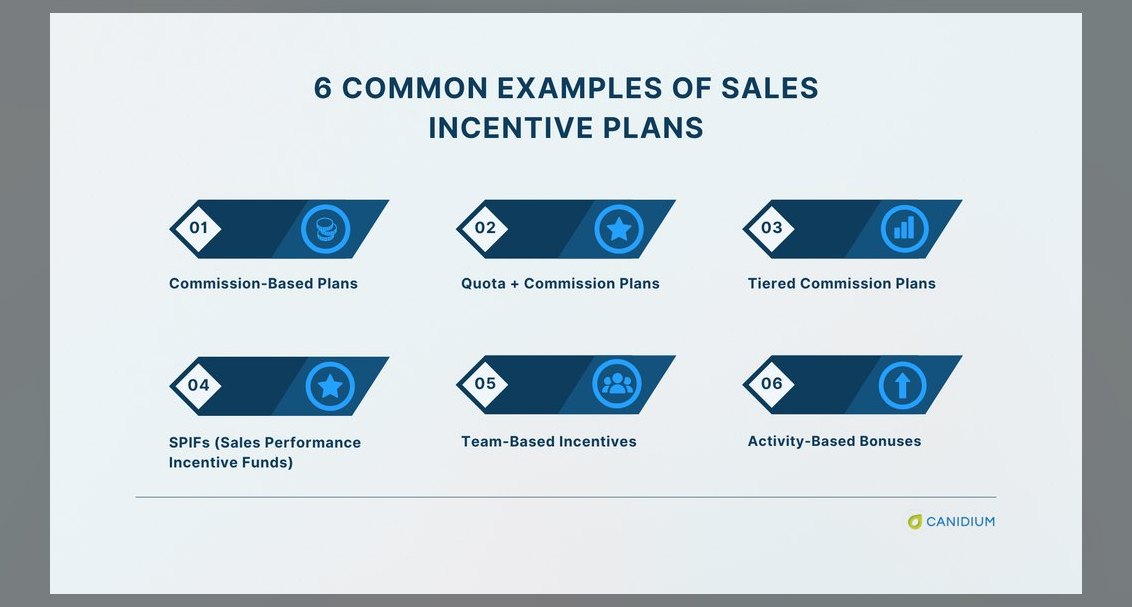
One tactic that reduces the number of consultants you need: tier your commission rates. Pay 8% on the first $50K of monthly booked revenue, 10% on $50K–$100K, and 12% above that. This incentivizes your existing team to sell more without you adding headcount. I've seen med spas cut their consultant count by 30% just by restructuring comp and adding a monthly accelerator.
Measuring Consultant Productivity to Know When to Add (or Cut)
You shouldn't set your consultant headcount in stone. Revisit it every 90 days based on actual productivity data. Track two key metrics per consultant: consult-to-close rate (industry benchmark: 55–70% for booked consults that show) and average treatment revenue per closed consult (typically $800–$1,800 depending on your service mix). If a consultant is closing 60% at $1,200 per consult, they're likely at full ramp. If they're at 40% and $700, they're either still learning or not a fit.
Use a trailing 3-month average to smooth out seasonal noise. If your team of 3 is averaging $150K per month in booked treatment revenue, and you need $200K, you don't necessarily need a 4th consultant. First, check if your current team has capacity. Are they each doing 8–12 consults per week? If not, the bottleneck is lead flow or scheduling, not headcount. Only add a consultant when your current team is consistently at 90%+ capacity and you have the lead volume to support another full book.
The flip side: if a consultant has been ramped for 6 months and is below 50% of your target per-consultant revenue, cut them. One underperformer drags down team morale and distorts your headcount math. It's better to run lean with 2 strong closers than to carry 4 mediocre ones.
Sources
- American Med Spa Association (AmSpa) — industry benchmarks and operational guidelines for medical spa staffing
- International Association of Medical Spas (IAMS) — standards and best practices for med spa business operations
- U.S. Bureau of Labor Statistics (BLS) — data on employment, wages, and job outlook for sales and related occupations
- Harvard Business Review — articles on sales team sizing, productivity metrics, and service industry staffing
- Spa Industry Association (SIA) — research on spa staffing ratios, revenue per employee, and consultant roles
- Medical Spa Insider (publication) — case studies and expert advice on hiring sales consultants in med spas
FAQ
How long does it take for a new sales consultant to ramp up? Ramp time typically ranges from 3 to 6 months, depending on the complexity of your treatments and how structured your training is. During this period, they’re learning your injectables, lasers, and membership tiers, so don’t expect full productivity until after that window.
What’s a realistic attrition rate for sales consultants in a medical spa? Annual attrition for sales consultants in this field often falls between 20% and 30%. For a team of four, that means you might need to backfill roughly one person each year just to maintain headcount.
How much revenue can one fully ramped consultant sell per year? A well-ramped patient consultant typically sells between $500,000 and $650,000 in treatment revenue annually, depending on their skill and your market. This range assumes realistic close rates and a solid membership base.
Should I hire consultants based on current revenue or future goals? Always base your hiring on the gap between your current bookings and your target revenue. For example, if you need $1.74M in net-new sales and each consultant produces $580K, you’d plan for about three consultant-years of capacity, adjusted for ramp time.
How do I account for membership renewals when calculating consultant needs? Existing memberships and repeat clients often carry 60% to 80% of your current revenue automatically, depending on retention rates. Subtract that from your goal to find the net-new revenue your consultants must sell.
What happens if I hire too many consultants at once? Over-hiring can burn cash quickly, as you’ll pay salaries and training costs before they’re productive. It’s better to start with a conservative number, ramp them, and add more based on actual performance and demand.
This page will be disappearing soon. Save it to your device for $1 — or read it free while it is here.
@Kory-White- · if Venmo asks, the last 4 of my number are 2012
This page is gone.
This one is off the shelf now. $1 keeps it on your phone for good — the whole page, pictures and diagrams included.
 pulse-qHow Many Sales Reps Do I Need to Hire for My Commercial Printing Company in 2026?
 pulse-qHow Many Employees Should I Schedule Each Shift at My Tutoring Center in 2026?
 pulse-qHow Many Sales Reps Do I Need to Hire for My Equipment Rental Company in 2026?
 pulse-qHow Many Salespeople Should I Schedule Each Day on My Furniture Store Floor in 2026?
 pulse-qHow Many Employees Should I Schedule Each Shift at My Skate Park in 2026?
 pulse-qWhat Service Fees Should a Veterinary Clinic Charge in 2026?
 pulse-qHow Do I Set Attach Rates for My Service Fees in 2026?
 pulse-qHow Many Salespeople Do I Need to Hire for My Car Dealership in 2026?
 pulse-qHow Many Baristas Should I Schedule Each Shift at My Coffee Drive-Thru in 2026?
 pulse-qWhat Service Fees Should a Photography Business Charge in 2026?