
Should I open or buy a Burger King franchise in 2027?
 Curated byKory White · Fractional CRO · Maryland
 PULSEKNOWLEDGE LIBRARY
Probably not, unless you can fund $1.5M in liquid capital, operate multiple restaurants, and can commit years of hands-on management. Should you open a new Burger King franchise in 2027, expect $2.01M-$4.67M all-in, a 9% royalty-plus-ad-fund load, and breakeven in 36-54 months. Buying an existing remodeled King unit at 3.5-4.5x EBITDA is the more realistic entry for most first-time buyers.
The outcome you should expect
The most likely outcome for a brand-new, ground-up Burger King franchise opened in 2027 is a long, capital-intensive ramp with modest single-unit returns — not a fast payback. Restaurant Brands International's 2026 Franchise Disclosure Document puts total initial investment for a traditional freestanding restaurant at $2.01M to $4.67M, which already assumes you clear the $50,000 franchise fee and land somewhere in the $650K-$1.9M range for building and site work alone. Against that capital base, Item 19 discloses a traditional-unit average unit volume (AUV) of roughly $1.66M and RBI's own disclosed target of $205K-$230K in average franchisee profit per store. Run the arithmetic and a single new unit at average performance clears somewhere between 4.5% and 6% of total investment back in profit each year — before debt service. That is why breakeven realistically lands at 36-54 months for a new build, and why cash-on-cash returns for single-unit, first-time operators rarely clear 8-11%.
The outcome changes materially depending on which path you take into the system. A first-time operator opening one freestanding restaurant with SBA financing at 20-25% down is stacking $400K-$900K of hard equity against a business that may not turn free cash flow positive until year three or four. A multi-unit veteran adding a fourth or fifth Burger King to an existing portfolio faces a completely different outcome curve: shared general-manager payroll, existing purchasing relationships, and a back office that already absorbs compliance and accounting cost. That operator's per-unit profit tends to run meaningfully above the disclosed average, because fixed overhead is already amortized across other doors. The buy-versus-build decision produces the third outcome: acquiring an already-remodeled Royal Reset location at 3.5-4.5x trailing EBITDA compresses the payback window to roughly 24-36 months because you skip the 12-18 month construction and ramp period entirely and inherit a trained crew and an established local customer base.
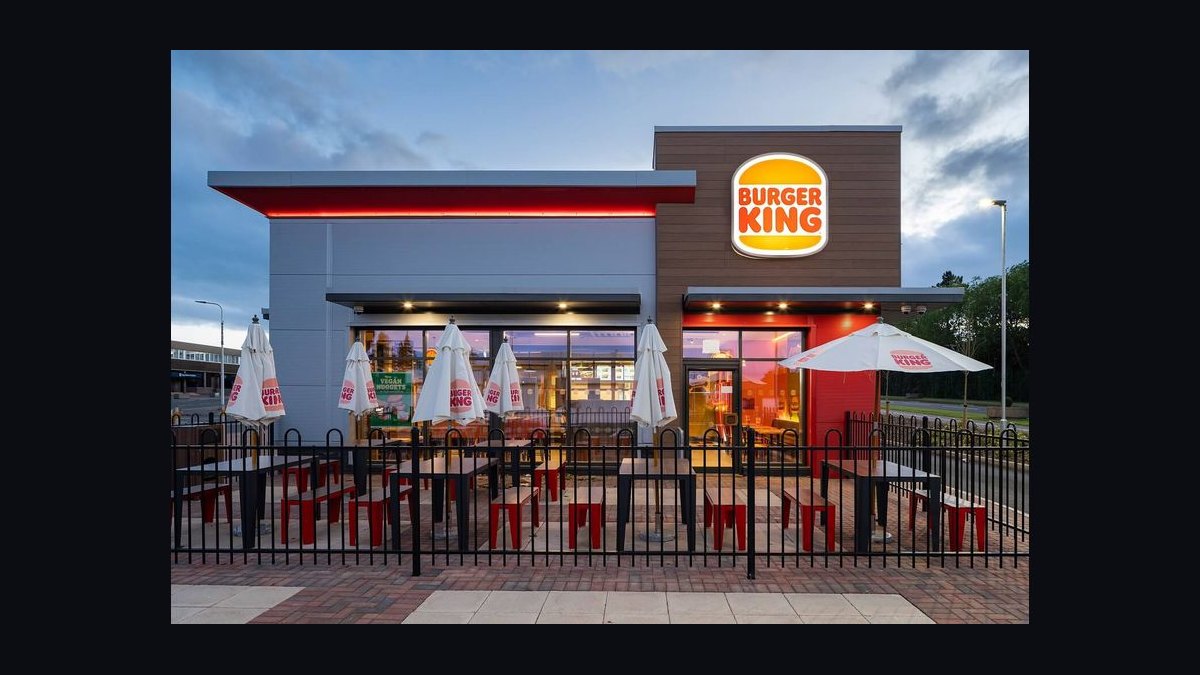
Expect the outcome to be sensitive to geography as well. Sun Belt suburban corridors with heavy drive-thru traffic patterns post AUVs above the chain average; dense urban cores and already-saturated metros (California, New Jersey, Florida) push the same investment toward the bottom of the profit range because rent and labor costs eat into the 9% margin cushion the royalty and ad fund already claim. In short: the honest expectation for 2027 is a multi-year, capital-heavy build for a mid-single-digit annual return unless you bring multi-unit scale, a below-average site cost, or an acquisition instead of new construction to the table.
What drives that outcome
Three forces determine whether a Burger King franchise opened in 2027 lands at the top or bottom of its outcome range: the fee structure sitting on top of every sales dollar, the labor and commodity cost environment the operator inherits, and the operator's own scale and experience going in.
The fee structure is fixed and non-negotiable: a 4.5% royalty plus a 4.5% national and local advertising contribution takes 9% of gross sales off the top before a single labor or food cost is paid. Layer on a $500/month building improvement reserve, a $600/year BK University training fee, and the 0.5%-1.0% technology fee tied to kiosk software, digital ordering, and the loyalty app, and total off-the-top drag for 2027 openings sits closer to 9.5-10%. That is roughly 200 basis points heavier than the effective combined load carried by comparably sized rivals once national co-op advertising structures are factored in, which matters because a QSR business already operates on thin restaurant-level margins.
Labor and commodity costs are the second driver, and both are moving against operators in 2027. Ground beef wholesale pricing has run $5.15-$5.85/lb per USDA Economic Research Service data across 2024-2026, and operators without a hedging or pre-buy arrangement have absorbed 180-260 basis points of margin erosion as a result. On the labor side, California's AB 1228 pushed fast-food minimum wage to $20/hour, and state-level copycats in New York ($19.50), Massachusetts ($18.25), and Washington ($20.50) have added $80K-$140K per store in incremental annual payroll in those states since 2025. Because the franchise fee structure is uniform nationwide but labor law is not, the same royalty percentage produces wildly different net outcomes depending on which state a unit sits in — an 800-1,200 basis point swing in unit economics from state to state is now a real planning variable, not a rounding error.
The third driver is the operator's own starting position. Multi-unit experience compounds: RBI's own franchisee data shows operators running 10 or more units generating 22-28% higher store-level EBITDA than single-unit owners, purely from shared overhead and purchasing leverage. A first-time operator carries the full weight of a general manager, assistant manager, and back-office payroll — often $95K-$120K annually — against a single store's $1.4M-$1.7M in revenue, which is a proportionally much heavier burden than the same payroll spread across three or five units.
Benchmarks and realistic ranges
Every number below comes from Burger King's own 2026 FDD disclosures or from named third-party data series, and should be treated as the planning range for a 2027 decision rather than a guarantee.
Capital requirements (FDD Item 7): total initial investment for a traditional freestanding restaurant runs $2,010,600 to $4,670,900. That breaks down into a fixed $50,000 franchise fee; $0 to $1.75M in real estate or lease deposits depending on whether land is purchased outright; $650,000 to $1.9M in building and site work; $425,000 to $575,000 in equipment and POS, including the Sizzle kitchen build-out and self-order kiosks; $60,000 to $140,000 in exterior and drive-thru signage; $30,000 to $45,000 in opening inventory; $15,000 to $45,000 in the roughly 12-week BK University training program; $8,000 to $25,000 in three months of general liability and workers' compensation insurance; and $130,000 to $200,000 in three months of working capital.
Qualification thresholds: the franchise application sets $1.5M in liquid capital and $3M in net worth as effective hard gates, though operators pursuing a 3-5 unit development agreement typically show up with $5M or more so a single capital raise can fund the whole commitment rather than each unit separately.
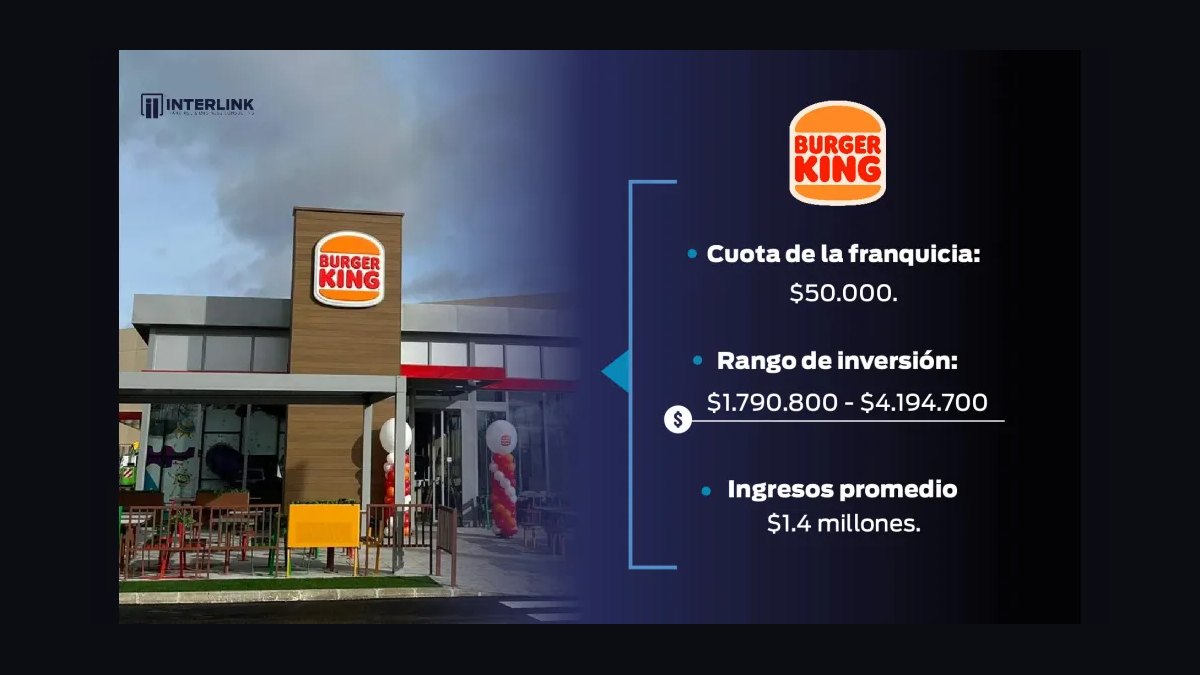
Revenue and profit (FDD Item 19): traditional U.S. restaurants posted a $1,658,463 average unit volume; non-traditional locations (airport, university, and travel-center formats) ran lower at $1,321,324. RBI has publicly targeted $230,000 in average store-level profit by the end of 2026, up from $205,000 in 2024 — implying restaurant-level EBITDA in the 12.5-14% range at the AUV midpoint.
Payback and returns: an average-performing new build runs an 8-12 year full payback period; top-quartile operators in dense suburban trade areas can reach 4-6 years. Breakeven on operating cash flow (a shorter, more immediate milestone than full payback) typically lands at 36-54 months for new construction and 24-36 months for an acquired, already-remodeled unit. Cash-on-cash returns for first-time single-unit operators rarely exceed 8-11% annually; the underwriting bar most franchise attorneys and CPAs use for a "go" decision is a modeled 15% or better cash-on-cash return at 85% of the FDD Item 19 revenue benchmark.
Acquisition pricing: existing, Royal Reset-remodeled units are trading at 3.5-4.5x trailing EBITDA, with Royal Reset matching capital contributions of $125,000-$175,000 per store typically due in years three through five of ownership regardless of whether that expense was budgeted for at purchase.
Risks, edge cases, and failure modes
The single biggest failure mode among first-time operators is underestimating the remodel capital obligation. The $125,000-$175,000 Royal Reset matching contribution is not optional, and it arrives on a schedule set by the brand, not the franchisee — operators who model only the initial build cost and ignore this mid-life capex requirement routinely find themselves cash-constrained in years three through five just as debt service peaks.
Site selection by instinct rather than data is the second recurring failure. Choosing "the available corner" instead of paying $6,000-$12,000 for a professional trade-area study from a firm like Buxton, Sites USA, or Tango Analytics has been a factor in roughly 120 Burger King unit closures per year since 2022. The screening criteria that matter — 45,000-plus vehicles per day, median household income of $45,000-$85,000, and no competing Burger King within four miles — are measurable in advance, and skipping that measurement is a self-inflicted risk.
Commodity exposure is a structural edge case rather than a one-time risk: ground beef at $5.15-$5.85/lb wholesale and periodic supply shocks (avian-influenza-driven egg shortages affecting the Croissan'wich line, and consolidation among bun suppliers like Fresh Start Bakeries and Aryzta) mean operators who don't build in hedging, forward-buying, or at minimum a stress-tested food cost model are exposed to margin swings outside their control. Labor compliance is the parallel risk on the cost side — the patchwork of state minimum-wage laws means a franchise model calibrated to national averages can quietly become unprofitable in a specific state without a state-specific labor model built in from day one.
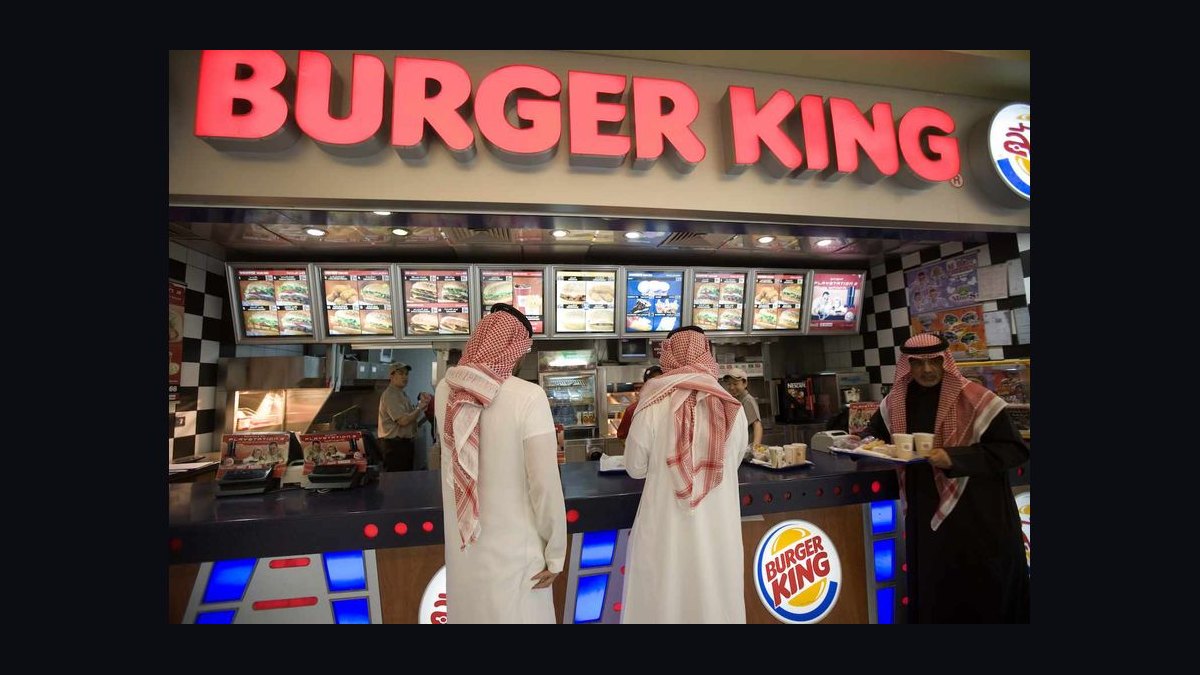
Single-unit isolation is the failure mode that compounds all of the others. Without a second or third unit to spread general-manager and assistant-manager payroll across, $95,000-$120,000 of fixed overhead sits entirely on one restaurant's $1.4M-$1.7M in revenue, which is the single largest reason first-time single-unit operators underperform the disclosed averages. Finally, demand-side risk deserves attention going into 2027: Technomic projects flat-to-down 2% burger QSR traffic industry-wide, with value-tier customers — Burger King's core demographic — under continued pressure from grocery deflation on beef and chicken, which softens the AUV assumptions this entire analysis rests on if same-store sales growth (1.8% in RBI's most recent quarter, trailing both McDonald's and Wendy's) doesn't hold.
A practical rollout plan
A disciplined 90-day process protects against the failure modes above and produces a defensible go/no-go decision rather than an emotional one. In the first week, pull the current Burger King FDD directly from the Restaurant Brands International franchise portal and read Items 5, 6, 7, 17, 19, and 20 in full — Item 20's list of departed franchisees is worth a dozen phone calls in your target region before you go further. Over the following two weeks, confirm your $1.5M liquid capital and $3M net worth position with two years of tax returns and a completed personal financial statement ready to submit; if either threshold isn't met, this is the point to pivot toward a smaller-format concept rather than continuing.
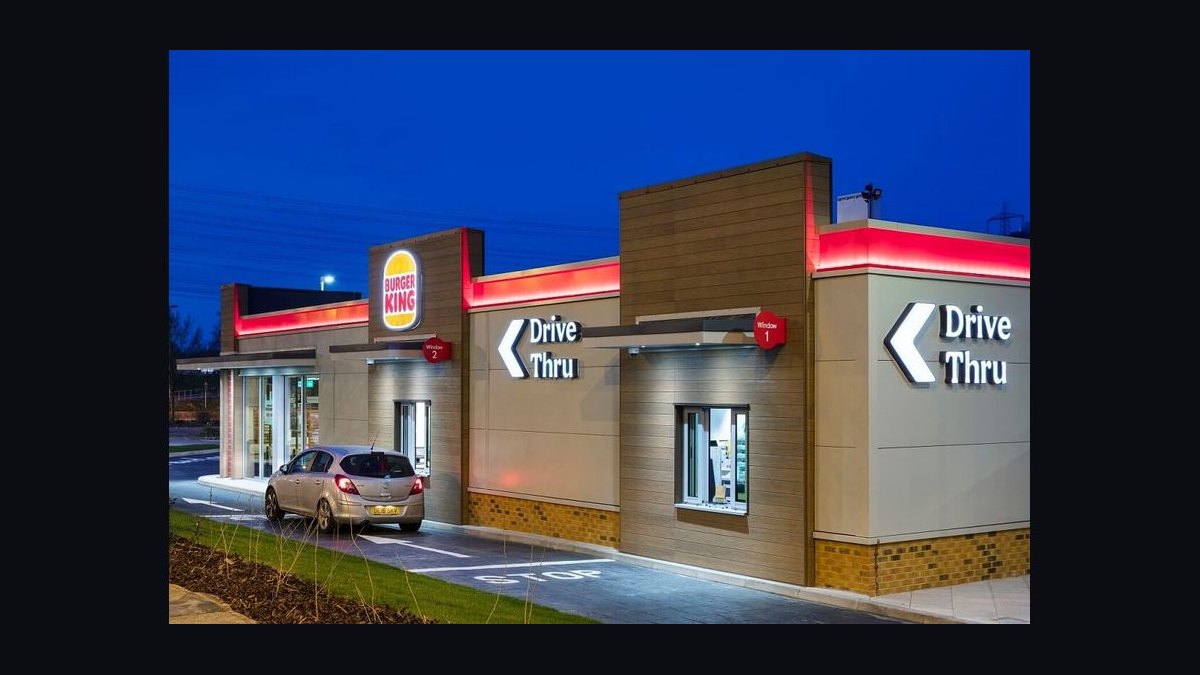
Weeks four and five are for professional underwriting: engage a franchise attorney (budget $8,000-$15,000 flat fee) and a CPA with QSR experience to build a unit-level P&L using Item 19 as the base case, stress-tested at 70%, 85%, and 100% of disclosed revenue. Weeks six and seven fund a paid trade-area study ($6,000-$12,000) on three to five candidate sites, filtered against the 45,000-vehicle, $45K-$85K household income, and four-mile-exclusivity screens described above. Around week eight or nine, attend Burger King's Discovery Day at the Miami headquarters, meet the regional Franchise Business Leader, and walk at least three Sizzle-remodeled units with their current operator, asking to see trailing-12-month P&L data directly.
The final stretch — weeks ten through thirteen — is submission and financing: file the formal franchise application (underwriting takes 30-45 days) while simultaneously securing SBA 7(a) pre-approval, typically a $1.5M-$2.5M loan at 20-25% down over a 10-year amortization. The decision at day 90 should rest on three concrete tests: does the 85%-of-AUV model still clear a 15% cash-on-cash return; are three or more named operating partners or general managers already committed; and does the site lease price out at 6-8% of projected sales or lower. Failing any of those tests is a legitimate reason to walk rather than force the deal.
Related questions
Is it cheaper to buy an existing Burger King than build a new one?
Yes. An acquisition priced at 3.5-4.5x trailing EBITDA typically requires less up-front cash than a new build's $2.01M-$4.67M all-in cost, and shortens breakeven from 36-54 months to roughly 24-36 months by skipping construction and ramp-up.
How does Burger King's royalty compare to other burger franchises?
Burger King's combined 9% royalty and ad fund is roughly 200 basis points above the effective load at comparably sized rivals once national co-op advertising is factored in, making it one of the heavier fee structures among major burger chains.
What credit score or financing do I need for an SBA loan on a Burger King?
Most SBA 7(a) lenders underwriting a $1.5M-$2.5M Burger King loan expect 20-25% down, a strong personal credit profile, and two years of tax returns supporting the $1.5M liquid capital and $3M net worth franchise qualification thresholds.
Does Burger King require multi-unit development agreements in 2027?
Not universally, but RBI's own data showing 22-28% higher EBITDA for 10-plus-unit operators has pushed the brand's franchise sales effort toward development agreements of 3-5 units rather than single-restaurant deals in most 2027 territories.
FAQ
What is the total investment for a new Burger King franchise in 2027? The all-in cost for a new traditional freestanding location ranges from $2.01 million to $4.67 million, per the Franchise Disclosure Document Item 7. This covers construction, equipment, signage, and opening inventory, but actual costs vary by market and real estate requirements.
How much liquid cash do I need to open a Burger King? You typically need at least $1.5 million in liquid assets to qualify, with some franchisees reporting requirements between $1 million and $2 million depending on the lender and location. This is a common QSR benchmark rather than a fixed rule.
What are the ongoing royalty and advertising fees? Burger King charges a 4.5% royalty on gross sales plus a 4.5% advertising fund contribution, totaling 9% off the top before labor or food cost. A separate 0.5-1.0% technology fee for digital ordering and kiosk software adds to that load in 2027.
How long does it take to break even on a Burger King franchise? Breakeven typically falls between 36 and 54 months for a new unit, longer if sales run below average. Buying an existing remodeled store can shorten that timeline to roughly 24-36 months.
What is the average profit per store for a Burger King franchisee? Average disclosed franchisee profit per store runs between $205,000 and $230,000 annually based on 2024-2026 targets, though actual profit varies widely by location, management quality, and local labor and commodity costs.
Is it better to buy an existing Burger King or open a new one? Buying an existing, Royal Reset-remodeled unit at 3.5 to 4.5 times EBITDA is often the more realistic path for a first-time operator, since it avoids construction delays and initial ramp-up. Opening a new build requires deeper capital and more operating experience, with cash-on-cash returns for single-unit owners rarely exceeding 8-11%.
Sources
- Burger King 2026 Franchise Disclosure Document (Items 5, 6, 7, 19), filed via Restaurant Brands International — https://www.rbi.com
- Restaurant Brands International Q4 2025 Earnings Release and 10-K — https://www.sec.gov
- "Is Burger King's Massive Remodel Plan Working?" — QSR Magazine — https://www.qsrmagazine.com
- "Burger King accelerates remodels, refranchising" — Restaurant Dive — https://www.restaurantdive.com
- Technomic Top 500 Chain Restaurant Report — https://www.technomic.com
- USDA Economic Research Service, Ground Beef wholesale price series — https://www.ers.usda.gov
- California Department of Industrial Relations, AB 1228 Fast Food Council wage data — https://www.dir.ca.gov
- International Franchise Association, Franchise Business Outlook report — https://www.franchise.org
- U.S. Small Business Administration, 7(a) Loan Program overview — https://www.sba.gov
Related on PULSE
- [Should I open or buy a Junk King franchise in 2027?](/knowledge/fr0253)
- [Should I open or buy a Smoothie King franchise in 2027?](/knowledge/fr0010)
- [Best burger franchises to buy in 2027](/knowledge/fr1135)
- [Should I open or buy a The Counter burger franchise in 2027?](/knowledge/fr0701)
- [Should I open or buy a Habit Burger Grill franchise in 2027?](/knowledge/fr0141)
- [Should I open or buy a Tasty Burger franchise in 2027?](/knowledge/fr0138)
This page will be disappearing soon. Save it to your device for $1 — or read it free while it is here.
@Kory-White- · if Venmo asks, the last 4 of my number are 2012
 franchiseShould I open or buy a Mission BBQ franchise in 2027?
 franchiseShould I open or buy an F45 Training franchise in 2027?
 franchiseShould I open or buy a Rita's Italian Ice franchise in 2027?
 franchiseShould I open or buy a Checkers franchise in 2027?
 franchiseShould I open or buy a Flame Broiler franchise in 2027?
 franchiseShould I open or buy an L&L Hawaiian Barbecue franchise in 2027?
 franchiseShould I open or buy a Shake Shack franchise in 2027?
 franchiseShould I open or buy a DoodyCalls franchise in 2027?
 franchiseShould I open or buy an East of Chicago Pizza franchise in 2027?
 franchiseShould I open or buy a Cheba Hut franchise in 2027?