


Should I open or buy a Sonic Drive-In franchise in 2027?
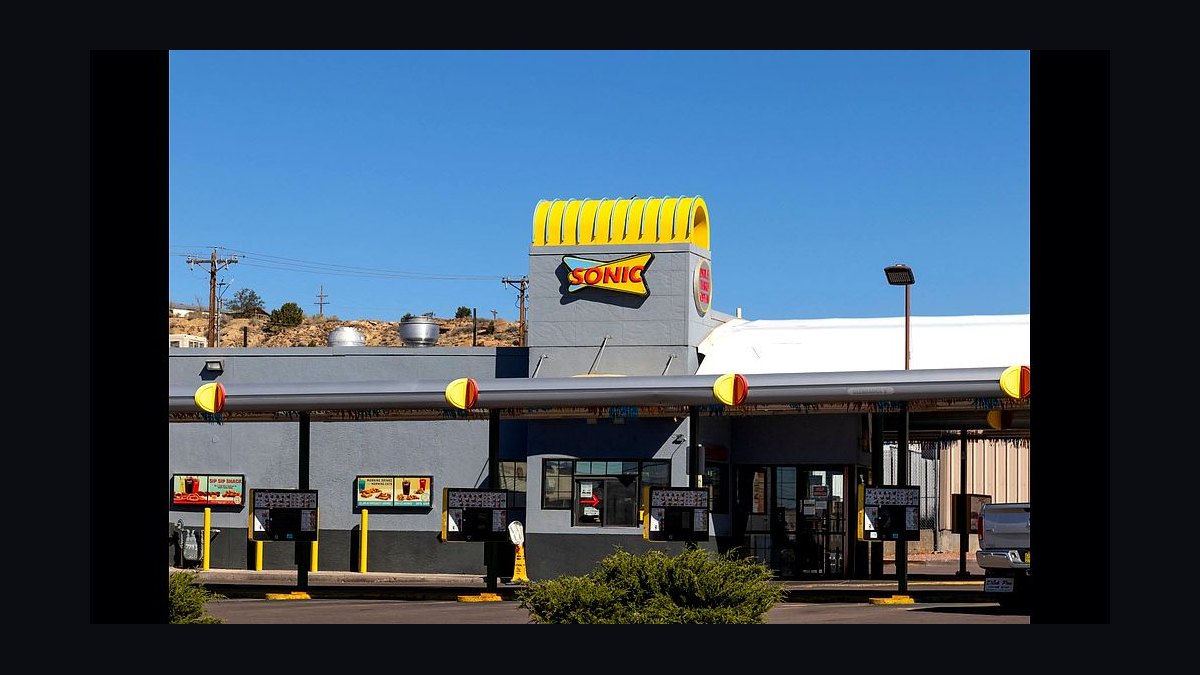
Probably not — unless you already own two or more QSR units in Sonic's Texas / Oklahoma / Tennessee core, can write a $1.0M+ equity check, and are willing to operate a labor-heavy car-hop format while Inspire Brands (Sonic's parent since the $2.3B 2018 acquisition) keeps remodel mandates flowing. The 2026 FDD lists a $1,676,000-$3,140,900 Item 7 initial investment and a $15,000-$45,000 franchise fee, with median AUV near $1.53M and 5% royalty + 3.25% brand fund. Expect Year-1 cash flow of $130K-$210K on a stabilized unit, payback of 6-9 years, and breakeven in month 14-20. First-time operators with under $1M liquid get crushed by build-out overruns and car-hop labor math.
The Real Numbers
Sonic's 2026 Franchise Disclosure Document (filed via Inspire Brands' Sonic Franchising LLC) is the source of record. The build is real-estate-heavy because the drive-in stall format demands 1.0-1.5 acres with 24-32 stalls plus a drive-thru lane — far more land than a typical Arby's or Wendy's pad.
| Line item | Low | High | Source |
|---|---|---|---|
| Initial franchise fee | $15,000 | $45,000 | FDD Item 5, 2026 |
| Land & site work (excluded from Item 7 if leased) | $300,000 | $900,000 | FDD Item 7 notes |
| Building & construction | $750,000 | $1,400,000 | FDD Item 7 |
| Equipment, POS, AI menu boards | $310,000 | $480,000 | FDD Item 7 |
| Signage, canopies, stalls | $145,000 | $235,000 | FDD Item 7 |
| Pre-opening, training, opening inventory | $86,000 | $145,000 | FDD Item 7 |
| Working capital (3 months) | $70,000 | $110,000 | FDD Item 7 |
| Total Initial Investment (Item 7) | $1,676,000 | $3,140,900 | 2026 FDD |
| Ongoing royalty | 2.5%-5.0% of gross sales | tiered by sales | FDD Item 6 |
| Brand fund (advertising) | 3.25% traditional / 1.625% non-traditional | of gross sales | FDD Item 6 |
| Median AUV (Item 19, traditional) | ~$1,530,000 | — | 2026 FDD Item 19 |
| System-wide average sales | ~$1,610,000 | — | Franchise Chatter FDD Talk 2024 |
| Top quartile AUV | ~$2,100,000 | — | 2026 FDD Item 19 |
| Bottom quartile AUV | ~$1,050,000 | — | 2026 FDD Item 19 |
Unit-economic math on a median $1.53M AUV location after Inspire Brands' 2024-2026 menu-engineering lift and the $1 hot-dog-promo halo:
- Food + paper cost: 29-31% of sales (= ~$460K)
- Labor (car-hops + line): 31-35% — the structural margin killer vs. drive-thru-only QSR at 25-28%
- Occupancy / rent: 6-9%
- Royalty + brand fund: 8.25% combined (at top royalty tier)
- Other controllables (utilities, R&M, insurance): 9-11%
- Restaurant-level EBITDA margin: 12-16% = $185K-$245K on the median unit
- Owner cash flow after debt service (on a $1.6M SBA 7(a) note at 9.75%, 25-yr): $95K-$170K
- Payback period: 6-9 years at median; 4-5 years top quartile; never in bottom quartile if you took on full $2.5M+ debt
For 2027, model inflation creep at 3.2% on food and 5.1% on labor (BLS forecast), which compresses restaurant EBITDA another 80-140 bps unless the AI voice-ordering rollout (Mastercard + Zivelo) materially cuts car-hop hours.
Who Wins With This Business
The profitable Sonic franchisee in 2027 looks almost nothing like the first-timer fantasy:
- Multi-unit operator — Sonic's strongest financial performers run 8-25+ units, leveraging shared area management, bulk equipment swaps, and multi-unit SBA package financing. Single-unit owners average $1.05M-$1.30M AUV, below the system median.
- Net worth $2.5M+, liquid $1.0M+ — the Inspire Brands franchisee financial requirements mandate $1M net worth and $500K liquid per unit, but real underwriting at Wells Fargo / Live Oak / Huntington wants $1M liquid for a first-time operator.
- Already-licensed restaurant operator — Sonic's app-driven loyalty stack and car-hop labor model punish anyone who hasn't run a 15-30 hourly-employee restaurant before.
- Geographic fit: Texas, Oklahoma, Tennessee, Arkansas, Louisiana, Missouri — markets where drive-in nostalgia still drives 20%+ same-store sales vs. 15% in new northern markets.
- 80-hour weeks for 24 months minimum — Sonic's late-night daypart (15-22% of sales) requires owners on site through midnight close during ramp.
Who Loses With This Business
The failure modes are well-documented in SBA 7(a) loan data and bankruptcy filings:
- 6.8% SBA 7(a) default rate on Sonic loans (per VettedBiz analysis of SBA disbursement data 2019-2024) — higher than Arby's (3.1%), Chick-fil-A (effectively 0%), or Culver's (2.4%).
- First-time operators with <$1M liquid — under-capitalized owners hit the 24-month working-capital wall before the unit stabilizes.
- Northern / coastal expansion gambles — units in New England, Pacific Northwest, and metro NYC/LA have historically underperformed by 30-45% vs. the Southwest core.
- Build-out cost overruns — 2025-2026 construction inflation pushed actual all-in costs 18-26% above FDD Item 7 highs in metro Texas and Phoenix.
- Car-hop labor squeeze — state minimum-wage hikes in 2026-2027 (California $20, Washington $17.25, Arizona $15.50 ballot) crush the car-hop tip-credit math.
- Remodel mandates — Inspire Brands has rolled out a "Delight" image refresh averaging $185K-$340K per unit, often on a 5-7 year compliance window baked into the renewal addendum.
- Owners who skip the AI-menu retrofit — locations without the dynamic AI menu boards are tracking 8-12% lower average ticket vs. retrofitted units.
2027 Market Conditions
QSR drive-in / drive-thru segment is in a two-track market:

- Demand: US QSR industry grew 3.9% in 2025 (per Technomic Top 500) but the drive-in subsegment (Sonic is the only national pure-play) is flat at 0.5% unit growth.
- AI-voice-ordering rollout: Inspire Brands began piloting Mastercard's voice AI at select Sonic stalls in 2024, expanded to ~600 units by mid-2026, with system-wide target of 2,200+ units by end of 2027. Early-pilot units report 6-9% throughput improvement and 3-5% labor-hour reduction.
- Saturation by region: Texas (920 units), Oklahoma (215), Tennessee (190), Arkansas (135) are saturated — almost no greenfield territory. Real growth runway is in Florida, Georgia, Carolinas, Ohio, Indiana (each <100 units, target 200+).
- Regulatory shifts: Joint-employer rule under the NLRB's 2025 revision raises wage-and-hour exposure for franchisors; PFAS-free packaging mandates in CA, NY, ME, WA add $0.04-$0.09 per order in cost.
- Supply chain: Beef costs up 11% YoY (USDA April 2026), chicken stable, soda concentrate up 4.5% under Coca-Cola's national supply agreement. Inspire Brands' procurement scale (combined ~32,000 restaurants across Arby's, Sonic, Buffalo Wild Wings, Jimmy John's, Dunkin', Baskin-Robbins) cushions ~150-200 bps of COGS vs. independents.
- Public-equity comp: Restaurant Brands International (QSR), Wingstop (WING), Texas Roadhouse (TXRH) trade at 18-32x EBITDA, suggesting that franchise-level cash flow at 5-6x offers a valuation arbitrage for multi-unit roll-ups.
The 90-Day Decision Tree
- Days 1-7 — Self-qualify financials. Pull a personal financial statement (SBA Form 413) and verify $1M+ liquid, $2.5M+ net worth, 700+ FICO. If short, stop and pursue area-developer partnership instead.
- Days 8-14 — Request 2026 FDD from sonicfranchising.com and read Items 5, 6, 7, 11, 19, 20, 21 end-to-end. Build your own AUV / EBITDA model from Item 19 raw tables — do not trust franchisee-recruiter pro formas.
- Days 15-28 — Validation calls with 8-12 current franchisees from the Item 20 exhibit, weighted to multi-unit operators in your target state plus 3 owners who terminated or transferred in the last 24 months. Ask specifically about build-out overruns, remodel mandates, and car-hop labor cost.
- Days 29-42 — Hire a franchise attorney (target $8K-$15K flat fee) — recommended: Greg Davidson, Lathrop GPM, Plave Koch PLC, or DLA Piper restaurant practice. Negotiate renewal terms, territorial protection, remodel triggers, transfer rights.
- Days 43-56 — Site selection with Sonic's real-estate team and an independent restaurant broker. Target demographics: 25K+ daytime population in 3-mile radius, median HHI $55K+, drive-time access to highway interchange or high-school corridor.
- Days 57-70 — Financing. Submit to Live Oak Bank, Huntington National Bank, Wells Fargo SBA, and Celtic Bank. Get 3+ term sheets. Expect SBA 7(a) at Prime + 2.25-2.75% (likely 9.50-10.25% in mid-2027) on 80% LTV, 25-year real estate / 10-year equipment.
- Days 71-84 — Operator hiring. Recruit your GM ($75K-$95K base + 10% profit share) and 2 assistant managers before signing. The #1 predictor of Sonic franchise success is whether your GM is already in seat 60 days pre-open.
- Days 85-90 — Sign or walk. If any of build cost, validation calls, financing, GM hire failed your threshold, WALK. Sonic's franchise development team will pressure for signature — your $1M+ check is the only leverage you have.
Alternative Plays
If Sonic's labor math, car-hop format, or regional concentration kills the deal, consider these adjacent 2027 plays:
- Culver's — midwestern butter-burger format, $2.7M-$5.6M Item 7, $3.4M median AUV, 2.4% SBA default rate. Higher capital, materially higher returns.
- Whataburger franchise (limited availability) — Texas-headquartered, opened franchising in 2024 under BDT Capital ownership. $1.2M-$2.8M Item 7, target $3.1M AUV.
- Freddy's Frozen Custard & Steakburgers — drive-thru + dine-in hybrid, $1.7M-$2.6M Item 7, $1.9M AUV, expanding east of the Mississippi.
- Slim Chickens — emerging-chicken category leader, $1.5M-$2.4M Item 7, $2.4M AUV, strong international growth runway.
- Jersey Mike's Subs — lower capital ($350K-$1.05M Item 7), $1.1M AUV, 6-7% royalty, far easier owner-operator path for first-timers.
- Buy a 4-8 unit existing Sonic package via Inspire Brands' refranchising desk or brokers like Restaurant Brokers International — gets you proven cash flow instead of build risk.
FAQ
What is the total investment range for a Sonic Drive-In franchise in 2027? The 2026 FDD shows an initial investment of $1,676,000 to $3,140,900, including a $15,000–$45,000 franchise fee. Actual costs often land near the upper end due to land, construction, and equipment overruns, especially for first-time owners.
How much can I expect to earn in the first year? Year-1 cash flow typically falls between $130,000 and $210,000 on a stabilized unit, but many new locations see lower figures due to ramp-up. Median AUV hovers around $1.53 million, though individual results vary widely by market and operator experience.
How long does it take to break even and get my investment back? Breakeven usually occurs in month 14 to 20, with full payback taking 6 to 9 years. These timelines depend heavily on site selection, labor costs, and how quickly you hit projected sales volumes.
What are the ongoing royalty and marketing fees? You’ll pay a 5% royalty on gross sales plus a 3.25% brand fund contribution. Combined, that’s 8.25% off the top, which can squeeze margins, especially in lower-volume stores.
Is this franchise suitable for first-time restaurant owners? Generally, no. First-time operators with under $1 million in liquid capital often struggle with build-out overruns and the labor-intensive car-hop model. Sonic prefers candidates who already own two or more quick-service restaurants in their core Texas, Oklahoma, or Tennessee markets.
Why does Sonic require so much equity and experience? The car-hop format is labor-heavy, and Inspire Brands (Sonic’s parent since the $2.3 billion 2018 acquisition) mandates frequent remodels. Higher equity ensures you can weather slow months and cover unexpected costs, while multi-unit experience helps manage the operational complexity.
Bottom Line
Sonic Drive-In is a viable franchise only for already-licensed multi-unit QSR operators in the Texas/Oklahoma/Tennessee/Arkansas core with $1M+ liquid and the stomach for car-hop labor math. First-time operators, under-capitalized buyers, and anyone targeting coastal or northern metros should walk away — the 6.8% SBA default rate and $1.05M-$1.30M single-unit AUV reality make the median single-unit deal a 7-9 year payback at best. The right play in 2027 is buying a 4-8 unit existing package at 4.5x EBITDA through Inspire Brands' refranchising desk or Restaurant Brokers International — not greenfield builds.
Sources
- Sonic Drive-In 2026 Franchise Disclosure Document — Sonic Franchising LLC (Inspire Brands subsidiary), Items 5, 6, 7, 19, 20, 21
- Franchise Chatter — FDD Talk: Sonic Drive-In Franchise Costs, Fees, Average Revenues and/or Profits 2024 Review, franchisechatter.com (2024)
- Inspire Brands corporate disclosures — 2018 Sonic acquisition ($2.3B), inspirebrands.com investor releases
- VettedBiz — Buying a Sonic Drive-In Franchise, vettedbiz.com (2025 SBA 7(a) default analysis)
- QSR Magazine — Sonic's Q4 Sales Rise Headed Into Inspire Brands Merger, qsrmagazine.com
- Hospitality Technology — Sonic Drive-In to Pilot Voice AI-Powered Ordering, hospitalitytech.com (Mastercard + Zivelo)
- Chain Store Age — Sonic hears its customers with AI and voice ordering, chainstoreage.com (May 2026)
- Restaurant Dive — Sonic plans to test AI-powered menu, restaurantdive.com
- Technomic Top 500 Chain Restaurant Report 2026 — QSR drive-in segment growth data
- US Bureau of Labor Statistics CPI / ECI — 2025-2026 food and labor inflation forecasts
- USDA Economic Research Service — Cattle/Beef Outlook, ers.usda.gov (April 2026)
- Live Oak Bank, Huntington National Bank, Wells Fargo SBA 7(a) franchise lending guidelines — 2026 SBA 7(a) underwriting standards
Sonic Drive-In review / Sonic Drive-In reviews / Sonic Drive-In rating / Sonic Drive-In review 2027 / review of Sonic Drive-In franchise / Sonic franchise review 2027
Related on PULSE
This page will be disappearing soon. Save it to your device for $1 — or read it free while it is here.
@Kory-White- · if Venmo asks, the last 4 of my number are 2012
This page is gone.
This one is off the shelf now. $1 keeps it on your phone for good — the whole page, pictures and diagrams included.
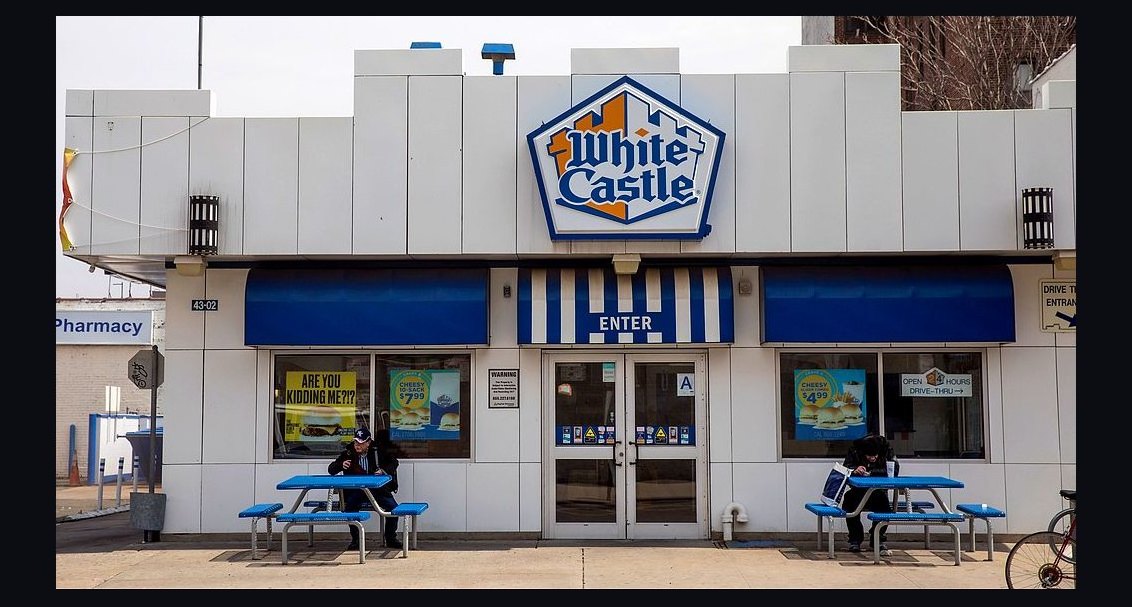 franchiseShould I open or buy a White Castle franchise in 2027?
 franchiseShould I open or buy an Ideal Image franchise in 2027?
 franchiseShould I open or buy a Quaker Steak & Lube franchise in 2027?
 franchiseShould I open or buy a BJ's Restaurant & Brewhouse franchise in 2027?
 franchiseShould I open or buy a Woofie’s franchise in 2027?
 franchiseShould I open or buy a Tropical Smoothie Cafe alternative — Frutta Bowls — franchise in 2027?
 franchiseShould I open or buy a Fantastic Sams franchise in 2027?
 franchiseShould I open or buy a Philly Pretzel Factory franchise in 2027?
 franchiseShould I open or buy a Nutrishop franchise in 2027?
 franchiseShould I open or buy a Cabinet IQ franchise in 2027?