
Should I open or buy a Pollo Loco franchise in 2027?
 Curated byKory White · Fractional CRO · Maryland
 PULSEKNOWLEDGE LIBRARY
<p style="color:#64748b;font-size:0.9rem;margin:0 0 1.5rem 0;">Published June 4, 2026 · Updated June 4, 2026</p>
Yes — if you have $1.2M+ in liquid capital, multi-unit restaurant operating experience, and you're targeting Texas, Arizona, Nevada, Colorado, New Mexico, or Florida where El Pollo Loco is actively recruiting franchisees for 2027 expansion. Probably not — unless you're prepared for a $793,750 to $2,685,500 total investment (2025 FDD Item 7), a 9% combined royalty + marketing burden (5% royalty + 4% marketing), and a 5-7 year payback window. Realistic Year-1 cash flow for a new build sits at $240,000 to $310,000 on the system AUV of $2.4M (2026 disclosure), assuming you hit 18-19% restaurant-level margin before debt service. Existing-unit resale is the safer entry — fewer surprises, faster cash, and no build-out risk. Greenfield outside California is where the unit economics actually work in 2027.
The Real Numbers
The brand reported average unit volumes of $2.4 million in 2026, with restaurant-level margin guidance of 18.25%-18.75% for full-year 2026 and Q1 2026 margin of 19.2%. Texas franchisees are specifically reporting "above $2 million in annualized sales" on second-generation builds in the low-to-mid million dollar range. Below is the full economic stack a serious buyer should model before signing.
| Line Item | Low | High | Source |
|---|---|---|---|
| Initial franchise fee | $40,000 | $40,000 | FDD Item 5 |
| Site work + build-out (new) | $400,000 | $1,650,000 | FDD Item 7 |
| Second-gen conversion (TX model) | $1,000,000 | $1,500,000 | El Pollo Loco investor disclosure |
| Equipment + signage + POS | $185,000 | $410,000 | FDD Item 7 |
| Initial inventory + smallwares | $25,000 | $55,000 | FDD Item 7 |
| Real estate / lease deposits | $15,000 | $45,000 | FDD Item 7 |
| Training + travel | $20,000 | $50,000 | FDD Item 7 |
| Working capital (3 months) | $108,750 | $395,500 | FDD Item 7 |
| TOTAL INVESTMENT (Item 7 range) | $793,750 | $2,685,500 | FDD Item 7 (2025) |
| Royalty (% of gross sales) | 5.0% | 5.0% | FDD Item 6 |
| Marketing fund | 4.0% | 4.0% | FDD Item 6 |
| Local marketing minimum | 1.0% | 2.0% | FDD Item 6 |
| Total ongoing fees | 10.0% | 11.0% | FDD Item 6 |
| System AUV (2026) | $2,159,052 | $2,400,000 | Item 19 + 2026 earnings |
| Restaurant-level margin | 18.25% | 19.5% | 2026 guidance |
| Year-1 operator cash flow (pre-debt) | $240,000 | $310,000 | Calculated from AUV × margin |
| Payback period | 5 years | 7 years | Industry standard model |
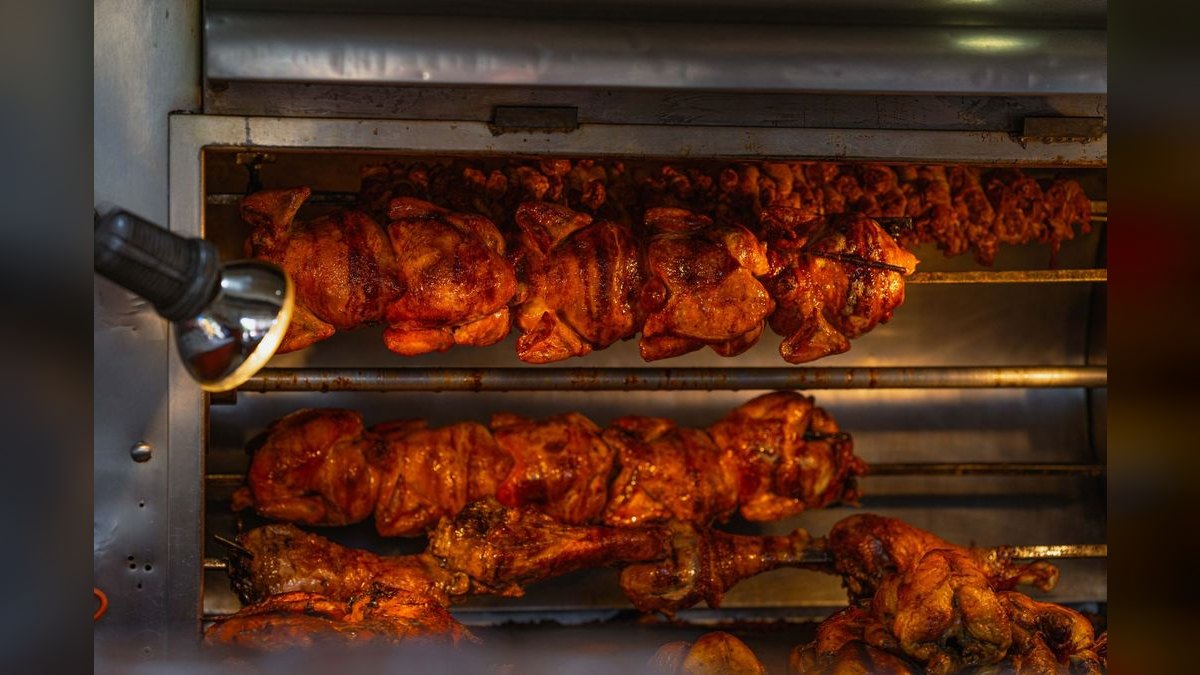
The gap between $793k and $2.6M comes down to real estate path: a second-generation conversion (taking over a closed Arby's, Burger King, or Boston Market) lands near the low end; a new-build ground-up with land lease pushes you past $2M. Texas franchisees are openly targeting conversions because the math is cleaner. Equipment alone runs $185k-$410k because El Pollo Loco's fire-grill platform requires custom hoods, grill assemblies, and ventilation that standard QSR build-outs don't carry.
Who Wins With This Business
Multi-unit QSR operators — particularly existing Taco Bell, Chipotle, Wingstop, or Raising Cane's franchisees who already understand labor scheduling at 28-32% of sales, food cost at 30-32%, and same-store-sales tracking by daypart. The El Pollo Loco menu skews dinner-heavy (60% of mix), so operators with strong evening throughput experience translate fastest. Hispanic-market operators in Texas, Arizona, Nevada, and Florida are the fastest-ramping cohort — the brand's fire-grilled, citrus-marinated chicken has authentic credibility that second-generation Latino consumers gravitate to, and Texas franchisees are reporting $2M+ AUVs on opening weekend traffic in El Paso and the Rio Grande Valley.
Real estate developers with portfolio approaches also win — the company's renewed Texas push, Colorado territory agreement, and New Mexico expansion mean 3-5 unit area developers get first pick of second-generation conversion sites, which cuts build cost by $600k-$1M per location. Operators who can self-fund 30%+ of the build avoid the margin compression that highly-leveraged single-unit owners face when SBA debt service eats 4-5 points of restaurant-level margin. Couples or family teams with one partner in operations, one in finance consistently outperform passive investors because fire-grill chains require active GM-level oversight of cook times, marinade rotation, and labor.
Who Loses With This Business
Single-unit absentee owners consistently fail at El Pollo Loco — the 9-11% royalty + marketing burden combined with $2M AUV expectations leaves almost no room for absentee-management overhead. If you're outsourcing the GM seat to a $75k hire on a single unit, you're giving up 3-4% of margin that the owner-operator model captures. First-time restaurant operators without QSR P&L fluency routinely blow through the $108k-$395k working capital cushion in months 4-7 when opening-honeymoon traffic fades and they discover they were mis-pricing the labor model the entire time.
Operators chasing California density are betting against the brand's own playbook — California saturation, labor laws (AB 1228 $20/hr fast-food minimum), and real estate costs make new California units a structural money-loser unless you inherit a legacy lease at $15-$20/sqft. Geographic gamblers who plant flags in markets with zero brand awareness — small-town Midwest, Pacific Northwest, Northeast — fight 18-24 months of awareness-building with only 4% national marketing behind them, often landing AUVs of $1.4M-$1.7M that don't cover debt service. Highly-leveraged buyers with less than $400k of true liquid capital routinely default in years 2-3 when the honeymoon traffic curve flattens.
2027 Market Conditions
El Pollo Loco Holdings (NASDAQ: LOCO) reported Q1 2026 adjusted EBITDA of $18.2 million (up from $13.9M YoY) and raised full-year 2026 guidance to $67.5M-$69.5M adjusted EBITDA, signaling operational momentum heading into 2027. The company publicly forecasts low-single-digit comp growth, mid-single-digit unit growth, and high-single-digit adjusted EBITDA growth for both 2027 and 2028 — meaningful for franchisees because it means the franchisor is investing in marketing, menu R&D, and tech infrastructure rather than cutting support to chase short-term EBITDA.
2027 unit growth target sits at 18-20 new restaurants, with majority outside California and 3-4 company-operated, meaning roughly 14-17 franchise units will open. Texas remains the priority — 31 existing units, with active recruitment in El Paso, Lubbock, Corpus Christi, Odessa, and Midland. New territory agreements were signed for Northern Colorado, New Mexico, and El Paso. Fast-food traffic is structurally pressured in 2027 by GLP-1 weight-loss drug adoption (estimated 6-9% of US adults), consumer trade-down to grocery, and wage inflation at 4-5% annually in restaurant labor. El Pollo Loco's "better-than-fast-food" health positioning (fire-grilled, not fried; fresh ingredients) is structurally insulated from the GLP-1 fast-food backlash affecting burger and fried-chicken chains.
The 90-Day Decision Tree
- Days 1-7 — Pull the actual FDD. Submit a Request for Consideration at elpolloloco.com/franchise. The 2026 FDD (filed April 2026, governs 2027 openings) will be sent under a non-disclosure. Read Item 7 (investment), Item 19 (financial performance), Item 20 (transfers + closures), and Item 21 (financials of franchisor) — in that order. Item 20 is the truth-teller: count transfers, terminations, and non-renewals over the last 3 years. Healthy systems show under 4% annual turnover.
- Days 8-21 — Talk to 10 existing franchisees. Item 20 lists every operator with contact info. Call at least 10, focus on Texas, Arizona, and Nevada operators (the growth markets). Ask three questions: What was your actual Year-1 AUV?, What's your current restaurant-level margin?, and Would you sign again at today's investment level? If fewer than 7 of 10 say yes, walk away.
- Days 22-45 — Validate your territory. Pull Census Bureau Hispanic-population data for your target trade area — El Pollo Loco's outperformance correlates with 22%+ Hispanic population density within a 3-mile radius. Use Placer.ai or SafeGraph data to confirm competitive QSR traffic exceeds 1,200 transactions/day per nearby unit. If your target site sits below either threshold, switch territories.
- Days 46-60 — Build the financing stack. SBA 7(a) caps at $5M, typically funds 70-80% of total investment on QSR franchises at prime + 2.5% to prime + 3.5%. Lenders require $250k-$400k of liquid capital post-close even with SBA. Live Oak, Huntington, Byline, and Newtek are the top SBA-7(a) franchise lenders for 2027. Get two competing term sheets.
- Days 61-75 — Discovery Day in Costa Mesa. El Pollo Loco corporate vets you face-to-face. Bring a written 5-year P&L model built off your specific FDD Item 19 numbers, not generic templates. Approval rate at Discovery Day runs around 35-45% based on operator interviews.
- Days 76-90 — Sign or walk. Franchise agreement is 20 years with a 10-year renewal option. Once signed, you owe the $40k franchise fee and commit to site selection within 12 months. Do not sign if you don't have a site under LOI — the 12-month clock is brutal.
Alternative Plays
If El Pollo Loco's $793k-$2.6M ticket is too rich or the 9-11% ongoing fees feel too steep, three credible alternatives belong on your short list. Pollo Tropical (operated by Authentic Restaurant Brands since 2025) offers a similar Caribbean-citrus chicken concept at a lower $700k-$1.6M build with 5% royalty / 3% marketing, concentrated in Florida and the Southeast — easier to enter, smaller AUV ($1.6M-$1.9M). Cervera's and Pollo Campero are emerging fast-casual chicken concepts with lower franchise fees ($30k-$35k) and earlier-stage territory availability, though system AUV runs $1.3M-$1.7M. Independent fire-grill chicken concepts built around a single owner-operator + local marketing can hit $1.8M-$2.2M AUV at $450k-$700k total build with zero royalty burden — if you have brand-building skill and 3-5 years of QSR ops experience. For passive-leaning capital, buying an existing El Pollo Loco resale (typical asking $1.2M-$2.0M for a stabilized $2.2M+ AUV unit) skips the build risk and shortens payback to 4-6 years.
FAQ
What is the total investment range for a new El Pollo Loco franchise in 2027? The total investment typically falls between $793,750 and $2,685,500, as outlined in the 2025 FDD Item 7. This covers costs like construction, equipment, and initial fees, but actual amounts vary by location and build-out complexity.
How much liquid capital do I need to qualify? You generally need at least $1.2 million in liquid capital to be considered. This ensures you can cover initial costs and sustain operations during the early months before the restaurant becomes profitable.
What are the ongoing royalty and marketing fees? The combined royalty and marketing fee is 9% of gross sales — 5% for royalty and 4% for marketing. These fees are standard across most franchise agreements and are paid weekly or monthly.
How long does it take to see a return on investment? The typical payback window is 5 to 7 years. This assumes you hit average unit volumes near $2.4 million and maintain restaurant-level margins around 18-19% before debt service.
Is it better to buy an existing franchise or build a new one? Buying an existing unit is often safer because it avoids construction delays and has a proven sales history. New builds offer more control over location but come with higher risk and longer wait times for profitability.
Which states are best for new El Pollo Loco locations in 2027? Texas, Arizona, Nevada, Colorado, New Mexico, and Florida are key expansion targets. These states offer lower costs and stronger unit economics compared to California, where saturation and higher expenses can reduce profitability.
Bottom Line
El Pollo Loco is a "yes" for the right operator profile in 2027 — multi-unit QSR experience, $1M+ liquid, Hispanic-density growth-market site, and ability to do a second-generation conversion under $1.5M all-in. The brand's 2027 corporate trajectory (raised EBITDA guidance, raised unit-growth target, accelerated Texas expansion) means franchisees are buying into momentum, not turnaround. The structural insulation from GLP-1 fast-food traffic erosion (because the brand is positioned as the healthier chicken option, not fried) is the underappreciated 2027 thesis. The failure cases are predictable: single-unit absentee owners, California greenfield builds, operators carrying SBA debt above 75% of investment, and first-time restaurant operators without P&L fluency. If you fit the profile, the 5-7 year payback and 15-22% IRR target is defensible against most QSR alternatives. If you don't, a Pollo Tropical, Wingstop, or existing-unit resale is a safer first step.
Sources
- El Pollo Loco Franchise FDD, Profits & Costs (2025) — Sharpsheets
- El Pollo Loco 2025 FDD — The FDD Exchange
- El Pollo Loco Franchise Insights: FDD, Costs & Fees — Vetted Biz
- El Pollo Loco Holdings, Inc. Announces First Quarter 2026 Financial Results — GlobeNewswire
- El Pollo Loco (LOCO) Q1 2026 Earnings Transcript — The Motley Fool
- El Pollo Loco Plots Expansion in Texas — QSR Magazine
- El Pollo Loco Sees Strong Demand in New Markets — QSR Magazine
- Why El Pollo Loco is renewing a national expansion strategy — Nation's Restaurant News
- El Pollo Loco Holdings 10-Q FY2026 Q1 — SEC EDGAR
- El Pollo Loco Signs New Territory Agreements for Northern Colorado, New Mexico and El Paso — Investor Relations
- Top 400 Restaurants 2025: #75 El Pollo Loco — Franchise Times
<p style="color:#94a3b8;font-size:0.85rem;margin-top:2rem;border-top:1px solid #e2e8f0;padding-top:1rem;">El Pollo Loco franchise review / El Pollo Loco franchise reviews / El Pollo Loco franchise rating / El Pollo Loco franchise review 2027 / review of El Pollo Loco franchise.</p>
Related on PULSE
This page will be disappearing soon. Save it to your device for $1 — or read it free while it is here.
@Kory-White- · if Venmo asks, the last 4 of my number are 2012
This page is gone.
This one is off the shelf now. $1 keeps it on your phone for good — the whole page, pictures and diagrams included.
 franchiseShould I open a independent coffee shop in 2027?
 franchiseShould I open or buy a CarePatrol franchise in 2027?
 franchiseShould I open or buy a Bath Tune-Up franchise in 2027?
 franchiseShould I open or buy a Black Rock Coffee Bar franchise in 2027?
 franchiseShould I open or buy a Jimmy John's franchise in 2027?
 franchiseShould I open or buy a Waxing the City franchise in 2027?
 franchiseShould I open or buy a Walk-On's Sports Bistreaux franchise in 2027?
 franchiseShould I open or buy a Jabz Boxing franchise in 2027?
 franchiseShould I open or buy an Archadeck Outdoor Living franchise in 2027?
 franchiseShould I open or buy a 9Round Kickbox Fitness franchise in 2027?