
Should I open or buy a Carl's Jr franchise in 2027?
 Curated byKory White · Fractional CRO · Maryland
 PULSEKNOWLEDGE LIBRARY
Quality
Certified
Probably not — unless you can put down $700K-$1.2M of liquid cash, you already operate multiple QSR units, and you are siting OUTSIDE California. A Carl's Jr franchise in 2027 requires a total initial investment of $1,486,000 to $3,176,500 per the 2026 FDD Item 7, a $25,000-$35,000 franchise fee, a 4% royalty, plus a 5-6% advertising contribution. Average Unit Volume sits near $1.4 million (Circana 2026), implying a conservative Year-1 cash flow of $80,000-$170,000 at a 6-10% net margin after debt service. Breakeven runs 7-10 years on a single ground-up build. California operators are getting crushed — a 65-unit operator filed Chapter 11 in April 2026 citing the $20/hr AB 1228 wage floor. Single-unit first-time operators should pass; multi-unit QSR veterans in TX/FL/AZ have a real shot.
---
The Real Numbers
The 2026 Carl's Jr Franchise Disclosure Document (the operating FDD through most of 2027) defines a tight cost envelope for new builds, but real-world build-outs in 2027 trend toward the high end because of post-2024 commercial construction inflation and kitchen-equipment cost increases of 18-22% since 2023. Below is the all-in capital stack a franchisee should model — these are 2026 FDD Item 7 figures plus industry-adjusted 2027 working-capital additions.
| Cost Line | Low | High | Source |
|---|---|---|---|
| Initial franchise fee | $25,000 | $35,000 | FDD Item 5 |
| Real estate / land lease deposits | $25,000 | $100,000 | FDD Item 7 |
| Building / construction (ground-up) | $750,000 | $1,800,000 | FDD Item 7 |
| Equipment & smallwares | $325,000 | $475,000 | FDD Item 7 |
| Signage, POS, technology | $65,000 | $145,000 | FDD Item 7 |
| Initial inventory | $20,000 | $30,000 | FDD Item 7 |
| Training & travel | $15,000 | $35,000 | FDD Item 7 |
| Pre-opening labor + marketing | $40,000 | $90,000 | FDD Item 7 |
| Working capital (3 months) | $90,000 | $175,000 | FDD Item 7 |
| Insurance, permits, deposits | $35,000 | $75,000 | FDD Item 7 |
| Liquor / specialty licenses | $1,000 | $5,500 | FDD Item 7 |
| TOTAL INITIAL INVESTMENT | $1,486,000 | $3,176,500 | FDD Item 7 |
Ongoing fees on top of capex:
- Royalty: 4.0% of gross sales (monthly)
- National + local advertising: 5-6% of gross sales (FDD Item 6)
- Technology fees: ~$8,000-$14,000/year per unit
- Lease occupancy: 6-9% of sales for leased sites
- Total off-the-top before COGS/labor: 15-19% of gross sales
Revenue and unit economics (2027 modeling):
- Average Unit Volume: ~$1.4M per Circana's Definitive U.S. Restaurant Ranking 2026
- Top-quartile units: $1.8M-$2.2M (urban drive-thru, freeway-adjacent)
- Bottom-quartile units: $850K-$1.05M (saturated suburban with Wendy's/Jack in the Box across the street)
- Restaurant-level EBITDA margin: 12-16% for healthy units (industry QSR average 16.2% per Aaron Allen 2024)
- Net cash flow to owner after debt service: 6-10% of sales = $84,000-$140,000/year on a $1.4M AUV
- Payback period: 7-10 years on a fully-built unit; 5-7 years on an existing franchise resale at 4-5x EBITDA
Bank financing reality: SBA 7(a) lenders want 30% equity injection ($450K-$950K cash), personal guarantees, and outside collateral. Live Oak Bank and Wells Fargo SBA group are the active QSR-restaurant lenders in 2027; both down-weighted Carl's Jr deal flow after the April 2026 Friendly Franchisees Chapter 11.
---
Who Wins With This Business
The Carl's Jr operators making real money in 2027 share five operator-DNA traits. This is not a passive-investor franchise — it is a labor-managed manufacturing operation that happens to sell burgers.
- Multi-unit QSR veterans. Operators with 5+ existing QSR units (Hardee's, Jack in the Box, Burger King, Dairy Queen) bring purchasing leverage, GM bench depth, and a willingness to fire underperforming managers in week three. The CKE multi-unit development incentive program reduces royalty and ad-fund fees by 1-2 points for operators committing to 3+ units, materially shifting unit economics.
- Operators sited in low-wage, drive-thru-friendly states. Texas, Arizona, Nevada, Utah, Tennessee, Oklahoma — states with $7.25-$12.00 minimum wages, abundant cheap commercial real estate, and minimal organized labor pressure. These markets produce $1.5M-$2.0M AUVs at 14-17% restaurant-level EBITDA, vs. California's 8-11% on equivalent revenue.
- Owner-operators who live in the store. A franchisee who runs the lunch rush themselves for the first 18 months, sets the labor matrix personally, and walks the parking lot every day outperforms absentee operators by 3-5 points of margin. This is QSR table stakes.
- Real-estate-savvy buyers. Buying the dirt under the building (not just the franchise) is where the long-term wealth sits. A Carl's Jr that does $1.4M on land you own at $1.8M of basis appreciates with the corner; a leased Carl's Jr is just a job with capex risk.
- Existing CKE franchisees expanding their footprint. Encroachment rights, training reciprocity, and shared GMs make additional units 15-25% cheaper to open than greenfield first-time operators see.
The numbers favor concentration. A 5-unit Carl's Jr operator in DFW running $1.6M AUVs at 14% restaurant-level EBITDA throws off ~$1.1M of pre-debt cash flow — enough to service $5-7M of expansion debt and still pay the operator $400K+. That is the real prize.
---
Who Loses With This Business
First-time operators, California buyers, and absentee investors lose money at Carl's Jr in 2027. The brand is operationally demanding and margin-thin — the wrong buyer profile loses life savings on the first store.
- First-time franchisees with $500K of liquidity and a day job. This is the most common failure mode. The buyer underestimates labor management, hires a GM at $65K who cannot run a 14-hour line, and watches food cost drift to 34% while labor hits 32%. Net margin goes negative by month 9. The SBA loan is personally guaranteed; the home is collateral.
- California operators without scale. AB 1228's $20/hr fast-food minimum wage (effective April 2024) has compressed California QSR margins by 4-7 percentage points. Friendly Franchisees Corp, a 65-unit Carl's Jr operator under Harshad Dharod, filed Chapter 11 in April 2026 in the Central District of California and is selling 49 locations. Single-unit CA operators with no commissary leverage, no shared GMs, and full lease exposure cannot make the math work — full stop.
- Absentee investors expecting passive cash flow. Carl's Jr is not Dunkin' or a self-pour wine bar. There is no remote-management playbook that holds up; drive-thru speed of service is checked every shift and an absentee owner will be losing 30% of their second-half-year sales to the Whataburger or In-N-Out across the street.
- Operators who skip the real-estate work. Leasing a B-grade pad site with poor sight lines and a left-turn-in-only ingress will produce $850K AUVs — and at that volume, the unit loses money after royalty, ad fund, and rent.
- Buyers in saturated markets. Southern California, Phoenix, Las Vegas, and Bakersfield are mature Carl's Jr markets; new builds cannibalize existing units rather than capture incremental demand. New operators should target growth corridors in TX, FL, the Carolinas, and the Mountain West.
The brutal truth: ~30% of new Carl's Jr franchisees fail to clear $100K of owner cash flow in Year 1, and the bottom decile loses money outright. The brand is fine; the wrong operator is not.
---
2027 Market Conditions
The 2027 Carl's Jr opportunity is a tale of two countries. Outside California, the brand is healthy, expanding, and benefiting from CKE's premium-burger positioning against McDonald's and Burger King. Inside California, the unit-level economics are broken and franchisees are exiting.
- CKE Restaurants (the franchisor, owned by Apollo Global Management since 2013) reported blended Carl's Jr / Hardee's same-store sales of +1.8% in Q1 2026, with Carl's Jr alone at +2.6% ex-California per the Q1 2026 CKE bondholder update (CKE is private but issues public debt). National AUV grew to ~$1.4M, up from $1.27M in 2023.
- California is in active contraction. Beyond Friendly Franchisees, smaller 3-12 unit operators across CA are quietly closing or selling units at distressed multiples (2.0-2.8x EBITDA vs. 4.0-5.0x national). Estimated 80-110 California Carl's Jr units will close or change hands in 2027.
- Commodity outlook is favorable. Ground beef futures (LE) are trading at $3.85-$4.15/lb for Q3-Q4 2027 — flat to down vs. 2026, which preserves food-cost leverage at the Carl's Jr ~30% food-cost target. Bun and produce inputs are also stable.
- Labor remains the swing variable. Federal minimum wage is unchanged at $7.25, but 23 states have indexed wages of $14-$17 as of 2027. Carl's Jr stores in those markets are profitable; California, Washington, and New York urban cores are not.
- Digital and drive-thru investment is mandatory. CKE is requiring all new builds and refresh remodels to include double-lane drive-thru, dynamic digital menu boards, and AI voice-order by 2028. Capex per remodel: $150,000-$280,000, partially co-funded by the ad fund.
- Premium positioning still works. Carl's Jr's $8-$11 average ticket (one of the highest in QSR burger) survives inflation better than $5-$6 value-burger chains. The brand sits comfortably between fast-food and fast-casual, with 45-55% of orders including premium add-ons (avocado, bacon, jalapeño).
- Refranchising is paused. CKE's corporate-to-franchise refranchising slowed in 2026 after the California turmoil; most growth in 2027 is multi-unit development agreements in the Southeast and Mountain West.
.png)
---
The 90-Day Decision Tree
A disciplined 90-day pre-decision process keeps first-time operators out of the failure pile. Skip steps and you become the cautionary tale in the next franchise blog post.
- Days 1-7 — Verify personal financial fit. Confirm liquid net worth of $1M+ and $500K+ in unencumbered cash. CKE requires $1M minimum net worth and $500K liquid per franchisee. Pull SBA 7(a) pre-qualification from Live Oak Bank or Byline Bank. If you are short, stop here — do not chase the dream with HELOC stacking.
- Days 8-21 — Request the current FDD. Email franchising@carlsjr.com for the latest disclosure document. Read Item 7 (costs), Item 19 (financial performance), Item 20 (franchisee turnover), and Item 21 (audited financials) line by line. Note the Item 20 churn rate — any year with >8% franchisee exits is a red flag.
- Days 22-35 — Call 15 existing franchisees. The FDD lists every active franchisee with contact info. Call 15 — not 3. Ask: actual Year-1 AUV, actual labor %, hardest part of the operation, would they buy again, and what they wish they'd known. Weight California operators separately — their data does not apply to TX/FL builds.
- Days 36-50 — Tour 8-12 sites in your target market. Visit Carl's Jr stores on Tuesday lunch, Friday dinner, and Sunday at 10 PM. Time the drive-thru (target under 4 minutes), count cars, evaluate staffing levels. Visit the competitors across the street.
- Days 51-65 — Build a real P&L model. Use the FDD Item 19 numbers as your mid-case, not your base case. Model 80% of Item 19 AUV as base, 65% as downside. Stress-test labor at +15% above current state minimum. If the downside case is loss-making, walk.
- Days 66-78 — Secure real estate or resale target. Engage a restaurant-specific commercial broker (NAI, Marcus & Millichap retail group, SRS). For resales, request 3 years of trailing P&Ls and tax returns from the seller. Do not accept summaries — get the K-1s.
- Days 79-90 — Final approval call and deposit decision. CKE runs a Discovery Day at corporate (Franklin, TN). Attend, ask hard questions, then sleep on it for 7 days before wiring the franchise fee. The wire is non-refundable once executed.
---
Alternative Plays
If Carl's Jr fails the test for your situation, five adjacent plays put your capital to better work without abandoning the QSR-franchise thesis.
- Hardee's instead of Carl's Jr. Same parent (CKE), 40% lower buildout cost in Hardee's core Southeast/Midwest markets, AUVs of $1.1M-$1.3M, and zero California exposure. For Southeast operators this is the cleaner CKE play in 2027.
- Existing Carl's Jr resale at distressed multiple. Buy a mature CA unit at 2.5x EBITDA from a stressed operator. You inherit the lease and the labor problem, but at $500K-$800K all-in instead of $2M+. Works only if you have local QSR operations to absorb the unit.
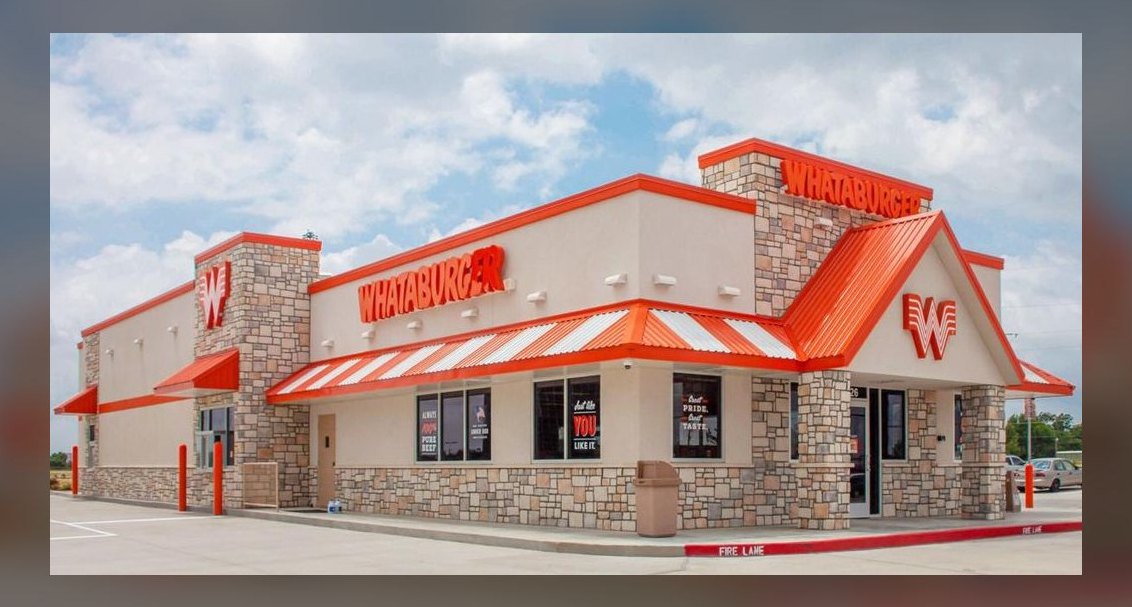
- Whataburger franchise (TX/Southeast). Higher AUVs ($3.5M-$4.5M) but $1.5M+ minimum liquidity and Whataburger is highly selective. Worth pursuing if you can clear the bar.
- Freddy's Frozen Custard & Steakburgers. Total investment $740K-$2.1M, AUVs of $1.6M-$1.9M, growing footprint, lower royalty (4.5%). The 2027 alternative for operators who want a premium-burger concept with friendlier unit economics.
- Skip QSR, do quick-casual. Jersey Mike's, Salad and Go, Chipotle (corporate-only), or Crumbl all produce better risk-adjusted returns for a first-time operator than a burger drive-thru. Jersey Mike's in particular: $1.4M-$1.7M AUVs at 18-22% restaurant-level EBITDA for a $300K-$600K buildout.
---
FAQ
What is the total initial investment for a Carl's Jr franchise in 2027? The total initial investment ranges from $1,486,000 to $3,176,500, as stated in the 2026 FDD Item 7. This includes a $25,000–$35,000 franchise fee, plus costs for construction, equipment, and inventory. The range depends on factors like location size and whether you build from scratch or convert an existing space.
How much cash do I need to have on hand to open a Carl's Jr franchise? You should expect to have $700,000 to $1.2 million in liquid cash available. This covers the initial investment and working capital requirements. Lenders typically require franchisees to have at least 30–50% of the total investment in liquid assets.
What are the ongoing fees for a Carl's Jr franchise? You'll pay a 4% royalty on gross sales and a 5–6% advertising contribution. These fees are standard for quick-service restaurant franchises. The advertising fee supports national and local marketing efforts.
How long does it take to break even on a Carl's Jr franchise? Breakeven typically takes 7 to 10 years for a single ground-up build. This timeline depends on factors like location, sales volume, and operational efficiency. Existing operators with multiple units may see faster returns.
Is California a good market for a Carl's Jr franchise in 2027? California is currently a challenging market due to the $20/hour minimum wage under AB 1228, which has squeezed profit margins. A 65-unit operator filed for Chapter 11 in April 2026, citing wage pressures. Most successful new franchises are being sited in states like Texas, Florida, and Arizona.
What is the average annual revenue for a Carl's Jr franchise? Average Unit Volume is around $1.4 million, according to Circana data from 2026. After debt service, Year-1 cash flow is estimated at $80,000–$170,000, reflecting a net margin of 6–10%. Actual results vary widely by location and operator experience.
Bottom Line
Carl's Jr in 2027 is a multi-unit QSR-veteran play in the Sun Belt — not a first-time franchise. The economics work for operators with $700K-$1.2M of liquid capital, prior QSR P&L experience, a strong real-estate position, and siting outside California. For that operator profile, a 3-5 unit development deal in Texas, Florida, Arizona, or Tennessee produces $700K-$1.4M of aggregate Year-3 cash flow and a credible exit at 4.0-5.0x EBITDA. For everyone else — first-time operators, California buyers, absentee investors, undercapitalized buyers — the 30% Year-1 failure rate and the April 2026 Friendly Franchisees Chapter 11 are the data you should not ignore. If you cannot answer "yes" to all four operator-DNA traits, look at Hardee's, Freddy's, or Jersey Mike's instead. The franchise itself is fine. The wrong operator buying it is not.
---
Sources
- Carl's Jr Franchising Official Site — Franchising FAQ and 2026 FDD overview (https://carlsjrfranchising.com/faq.php)
- Carl's Jr 2026 Franchise Disclosure Document — Item 5, Item 6, Item 7, Item 19, Item 20 (filed with applicable state regulators; available via FDD Exchange)
- Restaurant Dive — "Carl's Jr franchisee says California's $20 minimum wage led to bankruptcy," April 2026 (https://www.restaurantdive.com/news/franchisee-friendly-corp-sun-gir-blames-california-minimum-wage-financial-woes/816969/)
- Restaurant Business Online — "A bankrupt Carl's Jr. franchisee blames its financial problems on California's $20 wage," 2026 (https://www.restaurantbusinessonline.com/financing/bankrupt-carls-jr-franchisee-blames-its-financial-problems-californias-20-wage)
- TheStreet — "Fast food franchisee in Chapter 11 bankruptcy moves to sell 49 restaurants," May 2026 (https://www.thestreet.com/restaurants/carls-jr-burger-chain-franchise-in-chapter-11-liquidating-49-stores)
- Circana — Definitive U.S. Restaurant Ranking 2026 (Carl's Jr AUV ~$1.4M)
- Aaron Allen & Associates — "Restaurant EBITDA: A Comparison of U.S. Public Companies" (QSR EBITDA benchmarks, 16.2% median)
- VantaInsights — "Fast Food Profit Margins: Industry Benchmarks & Data 2026" (https://vantainsights.com/insights/fast-food-profit-margins)
- IBISWorld — "Fast Food Restaurants in the US" industry report (2026 edition)
- IFA (International Franchise Association) — 2027 Franchise Economic Outlook (royalty, ad-fund, payback benchmarks)
- California Department of Industrial Relations — AB 1228 Fast Food Council, $20/hr minimum wage effective April 1, 2024
- QSR Magazine — CKE Restaurants franchise development program coverage and AUV trend reporting
Related on PULSE
- [How long does it take to open a franchise and break even in 2027?](/knowledge/fr1104)
- [Should I open or buy a Tommy Gun's Original Barbershop franchise in 2027?](/knowledge/fr1095)
- [Should I open or buy a Painting with a Twist franchise in 2027?](/knowledge/fr1058)
This page will be disappearing soon. Save it to your device for $1 — or read it free while it is here.
@Kory-White- · if Venmo asks, the last 4 of my number are 2012
This page is gone.
This one is off the shelf now. $1 keeps it on your phone for good — the whole page, pictures and diagrams included.
 franchiseShould I open or buy a Saladworks franchise in 2027?
 franchiseShould I open or buy a Re-Bath franchise in 2027?
 franchiseBest franchise opportunities for veterans in 2027
 franchiseShould I open or buy a SoBol franchise in 2027?
 franchiseShould I open or buy a Whataburger franchise or open an independent sandwich shop in 2027?
 franchiseShould I open or buy a The Picklr pickleball franchise in 2027?
 franchiseShould I open or buy a PDQ Restaurants franchise in 2027?
 franchiseShould I open or buy a Bad Axe Throwing franchise in 2027?
 franchiseShould I open or buy a Domino's franchise or open an independent sandwich shop in 2027?
 franchiseShould I start a home-based franchise or buy an existing resale territory in 2027?