
Should I open or buy a Popeyes franchise in 2027?
 Curated byKory White · Fractional CRO · Maryland
 PULSEKNOWLEDGE LIBRARY
Probably not — unless you already operate 3+ QSR units, can write a $600K-$900K cash equity check, control a high-traffic suburban or urban infill site with a drive-thru, and have operational tolerance for negative comparable sales. A new-build Popeyes in 2027 costs $1.22M to $3.92M all-in (FDD Item 7), with a $50,000 franchise fee, 5% royalty, and 5% ad fund (rising from 4% under the 2025 franchisee agreement). Median AUV sits at $1.9M (FDD Item 19), and at a 13-15% store-level EBITDA margin that yields $247K-$285K in Year-1 cash flow before debt service. Payback runs 5-8 years on a new build, 3-5 years on a resale acquired below book. PLK comps were -6.5% in Q1 2026 — buy a stabilized cash-flowing resale, do not greenfield without a proven trade area.
The Real Numbers
Popeyes is owned by Restaurant Brands International (NYSE: QSR) alongside Burger King, Tim Hortons, and Firehouse Subs. The 2026 FDD (effective for 2027 development) governs every new franchisee. Here are the hard numbers every prospective operator must memorize before signing the franchise disclosure receipt.
| Line Item | Low | High | Notes (FDD source) |
|---|---|---|---|
| Initial franchise fee | $50,000 | $50,000 | Item 5, non-refundable |
| Real estate / build-out | $400,000 | $2,400,000 | Item 7, varies by freestanding vs. inline |
| Equipment & signage | $375,000 | $625,000 | Item 7, fryers/POS/drive-thru tech |
| Initial inventory | $15,000 | $35,000 | Item 7 |
| Training & travel | $8,000 | $18,000 | Item 7, mandatory at Miami HQ |
| Working capital (3 mo.) | $80,000 | $150,000 | Item 7 |
| Insurance / permits / misc. | $44,045 | $145,245 | Item 7 |
| TOTAL INITIAL INVESTMENT | $1,222,045 | $3,923,245 | Item 7 |
| Ongoing royalty | 5.0% of gross sales | — | Item 6 |
| Ongoing ad fund | 5.0% of gross sales | — | Item 6, raised from 4.5% in April 2025 |
| Combined ongoing fees | 10.0% of gross sales | — | Heavier than McDonald's (8%) |
| Median AUV (Item 19) | $1,900,000 | — | 2026 FDD, 3,079 US units |
| Top-quartile AUV | $2,200,000 | — | Item 19 |
| Bottom-quartile AUV | $1,400,000 | — | Item 19 |
| Store-level EBITDA margin | 13% | 15% | RBI investor disclosure |
| Year-1 cash flow (median AUV) | $247,000 | $285,000 | Pre-debt service |
| Payback period (new build) | 5 years | 8 years | Median operator |
| Payback period (resale) | 3 years | 5 years | If acquired at 4-5x EBITDA |
Reality check on the AUV figure: Item 19 reports system-average, not what your specific store will do. A new-build in a saturated DMA with a Chick-fil-A within 2 miles routinely opens at $1.1M-$1.4M and takes 18-24 months to ramp. Underwrite the bottom quartile, not the median.
Who Wins With This Business
Multi-unit QSR veterans win disproportionately at Popeyes. The operators printing money in 2027 share five traits. First, they own 5-20 existing units — typically a mix of Burger King, Taco Bell, or Wendy's — and treat Popeyes as a portfolio diversification play, not their first restaurant. Second, they buy resales, not greenfield: acquiring a $1.9M AUV store at a 4.5x EBITDA multiple (roughly $1.15M for the operating business plus assumed land/lease) beats spending $3M to build one and waiting 24 months to ramp. Third, they control real estate: owning the land via a personal LLC and triple-net-leasing it back to the operating company captures the 6-7% cap rate as a separate income stream. Fourth, they have an existing back-office — bookkeeping, HR, payroll, food safety compliance — so a new store adds incremental overhead of $15K/year, not $80K. Fifth, they recruit and retain GMs internally, paying $75K-$95K base plus 10-15% of store EBITDA, which keeps turnover under 25% in a category where 75% annual GM churn is standard.
Geographically, winners cluster in the Southeast and Texas where the brand has 60+ years of equity, real estate cap rates are 6.5-7.5%, and chicken consumption per capita runs 18% above the national average. Atlanta, Houston, Dallas, Tampa, Charlotte, and New Orleans are the proven cash-flow markets.
Who Loses With This Business
First-time franchisees lose money at Popeyes in 2027, full stop. The category's labor intensity (40-55 hours/week of GM time minimum, 18-22% of sales in hourly labor vs. 14-16% for sandwich shops), the 10% combined royalty + ad fund, and the negative -6.5% PLK comps reported by RBI in Q1 2026 mean a single-store operator with no scale advantage gets crushed between fixed costs and softening top-line. The break-even point on a new-build at $3M all-in is roughly $1.65M AUV with 13% margins — and bottom-quartile units do $1.4M. That's a $33,000 annual cash-burn, not a profit.
Absentee owners lose. Popeyes' operating model — fresh-marinated chicken, 12-hour daily prep, drive-thru speed-of-service targets under 240 seconds — punishes hands-off operators. Stores managed by a salaried GM with no equity, while the franchisee golfs in Naples, consistently underperform by 25-35% on AUV vs. owner-operator stores in the same DMA.
Operators in saturated chicken DMAs lose. The 2024-2026 chicken sandwich wars added Chick-fil-A (45.5% share), Raising Cane's (7.5% and growing 31% YoY), Wingstop, Dave's Hot Chicken, and Slim Chickens to every suburban intersection. New Popeyes greenfield builds inside 3 miles of a Chick-fil-A typically open at 65-70% of the Item 19 median AUV and never close the gap.
Operators without $300K liquid post-opening lose. The 90-day ramp burns working capital fast: opening week is loud, weeks 5-12 are quiet, and you cannot make payroll on a credit card.
2027 Market Conditions
The category is structurally challenged entering 2027. RBI reported Popeyes US same-store sales of -6.5% in Q1 2026, the worst of any RBI brand. The 2025 franchisee agreement raised the ad fund from 4% to 5% (with a $4,000 per-store royalty credit) in exchange for franchisee commitments around remodeling and capex — meaning your cost structure is higher in 2027 than it was in 2024, while comps go the wrong direction.
Three macro forces define the 2027 operating environment. First, labor: the federal floor remains $7.25 but 22 states have minimums above $13, and California's $20/hour fast-food law (AB 1228) continues to ripple into franchisee P&Ls across the West Coast. Second, input costs: chicken wholesale prices are 8-12% above the 2019 baseline, and bone-in chicken (Popeyes' core SKU) is more expensive than the boneless tenders that fuel competitors like Raising Cane's. Third, real estate: cap rates for net-leased QSR pads compressed to 5.75-6.25% in 2026 as private REITs returned to acquisitions, raising occupancy costs for new builds by 80-120 basis points vs. 2022.
Bright spots: the chicken category overall is growing 5.6% CAGR, digital sales are 28% of mix at Popeyes (vs. 19% in 2022), and the brand's international expansion continues to fund US ad spending. The Q1 2026 weakness is partly a comp issue against the 2024 Cajun Wings launch — the 2H 2026 menu innovation pipeline should improve the comparable.
The 90-Day Decision Tree
- Days 1-7: Qualify yourself financially. Pull a personal financial statement. Confirm $1.5M net worth and $600K liquid — these are RBI's stated minimums. If you are below either, stop here and run a different play.
- Days 8-21: Pull and read the FDD cover-to-cover. Request the 2026 FDD from RBI's franchise development team. Read all 23 items. Focus on Item 19 footnotes (which markets the AUV excludes), Item 20 turnover (how many franchisees exited in the prior 3 years), and Item 21 audited financials (RBI's parent-level liquidity).
- Days 22-35: Call 15 existing operators. Item 20 lists every current franchisee and contact info. Call multi-unit operators in your target market and ask: store-level EBITDA margin, GM turnover rate, true ramp curve, RBI field support quality, remodel costs.
- Days 36-50: Tour the market. Sit in the parking lot of 5 nearby Popeyes at lunch peak (11:30am-1:30pm) and dinner peak (5:30pm-7:30pm). Count cars in drive-thru per 15 minutes. Anything below 25 cars per hour at peak signals a sub-$1.5M AUV.
- Days 51-65: Decide build vs. buy. Use BizBuySell, Restaurant Realty, or a franchise broker to scout active resales. A stabilized $1.9M AUV store with 3+ years of P&Ls is worth $1.0M-$1.3M for the operating business (4-5x EBITDA). Compare against the $3M+ new-build cost.
- Days 66-78: Get SBA pre-approval. Major franchise-focused SBA lenders — Live Oak Bank, ReadyCap, Celtic Bank — pre-qualify Popeyes deals at 85% LTC up to $5M, 10-year amortization, prime + 2.75%.
- Days 79-85: Engage a franchise attorney. $8,000-$15,000 fee to review the FDD, negotiate the development agreement (multi-unit operators can sometimes get reduced fees on units 3+), and structure the entity.
- Days 86-90: Make the binary decision. Sign the franchise agreement and submit the $50K fee, OR walk away and pursue a Chicken Salad Chick / Dave's Hot Chicken / Slim Chickens alternative with better unit economics.
Alternative Plays
If you want chicken category exposure but better unit economics, four alternatives beat Popeyes in 2027. Chicken Salad Chick (FDD: ~$650K all-in, ~$1.7M AUV, 18-22% margins) targets a daytime female demo with lower labor intensity. Dave's Hot Chicken (~$770K-$2M all-in, ~$2.1M AUV) is the fastest-growing chicken concept in North America with strong celebrity equity and a smaller footprint. Slim Chickens (~$1.6M all-in, ~$2.4M AUV) is a 700-unit concept with premium AUVs and a less saturated market presence than Popeyes. Wingstop (~$430K all-in, ~$1.85M AUV, 20%+ margins) has the lowest capex in the category thanks to a 1,400 sq. ft. footprint, no drive-thru, and a delivery-heavy mix.
If you want RBI brand equity, look at Tim Hortons US (less saturated than Popeyes in the South) or Firehouse Subs (~$870K all-in, lower royalty at 6% combined). Both are inside the same parent company with shared field support but better expansion runway in 2027.
If you want guaranteed cash flow, buy an existing stabilized Popeyes resale rather than building new. Search BizBuySell and the IFA Multi-Unit Franchisee resale board: a $1.9M AUV unit changing hands at 4.5x EBITDA ($1.15M) delivers a 22% unlevered return vs. an 8-12% return on a new build.
FAQ
What is the total investment needed to open a Popeyes franchise in 2027? The all-in cost for a new-build Popeyes ranges from $1.22 million to $3.92 million, per the FDD Item 7. This includes a $50,000 franchise fee, construction, equipment, and three months of working capital. The wide range depends on real estate costs, local construction rates, and whether you build a standalone unit with a drive-thru or a inline location.
How much can I expect to earn from a Popeyes franchise? Median annual unit volume (AUV) is around $1.9 million, according to FDD Item 19. At a typical 13–15% store-level EBITDA margin, that translates to $247,000–$285,000 in cash flow before debt service in the first year. Actual results vary by location, local competition, and operator experience.
How long does it take to recoup my investment? Payback on a new-build runs 5–8 years, while a resale acquired below book value can pay back in 3–5 years. The faster payback on resales assumes you buy a stabilized, cash-flowing unit at a discount, avoiding the ramp-up costs and negative comps that new stores often face.
Why are same-store sales negative for Popeyes recently? Popeyes Louisiana Kitchen reported comparable sales down 6.5% in Q1 2026. This reflects broader industry headwinds, including menu price resistance and increased competition from chicken sandwich rivals. Negative comps make it harder for new franchisees to cover debt service in the early years.
Can I buy an existing Popeyes instead of building new? Yes, and that’s often the smarter move. Resale units can be acquired below their original build cost, especially if the seller is exiting due to underperformance or retirement. You’ll still need the same cash equity ($600K–$900K) and lender approval, but you skip the 12–18 month construction timeline and get immediate cash flow.
What are the ongoing fees I’ll pay to Popeyes? You’ll pay a 5% royalty on gross sales and a 5% advertising fund contribution (up from 4% under the 2025 franchise agreement). These fees are deducted weekly or monthly, and they apply to every dollar of revenue. Combined, they take 10% off the top before you pay for food, labor, and rent.
Bottom Line
Popeyes in 2027 is a multi-unit operator's game, not a first-timer's. The brand has real equity, $1.9M median AUV, and a credible parent in RBI — but the 10% combined royalty + ad burden, the negative -6.5% Q1 2026 comps, the chicken-category saturation with Chick-fil-A and Raising Cane's, and the $3M+ all-in cost of a new-build mean unit economics break down fast for under-capitalized solo operators. Buy a resale, not a greenfield. Underwrite to the bottom-quartile AUV. Control the real estate via a separate LLC. Run owner-operator for the first 18 months. If you cannot check all four boxes, run a different franchise.
Sources
- Popeyes FDD 2026 Item 7 Initial Investment Range — Franchise Investor Data
- Popeyes Franchise FDD, Costs & Fees 2026 — FranchisePayback
- Popeyes Franchise Cost, Fees & Profit 2026 FDD Data — 1851 Franchise
- Popeyes Louisiana Kitchen Franchise Insights — Vetted Biz
- Popeyes banks on more marketing and remodels — Restaurant Business Online
- Restaurant Brands International Q1 2026 Earnings 8-K — SEC EDGAR
- Restaurant Brands International Form 10-Q FY2026 — SEC EDGAR
- How Raising Cane's overtook KFC to become No. 3 chicken chain — CNBC
- Chick-fil-A triples Popeyes' share of chicken sandwich delivery spend — Restaurant Dive
- KFC US sales fall behind Raising Cane's, Wingstop — Restaurant Dive
- Fast-Food Chicken Industry 2025 Market Share Analysis — MMCG Invest
- Popeyes Franchise Cost, Process & Funding — Swoop US
Popeyes franchise review — Popeyes franchise reviews — Popeyes franchise rating — Popeyes franchise review 2027 — review of Popeyes franchise
Related on PULSE
This page will be disappearing soon. Save it to your device for $1 — or read it free while it is here.
@Kory-White- · if Venmo asks, the last 4 of my number are 2012
This page is gone.
This one is off the shelf now. $1 keeps it on your phone for good — the whole page, pictures and diagrams included.
 franchiseShould I open a independent coffee shop in 2027?
 franchiseShould I open or buy a Little Caesars franchise in 2027?
 franchiseShould I open or buy an All My Sons Moving & Storage franchise in 2027?
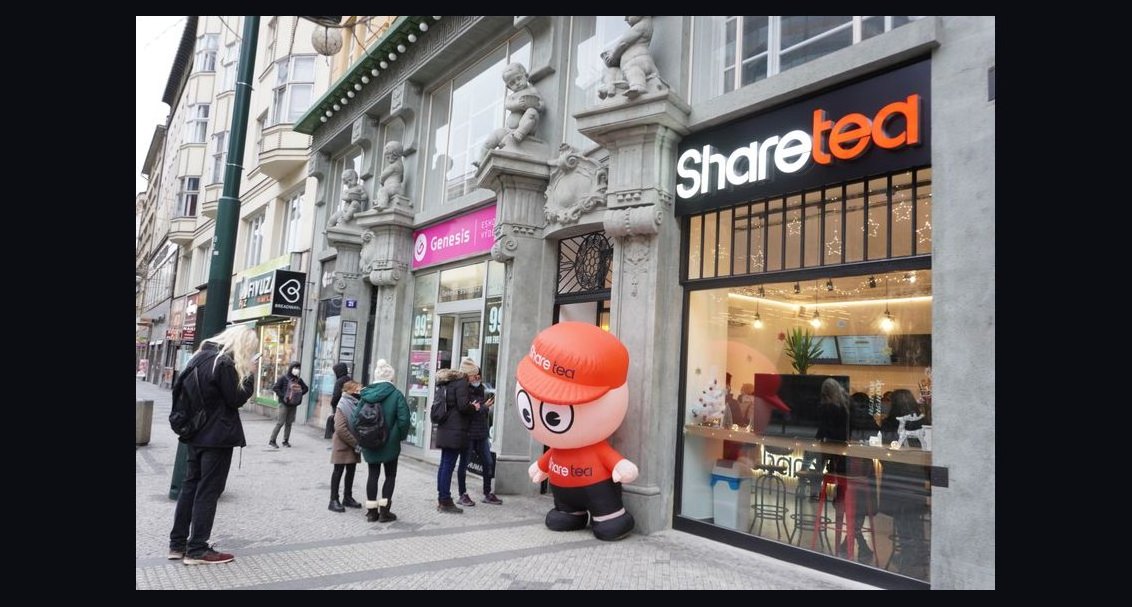 franchiseShould I open or buy a Sharetea franchise in 2027?
 franchiseShould I open or buy an Island Fin Poke franchise in 2027?
 franchiseShould I open or buy a LongHorn Steakhouse franchise in 2027?
 franchiseShould I open or buy a Cold Stone Creamery franchise in 2027?
 franchiseShould I open or buy a Jabz Boxing franchise in 2027?
 franchiseShould I open or buy a Bach to Rock franchise in 2027?
 franchiseShould I open or buy a Creamistry franchise in 2027?