
Should I open or buy a Fatburger franchise in 2027?
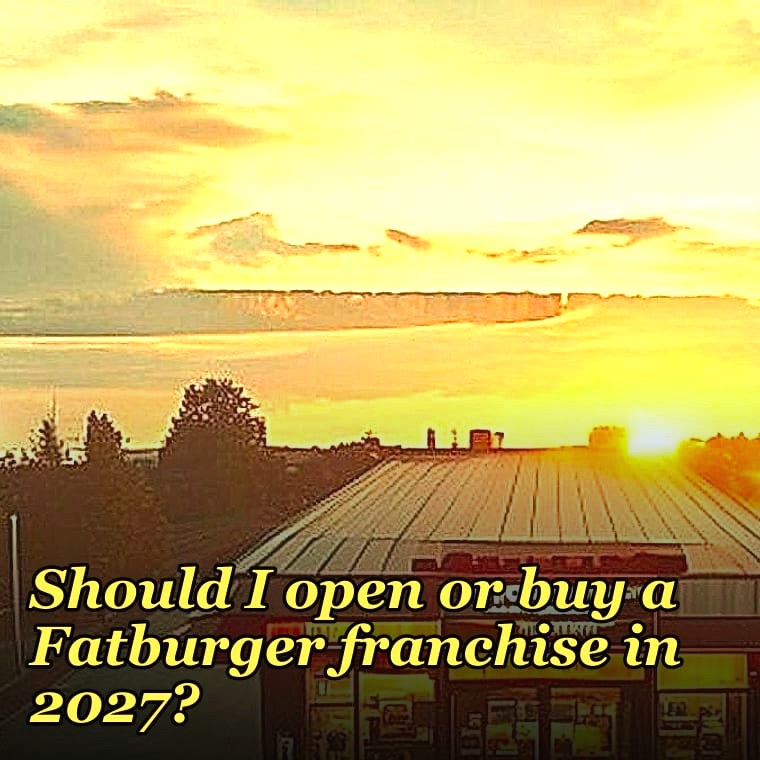
Probably not — unless you already own three or more profitable QSR units, have $700,000 in liquid cash outside the loan, and can stomach being a franchisee inside a Chapter 11 bankruptcy estate. FAT Brands filed Chapter 11 on January 26, 2026 in the Southern District of Texas, carrying roughly $1.3 billion in debt that creditors called due in full. Fatburger's 2026 FDD Item 7 puts total investment at $509,000 to $1,695,000 (high-end builds hit $2,656,900), with a $50,000 franchise fee, 6% royalty, and 4% marketing fee. Item 19 lists franchisee AUV of $1,077,512. Conservative Year-1 cash flow on a $1.2M build sits at $95,000–$130,000 before debt service. Breakeven on equity: 6–9 years, and that assumes the parent reorganizes cleanly.
The Real Numbers
Every figure below is sourced from the Fatburger 2025/2026 FDD (the 2026 amendment was filed pre-bankruptcy), FAT Brands' January 2026 Chapter 11 petition, IBISWorld's Fast Food Restaurants in the US (December 2026), and the International Franchise Association 2026 Economic Outlook. Stack-rank the line items before you sign anything.
| Line Item | 2026 Figure | Source |
|---|---|---|
| Initial franchise fee | $50,000 | FDD Item 5 |
| Total investment (low) | $509,000 | FDD Item 7 |
| Total investment (high — full inline build) | $1,695,000 | FDD Item 7 |
| Total investment (high — freestanding with land work) | $2,656,900 | FDD Item 7 (full range) |
| Royalty fee | 6.0% of net sales | FDD Item 6 |
| Marketing fee (national + local) | 4.0% of net sales | FDD Item 6 |
| Average Unit Volume (AUV) | $1,077,512 | FDD Item 19 (franchised) |
| Median unit revenue band | $850,000–$1,150,000 | FDD Item 19 distribution |
| EBITDA margin (mature unit) | 10%–14% | Sharpsheets analysis, FAT Brands 10-K segments |
| Estimated franchisee earnings (pre-debt) | $107,752–$129,302 | Sharpsheets, Vetted Biz |
| Working capital reserve (recommended) | $150,000 minimum | FDD Item 7 + IFA |
| Liquid capital requirement | $500,000 | Fatburger franchise development team |
| Net worth requirement | $1,500,000 | Fatburger franchise development team |
| Payback period (mid-build) | 6–9 years | Calculated from AUV × 11% / $1.2M |
| Royalty deferral during Ch. 11 | No formal deferral | FAT Brands DIP disclosures Jan 2026 |
Math you must do yourself: AUV $1,077,512 × 6% royalty = $64,651/yr to FAT Brands. Add 4% marketing ($43,100), food cost (28–32%), labor (28–33%), occupancy (8–11%), and you are left with roughly 10–12% EBITDA before debt service. On a $1.2M SBA 7(a) note at 11.25% over 10 years, annual debt service is roughly $202,000 — which eats most of the EBITDA. Cash-on-cash returns only work if you build at the bottom of the Item 7 range or convert an existing kitchen.
Who Wins With This Business
The franchisee profile that actually clears 18% cash-on-cash at Fatburger is narrow. Multi-unit QSR operators with three or more existing units win because they already have commissary leverage, shared back-office overhead, and HR pipelines. Real-estate-rich owners who can build on land they already control skip the largest cost variable in Item 7 — the swing between $509K and $1.7M is almost entirely site work and lease build-out. Diaspora-market operators in metro LA, Vegas, Toronto, Riyadh, and Manila win because Fatburger's brand equity is concentrated in nostalgia markets with first-generation immigrant customers who remember the original Western Avenue store. Conversion plays — taking over a closed Quiznos, Carl's Jr, or independent burger box at 40% of greenfield cost — also pencil. Operators who underwrote the deal before the January 2026 bankruptcy and renegotiated royalty during the Ch. 11 plan window end up with the best 2027 IRR. Cash buyers of distressed resales (closed units re-franchised at a discounted territory fee) are quietly the best play of 2027.
Who Loses With This Business
First-time franchisees lose at Fatburger in 2027. The brand requires operational reps the system cannot transfer through training alone — Fatburger's made-to-order, no-freezer beef model has 2x the ticket time of a Five Guys clone, and new owners routinely mis-staff the back line. Single-unit suburban operators lose because the AUV concentration sits in urban-core and airport units — a tertiary-market freestanding Fatburger averages closer to $750,000, not $1.08M. Highly leveraged buyers lose because debt service swallows EBITDA. Investors expecting parent support lose because FAT Brands is in Chapter 11: marketing co-op spend has been questioned in court filings (the Round Table franchisees sued over alleged marketing-fund misuse pre-bankruptcy), and new-build incentives have been frozen. International master-franchisees who paid territory fees up-front and have not yet opened lose hardest — those deposits are unsecured claims in the bankruptcy estate. If you cannot personally cover 18 months of fixed costs without parent support, this is not your franchise in 2027.
2027 Market Conditions
The QSR burger category is bifurcating going into 2027. Five Guys, In-N-Out, and Shake Shack are growing AUV at 4–6% YoY while legacy mid-tier burger brands (Fatburger, Checkers, Hardees) are flat to down 3% on same-store sales. Beef cost is up 11% YoY per USDA December 2026 data, squeezing margins on every premium-burger concept. Labor cost in Fatburger's core California market hit $20/hr minimum under AB 1228 (fast-food council rate effective April 2024, with the 2026 council raise to $20.70). The FAT Brands Chapter 11 plan — expected to confirm in Q3 2027 — will reorganize the franchise contract structure, with creditors pushing for mandatory remodel commitments funded by franchisees. CPI on QSR menu prices has run +18% cumulative since 2023, hitting price elasticity ceiling in the $10–$13 combo band where Fatburger lives. 2027 traffic forecasts from Black Box Intelligence show mid-tier burger traffic down 2.4%. The bull case: distressed-unit conversions at $0.50 on the dollar create the best entry price in a decade. The bear case: the brand emerges from Ch. 11 weakened, with half the unit count and reduced negotiating power with delivery aggregators (DoorDash, Uber Eats now take 28–32% off the top).
The 90-Day Decision Tree
- Days 1–10: Pull the current Fatburger FDD from FAT Brands' franchise development portal AND from the Texas bankruptcy docket (Case filings in S.D. Tex., Jan 2026). Read Item 3 (litigation) twice — the Ch. 11 filing materially changes the risk profile.
- Days 11–20: Call at least 12 current franchisees from the Item 20 list. Ask specifically: (a) Year-3 EBITDA, (b) parent-company support level post-Jan 2026, (c) remodel demands from creditors, (d) whether they would buy again.
- Days 21–30: Engage a franchise-experienced bankruptcy attorney (not a generalist) to review the DIP financing terms and how they affect franchisee contracts. Budget $8,000–$15,000 for this review — non-negotiable.
- Days 31–45: Site-select with Buxton or eSite Analytics demographic models. Required: 50,000+ daytime population within 3-mile radius, median HH income above $65,000, fast-food spending index above 110.
- Days 46–60: Get 3 SBA 7(a) lender term sheets. The bankruptcy will spook some lenders — Live Oak, Huntington, and Wells Fargo SBA desks still write Fatburger paper as of Q1 2027.
- Days 61–75: Run a conversion search. Closed Quiznos, Roy Rogers, and Sbarro boxes save $300K–$500K vs. greenfield. CoStar and LoopNet both filter by closed QSR.
- Days 76–85: Build a 5-year P&L at the low end of Item 19 ($850K, not the $1.08M average). If the deal still pencils at $850K AUV, you have a real margin of safety.
- Days 86–90: Final go/no-go. Send the deal to two outside QSR operators for a sanity check before signing.
Alternative Plays
If Fatburger does not pencil — and for most buyers it will not — consider these 2027 alternatives with similar capital requirements but better unit economics:
- Freddy's Frozen Custard & Steakburgers — Item 19 AUV $1.65M, clean parent balance sheet, freestanding focus, total investment $651K–$2.3M.
- MOOYAH Burgers — better-burger niche, smaller footprint, total investment $471K–$801K, AUV ~$1.1M.
- Smashburger — Jollibee-owned (stable parent), AUV ~$1.05M, total investment $782K–$1.45M.
- Independent burger concept on a Fatburger lease — pick up a closed Fatburger box at liquidation pricing, build your own brand, skip the 10% royalty+marketing, keep an extra $108K/yr on a $1.08M unit.
- Wayback Burgers or BurgerFi — both have smaller Item 7 ranges and less parent-company drama.
- Cloud kitchen / virtual brand — start with a $60K–$120K ghost kitchen footprint inside an existing restaurant, validate the unit economics before committing to a $1.2M build.
FAQ
Is Fatburger still accepting new franchise applications during Chapter 11? Yes, FAT Brands has not publicly suspended franchise sales, but the bankruptcy court must approve any new franchise agreements. Lenders and creditors may challenge new royalties being diverted to a struggling parent, so approval timelines are uncertain.
How does the Chapter 11 filing affect my ongoing royalties and fees? You still pay the 6% royalty and 4% marketing fee to FAT Brands, but those funds now flow into the bankruptcy estate. The court may redirect a portion to creditors, potentially reducing corporate support for franchisees.
What is the realistic timeline to open a Fatburger in 2027? Site selection, lease negotiation, and build-out typically take 12–18 months. If you start the process in early 2027, a late 2028 opening is more realistic. The bankruptcy could further delay approvals.
Can I negotiate lower fees or a reduced franchise fee during bankruptcy? FAT Brands may offer concessions to attract new franchisees, but the court and creditors must approve any fee changes. Historically, bankrupt franchisors rarely offer meaningful discounts to new operators.
What happens to my franchise if FAT Brands is liquidated? If the court orders liquidation, your franchise agreement could be terminated or sold to a new owner. You might lose your investment or be forced to renegotiate terms with a buyer.
Is there any scenario where buying a Fatburger franchise makes sense? Only if you have deep pockets ($700K+ liquid), experience turning around distressed operations, and are willing to accept a 6–9 year breakeven. Even then, the parent’s instability makes this a high-risk bet.
Bottom Line
Fatburger in 2027 is a distressed-asset play, not a startup play. Buying a resale unit or a closed-box conversion during the Chapter 11 window can produce strong returns if you are a multi-unit operator with deep liquid capital. Building greenfield at the top of the Item 7 range is a value-destroying decision given flat same-store sales, rising beef and labor costs, and an uncertain parent company. First-time franchisees and single-unit suburban operators should walk away and look at Freddy's, MOOYAH, or Smashburger instead. The decision tree is binary: multi-unit + conversion + cash-rich = go; anything else = wait for the 2028 FDD after the Ch. 11 plan confirms and Fatburger's reorganized franchise terms are clear.
Sources
- Fatburger 2026 Franchise Disclosure Document — Items 5, 6, 7, 19 (filed via state registration portals; archived at VettedBiz and Sharpsheets)
- FAT Brands Inc. Chapter 11 Petition, U.S. Bankruptcy Court Southern District of Texas, Case filed January 26, 2026
- FAT Brands Inc. Form 8-K filings, January–March 2026 (SEC EDGAR, CIK 0001705012)
- Sharpsheets — "Fatburger Franchise FDD, Profits & Costs (2025/2026)"
- VettedBiz — Fatburger Franchise Insights: FDD, Costs & Fees (2026 update)
- Restaurant Dive — "Why FAT Brands filed Chapter 11" and "How FAT Brands' bankruptcy could impact franchisees" (Q1 2026 coverage)
- TheStreet — "Burger and pizza chains close stores amid potential bankruptcy sale" (Jan 2026)
- IBISWorld — Fast Food Restaurants in the US, industry report (December 2026)
- International Franchise Association — 2026 Economic Outlook for Franchising (FRANdata)
- USDA Economic Research Service — Beef and Veal Outlook, December 2026
- Black Box Intelligence — Restaurant Industry Snapshot, Q4 2026 (mid-tier burger traffic data)
- California Fast Food Council — AB 1228 minimum wage schedule, 2026 review
Related on PULSE
- [How long does it take to open a franchise and break even in 2027?](/knowledge/fr1104)
- [Should I open or buy a Tommy Gun's Original Barbershop franchise in 2027?](/knowledge/fr1095)
- [Should I open or buy a Painting with a Twist franchise in 2027?](/knowledge/fr1058)
 pulse-toolsHow Many Salespeople Should I Schedule Each Day at My Jewelry Store?
 aqTop 10 Hang-On-Back Aquarium Filters 2027
 pulse-moviesTop 10 Movies on Netflix 2027
 pulse-moviesTop 10 Movies on Max 2027
 pulse-moviesTop 10 Musical Movies of All Time
 pulse-moviesTop 10 Crime Movies of All Time
 pulse-moviesTop 10 Westerns of All Time
 pulse-moviesTop 10 Animated Movies of All Time
 pulse-moviesTop 10 Documentaries of All Time
 pulse-moviesTop 10 Thriller Movies of All Time