
Should I open or buy a Bennigan's franchise in 2027?
Probably not — unless you have $1.5M–$3.6M liquid, prior full-service restaurant operating experience, and a trade area where the 80s-nostalgia casual-bar concept genuinely resonates (Texas, Florida, Latin America, Middle East, India). Bennigan's Grill & Tavern carries a $35,000 franchise fee, a 4% royalty plus 1% marketing fee, a published Item 7 initial investment range of $1,027,075–$3,588,244, and a legacy AUV around $1.66M versus $2.41M for the new prototype. Conservative Year-1 cash flow on a $2.0M AUV with an 8–10% restaurant-level EBITDA margin lands at $160K–$200K before debt service, with a 5–7 year payback. The On The Fly hybrid model is the cheaper, more defensible 2027 play — $400K–$900K all-in.
The Real Numbers
Bennigan's Grill & Tavern is owned by Legendary Restaurant Brands (LRB), the Dallas-based holding company that also owns Steak and Ale. The 2026 system count sits in the mid-30s domestic plus 70+ international, with 30 new On The Fly locations signed under a partnership with Franklin Junction and a 100+ unit Master Franchise Agreement for the Republic of India executed in 2025. The numbers below blend the most recent published FDD figures with 2027 build-cost inflation adjustments based on RSMeans construction indices and National Restaurant Association operator surveys.
| Line item | Low | High | Notes |
|---|---|---|---|
| Initial franchise fee | $35,000 | $35,000 | FDD Item 5; single unit; multi-unit discounts available |
| Real estate / leasehold deposit | $25,000 | $150,000 | Free-standing or end-cap, 5,500–6,500 sq ft |
| Build-out and construction | $650,000 | $2,400,000 | Ground-up vs. second-generation restaurant space |
| Furniture, fixtures, equipment | $185,000 | $475,000 | Kitchen line, bar, POS, Toast or NCR Aloha |
| Signage and decor | $40,000 | $110,000 | Brand-mandated tavern aesthetic package |
| Opening inventory | $30,000 | $55,000 | Food, liquor, smallwares |
| Training and travel | $12,000 | $35,000 | 3-week corporate training in Dallas |
| Insurance, permits, liquor license | $20,000 | $180,000 | Liquor license cost varies wildly by state |
| Working capital (3 months) | $30,000 | $148,244 | FDD Item 7 floor; operators target 6 months |
| Total initial investment | $1,027,075 | $3,588,244 | FDD Item 7 published range |
| Royalty (ongoing) | 4.0% of gross sales | 4.0% of gross sales | Paid weekly |
| Marketing fund | 1.0% of gross sales | 1.0% of gross sales | Brand fund |
| Local marketing minimum | 1.0% of gross sales | 2.0% of gross sales | Operator-funded |
Revenue and unit economics. The most recent published Item 19 Financial Performance Representation from Bennigan's showed a new prototype average gross revenue of $2,413,345 versus $1,662,981 for legacy restaurants. 2027 build-adjusted AUV for a well-sited new-build prototype lands at $2.0M–$2.6M. Restaurant-level EBITDA margin for casual-dining grill-and-tavern concepts runs 8%–12% per TDn2K and Black Box Intelligence operator benchmarks — meaning a $2.2M AUV unit generates $176K–$264K in restaurant-level cash flow before corporate G&A and debt service. Payback period at this level is 5–7 years on a $2.0M all-in build — slower than QSR (3–5 years) but faster than fine-dining (8–10 years). EBITDA margins compress hard below a $1.7M AUV because labor and rent are largely fixed.
Who Wins With This Business
Multi-unit operators with existing full-service infrastructure win biggest. The fixed-cost spread across a commissary, shared GM payroll, and bulk liquor purchasing is what turns a $2.2M AUV unit from a 9% margin into a 13% margin. Operators like Roy Arnold in Little Rock and the Franklin Junction host-kitchen network are the prototype winners — they layer Bennigan's into existing real estate, existing labor, and existing back-of-house.
International master franchisees in emerging-market urban centers also win. The India Master Franchise Agreement (100+ units), the Panama/Central America multi-store deal, and active development across Qatar, Dubai, and Guyana show LRB's commercial focus. 80s American casual dining carries aspirational brand equity internationally that it has lost domestically — a mall location in Bangalore or Dubai outperforms a suburban Ohio strip center on traffic per square foot.
Second-generation restaurant conversions win on build cost. Taking over a failed Applebee's, TGI Friday's, or Ruby Tuesday box can shave $700K–$1.2M off the build-out line item because hoods, grease traps, plumbing, and HVAC are already in place. With TGI Fridays bankruptcies, Red Lobster closures, and Hooters store rationalization in 2024-2025, the second-gen casual-dining real estate market is the most operator-favorable it has been in 15 years.
Who Loses With This Business
First-time restaurant operators lose. Bennigan's is a full-service, full-bar, scratch-kitchen concept with 40-person staff and 80+ menu SKUs. Restaurant industry first-year failure rate is 17% per CHR Cornell, and full-service first-time operators run higher — closer to 22%–28%. The liquor license alone can destroy a deal: $180K in New Jersey, $300K+ in Pennsylvania quota counties, $15K in Texas. First-timers underestimate this by 80%.
Northeast and West Coast operators lose on brand recall. Bennigan's peak footprint was Texas, the Southeast, and the Midwest before the 2008 S&A Restaurant Corp bankruptcy wiped out 150+ corporate stores. Brand awareness in Boston, Seattle, San Francisco, and New York is below 12% in operator-commissioned surveys — meaning $200K+ in local pre-opening marketing just to fight back to Applebee's brand baseline. Don't open a Bennigan's where it has never existed unless your trade area has heavy Texas/Florida/Midwest transplant demographics.
Operators expecting passive ownership lose. The FDD Item 15 requires the franchisee or a designated principal operator to be involved in day-to-day operations for at least the first 24 months. Absentee-owner models do not work in full-service casual dining — labor cost discipline, liquor inventory shrink control, and guest experience supervision require on-site ownership.
2027 Market Conditions
Casual dining is in a bifurcated recovery. Chili's posted record same-store sales in 2025, Dine Brands (Applebee's + IHOP) reached positive traffic at IHOP for the first time since 2015, and Outback comp sales turned positive — yet TGI Fridays filed Chapter 11, Red Lobster closed 100+ stores, and Hooters rationalized 40+ units. The winners are running digital ordering at 25%+ of mix, loyalty programs with 30%+ enrollment, and value bundles under $15 (Applebee's Ultimate Trio).
Bennigan's specific 2026 momentum. Per the January 2026 LRB press release, the brand added a ground-up Alamogordo, New Mexico location, signed a Little Rock franchise partner, executed the 30-store Franklin Junction On The Fly deal, and finalized a 100+ unit India Master Franchise. Bennigan's On The Fly — the compact, host-kitchen, airport-friendly footprint — is the 2027 expansion vehicle and the lower-risk franchisee entry point.
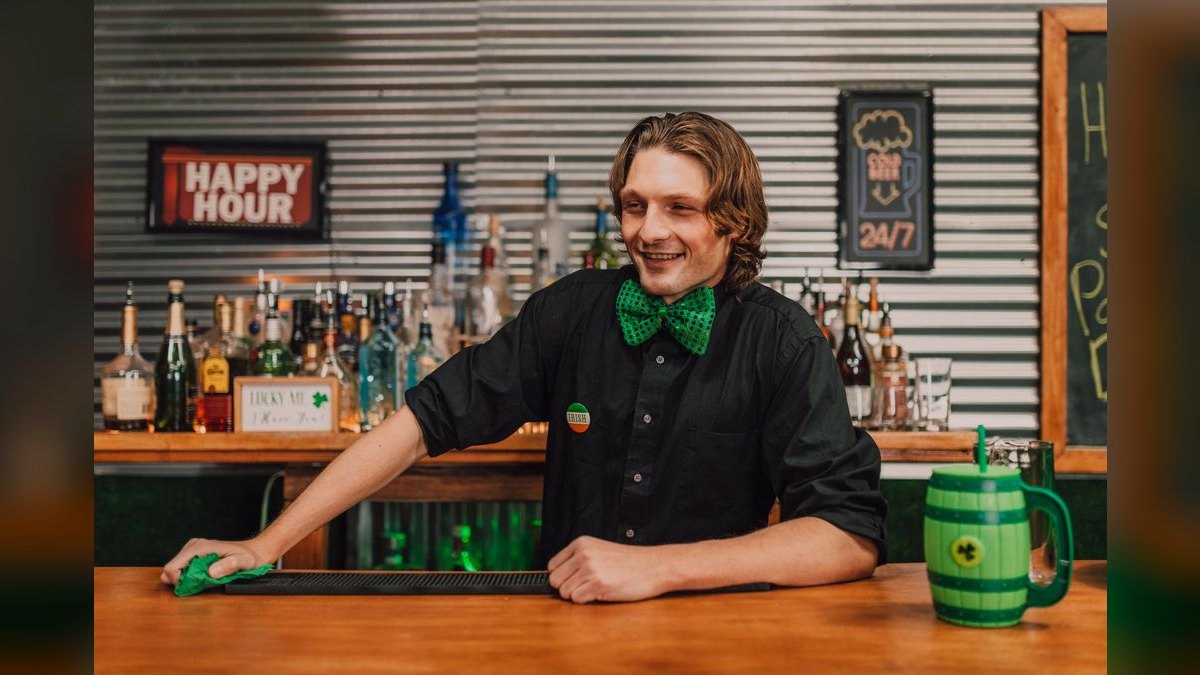
Cost pressures. Labor costs for full-service casual rose 6.8% YoY through Q3 2025 per Black Box Intelligence. Beef and chicken commodity baskets are up 9% and 14% respectively since 2024. Liquor margin remains the protective moat — Bennigan's signature Irish Coffee, Death by Chocolate, and full-bar program push beverage mix to 22%–26% of sales versus Chili's 18% and Applebee's 16%.
Capital availability. SBA 7(a) loan approvals for restaurant operators tightened in late 2025 after the Q2 2025 restaurant default uptick; expect to put 30%–35% equity into a deal versus 20% in 2022. ROBS (Rollover for Business Startups) 401(k) deals through Guidant Financial and Benetrends remain active for restaurant franchisees.
The 90-Day Decision Tree
- Days 1–7: Self-qualification. Confirm $750K minimum liquid net worth and $1.5M total net worth — the published FDD Item 21 minimums. Pull a personal credit report (720+ for SBA 7(a) on a restaurant deal). Itemize prior restaurant operating experience in writing.
- Days 8–14: Request the FDD. Submit the inquiry form at bennigans.com/franchising. Federal Trade Commission Franchise Rule requires LRB to deliver the 2026 FDD within 14 calendar days of your request. Read Items 5, 6, 7, 15, 17, 19, 20, 21 first — they contain fee structure, royalties, total investment, operating obligations, transfer rules, financial performance representations, franchisee contact list, and net worth requirements.
- Days 15–30: Franchise attorney review. Hire a registered franchise attorney (the American Bar Association Forum on Franchising maintains a referral list). Budget $4,500–$8,500 for full FDD review and lease comments. Do not skip this step.
- Days 31–45: Item 20 franchisee calls. Call at least six current franchisees and three former franchisees from the Item 20 contact list. Ask: what is your actual AUV, what was your final build-out cost, what is your prime cost (food + labor) percentage, would you do it again? Three former franchisees who say "no" is a walk-away signal.
- Days 46–60: Site visits. Spend a full operating day at three different existing Bennigan's units. Shadow the GM. Watch the dinner rush. Inspect the kitchen line. Sit at the bar for two hours. Talk to servers about turnover.
- Days 61–75: Pro forma construction. Build a bottoms-up P&L pro forma for your specific market using your actual rent comps, your actual labor market wages, your actual liquor license cost. Stress-test to a $1.7M AUV downside scenario. If you cannot break even at $1.7M, walk away.
- Days 76–90: Decision and funding. Discovery Day in Dallas at LRB headquarters. Either sign the Franchise Agreement + Area Development Agreement and secure SBA 7(a) commitment through a restaurant-specialist lender (Live Oak Bank, Celtic Bank, Byline Bank), or walk away cleanly.
Alternative Plays
Bennigan's On The Fly. The compact, hybrid, host-kitchen model is the 2027 lower-risk entry point — $400K–$900K all-in versus $1M–$3.6M for the full grill-and-tavern. Works in airports, food halls, ghost-kitchen networks, and retail centers. Franklin Junction partnership provides plug-and-play host kitchens in existing restaurant infrastructure.
Steak and Ale (sister concept). LRB also franchises Steak and Ale, which carries stronger nostalgia equity and a steakhouse price point ($35–$45 entrée). First new Steak and Ale opened in 2025; DFW Area Development LOI signed for 2026. Higher AUV ceiling, higher build cost.
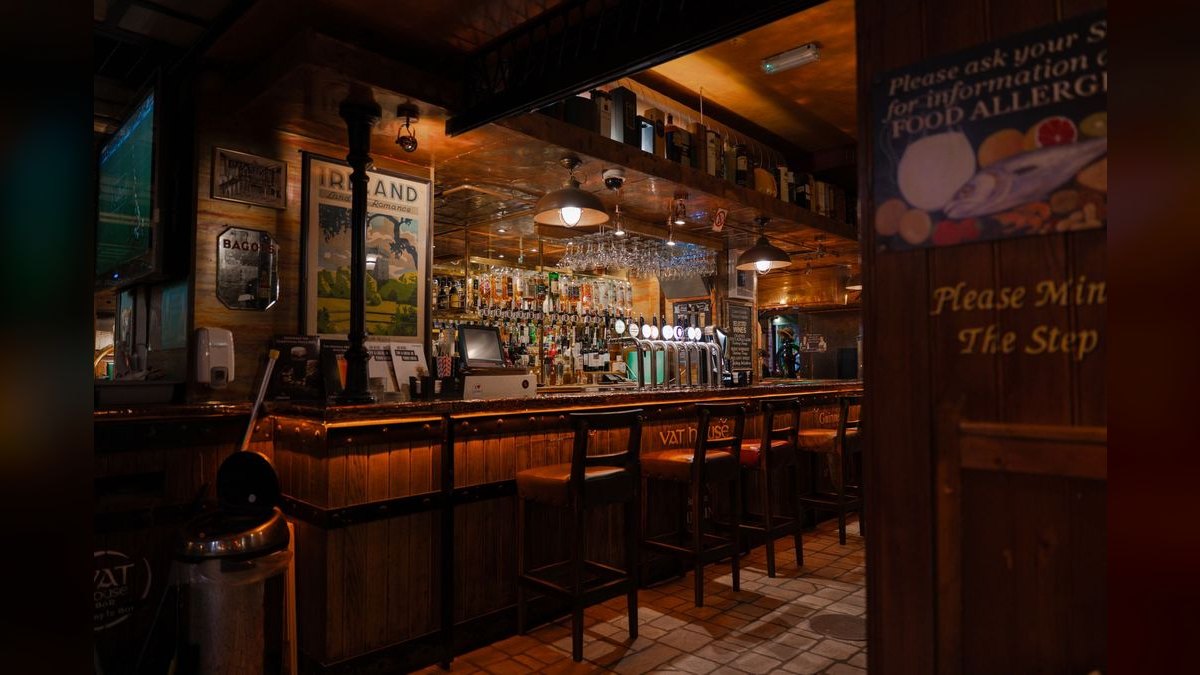
Independent grill-and-tavern. Skip the 4% royalty + 1% marketing and build your own neighborhood concept. Saves $80K–$120K annually on a $2M unit but loses national supply contracts, training infrastructure, and brand pull. Right answer only if you have 10+ years of GM experience and a sharp local concept.
Second-generation Applebee's or Chili's. Buy an existing operating franchise instead of greenfield. Dine Brands and Brinker maintain active franchisee resale boards. Pay 4–6x EBITDA for an established unit instead of building. Faster cash flow, known unit economics, no ramp risk.
Ghost kitchen casual concept. $80K–$220K all-in through CloudKitchens, Reef, or Kitchen United. No dining room, no bar, no liquor license. Margins are thinner (5%–8%) but capital risk is 10% of a full restaurant.
FAQ
What is the total investment needed to open a Bennigan's franchise? The initial investment ranges from $1,027,075 to $3,588,244, per the franchise disclosure document. This covers everything from leasehold improvements to equipment and initial inventory, but the actual cost depends on location size and whether you choose a full-service or hybrid model.
How much liquid capital do I need to qualify? Franchisees typically need $1.5 million to $3.6 million in liquid assets. The higher end is for a full-scale Grill & Tavern, while the On The Fly hybrid requires $400,000 to $900,000 liquid.
What ongoing fees does Bennigan's charge? There's a 4% royalty on gross sales and a 1% marketing fee. The initial franchise fee is $35,000. These are standard for casual-dining franchises, but the combined 5% can pressure margins if sales are below average.
How profitable is a Bennigan's franchise in the first year? At a $2.0 million average unit volume, restaurant-level EBITDA margins typically run 8% to 10%, yielding $160,000 to $200,000 before debt service. Payback period is 5 to 7 years, assuming no major cost overruns.
Where is the best location for a Bennigan's in 2027? The brand performs best in Texas, Florida, and select international markets like Latin America, the Middle East, and India. Domestic success relies on areas with strong 80s-nostalgia appeal and a casual-bar customer base.
Is the On The Fly hybrid model a better bet than the full restaurant? Yes, for most first-time franchisees. The hybrid costs $400,000 to $900,000 total, has lower overhead, and adapts to delivery and takeout trends. It's a more defensible entry point than the $1 million-plus full-service build-out.
Bottom Line
Bennigan's Grill & Tavern is a legitimate, operating, growing franchise system under Legendary Restaurant Brands with real 2026 expansion momentum and a published FDD Item 7 range of $1.03M–$3.59M. It is not the right play for first-time restaurant operators and not the right play in markets with weak 80s-nostalgia brand recall. It is the right play for experienced multi-unit operators doing second-generation conversions in Texas/Florida/Southeast/Midwest, international master franchisees in emerging-market urban centers, and Franklin Junction host-kitchen partners running the On The Fly compact model. Pull the FDD, do the Item 20 calls, build the $1.7M-AUV downside pro forma, and only sign if the math works at the downside case.
Sources
- Bennigan's Franchise Information — bennigans.com/franchising — official franchise development site with current concept overview and inquiry intake.
- Legendary Restaurant Brands 2026 Press Release — "Steak and Ale and Bennigan's Reach Major Milestones, Positioning Legendary Restaurant Brands for Future Growth" (legendaryrestaurantbrands.com, January 16, 2026).
- FSR Magazine — "Legendary Restaurant Brands Carries Momentum Into New Year" (fsrmagazine.com, January 2026) — covers 30-store Franklin Junction deal, India MFA, Alamogordo NM unit.
- Franchise Grade — Bennigan's Franchise Review (franchisegrade.com/franchises/bennigan-s) — historical Item 7 / Item 19 figures, royalty schedule.
- The Franchise Mall — Bennigan's Grill & Tavern Franchise Costs & Fees (thefranchisemall.com) — published FDD investment range and fee schedule.
- Franchise Gator — Bennigan's Grill & Tavern Franchise Cost and Fees (franchisegator.com) — operator profile and discovery process.
- Restaurant Magazine — "Steak and Ale and Bennigan's Reach Major Milestones" (restaurantmagazine.com, January 2026) — international expansion detail.
- National Restaurant Association — 2025 State of the Restaurant Industry Report — labor cost trends, commodity inflation, segment performance data.
- Black Box Intelligence — Casual Dining Industry Benchmark Reports — restaurant-level EBITDA margins, prime cost benchmarks, traffic trends.
- Restaurant Dive — "Casual chains need to prioritize experience to win in 2026" (restaurantdive.com) — segment recovery analysis, TGI Fridays/Red Lobster context.
- Restaurant Business Online — "Casual dining (finally) finds its footing" (restaurantbusinessonline.com) — Chili's, Applebee's, Outback recovery data.
- Nation's Restaurant News — "Casual dining redefines value in an inflationary environment" (nrn.com) — Applebee's Ultimate Trio, value pricing strategy.
- FTC Franchise Rule (16 CFR Part 436) — 14-day FDD delivery requirement and disclosure standards.
- SBA 7(a) Restaurant Lending Data — Live Oak Bank, Celtic Bank, Byline Bank franchise-restaurant approval guidelines.
Related on PULSE
- [How long does it take to open a franchise and break even in 2027?](/knowledge/fr1104)
- [Should I open or buy a Tommy Gun's Original Barbershop franchise in 2027?](/knowledge/fr1095)
- [Should I open or buy a Painting with a Twist franchise in 2027?](/knowledge/fr1058)
 pulse-toolsHow Many Salespeople Should I Schedule on My Auto Dealership Floor Each Day?
 pulse-toolsHow Many Sales Reps Do I Need to Hire for My Painting Company to Grow Next Year?
 pulse-toolsHow Many Sales Reps Do I Need to Hire for My HVAC Company to Hit Its Growth Target?
 pulse-aquariumsTop 10 Canister Filters 2027
 pulse-toolsHow Many Salespeople Should I Schedule Each Day at My Jewelry Store?
 aqTop 10 Hang-On-Back Aquarium Filters 2027
 pulse-moviesTop 10 Movies on Netflix 2027
 pulse-moviesTop 10 Movies on Max 2027
 pulse-moviesTop 10 Musical Movies of All Time
 pulse-moviesTop 10 Crime Movies of All Time