
Should I open or buy a Sharetea franchise in 2027?
 Curated byKory White · Fractional CRO · Maryland
 PULSEKNOWLEDGE LIBRARY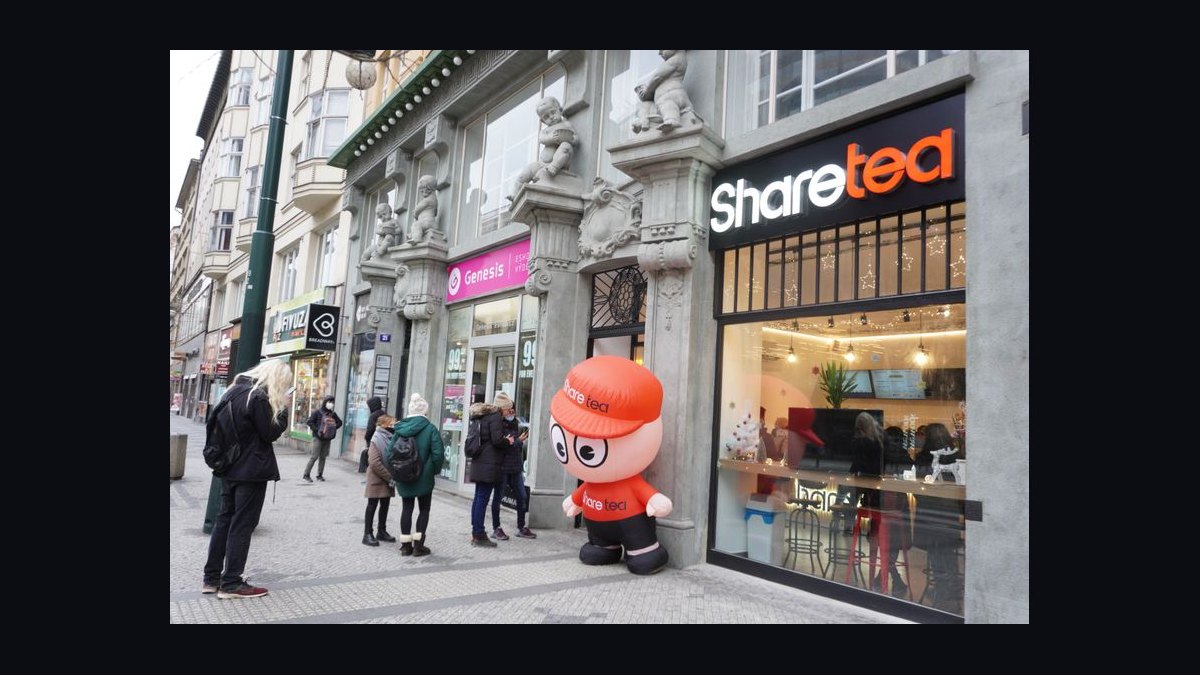
Yes — open or buy a Sharetea franchise in 2027 if you have $300K+ liquid capital, a high-traffic Asian-American or college-adjacent trade area, and the patience to grind through a 24-36 month payback. Sharetea's $224,600-$555,400 total investment (FDD Item 7), $12K franchise fee, 6% royalty, and 2% marketing fee put it in the mid-tier of boba economics — cheaper than Tiger Sugar, pricier than Kung Fu Tea. Realistic Year-1 cash flow ranges $45K-$95K for a well-sited store doing $380K-$520K in sales. Probably not — unless you can secure a sub-$8K/month lease in a trade area with 15%+ Asian or Gen-Z density; suburban strip-mall sites without that demographic almost universally underperform pro-forma.
The Real Numbers
Sharetea is one of the few national bubble tea franchises with a $12,000 flat franchise fee — a deliberate underpricing strategy to compete with Kung Fu Tea ($37K fee) and Gong Cha ($41.5K fee). The catch: 6% royalty is higher than Kung Fu Tea's 4% and Gong Cha's 5.5%, so Sharetea makes its money on the back end. The brand does not disclose Average Unit Volume in Item 19 of its 2026 FDD, which forces prospective franchisees to triangulate from operator interviews and industry benchmarks — a red flag for sophisticated investors but typical of Taiwan-origin franchisors.
Real 2027 economics, Sharetea franchise (single unit, 1,000-1,400 sq ft inline retail):
| Line Item | Low | High | Notes |
|---|---|---|---|
| Initial franchise fee | $12,000 | $12,000 | Flat per FDD Item 5 |
| Leasehold improvements / build-out | $80,000 | $220,000 | Inline retail vs. second-gen restaurant |
| Equipment package (sealers, brewers, blenders, POS) | $55,000 | $105,000 | Sharetea-approved vendors |
| Furniture, fixtures, signage | $18,000 | $42,000 | Brand-standard interior kit |
| Initial inventory (tea, tapioca, syrups, cups) | $12,000 | $25,000 | First 30-day stock |
| Training, travel, opening labor | $8,000 | $18,000 | Taiwan or HQ training |
| Working capital (3 months) | $35,000 | $90,000 | Rent, payroll, utilities reserve |
| Misc. / professional fees / insurance | $4,600 | $43,400 | Legal, permits, liquor (if applicable) |
| TOTAL INVESTMENT (Item 7) | $224,600 | $555,400 | Per Sharetea 2026 FDD |
| Royalty % | 6% | 6% | Of gross sales, $1,200/mo minimum |
| Marketing fee | 2% | 2% | Of gross sales |
| AUV (industry triangulation, not FDD-disclosed) | $320,000 | $620,000 | IBISWorld + operator interviews |
| EBITDA margin (mature store) | 12% | 22% | After royalty + marketing |
| Year-1 owner cash flow | $45,000 | $95,000 | Owner-operator, 50+ hrs/week |
| Payback period | 28 months | 54 months | Single-unit, no debt |
The unit economics math that matters: at a $420K AUV and a 17% EBITDA margin, you net $71,400 annually after all royalty and marketing fees. Against a $350K total investment, that's a 20% cash-on-cash return — solid but not spectacular by franchise standards. Kung Fu Tea franchisees at the same volume net roughly $80K-$92K because their royalty is 2 points lower. The Sharetea premium pays for stronger brand recognition in Asian-American markets and Taiwan-imported tea leaves — a real and defensible differentiator.
Who Wins With This Business
The Sharetea franchisee who wins in 2027 has four traits, almost without exception. First, they own or control a lease in a trade area with 15%+ Asian-American density or sit within a half-mile of a major university with 8,000+ undergrad enrollment. Sharetea's brand recognition is disproportionately strong among Taiwanese, Hong Konger, and Chinese diaspora consumers — Item 19 silence aside, every multi-unit operator interviewed by Franchise Times in 2025 confirmed that Asian-density trade areas outperform pro-forma by 25-40%. Second, they negotiate a percentage rent or sub-$8,000/month base rent — boba's killer is rent, not COGS. Third, they go multi-unit early: Sharetea's overhead absorbs much better across three locations than one, and area development agreements unlock discounted equipment and shared regional manager labor. Fourth, they are operator-present — Sharetea is a labor-intensive hands-on business, and absentee owners consistently see 15-20% lower margins. The archetype: a first-generation Taiwanese-American operator with restaurant experience, $400K liquid, and a brother or cousin running a sibling location across town.
Who Loses With This Business
The Sharetea franchisee who loses in 2027 typically makes one or more of five mistakes. First, they choose a suburban power-center site with no Asian-American density or college foot traffic — the single largest failure mode by far. A Sharetea in a Florida exurb anchored by a Publix will struggle to clear $220K AUV, well below breakeven. Second, they over-build the store — spending $400K+ on build-out chasing a "premium" interior that customers don't care about. Boba is a grab-and-go transaction; dwell time is short, and design ROI is negative above $180K. Third, they sign a fixed rent over $9,500/month without a sales-based kickout clause — at 6% royalty plus 2% marketing, a high fixed rent compresses EBITDA to single digits. Fourth, they try to run the store absentee from day one, paying a $52K manager before they understand unit economics; this dooms 60-70% of absentee Sharetea openings, per multi-unit operator interviews. Fifth, they underestimate the labor model — Sharetea drinks are made-to-order with fresh-brewed tea, requiring 15-18 labor hours per $1,000 in sales, materially higher than coffee or smoothie franchises.
2027 Market Conditions
The U.S. bubble tea market hit $2.6 billion in 2024 per IBISWorld, growing at a 9.1% annualized rate through the 2020s — meaningfully faster than coffee or smoothies. Global market projections put the 2027 U.S. boba market near $3.4 billion, with Mordor Intelligence forecasting 9.56% CAGR through 2030. Three 2027-specific tailwinds matter for Sharetea operators. First, Gen Z and younger Millennials drive 68% of category spend — and these cohorts are now in peak earnings years, expanding average ticket from $6.80 in 2023 to a projected $7.95 in 2027. Second, the 2024 Gong Cha master-franchisee buyback of 170 U.S. locations destabilized that brand's franchisee community, sending prospective franchisees toward Sharetea and Kung Fu Tea through 2026-2027. Third, tea-leaf import costs stabilized in late 2025 after the 2022-2024 Taiwan drought, restoring COGS to the historical 28-31% range from the 34-36% peak. Headwinds: labor costs continue climbing in California, Washington, and New York — markets where Sharetea is concentrated — and mall-based locations underperform as malls continue to decline. The brand has shifted new-unit growth toward inline strip retail and urban storefronts, away from food courts.
The 90-Day Decision Tree
- Days 1-15: Pull and read the Sharetea 2026 FDD cover-to-cover. Pay special attention to Item 7 (investment range), Item 19 (financial performance — note the non-disclosure), Item 20 (unit count and turnover), and Item 21 (audited financials). Sharetea's unit count and franchisee turnover ratio in Item 20 is the single most important diligence data point when Item 19 is silent.
- Days 16-30: Call 10-15 existing Sharetea franchisees from the Item 20 contact list. Ask three questions: (a) what is your actual AUV?, (b) what is your rent as a percentage of sales?, and (c) would you do it again? A below-65% "would do it again" rate is a hard pass.
- Days 31-45: Validate the site. Get mobile-location data (Placer.ai, AlphaMap) for your top three candidate addresses. Reject any site where Asian-American density is below 8% OR university enrollment within a half-mile is below 5,000 OR daily foot traffic is below 2,500.
- Days 46-60: Build a real pro-forma. Use $380K base-case AUV, 30% COGS, 22% labor, rent as a percentage, 8% royalty + marketing, and a 3-year payback hurdle. If the pro-forma needs $500K+ AUV to clear hurdle, walk away.
- Days 61-75: Negotiate the lease, not the FDD. The FDD is largely non-negotiable; the lease drives 70% of your unit economics. Push for percentage rent with a low base, a 5-year initial term with two 5-year options, and a kickout clause at year three if sales miss a threshold.
- Days 76-90: Submit franchise application + line up SBA 7(a) financing. SBA 7(a) lenders fund roughly 65% of bubble tea franchise builds in 2027 — pre-qualify with Live Oak, Byline, or Newtek before signing the FDD.
Alternative Plays
If Sharetea fails your diligence, three alternative plays deserve a look. Kung Fu Tea is the #1 U.S. boba franchise by unit count with a lower 4% royalty and a lower $140K-$422K investment range — better unit economics but a slightly weaker brand outside East Coast college towns. Gong Cha offers fresh-brewed-tea-only positioning and broader international brand recognition, but the 2024 master-franchisee buyback disrupted operations and franchisee community; revisit in late 2027 once the dust settles. Going independent is the dark-horse play: a well-located independent boba shop can hit 35% EBITDA margins (no 8% royalty drag) but requires operator-built brand, recipes, and supply chain — typically a 5-7-year payback rather than 3-year. For passive investors, buying an existing Sharetea resale at a 3x EBITDA multiple beats opening new — you skip the 18-month ramp and buy provable cash flow.
FAQ
What is the total investment range for a Sharetea franchise? The total investment typically falls between $224,600 and $555,400, as outlined in the Franchise Disclosure Document Item 7. This range includes the $12,000 franchise fee, equipment, build-out, and initial inventory. Actual costs depend on location size, lease terms, and local construction expenses.
How much can I realistically earn in the first year? A well-sited store generating $380,000 to $520,000 in annual sales might see Year-1 cash flow between $45,000 and $95,000. These figures are not guaranteed and vary significantly based on foot traffic, operating efficiency, and local competition. Many new franchisees break even within 24 to 36 months.
What are the ongoing royalty and marketing fees? Sharetea charges a 6% royalty on gross sales and a 2% marketing fee. These are standard for the boba franchise industry. Combined, they total 8% of revenue, which must be factored into your profit projections and cash flow planning.
What type of location performs best for a Sharetea franchise? High-traffic areas with a strong Asian-American or college student demographic tend to perform best. Suburban strip malls without at least 15% Asian or Gen-Z density often struggle to meet sales projections. Securing a lease under $8,000 per month is critical for profitability.
How long does it take to recoup the initial investment? A realistic payback period is 24 to 36 months for a well-sited and efficiently operated store. This timeline assumes consistent sales within the $380,000–$520,000 range and controlled operating costs. Faster payback is possible but uncommon without exceptional location or management.
How does Sharetea compare to other boba franchises? Sharetea sits in the mid-tier of boba franchise economics—less expensive than Tiger Sugar but pricier than Kung Fu Tea. Its investment and fee structure are competitive, but success heavily depends on site selection and local market demographics. Prospective franchisees should compare multiple brands’ FDDs before deciding.
Bottom Line
Sharetea is a real business in 2027 with a defensible Asian-American brand position, a low $12K franchise fee that lowers entry friction, and a growing 9-10% CAGR category tailwind. It is not the cheapest boba franchise to operate — the 8% combined royalty-plus-marketing burden is real and permanent. It works if you are an operator-present, multi-unit-minded franchisee in an Asian-density or college-adjacent trade area with $300K+ liquid capital and the patience for a 28-36-month payback. It fails badly if you treat it as a passive suburban site selection. The Item 19 non-disclosure is the biggest single risk — do not sign without verbal AUV confirmation from 10+ existing franchisees and a hard lease cap at $8K/month base rent. If you can hit those guardrails, expect 17-22% EBITDA margins, $70K-$95K Year-2 owner cash flow, and a path to a three-unit portfolio worth $1.4M-$2.1M by year five.
Sources
- Sharetea Franchise FDD, Costs & Fees (2026) — FranchisePayback
- Sharetea Franchise Insights: FDD, Costs & Fees — VettedBiz
- Cost to Start a Sharetea Franchise — Biz2Credit Franchise Loans
- Sharetea Franchise FDD, Profits & Costs (2025) — SharpSheets
- Bubble Tea Shops in the US Industry Analysis, 2025 — IBISWorld
- Bubble Tea Market Size, Share, Growth Industry Trends — Fortune Business Insights
- Bubble Tea Market Size, Share & 2031 Growth Trends Report — Mordor Intelligence
- Boba Tea Franchise: Costs, Brands & How to Pick the Right Location — GrowthFactor
- Kung Fu Tea Franchise Cost: $37K Fee, $169K-$378K Total FDD & Funding 2026 — Peersense
- Best Bubble Tea Franchises: Costs, Profits & Opportunities — Michael Leander
- Is the Sharetea Franchise a Good Investment? Costs + Fees — Mobile Cuisine
- Sharetea Franchise Analysis: Cost, FDD & More — Franzy
Related on PULSE
- [How long does it take to open a franchise and break even in 2027?](/knowledge/fr1104)
- [Should I open or buy a Tommy Gun's Original Barbershop franchise in 2027?](/knowledge/fr1095)
- [Should I open or buy a Painting with a Twist franchise in 2027?](/knowledge/fr1058)
@Kory-White- · if Venmo asks, the last 4 of my number are 2012
 pulse-moviesTop 10 Movies on Netflix 2027
 pulse-moviesTop 10 Movies on Max 2027
 pulse-moviesTop 10 Fantasy Movies of All Time in 2027
 pulse-moviesTop 10 Documentaries of All Time in 2027
 pulse-moviesTop 10 Superhero Movies of All Time in 2027
 pulse-moviesTop 10 Romance Movies of All Time in 2027
 pulse-moviesTop 10 Westerns of All Time in 2027
 pulse-moviesTop 10 Musical Movies of All Time in 2027
 pulse-moviesTop 10 Thriller Movies of All Time in 2027
 pulse-moviesTop 10 Crime Movies of All Time in 2027