
Should I open or buy a BrightStar Care franchise in 2027?
 Curated byKory White · Fractional CRO · Maryland
 PULSEKNOWLEDGE LIBRARY
Quality
Certified

Yes — opening or buying a BrightStar Care franchise in 2027 is viable if you have $235K+ liquid capital, are willing to personally run B2B sales and recruiting for 24–36 months, and can manage medical-home-care regulatory requirements (state licensure, Joint Commission accreditation, RN oversight). BrightStar's 2026 FDD Item 19 reports ~$2.4M average first-location revenue with top-quartile units exceeding $4.7M. Realistic startup costs range $132K–$235K, with breakeven at month 18–24 and Year-1 operating cash flow of negative $50K to positive $40K before owner draws. Not recommended if you want a passive investment or expect to clear $200K in Year 1.
---
The Real Numbers
BrightStar Care is a medical and non-medical home care brand owned by BrightStar Group Holdings, founded by Shelly Sun in 2002. Below are key figures from the 2026 FDD (issued April 1, 2026, governing 2027 openings) and industry benchmarks.
| Line Item | 2027 Number | Source |
|---|---|---|
| Initial franchise fee (standard) | $50,000 (200K–300K population territory) | FDD Item 5 |
| Initial franchise fee (small/medium) | $25,000 (<200K population) | FDD Item 5 |
| Total initial investment (low) | $132,499 | FDD Item 7 |
| Total initial investment (high) | $235,038 | FDD Item 7 |
| Royalty — non-National Accounts | 5.25% of Net Billings | FDD Item 6 |
| Royalty — National Accounts | 6.25% of Net Billings | FDD Item 6 |
| National brand fund | 2.0% of Net Billings | FDD Item 6 |
| Local marketing minimum | $3,000–$5,000/month Year 1 | FDD Item 7 |
| Combined avg first-location revenue (2025) | ~$2,413,076 | FDD Item 19 |
| Top-quartile first-location revenue | ~$4,770,311 | FDD Item 19 |
| Average National Account revenue | ~$889,051 | FDD Item 19 |
| Reported gross margin (industry) | 30–38% before G&A | Home Care Pulse 2026 |
| EBITDA margin (mature unit, Year 3+) | 8–14% | Senior Care Authority 2026 |
| Payback period (median) | 30–42 months | Vetted Biz analysis |
| Working capital needed beyond Item 7 | $75,000–$150,000 | FDD Item 7 note |
Realistic math: At $2.4M average revenue, royalty + brand fund take ~$175K–$200K off the top. Direct labor (caregivers + RNs) consumes 62–68% of revenue. Office payroll (Director of Nursing, scheduler, sales rep) runs $220K–$280K. Mature-unit owner take-home typically ranges $140K–$320K. Year 1 is almost always negative cash flow because billable hours ramp slowly while fixed costs hit on day one.
---
Who Wins With This Business
You win with BrightStar Care if you match one of these profiles:
Profile 1 — Healthcare operator with sales DNA. Former hospital VP of nursing, DME sales director, or hospice administrator who already knows discharge planners, case managers, and assisted-living referral coordinators. BrightStar's medical model lives or dies on B2B referrals from hospitals, skilled nursing facilities, and assisted living facilities.
Profile 2 — Multi-unit operator with $750K liquid. Owners running 3+ units generate top-quartile numbers because they amortize a single Director of Nursing, one back-office, and one sales team across territories. The National Accounts program rewards geographic density.
Profile 3 — Owner who lives in territory. The single biggest predictor of unit success is whether the owner is the primary B2B salesperson for the first 18 months. Absentee owners average 40–50% of revenue of owner-operators.
Profile 4 — Operator who can recruit and retain CNAs/HHAs. Caregiver turnover in home care averages 77.1% (Home Care Pulse 2026). Owners who run structured CNA referral bonuses, same-day-pay options, and caregiver recognition programs hit <55% turnover and 2–3x the billable hours of average operators.
---
Who Loses With This Business
You lose with BrightStar Care if any of these describe you:
- The absentee investor. If your plan is to hire a manager and check QuickBooks weekly, home care requires owner-led B2B sales, on-call clinical decisions, and personal hiring of the Director of Nursing — a role with 30–40% national turnover.
- The under-capitalized operator. Item 7 says $235K high range. Reality is $310K–$385K to reach Month 18 breakeven once you fund payroll for caregivers who must be paid weekly while you bill clients net-30 to net-60. The accounts receivable hole is the #1 reason new units fail.
- The non-clinical first-timer with no sales experience. If you've never sold B2B and have never managed RNs, you'll compete against Home Instead, Comfort Keepers, BAYADA, and Visiting Angels — many run by second-generation operators who already own referral relationships in your territory.
- The operator in a saturated/declining metro. BrightStar has 400+ U.S. locations (2026 FDD Item 20). In Phoenix, Tampa, Dallas, and Atlanta, prime senior corridors are already taken. If your available territory has <12% population aged 65+, your total addressable market doesn't support the model.
- The operator who underestimates regulation. 24 states require Home Care Organization licensure with fees of $2,000–$15,000 and 6–9 month application windows. Medicare-certified skilled locations need CMS certification ($8K–$30K, 12–18 months). Joint Commission accreditation runs $15,000–$22,000 every 3 years.
---
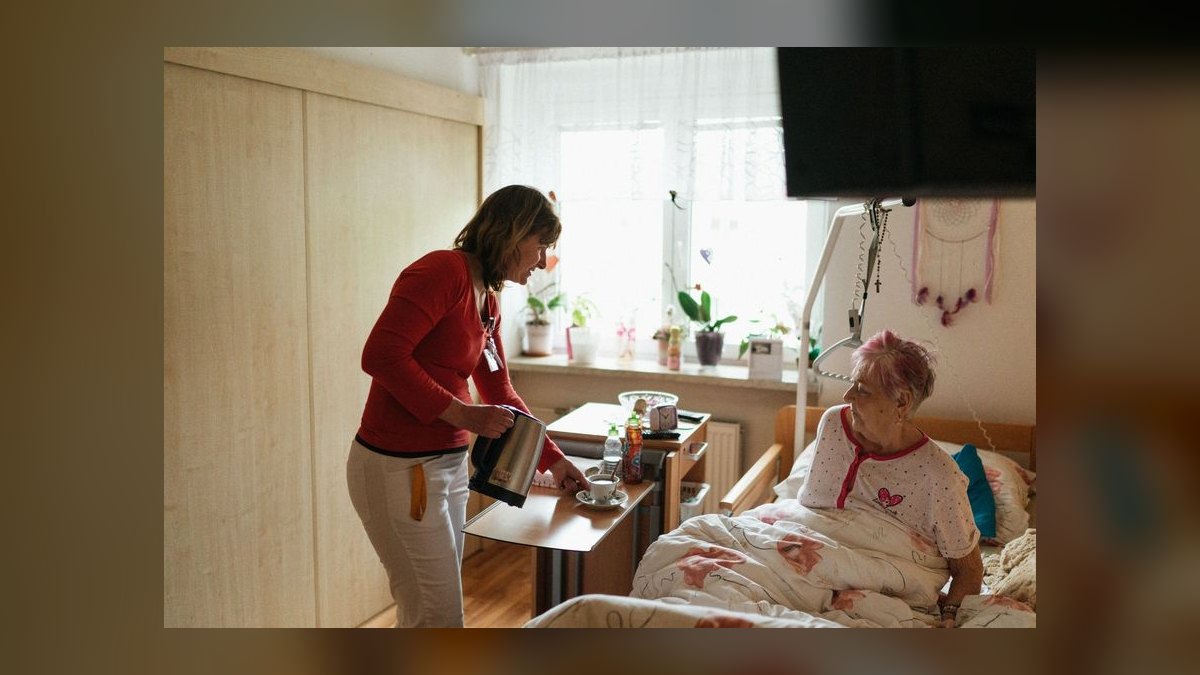
2027 Market Conditions
Condition 1 — Demographic tailwind is real but maturing. The 65+ population reaches 63.4 million in 2027 (Census Bureau projections). BLS projects home health and personal care aide employment grows 21% from 2021–2031, the second-fastest occupation in the U.S. IBISWorld pegs home care providers industry revenue at $173.6B in 2026 with 4.1% YoY growth into 2027.
Condition 2 — Caregiver wage inflation is the margin killer. Median caregiver wage rose from $13.50/hr (2022) to $18.40/hr (2026), a 36% increase that outpaced bill rate increases of 19%. Operators who haven't repriced contracts are seeing gross margin compression from 38% to 30%.
Condition 3 — Veterans Administration and Medicare Advantage are growth channels. VA Community Care Network and MA supplemental benefits under CMS expanded definitions are paying for personal care at scale. BrightStar's National Accounts program is positioned to capture this.

Condition 4 — Private equity rollups are compressing exit multiples. Help at Home, Addus HomeCare (NASDAQ: ADUS), Aveanna, and Bayada are buying agencies at 5.5x–7.5x EBITDA in 2026, down from 9x–11x in 2022.
Condition 5 — Tech is now table stakes. Operators without Electronic Visit Verification (EVV) per the 21st Century Cures Act, same-day caregiver pay options, and modern scheduling software lose both caregivers and referral sources. BrightStar provides its proprietary platform, which mitigates this risk.
---
The 90-Day Decision Tree
- Days 1–7 — Validate your liquidity. Confirm $235K+ liquid (cash + readily marketable securities, NOT home equity). Pull personal credit (FICO 720+ preferred). If you have <$235K liquid, consider lower-investment models.

- Days 8–21 — Pull and read the full FDD. Request the April 1, 2026 FDD from BrightStar Franchising LLC. Read Items 6, 7, 19, 20, 21 in full. Cross-reference Item 20's franchisee contact list against terminations/transfers.
- Days 22–45 — Call 25 franchisees yourself. Call 10 high-performers (top quartile from Item 19), 10 mid-tier, and 5 who terminated or sold. Ask: (a) What's your actual EBITDA? (b) What killed your worst month? (c) Would you buy this franchise again?
- Days 46–60 — Validate your territory. Confirm >15% population aged 65+, median household income >$75K, and <3 existing competitors per 50K seniors.

- Days 61–75 — Attend Discovery Day in person. BrightStar runs Discovery Day at HQ in Gurnee, IL. Do not sign anything in the room. Bring a franchise attorney ($350–$500/hr; budget $3K–$6K for full FDD review).
- Days 76–85 — Stress-test the financials. Model three scenarios: (a) bottom quartile (~$890K AUR), (b) median (~$1.6M AUR), (c) top quartile (~$4.77M AUR). If bottom quartile still meets your household needs, proceed.
- Days 86–90 — Sign or walk. If your attorney clears the FA, your territory is validated, and your 24-month cash runway is funded, sign. Otherwise, walk.

---
Alternative Plays
Home Instead Senior Care (non-medical only). 2026 FDD Item 19: median first-location AUR ~$1.36M. Lower investment ($125K–$170K), no RN required, simpler licensure.
Senior Helpers. Investment $108K–$145K. Parkinson's Care and dementia specialization is differentiated. Royalty 5%. Smaller AUR (~$1.05M median) but better unit economics for solo operators.
Right at Home. Investment $80K–$155K. Skilled + companion dual model similar to BrightStar but lower fee and no Joint Commission requirement in most states. Median AUR ~$1.3M.

Build an independent agency. Skip the franchise fee, 5.25%–6.25% royalty, and 2% brand fund. You'll save $200K–$350K over 5 years but lose National Accounts, the proprietary platform, and brand-driven inbound leads.
Buy a resale BrightStar unit. 30–40 BrightStar units typically list for sale per year. Mature units sell for 3.5x–5.5x EBITDA. A $400K EBITDA unit costs $1.4M–$2.2M but produces cash flow Day 1 vs. 24 months of losses for a startup.
---
FAQ
What is the total investment range for a BrightStar Care franchise in 2027? The total investment typically ranges from $132,499 for a small territory to $235,038 for a standard location. This includes the franchise fee, equipment, and initial marketing, but you'll also need additional working capital for 6–9 months of operations.
How much revenue can I realistically expect in the first year? Based on 2026 FDD data, average first-location revenue is around $2.4 million, but first-year figures vary widely. Realistic ranges are negative $50,000 to positive $40,000 in operating cash flow before owner draws, with breakeven typically occurring between months 18 and 24.
Do I need a medical background to run this franchise? No, but you must be willing to manage medical-home-care regulatory load, including state licensure and Joint Commission accreditation. You'll also need to oversee RN staff, so comfort with healthcare compliance is essential.
How long does it take to become profitable? Most franchisees reach breakeven between 18 and 24 months, though some may take longer. The first year often requires significant personal investment in sales and recruiting.
Can I buy an existing BrightStar Care franchise instead of opening a new one? Yes, existing units are sometimes available for purchase, but prices vary widely based on location, revenue, and seller terms. Buying an established franchise may reduce startup risk but typically requires a higher upfront investment.
What are the biggest risks I should consider? Main risks include regulatory changes in home care, difficulty hiring and retaining qualified staff, and slower-than-expected revenue growth. You should also be prepared to personally handle sales and recruiting for the first 24–36 months.
---
Bottom Line
BrightStar Care is a strong franchise if you bring $310K–$385K liquid, 24 months of owner-operator commitment, and either healthcare-sales experience or the willingness to learn B2B referral selling fast. The ~$2.4M average first-location revenue is real, but so is the 18–24 month breakeven and the regulatory drag of medical home care. Choose BrightStar if you want the highest revenue potential in home care franchising and can stomach the clinical complexity. Choose Home Instead or Senior Helpers if you want lower investment, simpler regulation, and faster Year-1 cash flow at the cost of a smaller revenue ceiling.
---
Sources
- BrightStar Care 2026 Franchise Disclosure Document (issued April 1, 2026), Items 5, 6, 7, 19, 20 — official document available via BrightStar Franchise
- Franchise Chatter, "BrightStar Care Franchise Review 2026: Costs, Fees, News, Average Revenues" (Feb 2026) — FranchiseChatter.com
- 1851 Franchise, "Franchise Deep Dive: BrightStar Care's Franchise Costs, Fees, Profit & Data 2026" — 1851Franchise.com
- Peersense, "BrightStar Care Franchise Cost & FDD [$50K Fee, $132K-$235K Total] 2026" — Peersense.com
- Vetted Biz, "BrightStar Care Franchise Insights: FDD, Costs & Fees" — VettedBiz.com
- Senior Care Authority, "BrightStar Home Care Franchise: Cost, Profit Margin & Owner Salary" (2026) — SeniorCareAuthority.com
- IBISWorld, "Home Care Providers in the US Industry Analysis, 2026" — IBISWorld.com
- U.S. Bureau of Labor Statistics, "Home Health and Personal Care Aides" Occupational Outlook — BLS.gov
- Home Care Pulse, "2026 Benchmarking Report" — HomeCarePulse.com
- U.S. Census Bureau, 2024 National Population Projections — Census.gov
---
Related on PULSE
- [Best senior care franchises to buy in 2027](/knowledge/fr1085)
- [Should I open or buy a HomeWell Care Services franchise in 2027?](/knowledge/fr0976)
- [Should I open or buy a Griswold Home Care franchise in 2027?](/knowledge/fr1053)
- [Should I open or buy an AFC Urgent Care franchise in 2027?](/knowledge/fr1055)
- [Best pet care franchises to start in 2027](/knowledge/fr1086)
- [Should I open or buy a Sploot Veterinary Care franchise in 2027?](/knowledge/fr1006)
This page will be disappearing soon. Save it to your device for $1 — or read it free while it is here.
@Kory-White- · if Venmo asks, the last 4 of my number are 2012
This page is gone.
This one is off the shelf now. $1 keeps it on your phone for good — the whole page, pictures and diagrams included.
 franchiseShould I open a independent lawn care business in 2027?
 franchiseShould I open or buy a Logan's Roadhouse franchise in 2027?
 franchiseShould I open or buy a Long John Silver's franchise in 2027?
 franchiseBest retail franchises to buy in 2027
 franchiseShould I open or buy a CorePower Yoga franchise in 2027?
 franchiseShould I open or buy a Bojangles franchise in 2027?
 franchiseShould I open a transmission repair business in 2027?
 franchiseShould I open or buy a Berkshire Hathaway HomeServices franchise in 2027?
 franchiseShould I open a HVAC repair business in 2027?
 franchiseShould I open or buy a Garbanzo Mediterranean Fresh franchise in 2027?