
Should I open or buy a Mr. Electric franchise in 2027?
 Curated byKory White · Fractional CRO · Maryland
 PULSEKNOWLEDGE LIBRARY
Quality
Certified
Yes — open or buy a Mr. Electric franchise in 2027 if you bring $160K-$360K total capital, $65K liquid, a licensed master electrician on payroll (or you are one), and a 2027 service-area with $120K+ median household income and 20%+ housing stock built before 1985. Expect $488K median revenue and $796K average revenue per the 2026 FDD Item 19, breakeven by month 14-22, and conservative Year-1 owner cash flow of $35K-$70K after the 6% royalty + 2% marketing fee. Probably not if you cannot recruit licensed electricians at $35-$48/hour in your market, if you expect absentee ownership in Year 1, or if your territory has fewer than 35,000 owner-occupied homes.
The Real Numbers
Mr. Electric's 2026 Franchise Disclosure Document (filed April 2026, current through the 2027 selling season) shows the following economics. Numbers below combine Item 5 (initial fees), Item 6 (ongoing royalties), Item 7 (initial investment), and Item 19 (financial performance representations) with Neighborly's corporate-level disclosures and independent benchmarks from IBISWorld and Franchise Business Review.
| Line Item | Low | High | Notes |
|---|---|---|---|
| Initial Franchise Fee | $42,500 | $42,500 | Item 5; covers 100,000 population. +$425 per 1,000 population over 100K. |
| Vehicle (wrap, racks, lease deposit) | $8,500 | $42,000 | One service van minimum; most owners run 2-3 by month 18. |
| Equipment, tools, inventory | $14,200 | $48,500 | Meters, conduit benders, generators, branded uniforms, iPad/CRM hardware. |
| Office build-out / lease | $4,000 | $35,000 | Home-office permitted in 38 states; most owners take a 1,200-1,800 sq ft warehouse by Year 2. |
| Training & travel | $6,500 | $11,000 | Mandatory 2-week Waco, TX training at Neighborly HQ. |
| Insurance, licensing, permits | $7,800 | $18,500 | General liability $1M, commercial auto, workers comp, state electrical contractor bond. |
| Working capital (90 days) | $35,000 | $115,000 | Payroll for 2 electricians + 1 CSR before AR catches up. |
| Technology & marketing launch | $5,000 | $22,425 | ServiceTitan or RazorSync seat, Google LSA deposit, truck wraps. |
| TOTAL INITIAL INVESTMENT (Item 7) | $159,500 | $357,425 | Per 2026 FDD Item 7. Most owners land at $215K-$260K. |
| Royalty (Item 6) | 6.0% | 6.0% | Of gross sales, excluding "roll-in" specialty services. |
| Marketing fee (Item 6) | 2.0% | 2.0% | National brand fund. |
| Tech fee | $300/mo | $650/mo | Required Neighborly tech stack. |
| Average gross revenue (Item 19) | $796,000 | — | 2026 FDD; 168 reporting franchisees. |
| Median gross revenue (Item 19) | $488,000 | — | More predictive than the mean for new owners. |
| Top-quartile revenue (Item 19) | $1,420,000 | — | 42 franchisees above this line. |
| EBITDA margin (mature, Year 3+) | 8% | 17% | Industry benchmark; FBR survey. |
| Year-1 owner draw (conservative) | $35,000 | $70,000 | Owner-operator who pulls permits. |
| Payback period | 14 months | 36 months | Median 22 months per FBR 2026 franchisee survey. |
| 3-year failure rate | 19% | — | Per Vetted Biz analysis of FDD Item 20. |
The $308K spread between median ($488K) and average ($796K) revenue tells the real story: this is a bimodal business. Owner-operators who personally pull permits and ride trucks the first 18 months cluster around the median. The owners who break $1M+ have 3+ service vans, a dispatched CSR, and a dedicated commercial-account hunter by month 24.

Who Wins With This Business
The winners are licensed master electricians who already ran a small unbranded shop and bought into Mr. Electric for the Neighborly call-center, LSA budget, and ServiceTitan-equivalent CRM. They convert their existing $200K-$400K residential book to the franchise on day one and use the brand to push commission-based commercial maintenance contracts with property managers, REITs, and municipal accounts.

The second winner profile is the executive operator: a former GC, ops director, or facilities VP with $300K+ in liquid net worth who hires a licensed qualifying agent (the "QA" — the master electrician of record for the contractor license) at $95K-$130K base + 5% revenue share. This owner runs the P&L, marketing, and recruiting while the QA owns the truck rolls. The profile works in metros like Phoenix, Charlotte, Tampa, Nashville, Dallas-Fort Worth, Raleigh-Durham, and Boise where housing stock is aging into rewire territory and EV-charger demand is compounding.
The third winner is the multi-unit Neighborly franchisee who already owns a Mr. Rooter, Aire Serv, or Mr. Handyman territory and bolts Mr. Electric onto the same back office. Shared CSR, shared dispatcher, shared truck bay, shared bookkeeper — incremental EBITDA on the second brand typically hits 22-28% because the overhead is sunk.
The economic moat is the licensed-contractor barrier. Unlike a Subway or a Great Clips, you cannot open a Mr. Electric in 90 days. The state licensing path — journeyman to master electrician — takes 6,000-10,000 supervised hours depending on the state. 38 states require the franchise owner or a named employee to hold a master electrician license to pull permits. That gate keeps competitors out and keeps 2027 effective hourly billing rates between $145-$215.

Who Loses With This Business
Absentee investors lose. This is not a passive ownership. The 19% three-year failure rate in Item 20 of the 2026 FDD concentrates among owners who hired a general manager on day one and never learned to read a daily dispatch report. Mr. Electric's call-center hand-off model means the franchisee owns the close rate. When the close rate sags below 38% on Neighborly-routed leads, the unit economics collapse within 9 months.
Owners in markets with weak electrician labor pools lose. If your metro pays $28-$32/hour for a journeyman and the next metro over pays $42, your electricians will leave for the higher wage within 12 months. Markets where the non-residential construction backlog (per the ABC Construction Backlog Indicator) sits above 9.5 months are especially brutal — commercial GCs poach your techs with overtime guarantees you cannot match on residential service tickets.

Buyers of distressed resale units lose unless they negotiate hard. Mr. Electric resales come to market for three reasons: owner retirement (healthy), owner burnout (yellow flag), or technician walk-out (red flag). A unit that lost 2+ licensed electricians in the prior 12 months is worth 0.4x trailing twelve-month revenue, not the 0.8x-1.1x sellers ask for. Always pull the workers-comp mod factor and the trailing 24-month tech-turnover log before signing.
Anyone expecting Neighborly to drive your sales loses. The corporate Local Services Ads budget gets spread across 211 U.S. Mr. Electric units. Per-unit national-spend allocation runs $1,800-$3,200 per month depending on territory. That is not enough to feed three vans. Owners who hit the average $796K revenue spend another $4,500-$8,500 per month on local Google LSAs, Nextdoor, direct mail to homes 25+ years old, and commercial-account development.
2027 Market Conditions
Five forces shape the 2027 buy decision:
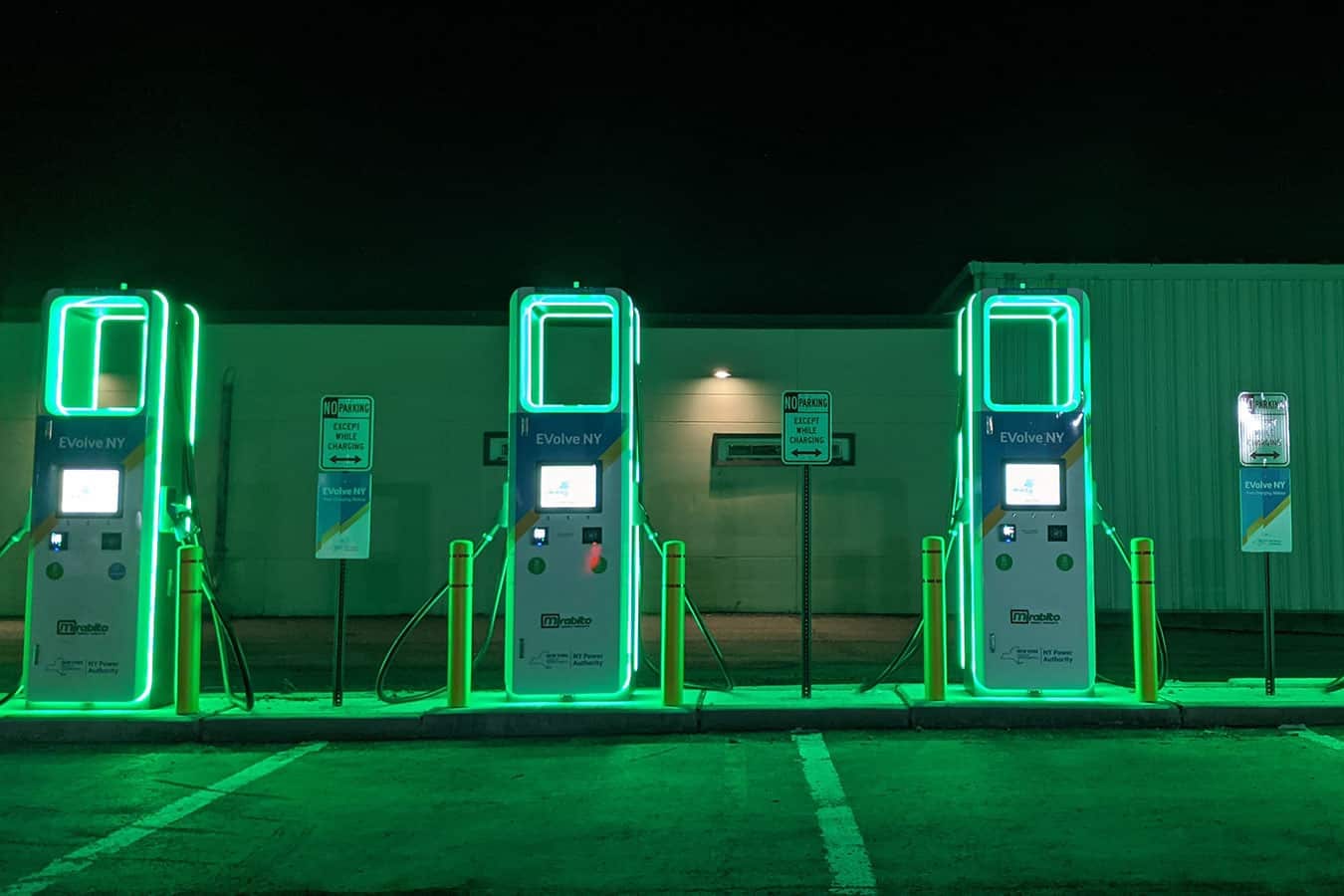
1. EV charger demand is the single biggest tailwind. The Inflation Reduction Act 30C tax credit (extended through 2032) plus state-level rebates in California (CALeVIP), New York (NYSERDA), Colorado, and Massachusetts are driving Level 2 home-charger installs from 1.4M in 2024 to a projected 3.1M in 2027 per the Edison Electric Institute. Average ticket: $1,650-$3,400 installed. Mr. Electric corporate launched an EV-Certified program in Q3 2026.
2. Aging housing stock is the second tailwind. 41% of U.S. owner-occupied homes were built before 1980 (Census ACS 2024). These homes need panel upgrades from 100-amp to 200-amp service ($2,200-$4,800 ticket), aluminum-wiring remediation ($3,500-$12,000 ticket), and knob-and-tube replacement ($8,000-$28,000 ticket). Insurance carriers like State Farm, Allstate, and USAA now refuse to renew policies on homes with un-remediated aluminum branch wiring as of 2026 renewals, forcing homeowner action.

3. Residential construction is a headwind. Per IBISWorld's June 2026 Electricians report (NAICS 23821), U.S. electricians industry revenue is $347.5B in 2026 with residential new-construction down for the fourth consecutive year on elevated mortgage rates. Mr. Electric is a service-and-repair brand, not new-construction, so this hurts less — but it does compress your commercial-developer pipeline.
4. Licensed-electrician shortage is structural. BLS Occupational Outlook 2024-2034 projects 84,300 average annual openings against a graduating apprentice pool roughly 30% short. Owners winning in 2027 are running in-house apprentice programs registered with the U.S. Department of Labor's Office of Apprenticeship — the franchisee gets a WOTC tax credit up to $9,600 per veteran apprentice plus state-level reimbursements.
5. Private equity overhang on Neighborly is a wild card. KKR acquired Neighborly from Harvest Partners in 2021 at a reported $1.4B enterprise value. A 2027-2028 sale or IPO is the consensus expectation among franchise-industry analysts. Existing franchisees report rising tech fees and tighter brand standards under PE ownership — the Franchise Business Review 2026 survey still places Mr. Electric in the Top 200, but franchisee net promoter dropped from 71 in 2022 to 58 in 2026.
The 90-Day Decision Tree
- Days 1-10 — Verify licensing path. Pull your state's electrical contractor licensing requirements (NASCLA reciprocity covers 16 states). Confirm whether you can be the qualifying agent or whether you must hire one. If hiring, post the role at $95K-$130K base on Indeed and ZipRecruiter. No qualified applicants in 14 days = abort.
- Days 11-25 — Territory diligence. Request the available-territories list from Neighborly franchise development. Pull Esri Business Analyst or Claritas PRIZM data for the target ZIPs. Minimum thresholds: 35,000 owner-occupied homes, 20%+ pre-1985 housing, $95K+ median household income, and fewer than 3 incumbent franchised electrical brands (Mister Sparky, Hour Glass Electric, Mr. Electric resale, Sears Home Services).

- Days 26-40 — Validate with 8+ existing franchisees. Neighborly will send you the Item 20 contact list. Call at least 8 owners outside your target metro and ask: (a) actual Year-1 revenue, (b) ramp to breakeven, (c) what Neighborly does well, (d) what Neighborly does poorly, (e) would you buy again at today's fees.
- Days 41-55 — Build the pro-forma. Use the median $488K Year-1 revenue (not the average). Plug in your local journeyman wage (BLS QCEW data by MSA). Model royalty + marketing fee + tech fee + LSA spend. If projected Year-1 owner draw is below $35K, the territory or the fee structure does not work for you.
- Days 56-70 — Lender + legal. SBA 7(a) preferred lenders for Neighborly include Live Oak Bank, Huntington, and Byline Bank. Mr. Electric is on the SBA Franchise Directory (SBA Form 2462 on file). Engage a franchise attorney (IFA-affiliated; budget $4,500-$8,500) to review the FDD red-line by Day 70.
- Days 71-82 — Discovery Day in Waco, TX. Mandatory site visit at Neighborly HQ. Bring the 8-franchisee call notes and ask the development team to reconcile any discrepancies between the FDD Item 19 medians and what owners told you.
- Days 83-90 — Decision gate. Sign or walk. The franchise agreement is a 10-year term with one 10-year renewal. The territory exclusivity clause has been weakened in the 2026 FDD — read Section 3.2 carefully: Neighborly retains the right to fulfill calls from your protected ZIP codes through other Neighborly brands. Negotiate a written carve-out if your model depends on adjacent-brand referrals.
Alternative Plays
If you want the electrical-services exposure without Mr. Electric's specific fee load, consider these alternatives. Each has trade-offs.
- Mister Sparky (Authority Brands) — Direct competitor. Investment $140K-$320K, royalty 6%, marketing 2%. Stronger residential-only positioning; weaker commercial book. Authority Brands also owns Benjamin Franklin Plumbing and One Hour Heating & Air, so bundled HVAC + plumbing + electrical multi-unit ownership is the obvious play.
- Hour Glass Electric (HomeServe Pro) — Smaller system, ~40 units, royalty 5%. Higher founder support but weaker national LSA fund.
- Independent unbranded shop — Avoid $42.5K franchise fee + 8% combined royalty/marketing by going solo. Trade-off: no national call center, no ServiceTitan-equivalent CRM negotiated rates, no Neighborly cross-referrals. Independent residential electrical contractors in IBISWorld NAICS 23821 report 9-14% EBITDA vs. 8-17% franchise EBITDA — net wash on a single-unit basis, franchise wins at 2+ units.
- Buy an existing Mr. Electric resale — Often cheaper than greenfield if the seller is a healthy retirement. Look for units with 3+ year trailing revenue above $850K, tech turnover below 18%, and WC mod factor below 1.05. Asking multiples in 2026-2027 are 0.6x-0.9x TTM revenue plus tangible assets.
- HVAC adjacency (One Hour Heating, Aire Serv) — Larger ticket sizes ($8K-$22K installs), bigger working-capital requirement ($250K+), but cleaner labor pool (HVAC techs less mobile than master electricians).
FAQ
What is the total investment range for a Mr. Electric franchise in 2027? You’ll typically need $160,000 to $360,000 in total capital, with at least $65,000 liquid. This covers the franchise fee, equipment, vehicles, and initial working capital, though exact costs depend on your territory size and build-out needs.
Do I need to be a licensed electrician to own this franchise? No, but you must have a licensed master electrician on your payroll from day one, or be one yourself. The license is required for permitting and code compliance, and hiring one costs roughly $35–$48 per hour in most markets.
How much revenue can I expect in the first year? Per the 2026 FDD Item 19, median revenue is around $488,000, with average revenue near $796,000. Your actual first-year revenue will vary based on territory density, local competition, and how quickly you ramp up marketing.
When do most franchisees break even? Breakeven typically occurs between month 14 and month 22. This timeline depends on your initial investment, how fast you build a customer base, and whether you can keep labor costs in line during the first year.
Can I run this franchise as an absentee owner? Probably not in Year 1. The business requires active oversight of electricians, scheduling, and customer service. Absentee ownership usually works only after you have a reliable manager and established systems, which takes at least 12–18 months.
What kind of owner cash flow can I expect after fees? Conservative Year-1 owner cash flow is $35,000 to $70,000, after paying the 6% royalty and 2% marketing fee. This range assumes you’re actively managing the business and your territory has at least 35,000 owner-occupied homes with a median income above $120,000.
Bottom Line
Mr. Electric in 2027 is a legitimate franchise for the right operator — a licensed master electrician or an executive operator with a hired QA, $215K-$260K in capital, and a target metro with aging housing stock and EV-charger demand. Expect breakeven by month 18-22, median revenue of $488K, and 8-17% EBITDA at maturity. The 19% three-year failure rate is real and concentrates among absentee owners and labor-starved metros. The PE-ownership overhang at Neighborly is the biggest non-quantified risk — model your pro-forma with tech fees rising 10% annually to be safe. Walk away if you cannot answer "who is my qualifying agent" with a name and a signed offer letter by Day 25 of diligence.
Sources
- Mr. Electric 2026 Franchise Disclosure Document, Items 5, 6, 7, 19, 20
- Neighborly Company, "Mr. Electric Franchise Investment Page," 2026
- Franchise Business Review, "Mr. Electric Owner Satisfaction Report 2026"
- Vetted Biz, "Mr. Electric Franchise Insights: FDD, Costs & Fees," 2026
- Franchise Chatter, "Mr. Electric Franchise Review 2025: Costs, Fees, News, Average Revenues," August 2025
- IBISWorld Industry Report 23821, "Electricians in the US," June 2026
- U.S. Bureau of Labor Statistics, "Electricians" Occupational Outlook Handbook, 2024-2034
- Edison Electric Institute, "EV Quarterly Sales and Charging Infrastructure Report," Q4 2026
- U.S. Census Bureau, American Community Survey 5-Year Estimates, 2024
- Associated Builders and Contractors, "Construction Backlog Indicator," 2026
- U.S. Small Business Administration Franchise Directory (SBA Form 2462), 2026
- International Franchise Association, "Franchise Economic Outlook Report," 2027
Related on PULSE
- Should I open or buy a Mister Sparky Electric franchise in 2027?
- Should I open or buy a Mr. Appliance franchise in 2027?
- Should I open or buy a Mr. Pickle’s Sandwich Shop franchise in 2027?
- Should I open or buy a Mr. Mike's SteakhouseCasual franchise in 2027?
- Should I open or buy a Mr. Gatti's Pizza franchise in 2027?
- Should I open or buy a Mr. Handyman franchise in 2027?
This page will be disappearing soon. Save it to your device for $1 — or read it free while it is here.
@Kory-White- · if Venmo asks, the last 4 of my number are 2012
This page is gone.
This one is off the shelf now. $1 keeps it on your phone for good — the whole page, pictures and diagrams included.
 franchiseShould I open or buy a 100% Chiropractic franchise in 2027?
 franchiseShould I open or buy a Playa Bowls franchise in 2027?
 franchiseShould I open or buy an Andretti Indoor Karting franchise in 2027?
 franchiseShould I open or buy a Yogurtland franchise in 2027?
 franchiseShould I open or buy a Burn Boot Camp (re-do) franchise in 2027?
 franchiseShould I open or buy a Tutor Doctor franchise in 2027?
 franchiseShould I open or buy a BIGGBY Coffee franchise in 2027?
 franchiseShould I open or buy a Round Table Pizza franchise in 2027?
 franchiseShould I open or buy a Cottman Transmission franchise in 2027?
 franchiseShould I open or buy a solidcore franchise in 2027?