
Should I open or buy a College Hunks Hauling Junk and Moving franchise in 2027?
 Curated byKory White · Fractional CRO · Maryland
 PULSEKNOWLEDGE LIBRARY
Quality
Certified
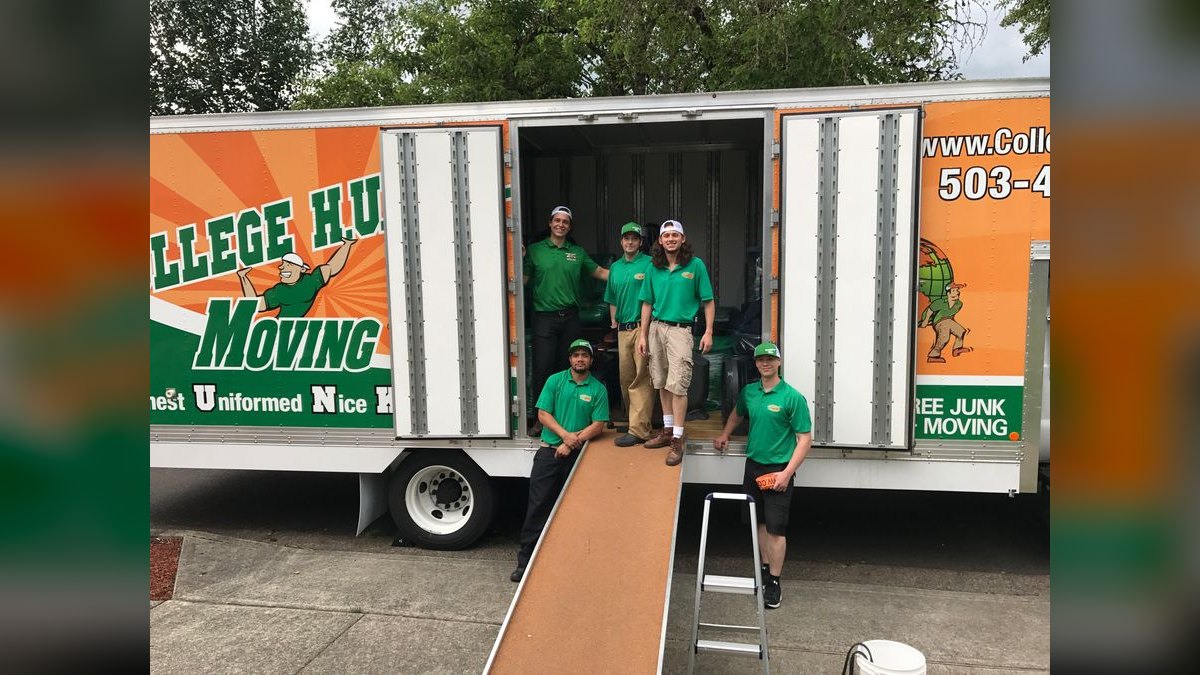
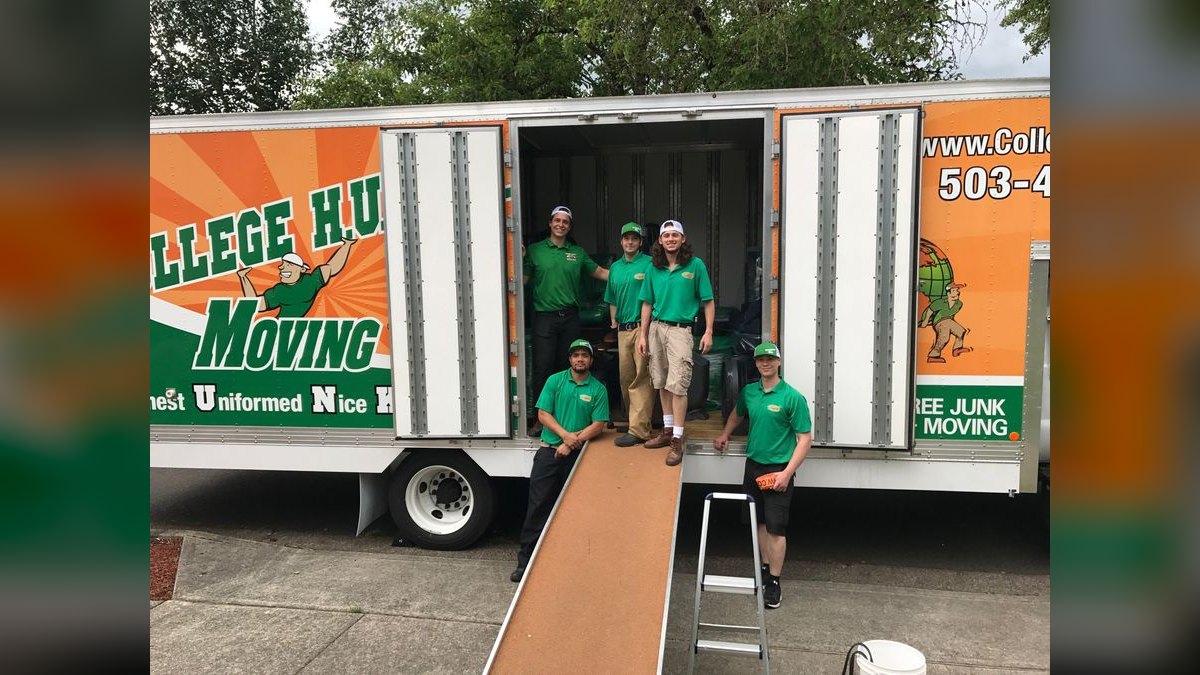
Yes — open or buy a College Hunks Hauling Junk and Moving franchise in 2027 if you can write a check for $258,100 to $480,500 all-in, you already have $70,000 liquid plus a $200,000 net worth, and you are willing to be a hands-on operator-manager running labor-heavy crews in a metro with median household income above $75,000. Conservative Year-1 cash flow on a single territory is $60,000 to $90,000 EBITDA on roughly $840,000 gross, with breakeven inside 10 months and payback inside 18 to 24 months for disciplined operators. Probably not if you want absentee ownership, hate managing 18-to-26-year-old labor, or are buying for the brand cachet alone. Multi-territory 3-plus pack operators clear $560,000-plus EBITDA at maturity, and that is the only configuration that meaningfully beats a strong independent.
The Real Numbers
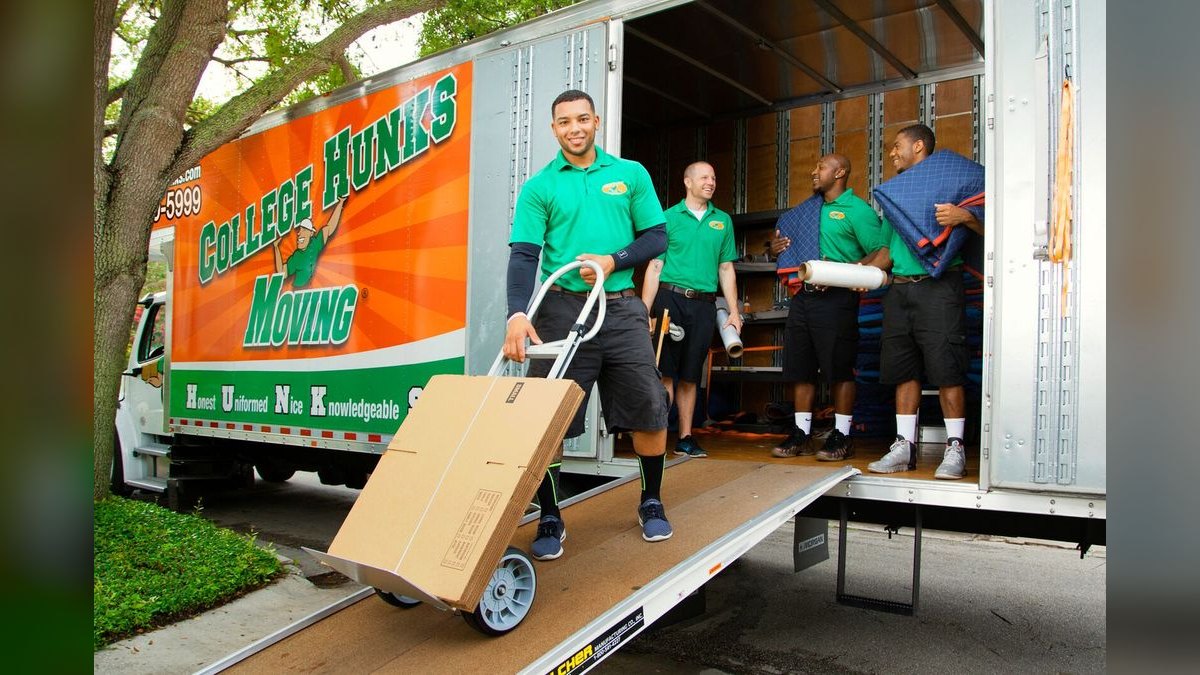
College Hunks Hauling Junk and Moving (CHHJ) operates under parent Authority Brands, which also owns Mosquito Squad, Benjamin Franklin Plumbing, and One Hour Heating and Air. The 2025 FDD (governing 2026-2027 awards) lists the following.
| Line item | Low | High | Notes |
|---|---|---|---|
| Initial franchise fee (Item 5) | $30,000 | $55,000 | Single territory; multi-pack discounts available |
| Trucks, vehicle wrap, signage | $8,000 | $45,000 | Lease vs. buy; 1-2 box trucks at launch |
| Equipment, uniforms, tech | $5,500 | $18,000 | Tablets, dollies, straps, blankets |
| Insurance deposits | $7,500 | $35,000 | Auto, GL, workers comp, cargo |
| Real estate / office build-out | $4,000 | $42,000 | Warehouse-flex, 1,500-2,500 sq ft |
| Training, travel, U-Move-U University | $3,500 | $9,500 | 5-day Tampa HQ training |
| Initial marketing (ramp-up) | $26,000 | $36,000 | Local SEO, paid social, fleet wraps |
| Working capital (3 months) | $150,000 | $250,000 | Payroll-heavy business |
| Total initial investment (Item 7) | $258,100 | $480,500 | Source: 2025 FDD, Item 7 |
| Royalty (Item 6) | 7% of gross | 7% of gross | Paid weekly |
| Brand fund / national marketing | 2% of gross | 2% of gross | Brand-level demand-gen |
| Required local marketing minimum | $1,500/mo or 8% | $1,500/mo or 8% | Whichever is greater — moving side |
| Average franchisee gross revenue (Item 19, 2024 reporting year) | — | $1,283,000 | All units reporting full year |
| Top quartile gross revenue | — | $3,000,000-plus | Multi-territory pack operators |
| Single-territory EBITDA (median) | — | $60,031 (7.1%) | Reported franchisee P&Ls |
| 3-plus territory EBITDA (median) | — | $567,994 (9%-plus) | Corporate + top franchisee data |
| Breakeven timeline | 8 months | 12 months | Median ~10 months |
| Payback timeline | 12 months | 30 months | Median 18-24 months single, ~36 multi |
The independent junk removal industry was $10.4B in 2023 (IBISWorld) and is growing ~9.6% CAGR through 2035. Moving services in the US are growing ~3.68% annually through 2027. CHHJ's revenue mix is roughly 65% junk hauling / 35% moving, which matters because junk has a 41% gross margin while local moving is closer to 28-32%.
Who Wins With This Business
The winners share five traits.
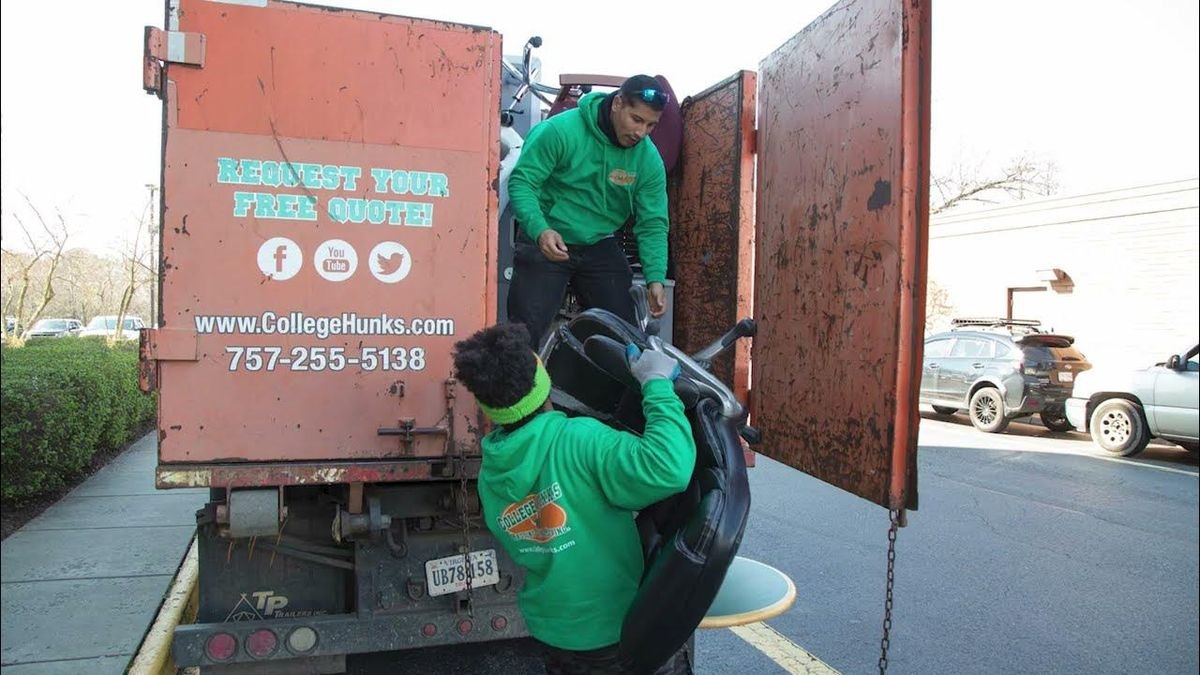
- Hands-on operator-managers, not investors. The owner who answers the phone, rides shotgun on the first 50 jobs, and recruits at three local community colleges every August clears $90K-plus single-territory EBITDA. Absentee owners hovering from a corporate job typically post the $60K median or worse.
- Pre-existing local network strength. Past real estate agents, property managers, estate-sale operators, contractors, and storage-facility owners convert their rolodex into B2B accounts inside 60 days. CHHJ corporate reports B2B accounts produce 18-22% of revenue at mature units at materially higher margins than residential one-offs.
- People with $70K liquid plus $200K net worth and 90 days of payroll runway. The single largest cause of failure inside year one is undercapitalization on payroll when one truck breaks down or one regional season turns slow.
- Operators willing to run a 3-pack from day one. The economics flip dramatically at three territories: shared dispatcher, shared warehouse, fleet utilization above 70%, EBITDA margin moves from 7.1% to 9-plus%, and absolute EBITDA dollars jump from $60K to $560K-plus.
- Metros with median household income above $75K and population density above 1,200 per sq mi. Junk volume scales with discretionary spending. Suburban Atlanta, Charlotte, Raleigh, Phoenix, Tampa, and Nashville territories outperform comparable Midwest or rural Northeast markets by 20-40% on same-territory gross.
Who Loses With This Business
- Absentee owners with a W-2 day job. The data is brutal: single-territory units run by absentee owners cluster at $35K-$50K EBITDA, below the median, before owner draw. There is no meaningful semi-passive version of this business at one territory.
- First-time entrepreneurs with under $50K cash buffer. Royalty (7%) plus brand fund (2%) plus required marketing (8% or $1,500 minimum) is 17% of gross off the top before COGS. A bad month with two truck repairs ends single-truck operators who do not have 90 days of payroll in reserve.
- People who hate managing young, transient labor. CHHJ's brand promise is college-aged uniformed crews. Annualized labor turnover runs 80-140%. If you cannot recruit and replace 18-to-26-year-olds every semester, the wheels come off by month 8.
- Rural and exurban operators. Territories with under 150,000 households inside a 25-minute drive radius struggle to fill two trucks per day. CHHJ's published Item 19 averages skew metro; rural buyers should expect 40-60% of system average, not the median.
- Operators chasing brand prestige without operational obsession. CHHJ's 7% royalty plus 8% marketing is mid-pack versus 1-800-Got-Junk (8% + 7%) and JunkLuggers (7% + 2%), so the brand is only worth the spread if you actually use the dispatch tech, U-Move-U University training, and call-center overflow. Operators who view CHHJ as a marketing logo overpay.
2027 Market Conditions
Three forces define the 2027 environment for this franchise.

First, the residential moving slowdown extends. US existing-home sales finished 2025 at 4.06M units, the lowest since 1995, and Fannie Mae's January 2026 forecast holds 2027 at 4.4M, well below the 5.3M long-run average. This compresses the moving side of CHHJ's mix. Smart operators are rebalancing to 70-75% junk / 25-30% moving in 2027, up from the historical 65/35 split.
Second, junk volume is structurally rising. Bulk-item disposal complaints to municipalities rose 22% from 2023 to 2025 as cities cut weekly bulk pickup. Estate cleanouts surged with the demographic wave — 10,800 Americans turn 65 every day in 2027, peak Baby Boomer downsizing. CHHJ's average estate cleanout ticket is $1,850-$2,400, versus $385 for a typical residential one-room job.
Third, AI dispatch and dynamic pricing are now table stakes. Authority Brands rolled out the HUNK AI dispatch platform in Q3 2025 with claimed 14% labor efficiency improvement and 9% revenue lift through dynamic surge pricing on weekends. Independents and smaller franchise systems (Junk King, JunkLuggers) lag 12-18 months. This is the single largest structural advantage CHHJ has over independents in 2027.
Fourth (regulatory), EPA's 2026 Mattress and Bulk Furniture Recycling Rule (effective January 2027 in 18 states) raises landfill tipping fees by $28-$42 per mattress and $18-$30 per upholstered item. CHHJ's national disposal contracts and recycling partnerships materially out-economize a solo operator paying retail tipping rates.

The 90-Day Decision Tree
- Days 1-7 — Pull the 2025 FDD directly from CHHJ's franchise development team (not third-party portals) and read Items 6, 7, 19, 20, and 21 (financial statements) cover to cover. Demand the 2026 update if it has been issued. Walk away if Item 20 unit count growth is negative for two consecutive years or closures exceed 5% of system.
- Days 8-21 — Call 15 existing franchisees from Item 20 with this exact script: "What is your gross last full year, your owner-comp plus EBITDA, your single biggest surprise cost, and would you sign again?" Target 10 single-territory and 5 multi-territory operators. Do not skip this — it is the single highest-signal hour of your diligence.
- Days 22-35 — Validate your target territory with three datapoints: median household income above $75K, population density above 1,200/sq mi inside a 25-min drive, and at least three commercial property managers or estate-sale firms willing to take a meeting. If you cannot get three meetings, your territory is wrong.
- Days 36-50 — Run the unit economics model on three scenarios: pessimistic ($600K gross, breakeven month 14), base ($840K, breakeven month 10), optimistic ($1.1M, breakeven month 8). Stress-test payroll at 38% of gross, royalty plus fees at 17%, fuel and disposal at 14%. If pessimistic case bankrupts you, do not sign.
- Days 51-65 — Get pre-approval on an SBA 7(a) loan for 70-75% of total investment. CHHJ is on the SBA Franchise Directory, which speeds approval to 4-6 weeks. Live Oak Bank and Huntington are the two highest-volume CHHJ lenders as of 2027.
- Days 66-75 — Visit Tampa HQ for Discovery Day and meet the Authority Brands operations team. Demand to see the HUNK AI dispatch system live, the franchisee P&L benchmarking dashboard, and the call-center conversion rates by hour. If they will not show you these, walk.
- Days 76-83 — Run a 5-day shadow on a top-quartile franchisee in a comparable metro. Pay for travel. Ride three full ride-along days with crews. You will learn more about job costing in 72 hours than in 72 hours of due diligence reading.
- Days 84-90 — Decide and sign, or walk. Multi-territory pack discounts expire if you delay — Authority Brands typically offers $10K-$15K off Initial Fee for 3-pack commitments inside the original term sheet window. No-go signals: any franchisee in your peer cohort posting under $600K gross at month 18, FDD Item 3 litigation count rising year over year, or your target territory ZIP failing the income/density screens.
Alternative Plays
- 1-800-Got-Junk — Larger system (200-plus units), 8% royalty + 7% marketing, single-service junk focus, stronger national brand recall but mid-pack unit economics. Best for operators who want pure junk and the strongest 800-number national lead-gen funnel.
- JunkLuggers — Smaller system, eco-positioning (80% donate/recycle target), 7% royalty + 2% marketing, lower total fee load. Lower brand awareness means more local marketing work, but higher take-home for disciplined operators.
- Junk King — Mid-size, 7% royalty + 3% marketing, dual-truck model standard, higher average ticket ($548 vs CHHJ's $475). Slightly older customer demographic.
- Independent junk + moving operator — No royalty, no marketing fee, $40K-$120K all-in startup. You give up brand, dispatch tech, national accounts, and SBA-blessed lending. Net-take-home parity with CHHJ requires 18-30 months of grinding before brand and ops leverage pays back the franchise spread.
- U-Haul Moving Help marketplace operator — Asset-light, 2% platform fee, no franchise fee. EBITDA caps around $40K-$60K but startup is under $20K. Best for testing the labor model before committing to CHHJ.
- Buy an existing CHHJ resale — Check Vetted Biz, FranchiseGator resale listings, and the Authority Brands resale board. Mature 3-pack territories trade at 3.5-5.0x EBITDA, often financed by the selling franchisee. Less ramp risk, immediate cash flow, but premium to greenfield.
FAQ
What is the total investment range to open a College Hunks Hauling Junk and Moving franchise in 2027? The all-in investment typically falls between $258,100 and $480,500. This includes the franchise fee, equipment, vehicles, insurance, and initial working capital. Actual costs vary by territory size and whether you lease or purchase trucks.
How much liquid capital and net worth do I need? You should have at least $70,000 in liquid cash and a net worth of $200,000. Some franchisors may require slightly higher liquidity for multi-territory deals. These figures are based on current franchise disclosure document ranges.
What is the realistic first-year profit potential for a single territory? First-year EBITDA is often in the $60,000 to $90,000 range on roughly $840,000 in gross revenue. Breakeven can occur within 10 months, with full payback on investment in 18 to 24 months for well-run operations. Results depend heavily on local demand and labor management.
Can I run this franchise as a semi-absentee owner? It is not recommended. The business requires hands-on management of young, often inexperienced crews, daily scheduling, and customer service. Most successful owners are on-site operators. Passive ownership typically leads to poor performance and higher turnover.
How much can I earn with multiple territories? Operators with three or more territories often see mature EBITDA above $560,000 annually. This scale allows for shared overhead and a dedicated management team. However, it also requires significantly more capital and operational oversight upfront.
Is the brand name alone worth the investment compared to starting an independent junk hauling business? The brand provides national recognition, a proven system, and training, but it does not guarantee success. Independent operators can sometimes achieve similar margins with lower startup costs. The franchise premium is most valuable if you lack industry experience or want a faster ramp-up in a competitive market.
Bottom Line
Open or buy College Hunks Hauling Junk and Moving in 2027 if you can write the $258K-$480K check, you will personally operate it for the first 24 months, and your metro has the income and density to support $800K-plus Year-1 gross. The AI dispatch advantage, the demographic tailwind from Boomer downsizing, and the structural shift toward more junk and less residential moving all favor the brand through 2030. The economics get materially better at three territories — that is where CHHJ's $560K-plus median EBITDA case lives, and it is the only configuration that decisively beats a well-run independent. Walk away if you want absentee ownership at a single territory, if you have under $70K liquid plus 90 days of payroll runway, or if your target metro fails the $75K median income and 1,200/sq mi density screen. Single-territory payback inside 24 months and 3-pack payback inside 36 months are both achievable for disciplined hands-on operators; everything else is wishful thinking.
Sources
- Authority Brands College Hunks Hauling Junk and Moving 2025 Franchise Disclosure Document, Items 5, 6, 7, 19, 20, 21
- Franchise Chatter, "College HUNKS Hauling Junk & Moving Franchise Review 2025: Costs, Fees, Average Revenues and/or Profits" (August 2025)
- Franchise Chatter, "College HUNKS Hauling Junk & Moving: $1.28M Average Sales vs. $258K-$480K Franchise Cost" (July 2024)
- Vetted Biz, "College Hunks Hauling Junk and Moving Franchise Insights: FDD, Costs & Fees" (2026 update)
- Franchise Direct, College Hunks Hauling Junk Franchise Costs + Fees + FDD Profile
- IBISWorld, "Junk Removal Services in the US" industry report (2025)
- IBISWorld, "Moving Services in the US" market size statistics (1154)
- Business Research Insights, "Junk Removal Franchise Market Size, Share | Global Forecast 2026-2035"
- National Association of Realtors, US Existing Home Sales Annual Report (December 2025)
- Fannie Mae Economic and Strategic Research, January 2026 Housing Forecast
- Small Business Administration Franchise Directory, College Hunks Hauling Junk listing
- International Franchise Association (IFA), 2026 Franchise Economic Outlook
- US Environmental Protection Agency, 2026 Mattress and Bulk Furniture Recycling Rule (Federal Register, October 2025)
- US Census Bureau, American Community Survey 2024 5-year estimates (household income and density data)
Related on PULSE
- Should I open or buy a College Hunks Hauling Junk franchise in 2027?
- Should I open or buy a JDog Junk Removal & Hauling franchise in 2027?
- Best moving and junk-removal franchises to buy in 2027
- Should I open or buy an All My Sons Moving & Storage franchise in 2027?
- Should I open a independent moving company in 2027?
- Should I open or buy a Junk Doctors franchise in 2027?
This page will be disappearing soon. Save it to your device for $1 — or read it free while it is here.
@Kory-White- · if Venmo asks, the last 4 of my number are 2012
This page is gone.
This one is off the shelf now. $1 keeps it on your phone for good — the whole page, pictures and diagrams included.
 franchiseShould I open or buy a solidcore franchise in 2027?
 franchiseShould I open or buy a World Gym franchise in 2027?
 franchiseShould I open or buy a Burn Boot Camp (re-do) franchise in 2027?
 franchiseShould I open a short-term rental management business in 2027?
 franchiseShould I open or buy a Garbanzo Mediterranean Fresh franchise in 2027?
 franchiseShould I open or buy a Charleys Cheesesteaks franchise in 2027?
 franchiseShould I open or buy a Bibibop Asian Grill franchise in 2027?
 franchiseShould I open or buy a Jeremiah's Italian Ice franchise in 2027?
 franchiseShould I open or buy Jimmy John’s franchise or open an independent sandwich shop in 2027?
 franchiseShould I open or buy a Cooper's Hawk Winery & Restaurants franchise in 2027?