
Should I open or buy a Garage Living franchise in 2027?
 Curated byKory White · Fractional CRO · Maryland
 PULSEKNOWLEDGE LIBRARY
Quality
Certified

Yes — if you have $350K liquid, a $750K net worth, target a suburban metro with median household income above $120K, and can personally close design consultations for the first 18 months. Garage Living is a premium garage-makeover franchise (epoxy floors, slatwall, custom cabinets, lifestyle storage) with 51 locations, a $60,000 franchise fee, and a $233,000 to $317,000 all-in startup. The 2025 FDD Item 19 shows an AUV of $1,425,714 and estimated owner earnings of $171,086 to $213,858. Breakeven typically lands at month 14 to 22; payback runs 2.0 to 4.0 years. Conservative Year-1 cash flow for a disciplined owner-operator targets $95,000 to $140,000 after debt service. Probably not if you want a passive, absentee model — Garage Living is showroom-plus-install, which means hands-on sales and crew management through Year 2.
The Real Numbers
Garage Living's 2025 FDD is the most recent public document and the basis for 2027 underwriting. Item 7 ranges $233,000 to $317,000 total investment; Item 5 is the $60,000 initial franchise fee; Item 6 sets 6.5% royalty, 2% national brand fund, and 6% local marketing minimum — that's a combined 14.5% off the top before COGS. Item 19 reports average gross sales of $1,425,714 across reporting franchisees and estimated owner earnings of $171,086 to $213,858 (roughly a 12% to 15% net owner-benefit margin). AUV at the Sharpsheets cut runs higher at $1,564,000 for mature units.
| Line item | Low | High | Notes |
|---|---|---|---|
| Initial franchise fee | $60,000 | $60,000 | Item 5, single territory |
| Showroom build-out (1,500-2,500 sq ft) | $55,000 | $95,000 | Lease improvements, signage |
| Vehicles (1-2 wrapped) | $35,000 | $65,000 | Cargo van plus install trailer |
| Installation equipment & tools | $18,000 | $32,000 | Grinders, mixers, racks |
| Initial inventory & samples | $22,000 | $35,000 | Slatwall, cabinet samples, epoxy |
| Technology, POS, design software | $6,500 | $12,000 | Configurator, CRM |
| Insurance, permits, legal | $7,500 | $14,000 | Workers comp, GL, bond |
| Training & travel | $4,000 | $8,000 | Toronto HQ, 2 weeks |
| Working capital (3 months) | $25,000 | $52,000 | Payroll, lease, ad spend |
| Total Item 7 range | $233,000 | $317,000 | Real 2025 FDD |
| Royalty | 6.5% | 6.5% | of gross sales |
| National brand fund | 2.0% | 2.0% | mandatory |
| Local marketing minimum | 6.0% | 6.0% | spend, not paid to franchisor |
| AUV (FDD Item 19) | $1,425,714 | $1,564,000 | franchisee-reported |
| Owner earnings band | $171,086 | $213,858 | 12-15% net owner benefit |
| Payback period | 2.0 yrs | 4.0 yrs | Franchise Payback Period |
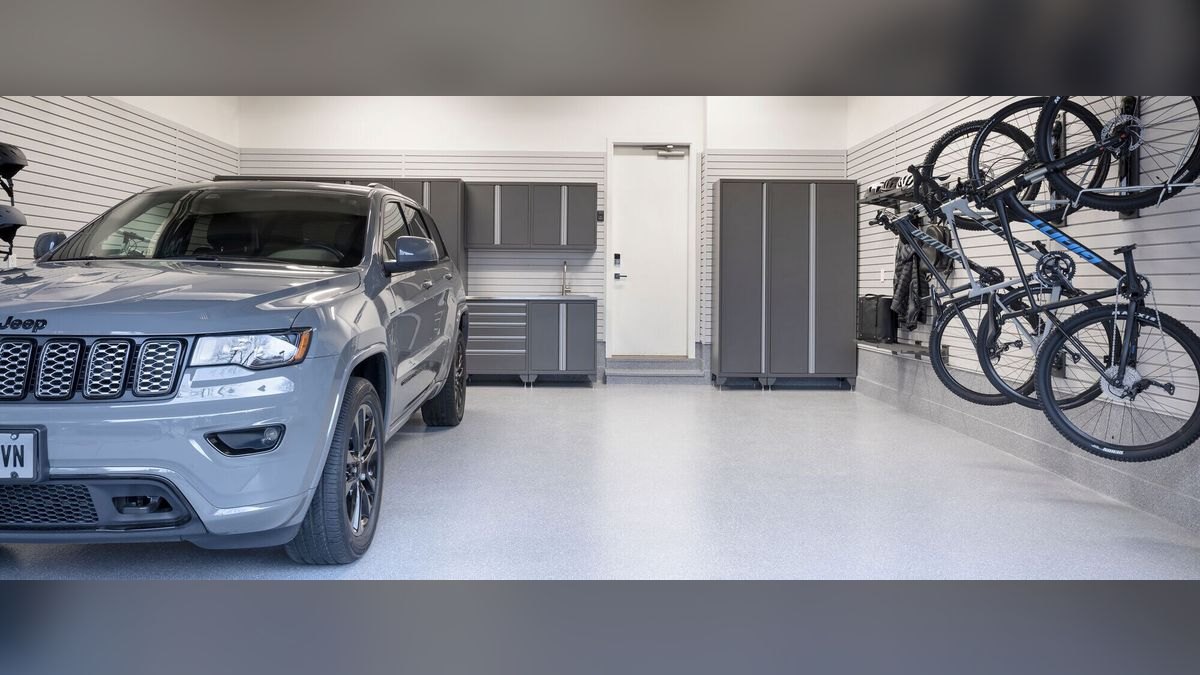
Revenue mix at a typical mature Garage Living unit splits roughly 45% epoxy/polyaspartic floor coatings, 30% custom cabinets, 15% slatwall and overhead storage, 10% lifestyle add-ons (workbenches, sports racks, EV chargers). EBITDA margin at a single-territory operator runs 15% to 22% once year-2 leverage on the showroom kicks in; multi-territory operators report 24% to 28% on consolidated overhead.
Who Wins With This Business
Winners at Garage Living share six traits. First, they are former home-services operators — roofing, kitchen-bath remodelers, closet-organization franchisees — who already know construction supply chains, crew hiring, and in-home selling. Second, they pick affluent suburban territories with median household income above $120,000 and garage attach rates above 85% — think Scottsdale, Naperville, Bellevue, Cary, Plano, Northern Virginia. Third, they personally close the first 100 in-home consults before delegating to a designer; the Garage Living average ticket of $18,000 to $24,000 demands consultative selling, not order-taking. Fourth, they treat Houzz, NextDoor, and Meta Lead Ads as the primary lead engine — not yard signs. Fifth, they layer in EV-charger installs and adjacent home-improvement leads to smooth seasonality (Q1 is brutal in northern climates). Sixth, they sign multi-unit development agreements from day one — single-territory operators top out at $1.4M to $1.7M AUV and $200K owner earnings, but three-territory operators clear $4M to $5M revenue and $600K to $900K owner earnings by Year 3. The most consistent winner profile is the 40-to-55-year-old executive with $500K-plus liquid, construction-adjacent background, and a working spouse covering household burn during the 18-month ramp.
Who Loses With This Business
Losers at Garage Living also fit a pattern. First, absentee investors expecting a manager to run a $1.4M custom-install business — the Item 19 earnings band assumes owner-operator involvement in sales and crew management. Second, operators in sub-$80K-median markets where the average homeowner cannot stomach a $15K garage spend; Garage Living is not a $3K-ticket business and never will be. Third, first-time business owners without construction, trades, or home-services background — managing two-to-four-person install crews, insurance, workers comp, and scheduling through a rainy Tuesday breaks people who only ever wore a suit. Fourth, undercapitalized entrants who hit the $233K Item 7 floor with $30K working capital and run dry in month 4 when CAC spikes and install backlog stretches 6 weeks. Fifth, operators in dense urban cores (Manhattan, San Francisco) where attached garages are rare — the TAM is structurally too small. Sixth, anyone who skips the 6% local marketing minimum in Year 1 to "save money" — Garage Living units that underspend on local lead-gen sit at $600K AUV and negative owner earnings indefinitely. Failure mode is not the business model; it's almost always wrong territory or wrong operator.
2027 Market Conditions
The garage-organization-and-storage market sits at $31.1 billion in 2025 and is forecast to reach roughly $35.8 billion by 2027 on a 7.4% CAGR (Grand View Research, Polaris). Tailwinds through 2027: work-from-home permanence kept garage-as-extension-of-living-space demand structurally elevated; electric-vehicle adoption (BEV share of new US sales climbed past 18% entering 2027) is driving EV-charger plus garage-refresh bundled jobs; U.S. existing-home sales finally normalized at 4.6M units for 2026 as 30-year fixed mortgages settled in the 5.75% to 6.25% band, unlocking renovation budgets that had been frozen since 2023. Headwinds: epoxy resin and slatwall PVC input costs ran 6% to 9% above 2024 through Q1 2027 on continued Asian polymer tightness; install-labor wages in Sunbelt metros rose 5.2% year-over-year per BLS Q1 2027 reads; Lowe's and Home Depot continue to push DIY garage kits at $1,500 to $3,500 which commoditizes the entry tier — that's why Garage Living's premium positioning (average ticket $18K to $24K) is the moat. Competitive set in 2027: PremierGarage (a Authority Brands unit, 300-plus locations, lower ticket), GarageExperts (~150 locations), Tailored Living (a Home Franchise Concepts sister brand), and a long tail of regional independents. Garage Living's 51-unit footprint is smaller but higher AUV per unit by a documented 30% to 45% margin.

The 90-Day Decision Tree
- Days 1-7: Pull the 2025 Garage Living FDD directly from the franchisor and from Wisconsin or Minnesota state registry portals (both states are registration states and post the FDD publicly). Read Item 19 twice and Item 20 (unit count, transfers, terminations) cold.
- Days 8-21: Validation calls with at least 8 existing franchisees, weighted half toward top-quartile and half toward bottom-quartile operators (the FDD Item 20 exhibit lists every franchisee with phone numbers). Ask gross sales, gross margin, owner take-home, months to breakeven, biggest mistake.
- Days 22-35: Territory analysis — pull median household income, owner-occupied detached single-family with garage counts, and median home value for every available territory. Target threshold: 75,000+ qualified households, MHI > $120K, median home value > $550K.
- Days 36-50: Financial modeling with a real CPA: build a 3-year P&L at $900K, $1.4M, and $1.9M AUV. Stress-test 6.5% royalty, 8% blended marketing, and 30% gross margin assumptions.
- Days 51-65: Lending pre-approval — SBA 7(a) for $200K to $250K with 10% to 15% equity injection is the standard path; ROBS (401(k) rollover) and HELOC are common stacks. Get two term sheets.
- Days 66-75: Discovery Day in Toronto (Garage Living HQ). Bring your spouse. Meet founder Aaron Cash and the support team. Tour the showroom.
- Days 76-85: Legal review of the franchise agreement with a franchise-specialist attorney (not your general counsel). Negotiate renewal, transfer, post-term non-compete, and development obligations if signing multi-unit.
- Days 86-90: Sign or walk. If three or more of your validation calls flagged the same operational issue and HQ's answer didn't satisfy you, walk. There will be another franchise.
Alternative Plays
If Garage Living fails any of the gates above, the adjacent plays in 2027 with similar economics and lower friction:
- PremierGarage (Authority Brands): lower ticket ($8K-$15K), broader unit count (300+), easier territory acquisition, but lower AUV ($650K-$900K) and commoditized lead environment.
- GarageExperts: epoxy-floor-centric, $120K-$190K Item 7, lower barrier, lower ceiling ($500K-$750K AUV).
- Closet Factory or California Closets: higher ticket ($25K-$45K), whole-home organization vs. garage-only, $300K-$450K Item 7, larger TAM, but dealer model (not pure franchise) at some.
- Independent garage-makeover operator under your own brand: skip the 14.5% off-the-top, but lose the lead engine, vendor pricing, brand recognition, and proven playbook — net-net independents under-perform franchisees by 20% to 35% in their first three years per IFA 2026 economic impact data.
- Buy an existing Garage Living unit in resale rather than open greenfield — pay 2.5x to 3.5x SDE but inherit revenue, crew, and lead pipeline from day one. FDD Item 20 transfers are the place to start hunting.
FAQ
What is the total investment range for a Garage Living franchise in 2027? The all-in startup cost typically falls between $233,000 and $317,000, which includes the $60,000 franchise fee. This range covers build-out, equipment, inventory, and initial marketing, but actual costs can vary by location and market conditions.
How much liquid capital and net worth do I need to qualify? Franchisees should have at least $350,000 in liquid assets and a net worth of $750,000 or more. These requirements help ensure you can cover startup costs and sustain operations during the initial ramp-up period.
What is the average revenue and owner earnings for a Garage Living franchise? Based on the 2025 FDD Item 19, the average unit volume (AUV) is approximately $1,425,714, with estimated owner earnings ranging from $171,086 to $213,858. Keep in mind that individual results depend on location, owner involvement, and local market demand.
How long does it take to break even and achieve payback? Breakeven typically occurs between month 14 and month 22, with full payback on investment expected within 2.0 to 4.0 years. Conservative Year-1 cash flow for a hands-on owner-operator is projected at $95,000 to $140,000 after debt service.
Can I run a Garage Living franchise passively or as an absentee owner? Probably not—this is a showroom-plus-install model that requires hands-on sales and crew management, especially during the first 18 to 24 months. Owner involvement in design consultations and daily operations is critical for success.
What markets are best suited for a Garage Living franchise? Target suburban metro areas with a median household income above $120,000. Higher-income neighborhoods with large garages and a focus on home organization and lifestyle storage tend to perform best.
Bottom Line
Garage Living is a legitimate premium franchise with a defensible niche, a 51-unit footprint, and FDD-documented owner earnings of $171K-$214K at the mean. The $233K-$317K entry, 6.5% royalty, and 8% combined marketing burden are fair-to-tight for a $1.4M AUV business — it works, but you cannot waste basis points. Sign if you are an owner-operator with construction-adjacent experience, $350K+ liquid, an A-grade affluent suburban territory with MHI > $120K, and the stomach to personally close the first 100 in-home consults. Walk if you want passive income, are undercapitalized, sit in a sub-$95K-MHI market, or lack home-services experience. The multi-unit operator path is where the real wealth creation lives — single-territory operators cap at $200K earnings; three-territory operators clear $600K-$900K by Year 3. Make the call accordingly.
Sources
- Garage Living Franchise FDD, Profits & Costs (2025) — Sharpsheets
- Garage Living Franchise FDD, Costs & Fees (2026) — Franchise Payback
- Garage Living Franchise Analysis — Franchise Grade
- Garage Living Franchise Insights: FDD, Costs & Fees — Vetted Biz
- Garage Living Franchise Analysis: Cost, FDD & More — Franzy
- Garage Living — Franchimp Database (Updated 2026)
- Start a Garage Living Franchise in 2026 — Entrepreneur
- Garage Organization And Storage Market Size Report, 2030 — Grand View Research
- US Garage Organization Products Market — Freedonia Group
- Garage Organization and Storage Market — Polaris Market Research
- SBA Franchise Directory — U.S. Small Business Administration
- IFA 2026 Franchise Economic Impact Report — International Franchise Association
Related on PULSE
- Should I open or buy an Archadeck Outdoor Living franchise in 2027?
- Should I open or buy a Tailored Living franchise in 2027?
- Should I open or buy a Premier Garage franchise in 2027?
- Should I open or buy a Garage Experts franchise in 2027?
- Should I open or buy a Precision Garage Door franchise in 2027?
- Should I open or buy a Granite Garage Floors franchise in 2027?
This page will be disappearing soon. Save it to your device for $1 — or read it free while it is here.
@Kory-White- · if Venmo asks, the last 4 of my number are 2012
This page is gone.
This one is off the shelf now. $1 keeps it on your phone for good — the whole page, pictures and diagrams included.
 franchiseShould I open or buy a Bruster's Real Ice Cream franchise in 2027?
 franchiseShould I open or buy a CPR Cell Phone Repair franchise in 2027?
 franchiseShould I open or buy a Scooter's Coffee franchise in 2027?
 franchiseShould I open or buy a Yogurtland franchise in 2027?
 franchiseShould I open or buy a Dream Vacations franchise in 2027?
 franchiseShould I open or buy a Pestmaster franchise in 2027?
 franchiseShould I open or buy Cinnabon franchise or open an independent sandwich shop in 2027?
 franchiseShould I open or buy a Cold Stone Creamery franchise in 2027?
 franchiseShould I open or buy a Howard Hanna Real Estate franchise in 2027?
 franchiseShould I open a vending machine business in 2027?