
Should I open or buy a Pinch A Penny Pool franchise in 2027?
 Curated byKory White · Fractional CRO · Maryland
 PULSEKNOWLEDGE LIBRARY
Quality
Certified
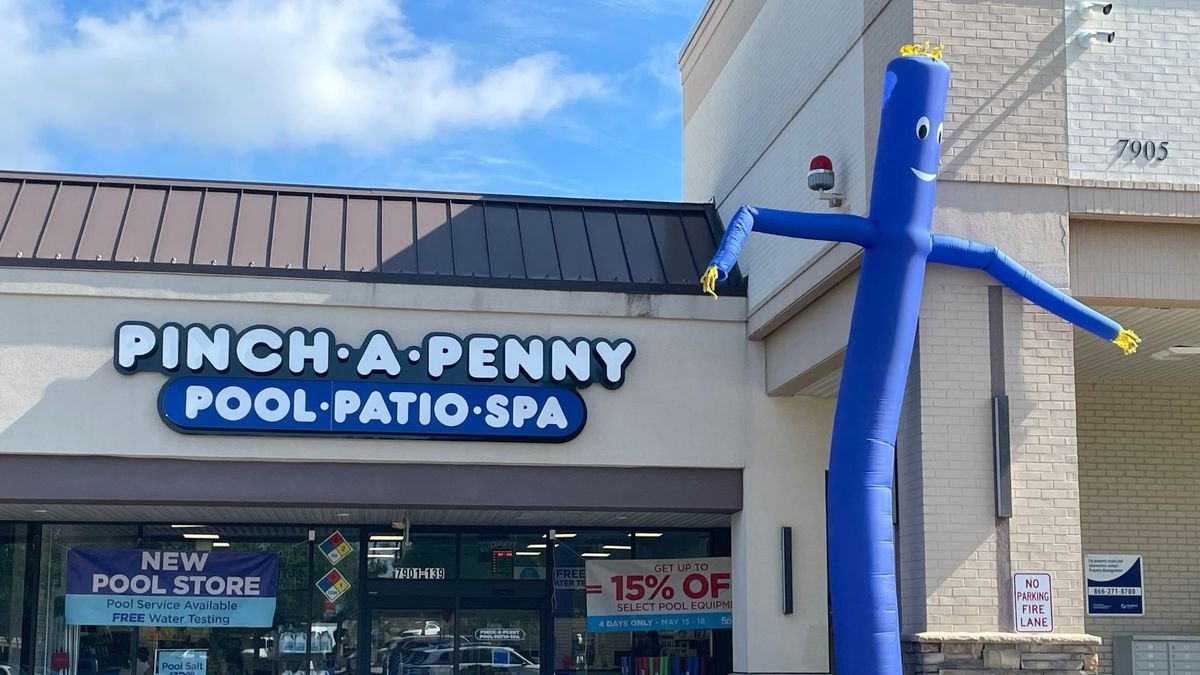
Yes — if you have $550K-$840K in real capital, a Sunbelt market with 5,000+ residential pools within a 15-minute drive, and a multi-year willingness to learn chlorine chemistry, retail merchandising, and route-service ops. Pinch A Penny is the largest retail pool-supply and service franchise in the US with 291 stores open as of December 31, 2024, 50 years of operating history, and average annual gross sales of $2,032,346 per store open at least one year (2023 FDD Item 19, carried into the 2025/2027 disclosure cycle). Probably not — unless you can stomach a 24-36 month payback, a 6% royalty + 4% marketing fee stacked on retail-thin gross margins, and the fact that 39% of stores beat the average (meaning 61% sit below it). Conservative Year-1 owner cash flow: $60K-$140K after debt service on a ramping store.
The Real Numbers
Pinch A Penny's 2025 Franchise Disclosure Document (the document in force through the April 2027 renewal cycle under the FTC Franchise Rule) lists the following economics. All figures cite Item 7 (Estimated Initial Investment) and Item 19 (Financial Performance Representations) unless otherwise stated.
| Line Item | Low | High | Notes |
|---|---|---|---|
| Initial franchise fee | $50,000 | $50,000 | 20% veteran discount drops to $40,000 |
| Real estate / lease deposits | $8,500 | $42,000 | 2,500-3,500 sq ft retail bay |
| Leasehold improvements + build-out | $80,000 | $185,000 | Signage, shelving, chemistry counter, service bay |
| Opening inventory | $135,000 | $185,000 | Chlorine, equipment, parts, chemicals |
| Service vehicles + equipment | $45,000 | $95,000 | 1-2 branded trucks, test kits, vacuums |
| POS, computers, software | $18,000 | $32,000 | Franchisor-mandated systems |
| Training + travel (Clearwater HQ) | $4,500 | $9,200 | 3-week required program |
| Insurance, permits, pro fees | $6,500 | $14,000 | Pool-contractor licensing varies by state |
| 3 months working capital | $172,425 | $225,000 | Payroll, royalty, rent runway |
| TOTAL INITIAL INVESTMENT | $519,925 | $837,200 | Item 7, 2025 FDD |
| Royalty | 6.0% of gross sales | — | Item 6 |
| National marketing fee | 4.0% of gross sales | — | Item 6 |
| Average annual gross sales (Item 19) | — | $2,032,346 | Stores open 1+ year, 2023 reporting |
| % of stores above the average | — | 39% | Item 19 disclosure |
| Liquid capital requirement | $150,000 | — | Item 7 supplement |
| Minimum net worth | $350,000 | — | Item 7 supplement |
| Typical EBITDA margin (mature store) | 8% | 14% | Retail+service blended; industry comp |
| Payback period (median) | 30 months | 48 months | Cash-on-cash from open |
Read the math straight: a store at the $2.03M Item 19 average running a mid-cycle 11% EBITDA throws off ~$223K of operating cash flow before debt service. Subtract $60K-$90K of SBA 7(a) debt service on a $500K loan and the owner clears $130K-$165K — assuming they hit the average, which 61% of stores do not. The bottom-quartile store doing ~$1.1M-$1.3M with the same fixed cost structure clears $40K-$80K — barely a salary. Pinch A Penny offers in-house financing to reduce the SBA gap, but the unit economics still demand a 2027 Sunbelt market with year-round pool season.
Who Wins With This Business
Owners who win with Pinch A Penny share five traits.
1. They live in a year-round pool market. Florida has 1.7 million+ residential pools, Texas adds ~600K, Arizona another ~400K, and Pinch A Penny's footprint follows that demand. The brand operates 300+ stores across Florida, Texas, Arizona, Nevada, Georgia, North Carolina, South Carolina, and Alabama as of 2026. Snowbelt operators do not exist here for a reason — chlorine demand collapses October-April.
2. They are owner-operators, not absentees. Pinch A Penny's franchisee survey consistently reports that stores with the owner physically on-site 40+ hours per week outperform absentee stores by 18-25% on gross sales. Retail closing rates on $1,200 pool-cleaner upsells require an owner who knows water chemistry cold.
3. They built a service route alongside the store. The retail counter is a customer-acquisition machine for the recurring weekly-service business at $130-$185/month per pool. A 200-pool route adds $300K-$440K of high-margin recurring revenue to the store's top line.
4. They have prior small-business or trades experience. Pinch A Penny's strongest segment is second-career operators in their 40s-50s with corporate-management or HVAC/plumbing/electrical backgrounds. Family-run stores show the highest 5-year survival rate at 92% per franchisor disclosure.

5. They under-leverage. Owners who put 40%+ equity into the deal (rather than maxing out a 90% SBA 7(a)) survive the Year-2 cash-flow dip when initial inventory financing comes due.
Who Loses With This Business
Five profiles lose money with Pinch A Penny — predictably.
1. Absentee investors expecting a passive return. The 6% royalty + 4% marketing fee = 10% of gross off the top before COGS. Retail pool supply runs 28-34% gross margin on chemicals and 38-44% on equipment. After the 10% franchise stack, ~30% blended COGS, ~14-18% labor, and ~8-10% occupancy, an absentee manager has to be a unicorn to leave anything for the owner.
2. Snowbelt or mountain-market buyers. A store in Denver, Boise, or Cleveland faces 6-month dead season with full fixed costs. Pinch A Penny does not currently award territories outside the Sunbelt — for sound reason. Buyers who push to be the "first store in [cold market]" lose.
3. Under-capitalized operators. The $150K liquid + $350K net worth minimum is a floor, not a target. Operators who hit only the floor burn through working capital by month 9 and start skipping advertising spend — which kills new-customer acquisition and starts a death spiral.
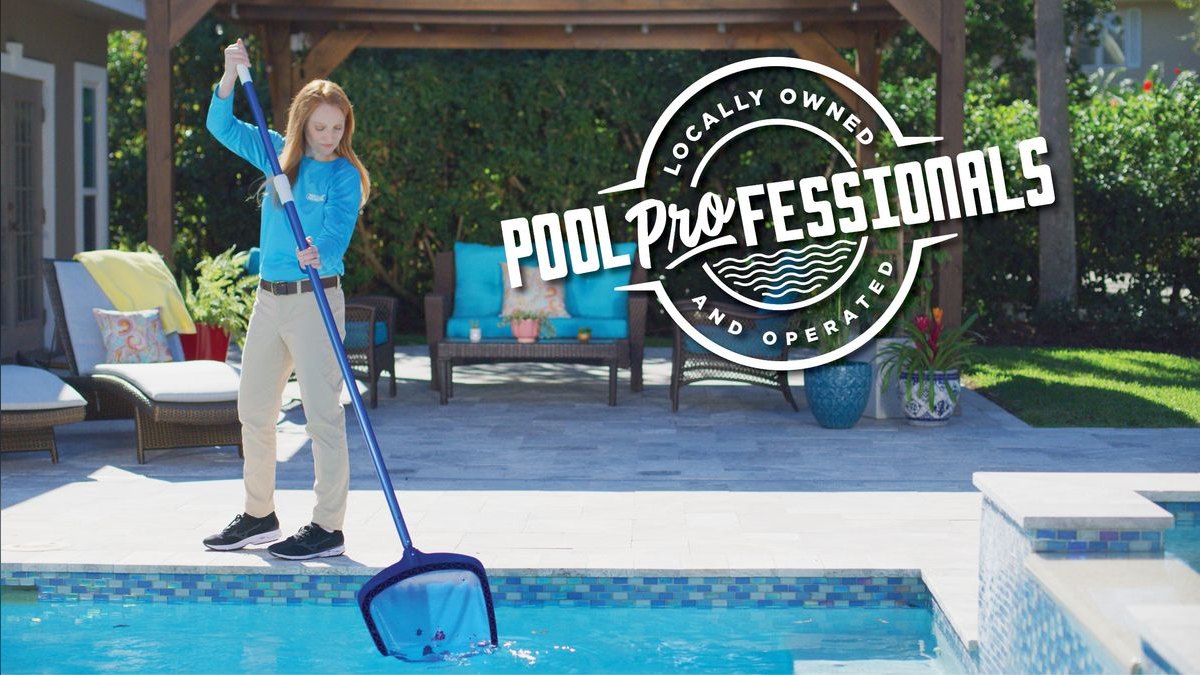
4. Retail-only operators who skip the service route. Pure-retail Pinch A Penny stores cap out at ~$1.4M-$1.6M in gross sales and run 6-9% EBITDA — too thin to support owner draw plus debt service. The service route is where the EBITDA lives, not the cash register.
5. Operators who fight the franchisor's chemistry-system mandate. Pinch A Penny's proprietary water-testing system and BioGuard chemical line is non-negotiable. Operators who try to source cheaper chlorine through grey-market distributors face termination and lose all build-out equity.
2027 Market Conditions
The 2027 environment is the most favorable Pinch A Penny has seen in a decade, with three structural tailwinds and two structural threats.
Tailwind 1 — Pool-build backlog conversion. The 2021-2024 residential pool boom added 240,000+ new in-ground pools to the US installed base per Pool & Spa News. Those pools hit their first major equipment-replacement cycle in 2027-2029 — heaters, pumps, salt cells, automation controllers all need replacement at the 5-7 year mark. This is a measurable demand wave.
Tailwind 2 — Florida + Texas migration continues. Net domestic migration to Florida and Texas added ~480K new residents combined in 2025, per BEA data, and ~62% of new single-family construction in those states includes a pool. Pinch A Penny's footprint matches the demand vector exactly.
Tailwind 3 — Independent operator consolidation. IBISWorld counts 14,359 formally registered pool-cleaning businesses in the US (2025 report). The median operator is 58 years old with no succession plan per the National Pool Industry News 2025 survey. Pinch A Penny franchisees buying independent routes for 1.0-1.4x annual recurring revenue are growing same-store sales 15-22% through tuck-in acquisitions.
Threat 1 — Chlorine cost volatility. The 2020 BioLab trichlor plant fire drove chlorine prices up 300% through 2023, and tariff uncertainty on Chinese isocyanurates in 2026-2027 continues to compress retail margins. Operators who do not pass through cost increases monthly lose 200-400 bps of gross margin.
Threat 2 — Big-box and DTC competition. Leslie's, Pool Supplies Superstore, and Amazon compete aggressively on commodity chemicals. Pinch A Penny's defense is the in-store water-testing service + same-day repair — but stores that do not actively merchandise service over commodity lose share.
The 90-Day Decision Tree
A disciplined 90-day evaluation separates real buyers from tire-kickers. Run these steps in order.
1. Days 1-10 — Pull the 2025 FDD and read it cover to cover. Request directly from franchising@pinchapenny.com. Read Item 7 (investment), Item 19 (performance), Item 20 (system size/turnover), and Item 21 (audited financials). Pay specific attention to Item 20 closures and transfers — a healthy system shows <3% annual closure rate.
2. Days 11-25 — Validator calls with 8-12 existing franchisees. The FDD Item 20 exhibit lists every franchisee with phone and email. Call stores in your same revenue tier (newly opened, mid-range, top-quartile) and ask: actual Year-1 gross sales, actual months to breakeven, biggest unexpected cost, biggest regret, would they buy again.
3. Days 26-40 — Market analysis on your specific territory. Use county property-appraiser data to count single-family parcels with pool flags within a 12-minute drive of your target retail address. Cross-reference with Esri demographic data for median household income (target: $85K+) and home-value distribution (target: 60%+ of homes above $400K). Minimum threshold: 4,000 pools. Below that, the math does not work.
4. Days 41-55 — Attend Discovery Day at Clearwater HQ. Pinch A Penny runs monthly Discovery Days at the Clearwater, FL support center. Bring your spouse or business partner — the franchisor specifically screens for household alignment because owner-operator hours destroy unprepared marriages.
5. Days 56-70 — Secure capital. Pinch A Penny offers in-house financing for qualified veterans and existing operators. SBA 7(a) lenders comfortable with the brand include Live Oak Bank, Celtic Bank, and Newtek. Target a 65/35 debt-to-equity structure — do not max leverage.
6. Days 71-85 — Lease negotiation + contractor licensing. Florida, Texas, and Arizona require state-level pool contractor licensing for the service-route business. Florida's CPC (Certified Pool Contractor) exam has a 42% first-time pass rate — start studying during validator calls.
7. Days 86-90 — Sign or walk. If validator calls produced 2+ "would not buy again" responses, or your specific territory shows <4,000 pools within a 12-minute drive, or your capital stack requires >80% debt, walk. There will be other deals.
Alternative Plays
Before signing the Pinch A Penny franchise agreement, consider four alternative plays that may deliver better risk-adjusted returns.
1. Buy an independent pool route directly. A 200-pool service route in central Florida sells for $250K-$340K at 1.0-1.4x annual recurring revenue. No franchise fee, no royalty, no marketing stack — pure 22-28% EBITDA on $300K-$440K of recurring revenue. The trade-off: no brand, no national vendor pricing, no proven retail playbook.
2. America's Swimming Pool Company (ASP) franchise. ASP is service-only (no retail store) with a $45K franchise fee and $90K-$240K total investment. Much lower capital threshold but lower revenue ceiling — mature ASP territories average $650K-$1.2M vs. Pinch A Penny's $2M+.
3. Poolwerx franchise. Australian-founded competitor expanding aggressively in the US Sunbelt. $80K franchise fee, $385K-$795K total investment, similar retail+service model. Smaller US footprint (~70 stores) means more territory availability but less brand recognition with consumers.
4. Build a multi-unit Pinch A Penny portfolio. The strongest-performing operators in the system own 3-7 stores with shared back-office, fleet, and bulk-chemical purchasing. Start with one store, prove operator capability for 24 months, then negotiate area-development rights for adjacent territories at reduced franchise fees.
FAQ
What is the total investment range for a Pinch A Penny franchise? The total investment typically falls between $550,000 and $840,000. This range includes the franchise fee, build-out costs, inventory, and working capital, though actual costs vary by market and store size.
How long does it take to break even or see a return? Most franchisees should expect a 24- to 36-month payback period. Year-1 owner cash flow after debt service is often in the $60,000 to $140,000 range, depending on store ramp-up and local market conditions.
What are the ongoing royalty and marketing fees? You’ll pay a 6% royalty on gross sales plus a 4% marketing fee. These fees are stacked on retail-thin gross margins, so careful financial planning is essential to maintain profitability.
How many residential pools do I need in my area to succeed? A viable territory typically has at least 5,000 residential pools within a 15-minute drive. Fewer pools may make it difficult to generate sufficient sales volume for the store and route-service operations.
What percentage of stores perform above the average? About 39% of stores beat the reported average annual gross sales of roughly $2 million. That means 61% of stores fall below that figure, so outcomes vary widely by location and operator skill.
Do I need prior pool industry experience? No formal experience is required, but a willingness to learn chlorine chemistry, retail merchandising, and route-service operations is critical. Most franchisees spend their first year mastering these areas before seeing strong returns.
Bottom Line
Pinch A Penny is a credible 2027 franchise investment for owner-operators with $200K+ liquid capital deploying into Sunbelt markets with 5,000+ residential pools within driving distance. The $2.03M Item 19 average, 6%/4% royalty stack, 30-48 month payback, and 8-14% mature EBITDA are real, knowable, and consistent across 50 years of system history. The brand wins because the 2027 environment — pool-equipment replacement cycle, Sunbelt migration, independent-operator consolidation — favors capitalized franchise systems over solo operators. It loses for absentee investors, undercapitalized buyers, Snowbelt markets, retail-only operators, and anyone who fights the chemistry-system mandate. Run the 90-day decision tree disciplined. Verify your territory's pool count. Call 10+ validators. Then sign or walk.
Sources
- Pinch A Penny Franchise Disclosure Document 2025 — Item 7 & Item 19 (franchisedirect.com)
- Pinch A Penny Pool Patio Spa Franchising (official)
- Pinch A Penny Pool Franchise Opportunities
- Pinch A Penny In-House Financing Program
- 1851 Franchise — Pinch A Penny Deep Dive: Costs, Fees, Profit and Data
- Franchise Business Review — Pinch A Penny Top Franchise for Women
- IBISWorld — Swimming Pool Cleaning Services in the US, 2025 Industry Report
- IBISWorld — Swimming Pool Equipment Stores in the US, 2025
- PoolPro Magazine — New Pinch A Penny Stores and Franchisees
- National Pool Industry News — Pool Service Industry Statistics and Market Data
- Entrepreneur — Pinch A Penny Pool Patio Spa Franchise Directory 2026
- International Franchise Association (IFA) — Franchise Economic Outlook 2026-2027
Related on PULSE
This page will be disappearing soon. Save it to your device for $1 — or read it free while it is here.
@Kory-White- · if Venmo asks, the last 4 of my number are 2012
This page is gone.
This one is off the shelf now. $1 keeps it on your phone for good — the whole page, pictures and diagrams included.
 franchiseShould I open or buy a Charleys Cheesesteaks franchise in 2027?
 franchiseShould I open or buy a Storm Guard Roofing franchise in 2027?
 franchiseShould I open or buy a Glory Days Grill franchise in 2027?
 franchiseShould I open or buy a Maui Wowi franchise in 2027?
 franchiseShould I open or buy an Expedia Cruises franchise in 2027?
 franchiseShould I open or buy a Howard Hanna Real Estate franchise in 2027?
 franchiseShould I open or buy a Cold Stone Creamery franchise in 2027?
 franchiseShould I open or buy Cinnabon franchise or open an independent sandwich shop in 2027?
 franchiseShould I open or buy a Drama Kids franchise in 2027?
 franchiseShould I open or buy a Pestmaster franchise in 2027?