
Should I open or buy a LaMar's Donuts franchise in 2027?
 Curated byKory White · Fractional CRO · Maryland
 PULSEKNOWLEDGE LIBRARY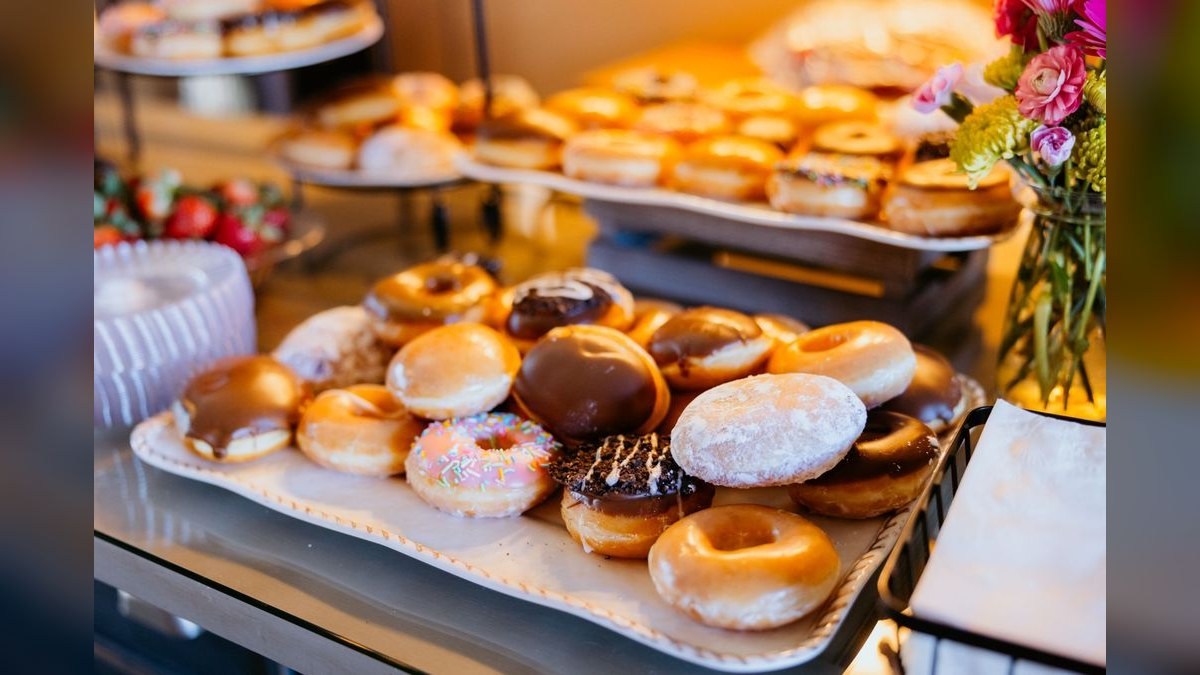
Probably not — unless you already operate a high-traffic Midwest or Mountain-West breakfast concept, can fund $350K–$500K all-in from cash and SBA debt without touching retirement savings, and are willing to grind through a 24–36 month breakeven on a brand that has roughly 25 open units and is fighting Dunkin', Krispy Kreme, and indie hipster donut shops for the same morning daypart. LaMar's Donuts & Coffee is a real, 93-year-old handmade-donut brand with genuine fan loyalty in Denver and Kansas City — but Year-1 conservative cash flow lands at $35K–$75K on roughly $650K–$900K in sales, and the system has not meaningfully expanded its footprint in over a decade. If you want scale donut economics, Dutch Bros, Krispy Kreme, or Shipley are the more defensible 2027 plays.
The Real Numbers
LaMar's is a small, regional franchisor headquartered in Denver, Colorado, with roughly 25 operating units across Arizona, Colorado, Kansas, Missouri, and Nebraska as of 2027. Because the system is small, FDD Item 19 financial performance representations are thin and the FDD itself is not widely indexed in public FDD databases (FranchiseHelp, FranchiseMall, FranchiseGenius all republish the same disclosed ranges). The numbers below combine disclosed Item 7 / Item 5 ranges, public IBISWorld 2026 doughnut-store benchmarks ($9.6B industry, ~14,469 establishments, 5.8% CAGR 2020-2025), and operator-reported P&Ls from comparable handmade-donut concepts.
| Line item | Low | High | Notes |
|---|---|---|---|
| Initial franchise fee (Item 5) | $28,500 | $28,500 | 10-year term, renewable |
| Real estate / leasehold deposits | $15,000 | $40,000 | 1,800–2,400 sq ft retail end-cap |
| Build-out & leasehold improvements | $120,000 | $200,000 | Hood, plumbing, drive-thru if available |
| Donut & coffee equipment | $75,000 | $110,000 | Fryers, proofer, mixers, espresso, POS |
| Signage, smallwares, opening inventory | $20,000 | $35,000 | |
| Training, travel, grand opening | $10,000 | $20,000 | Required 6-week Denver training |
| Working capital (3 months) | $40,000 | $75,000 | Payroll, rent, utilities runway |
| Total Item 7 initial investment | $288,500 | $508,500 | Disclosed range $288.5K–$366.5K; build-out cost inflation 2024-2027 pushes the realistic top to ~$500K |
| Ongoing royalty | 5.0% of gross sales | ||
| Brand / marketing fund | 2.0% of gross sales | Estimated; small-system pooled fund | |
| Estimated AUV (Year 1) | $650,000 | $900,000 | Below national franchise donut median; LaMar's units are smaller-footprint than Dunkin' |
| Mature AUV (Year 3+) | $850,000 | $1,200,000 | Top Denver units reportedly above $1M |
| Food + paper COGS | 28% | 32% | Handmade dough is higher COGS than Dunkin' |
| Labor (with mgmt) | 28% | 34% | Two-shift bakers + counter |
| Rent + occupancy | 8% | 12% | |
| EBITDA margin (mature) | 8% | 14% | Royalty + ad fund eats 7 pts off independent benchmarks |
| Year-1 owner cash flow | $35,000 | $75,000 | Assumes owner-operator, not absentee |
| Year-3 owner cash flow | $95,000 | $160,000 | |
| Cash-on-cash payback | 36 months | 60 months | |
| Liquid capital required | $150,000 | ||
| Net worth required | $350,000 |
Conservative underwriting: model Year-1 AUV at $700K, blended food + labor + occupancy + royalty + ad fund at 78%, leaving $154K before owner draw, debt service, and insurance. After $2,500/month SBA 7(a) debt service on a $300K loan at 10.5%, owner take-home is $45K–$60K Year 1. This is a four-day-a-week 5 a.m. job that pays like a salaried regional manager until Year 3 or 4.
Who Wins With This Business
The franchisees who actually clear $150K+ in owner earnings by Year 3 at LaMar's share a tight profile.
- Existing food-service operators — multi-unit Dunkin', Einstein Bros., or Tim Hortons franchisees who already own a commissary, a real-estate broker relationship, and a hiring funnel. They cut $80K–$120K off the build-out by reusing equipment vendors and have an HR team that can staff a 5 a.m.–2 p.m. operation.
- Denver, Kansas City, and Omaha natives with brand nostalgia equity — communities where LaMar's has been a Saturday-morning ritual since the 1960s. These markets deliver 20–35% repeat customer rates in Week 1, which most new donut concepts spend $50K in marketing to manufacture.
- Owner-operators willing to bake — the unit-economics math only works if the owner is on-site 50+ hours a week through Month 18. Absentee operators consistently underperform AUV by 18–25% in handmade-donut concepts because dough quality drifts the moment the owner stops pulling 4 a.m. shifts.
- Drive-thru real-estate winners — LaMar's units with a drive-thru clear $1.1M+ AUV; sit-down-only units stall at $600K–$750K. If you cannot secure a corner end-cap with a drive lane, walk away.
- Patient capital — operators who do not need this business to fund their lifestyle in Year 1 and can stomach a 36-month payback.
Who Loses With This Business
- First-time food operators using SBA leverage to cover 80% of the capital stack — debt service of $3,000+/month crushes Year-1 cash flow and pushes you into technical default if AUV undershoots $600K.
- Coastal operators (NY, CA, FL, PNW) — LaMar's has zero brand recognition outside its 5-state footprint. You will pay full freight to build awareness while competing with Krispy Kreme's $1.2M AUV units and Randy's Donuts (which actually disclosed $1.41M average gross sales in 2023).
- Absentee investors — the 2010 Springfield, MO franchisee revolt (Springfield Business Journal coverage of a franchisee who broke away from LaMar's) and the system's flat unit count for 12 years are a flashing warning sign that this is not a passive-income vehicle.
- Operators chasing third-party delivery dependency — DoorDash and Uber Eats take 22–30% of ticket and donuts travel poorly. Units that lean on delivery for >25% of revenue lose money on that channel.
- Anyone who has not personally underwritten an FDD Item 20 — LaMar's has had closed and terminated units in recent years; the small-system math means one bad market kills 4% of the entire chain.
2027 Market Conditions
The U.S. doughnut store industry is a $9.6B IBISWorld category in 2026 with 14,469 establishments, growing at a 5.8% CAGR 2020-2025. But the growth is bifurcated: Dunkin' modernization and Krispy Kreme retail-channel expansion are capturing share at the top, while indie craft donut shops (Sidecar, Hurts, Top Pot, Donut Bar) capture the premium daypart at $5–$7 average ticket.
LaMar's sits awkwardly in the middle — premium enough to charge $1.85–$2.50 per donut but not boutique enough to command the $4 Instagram donut price. 2027 conditions pressuring this position:
- Egg, flour, and shortening costs remain 18–24% above 2022 baselines after the 2024-2025 avian-flu cycle, compressing donut-shop COGS by 2-3 points.
- Labor floors of $15–$18/hour in Denver, Phoenix, and Kansas City metros push franchise labor lines above 30% of sales for any unit doing under $800K.
- GLP-1 drug penetration (Ozempic, Mounjaro, Zepbound) reduced quick-service breakfast traffic 4-7% in 2026 per Circana scanner data, with sweet-baked-goods categories disproportionately hit.
- Drive-thru coffee competition — Dutch Bros opened 165 net new units in 2026, Scooter's added 140, and 7 Brew added 220. Each new drive-thru coffee unit within 1.5 miles of a LaMar's siphons 8-15% of morning ticket.
- Small-system risk — with ~25 units, LaMar's lacks the national supply-chain leverage of a Dunkin' (~9,500 U.S. units) or Krispy Kreme (~370 U.S. shops + ~6,500 access points). Your COGS is structurally 200-400 bps worse than the giants.
The 90-Day Decision Tree
- Days 1-10: Request the current FDD directly from LaMar's corporate (3600 S. Yosemite St., Suite 750, Denver, CO 80237). Refuse to rely on third-party summaries. Read Items 3 (litigation), 7 (investment), 19 (FPRs), and 20 (unit counts and turnover) line by line. If Item 20 shows >10% unit churn over the prior 3 years, stop.
- Days 11-20: Call 5 current franchisees and 3 former franchisees from the Item 20 list. Ask: "What is your trailing-12 AUV, your food + labor + occupancy + royalty stack, and would you sign again at today's build-out costs?" If 3 of 5 current operators are below $700K AUV, stop.
- Days 21-35: Secure conditional real estate. Target end-cap with drive-thru in a Denver, Kansas City, Omaha, or Phoenix submarket with 40,000+ daytime population within 3 miles and household income above $85K. If no drive-thru is available within your budget, walk.
- Days 36-50: Build a defensible 5-year pro forma with three scenarios: $650K, $850K, $1.05M AUV. Stress-test debt coverage at $600K AUV. If DSCR falls below 1.15 at the low case, the deal is too levered.
- Days 51-65: Get SBA 7(a) pre-qualification from a food-franchise-experienced lender (Live Oak, Huntington, Byline). Do not accept higher than 75% LTV; insist on 25%+ equity injection to survive a soft opening.
- Days 66-80: Visit at least 3 LaMar's locations on weekday mornings and Saturday mornings. Count cars in the drive-thru. Watch ticket time. Eat the product cold at 11 a.m. If the donuts are stale by 10:30 a.m., the operator is over-baking and the unit economics are broken.
- Days 81-90: Sign or walk. If FDD reads clean, validators corroborate $850K+ AUV, real estate is drive-thru, and SBA terms are non-predatory, sign. If any of those four conditions fail, walk and look at Shipley Do-Nuts, Dunkin', or Scooter's Coffee instead.
Alternative Plays
If LaMar's underwriting falls apart, run the same diligence playbook against these 2027 alternatives.
- Shipley Do-Nuts — ~325 units, total investment $465K–$1.85M, 5% royalty, AUV reportedly $900K-$1.4M in mature Texas markets. More scale, better supply chain, similar handmade positioning.
- Dutch Bros (corporate-only, not franchised) — not a franchise but a strategic comp; Dutch Bros' 165-unit 2026 expansion is the drive-thru coffee thesis competing for LaMar's morning daypart.
- Scooter's Coffee — total investment $760K–$1.3M, royalty 6%, AUV $750K–$1.1M, drive-thru-only model that directly out-positions LaMar's on speed and labor cost.
- Krispy Kreme HotLight Theater Shop — investment $2.4M–$4M, but AUV $2.5M-$4M and brand recognition is universal. Different capital league but better risk-adjusted returns for serious operators.
- Independent craft donut shop — skip the 5% royalty and 2% ad fund. Total build $180K–$320K, target $450K-$700K AUV, EBITDA margin 15-22%. The right move if you have culinary chops and a strong local brand idea.
- Tropical Smoothie Cafe or Crisp & Green — healthy fast-casual with AUV $1.1M-$1.4M that does not fight GLP-1 headwinds.
FAQ
What is the total investment needed to open a LaMar's Donuts franchise? The all-in cost typically ranges from $350,000 to $500,000. This includes franchise fees, equipment, build-out, inventory, and working capital. Most owners fund this with a mix of cash and SBA loans, but you should avoid tapping retirement savings.
How long does it take to break even with a LaMar's Donuts franchise? Breakeven usually takes 24 to 36 months. First-year cash flow is conservative, landing between $35,000 and $75,000 on sales of $650,000 to $900,000. Patience and a strong local following are essential.
How many LaMar's Donuts locations are currently open? There are roughly 25 open units, primarily in the Midwest and Mountain-West regions. The brand has not expanded significantly in over a decade, so you'd be joining a small, tight-knit system.
Is LaMar's Donuts a well-known brand? Yes, it's a 93-year-old handmade donut brand with genuine fan loyalty, especially in Denver and Kansas City. However, it competes directly with larger chains like Dunkin', Krispy Kreme, and indie shops for the morning daypart.
Can I expect strong sales growth in 2027? Sales growth is modest and location-dependent. Year-1 sales typically range from $650,000 to $900,000, with gradual increases if you build a loyal customer base. It's not a high-growth franchise compared to Dutch Bros or Shipley.
What are the main risks of opening a LaMar's Donuts franchise? The biggest risks are the long breakeven period, limited brand expansion, and intense competition from national chains and local hipster donut shops. You also need to be comfortable with a smaller system and hands-on daily operations.
Bottom Line
LaMar's Donuts & Coffee is a real, beloved, 93-year-old handmade-donut brand with a small but loyal Midwest/Mountain-West footprint and the lowest franchise fee in the QSR donut category. For the right operator — food-service experienced, drive-thru real estate locked, fully funded with 25%+ equity, willing to bake 50 hours a week through Month 18 — it can return $95K–$160K in Year-3 owner cash flow on a $400K all-in investment. For everyone else — first-timers, SBA-maxed buyers, absentee investors, coastal markets — the math does not work. The bigger and more defensible 2027 donut and coffee plays are Shipley Do-Nuts, Krispy Kreme HotLight, and Scooter's Coffee. Do the FDD diligence, call eight validators, and walk if any single decision-tree gate fails.
Sources
- LaMar's Donuts Official Franchise Page — lamars.com/franchise
- LaMar's Donuts — Wikipedia (history, locations, founder)
- FranchiseHelp — LaMar's Donuts Franchise Cost & Opportunities 2026
- The Franchise Mall — LaMar's Donuts Franchise Costs & Fees
- IBISWorld — Doughnut Stores in the US Industry Report 2026 ($9.6B, 14,469 establishments)
- IBISWorld — Coffee & Snack Shops in the US Industry Analysis 2026
- Toast POS — How Much Do Donut Shops Make? (Average Donut Shop Revenue Data)
- Randy's Donuts Franchising — How Much Do Donut Shops Make Profit Guide ($1.41M AUV 2023)
- BizBuySell — Donut Shop Business Valuation Multiples & Financial Benchmarks
- Springfield Business Journal — Franchisee breaks away from LaMar's
- 9News — Ray Lamar, the Midwest's king of doughnuts, dead at 89 (founder history)
- Mobile Cuisine — How Much Does it Cost to Open a LaMar's Donuts
Related on PULSE
This page will be disappearing soon. Save it to your device for $1 — or read it free while it is here.
@Kory-White- · if Venmo asks, the last 4 of my number are 2012
This page is gone.
This one is off the shelf now. $1 keeps it on your phone for good — the whole page, pictures and diagrams included.
 franchiseShould I open or buy a Howard Hanna Real Estate franchise in 2027?
 franchiseShould I open or buy a Pool Scouts franchise in 2027?
 franchiseShould I open or buy a CarePatrol franchise in 2027?
 franchiseShould I open or buy a Freddy's Frozen Custard franchise in 2027?
 franchiseShould I open or buy a Round Table Pizza franchise in 2027?
 franchiseShould I open or buy a Pet Supplies Plus franchise in 2027?
 franchiseShould I open or buy a Huey Magoo's franchise in 2027?
 franchiseShould I open or buy Jimmy John’s franchise or open an independent sandwich shop in 2027?
 frShould I open or buy a McDonald's franchise in 2027?
 franchiseShould I open or buy a Just Salad franchise in 2027?