
Should I open or buy a Cherry Berry frozen yogurt franchise in 2027?
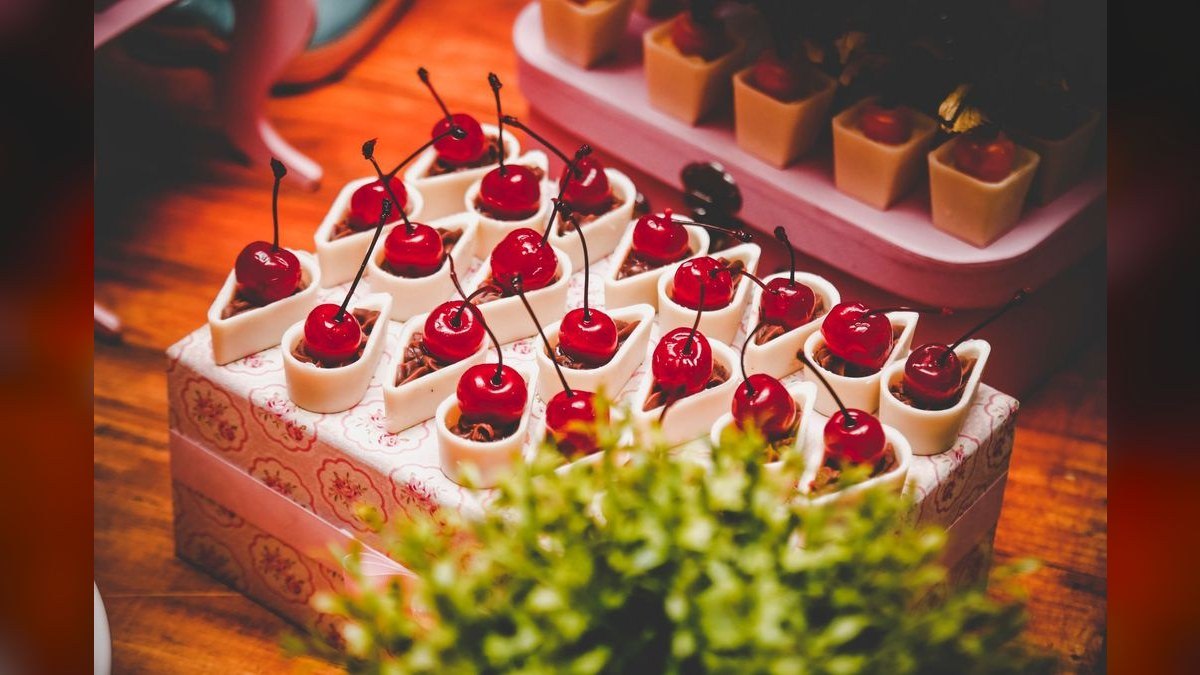
Probably not — unless you have a high-traffic, family-dense suburban or college-town site with anchor co-tenants (Target, AMC, Chick-fil-A, a big-box grocery), $150K-$200K liquid beyond financed dollars, and the stomach to operate a seasonal, declining-category single-unit business for 5-7 years before payback. Cherry Berry's all-in startup runs $339,000 to $505,760 per the 2022 FDD (Item 7), with a $25,000 franchise fee, 6% royalty, and ~2% marketing fee. Realistic Year-1 cash flow on a median-AUV unit is $35,000-$70,000 owner-operator pay after debt service. Breakeven on the build is 4-7 years; the self-serve frozen yogurt category has lost 40-60% of its US units since the 2013 peak. If you cannot lock a Class-A pad for under $40/sq ft NNN with summer foot traffic of 1,500+ daily, walk.
The Real Numbers
Cherry Berry's most recent publicly accessible Franchise Disclosure Document is dated September 2022 and remains the operative reference until the 2027 renewal posts on the FTC franchise registry (the brand has not materially restructured its fee schedule in three years per Franchise Direct and Franchise Panda extracts). Build-out inflation since 2022 has pushed the realistic high end above the $505,760 ceiling for new-construction inline retail in 2027, especially in Sun Belt markets where general-contractor bids are running 18-24% over 2022 baselines.
| Line item | 2022 FDD low | 2022 FDD high | 2027 realistic |
|---|---|---|---|
| Initial franchise fee (Item 5) | $25,000 | $25,000 | $25,000 |
| Leasehold improvements / build-out | $135,000 | $230,000 | $175,000-$295,000 |
| Equipment (machines, sinks, POS, freezers) | $85,000 | $110,000 | $95,000-$135,000 |
| Signage & decor | $12,000 | $22,000 | $15,000-$28,000 |
| Initial inventory | $8,000 | $14,000 | $10,000-$18,000 |
| Insurance, deposits, licenses | $9,000 | $18,000 | $12,000-$22,000 |
| Training & travel | $3,000 | $7,500 | $4,000-$8,500 |
| Working capital (3 mo) | $50,000 | $70,000 | $60,000-$90,000 |
| Grand opening marketing | $12,000 | $9,260 | $12,000-$15,000 |
| TOTAL | $339,000 | $505,760 | $408,000-$616,500 |
| Royalty | 6.0% gross | 6.0% gross | 6.0% gross |
| Marketing fee | ~2.0% gross | ~2.0% gross | ~2.0% gross |
Revenue and EBITDA reality — Cherry Berry does not publish a robust Item 19, which is a meaningful disclosure gap; FranchiseGrade explicitly flags the brand as "discloses much less financial-performance information than peers." Triangulating from comparable self-serve frozen-yogurt brands (Yogurtland Item 19 medians, Menchie's prior FDDs, IBISWorld 31152d frozen-dessert-shops data), a typical mature Cherry Berry unit produces $280,000-$425,000 in annual gross sales, with top-quartile suburban units hitting $500,000-$650,000 and bottom-quartile units stalling at $180,000-$240,000.
Cost stack on a $350,000-AUV unit: cost of goods 30-34% (yogurt mix, toppings, cups, spoons), labor 22-28% (mostly $13-$16/hr teen and college part-time), rent 9-13% (typical pad lease $30-$48/sq ft NNN on 1,400-1,800 sq ft), royalty + marketing 8%, utilities 4-6%, other opex 5-7%. That yields a store-level EBITDA margin of 10-16%, or $35,000-$56,000 of cash flow on a median unit before debt service and owner draw. Top-quartile units clear $75,000-$110,000 EBITDA. Payback period: 4-7 years at median, 3-4 years in a top-quartile location, never in a bottom-quartile pad.
Who Wins With This Business
Multi-unit operators who already run a complementary daytime concept (a coffee shop, a smoothie bar, a kids' play cafe) and bolt Cherry Berry into a shared back-of-house to dilute fixed overhead. Family operators in college towns and suburban Bible Belt markets (Cherry Berry's geographic core is Oklahoma, Texas, Arkansas, Missouri, Kansas, and Tennessee, where the brand was founded by Lance and Linda Tucker in Broken Arrow, OK in 2010), where church groups, school fundraisers, and youth sports teams drive repeat throughput the brand's "Yogurt Rewards" program captures cheaply. Owners who treat the store as a 7-year cash-flow asset, not a get-rich vehicle — the model rewards fanatical labor management (running 1.5-2.0 part-timers per shift max), toppings-bar discipline (waste under 8%), and active local marketing (school nights, team-of-the-month, faith-group bulletins).
The winning operator profile: 45-60 years old, owns a primary home outright or with low LTV, $250K-$400K liquid net of the unit investment, has run a food, retail, or service business before, lives within 15 minutes of the store, and is physically present 25-35 hours per week during the first 24 months. Single-unit absentee ownership is the single largest predictor of failure in self-serve frozen yogurt — the per-ounce pricing model bleeds margin the moment a manager stops calibrating the dispensers and policing the toppings bar.
Who Loses With This Business
First-time franchisees buying as a side hustle while keeping a W-2 job. Investors expecting passive returns — there are essentially none in this category. Anyone with under $150K liquid post-investment; the working-capital line in the FDD ($50K-$70K) is 30-40% light for 2027 reality, and you will burn through it covering summer ramp and winter contraction. Operators who sign a lease above $42/sq ft NNN — rent above 13% of sales is a death sentence in self-serve fro-yo. Anyone counting on year-round revenue smoothness — Cherry Berry units typically do 40-55% of annual revenue in May-August and 8-12% in December-February; if your fixed costs do not survive a $9,000 February, you lose the store.
Markets to avoid in 2027: dense urban Class-A retail (rent kills you), New England and Pacific Northwest (weather plus indoor-ice-cream competition), saturated metros where Menchie's, 16 Handles, Yogurtland, or sweetFrog already own the family-night occasion. The category has lost 40-60% of its US footprint since 2013 per Restaurant Business and Franchise Help reporting — Pinkberry alone fell from 154 units to under 60, Menchie's has shuttered 100-plus units in five years. Cherry Berry has consolidated to roughly 150-170 active US units in 2026 (down from a 2014 peak above 230), per Franchise Direct and FranchiseGrade tracking.
2027 Market Conditions
The self-serve frozen-yogurt category is in late-stage decline as a US retail format. Three structural pressures shape the 2027 underwriting case:
First, category substitution. The better-for-you dessert occasion that fro-yo owned from 2008-2014 has been fractured by Greek-yogurt cups at home, premium gelato chains (Salt & Straw, Van Leeuwen), boba tea, and Crumbl-style cookie shops. Crumbl alone added 400-plus US units in 2023-2025, capturing the same teen-and-family Friday-night occasion. Acai bowls (Playa Bowls, Vitality Bowls, Frutta Bowls) are eating the "healthy treat" share that fro-yo monetized.
Second, input cost compression. Yogurt mix wholesale prices rose 14-19% from 2023 to 2026 per USDA dairy reports, toppings and packaging up 9-12%, while per-ounce retail pricing has moved only $0.10-$0.20 over the same period because consumers price-anchor against the $7-$9 build of 2018. Margin compression of 300-500 bps is the category baseline.
Third, labor. State minimum-wage step-ups in CA, WA, NY, IL, CO, MN, and AZ have pushed teen wage floors to $15-$17.50 in 2027, eroding the labor arbitrage self-serve was originally built on. Cherry Berry's Sun Belt geographic core partially insulates the model (Oklahoma, Arkansas, Tennessee, Missouri stay at the $7.25 federal floor), which is the single most underrated structural advantage in the brand's franchise system relative to coastal competitors.
The 90-Day Decision Tree
- Days 1-7: Validate the math. Request the 2026 or 2027 FDD directly from Cherry Berry corporate at the Broken Arrow, OK headquarters (the franchisesales contact on cherryberryyogurtbar.com is the right path). Read Item 7, Item 19 (or note its absence), Item 20 (closure data), and Item 21 (audited financials). If 3-year unit-closure rate exceeds 12%, stop.
- Days 8-21: Talk to 12 current franchisees drawn at random from the Item 20 list — not the corporate-supplied "validators." Ask three questions: actual Year-1 AUV, actual Year-1 owner take-home after debt, would-you-do-it-again on a 1-10 scale. If the average score is under 7, stop.
- Days 22-45: Site hunt with a tenant-rep broker. Target 1,400-1,800 sq ft, endcap with patio, co-tenanted with grocery + family-medical or family-restaurant, rent under $42/sq ft NNN gross, 20K-35K daily-drive-by, median HH income $75K-$140K, household density of kids under 18 at 28%-plus in the 3-mile ring.
- Days 46-60: Lock financing. SBA 7(a) through Live Oak, Huntington, or Byline is the standard path — Cherry Berry is on the SBA Franchise Directory, simplifying eligibility. Bring 25-30% equity injection ($85K-$130K cash).
- Days 61-75: Build-out and equipment. Stoelting or Taylor self-serve machines (12-16 spouts standard), toppings bar from CaterChoice or BSI, POS via Toast or Square for Restaurants.
- Days 76-90: Hire, train, soft-open. Recruit 10-14 part-timers (cover 70 weekly shift-hours), complete the 7-day corporate training in Broken Arrow, soft-open with a school group, grand-open Saturday of week 13 with a buy-one-get-one-free and a local-school fundraiser tie-in.
Alternative Plays
If you have $400K and want frozen dessert, look hard at Crumbl (no fro-yo competition, AUVs $1.2M-$1.8M, but fees and territory premiums are 2-3x Cherry Berry and the franchise pool is closed for new applicants in 60-plus markets). Kona Ice at $150K all-in for a mobile truck flips the rent and labor model entirely and posts median owner take-home of $80K-$140K per the brand's Item 19. Dippin' Dots & Doc Popcorn kiosks at $120K-$260K target the mall and entertainment-venue channel Cherry Berry cannot serve. Playa Bowls at $310K-$555K captures the acai trend that is actively stealing fro-yo's share. If you want self-serve dessert without a brand, independent operators can replicate the Cherry Berry model for $190K-$280K by sourcing equipment used, skipping the $25K franchise fee + 8% ongoing royalty/marketing burden (a $28K-$34K annual cost on a $350K AUV) — the tradeoff is no brand recognition, no buying co-op, and no operations playbook, which kills 60-70% of independents inside 36 months.
FAQ
What is the total investment needed to open a Cherry Berry franchise? The all-in startup cost ranges from about $339,000 to $505,760, based on the 2022 FDD. This includes a $25,000 franchise fee, equipment, build-out, and initial inventory. You'll likely need $150,000–$200,000 in liquid capital beyond any financing.
How much money can an owner-operator expect to make in the first year? Realistic Year-1 cash flow for a median-AUV unit is roughly $35,000 to $70,000 after debt service. This is owner-operator pay, not profit after you pay yourself. Actual earnings depend heavily on location traffic and operating costs.
How long does it take to break even on a Cherry Berry franchise? Breakeven on the initial build typically takes 4 to 7 years. This timeline assumes consistent sales and controlled expenses. A slower ramp-up or seasonal dips can push it toward the longer end.
Why is the frozen yogurt category declining? The self-serve frozen yogurt segment has lost about 40–60% of its U.S. units since its peak around 2013. Competition from other dessert concepts, shifting consumer preferences, and market saturation have driven this decline. New entrants face a smaller overall market.
What location factors are critical for success? You need a high-traffic, family-dense suburban or college-town site with anchor co-tenants like Target, AMC, Chick-fil-A, or a big-box grocery. Summer foot traffic should be at least 1,500+ daily. Lease costs should ideally be under $40 per square foot NNN.
Can I operate a Cherry Berry franchise part-time or passively? No—this is a hands-on, owner-operator business, especially in the first few years. The seasonal nature and slim margins require active management to control labor, inventory, and marketing. Passive ownership is not realistic for a single unit.
Bottom Line
Cherry Berry in 2027 is a defensible single-unit small-business investment for a hands-on owner-operator in the Sun Belt with a Class-A family-co-tenanted pad, $400K-$500K of liquid capital, and a 7-10 year hold horizon. It is not a growth franchise, not a passive investment, and not appropriate for first-time owners with under $150K liquid post-investment. The brand's geographic concentration in low-minimum-wage states is the single underrated advantage; the category-level decline of self-serve frozen yogurt is the single biggest headwind. If your site economics cannot pencil at a $280K AUV (the realistic 25th-percentile case), do not sign. If they do pencil, expect $35K-$60K of owner pay in Year 1, break-even on the build by Year 5-6, and a thin resale market when you exit. Most prospective franchisees should pass and redeploy capital into Crumbl, Kona Ice, Playa Bowls, or an independent self-serve concept with better category tailwinds.
Sources
- Cherry Berry Self-Serve Yogurt Bar Franchise (Costs + Fees + FDD) - Franchise Direct
- Cherry Berry 2022 Franchise Disclosure Document (PDF) - Franchise Panda
- Cherry Berry Franchise Review - FranchiseGrade
- Cherry Berry Franchising - cherryberryyogurtbar.com
- Frozen Yogurt Franchises Are Freezing Over America - Franchise Help
- The second frozen yogurt craze continues its long decline - Restaurant Business
- IBISWorld - Frozen Dessert Production Industry
- SBA Franchise Directory - US Small Business Administration
- USDA Dairy Market News - 2026 wholesale yogurt mix pricing
- Cherry Berry Franchise Information - FoodFranchise.com
- Cherry Berry Franchise Costs & Fees - The Franchise Mall
- International Frozen Yogurt Association - Category History
Related on PULSE
- [Should I open or buy a Menchie's Frozen Yogurt franchise in 2027?](/knowledge/fr0123)
- [Best ice cream and frozen dessert franchises to buy in 2027](/knowledge/fr1111)
- [Should I open or buy an Andy’s Frozen Custard franchise in 2027?](/knowledge/fr0728)
- [Should I open or buy a Freddy's Frozen Custard franchise in 2027?](/knowledge/fr0144)
 pulse-moviesTop 10 Action Movies of All Time
 pulse-skillsSkill Drill: Objection Handling for Construction
 pulse-skillsSkill Drill: Reading Buying Signals for Food and Beverage Distribution
 pulse-skillsSkill Drill: Follow-Up Cadence for Roofing
 pulse-skillsSkill Drill: Upselling and Cross-Selling for B2B Distribution
 pulse-skillsSkill Drill: Running Effective Meetings for Manufacturing
 pulse-skillsSkill Drill: Conflict Resolution for Furniture Manufacturing
 pulse-skillsSkill Drill: Relationship Selling for Industrial Equipment
 pulse-skillsSkill Drill: Onboarding New Hires for Furniture Manufacturing
 pulse-skillsSkill Drill: Running Effective Meetings for Healthcare Sales