
Should I open or buy a Pizza Inn franchise in 2027?
 Curated byKory White · Fractional CRO · Maryland
 PULSEKNOWLEDGE LIBRARY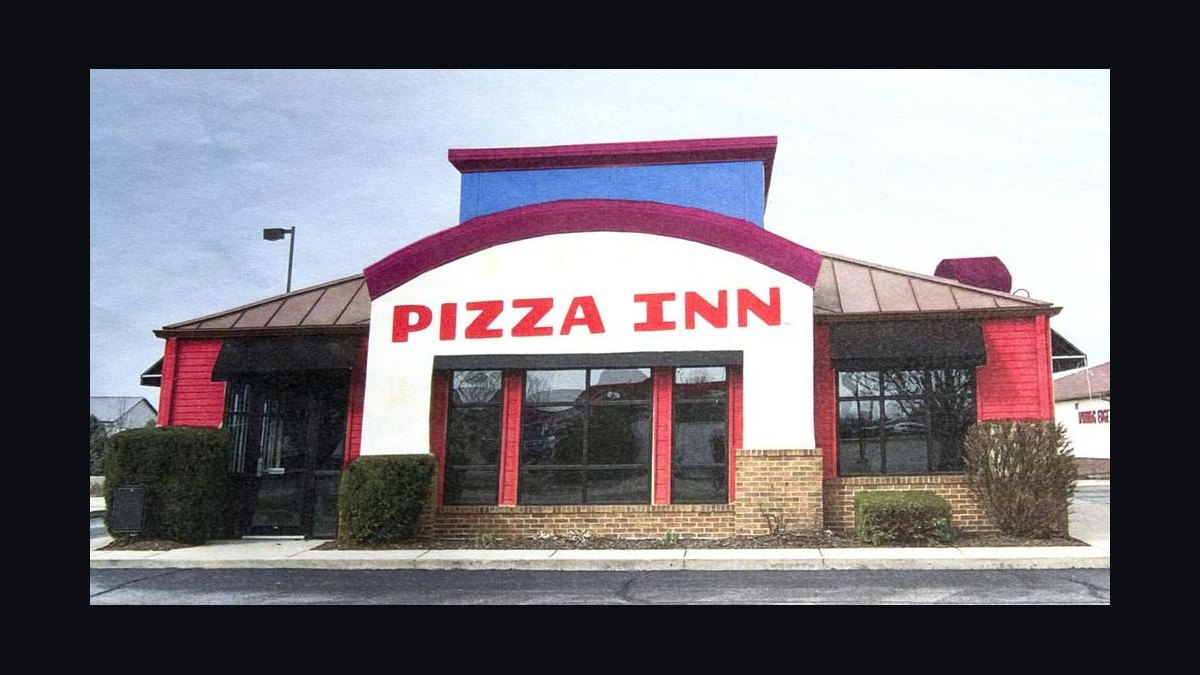
Probably not — unless you already own a buffet-friendly building in a small Southern or Midwestern town under 50,000 people, have $200,000–$300,000 in liquid capital, and can run a 120–185-seat dining room with 35–50 hourly employees yourself. Pizza Inn's total initial investment runs $415,000 to $793,000 for a Buffet unit (Item 7, FY2025 FDD), with a $25,000 franchise fee, 4% royalty, and 1% national marketing fee plus up to 5% local advertising. The brand is shrinking domestically — 97 domestic units as of Q3 FY2026 versus 200+ a decade ago — but same-store sales grew 8.1% in Q1 FY2026 and 2.3% in Q3 FY2026 (RAVE Restaurant Group). Realistic Year-1 owner cash flow on a Buffet is $45,000–$95,000 after debt service. Payback runs 5-8 years, not 3.
The Real Numbers
Pizza Inn franchises through parent RAVE Restaurant Group, Inc. (NASDAQ: RAVE) under three concepts: Buffet (3,000–5,000 sq ft, 120–185 seats), Delco (delivery/carryout, 900–1,200 sq ft), and Express (200–400 sq ft kiosk). Below are the 2025 FDD Item 7 ranges (filed for FY2026 enrollment) plus operator-reported P&L benchmarks from BizBuySell listings and RAVE's 10-K disclosures.
| Line Item | Buffet (Low) | Buffet (High) | Delco | Express |
|---|---|---|---|---|
| Initial franchise fee | $25,000 | $25,000 | $10,000 | $5,000 |
| Real estate / leasehold deposits | $5,000 | $50,000 | $4,000 | $2,000 |
| Construction & build-out | $150,000 | $350,000 | $40,000 | $15,000 |
| Furniture, fixtures, equipment | $125,000 | $225,000 | $50,000 | $25,000 |
| Signage | $15,000 | $30,000 | $5,000 | $3,000 |
| POS & technology | $12,000 | $25,000 | $10,000 | $6,000 |
| Opening inventory | $10,000 | $18,000 | $5,000 | $3,000 |
| Insurance, permits, training | $8,000 | $20,000 | $4,000 | $2,000 |
| Working capital (3 months) | $65,000 | $50,000 | $30,000 | $15,000 |
| TOTAL INITIAL INVESTMENT | $415,000 | $793,000 | $158,000 | $76,000 |
| Royalty (% of gross sales) | 4.0% | 4.0% | 4.0% | 4.0% |
| National marketing fund | 1.0% | 1.0% | 1.0% | 1.0% |
| Local advertising (recommended) | up to 5.0% | up to 5.0% | up to 5.0% | up to 5.0% |
| Minimum liquid capital required | $150,000 | $150,000 | $80,000 | $30,000 |
| Net worth requirement | $500,000 | $500,000 | $250,000 | $100,000 |
Revenue benchmarks (FY2025 RAVE 10-K + BizBuySell resale listings): Pizza Inn does not publish a full Item 19 AUV in the public FDD summaries, but RAVE's FY2025 10-K reports $179.8 million in total Pizza Inn system-wide retail sales across 96 domestic units, implying a rough domestic AUV near $1.55–$1.75 million for buffet units (express and Delco drag the average down). Independent BizBuySell listings of Pizza Inn buffet stores in 2025–2026 show annual gross revenue of $850,000–$2.1 million with net seller's discretionary earnings of $85,000–$240,000.
Margin structure on a $1.6M buffet:
- Cost of food: 28-32% ($448K-$512K)
- Labor (35-50 hourly + 1-2 managers): 30-34% ($480K-$544K)
- Royalty + marketing: 5% ($80K)
- Rent (NNN): 6-9% ($96K-$144K)
- Utilities (heavy — buffet pizza ovens, HVAC for 4,000 sq ft): 4-6%
- Insurance, supplies, R&M: 4-6%
- EBITDA margin: 6-12% ($96K-$192K)
- Owner-operator cash flow after debt service on $500K SBA loan at 11.5%: $45,000-$95,000 Year 1, growing to $80,000-$160,000 by Year 3 if same-store sales hold
Payback period: 5-8 years at the Buffet level, 3-5 years at Delco, 2-4 years at Express. These are slower than Domino's, Marco's, or Hungry Howie's because buffet labor and waste eat margin and Pizza Inn's brand pull is regional, not national.
Who Wins With This Business
Existing restaurant operators in towns under 50,000 people are the clearest winners with Pizza Inn. The brand's competitive moat is small-town nostalgia — Pizza Inn has operated in Southern and Midwestern markets since 1958 and carries 40+ years of birthday-party and Sunday-buffet memory in towns like Greenville NC, Tyler TX, Russellville AR, and Hattiesburg MS. An operator who already owns a 4,000-square-foot former buffet building (former CiCi's, former Ryan's, former Golden Corral) can convert for $180,000–$280,000 instead of building new, cutting total investment to $250,000–$400,000.
Multi-unit operators clustering 3-5 stores in a single DMA win on distribution savings, shared management overhead, and local marketing leverage. RAVE's 10-K identifies a handful of franchisees operating 5+ units capturing the bulk of system EBITDA. Single-unit owner-operators who work the dining room 50+ hours per week also win — they save the $55,000–$75,000 salary of a general manager and personally enforce buffet freshness, the single biggest brand-defection driver.
Buyers of distressed resale units win when they pay 2.5-3.5x SDE for a $1.4M+ revenue store with clean books and a long lease. BizBuySell listings in 2025-2026 showed several Pizza Inn buffet resales at $275,000-$450,000 acquisition prices on units generating $130,000-$180,000 in seller's discretionary earnings — implying 2.0-2.8x multiples, a discount to the 3.5-4.5x multiples on national-brand pizza resales.
Who Loses With This Business
First-time operators in major metro markets lose with Pizza Inn. The brand has almost no presence in Dallas, Houston, Atlanta, Charlotte, or Nashville urban cores despite being Texas-headquartered. Customer acquisition cost in metros is $35-$70 per new household — Pizza Inn's 1% national marketing fund cannot move the needle versus Domino's $400M+ annual ad spend or Pizza Hut's Yum! Brands media buy. New franchisees in metros routinely close inside 24 months after burning through working capital trying to build awareness.
Absentee or semi-absentee owners lose. Buffet operations require constant in-person quality control — pizza sitting on a warming line for 12 minutes turns rubbery, salad bar lettuce wilts, and buffet abuse (customers loading takeout containers) can spike food cost from 30% to 38% in a single quarter. Owners who delegate to a $52,000-a-year GM and check in twice a week see food cost drift, labor padding, and same-store sales decline of 4-9% per year.
Operators undercapitalized at the liquid-capital floor lose. Pizza Inn requires $150,000 liquid for Buffet, but realistic working capital needs run $90,000-$140,000 for the first 12 months beyond the $65,000 baked into Item 7. Anyone opening a Buffet with only $150,000 liquid and $643,000 of SBA debt is one bad summer away from default. The 11.5% SBA 7(a) rate in 2027 means $84,000 of annual debt service on $640K of borrowed capital — that alone consumes most Year-1 EBITDA.
Buyers chasing the "buffet comeback" narrative lose more often than they win. The post-COVID buffet recovery has been uneven — Golden Corral closed 70+ units between 2020 and 2025, and CiCi's emerged from 2021 bankruptcy with half its 2018 unit count. Pizza Inn's shrinking domestic count (from 200+ in 2014 to 97 in Q3 FY2026) signals the format is structurally challenged in markets above 75,000 population.

2027 Market Conditions
Pizza Inn enters 2027 as a small, profitable, shrinking-but-stabilizing brand. RAVE Restaurant Group reported three consecutive quarters of positive same-store sales in FY2026 — +8.1% Q1, +2.5% Q2, +2.3% Q3 — the strongest run since FY2019. Domestic unit count is 97 (82 buffets, plus Delco/Express) with 18 international stores, a modest net contraction from FY2025's 96 domestic count but stable enough to suggest the bleeding has slowed.
Three 2027 macro conditions matter for any new Pizza Inn franchisee:
Food cost volatility: Mozzarella cheese, the single largest food cost line for any pizza concept, traded at $1.95-$2.35/lb in 2026 versus the 2018-2022 average of $1.65/lb. USDA dairy forecasts call for $2.05-$2.25/lb through 2027. Flour costs are down 12% year-over-year but packaging (corrugated pizza boxes) is up 9%. Operators who locked supplier contracts in late 2024 at 2023 prices are losing them in 2027 contract renewals.

Labor — the buffet killer: The median fast-casual restaurant wage hit $15.85/hour nationally in mid-2026 (BLS QCEW), with 22 states at $13+ statutory minimums. A 4,000-sq-ft buffet running 35-50 hourly employees across two shifts absorbs $28,000-$45,000 of incremental annual labor versus 2022 wage levels. The Delco and Express formats are far more labor-efficient — 8-12 hourly employees instead of 40+.
The buffet category is consolidating, not growing: Golden Corral has 343 units in 2026 vs 480+ in 2014. CiCi's has 282 units vs 521 in 2014. Ryan's, Old Country Buffet, Hometown Buffet — gone. Pizza Inn's buffet-heavy mix (82 of 97 domestic units) makes it the largest pure-pizza-buffet brand in America, but the format is shedding 1-3% of units per year across the entire category. A new buffet operator in 2027 is buying into a structurally declining format with a temporary same-store-sales tailwind.
The 90-Day Decision Tree
- Days 1-10 — Request the 2026 FDD and read Item 7 + Item 19 + Item 20 line by line. Email franchising@pizzainn.com (RAVE Restaurant Group HQ, 3551 Plano Parkway, The Colony, TX 75056). Confirm current Item 7 totals match the $415K-$793K Buffet range and that Item 20 turnover data does not show 5+ closures in your target state over the past 3 years. Hard-stop if more than 2 of 10 nearest stores closed since 2023.
- Days 11-25 — Validate site economics in your target town. Pull U.S. Census ACS 5-year data for the trade area. Pizza Inn buffet units need a minimum 25,000-person trade area, median household income $42,000-$72,000, and zero Pizza Hut/Domino's within 2 miles. Use Placer.ai or SafeGraph foot-traffic data to compare your candidate building to the top quartile of existing Pizza Inn buffets (use Greenville NC, Tyler TX, or Florence SC as benchmarks).
- Days 26-45 — Call 12+ existing Pizza Inn franchisees. The FDD lists every active franchisee with phone numbers. Skip the ones HQ recommends — they're hand-picked. Cold-call bottom-quartile operators. Ask: "What's your actual food cost and labor cost?" "What's your monthly royalty + marketing check?" "What's your same-store sales versus prior year?" "Would you buy in again?" Hard-stop if 3+ of 12 say "no" to re-buying.

- Days 46-60 — Secure financing and lock the lease. Pizza Inn is on the SBA Franchise Directory — meaning SBA 7(a) loans up to $5M are available without re-underwriting the brand. Expect 11.0-12.0% rates in 2027 with 10-year amortization on equipment, 25-year on real estate. Negotiate a lease with 5-year initial term + two 5-year options, base rent at 6-7% of projected sales, with a co-tenancy clause if you are in a strip center.
- Days 61-90 — Sign the franchise agreement, attend training, and open. RAVE runs a 3-week training program in The Colony, TX plus 2 weeks of on-site opening support. Order point-of-sale, signage, and dough mixers 60 days before opening. Hire and train your opening crew of 35-50 in the final 21 days. Soft-open for 5-7 days at 70% capacity before grand opening to shake out kitchen workflow and buffet rotation.
Alternative Plays
Marco's Pizza offers a delivery/carryout-only model with $290,000-$680,000 total investment and 5.5% royalty + 3% marketing. Marco's has 1,200+ U.S. units versus Pizza Inn's 97 — far stronger national brand pull, faster payback (3-5 years), and no buffet labor exposure. The trade-off is a higher royalty and a more crowded competitive set.
Hungry Howie's Pizza runs $245,000-$465,000 total investment with 5.5% royalty + 4% marketing, also delivery/carryout-only. Strongest in Florida, Michigan, and the upper Midwest. Flavored crust is the menu differentiator — defensible in markets where Domino's and Papa John's saturate.
Buy an independent pizzeria in your target town instead of franchising. A profitable independent doing $800K-$1.2M in revenue trades on BizBuySell at 2.0-2.8x SDE — typically $180,000-$340,000. No franchise fee, no royalty, no marketing fund, no territory restrictions. You keep 100% of EBITDA. The trade-off is no brand, no supply chain leverage, no training program — you build everything yourself.
Acquire a distressed Pizza Inn resale. RAVE's franchisee turnover means 3-7 Pizza Inn buffets are typically listed for sale on BizBuySell at any time. Buying an existing unit at $275K-$450K with established cash flow removes build-out risk, ramp-up risk, and trade-area risk. The catch: distressed sellers often have deferred maintenance, expiring leases, or local-market damage you only discover after closing.
Skip pizza entirely and open a Tropical Smoothie Café or Crumbl Cookies. Tropical Smoothie's 2025 AUV exceeds $1.05M on $321K-$674K total investment with 6% royalty — better unit economics than Pizza Inn Buffet with a growing, not shrinking, brand.
FAQ
How much money do I need to open a Pizza Inn franchise? You’ll need $200,000–$300,000 in liquid capital. The total initial investment for a Buffet unit ranges from $415,000 to $793,000, including a $25,000 franchise fee. Financing may be available, but you should expect to cover at least the liquid capital requirement from personal funds.
What are the ongoing fees I’ll pay as a franchisee? You’ll pay a 4% royalty on gross sales, a 1% national marketing fee, and up to 5% for local advertising. These fees are standard in the industry and are deducted from your revenue before you see any profit.
How profitable is a Pizza Inn franchise in the first year? Realistic Year-1 owner cash flow after debt service is $45,000–$95,000. This range depends on your location, sales volume, and how well you control labor and food costs. It’s not a get-rich-quick scenario.
How long does it take to recoup my investment? Payback typically runs 5–8 years, not the 3 years some franchise sales materials suggest. This timeline assumes steady sales growth and disciplined expense management. Be prepared for a longer horizon.
Is Pizza Inn growing or shrinking as a brand? Domestically, the brand is shrinking — it had 97 units as of Q3 FY2026, down from over 200 a decade ago. However, same-store sales grew 8.1% in Q1 FY2026 and 2.3% in Q3 FY2026, showing some positive momentum in existing locations.
What type of location works best for a Pizza Inn franchise? A buffet-friendly building in a small Southern or Midwestern town under 50,000 people is ideal. You’ll need a 120–185-seat dining room and the ability to hire 35–50 hourly employees. Running the operation yourself is strongly recommended to keep costs in check.
Bottom Line
Pizza Inn is a small, profitable, regionally-concentrated buffet brand with 97 domestic units, three consecutive quarters of positive same-store sales, and a $415K-$793K Buffet investment range. It is not the right franchise for first-time operators in major metros, absentee investors, or anyone chasing rapid payback. It is the right franchise for experienced restaurant operators in small Southern or Midwestern towns who own or can cheaply convert a 4,000-sq-ft former buffet building, have $200,000-$300,000 in liquid capital, will work the dining room 50+ hours per week, and accept a 5-8 year payback in exchange for a low franchise fee, 4% royalty, and 40+ years of small-town brand equity. The Delco and Express formats offer better unit economics for capital-constrained operators, but the brand's growth story lives or dies on the buffet format — and that format faces structural headwinds for the rest of the decade.
Sources
- RAVE Restaurant Group, Inc. — Form 8-K Q3 FY2026 Results (SEC.gov, May 2026)
- RAVE Restaurant Group, Inc. — Form 8-K Q2 FY2026 Results (SEC.gov, Feb 2026)
- RAVE Restaurant Group, Inc. — Form 8-K Q4 / FY2025 Annual Results (SEC.gov, Sep 2025)
- RAVE Restaurant Group Investor Relations — Q3 FY2026 Press Release
- Pizza Inn Franchise — Official Investment Page
- Pizza Inn Franchise Costs & Opportunities 2026 — FranchiseHelp
- Pizza Inn Franchise Cost, Fees, Opportunities 2026 — Franchise Gator
- Pizza Inn Franchise — Entrepreneur Franchise Directory 2026
- Pizza Inn Franchise Cost & Profit Exposed — VettedBiz
- BizBuySell — Pizza Inn Franchise Resale Listings
- U.S. Bureau of Labor Statistics — QCEW Limited-Service Restaurant Wages 2026
- U.S. Small Business Administration — Franchise Directory
---
*Reviews & ratings: Pizza Inn review / Pizza Inn franchise reviews / Pizza Inn franchise rating / Pizza Inn review 2027 / review of Pizza Inn franchise*
Related on PULSE
- [Should I open or buy a Comfort Inn franchise in 2027?](/knowledge/fr1047)
- [Should I open or buy a Days Inn franchise in 2027?](/knowledge/fr1044)
- [Should I open or buy a Hampton Inn franchise in 2027?](/knowledge/fr1038)
- [Should I open or buy a Holiday Inn Express franchise in 2027?](/knowledge/fr1037)
- [Best pizza franchises to buy in 2027](/knowledge/fr1110)
- [Should I open or buy an East of Chicago Pizza franchise in 2027?](/knowledge/fr0870)
@Kory-White- · if Venmo asks, the last 4 of my number are 2012
 pulse-moviesTop 10 Movies on Netflix 2027
 pulse-moviesTop 10 Movies on Max 2027
 pulse-moviesTop 10 Fantasy Movies of All Time in 2027
 pulse-moviesTop 10 Documentaries of All Time in 2027
 pulse-moviesTop 10 Superhero Movies of All Time in 2027
 pulse-moviesTop 10 Romance Movies of All Time in 2027
 pulse-moviesTop 10 Westerns of All Time in 2027
 pulse-moviesTop 10 Musical Movies of All Time in 2027
 pulse-moviesTop 10 Thriller Movies of All Time in 2027
 pulse-moviesTop 10 Crime Movies of All Time in 2027