

Should I open or buy a Kilwins franchise in 2027?
 Curated byKory White · Fractional CRO · Maryland
Quality
Certified

Open or buy a Kilwins franchise in 2027 only if you control a genuine tourist or walkable-downtown retail spot, hold $200K–$300K liquid against a roughly $393K–$880K all-in build plus a $40,000 fee, and will personally run the floor for two years. Absentee owners in suburban strip centers lose money.
The outcome you should expect
Strip away the brochure language and a Kilwins store is a seasonal, high-ticket impulse retail business whose entire economic engine is pedestrian volume you did not create and cannot control. That single fact determines almost everything about the outcome you should expect.
If you land a strong destination site — a boardwalk, a resort main street, a ski village retail block, a theme-park gateway corridor — the realistic expectation is a store that ramps toward the system's disclosed average unit volume of roughly $921,000 (2024 FDD Item 19, 140 reporting units) inside 18 to 24 months, throws off owner-operator cash flow in the $80,000 to $140,000 range in year one after debt service, and pays back your equity in roughly two and a half to four years. That is a good small-business outcome. It is not a passive one. The 60-to-70-hour weeks in year one are not a motivational cliché; they are the mechanism by which the margin exists, because the in-store theater — paddling fudge on the marble slab, dipping apples, hand-scooping — is what converts a browsing tourist into a $22 ticket.
If you land a mediocre site, the expectation flips hard. Bottom-quartile stores in the $500,000 to $650,000 volume band do not simply earn less; they earn disproportionately less, because rent, the brand-mandated build-out, and the minimum staffing to run a candy kitchen are close to fixed. A store doing 60% of system average does not earn 60% of system-average profit. It earns something closer to 20% to 30% of it, and payback stretches to seven, eight, nine years — long enough that a lease renewal, a cocoa price shock, or a personal life event will likely end the story before the return arrives.

So the honest framing of the expected outcome is bimodal, not average. You are not buying a business that returns "somewhere around" the mean. You are buying a lottery ticket whose odds you set almost entirely during site selection, and then a job that determines whether you actually collect. Practitioners in adjacent destination-retail categories — surf shops, taffy shops, souvenir apparel, independent creameries — describe the same distribution. The category rewards location and presence, and punishes everything else with unusual efficiency.
One more expectation to set correctly: your revenue calendar will not look like a normal retail business. Depending on latitude, somewhere between 55% and 75% of annual sales can arrive in a four-to-five-month window. January through March in a northern market can run dramatically below the summer peak — deep enough that the store may be cash-flow negative in those months even while remaining highly profitable annually. If that pattern makes you anxious, this is the wrong asset class, and no amount of operational skill fixes it.
What drives that outcome
Four variables do nearly all the work. Everything else is noise around them.
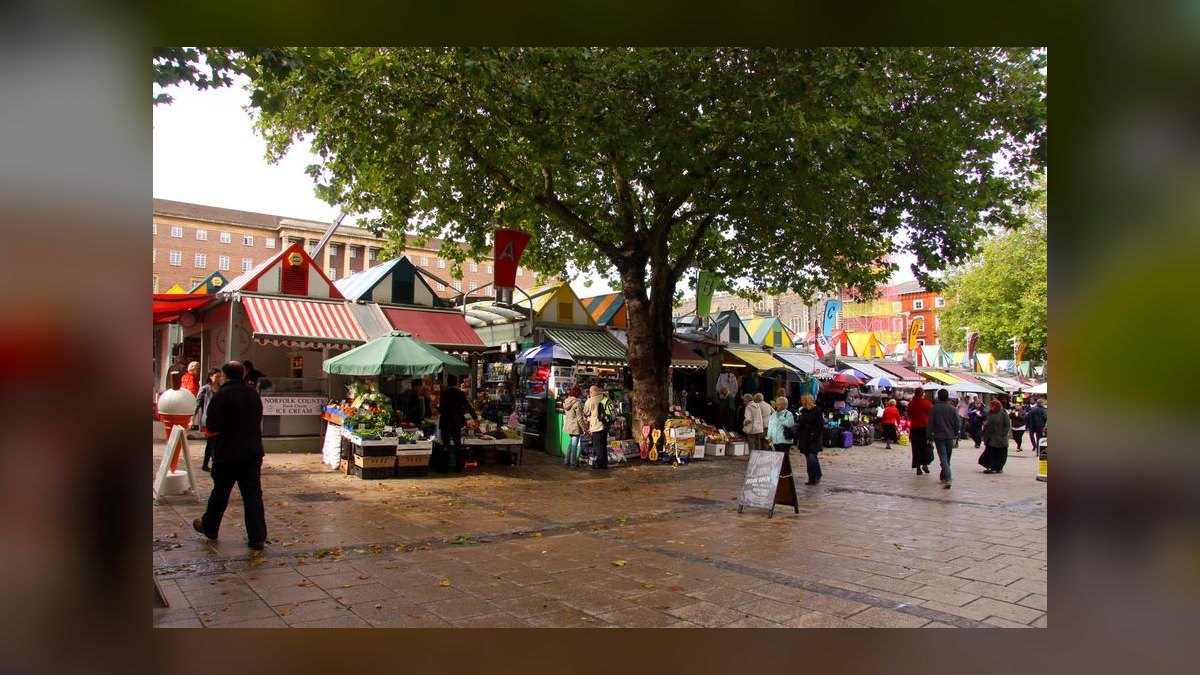
Trade-area foot traffic. Not population. Not household income. Pedestrian volume past your door, in the seasons you are open. A store on a boardwalk with two million summer visitors and a store three miles inland in a well-off suburb with the same demographics are not the same business — they are not even in the same industry. The inland store has no impulse channel, and Kilwins is almost entirely an impulse channel. You are competing for the walking-around dollar of a person already in vacation-spending mode, and that person does not drive to a strip mall for fudge.
Owner presence. The demo counter is the marketing budget. When an owner or a long-tenured lead is working the copper kettle in the front window, conversion off the sidewalk climbs sharply. When a rotating cast of seasonal teenagers is staring at a phone behind the register, it collapses. This is the single most common cause of an underperforming store that "should" work on paper — a good site operated absently will produce mediocre numbers indefinitely, and the operator will blame the site.
Cost of goods and the cocoa cycle. Chocolate is a commodity input with a genuinely volatile price history; the 2024–2026 cocoa run pushed confectionery COGS up across the entire category, not just this brand. Expect to take price increases annually and expect some guest resistance at the margin. The offset is that destination retail has unusual pricing power — a vacationing family absorbs a premium that a weekday commuter will not — which is another way of saying the tourist site protects you from more than one risk at once.
Fixed cost load. Rent in walkable downtowns and boardwalks is expensive, frequently structured with percentage-rent clauses, and rose meaningfully post-2022. Combine premium rent with a brand-mandated build-out (millwork, marble slab, kettles, batch freezer, enrober, display cases) and you have a high-fixed-cost store. High fixed cost plus high seasonality is exactly the combination that makes working capital non-negotiable rather than nice-to-have.

The diagram is deliberately linear because the decision really is that sequential. You cannot fix a bad trade area with great operations, and you cannot fix absentee ownership with a great trade area. Each gate has to clear before the next one matters.
Worth noting the upstream effect most first-time franchise buyers miss: your lease negotiation happens *before* you have any operating data, and it locks in the largest controllable fixed cost for a decade. A percentage-rent clause with a low base is a genuine hedge against a slow ramp. A high flat base with annual escalators in a market you have not proven is how good operators end up trapped. Spend disproportionate energy there — the lease outlives most other decisions you will make.
Benchmarks and realistic ranges
Use the franchisor's disclosure document as the spine and treat everything else as commentary. The 2024 FDD puts initial investment for a standard store in the range of roughly $393,675 to $659,575, with larger formats reaching approximately $880,344. The initial franchise fee is $40,000. Ongoing fees run 5% royalty on gross sales plus a 1% national marketing fund contribution — 6% total off the top, which is mid-pack for specialty retail franchising and materially lighter than some food-service systems that stack 8% to 10%.

Item 19 disclosed average gross revenue of about $921,000 across 140 reporting units. Treat that number with the respect it deserves and the skepticism it requires. It is an average across a system whose sites vary enormously, which means roughly half the stores are below it. The number you should underwrite to is not the average — it is the bottom-quartile figure, somewhere in the $500,000 to $650,000 band. If your model still services debt and pays you a living wage at that level, you have a real deal. If it only works at the average, you have a hope.
Here is the rough shape of a build budget, useful mostly for sanity-checking whatever the franchisor and your contractor tell you:
| Line item | Typical range | Notes |
|---|---|---|
| Franchise fee | $40,000 | One-time, Item 5 |
| Build-out and leasehold | $180,000–$410,000 | Brand-mandated millwork, marble fudge slab, copper kettles |
| Equipment and fixtures | $85,000–$175,000 | Batch freezer, enrober, display cases |
| Opening inventory | $35,000–$70,000 | Commissary-shipped chocolate plus dry goods |
| Training and travel | $8,000–$18,000 | Multi-week corporate training, Petoskey, Michigan |
| Working capital | $45,000–$135,000 | The line people underfund |
| Grand opening marketing | $5,000–$15,000 | Separate from the ongoing 1% |
Liquidity and net-worth screens sit around $125,000–$130,000 liquid and $500,000 net worth as the franchisor's stated minimum, but the practical number is higher. Plan on $200,000 to $300,000 liquid. The gap between the minimum you qualify with and the amount you actually need is where undercapitalized franchisees are manufactured, in this system and every other one.
On margins: owner-operated stores in decent locations tend to run 15% to 22% net after royalties, rent, COGS, and labor. Manager-led stores commonly land closer to 8% to 14% — that spread of roughly seven to eight points of margin is, in effect, the price of your own absence, and it is worth calculating explicitly against whatever salary you would earn doing something else. Cost of goods typically lands in the high 30s as a percentage of sales; labor in the low-to-mid 20s in tourist markets where seasonal wages have climbed into the high-teens to low-twenties per hour. Occupancy in a premium walkable district can consume 8% to 14% of sales, and that variance is why two stores with identical revenue can have wildly different owner take-home.
Financing benchmarks are more favorable here than for a newer concept. An established system with a multi-decade operating history, a footprint spread across dozens of states, and reasonably consistent unit volumes clears SBA underwriting screens that unproven brands cannot. A typical structure is a 7(a) loan covering $300,000 to $500,000 against an equity injection of $150,000 to $250,000, amortized over ten years for the business portion. Lenders with franchise desks move faster than a generalist community bank, and the difference in closing timeline can be four to six weeks — meaningful when you are racing to open before a summer season.
The comparison set is worth pricing too, because "should I open a Kilwins" is really "should I deploy $500K into destination confectionery retail versus the alternatives." Rocky Mountain Chocolate Factory sits at a lower investment band with correspondingly lower unit volumes. Ben & Jerry's scoop shops carry a lighter build but narrower product mix — ice cream without the chocolate and fudge cross-sell that carries a confectionery store through the fourth quarter. Cold Stone Creamery is a different positioning entirely, mix-in theater rather than heritage candy. And an independent artisan shop saves you the $40,000 fee and the 6% ongoing — perhaps $55,000 a year at system-average volume — while costing you the supply chain, the training, and, most importantly, the brand recognition that lets a tourist who visited a store in another state walk in already intending to buy.

Risks, edge cases, and failure modes
Seasonality is the primary killer. Not competition, not the franchisor, not cocoa. A northern store can see winter months run 40% to 60% below peak. The failure pattern is predictable: an operator has a strong first summer, feels confident, spends the cash, and then discovers in February that payroll, rent, and the loan payment do not care about the calendar. Reserve three to six months of fixed costs before you open and do not touch it. The counter-move is a serious fourth-quarter and holiday gifting program — corporate gift boxes, Valentine's, Easter, Mother's Day — which is the difference between a winter that is quiet and a winter that is fatal.
Absentee ownership. Covered above, but it belongs on the failure list because it is the most common structural mistake. People buy a franchise expecting to buy a job for someone else and discover they bought a job for themselves. If your plan requires you to not be there, buy something else — a laundromat, a self-storage facility, a vending route, an established service business with a real management layer. Those assets are designed for absentee operation. This one is not.
Site selection under time pressure. The second most common failure. A prospective franchisee spends nine months in diligence, gets emotionally committed, then cannot find a great space and takes a good-enough one because walking away feels like wasting the effort. Sunk cost destroys more franchise investments than bad brands do. The correct response to "no acceptable site is available in my market" is to wait a year or to walk entirely — not to compromise on the single variable that determines the outcome.
Expanding to store two too early. Multi-unit economics genuinely improve — shared management, pooled seasonal labor, one bookkeeper, better vendor leverage. But the leverage cuts both ways. Opening a second location before the first is comfortably above system average and running without you routinely produces two underperforming stores instead of one good one. The discipline is to treat store one's ability to run for six weeks without your daily presence as the gate for store two, not the calendar.
Lease structure. A ten-year term with two five-year options is what you want. Percentage rent with a reasonable base protects you during the ramp. Co-tenancy clauses matter more in destination retail than people expect: if the anchor restaurant or the attraction that generates your foot traffic closes, your trade area changes overnight and you need contractual recourse. Get a franchise attorney — not a general commercial attorney — to review both the franchise agreement and the lease. The $3,500 to $6,000 is the highest-ROI money in the entire process.
Product-quality drift. The brand standard involves real cream, real chocolate, actual copper kettles, actual marble. It is auditable, and cutting corners to save COGS points is both a compliance risk and a self-inflicted wound, because product quality is why the tourist tells three friends. Adjacent categories show the same dynamic — the independent creameries and bakeries that survive in resort towns are almost always the ones that refused to cheapen the product when input costs rose, and took price instead.
Buying a resale with hidden problems. Acquiring an existing store can be the smarter play — proven revenue, existing staff, no construction risk, often a lower total outlay than a new build. But resales come to market for reasons. Deferred maintenance on refrigeration, a lease with three years left and no options, a departing owner who was the store's entire local reputation, a location whose anchor traffic has quietly declined — all are common. Verify point-of-sale data directly rather than accepting a seller's summary, read the transfer table in the disclosure document to see how many units change hands annually, and price on the lower of the last three years rather than the best one.
Weather and single-season concentration. A rainy July in a beach market is a real financial event when four months carry the year. Operators in genuinely year-round markets — warm-climate destinations, towns with both a summer and a winter draw — carry structurally less risk, and it is fair to pay more in rent for that smoothing.
A practical rollout plan
Treat the decision as a ninety-day process with hard gates, and give yourself explicit permission to stop at any of them.
Days 1–7 — get the disclosure document and read the unglamorous items. Item 7 for costs, Item 19 for financial performance, Item 20 for the turnover table, Item 21 for audited financials. Item 20 is the one people skip and the one that tells the truth: openings, closures, transfers, and terminations by year. A system opening new stores while quietly closing or transferring a meaningful number tells you where the failure concentration sits — and if you cross-reference closures against location type, you will usually find them clustered in exactly the non-destination sites this page warns against.
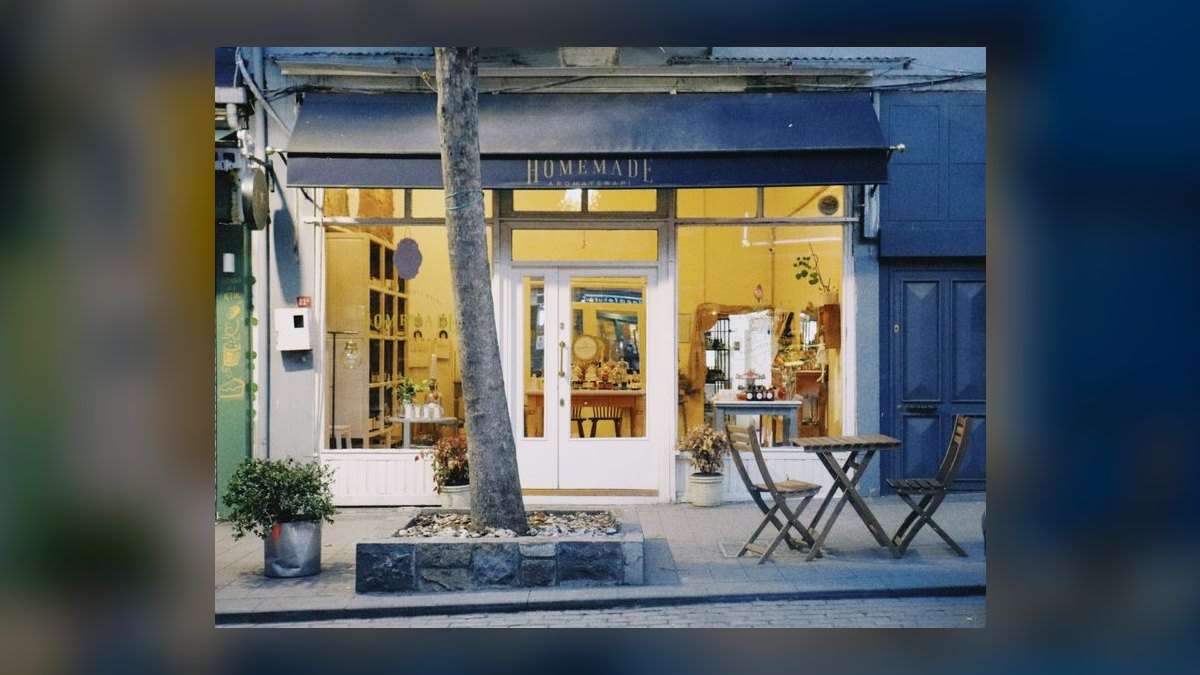
Days 8–21 — prove the trade area with data, not intuition. Pull visitation figures, county lodging-tax receipts, short-term-rental occupancy data, and, if you can get it, pedestrian counts. Then go stand on the sidewalk. Count people yourself, on a weekday and a weekend, in-season and shoulder-season. Look for at least three independent anchor draws within a short walk — restaurants, attractions, other destination retail — because a single anchor is a single point of failure.
Days 22–35 — call franchisees, not the franchisor. Eight minimum, drawn from the disclosure document list, weighted toward stores three to seven years old in markets comparable to yours. Ask for actual volume, actual COGS percentage, actual owner take-home, actual hours worked, and the single biggest surprise. Then call two or three who have left the system. The departed operators tell you things current ones will not, and the franchisor cannot filter your access to the list.
Days 36–50 — get pre-qualified. A lender with a franchise desk can pre-qualify in two to three weeks. Bring a model built at bottom-quartile volume. If the lender's model and yours disagree, the disagreement is the most useful information you will get all quarter.
Days 51–65 — tour widely, then submit letters of intent on two or three. Never one. Negotiating leverage in a lease comes entirely from having a live alternative. Push on tenant-improvement allowance, percentage rent, co-tenancy, and the option structure.
Days 66–80 — franchise attorney review of both documents together. The franchise agreement and the lease interact — territory language, transfer restrictions, personal guarantees, what happens to the lease if the franchise agreement terminates. Reviewing them separately misses the interaction.
Days 81–90 — sign or walk, and mean both options. If you sign, pay the fee, book training, and order equipment immediately, because lead times on specialty confectionery equipment run long enough to blow a season. Target a spring opening so your first full summer is a full summer. Opening in September in a seasonal market means financing an entire winter before you have ever earned a peak-season dollar — a brutal way to start.
Two adjacent moves are worth holding in reserve. First, a resale can compress this entire timeline and remove construction risk, at the cost of inheriting someone else's decisions — run the same trade-area proof on an existing store you would run on a raw site, because a proven revenue history in a declining trade area is a trap dressed as evidence. Second, a smaller-footprint format lowers the capital bar and opens secondary markets that a full standard store cannot justify; the trade-off is proportionally less production capacity and less of the in-store theater that drives conversion, so model it at lower volume rather than assuming the same numbers in a smaller box.
Related questions
How long until a new store breaks even?
Well-sited destination stores typically reach operating breakeven in roughly 14 to 22 months, with full equity payback at two and a half to four years. Weak sites stretch payback past seven years. The variable is trade-area traffic, not operational skill.
Is buying an existing store better than building new?
Often, yes. A resale removes construction and ramp risk and usually costs less than a full build. But verify point-of-sale data directly, confirm the lease has real term remaining, and price off the weakest of the last three years rather than the strongest.
What happens in the off-season?
In northern markets, winter months can run 40% to 60% below summer peaks. Survival depends on reserved working capital and a serious holiday chocolate-gifting and corporate-order program to replace vanished ice cream revenue.
Can I hire a manager and stay hands-off?
Not for a single store, and not in the first two years. In-store demonstration drives a large share of impulse conversion; removing the owner typically costs seven to eight points of net margin. Absentee models suit other asset classes better.
How do I evaluate the trade area objectively?
Combine visitation and lodging-tax data with your own physical pedestrian counts on multiple days and seasons. Require at least three independent anchor draws within walking distance so no single closure eliminates your foot traffic.
FAQ
What total capital should I actually plan for?
The disclosed initial investment runs roughly $393,000 to $880,000 depending on format and market, plus the $40,000 franchise fee. The franchisor's stated liquidity minimum sits near $125,000, but plan on $200,000 to $300,000 liquid. The gap between qualifying and being adequately capitalized is where most first-year distress originates, particularly given the seasonal cash cycle.
How much can an owner-operator realistically take home?
At system-average volume near $921,000, an owner-operated store running 15% to 22% net produces meaningful six-figure cash flow before debt service, translating to roughly $80,000 to $140,000 in year one after loan payments in a decent location. Underwrite at bottom-quartile volume instead, and confirm the deal still works there.
Are the 5% royalty and 1% marketing fund reasonable?
Six percent total is mid-pack for specialty retail franchising and lighter than many food-service systems. The relevant question is not the rate but what you receive — supply chain, training, product standards, and brand recognition strong enough that vacationers seek the store out. In a destination market, that recognition is worth more than the fee.
Is a suburban location ever viable?
Rarely, and only when the site has genuine walkable-district characteristics rather than strip-center parking-lot access. This is an impulse purchase made by people already walking. Without pedestrian volume, the model has no acquisition channel, and marketing spend cannot manufacture one economically.
What is the biggest diligence mistake buyers make?
Reading Item 19 and skipping Item 20. The financial-performance average flatters the system; the turnover table showing closures, transfers, and terminations tells you where and why units fail. Cross-reference closures against location type and the pattern usually confirms that site quality, not brand strength, drives outcomes.
Should I consider a multi-unit deal upfront?
Not before the first store clears system-average volume and runs without your daily presence for several weeks. Multi-unit economics genuinely improve through shared management and pooled seasonal labor, but expanding early is the most reliable way to convert one good store into two struggling ones.
Sources
- https://www.sba.gov/funding-programs/loans/7a-loans
- https://www.ftc.gov/business-guidance/resources/franchise-rule-compliance-guide
- https://consumer.ftc.gov/articles/buying-franchise-consumer-guide
- https://www.franchise.org/
- https://www.ustravel.org/research
- https://www.ibisworld.com/united-states/market-research-reports/chocolate-production-industry/
- https://www.kilwins.com/franchising
- https://www.entrepreneur.com/franchises/directory
- https://www.score.org/resource/business-plan-template-startup-business
- https://www.nass.usda.gov/
Related on PULSE
This page will be disappearing soon. Save it to your device for $1 — or read it free while it is here.
@Kory-White- · if Venmo asks, the last 4 of my number are 2012
This page is gone.
This one is off the shelf now. $1 keeps it on your phone for good — the whole page, pictures and diagrams included.
 franchiseShould I open or buy a Jabz Boxing franchise in 2027?
 franchiseShould I open or buy a Bach to Rock franchise in 2027?
 franchiseShould I open or buy a Creamistry franchise in 2027?
 franchiseShould I open or buy a The DRIPBaR franchise in 2027?
 franchiseShould I open or buy a Cafe Zupas franchise in 2027?
 franchiseShould I open or buy a Bonchon franchise in 2027?
 franchiseShould I open or buy an Acai bowl franchise — Vitality Bowls — in 2027?
 franchiseShould I open or buy a Sub Zero Nitrogen Ice Cream franchise in 2027?
 franchiseShould I open or buy a Bowlero franchise in 2027?
 franchiseShould I open or buy an Anago Cleaning Systems franchise in 2027?