
Should I open or buy a 7-Eleven franchise in 2027?
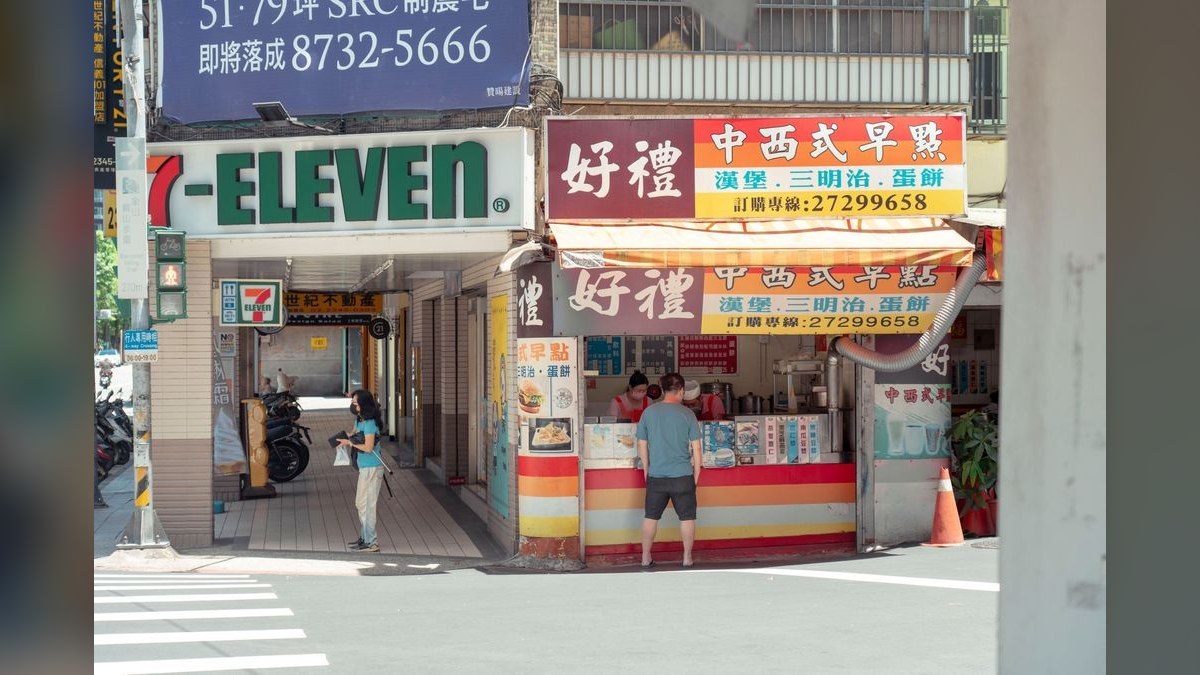
Probably not — unless you have $500K-$1M in liquid cash, accept a 48-50% gross-profit split with corporate, and are comfortable that 7-Eleven keeps the real estate, the gasoline margin, and the brand power while you keep the labor headaches. A traditional U.S. 7-Eleven costs $142,150-$1,627,710 all-in (FDD Item 7, 2026), with a franchise fee ranging $0 to $1.1M depending on store profitability tier. Conservative Year-1 owner cash flow lands at $80K-$180K for a non-fuel store and $120K-$220K for a fuel store, with breakeven at 24-36 months for a converted store and 48-60 months for a new build. If you can't write a $300K liquid check today and still want to be operating the register at 3 AM, walk away.
The Real Numbers
7-Eleven's FDD is the most mechanically different in U.S. franchising. Corporate owns or master-leases the real estate, funds the build-out, and takes 48-52% of gross profit instead of a royalty on sales. The franchise fee in Item 5 is tier-priced based on the store's prior 12-month gross profit — high-volume stores cost up to $1.1M to acquire, suburban stores often run $25K-$190K, and corporate occasionally offers $0-fee stores in turnaround markets. Independent c-store operators (no franchise) face a completely different math problem: $250K-$1.5M build-out but 100% of gross profit retained, per IBISWorld 44512 and NACS State of the Industry 2026.
| Line Item | Traditional 7-Eleven (FDD Item 7, 2026) | Independent C-Store (NACS/IBISWorld 2026) |
|---|---|---|
| Franchise fee | $0 - $1,100,000 (tiered by store GP) | $0 |
| Build-out / leasehold | $0 (corporate funds) | $180,000 - $800,000 |
| Equipment & POS | $0 (corporate funds) | $90,000 - $250,000 |
| Initial inventory | $50,000 - $185,000 (franchisee-funded) | $80,000 - $220,000 |
| Working capital (90 days) | $30,000 - $115,000 | $75,000 - $200,000 |
| Licenses, training, deposits | $12,150 - $77,710 | $15,000 - $60,000 |
| Liquid net worth required | $100,000 minimum | $50,000 - $150,000 |
| Net worth required | $250,000 minimum | $100,000 - $250,000 |
| TOTAL INITIAL INVESTMENT | $142,150 - $1,627,710 | $440,000 - $1,530,000 |
| Ongoing royalty / GP split | 48-52% of gross profit to 7-Eleven | $0 |
| Marketing / advertising | Built into GP split | 1-2% of sales (self-directed) |
| Annual store revenue | $1.2M - $2.4M (Item 19 implied) | $900K - $2.6M |
| Annual gross profit (GP $) | $420K - $720K | $260K - $720K |
| Franchisee share of GP | $200K - $360K (after split) | $260K - $720K |
| Owner cash flow Year 1 | $80K - $220K (after labor, utilities) | $60K - $280K |
| EBITDA margin | 6% - 11% of revenue | 4% - 14% of revenue |
| Payback period | 24 - 60 months | 36 - 84 months |
Source notes: 7-Eleven 2026 FDD Item 7 (range $142,150-$1,627,710); 7-Eleven's Financials page confirms 48% retained margin ($339,000 non-fuel, $365,300 fuel cited by corporate); NCASEF (National Coalition of Associations of 7-Eleven Franchisees) reports the current 50/50 gross-profit split under the updated franchise agreement; IBISWorld 44512 sizes the convenience-store industry at $45.9B in 2026 with 151,975 U.S. stores per NACS/NIQ TDLinx.
The mechanics matter more than the topline. Because corporate takes a slice of gross profit (sales minus cost-of-goods), the franchisee carries 100% of labor, utilities, repairs, shrink, credit-card fees, and bank fees out of the remaining 48-52% of GP. A store doing $1.6M revenue at a 30% GP margin generates $480K of gross profit. After the corporate split of ~$250K, the operator has $230K to cover two cashiers per shift across three shifts, manager, utilities, supplies, and shrink — which routinely consumes $140K-$190K, leaving the $40K-$90K owner take that surprises new franchisees in Year 1.
Who Wins With This Business
You win with 7-Eleven if you fit four specific profiles. First, immigrant operator-families who plan to run the store with household labor at 60-80 hours per week — labor is the biggest line item, and family operators avoid $80K-$120K in W-2 manager costs. Per NCASEF demographic data, roughly 60% of U.S. 7-Eleven franchisees are first- or second-generation immigrants, and these operators consistently report the highest take-home cash flow. Second, multi-unit operators who already run 3-10 stores and benefit from shared regional management, vendor consolidation, and rotating coverage. The economics break in your favor at unit number four. Third, veterans — 7-Eleven's Veterans Franchise Incentive Program discounts the franchise fee by 20% (capped) and is one of the better-priced military-incentive programs in retail franchising. Fourth, operators in dense urban or transit-adjacent locations where 7-Eleven's 24/7 brand recognition and fresh-food/beverage SKU support outperform an independent's local-only foot traffic. If you check three of four boxes, the math improves; if you check one or none, you should not write the check.
Who Loses With This Business
You lose with 7-Eleven if you are a white-collar career-changer who wants a "passive franchise" — there is no such thing in this brand. You lose if you have less than $150K liquid and need to finance the inventory and working capital with high-rate SBA debt that gets serviced from the already-thin 48% GP share. You lose if you bought into the corporate sales pitch about "average store revenue of $1.5M" without modeling labor at $18-$24/hour in your specific MSA — California, New York, Washington, and Massachusetts wage floors crush 7-Eleven's labor math, and net cash flow in those markets can run negative for two years. You lose if you cannot personally cover the cashier shift when an employee no-shows — and they will, every week, for the first two years. You lose if you are risk-averse about lottery, alcohol, and tobacco regulation — those three categories drive 18-32% of c-store gross profit per NACS State of the Industry 2026, and a single underage-sale violation in a strict state can suspend your liquor license and delete 40% of your store revenue overnight.
2027 Market Conditions
The 2027 c-store backdrop is mixed and you need to underwrite both sides. On the positive side, NACS reports U.S. in-store convenience sales topped $340B in 2026, fresh-food and prepared-meal categories grew double-digits, and the 151,975-store national count continues to consolidate toward branded chains (7-Eleven, Circle K, Wawa, Sheetz, Casey's). 7-Eleven specifically completed its integration of Speedway acquisitions through 2024-2026, expanding the U.S. footprint past 13,000 stores and giving franchisees access to better fresh-food supply chains and the 7Rewards loyalty program (130M+ members). On the negative side, NACS Research noted that transaction counts went flat-to-negative by Q3 2025, c-store foodservice traffic dropped roughly 2% entering 2026, and fuel-margin volatility has compressed Year-over-Year margins by 8-12% in several regions. Pickle-flavor snacks, build-your-own pizza counters, and AI-driven dynamic pricing are the 2027 talking points per C-Store Dive's "8 trends for 2026" report — useful indicators that the industry is shifting from gas-and-cigarettes to food-and-experience, which favors larger branded operators with corporate R&D budgets (a tailwind for 7-Eleven franchisees, a headwind for independents). The Seven & i Holdings spinoff of 7-Eleven US/Canada into a separately listed company by mid-2027 will introduce new franchisee-relations risk as activist shareholders push for higher GP-split capture — monitor this before signing a 15-year agreement.
The 90-Day Decision Tree
- Days 1-14: Pull the FDD. Request the current 7-Eleven FDD directly from corporate (free, federally required disclosure). Read Item 7 (initial investment), Item 19 (financial performance — note that 7-Eleven has historically included Item 19 representations but the scope varies by year), Item 20 (outlet counts, transfers, terminations), and Item 21 (audited financials of the franchisor). Cross-reference against FDDIQ.com, Franchise Direct, and Peersense for third-party reconciliation.
- Days 15-28: Validate the 50/50 economics with NCASEF. The National Coalition of Associations of 7-Eleven Franchisees is the independent franchisee association and publishes avenue magazine plus operator surveys. Read the last three years of NCASEF avenue issues on the gross-profit split renegotiation, fresh-food pushdown, and fuel-margin disputes. If the franchisee association is openly fighting corporate on basic economics, that is a signal you must price into your underwriting.
- Days 29-45: Talk to 10 current franchisees in your target metro — not from the corporate referral list, from NCASEF's published operator directory. Ask five questions: (a) what was your Year-1 take-home cash flow after labor; (b) what surprised you about the GP split; (c) how many hours per week do you personally work; (d) what happens when corporate pushes a new fresh-food category you don't want; (e) would you do it again.
- Days 46-60: Run the labor model in your MSA. Pull BLS Occupational Employment Statistics for 41-2011 cashiers in your specific metro. Multiply by 1.4x for benefits/payroll-tax burden and 3 shifts × 7 days = 21 shift-weeks. If the result exceeds 30% of projected store revenue, the unit is structurally unprofitable.
- Days 61-75: Get pre-approval on SBA 7(a) financing. 7-Eleven is on the SBA Franchise Directory (no FTA required). Bring 3 years of personal tax returns, $100K minimum liquid statement, and $250K net worth proof. Lenders will fund 70-80% of the initial fee but typically not the working capital — you need that in cash.
- Days 76-90: Visit five stores at three different time slots — 6 AM rush, 3 PM after-school, 11 PM late-shift. Watch staffing levels, basket size, fresh-food rotation, line speed, and what customers actually buy. If the 3-PM and 11-PM trips feel dead in your candidate territory, the 24/7 economics will not work.
Alternative Plays
If 7-Eleven does not pencil, five alternatives sit on the spectrum from lower-capital independent to higher-capital branded c-store. First, Circle K offers a traditional royalty model (5-6% of sales) instead of GP split — for high-volume operators, the fixed-royalty math beats the GP split above roughly $2.2M in annual revenue. Second, Casey's General Store focuses on rural Midwest locations with pizza as a foodservice anchor — total investment $3M-$5M but higher per-store EBITDA and operator-friendly contract terms. Third, independent c-store purchase via business brokers — buy an existing operator's store for $400K-$1.2M with seller financing, keep 100% of gross profit, and avoid the 50/50 split entirely (the math wins above $1.4M revenue). Fourth, Wawa or Sheetz if you live in their footprint — both are company-operated (not franchised) but operating partnerships exist for select managers. Fifth, fuel-only / car-wash operator (ZIPS Car Wash, Mister Car Wash franchises) — different category but similar real-estate-anchored, recurring-revenue thesis at $1.5M-$4M build cost with stronger EBITDA margins of 25-35%.
FAQ
How much cash do I actually need to open a 7-Eleven in 2027? You’ll need at least $300,000 in liquid cash, but realistically $500,000–$1 million is safer. The total investment ranges from about $142,000 to over $1.6 million depending on whether it’s a new build or conversion, and the franchise fee alone can be $0 to $1.1 million based on the store’s profit tier.
What’s the profit split with 7-Eleven corporate? Corporate takes 48–50% of your gross profit, and they keep the real estate, fuel margins, and brand control. You’re left with the operational headaches—staffing, inventory, and daily management—while they hold the high-margin assets.
How much can I expect to earn in the first year? For a non-fuel store, owner cash flow is typically $80,000–$180,000 in year one. If you have a fuel store, it’s higher at $120,000–$220,000, but remember that fuel margins are slim and mostly go to corporate.
How long until I break even? For a converted store (taking over an existing location), breakeven usually comes in 24–36 months. For a new build, expect 48–60 months. These are honest ranges; actual timing depends on location, local competition, and your operational efficiency.
Do I own the real estate or the gas station? No. 7-Eleven keeps ownership of the real estate and the gasoline business. You only operate the convenience store inside. This means you don’t benefit from property appreciation or fuel profits, which are major revenue drivers for the company.
Is it possible to succeed if I have less than $300K liquid? It’s very unlikely. The minimum liquid cash requirement is around $300,000, and even then you’ll be stretched thin. Most successful franchisees have $500K–$1M in cash to cover startup costs, working capital, and unexpected expenses during the first year or two.
Bottom Line
7-Eleven is the single most-recognized brand in U.S. convenience retail, and the franchise system eliminates the largest barrier to entry in the category — site selection, build-out, and equipment. That is the deal. In exchange, you give up half of your gross profit forever, you carry 100% of the labor and operating risk, and you take 5+ years to fully repay the initial investment. If you have $300K liquid, immigrant-family or military operator background, a multi-unit ambition, and a 24/7 operator's tolerance, this is a viable but not exceptional path to $140K-$220K of annual owner income by Year 3-4. If you are a passive investor, white-collar career-changer, or high-MSA-wage operator without a labor-cost workaround, walk away and buy an independent store, look at Circle K's traditional-royalty model, or pick a different industry entirely.
Sources
- 7-Eleven 2026 Franchise Disclosure Document, Item 7 (Initial Investment) and Item 19 (Financial Performance Representations) — corporate filing, available via state regulators and from 7-Eleven Franchise Recruitment
- 7-Eleven Corporate Financials page — franchise.7-eleven.com/franchise/the-financials (cites 48% retained margin, $339K non-fuel, $365K fuel)
- NCASEF (National Coalition of Associations of 7-Eleven Franchisees) — independent franchisee association, avenue magazine, ncasef.com
- NACS State of the Industry Report 2026 — convenience.org, in-store sales $340B figure
- NACS/NIQ TDLinx 2026 U.S. Convenience Store Count — 151,975 stores reported January 2026
- IBISWorld Industry Report 44512: Convenience Stores in the US, 2026 — $45.9B industry size
- Bureau of Labor Statistics OES 41-2011 (Cashiers) and 41-1011 (First-Line Retail Supervisors) — bls.gov metro-level wage data
- C-Store Dive 2026 trend reports — cstoredive.com (8 trends for 2026 c-store retailing)
- Datassential 2026 C-Store Foodservice Trends — datassential.com
- Franchise Direct, FDDIQ, Peersense, Franchise Caliber, VettedBiz — third-party FDD aggregators for cross-reference
- SBA Franchise Directory — sba.gov/franchise (7-Eleven SBA financing eligibility)
- Columbia Business School "The New 7-Eleven" case study — business.columbia.edu (gross-profit-split historical context)
7-Eleven review / 7-Eleven franchise reviews / 7-Eleven rating / 7-Eleven review 2027 / review of 7-Eleven franchise
Related on PULSE
- [How long does it take to open a franchise and break even in 2027?](/knowledge/fr1104)
- [Should I open or buy a Tommy Gun's Original Barbershop franchise in 2027?](/knowledge/fr1095)
- [Should I open or buy a Painting with a Twist franchise in 2027?](/knowledge/fr1058)
 pulse-moviesTop 10 Action Movies of All Time
 pulse-skillsSkill Drill: Objection Handling for Construction
 pulse-skillsSkill Drill: Reading Buying Signals for Food and Beverage Distribution
 pulse-skillsSkill Drill: Follow-Up Cadence for Roofing
 pulse-skillsSkill Drill: Upselling and Cross-Selling for B2B Distribution
 pulse-skillsSkill Drill: Running Effective Meetings for Manufacturing
 pulse-skillsSkill Drill: Conflict Resolution for Furniture Manufacturing
 pulse-skillsSkill Drill: Relationship Selling for Industrial Equipment
 pulse-skillsSkill Drill: Onboarding New Hires for Furniture Manufacturing
 pulse-skillsSkill Drill: Running Effective Meetings for Healthcare Sales