
Should I open or buy a NAPA Auto Parts franchise in 2027?
 Curated byKory White · Fractional CRO · Maryland
 PULSEKNOWLEDGE LIBRARY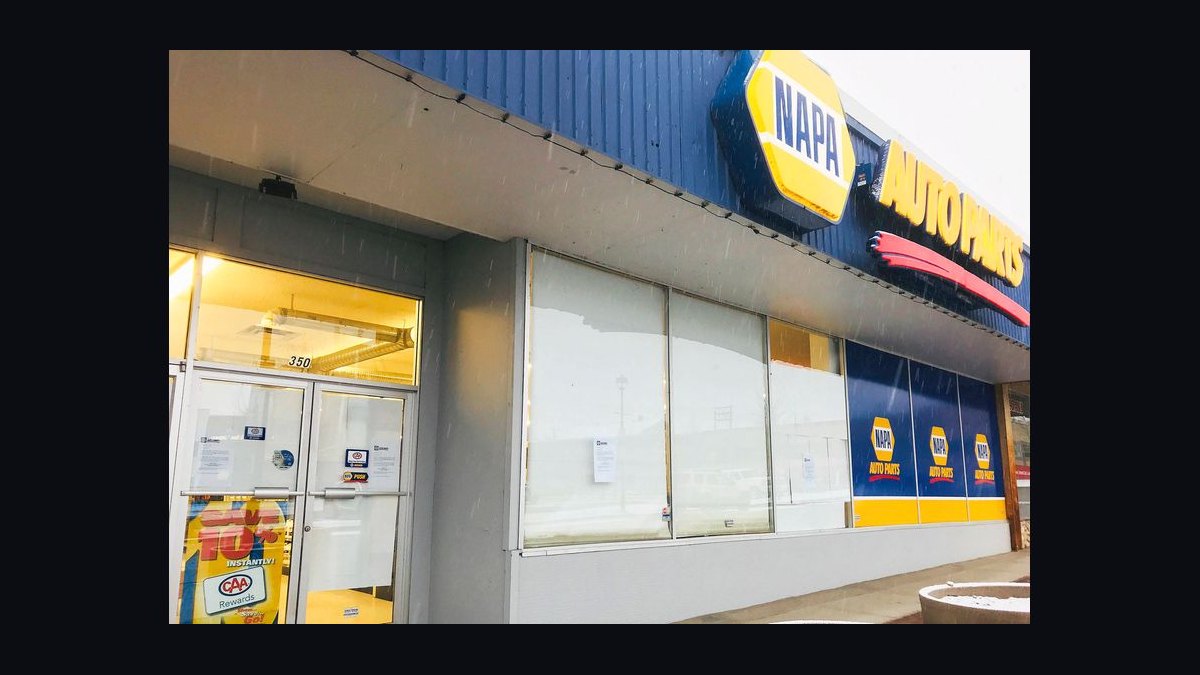
Yes — if you have $200,000-$400,000 in liquid capital, two-bay-deep automotive knowledge, an existing relationship with at least 15-25 independent repair shops in a market with 30,000+ registered vehicles per planned location, and you can stomach 18-30 months to breakeven while the wholesale book builds. NAPA Auto Parts is technically NOT a franchise — it is a voluntary store ownership program owned by Genuine Parts Company (NYSE: GPC) with zero franchise fee, zero royalty, and zero national marketing fee. You buy inventory wholesale from a NAPA distribution center and resell at retail and wholesale margins you control. Realistic Year-1 cash flow for a new store: -$40,000 to +$60,000. Mature stores (Year 4+) clear $200,000-$350,000 owner earnings on $1.5M-$2.2M revenue. Probably not if you are a passive investor looking for a franchise-in-a-box; this is a working-owner wholesale-distribution business.
The Real Numbers
NAPA does not publish a traditional FDD Item 7 or Item 19 because the 2027 NAPA Store Ownership Program is not classified as a franchise under the FTC Franchise Rule — GPC characterizes it as a trademark and supply agreement. The numbers below combine GPC's own published store-ownership disclosures, IBISWorld Auto Parts Stores 1012 (2026 report), and operator interviews compiled by Sharpsheets and FranchiseHelp (2025-2026 data). All figures are 2027 dollars.
| Line item | Low | Mid | High | Notes |
|---|---|---|---|---|
| Initial program fee | $0 | $0 | $0 | No franchise fee — distinguishing feature |
| Royalty | 0% | 0% | 0% | Margin sits inside wholesale parts price |
| National marketing fee | 0% | 0% | 0% | Co-op available, not mandatory |
| Real estate / build-out | $40,000 | $120,000 | $350,000 | Lease deposit + 8,000-15,000 sq ft retrofit |
| Opening inventory | $150,000 | $275,000 | $450,000 | NAPA TAMS + DC stocking program |
| Equipment, racking, POS | $25,000 | $55,000 | $90,000 | NAPA TAMS terminal, machine shop optional |
| Delivery vehicles (2-4) | $20,000 | $55,000 | $110,000 | Used to new sprinter / pickup fleet |
| Working capital | $40,000 | $80,000 | $150,000 | 90 days payroll + utilities |
| Signage, training, license | $10,000 | $20,000 | $40,000 | NAPA brand kit + state retail license |
| TOTAL initial investment | $285,000 | $605,000 | $1,190,000 | GPC range $75k-$850k assumes existing store buyout |
| Annual revenue (mature) | $900,000 | $1,700,000 | $2,400,000 | DIFM 70% / DIY 30% typical |
| Gross margin | 28% | 34% | 40% | Wholesale to shops lower margin than DIY counter |
| EBITDA margin | 8% | 13% | 18% | Labor + lease are biggest drags |
| Owner earnings (mature) | $80,000 | $200,000 | $350,000 | Includes owner W-2 + distributions |
| Payback period | 4.5 yrs | 6.5 yrs | 9 yrs | Inventory recovery is the long tail |
| Breakeven month | 14 | 22 | 36 | Wholesale book determines speed |

The single largest delta between a winning and losing NAPA store is the wholesale book — the recurring DIFM business sold to independent repair shops, fleet operators, municipalities, and dealerships. A store with 40+ active wholesale accounts running delivery within 30 minutes clears $1.6M+. A store leaning on walk-in DIY counter sales rarely crosses $900,000.
Who Wins With This Business
- Existing parts professionals with 5-10 years inside a NAPA, O'Reilly, AutoZone, or Advance distribution role who already know the TAMS catalog, the VIO data, and the independent shop network in their territory.
- Auto repair shop owners diversifying upstream — operators of 3-5 bay independent shops who realize their monthly parts spend of $25,000-$60,000 could be redirected to their own counter.
- Multi-store operators acquiring an existing NAPA store at 1.5-2.5x EBITDA from a retiring owner; GPC routinely brokers these transitions through its Store Ownership Program.
- Markets with 30,000+ registered vehicles and a vehicle-age median above 12.7 years (US national average per Hedges & Company 2026 VIO data) — older fleets drive replacement parts demand.
- Operators in rural / exurban markets where the AutoZone and O'Reilly density is sparse and the nearest jobber is 40+ miles away; NAPA's DC delivery cadence (1-3 same-day drops) is a defensible moat.
- Owners who treat the counter as a sales floor, not a passive store — daily outbound calls to independent shop service managers, monthly NAPA AutoCare program enrollment pushes, and fleet contract bids with municipalities.
- Capital-disciplined operators who understand inventory is the business — a $275,000-$450,000 inventory commitment is not a cost, it is the revenue-generating asset.
- Operators willing to run the TAMS system (NAPA's proprietary point-of-sale, inventory, and DC-replenishment platform); mastery here directly drives gross margin.

Who Loses With This Business
- Passive investors expecting a franchise-style turnkey — there is no national call center, no brand-mandated remodel cycle, no field consultant doing your work. You are the general manager, head of sales, and inventory buyer.
- Operators without an existing wholesale shop book who assume the NAPA brand will pull DIFM business automatically; the shops are already buying from someone (often a competing NAPA, O'Reilly Pro, or WORLDPAC).
- Urban markets with 5+ competing jobbers within 3 miles — Los Angeles, Houston, Phoenix metro are saturated; NAPA's brand premium does not overcome that density.
- Owners under-capitalized at the $150,000-$200,000 liquid level — they run out of working capital around month 9-14 when inventory has scaled but receivables from shops are stretched to net-45.
- Operators chasing DIY foot traffic in a market where AutoZone is 0.5 miles away — DIY counter buyers default to the closest store; NAPA's pricing is 5-15% above AutoZone retail on commodity SKUs.
- Operators who underestimate EV impact — markets with EV registrations above 15% of new vehicle sales (California, Washington, Oregon coastal counties) will see ICE-specific SKU velocity erode 3-5% per year through 2030 per IHS Markit / S&P Global Mobility 2026 forecast.
- Anyone unwilling to drive parts personally during the first 18 months when delivery driver turnover is brutal and the owner becomes the backup driver.
- Operators expecting to flip the store in 3 years — the inventory write-down on an early exit is severe; the natural hold is 8-15 years.
2027 Market Conditions
The US Auto Parts Stores industry (NAICS 441310) is forecast at $76.4B in 2027 per IBISWorld Report 1012 (March 2026), growing at a 2.1% CAGR — modest, but the DIFM subsegment (~63% of industry revenue) is growing 3.4%, while DIY counter is flat to declining. Three macro forces shape the 2027 NAPA decision:
First, the average US vehicle age hit 12.7 years in late 2026 per S&P Global Mobility, the oldest in recorded history. Older fleets drive higher parts replacement frequency — a tailwind specifically for the independent repair channel NAPA serves.
Second, the AutoZone Pro and O'Reilly First Call programs are eating wholesale share — O'Reilly's Professional segment grew 7.8% in 2025 vs GPC's NAPA US revenue at 1.2% per GPC FY2025 10-K. NAPA's 2026 "NAPA Pro" relaunch is the counter-offensive; operators in 2027 will see new DIFM pricing tools, NAPA TRACS shop-management integration, and a refreshed AutoCare loyalty program.
Third, EV penetration. EVs reached 9.3% of new US vehicle sales in 2026 per Cox Automotive. EVs require 40-60% fewer mechanical replacement parts over a 200,000-mile lifecycle. The time-to-impact is slow (existing ICE fleet keeps running for 15+ years), but new-store underwriting in 2027 must model a 0.5-1.0% annual headwind on ICE SKUs.
The 90-Day Decision Tree
- Days 1-10: Pull the GPC Store Ownership package. Request the NAPA Store Ownership Program disclosure from napaonline.com/store-ownership. Confirm no franchise fee, no royalty in writing. Order the NAPA TAMS demo and the regional DC service map for your target ZIP.
- Days 11-20: Market sizing. Pull registered vehicle counts for your target trade area from your state DMV or Polk/IHS Markit. Require 30,000+ VIO within a 7-mile radius; median vehicle age 12+ years; fewer than 3 competing jobbers within 3 miles.
- Days 21-35: Shop book audit. List every independent repair shop, fleet operator, school district fleet, municipal fleet, and farm co-op in the trade area. Walk in with a notebook. You need 15 verbal "we'd buy from you" commitments before signing a lease — anything less, the math does not work.
- Days 36-45: Existing-store hunt. Call the GPC District Manager for your region and ask for retiring-owner transitions. An existing store at 1.5-2.5x EBITDA beats a greenfield build by 18 months of breakeven runway.
- Days 46-55: Capital stack. Confirm $250,000-$400,000 liquid for greenfield (or $150,000-$250,000 for acquisition with seller financing). Pre-qualify an SBA 7(a) loan — NAPA stores are eligible; Live Oak Bank, Huntington, and Byline are active in this category in 2027.
- Days 56-65: Site selection. 8,000-12,000 sq ft, dock-high loading, 4+ parking spots out front for DIY, drive-around for delivery vans, visible from a road with 15,000+ AADT (annual average daily traffic).
- Days 66-75: Territory approval. Submit the NAPA Application Packet with personal financial statement, business plan, market study, and 3-year P&L projection. GPC approval typically runs 30-45 days.
- Days 76-85: Lease + LLC + insurance. Sign a 5-year lease with 2x5-year options. Insurance: $2M general liability + garage keepers + inventory coverage. Form state LLC. Open a bank operating account at a regional bank (avoid mega-banks — slow on lockbox).
- Days 86-90: Hire core team. Counter pro (1), delivery driver (2), parts puller (1). The counter pro is the single most important hire — they make or break gross margin. Pay $22-$28/hr for a real one.
Alternative Plays
- Buy an existing NAPA store from a retiring owner at 1.5-2.5x EBITDA instead of greenfield — cuts breakeven from 22 months to 6 months.
- O'Reilly First Call jobber — O'Reilly does not franchise but runs a professional installer channel; similar wholesale model, different brand power.
- Carquest (Advance Auto Parts) independent owner — lower brand premium, lower initial inventory ($150k-$250k), good fit for <$300k capital operators.
- Federated Auto Parts independent jobber — member-owned co-op model, lower entry cost, higher operator autonomy but weaker brand pull for DIY counter.
- AutoCare Association independent jobber (no national brand) — <$200k entry, highest margin, but zero brand traffic for DIY and no national fleet contracts.
- NAPA AutoCare Center (repair shop, not parts store) — if you already own a repair shop, the AutoCare program is $0/month and gives you the NAPA national warranty (24mo/24,000mi) without the $600k store investment.
- WORLDPAC import-parts specialty jobber — narrower SKU range (European + Asian imports), higher margin (35-45%), lower volume, fits markets with luxury/import vehicle density above 25%.
- Skip the parts store entirely and buy a 3-bay independent repair shop — typically $300k-$700k acquisition, higher cash margin (18-25% net), simpler operation for a non-distribution operator.
FAQ
What exactly is a NAPA Auto Parts “franchise”? It’s not a franchise in the traditional sense. NAPA’s program is a voluntary store ownership model with no franchise fee, no royalty, and no national marketing fee. You buy inventory wholesale from a NAPA distribution center and set your own retail and wholesale prices.
How much money do I need to start a NAPA store? You’ll need $200,000 to $400,000 in liquid capital. This covers inventory, store build-out, equipment, and working capital for the first year or two.
How long does it take to become profitable? Most new stores take 18 to 30 months to reach breakeven. Year-1 cash flow typically ranges from negative $40,000 to positive $60,000, depending on how quickly you build wholesale accounts.
What kind of revenue and earnings can I expect? Mature stores (Year 4 and beyond) generally generate $1.5 million to $2.2 million in annual revenue, with owner earnings of $200,000 to $350,000. Those numbers vary by market size and your ability to serve commercial accounts.
Do I need automotive experience? Yes, deep automotive knowledge is essential. You need to understand parts, repair workflows, and how to serve independent repair shops. This is a working-owner business, not a passive investment.
How many repair shops do I need as customers? You’ll want an existing relationship with at least 15 to 25 independent repair shops in a market with 30,000 or more registered vehicles per planned location. Wholesale accounts are the backbone of the business.
Bottom Line
NAPA Auto Parts in 2027 is a wholesale-distribution business wearing a retail-store costume. Win it by walking in with a pre-built shop book of 15-25 accounts, $250,000-$400,000 in liquid capital, operator knowledge of TAMS and the GPC DC network, and a market with 30,000+ VIO and median vehicle age above 12 years. The no-franchise-fee, no-royalty structure is genuinely the best economic deal in retail-adjacent franchising — but it comes with the highest operational burden, because GPC supplies parts, software, and brand, and nothing else. Avoid this business if you are looking for a franchise turnkey, if you are under $200k liquid, if your market has more than 3 jobbers in 3 miles, or if you are not personally willing to run the counter, drive parts, and chase shops for the first 18 months. The right operator clears $200,000-$350,000 in owner earnings by Year 4 and builds an asset that sells at 3-5x EBITDA at retirement — the wrong operator burns through $400,000 of inventory and walks away with $0.
Sources
- NAPA Auto Parts Store Ownership Program — napaonline.com
- NAPA Auto Parts Store Ownership FAQ — napaonline.com
- NAPA Auto Parts Franchise FDD, Profits & Costs (2025) — Sharpsheets
- NAPA Auto Parts Franchise Cost, FDD & Funding 2026 — PeerSense
- NAPA AUTO PARTS Franchise Cost & Opportunities 2026 — FranchiseHelp
- Genuine Parts Company FY2025 10-K — SEC EDGAR
- Auto Parts Stores in the US Industry Report 1012 (2026) — IBISWorld
- Aftermarket Auto Parts Industry Statistics — Hedges & Company
- Average US Vehicle Age Hits 12.7 Years (2026) — S&P Global Mobility
- EV Sales Share of New US Vehicles 2026 — Cox Automotive
- FTC Franchise Rule — Federal Trade Commission
- US Aftermarket Automotive Parts Market — Mordor Intelligence
Related on PULSE
- [Should I open or buy an O'Reilly Auto Parts franchise in 2027?](/knowledge/fr0486)
- [Should I open or buy a Honest-1 Auto Care franchise in 2027?](/knowledge/fr0906)
- [Should I open a independent auto repair shop in 2027?](/knowledge/fr0606)
- [Should I open or buy a Spotless Auto Wash franchise in 2027?](/knowledge/fr0497)
- [Should I open or buy a Fix Auto USA franchise in 2027?](/knowledge/fr0489)
- [Should I open or buy a Tuffy Tire & Auto franchise in 2027?](/knowledge/fr0246)
Read it free — or make it yours for $1.
@Kory-White- · if Venmo asks, the last 4 of my number are 2012
 franchiseShould I open or buy a Kitchen Tune-Up franchise in 2027?
 franchiseShould I open or buy a Chipotle franchise in 2027?
 franchiseShould I open or buy a Panera Bread franchise in 2027?
 franchiseShould I open or buy a Stratus Building Solutions franchise in 2027?
 franchiseShould I open or buy a Wienerschnitzel franchise in 2027?
 franchiseShould I open or buy a Tutti Frutti franchise in 2027?
 franchiseShould I open or buy a Red Lobster franchise in 2027?
 franchiseShould I open or buy a Stretch Zone franchise in 2027?
 franchiseShould I open or buy a One Hour Heating & Air Conditioning franchise in 2027?
 franchiseShould I open or buy a Fit Body Boot Camp franchise in 2027?