
Should I open or buy a Ziebart franchise in 2027?
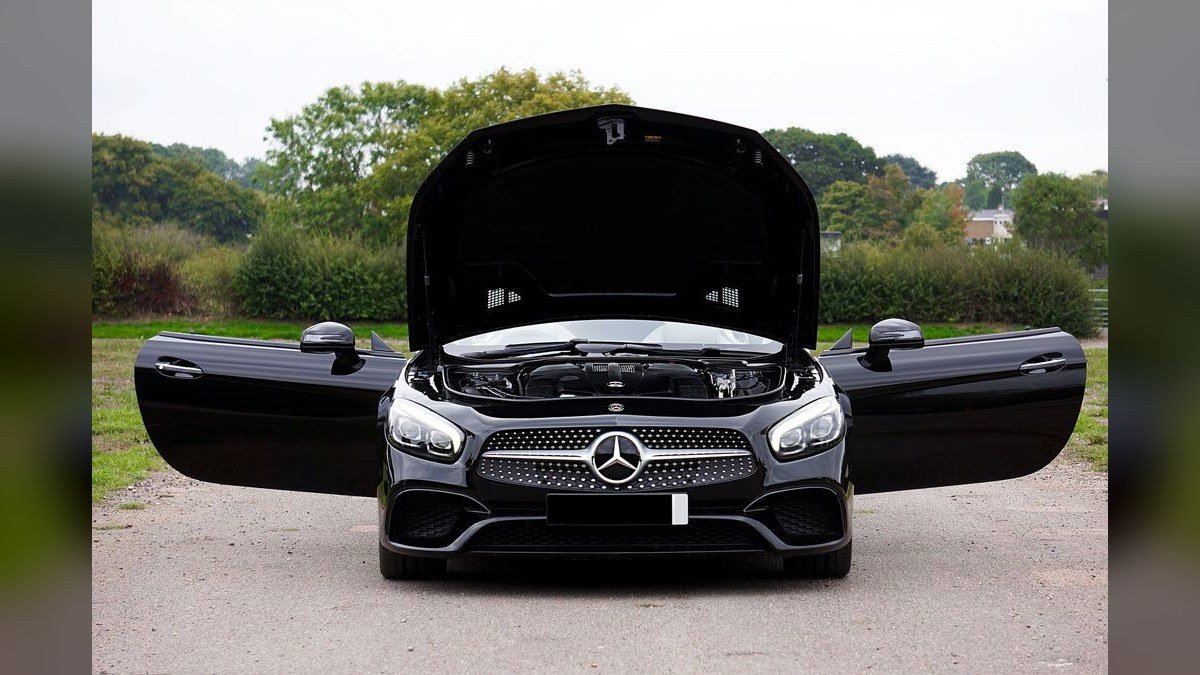
Yes — if you have $450K-$925K in total capital, $150K liquid, $750K net worth, an automotive or trades operations background, and a 3,500-5,000 sq ft flex-industrial bay in a market with median household income above $70K and vehicle density above 700 cars per square mile. Ziebart's 2025 FDD reports average gross sales of $1.04M per franchised location with a 70%+ gross profit margin and ~15% operating margin, meaning a conservative Year-1 EBITDA of $130K-$155K after the 8% royalty, 2% marketing fee, $650/week royalty minimum, labor, and rent. Breakeven typically lands at month 14-22. Probably not if you're targeting under $400K in capital, lease a sub-3,000 sq ft retail space, or expect passive ownership — this is a hands-on, technician-heavy auto-services build with 8% royalties on top of a 30% labor load.
The Real Numbers
Ziebart's 2025 FDD (the most recent disclosure available as of June 2026) is the source of record for cost and revenue. Item 7 brackets total initial investment at $450,100 to $924,000 depending on whether you build from a shell, retrofit an existing automotive bay, or take over a corporate-owned conversion store. Item 19 discloses average gross sales of $1,040,000 across the franchise system's reporting locations, with top-quartile units clearing $1.5M+ and bottom-quartile units around $620K. Ziebart has been operating since 1959 and runs ~400 locations globally, with roughly 140 in the United States and Canada under franchise agreements.
| Line Item | Low | High | Notes |
|---|---|---|---|
| Franchise fee | $45,000 | $45,000 | One-time, Item 5; non-refundable |
| Real estate / build-out | $180,000 | $410,000 | 3,500-5,000 sq ft flex-industrial bay; drive-thru access required |
| Equipment package | $95,000 | $185,000 | Spray booth, lifts, PPF cutting plotter, tint stations, compressors |
| Initial inventory | $35,000 | $65,000 | Rust-protection compounds, PPF rolls, tint film, detail chemicals |
| Signage + grand opening | $25,000 | $55,000 | Exterior Ziebart-branded signage + launch marketing |
| Training + travel | $8,000 | $14,000 | 3-week corporate training at Troy, MI HQ; 2 attendees |
| Working capital | $60,000 | $120,000 | 3-6 months of operating runway |
| Insurance + licensing | $2,100 | $5,000 | Garage keepers, GL, workers' comp |
| Total Item 7 range | $450,100 | $924,000 | Per 2025 FDD |
Ongoing fees that hit weekly:
| Fee | Rate | Cap / Floor |
|---|---|---|
| Royalty | 8% of gross sales | Minimum $650/week (~$33,800/year floor) |
| Royalty on certain product lines | 5% of weekly gross | Listed in FDD Note A |
| National marketing fund | 2% of weekly gross | Annual cap $30,000 |
| Local advertising | 1-2% suggested | Operator-controlled |
| Technology fee | $150-$300/month | POS + reporting platform |
Unit economics at the system-average $1.04M revenue:
| Metric | Annual | % of Revenue |
|---|---|---|
| Gross revenue | $1,040,000 | 100% |
| Cost of goods (chemicals, film, parts) | $260,000 | 25% |
| Gross profit | $780,000 | 75% |
| Labor (4-6 techs + manager) | $312,000 | 30% |
| Rent + utilities | $94,000 | 9% |
| Royalty (8%) | $83,200 | 8% |
| Marketing (2% + local) | $31,200 | 3% |
| Insurance + admin | $52,000 | 5% |
| EBITDA | $155,600 | ~15% |
Payback period: at $155K EBITDA against a midpoint $687K investment, simple payback runs ~4.4 years unlevered. SBA-financed deals with 25% equity-down hit personal cash-on-cash payback inside 24-30 months, which is on par with the better automotive-services franchises like Maaco and Ziebart's closest rival, Tuffy Tire & Auto Service.
Who Wins With This Business
The Ziebart operator who clears the system average almost always shares five traits. First, they come from an automotive operations background — service-manager, body-shop owner, detail-chain GM, or dealership F&I. Second, they have a second territory option locked at signing — multi-unit operators are 35-40% more profitable because they amortize the spray booth, tint station, and PPF plotter capex across 2-3 locations. Third, they aggressively chase B2B accounts — dealership reconditioning contracts, fleet rust-protection programs, municipal vehicle prep, and leasing-company return-to-spec work — which can push non-retail revenue to 45-55% of the mix versus the 25% retail-only average. Fourth, they install premium services first — PPF, ceramic coating, and EV-specific underbody treatments carry gross margins above 80% versus 60-65% for the legacy rust-proofing product. Fifth, they own real estate rather than lease — automotive-services flex bays have appreciated 6-8% annually since 2022, and ownership eliminates the lease-renewal risk that has killed dozens of single-unit operators on 5-year terms with 40% step-ups.
Who Loses With This Business
The losing profile is first-time franchisee with no automotive background, leasing a sub-3,500 sq ft retail strip space in a market with median household income below $60K, and expecting passive absentee ownership. Three structural failure modes recur in closed-unit reports filed with state franchise registries. Failure mode one: labor turnover — detail technicians turn over at 70-90% annually industry-wide, and an operator who can't recruit, train, and retain a stable 4-5 person crew will see revenue collapse from $1M to $400K inside 18 months as appointment wait times stretch past 10 days and Google reviews crater. Failure mode two: under-marketing — Ziebart's 2% national fund covers brand-level digital, but local lead-gen (LSAs, dealership BDC partnerships, fleet outreach) requires another 3-5% of revenue that absentee operators routinely cut to zero. Failure mode three: ignoring the 8% royalty floor — the $650/week minimum means a struggling store paying 8% on a $400K-revenue year is effectively paying 8.4%, compressing the already-thin operating margin to single digits or negative.
2027 Market Conditions
The automotive paint protection film (PPF) market is growing at a 7.2% CAGR, projected to reach $1.55 billion by 2030 from $1.09 billion in 2025. EV penetration is the single biggest tailwind for Ziebart's franchise system. Three structural shifts define the 2027 operating environment. First, EV owners spend 2.3x more on appearance protection than ICE owners on average — PPF, ceramic coating, and underbody dielectric treatments are routine on Tesla, Rivian, and Lucid deliveries because owners optimize for resale value in a market where EV depreciation runs 15-25% steeper than ICE. Second, OEM factory-PPF programs are projected to cover ~20% of premium vehicles by 2027, which cannibalizes the front-clip aftermarket but expands the full-vehicle wrap and ceramic-coat upsell — net positive for franchisees who reposition. Third, road-salt corrosion claims have risen 14% since 2023 as states aggressively expand winter-treatment programs; this directly revives demand for Ziebart's legacy rust-protection product in Snowbelt territories from Minnesota to Maine. The headwinds: rising labor cost (BLS reports automotive-services wages up 18% since 2024), and insurance premiums on garage keepers' policies up 22% in 2026.
The 90-Day Decision Tree
- Days 1-10: Request the 2025 Ziebart FDD directly from corporate at franchise.ziebart.com. Read Item 7 (initial investment), Item 19 (financial performance representation), Item 20 (outlet table — opens, closures, transfers over the trailing 3 years), and Item 21 (audited financials). The Item 20 table tells you whether the system is net-growing or net-shrinking; flag any year with closures exceeding 8% of total units.
- Days 11-20: Call 12-15 existing franchisees from the Item 20 contact list. Use this scripted ask: *"What was your Year-1 revenue versus the system average? What does your weekly P&L look like? Would you sign again knowing what you know now? What's the single biggest mistake you made?"* A "would not sign again" rate above 25% is a hard pass.
- Days 21-30: Pull demographic data for 3 candidate territories — population, vehicle density per square mile, median household income, competing detail/PPF shops within 5 miles, and dealership count (your B2B pipeline). Tools: ESRI Business Analyst, Claritas, and Placer.ai. Reject any territory with fewer than 3 mid-tier dealerships in a 10-mile radius.
- Days 31-45: Attend Discovery Day at Ziebart HQ in Troy, Michigan. Tour 2-3 nearby operating locations during business hours. Talk to detail technicians, not just owners — labor quality is the single biggest predictor of unit success.
- Days 46-60: Engage a franchise attorney ($3K-$6K flat fee) for FDD review and state-specific disclosure compliance (15 states require additional registration). Engage a franchise-experienced CPA for 3-year pro forma modeling at the 25th, 50th, and 75th percentile revenue scenarios.
- Days 61-75: Secure SBA-7(a) preapproval through a franchise-friendly lender (Live Oak Bank, Byline Bank, ApplePie Capital). Ziebart appears on the SBA Franchise Directory, which streamlines loan processing.
- Days 76-90: Sign the Franchise Agreement only if all six prior gates pass clean. Pay the $45K franchise fee, begin site selection with Ziebart's real estate team, and lock training dates. Walk away at any gate without remorse — the $45K avoided beats a $687K capital trap.
Alternative Plays
If Ziebart fails any decision-tree gate, three adjacent plays carry similar capital profiles with different risk-reward. First, Ming Auto Beauty Center or Detail Garage — pure-play detailing franchises with lower capital ($180K-$340K) and lower revenue ceilings ($450K-$700K) but faster breakeven and lower royalty (5-6%). Second, independent PPF/ceramic shop under your own brand — zero franchise fee, zero royalty, and full control of pricing but you carry all marketing burden and lose Ziebart's national B2B accounts (CarMax, Enterprise, US Postal Service fleet contracts route through Ziebart corporate). Third, Maaco or Tuffy Tire & Auto Service — larger franchise systems with broader service mix (collision, mechanical) but higher capital requirements ($475K-$1.1M) and slower growth profile. The strongest play for $450K-$900K capital and automotive ops experience remains Ziebart if the territory clears the 700-vehicle/sq-mi + $70K-HHI bar; otherwise pivot to an independent multi-service detail/PPF shop in a smaller market with weaker chain competition.
FAQ
What is the total investment range for a Ziebart franchise in 2027? The total capital needed typically falls between $450,000 and $925,000. This includes the franchise fee, equipment, build-out, inventory, and working capital, though exact costs depend on location size and market conditions.
How much liquid capital do I need to qualify? You generally need at least $150,000 in liquid assets. Franchisors also look for a net worth of $750,000 or more to ensure financial stability during the ramp-up period.
What kind of revenue and profit can I expect in the first year? Average gross sales for established Ziebart locations are around $1.04 million, with gross profit margins above 70%. After royalties, marketing fees, labor, and rent, a conservative first-year EBITDA estimate is $130,000 to $155,000.
How long does it take to break even? Most franchisees reach breakeven between month 14 and month 22. The timeline depends on location, local demand, and how quickly you build a customer base for services like rust protection and detailing.
What are the ongoing fees I need to pay? You’ll pay an 8% royalty on gross sales, a 2% marketing fee, and a weekly royalty minimum of $650. These fees are standard and support brand marketing and operational support.
Is this a hands-on business, or can I be a passive owner? This is a hands-on, technician-heavy operation. You’ll need an automotive or trades background and be actively involved in managing staff, quality control, and daily operations—passive ownership is not realistic.
Bottom Line
Ziebart is a legitimate $450K-$925K automotive-services franchise with a 66-year operating history, $1.04M system-average revenue, and ~15% operating margin that clears 70%+ gross margins. It wins for hands-on operators with automotive backgrounds in Snowbelt or premium-EV markets with strong territory demographics and a B2B pipeline plan. It loses for absentee, under-capitalized, retail-only first-timers in low-density, low-income markets. Go forward only if capital is at $687K midpoint plus 6 months working capital, territory demographics clear the 700-vehicle/sq-mi and $70K-HHI bar, and you can commit to 24 months of owner-operator presence. Otherwise pivot to an independent PPF/ceramic shop or a lower-capital detailing franchise.
Sources
- 2025 Ziebart International Corporation Franchise Disclosure Document — Items 5, 6, 7, 19, 20, 21 (corporate FDD on file with FTC and state franchise registrars)
- Franchise Chatter — *Ziebart Franchise Review 2025: Costs, Fees, News, Average Revenues and/or Profits* (July 2025)
- Sharpsheets — *Ziebart Franchise FDD, Profits & Costs (2025)*
- Franchise Direct — *Ziebart Franchise Costs + Fees + FDD*
- VettedBiz — *Ziebart Franchise Insights: FDD, Costs & Fees*
- 1851 Franchise — *Franchise Deep Dive: Ziebart Franchise Costs, Fees, Profit and Data*
- IBISWorld — *Auto Detailing in the US (NAICS 81119a)* industry report, 2026 update
- BLS Occupational Employment Statistics — *Automotive Service Technicians and Detailers* wage data, May 2026
- MarketsandMarkets — *Paint Protection Films Market worth $1,549.4 million by 2030* (June 2025)
- SBA Franchise Directory — Ziebart International Corporation listing and SBA-7(a) eligibility
- ESRI Business Analyst — vehicle-density and household-income geospatial benchmarks
- Global Franchise — *Franchise Watch: Driving Global Growth with Ziebart* (2025)
---
*Published 2026-06-09 · Updated 2026-06-09*
Ziebart franchise review / Ziebart franchise reviews / Ziebart franchise rating / Ziebart franchise review 2027 / review of Ziebart franchise
Related on PULSE
- [How long does it take to open a franchise and break even in 2027?](/knowledge/fr1104)
- [Should I open or buy a Tommy Gun's Original Barbershop franchise in 2027?](/knowledge/fr1095)
- [Should I open or buy a Painting with a Twist franchise in 2027?](/knowledge/fr1058)
 pulse-moviesTop 10 Action Movies of All Time
 pulse-skillsSkill Drill: Objection Handling for Construction
 pulse-skillsSkill Drill: Reading Buying Signals for Food and Beverage Distribution
 pulse-skillsSkill Drill: Follow-Up Cadence for Roofing
 pulse-skillsSkill Drill: Upselling and Cross-Selling for B2B Distribution
 pulse-skillsSkill Drill: Running Effective Meetings for Manufacturing
 pulse-skillsSkill Drill: Conflict Resolution for Furniture Manufacturing
 pulse-skillsSkill Drill: Relationship Selling for Industrial Equipment
 pulse-skillsSkill Drill: Onboarding New Hires for Furniture Manufacturing
 pulse-skillsSkill Drill: Running Effective Meetings for Healthcare Sales