
Should I open or buy a Stretch Zone franchise in 2027?
 Curated byKory White · Fractional CRO · Maryland
 PULSEKNOWLEDGE LIBRARY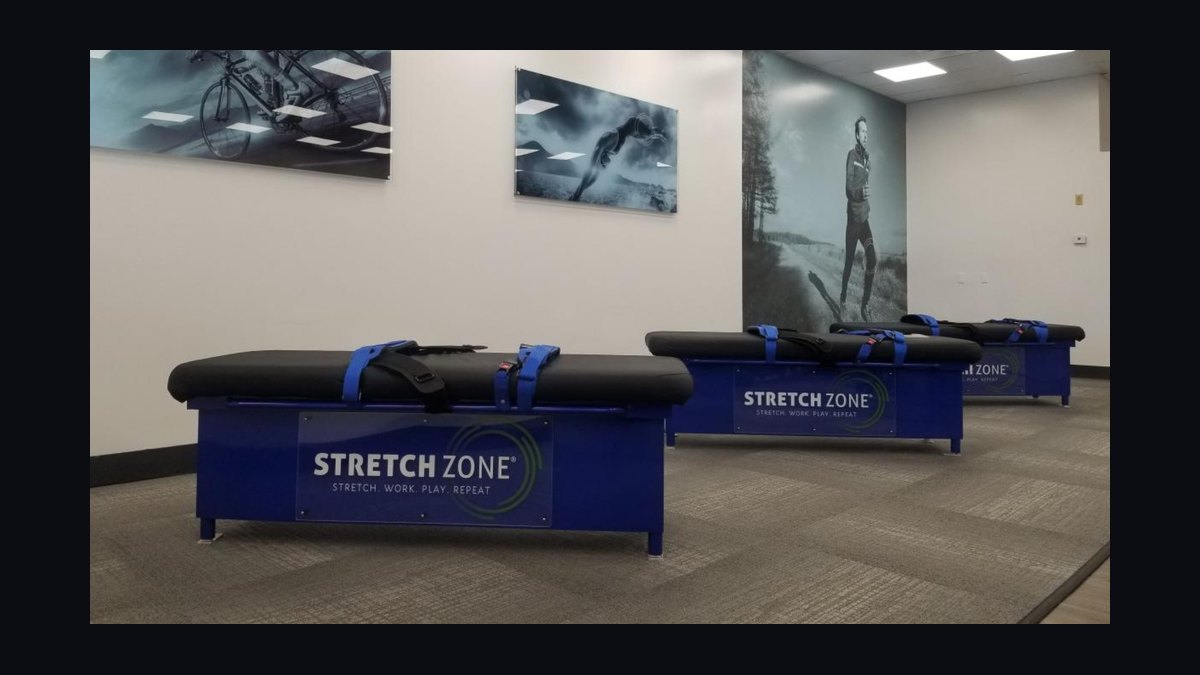
Open a Stretch Zone in 2027 only if you can fund roughly $185K–$240K plus $80K liquid reserves, owner-operate for 18 months, and site in a suburban trade area with no assisted-stretch competitor within five miles. At the system median gross revenue near $308K, expect $46K–$55K owner cash flow and 24–36 month breakeven.
A buyer's actual decision, week by week
Picture a 41-year-old regional sales manager in Greenville, South Carolina. She has $310K available — $120K cash from a home-equity line, $190K in a rollover she is willing to route through a ROBS structure or pledge against an SBA 7(a) loan. She has never owned a business. She has been stretched twice a month at a competitor's studio for two years and thinks the category is obviously good. That intuition is the most dangerous asset on her balance sheet, because "I like the service" is not a unit-economics thesis.
Her real decision has four gates, and the order matters. Gate one is capital adequacy: not the total investment number in Item 7, but the number *after* build-out — the working capital that funds payroll and rent through months one through twelve, when memberships are compounding but not yet covering fixed cost. Gate two is her own labor: can she be in the studio thirty-plus hours a week for eighteen months, or is this a side investment she plans to hand to a general manager in month two? Gate three is trade-area density: how many assisted-stretch studios already sit inside her five-mile ring, and what direction is their volume trending? Gate four is the deal structure itself: new build at a roughly 1.0–1.4x-of-revenue cost basis, or a resale at 0.6–0.8x trailing revenue with an existing membership base attached.
Most first-time franchise buyers invert this. They fall in love with a site, sign a letter of intent, then back-solve the capital and the labor commitment to fit the site. That sequence is how you end up with a $32-per-square-foot lease in a lifestyle center that needs $380K of revenue to work, in a brand whose median unit produces roughly $308K. The lease is a ten-year personal guarantee. The revenue is a median. You do not get to negotiate with a median.
The same discipline applies whether the buyer is looking at Stretch Zone, a Pilates box, a cryotherapy recovery studio, or an independent stretch practice with no royalty at all. Recurring-membership boutique wellness is a fixed-cost business wearing a service-business costume. Rent, the practitioner payroll floor you must staff *before* demand arrives, and the royalty stack are all fixed or near-fixed. Everything above breakeven flows to the owner at very high incremental margin; everything below it burns reserves at an ugly rate. That asymmetry is why capital adequacy is gate one and not gate four.
How the membership flywheel actually generates cash
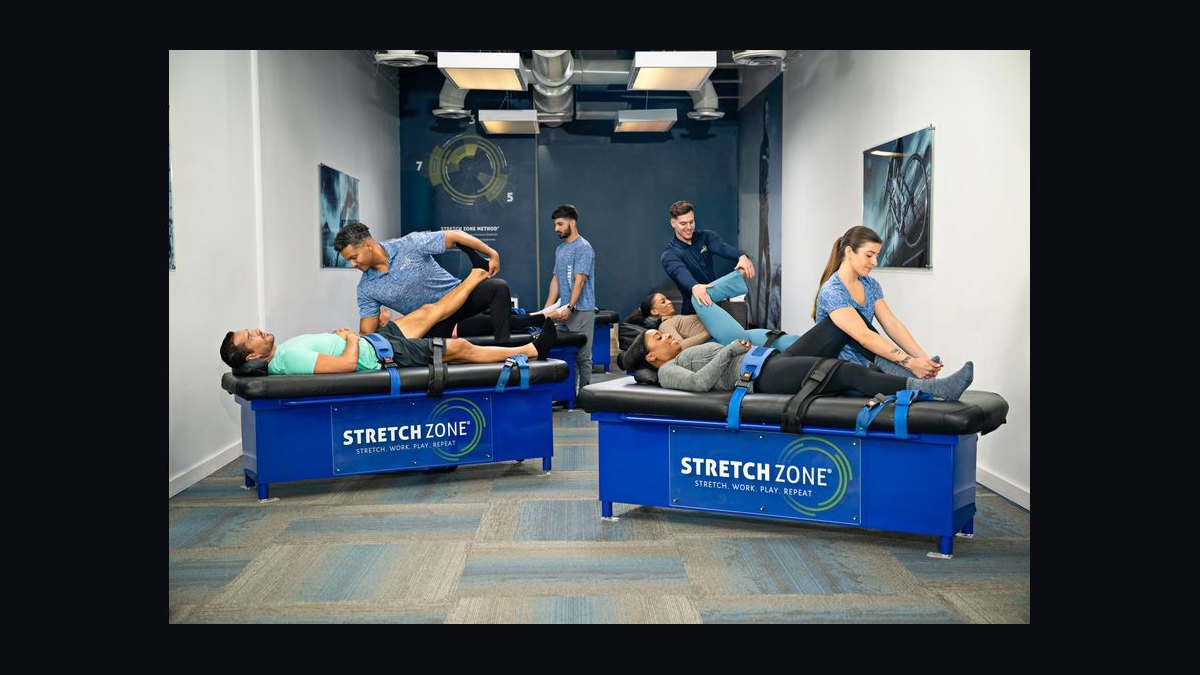
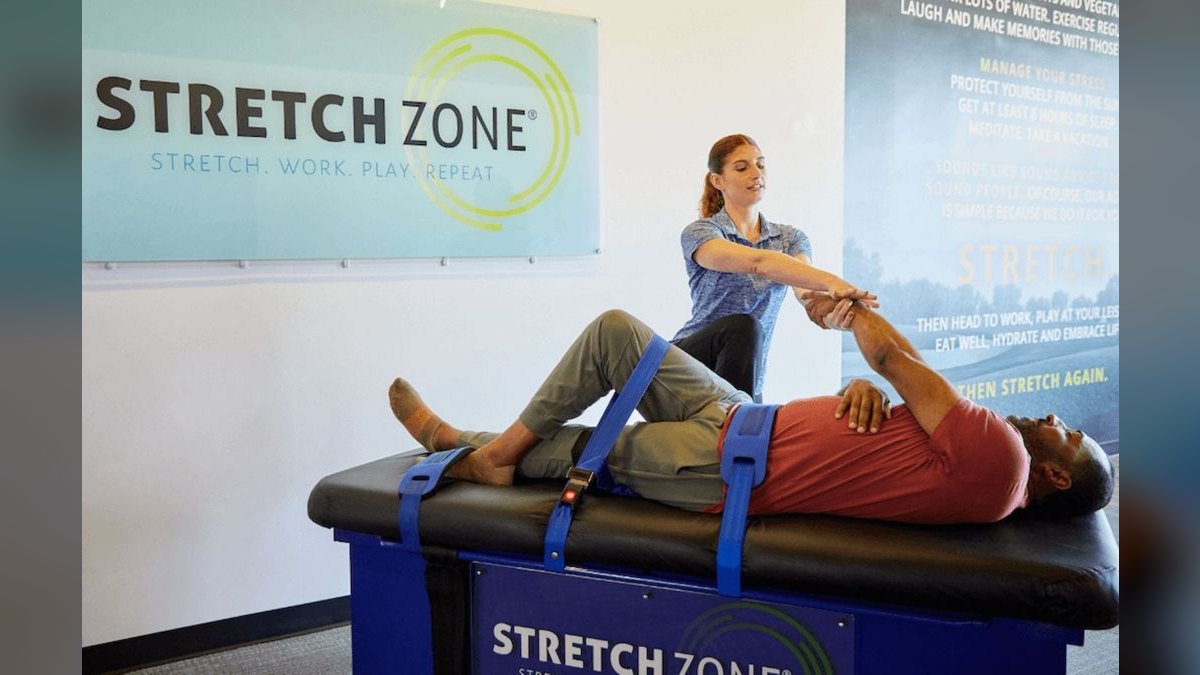
The mechanism is narrower than it looks. A studio sells monthly memberships — typically in the $200–$400 range depending on session frequency and market — that entitle a member to a set number of assisted-stretch sessions delivered by a certified practitioner on proprietary equipment. Revenue is a simple product: active members times average monthly revenue per member. Cost is practitioner hours, rent, and the franchisor stack.
What makes it work or fail is the ratio between two curves. The membership curve compounds slowly — it is driven by trial conversion, referral, and retention, and each of those has a multi-week cycle time. The cost curve is close to a step function: you cannot staff a fraction of a practitioner, and you sign the full lease on day one. The gap between those curves, integrated over months one through twelve, is your working-capital requirement. That is the entire financial story of the business.
This is why the founding-member presale matters more than anything else in the opening playbook. Selling a block of memberships at a discount before the doors open does three things at once: it moves the membership curve left by two to three months, it converts pre-opening marketing spend into deposits instead of impressions, and it produces a warm referral base at the exact moment you have staff capacity to serve them. An operator who opens with a strong founding cohort and one who opens cold can have identical Item 7 investments and end the first year $60K apart in cumulative cash.
Retention is the hinge inside the flywheel. Assisted stretching is a discretionary wellness spend competing directly with gym memberships, massage subscriptions, and Pilates packages for the same monthly line in a household budget. Members who attend rarely cancel eventually — usage predicts renewal far better than satisfaction surveys do. The operational implication is unglamorous: the highest-return activity in the studio is not new-member acquisition, it is calling the member who has not booked in eleven days. Owner-operators do that call. Underpaid front-desk staff generally do not.
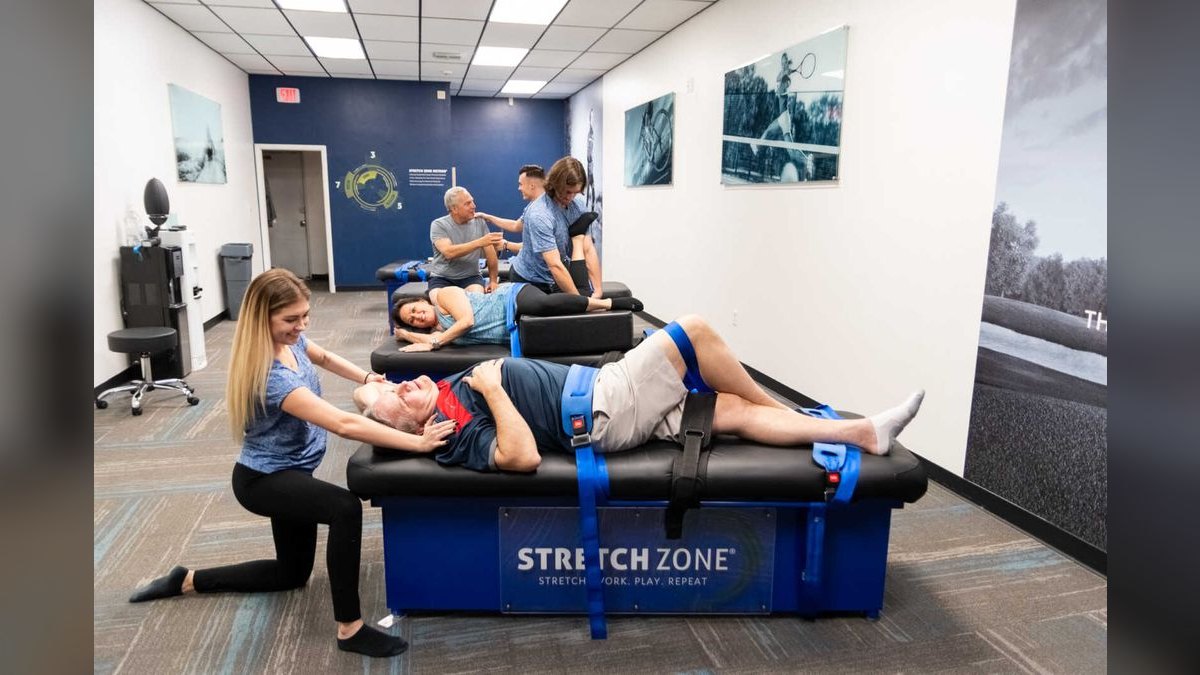
Practitioner quality is the second hinge. The brand requires proprietary certification through a structured course, which means your labor pool is not "anyone who can be trained in a week." A practitioner who builds personal rapport with thirty members effectively owns those relationships. When they leave — and in a labor market where licensed massage therapists and certified stretch practitioners command competitive hourly W-2 wages, they do leave — a meaningful slice of membership follows or lapses. Budget for retention bonuses and a bench, not just a headcount.
The numbers you should underwrite against
Work from the franchisor's own disclosures, not from a broker deck. The 2025 Franchise Disclosure Document puts total initial investment in a range of roughly $138,745 to $320,099, with a franchise fee of $59,500 and a discounted $53,550 for veterans and multi-unit commitments. Item 19 disclosed median annual gross revenue of $307,794 and average gross revenue of $328,042 across 293 reporting units on 2024 data — the average sitting above the median is the usual signal that a tail of strong units is pulling the mean up, so underwrite the median.
The ongoing stack: 7% royalty on gross with a $900 monthly minimum, a 2% brand fund contribution plus a $500 initial contribution, and a $375 monthly technology fee. Add those and roughly nine cents of every revenue dollar leaves before you pay rent or a single practitioner. The $900 royalty minimum is worth pausing on — it binds whenever monthly gross falls below about $12,857, which is precisely the ramp period when cash is tightest. The floor is designed to protect the franchisor from underperforming units. It does not protect you.
A workable base-case model at the Item 19 median looks approximately like this. Gross revenue $308K. Royalty and brand fund at 9% takes about $27.7K. Technology fee $4.5K annually. Rent at 1,200 square feet and $26 per square foot triple-net lands near $31K before common-area and tax pass-throughs — budget another 15–20% for those. Practitioner payroll for four to five W-2 staff with taxes and any benefits runs $130K–$180K depending on market wage. Insurance, utilities, supplies, merchant processing, and local marketing above the brand fund add another $30K–$45K. What survives is roughly $46K–$55K of owner cash flow at median volume, consistent with an EBITDA margin near 16%. That margin is respectable for the assisted-stretch category and materially below the 22–28% that mature massage and chiropractic franchises can reach at scale.
Payback on that math is five to seven years at median revenue — a fact that reframes the entire investment. This is not a cash-flow business you buy for year-one income. It is an equity-build business where the return concentrates in two places: the incremental margin above breakeven once fixed cost is covered, and the terminal value when you sell the unit. Breakeven sits near $22K of monthly gross, or roughly $264K annualized. Every dollar above that carries far higher incremental margin than the average margin suggests, because rent and base staffing are already paid. A unit at $400K does not earn 30% more than a unit at $308K — it earns considerably more than that in owner cash, which is exactly why site selection and trade-area quality dominate every other variable.

Build a three-scenario model before you sign anything. Bear at $240K, base at the $308K median, bull at $400K. The decision rule that saves people: if bear-case year-two owner earnings land under about $20K, the deal has no margin for error and you pass. Not because the bear case is likely, but because a ten-year personally guaranteed lease and an SBA note with a personal guarantee mean the bear case is the one that can actually hurt you. Under SBA 7(a) financing — the brand appears on the SBA Franchise Directory, which compresses underwriting — you are typically looking at 10–20% equity down, ten-year amortization on a non-real-estate loan, and a floating rate at a spread over prime. Run the debt service line in all three scenarios, not just the base.
Two diligence tasks are non-negotiable and cost nothing but time. First, read Item 20 carefully: unit counts by year, openings, terminations, non-renewals, reacquisitions, and transfers. Transfers are the tell. A system with heavy transfer volume relative to its base is a system where a lot of owners are choosing to exit early, and the reasons are usually visible in franchisee validation calls. Second, call eight to twelve existing franchisees from the Exhibit F list — including at least three who opened in the last twenty-four months and, if you can reach them, one or two who exited. Ask five specific questions: actual months to cash-flow breakeven, practitioner turnover in the last year, founding-member presale conversion, honest owner take after royalty and rent and payroll, and whether they would sign the agreement again today. That last question, asked plainly, produces the most honest answer in franchise diligence.

Trade-offs against the adjacent plays
The category context matters as much as the brand math. Assisted stretching has moved from underbuilt to roughly adequately built in a short window. The largest competitor operates several hundred more US units than Stretch Zone's roughly 377, and its reported average unit volume declined about 12% in 2025 — a same-store decline in a growing system is the classic signature of cohort dilution, where new units open into trade areas the existing units were already serving. Stretch Zone's median has been comparatively flat in the $307K–$328K band for three years, which reads as a more defensive franchisee-selection posture but also as an absence of category tailwind pulling volumes upward.
Against that, the 2027 demand picture has genuine substance. The 65-plus cohort keeps expanding as boomers age, and mobility maintenance is one of the few wellness spends that older consumers treat as semi-essential rather than discretionary. GLP-1 medication users pursuing weight loss have created a new and growing demand for mobility and recovery services as body composition changes. Sustained remote and hybrid work has produced a durable posture-and-hip-flexor problem across desk-bound professionals in exactly the 45–65 income bracket that buys $300 monthly memberships. None of that is speculative — it is visible demand. It is simply not infinite per trade area, and that is the whole argument.
So the real question is not "is assisted stretching good" but "what is the best deployment of my operator DNA and $250K." The alternatives deserve honest weight.

A distressed resale is the most underrated play on that map. Buying an existing unit at 0.6–0.8x trailing revenue against a new-build basis closer to 1.0–1.4x means you acquire the membership base and the built-out space for less than construction cost, and you skip the nine-to-fourteen-month ramp entirely. The catch is that you inherit whatever broke the unit. A resale doing $250K is only interesting if you can name the specific defect — a bad lease you can renegotiate at renewal, a practitioner roster that walked and can be rebuilt, a lapsed founding cohort you can relaunch, an absentee owner whose replacement is you. "I'll just run it better" is not a turnaround thesis. Demand the last three years of profit-and-loss statements, the current membership roster with tenure and last-visit dates, and the lease with all amendments. The last-visit column tells you more than the P&L does.
An independent, non-franchise studio saves the full nine points of royalty and brand fund — meaningful money, roughly $28K a year at median volume — and requires a smaller total investment. What you give up is the operating playbook, the certification curriculum, the equipment relationships, the brand recognition that makes cold traffic convert, and SBA Franchise Directory eligibility, which materially changes your financing options. That trade only works for an operator who already has a client book to migrate, typically a chiropractor, physical therapist, or established trainer. For a first-time owner with no book, paying the royalty to rent a proven playbook is usually the correct trade.

The adjacent-category plays — recovery and cryotherapy concepts, Pilates studios — generally carry higher investment requirements and larger boxes, but also higher revenue ceilings and, in Pilates specifically, stronger current category momentum. If your constraint is capital, stretch is the cheaper entry. If your constraint is finding an unsaturated trade area, the adjacent categories may still have open ground where assisted stretching does not. Run the same density analysis for whichever concept you evaluate; the analytical frame is identical even when the brand is not.
There is also a hybrid worth naming: adding assisted stretching as a service line inside an existing wellness practice. Chiropractic and physical-therapy owners who bolt on a stretch offering compress the ramp dramatically because the client base already exists and already trusts them. That path forfeits some franchise economics and may not be available under every franchise agreement's territorial and co-location terms — read the agreement carefully — but for the right operator it produces better returns than a standalone unit ever will.
Where these deals actually break
The dominant failure mode is absentee ownership in year one. An owner who hires a general manager in week one and checks in monthly is running a business whose two highest-leverage activities — founding-member outreach and lapsed-member recovery — are being performed by someone with no equity. Membership retention degrades quietly for two quarters before it shows up as a cash problem, and by then the reserve is gone. If you cannot personally commit eighteen months, the honest move is not to buy a cheaper unit; it is to buy a different asset class.

The second failure mode is rent. A lease at $45–$65 per square foot in an urban core requires a revenue level well above the system median just to reach breakeven, and it does it while the royalty stack takes nine points off the top. The target is second-generation retail in the $22–$28 per square foot triple-net range, 1,000–1,400 square feet, with a five-plus-five term and a tenant improvement allowance in the $20–$40 per square foot band. Anchor-shadow positioning near a premium grocer, a boutique fitness studio, or a Pilates studio puts you in front of the exact demographic that converts. Negotiate the escalator — 3% annual is common, 5% or more compounds into a real problem by year seven. And read the co-tenancy and exclusivity clauses; a landlord who leases the next suite to a competing recovery concept has cost you more than any rent concession was worth.
The third is undercapitalization disguised as optimism. The franchisor may disclose a short window to first revenue, but first revenue and breakeven cash flow are different events separated by roughly nine to fourteen months. Holding under $80K liquid after build-out means a single bad quarter — a practitioner resignation, an HVAC failure, a slow January — forces you to cut marketing at the exact moment marketing is the only thing compounding. Undercapitalized owners do not fail because the concept failed. They fail because they ran out of runway three months before the flywheel caught.

The fourth is trade-area density, and it is the specific 2027 risk. Three or more assisted-stretch units inside a five-mile ring means you are competing for a finite pool of members who have already been solicited by everyone else. Do the count before you do anything else — it takes twenty minutes with a mapping tool and it kills more bad deals per hour than any other diligence step. Pull five-mile demographics through a commercial site-selection platform and hold the line on your thresholds: median household income at or above roughly $95K, daytime population of 20,000-plus within three miles, and a strong 45–65 age cohort. A site that fails those tests does not become acceptable because you like the storefront.
The fifth is labor planning treated as an afterthought. You need practitioners certified and scheduled before opening day, which means recruiting during build-out, which means budgeting wages for people who are training rather than producing revenue. Operators who wait until the certificate of occupancy to start hiring open with two practitioners instead of four and cap their own session throughput in the exact months when founding members are most enthusiastic. That is a self-inflicted revenue ceiling, and it is entirely avoidable with a hiring calendar that starts sixty days before the doors do.
The last one is subtler: signing the ten-year lease and the franchise agreement on the same week without modeling the exit. Franchise agreements carry transfer provisions, transfer fees, and franchisor approval rights over your buyer. Leases carry assignment clauses. If your exit plan is to sell the unit in year six at a multiple of cash flow, you need to know today what the agreement lets you do and what the landlord will permit. Buyers who never read the transfer section discover in year six that their exit is narrower and more expensive than they modeled.
Related questions
How long before a new studio covers its fixed costs?
Plan on nine to fourteen months to breakeven cash flow at roughly $22K monthly gross, and 24–36 months to recover the initial investment. A strong founding-member presale is the single largest lever for pulling that timeline forward by two to three months.
Is a resale safer than a new build?
Often, if priced below 0.8x trailing revenue and paired with a named defect you can fix. You skip the ramp and inherit members. You also inherit the lease, the equipment condition, and the churn — demand the membership roster with last-visit dates before agreeing on price.
Does SBA financing change the math meaningfully?
Yes. The brand's presence on the SBA Franchise Directory shortens underwriting, and 7(a) terms typically allow 10–20% equity down over ten-year amortization. Debt service becomes a fixed monthly cost, so model it in the bear scenario — leverage amplifies a weak trade area as fast as a strong one.
What single metric best predicts a unit's success?
Assisted-stretch competitor count within five miles, combined with median household income in that ring. Trade-area quality outranks operator skill, brand choice, and build-out spend, because it sets the ceiling on how many $200–$400 monthly memberships the area can actually absorb.
Can this become a multi-unit business?
Yes, once one unit clears breakeven and the playbook is documented. Hub-and-spoke structures with a shared general manager across nearby units are the common path. Do not sign a multi-unit development schedule before the first unit proves out — development obligations become expensive when the ramp runs long.
FAQ
How much capital do I actually need to open a Stretch Zone franchise in 2027?
Budget $185,000–$240,000 for a realistic total initial investment covering the franchise fee, build-out, equipment, and initial operating expenses, against a disclosed Item 7 range of roughly $138,745 to $320,099. Separately, hold at least $80,000 in liquid working capital after build-out. That reserve funds payroll and rent through the nine-to-fourteen-month ramp and is the difference between surviving a slow quarter and cutting marketing when you can least afford to.
Can I run this as a semi-absentee owner?
Not in the first eighteen months. The two activities that determine whether the flywheel catches — founding-member outreach and lapsed-member recovery — require someone with equity making the calls. Owners who install a general manager at opening see retention erode for two quarters before it surfaces as a cash problem. After the unit clears breakeven and the playbook is documented, stepping back to a part-time role becomes realistic.
What's the realistic timeline to profitability?
Nine to fourteen months to cash-flow breakeven at roughly $22,000 monthly gross, and 24–36 months to recover the initial investment. At the Item 19 median gross revenue of $307,794, year-one owner cash flow lands in the $46,000–$55,000 range after royalty, brand fund, technology fee, rent, and payroll. Full payback runs five to seven years at median volume, so treat this as an equity build rather than an income replacement.
How many practitioners do I need and what do they cost?
Four to five full-time W-2 certified stretch practitioners for a typical 1,000–1,400 square foot studio. Fully loaded with payroll taxes, budget roughly $30,000–$40,000 per practitioner annually depending on market wage, making labor your largest recurring expense after rent. Start recruiting sixty days before opening — practitioners must complete the proprietary certification course, and opening short-staffed caps your session throughput exactly when founding-member enthusiasm peaks.
Is the assisted-stretch market getting too crowded?
In tier-one metros, frequently yes — the largest competitor's roughly 12% average-unit-volume decline in 2025 is a same-store signal that new units are diluting existing trade areas. The category is real and demand from aging consumers, GLP-1 users, and desk-bound professionals is genuine, but it is finite per trade area. Count competing studios within five miles before anything else; three or more should redirect you to a different market or a resale.
Should I buy an existing unit instead of building new?
Consider it seriously at 0.6–0.8x trailing revenue against a new-build basis near 1.0–1.4x, since you acquire the membership base and built space below construction cost and skip the ramp. But only proceed if you can name the specific defect you intend to fix — a renegotiable lease, a rebuildable practitioner roster, a relaunchable founding cohort. Buying a unit under $250,000 in volume without a concrete turnaround thesis inherits the problem, not the opportunity.
Sources
- U.S. Small Business Administration, SBA Franchise Directory — https://www.sba.gov/document/support-sba-franchise-directory
- Federal Trade Commission, "A Consumer's Guide to Buying a Franchise" — https://www.ftc.gov/business-guidance/resources/consumers-guide-buying-franchise
- U.S. Census Bureau, Population Projections (65-and-over cohort) — https://www.census.gov/programs-surveys/popproj.html
- Stretch Zone corporate franchise development site — https://www.stretchzone.com/franchise/
- Franchise Chatter, Stretch Zone franchise review and FDD analysis — https://www.franchisechatter.com/
- International Franchise Association, franchise research and industry outlook — https://www.franchise.org/
- U.S. Bureau of Labor Statistics, Occupational Outlook Handbook: Massage Therapists — https://www.bls.gov/ooh/healthcare/massage-therapists.htm
- U.S. Small Business Administration, 7(a) loan program terms — https://www.sba.gov/funding-programs/loans/7a-loans
- BizBuySell, businesses and franchise resales for sale — https://www.bizbuysell.com/
- IBISWorld, US industry research on gyms, health, and fitness clubs — https://www.ibisworld.com/united-states/market-research-reports/gym-health-fitness-clubs-industry/
Related on PULSE
- [Should I open or buy a Sky Zone franchise in 2027?](/knowledge/fr1022)
- [Should I open or buy a Sky Zone trampoline park franchise in 2027?](/knowledge/fr0204)
- [Should I open or buy a Wing Zone franchise in 2027?](/knowledge/fr0095)
@Kory-White- · if Venmo asks, the last 4 of my number are 2012
 pulse-moviesTop 10 Movies on Netflix 2027
 pulse-moviesTop 10 Movies on Max 2027
 pulse-moviesTop 10 Fantasy Movies of All Time in 2027
 pulse-moviesTop 10 Documentaries of All Time in 2027
 pulse-moviesTop 10 Superhero Movies of All Time in 2027
 pulse-moviesTop 10 Romance Movies of All Time in 2027
 pulse-moviesTop 10 Westerns of All Time in 2027
 pulse-moviesTop 10 Musical Movies of All Time in 2027
 pulse-moviesTop 10 Thriller Movies of All Time in 2027
 pulse-moviesTop 10 Crime Movies of All Time in 2027