
Should I open a home inspection business in 2027?
 Curated byKory White · Fractional CRO · Maryland
 PULSEKNOWLEDGE LIBRARY
Yes — if you already hold a state home inspector license (or can earn one in 60-90 days), can self-fund $15,000-$45,000 of independent startup costs (or $50,000-$135,000 for a top franchise), and have established relationships with 20+ residential real estate agents in a market doing 5,000+ existing-home sales per year. Home inspection in 2027 is a rare survivor of the housing slowdown: 62% of buyers now insist on a professional inspection, inspection contingency waivers fell to 17% from 25% in 2024, and first-time buyers hit 35% of transactions — all tailwinds. Independents reach breakeven in 6-9 months at 150 inspections per year ($60,000-$95,000 owner cash flow). Franchisees take 12-18 months but unlock $244K-$351K average gross revenue versus the $64K-$90K independent median.
Published 2026-06-09 Updated 2026-06-09
The Real Numbers
The home inspection industry generated $5 billion in U.S. revenue in 2025 per IBISWorld and is forecast to hit $6.8 billion by 2026 at a 2.6% CAGR. The residential segment alone is expanding at 9.1% CAGR globally through 2035 per Business Research Insights. Two paths exist: build an independent practice (low cost, slow ramp, all profit) or buy a franchise (higher cost, faster ramp, 7-11% perpetual royalty drag). The numbers below reflect 2026 FDDs (Items 5, 6, 7, 19) for the three largest franchise systems plus independent benchmarks from InspectionSupport, ASHI, and InterNACHI.
| Line Item | Independent Solo | WIN Home Inspection (FDD) | Pillar To Post (FDD) | HouseMaster (FDD) |
|---|---|---|---|---|
| Initial franchise fee | $0 | $14,250-$15,000 | $24,500-$32,500 | $42,500 |
| State licensing & training | $1,500-$4,500 | included | included | included |
| Equipment (thermal, moisture, ladders, lights) | $3,500-$8,000 | included in package | included in package | included |
| E&O + general liability insurance | $1,800-$3,500/yr | $2,200-$3,800/yr | $2,500-$4,200/yr | $2,200-$3,800/yr |
| Reporting software (Spectora, HomeGauge) | $99-$199/mo | $99-$199/mo | proprietary | proprietary |
| Vehicle / marketing wrap | $2,500-$8,000 | $3,500-$8,500 | $8,000-$15,000 | $5,000-$12,000 |
| Working capital (3 mo) | $5,000-$15,000 | $10,000-$18,000 | $15,000-$30,000 | $15,000-$30,000 |
| TOTAL INITIAL INVESTMENT | $15,000-$45,000 | $37,575-$55,000 | $103,000-$134,000 | $76,000-$92,000 |
| Royalty (% gross revenue) | 0% | 7% ($280/mo min) | 7% | 6-7% |
| Brand / marketing fund | 0% | 4% ($195/mo min) | 4% | 2-3% |
| Avg gross revenue per unit (Item 19) | $64,000-$95,000 | $244,682 (FY2023) | $351,348 | $614,073 (3-unit avg) |
| EBITDA margin (owner-operator) | 45-65% | 22-30% | 18-26% | 20-28% |
| Year-1 owner cash flow | $45,000-$75,000 | $53,000-$73,000 | $63,000-$91,000 | $120,000-$170,000 |
| Payback period | 6-9 months | 12-18 months | 18-30 months | 15-24 months |
The typical inspection fee in 2026 ran $343-$414 nationally per Angi and HomeGuide with luxury markets clearing $600-$800. A solo inspector running 4 inspections per week at $425 average ticket clears $88,400 in annual revenue with roughly $58,000 of net profit after insurance, software, fuel, and equipment depreciation. Top-decile independents running 8-10 inspections per week with ancillary services (radon, mold, sewer scope, termite) clear $180,000-$240,000 in revenue.
Who Wins With This Business
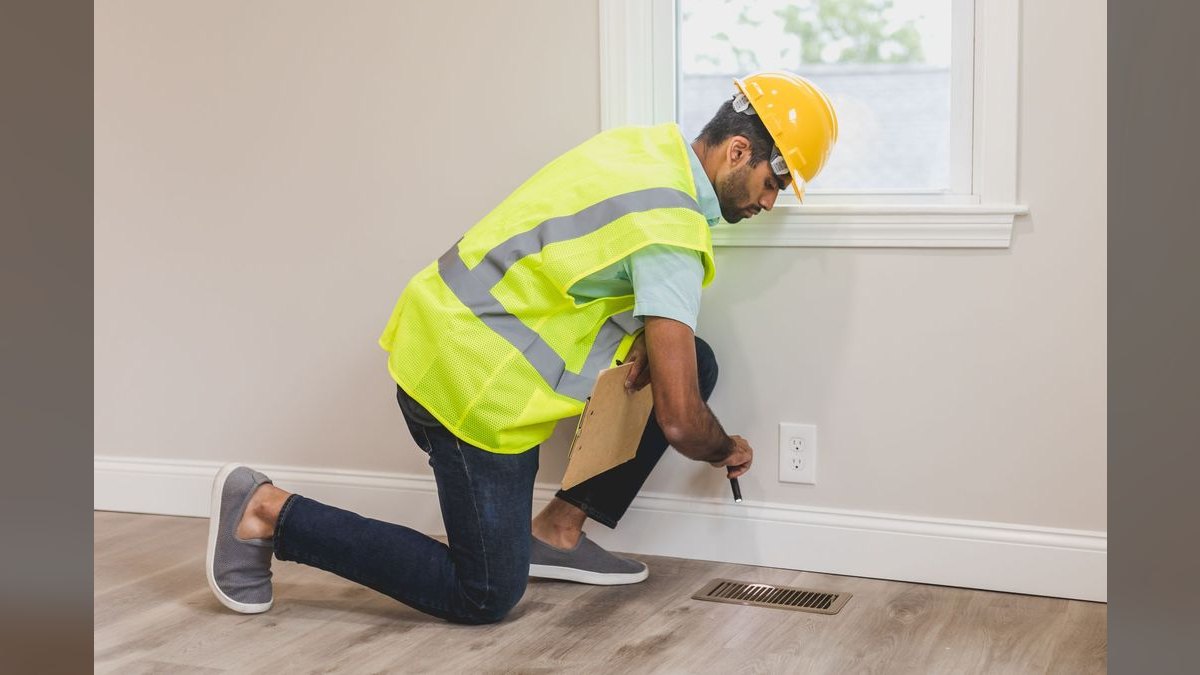
Former general contractors, electricians, plumbers, and HVAC technicians with 10+ years in the field win first — they already know how houses fail, can spot knob-and-tube wiring, polybutylene plumbing, FPE Stab-Lok panels, and asbestos siding in under 30 seconds, and can upsell radon or sewer scope with technical authority. Active military spouses and veterans win because state license requirements waive frequently for veterans and GI Bill funds the ICA School or AHIT certification. Real estate agents transitioning out of brokerage win because the 20+ referring agents is already in their phone. Operators in growth markets — Florida, Texas, the Carolinas, Idaho, Tennessee, and Arizona — capture the structural tailwind from NAR's projected 4% existing-home-sales increase in 2026 and first-time-buyer share at 35%. Multi-inspector operators who hire W-2 or 1099 sub-inspectors at 50-60% revenue split scale to $400K-$900K gross revenue with 30-40% operator margins — the HouseMaster 3-unit average of $614,073 is the proof point. Anyone in a market with 5,000+ annual existing-home transactions and less than 1 licensed inspector per 80 transactions has white space.
Who Loses With This Business
Solo operators in saturated markets lose — Denver, Austin, Phoenix, and the Twin Cities carry 400+ licensed inspectors competing for the same agent referrals and average ticket compression of 8-15% since 2023. Inspectors with no construction background lose — the learning curve to spot $50,000 of hidden defects takes 5+ years and buyers fund lawsuits when you miss a foundation crack. E&O claims average $15,000-$45,000 per incident per InspectorPro Insurance and 3 claims in 5 years cancel most policies. Inspectors who refuse ancillary services (radon at $125-$175, sewer scope at $250-$350, mold at $300-$600, termite at $75-$125) lose 35-50% of potential revenue per inspection. Operators dependent on a single broker lose — when that broker switches firms or retires, 40-60% of pipeline disappears in 90 days. Markets with sub-2,000 annual home sales and 3+ established inspectors cannot support a new entrant at $425 average ticket. Anyone who treats this as passive income loses — inspections are owner-on-the-roof work, 6-hour days minimum, and report turnaround under 24 hours is table stakes.
2027 Market Conditions
Mortgage rates are expected to ease from 6.3% to 6.1-6.2% through 2027 per Fannie Mae's May 2026 forecast, which unfreezes the move-up buyer and lifts existing-home-sales transaction volume. Inspection contingency waivers fell to 17% in 2026 from 25% in 2024 per NAR data — every percentage point of waiver decline adds roughly 53,000 inspection assignments nationwide. First-time buyers hit 35% of transactions, the highest share since June 2020, and first-time buyers waive inspections at less than half the rate of repeat buyers. Insurance carriers (Travelers, State Farm, Progressive) now require pre-bind 4-point inspections in Florida, Texas, and California, driving a $185-$285 ticket per inspection outside the purchase market. Drone roof scans and infrared scans moved from luxury upsell to standard kit — the DJI Mavic 3 Enterprise at $4,800 and Flir One Pro at $450 now pay back within 60 inspections. AI-assisted reporting (Spectora, HomeGauge, Tap Inspect with GPT-4o-mini integrations) cut report-writing time from 90 minutes to 25 minutes, lifting inspector productivity 35-40%. State licensing tightened in 2026 — Ohio, Georgia, and Pennsylvania added pre-licensure exam hours, and insurance minimums climbed in 11 states — both narrow the competitive funnel for already-licensed operators.

The 90-Day Decision Tree
- Days 1-10: Confirm state licensing path. Check your state's licensing requirements at www.nachi.org/state-licensing-requirements. 34 states require a license; 16 do not. Identify pre-license training hours, exam (typically National Home Inspector Examination at $225), and insurance minimums.
- Days 11-30: Complete training. Enroll in ICA School ($695-$1,295), AHIT ($799-$1,495), or InterNACHI free online courses + paid exam prep. Schedule the NHIE exam for Day 60.
- Days 31-45: Decide independent versus franchise. Pull WIN Home Inspection FDD ($37K-$55K, $244K avg revenue), Pillar To Post FDD ($103K-$134K, $351K avg revenue), and HouseMaster FDD ($76K-$92K, $614K 3-unit avg). Call 8-12 existing franchisees in each system. Independent path: build your LLC, EIN, business bank account, and quote insurance with InspectorPro, OREP, or AHIT-Allen.
- Days 46-60: Pass the NHIE exam. Average pass rate is 67% first attempt. Order equipment kit: infrared camera, moisture meter, AFCI/GFCI tester, gas leak detector, 17-ft ladder, lights, respirator, knee pads ($3,500-$8,000 independent / included in franchise package).
- Days 61-75: Build the agent referral pipeline. Visit 30 real estate offices in person, leave professional rate cards, host one CE-credited class on "defects every agent should flag pre-listing" at a top brokerage.
- Days 76-85: Run 5-10 free inspections for friends, family, and one agent's flip to build the portfolio and stress-test report turnaround. Photograph everything, shadow a senior inspector for 3-5 jobs, and finalize report template branding.
- Days 86-90: Launch with paid inspections. Price at market median ($385-$425 for 1,500-2,500 sq ft), publish a Google Business Profile with 5+ photos, and lock a referral fee disclosure policy (most states ban kickbacks to agents).
Alternative Plays
Insurance inspection only (4-point, wind mitigation, roof certification) is a lower-overhead alternative at $95-$185 per inspection with carrier referrals replacing agent referrals — strong in Florida, Texas, Louisiana, and California where insurers mandate pre-bind inspections. Commercial property inspections charge $0.10-$0.20 per square foot — a 15,000 sq ft warehouse pays $1,500-$3,000 with 2-3x the report complexity of residential. Niche specializations — historic homes ($500-$900 ticket), luxury homes over $2M ($800-$1,800 ticket), new-construction phase inspections (3 visits at $325 each) — escape ticket compression in saturated markets. Ancillary-service-only businesses (radon mitigation contractor, mold remediation, sewer scope specialist) double-dip the inspection ecosystem without the E&O exposure of general inspection. Franchise alternatives to the big three: AmeriSpec ($76K-$92K, Neighborly portfolio, co-marketing across 30 home-service brands), Inspect-It 1st ($28K-$48K, lowest royalty in segment at 5%), and National Property Inspections ($35K-$45K, smaller system with more territory availability). Best play for an existing trade contractor: add inspection as a complementary line — your electrician business can pivot 30% of capacity to inspections during slow electrical periods at 65% gross margins.
FAQ
Do I need a license to start a home inspection business in 2027? Yes, in nearly all states you must hold a valid home inspector license or certification. The time to get licensed ranges from 60 to 90 days for most states, though some require up to 120 hours of training and a passing exam. Check your state’s regulatory board for specific requirements.
How much money do I need to start an independent home inspection business? You can expect to spend between $15,000 and $45,000 for an independent startup, covering equipment, insurance, marketing, and basic software. If you choose a top franchise, initial investment typically runs $50,000 to $135,000, which includes training, branding, and ongoing support.
How long does it take to become profitable? Independents usually reach breakeven in 6 to 9 months if they complete around 150 inspections per year. Franchisees may take 12 to 18 months due to higher overhead, but they often see higher average revenue once established.
What kind of income can I expect? An independent owner-operator typically earns $60,000 to $95,000 in annual cash flow after expenses. Franchise owners report average gross revenue between $244,000 and $351,000, though net income varies based on local market and operational efficiency.
Do I need relationships with real estate agents to succeed? Yes, having established connections with 20 or more residential real estate agents is a strong advantage. Agents are the primary source of inspection referrals, and in markets with 5,000+ existing-home sales per year, these relationships can drive steady business.
Is the home inspection market still growing in a housing slowdown? Yes, demand remains resilient. About 62% of buyers now insist on a professional inspection, and inspection contingency waivers have dropped to 17% from 25% in 2024. First-time buyers make up 35% of transactions, all of which support consistent inspection volume.
Bottom Line
Home inspection in 2027 is one of the best-positioned small-business opportunities in the housing services stack — rare for any housing-adjacent business in a high-rate environment. The structural tailwinds (inspection waivers down, first-time buyers up, insurance carriers mandating pre-bind inspections, AI cutting report time 60%+) all point in your favor. Independents with a construction background and a real estate agent network can self-fund a $15K-$45K launch and hit $60K-$95K of owner cash flow within 12 months. Career-changers without that network should buy a top franchise — WIN at $37K-$55K, HouseMaster at $76K-$92K, or Pillar To Post at $103K-$134K — and trade the 11% royalty drag for $244K-$614K of franchise-system gross revenue. The losers are saturated-market solos, inspectors with no construction depth, operators dependent on a single broker, and anyone treating this as passive income. Move on this in Q3 2026 to be licensed and earning by Q1 2027, when the lower-rate-driven transaction lift hits and the agent referral game is wide open for new, prepared inspectors.
Sources
- IBISWorld — Building Inspectors in the US Industry Analysis, 2026 (ibisworld.com/united-states/industry/building-inspectors/1405/)
- WIN Home Inspection — 2025 Franchise Disclosure Document, Items 5, 6, 7, 19 (winfranchising.com)
- Pillar To Post Home Inspectors — 2026 FDD via FranchisePayback and Sharpsheets analysis
- HouseMaster Home Inspections — 2026 FDD Review via FranchiseChatter (franchisechatter.com)
- AmeriSpec Home Inspection — Franchise cost analysis via PeerSense and Franzy
- InterNACHI — National Home Inspector Examination preparation and state licensing requirements (nachi.org)
- ASHI (American Society of Home Inspectors) — Certification standards and membership data (homeinspector.org)
- NAR — Existing-Home Sales Reports and 2026-2027 transaction forecast (nar.realtor)
- Fannie Mae — May 2026 Housing Forecast covering mortgage rate trajectory through 2027
- Angi — How Much Does a Home Inspection Cost? 2026 national pricing data (angi.com)
- HomeGuide — 2026 Home Inspection Cost Breakdown (homeguide.com)
- InspectorPro Insurance — 2025 E&O Claims Study and Future of the Home Inspection Industry report
- InspectionSupport — 2025 Independent Home Inspector Compensation Survey
- Bureau of Labor Statistics — Construction and Building Inspectors occupational wage data (bls.gov/ooh)
- Business Research Insights — Residential Home Inspections Market 9.1% CAGR forecast through 2035
Related on PULSE
- Should I open a home staging business in 2027?
- Should I open a home baking business in 2027?
- Best home services franchises to buy in 2027
- Should I open or buy a Griswold Home Care franchise in 2027?
- Should I open or buy a Home Helpers Home Care franchise in 2027?
- Should I open or buy a FirstLight Home Care franchise in 2027?
This page will be disappearing soon. Save it to your device for $1 — or read it free while it is here.
@Kory-White- · if Venmo asks, the last 4 of my number are 2012
This page is gone.
This one is off the shelf now. $1 keeps it on your phone for good — the whole page, pictures and diagrams included.
 franchiseShould I open or buy a Storm Guard Roofing franchise in 2027?
 franchiseShould I open or buy a Red Lobster franchise in 2027?
 franchiseShould I open or buy a Tuffy Tire & Auto franchise in 2027?
 franchiseShould I open or buy an All My Sons Moving & Storage franchise in 2027?
 franchiseShould I open or buy a Yogurtland franchise in 2027?
 franchiseShould I open a HVAC repair business in 2027?
 franchiseShould I open or buy a solidcore franchise in 2027?
 franchiseShould I open or buy a Cold Stone Creamery franchise in 2027?
 franchiseShould I open or buy a World Gym franchise in 2027?
 franchiseShould I open or buy a CarePatrol franchise in 2027?