
Should I open or buy a Gracie Barra Brazilian Jiu-Jitsu franchise in 2027?
 Curated byKory White · Fractional CRO · Maryland
 PULSEKNOWLEDGE LIBRARY
Yes — but only if you are a Brazilian Jiu-Jitsu black belt (or can lock in one as your head instructor) and want a membership-driven academy under a globally recognized brand; no if you have no BJJ credibility of your own. Gracie Barra, founded by Carlos Gracie Jr. in 1986 and now running 700+ schools worldwide, rewards teaching ability and retention far more than capital — a well-run Gracie Barra franchise can clear $60,000–$160,000 for an owner-instructor, but a non-instructor investor without a committed black belt partner is set up to lose money.
The Outcome You Should Expect
The financial outcome of a Gracie Barra school is decided less by the market you pick and more by whether the person opening it is the one teaching. An owner-instructor who is a brown or black belt, already known in the local grappling community, typically opens with a pre-enrolled founding class of 50–100 students and reaches the 120-member cash-flow breakeven point within 12–18 months. A non-instructor investor who has to hire a head coach at $40,000–$70,000 a year is starting 30–50% behind on margin before a single class is taught, and the timeline to breakeven stretches to 24 months or longer because the brand alone does not fill mats — the instructor's reputation does.
Once a school matures, the expected range is fairly wide but predictable: 150–400 active members paying $150–$220 per month produces $150,000–$500,000 in annual gross revenue. Because Gracie Barra charges a flat monthly royalty (commonly $1,000–$1,500) rather than a percentage of sales, the outcome curve is steeper than most franchises — a school that grows past 250 members keeps almost all of the marginal dollar, while a school stuck under 100 members is paying the same fixed royalty against a much thinner revenue base and often loses money every month. This is the single biggest structural difference between Gracie Barra and percentage-royalty franchise models, and it means the realistic outcome bifurcates hard: either you cross the enrollment threshold where the flat fee becomes irrelevant, or you sit below it and the fixed costs (rent, royalty, insurance) eat the business alive.
Owner-instructors who teach the bulk of the schedule themselves — 12 to 20 classes a week plus private lessons — should expect to personally take home $60,000–$160,000 once the school stabilizes, with the wide range driven almost entirely by local membership pricing power and how much of the teaching load they retain versus delegate to assistant instructors. Investors who never step on the mat should expect a materially lower and less certain return, because their outcome now depends on retaining someone else's black belt for the life of the agreement.
What Drives That Outcome
Four levers explain almost all of the variance between a Gracie Barra school that thrives and one that struggles: instructor credibility, the flat-royalty structure, retention through the belt system, and ancillary uniform revenue.
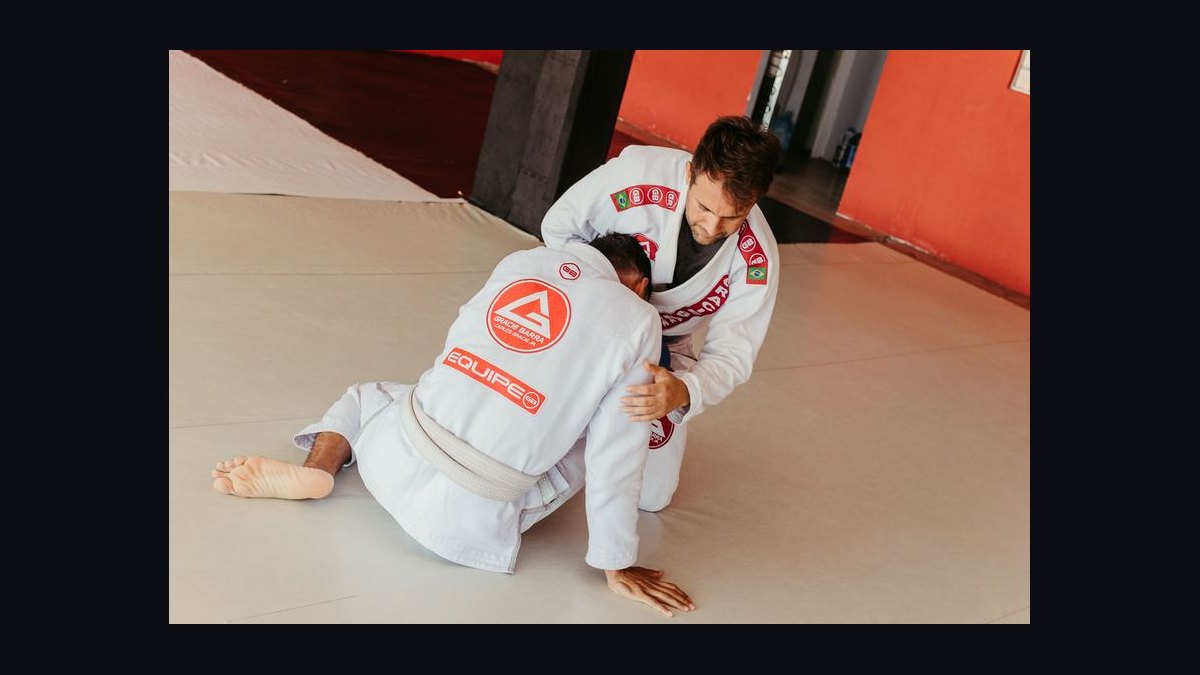
Instructor credibility is the gating factor because BJJ students train under a person, not a logo — a franchise agreement gives you the curriculum and the brand, but it cannot manufacture the trust that keeps someone paying monthly dues for years. This is why the Gracie Barra agreement requires the lead instructor to hold a valid Gracie Barra black belt credential rather than any outside black belt.
The flat royalty changes the math of every additional member differently than it would under a percentage model. At $1,000–$1,500 a month regardless of revenue, a school at 100 members is paying the same royalty dollar amount as a school at 350 members — meaning the marginal member above breakeven contributes almost pure profit once instructor labor and rent are covered. This is also why undersized schools are disproportionately dangerous: the fixed royalty does not shrink when enrollment is soft, so a slow launch compounds instead of self-correcting the way it might under a percentage-of-revenue deal.
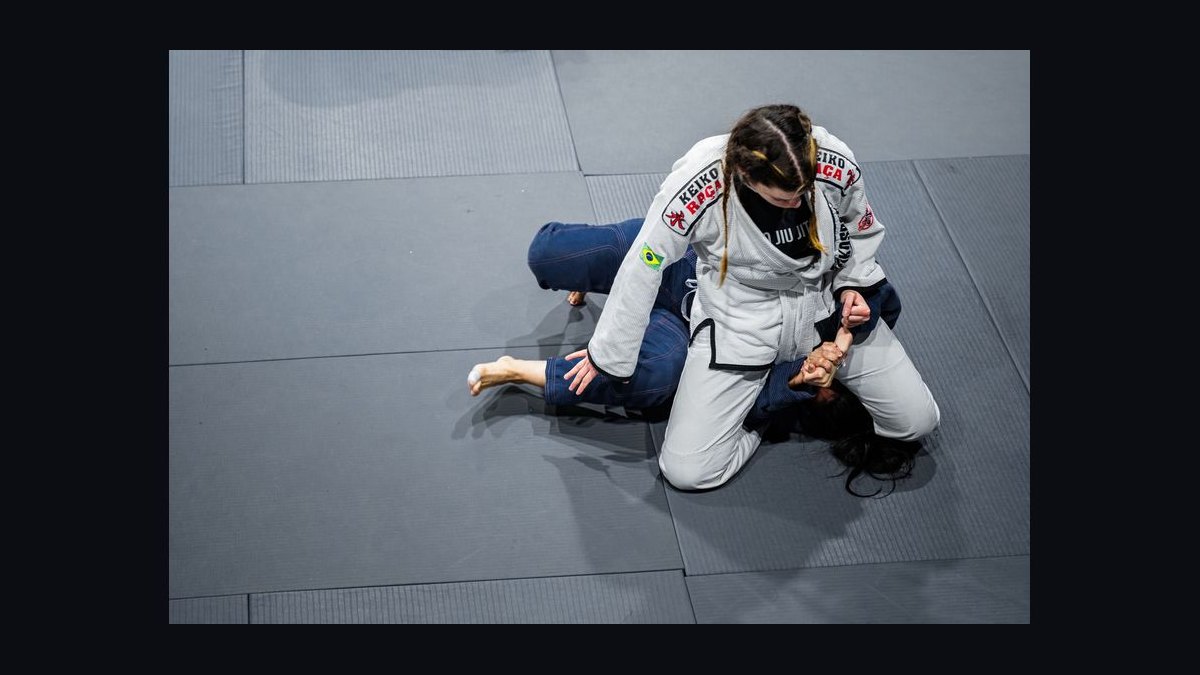
Retention is driven by the belt-progression system itself. Because advancement in BJJ takes years, not weeks, a well-run curriculum gives students a long visible ladder to climb, which Gracie Barra's structured system leverages to lift retention above the 40–60% annual churn typical of independent BJJ academies — but only if the school actually runs the curriculum with discipline (regular stripe and belt promotions, a real fundamentals-to-advanced pipeline, and dedicated kids' classes, which retain at 70–80% and cross-sell to parents).
Finally, the mandatory Gracie Barra gi and uniform requirement creates a captive merchandise stream most outside observers underweight: at 30–50% margins on required gear, a mature school adds $15,000–$40,000 a year in profit that partially offsets the higher monthly royalty compared to lower-cost independent affiliations.
Benchmarks and Realistic Ranges
Total startup capital for a Gracie Barra franchise runs $80,000–$250,000, built from a $10,000–$30,000 licensing fee, $25,000–$120,000 in leasehold buildout, $15,000–$45,000 in mats and equipment, $2,000–$6,000 in member-management software, $5,000–$18,000 in grand-opening marketing, $3,000–$12,000 in insurance and permits, and $20,000–$45,000 of working capital to survive the first three to six months before membership dues cover overhead. Most owners finance this through a mix of personal savings (30–50%), an SBA 7(a) loan (40–60%, typically requiring 10–20% down with 10-year terms), and equipment leasing (10–20%) — a financed balance of $80,000–$250,000 translates to monthly loan payments of roughly $1,000–$3,000, a fixed obligation that sits on top of the flat royalty and must be covered before any owner salary is drawn.
On the competitive-set side, Gracie Barra's monthly cost structure sits well above lower-cost BJJ affiliation models: Alliance Jiu-Jitsu charges roughly $200–$500 a month with no franchise fee, Atos runs $300–$600 a month with stricter competition-focused requirements, and Checkmat uses a flat annual fee of $2,000–$5,000 with no monthly royalty at all. Gracie Barra's $1,000–$1,500 monthly fee buys turnkey operations, centralized marketing support, and the strongest brand recognition in the category — a trade-off that favors owners who value systemization over owners chasing the lowest possible fixed cost.
On unit economics, a $300,000-AUV school typically allocates about 25% to instructor labor, 12–18% to rent, roughly 5% of revenue to the flat royalty once volume is healthy, 12% to marketing and admin, and 5% to equipment and consumables — leaving an owner roughly $110,000–$120,000 before the value of any labor the owner-instructor contributes personally, which can add another $40,000–$60,000 in saved payroll if they teach rather than hire.
On exit value, an established Gracie Barra academy typically resells for 1.5–3x annual net profit, meaning a school earning $100,000 a year in profit might sell for $150,000–$300,000 — but because the buyer must also be a Gracie Barra-approved black belt, the buyer pool is narrow and most sales go to an existing instructor or student inside the same school rather than an outside investor.
Risks, Edge Cases, and Failure Modes
The dominant failure mode is a non-instructor owner who cannot retain a qualified head coach. Because the brand's credibility is inseparable from the instructor's personal credibility, losing your black belt head coach to a competing school, a Gracie Barra franchise a few miles away, or simply burnout can gut enrollment within months — and replacing a departed instructor's personal following is far harder than replacing a manager in most other franchise categories.
A second major risk is being under-enrolled while carrying full fixed costs. Because the royalty is flat rather than a percentage of revenue, a school stuck under 100 active members is paying essentially the same monthly obligations as a school at 300 members, which means slow launches do not self-correct the way they might under a percentage-royalty model — they compound. Owners who overbuild their facility (leasing 5,000 square feet when 2,500–3,000 would suffice) make this worse by adding rent before the membership base can support it.
Retention failure is a close third. Industry-wide BJJ churn of 40–60% annually means a 200-member school must replace 40–100 students every year just to stay flat; owners who skip disciplined belt promotions, neglect the adult-beginner cohort (the highest-churn group), or under-invest in kids' programming (70–80% retention) will see membership erode even in a strong local market.
Market saturation is a real and growing 2027 concern: major metro areas with populations over one million can have 8–15 BJJ schools within a ten-mile radius, and because Gracie Barra territorial exclusivity is typically limited to a 3–5 mile radius, a new franchisee may face direct competition from another Gracie Barra school in a neighboring city rather than just independent gyms.
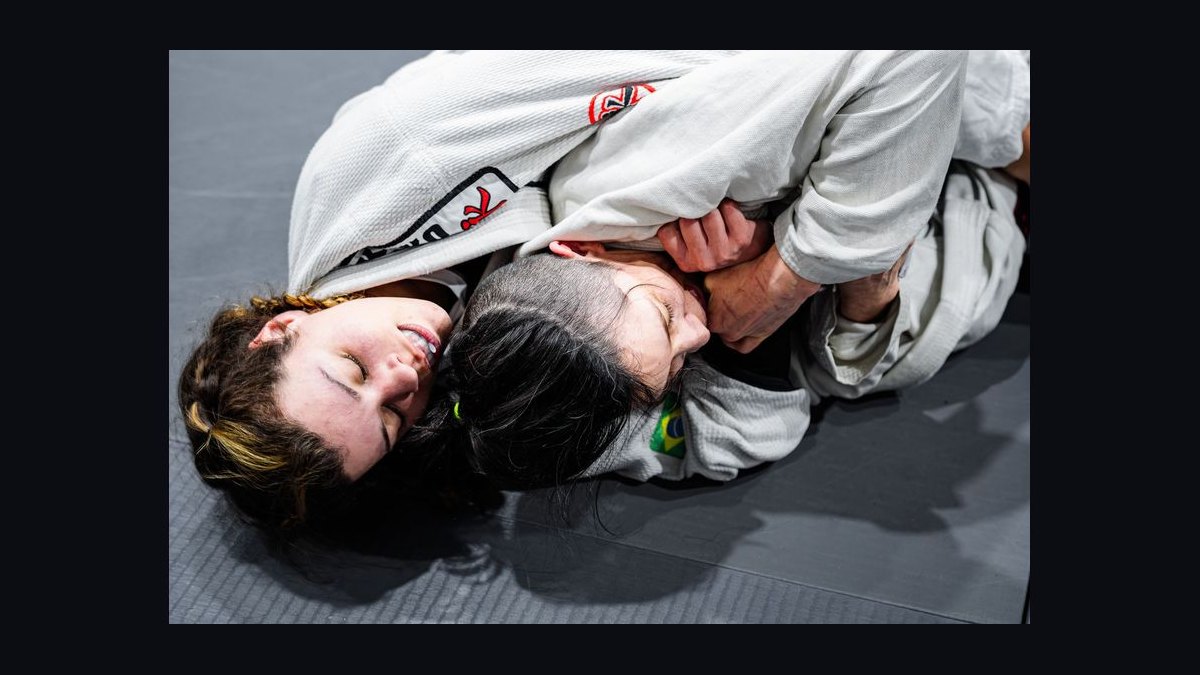
There is also a structural growth ceiling worth planning around: a single location typically caps out at 350–450 active members given realistic mat space and instructor bandwidth, and scaling beyond one school means either hiring additional black belt instructors at $50,000–$80,000 each or paying a second franchise fee and buildout — which is why most Gracie Barra franchisees stay at one or two locations rather than building a multi-unit portfolio.
Finally, exit risk is understated by first-time buyers: because a Gracie Barra school can only be sold to a Gracie Barra-approved black belt, an owner without a groomed internal successor (an assistant instructor progressing toward brown or black belt) can find themselves with a profitable business and almost no buyer when they want out, leaving equipment liquidation (10–20% of original cost) and a member-list sale as the only fallback options.
A Practical Rollout Plan
The first two weeks should be spent confirming — in writing — the black belt credentials of whoever will actually run the mats, since this is the one requirement that cannot be worked around later. From there, the next two weeks go to interviewing at least eight existing Gracie Barra owners about their real active-member counts, monthly churn, and personal take-home, because published averages hide enormous variance by market. Weeks five and six are for counting existing BJJ supply in your target radius and gauging underserved demand, given how saturated major metros have become. Weeks seven and eight go to securing 2,000–5,000 square feet of mat-appropriate space at a rent level the pre-enrollment numbers can support. Weeks nine through eleven cover finishing certification requirements and pre-selling founding memberships, targeting 50–100 signed members before the doors open. The final stretch, days 76 through 90, is spent opening and pushing hard toward the 120-member mark where flat-royalty economics start working in the owner's favor rather than against them.
Related questions
Do I need to be a black belt myself, or can I just hire one? You can hire a head instructor if you are not a black belt yourself, but doing so typically costs $40,000–$70,000 a year in salary and cuts 30–50% off your margin, so owner-instructors generally see stronger take-home than pure investors.
How does Gracie Barra's flat royalty compare to a percentage-based franchise? A flat $1,000–$1,500 monthly royalty means high-enrollment schools keep a larger share of incremental revenue than they would under a percentage model, but it also means underperforming schools carry the same fixed cost regardless of how few members they have.
What's the biggest difference between Gracie Barra and an independent BJJ gym? Gracie Barra provides a standardized curriculum, brand recognition, and operational systems in exchange for the franchise fee and royalty; an independent academy keeps full equity and pays no ongoing fees but must build its own reputation and systems from scratch.
How saturated is the BJJ franchise market in 2027? Major metro areas can already have 8–15 BJJ schools within a ten-mile radius, and Gracie Barra's own territorial exclusivity is typically only 3–5 miles, so competitive density is a real factor to research before signing.
FAQ
What qualifications do I need to open a Gracie Barra school? You must be a black belt under the Gracie Barra lineage, or partner with one who will serve as head instructor. The brand requires the lead instructor to hold a valid Gracie Barra black belt credential, so an outside black belt cannot simply be hired off the street.
How much does it actually cost to open a Gracie Barra franchise? Total startup typically runs $80,000 to $250,000, covering mat installation, buildout, uniforms, and initial marketing. The franchise fee itself is modest, often $10,000–$30,000, and the monthly royalty is a flat $1,000–$1,500 rather than a percentage of revenue.
Can I make a good living as a Gracie Barra owner-instructor? Yes — many owner-instructors earn $60,000 to $160,000 annually after expenses, depending on location and membership size. Mature academies with 150–400 members at $150–$220 a month can gross $150,000–$500,000, but the owner must actively teach and manage the school.
Is Gracie Barra a passive investment or a hands-on business? It is entirely hands-on. You must be the lead instructor or partner closely with a black belt who is. This is not a passive franchise; the model depends on personal BJJ credibility and a daily presence on the mats.
How long does it take to break even? Most schools reach breakeven within 12–24 months, largely determined by how quickly they hit 100–150 active members. Owners who pre-enroll founding members before opening and keep overhead lean often see positive cash flow closer to month 12–18.
What ongoing support does Gracie Barra provide to franchisees? Franchisees get access to the curriculum, marketing materials, the uniform supply chain, and a network of fellow school owners. Support is lighter than some traditional franchise categories, though — local marketing, retention, and day-to-day operations remain the owner's responsibility.
Sources
- https://www.ibisworld.com/united-states/industry/martial-arts-instruction/
- https://www.sba.gov/funding-programs/loans/7a-loans
- https://www.irs.gov/publications/p946
- https://www.entrepreneur.com/franchises/directory
- https://www.franchisebusinessreview.com/
- https://www.ifa.com/
- https://www.grandviewresearch.com/
- https://www.statista.com/topics/sports/
- https://www.sfia.org/reports
- https://www.ihrsa.org/
Related on PULSE
- [How long does it take to open a franchise and break even in 2027?](/knowledge/fr1104)
- [Should I open or buy a Tommy Gun's Original Barbershop franchise in 2027?](/knowledge/fr1095)
- [Should I open or buy a Painting with a Twist franchise in 2027?](/knowledge/fr1058)
- [What credentials do franchisors require from owner-operators in service franchises?](/knowledge/fr1104)
- [How does a flat-royalty franchise model compare to percentage-of-revenue royalties?](/knowledge/fr1095)
@Kory-White- · if Venmo asks, the last 4 of my number are 2012
 pulse-moviesTop 10 Movies on Netflix 2027
 pulse-moviesTop 10 Movies on Max 2027
 pulse-moviesTop 10 Fantasy Movies of All Time in 2027
 pulse-moviesTop 10 Documentaries of All Time in 2027
 pulse-moviesTop 10 Superhero Movies of All Time in 2027
 pulse-moviesTop 10 Romance Movies of All Time in 2027
 pulse-moviesTop 10 Westerns of All Time in 2027
 pulse-moviesTop 10 Musical Movies of All Time in 2027
 pulse-moviesTop 10 Thriller Movies of All Time in 2027
 pulse-moviesTop 10 Crime Movies of All Time in 2027