

Should I open or buy a Zoom Room dog training franchise in 2027?

Buy or open a Zoom Room only if you want a facility-based dog training business built on recurring class packages and memberships in a dense, affluent, pet-owning suburb. The 2026 FDD shows roughly $200,000 to $450,000 total investment, a franchise fee near $60,000, and royalties around 7%–8%. Mobile training franchises cost far less.
What a Zoom Room actually is, and why the format changes the math
Zoom Room, founded in 2007, franchises indoor dog training and socialization gyms. That single word — gym — is the whole thesis, and it is worth sitting with before you sign anything, because it explains every number in the FDD and every operational headache you will inherit.
Most dog training businesses in America are service businesses that travel. A trainer drives to your house, works with your dog in the environment where the behavior problem lives, charges for a package of four or six or eight sessions, and leaves. Bark Busters built a national brand on exactly that. Sit Means Sit runs a hybrid. The Dog Wizard blends in-home with limited facility work. Their capital requirement is low because their only fixed asset is a vehicle and their only real inventory is the trainer's time. Their revenue ceiling is also low, because a single human being can only be in one living room at a time.
Zoom Room inverts that. It leases 1,800 to 3,500 square feet, floors it with turf or rubber, fills it with agility equipment, and asks customers to come to it. The economic consequence is that one trainer can now serve six to ten dogs simultaneously in a group class rather than one dog in a kitchen. That is the leverage. It is also the risk: you have converted a variable-cost business into a fixed-cost business, and fixed costs do not care whether your Tuesday 6pm beginner class filled.

The second structural difference is what the facility unlocks beyond training itself. A physical room lets you sell retail. It lets you host events — birthday parties for dogs, adoption days, socialization hours, holiday photo sessions. It lets you sell memberships rather than packages, because a member has a place to go. Mobile franchises structurally cannot sell any of that. When you compare a mature Zoom Room grossing $350,000 to $800,000 against a mature mobile unit grossing $120,000 to $250,000, most of the delta is not training revenue at all. It is the ancillary stack the room makes possible.
Why does this matter for a 2027 decision specifically? Because the pet services category has been durable through several economic cycles, and the socialization side of the demand curve has structural tailwinds that pure obedience training does not. Households that acquired dogs during the pandemic era now own adolescent and adult dogs with entrenched behavior patterns and, in many cases, thin socialization histories. The demand is less "teach my dog to sit" and more "my dog cannot be around other dogs." That second problem cannot be solved in a living room. It requires other dogs, in a controlled space, with a trainer managing thresholds. That is precisely the product a training gym sells and a mobile trainer cannot.
The counterweight is that you are signing a commercial lease in a period when retail rent in desirable suburban strip centers has not softened much. Your lease is the single largest irreversible commitment in the deal — larger in practical terms than the franchise fee, because the franchise agreement has a term and the lease has a personal guarantee. Understand that before you fall in love with the model.
The step-by-step process from first inquiry to a full class schedule
The sequence below is the one that separates operators who open into a full calendar from operators who open into an empty room and spend eighteen months digging out. The ordering matters more than the calendar dates.

Days 1–15: read the FDD like an adversary. Request the current Franchise Disclosure Document and read Items 5, 6, 7, 19, and 20 before you read the marketing site. Item 7 gives the investment range. Item 6 gives every recurring fee — royalty, brand fund, technology fee, and any local advertising minimum, which are separate line items that people routinely conflate into "about seven percent" and then get surprised. Item 19 is the financial performance representation; read exactly what population it describes. A figure drawn from "locations open at least three years" is a very different claim than one drawn from all units. Item 20 is the tables of unit counts — openings, closures, transfers, terminations, non-renewals. The transfer and closure columns tell you more about franchisee outcomes than any brochure. If closures and transfers are running high relative to the system size, that is your signal to slow down, not to negotiate harder.
Days 16–30: interview eight or more current franchisees, and at least two former ones. The franchisor must give you contact information. Call the people who left. Ask every operator the same five questions: what were your first-year and second-year gross revenues, what do you actually take home after paying yourself for the hours you work, how many weeks did it take to fill your class schedule, what percentage of your revenue is memberships versus one-off classes, and what would you do differently about your site. That last question is the most useful and the least asked.
Days 31–45: validate the market with real data, not vibes. You are looking for dog-owning household density crossed with disposable income. Pull household counts within a three-, five-, and ten-mile radius. Look at median household income. Count the competing supply — PetSmart and Petco group classes, independent trainers, daycare facilities that offer training as an add-on, and any mobile franchise territories already sold in your area. A market with high dog ownership and zero indoor training supply is the target. A market with high dog ownership and three established independent trainers who have been there twelve years is a knife fight.
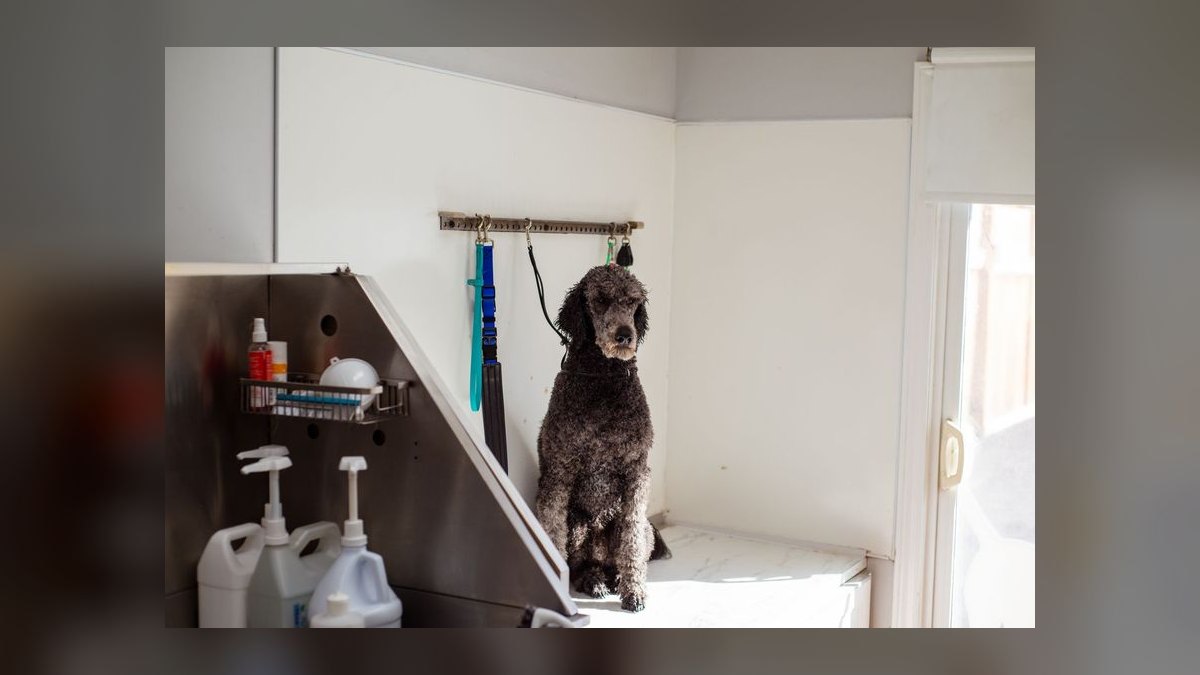
Days 46–65: secure the site, and negotiate the lease harder than the franchise agreement. You want five years with two renewal options, because resale value collapses without lease runway. Negotiate a tenant improvement allowance. Get a rent abatement period covering build-out plus at least thirty days of operation. Confirm zoning permits animal-related use — this trips people up in strip centers whose CC&Rs quietly exclude it. Confirm the HVAC tonnage can handle a room full of dogs in August, because retrofitting that is a five-figure surprise.
Days 66–90: pre-sell and staff simultaneously. This is the step that most first-time franchisees under-invest in. Every week your build-out runs, you should be selling founding memberships at a discount to people who will show up in week one. Run puppy socialization pop-ups at a partner vet clinic or a park. Build the local social following before you have a door to open. Simultaneously, complete the franchisor's training program and hire your first trainers so they are certified and calendar-ready on day one, not week six.
Costs, timelines, and the ranges that actually determine your outcome
Here is the investment picture as the 2026 FDD frames it, with the components broken out so you can see which lines you control.
| Line item | Low | High | What moves it |
|---|---|---|---|
| Franchise fee | $60,000 | $60,000 | Fixed; occasional veteran or multi-unit incentives |
| Leasehold improvements | $70,000 | $200,000 | Landlord TI allowance, shell condition, HVAC |
| Equipment and fixtures | $20,000 | $55,000 | Flooring type, agility gear, retail displays |
| Technology and software | $8,000 | $25,000 | Booking, CRM, POS setup |
| Initial marketing | $20,000 | $55,000 | Pre-sale campaign and grand opening |
| Insurance and permits | $5,000 | $18,000 | General and animal liability, local licensing |
| Training and travel | $6,000 | $18,000 | HQ training, lodging, time away |
| Working capital | $40,000 | $90,000 | First three to six months of burn |
| Total Item 7 | ~$200,000 | ~$450,000 | |
| Royalty | ~7%–8% of gross | Ongoing | |
| Marketing fee | ~2% of gross | Ongoing |
Lenders will generally want $70,000 to $140,000 liquid and a net worth well above the total investment. SBA 7(a) financing is common for franchise concepts on the SBA franchise directory, which changes the cash math considerably — but it also adds debt service that the owner-earnings figures below do not account for.
The revenue build. Mature locations gross roughly $350,000 to $800,000. That range is wide because it is really two different businesses. At the bottom, you are running a training studio with a modest schedule. At the top, you are running a community hub with a packed calendar, a strong membership base, and meaningful retail and event revenue. Class pricing generally runs $30 to $50 per session with six to ten dogs, memberships in the $150 to $300 per month band for four to eight classes, and private sessions at $80 to $150 an hour. Class packages in the $200 to $500 range are the standard entry product.

The cost structure. Trainer labor lands around 28% to 36% of gross — the single biggest line and the one that scales with your schedule. Rent and facility costs run 12% to 16%. Royalty plus brand fund takes roughly 9% to 10% combined. Other operating expenses — utilities in the $500 to $1,200 monthly range, insurance at $2,000 to $4,000 annually for general and animal liability, supplies, software, credit card processing — run another 15% or so. On a $550,000 location, that arithmetic leaves roughly $150,000 in owner earnings before debt service. On a $350,000 location with the same percentage structure, it leaves closer to $60,000, and that is why the top of the revenue range matters so much more than the bottom of the investment range.
The timeline. Site selection and lease negotiation typically consume two to four months. Build-out and permitting run another two to four, and permitting is the variable that blows up schedules — an animal-use occupancy review in a jurisdiction that has not done one recently can add six weeks with no warning. Most owners reach breakeven somewhere in months nine through eighteen and meaningful profitability in year two. The recurring-class model stabilizes cash flow faster than a one-off service business once it is running, but the ramp is longer than a mobile franchise because you are paying rent from the day you sign, not from the day your first customer calls.
Staffing costs, concretely. Plan for two to four full-time trainers at roughly $35,000 to $55,000 each plus commission on private sessions, and one or two part-time front-desk and social staff at $15 to $20 an hour. Zoom Room's internal certification program runs about four to six weeks and covers proprietary methods; hiring someone who already holds a CPDT-KA or similar credential shortens ramp-up considerably. Successful locations run 25 to 40 classes a week across puppy, beginner, intermediate, agility, and specialty tracks like scent work or therapy-dog prep.
Where owners get this wrong, and what it costs them
Treating it as a training business instead of a membership business. This is the dominant failure mode. An operator who thinks in packages sells a six-class beginner course, the customer graduates, and the relationship ends. An operator who thinks in memberships sells the same beginner course as the on-ramp to a monthly membership and a progression through intermediate, agility, and specialty tracks. The first operator has to re-fill the entire funnel every eight weeks. The second has a base. The gap between those two mental models is the gap between the bottom and the top of that revenue range, and it shows up in the numbers within twelve months.
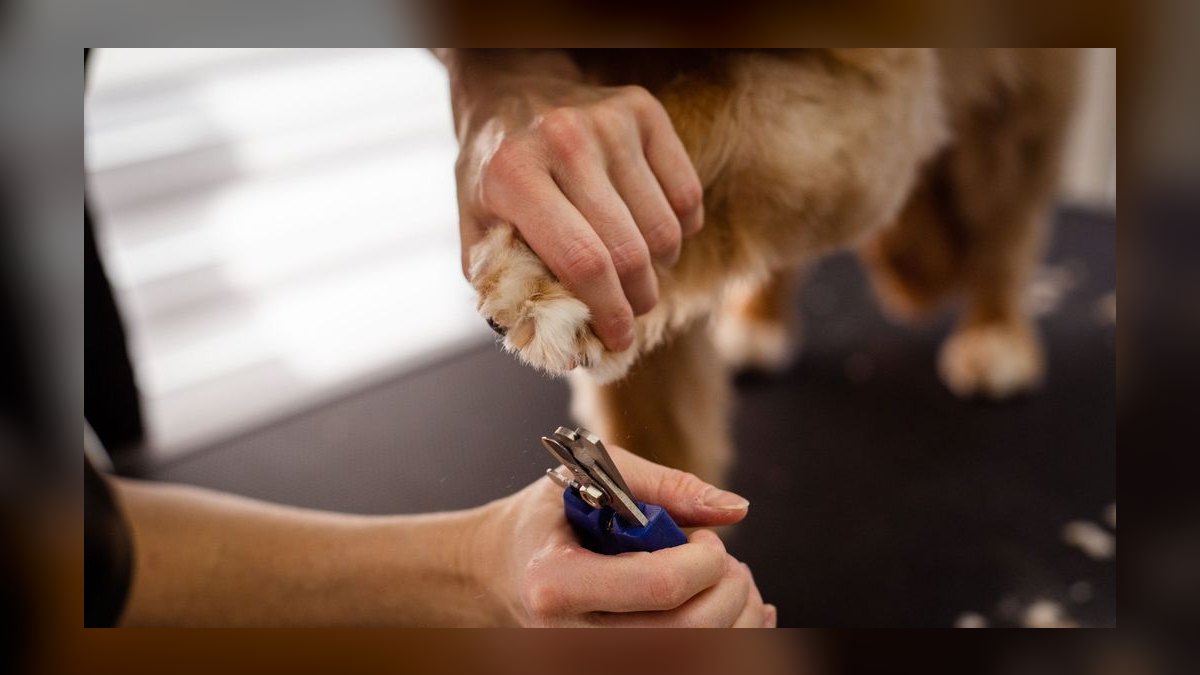
Under-budgeting the pre-opening marketing spend. The FDD's initial marketing range exists for a reason. Every week your build-out runs is a week you could be selling founding memberships. Owners who open cold, with an empty calendar and a grand opening as their first marketing act, spend the next two quarters paying rent on an underutilized room. The single highest-ROI activity in the entire launch is pre-selling — and it costs almost nothing but attention.
Single-trainer concentration risk. Class-based businesses attach to people. Customers do not buy "Tuesday intermediate"; they buy Sarah's Tuesday intermediate. Losing a popular trainer can drop enrollment 20% to 40% for two to four months while the base re-attaches. The mitigation is cross-training at least three trainers across every class type and deliberately rotating instructors so no single relationship carries a cohort. Build a hiring pipeline early — local vet tech programs, daycare and boarding facilities, and shelter volunteer networks are all reliable sources.
Signing the wrong lease. Short lease terms and month-to-month arrangements feel flexible and are financially devastating. They cap your resale value and they hand your landlord enormous leverage at renewal, right when your business is finally worth something. Insist on renewal options. Also insist on a right to assign the lease to a qualified buyer — a lease that cannot transfer makes your business nearly unsellable.

Picking a market on affection rather than density. People open where they live. The correct question is whether your trade area has enough dog-owning households at sufficient income within a realistic drive time. Customers will drive fifteen minutes to a weekly class; they will not drive forty. A market that clears on total population but fails on drive-time density will underperform indefinitely, and no amount of operating skill fixes it.
Ignoring facility operations. You are running a room where dogs urinate, shed, and occasionally fight. Daily cleaning of 1,200 to 2,000 square feet of turf or rubber is a real labor line. Odor control is a churn factor — a facility that smells loses members regardless of training quality. Animal liability coverage is separate from general liability, and your incident documentation protocol matters both for claims and for franchisor compliance.
Assuming the franchise handles demand generation. The brand fund buys system-level brand presence. It does not fill your Tuesday 6pm class. Local search presence, a genuinely active local social account, vet clinic and groomer referral relationships, shelter and rescue partnerships, and neighborhood-level community engagement are your job. Owners who expect the royalty to buy customers are consistently disappointed.

Decision framework: Zoom Room, mobile training, or something adjacent
The honest comparison is not "is Zoom Room a good franchise" but "which structure fits my capital, my market, and my temperament." Four options are genuinely live.
Facility-based training gym (Zoom Room). Highest capital, highest ceiling, most operational surface area. Right when you have $200,000 to $450,000 available, a suburban market with real dog density and disposable income, no established indoor training competitor, and a willingness to run a facility with staff. The community hub is a durable moat once established — competitors can undercut your price but they cannot replicate three years of relationships built in a room.
Mobile or in-home training (Bark Busters, Sit Means Sit, and similar). Typically $50,000 to $150,000 all-in, no lease, no build-out, and you can start generating revenue in weeks rather than months. Mature units often gross $120,000 to $250,000 with owner earnings of $60,000 to $120,000 — lower ceiling, but you keep more of the top line because there is no rent line and no facility labor. Right in dense urban markets where suitable retail space is scarce or expensive, in rural markets where you must cover a wide territory, and for anyone who wants to test the category before committing to a lease.

Adjacent pet-services facility (daycare and boarding concepts). Higher capital still, and a fundamentally different operation — you are running an overnight-capable facility with staffing coverage a training gym does not require. But the recurring revenue is stickier because daycare is a habit rather than a course. Some operators eventually run both, since the referral flow between them is natural.
Independent training gym. Full equity, no royalty, no brand fund, no territory restriction. You also build the curriculum, the brand, the operating procedures, the booking systems, and the staff certification path yourself. The 9% to 10% you save in fees is real money that compounds; so is the two years you spend building what a franchise hands you on day one. This is the right answer for an experienced trainer with an existing local reputation and client list, and the wrong answer for a career-changer entering the category cold.
Exit value: what you are actually building toward
Most franchise buyers underweight the exit, which is a mistake when the exit determines whether a decade of work compounds into anything. Pet service businesses generally trade on a multiple of seller's discretionary earnings, commonly in the three-to-five-times band for a well-run location with clean books. A location producing $150,000 in SDE can plausibly clear a meaningful six-figure sale — but three variables swing that outcome more than revenue does.
Lease runway. A buyer is not buying your business; they are buying your business in that room. Three or more years remaining plus renewal options preserves value. A short or month-to-month lease can cut the price materially, because the buyer is underwriting a possible forced relocation.
Recurring base versus transactional revenue. Two hundred active members is a far more valuable asset than the same revenue in one-off class packages, because members are predictable and packages are not. Track and report membership count, retention, and average tenure as first-class metrics from day one, not as an afterthought at sale time.
Owner independence. If the business only works because you are personally in the room, you are selling a job. Documented standard operating procedures, a cross-trained team willing to stay through a transition, and a manager who runs the calendar without you all raise the multiple. This is the single highest-leverage thing you can do in years three through five.
Transfer fees typically run around 10% of the then-current franchise fee, and the franchisor must approve your buyer. Expect six to twelve months to sell, which is normal for pet service franchises. Likely buyers are existing pet business owners — daycare or boarding operators adding a training line — and career-changers looking for an owner-operator lifestyle business. Both types are much more impressed by a stable membership roster and a real local following than by a single good revenue year.
Related questions
How does Zoom Room compare to opening an independent dog training gym?
You save 9%–10% in royalty and brand fees and keep full equity, but you build the curriculum, brand, systems, and staff certification path yourself. Franchising is worth it for career-changers entering cold; independence usually wins for established trainers with an existing local client base.
What market size do I need to support a training gym?
Look for dog-owning household density within a fifteen-minute drive time, not raw population. Suburban trade areas with high pet ownership, above-median household income, and no established indoor training competitor are the target. Rural and dense urban markets typically favor mobile models instead.
Can I run a Zoom Room semi-absentee?
Not in the first two years. Class scheduling, trainer hiring, and local community building all require owner presence. Once you have three cross-trained trainers and a manager running the calendar, reduced involvement becomes realistic — and that transition is also what raises resale value.
What is the biggest hidden cost people miss?
Pre-opening burn. Rent starts at lease signing, not at opening, and build-out plus permitting often runs four to eight months. Negotiate a rent abatement period covering construction, and budget working capital for three to six months of post-opening operation on top of that.
Does pandemic-era pet ownership still help demand in 2027?
Indirectly. Those dogs are now adults with entrenched behavior patterns, which shifts demand from basic obedience toward reactivity, socialization, and behavior modification — services that structurally require a controlled facility with other dogs present, which is exactly what a training gym provides.
FAQ
What is the total investment needed to open a Zoom Room franchise in 2027?
Per the 2026 FDD, total initial investment runs roughly $200,000 to $450,000, including a franchise fee around $60,000, leasehold improvements, equipment, technology, initial marketing, insurance, training, and working capital. The spread is driven mostly by build-out — a shell space with no landlord improvement allowance sits at the top of the range, while a second-generation space with usable HVAC and plumbing sits near the bottom. Always confirm current figures against the most recent FDD rather than any secondary summary.
How much can I expect to earn as a Zoom Room franchise owner?
Mature locations generally gross $350,000 to $800,000 annually, with owners clearing roughly $70,000 to $200,000 before debt service. The wide spread reflects membership penetration more than anything else — locations that convert intro classes into recurring memberships land near the top, while locations selling one-off packages land near the bottom. Review the FDD's Item 19 financial performance representation and validate it against conversations with current franchisees.
What ongoing fees does Zoom Room charge?
Royalty runs approximately 7% to 8% of gross revenue, plus a marketing or brand fund fee around 2%. Read Item 6 of the FDD carefully, because technology fees, local advertising minimums, and other recurring charges are listed separately and are easy to overlook when budgeting. Model your break-even using the full stack of recurring fees, not the royalty alone.
How is Zoom Room different from mobile dog training franchises?
Zoom Room operates a physical indoor gym, which enables group classes, memberships, socialization events, and retail — revenue streams that mobile trainers structurally cannot access. Mobile franchises like Bark Busters or Sit Means Sit cost far less to start and carry no rent, but their ceiling is lower because a trainer can only serve one client at a time. Facility models trade higher fixed cost for higher leverage.
How long does it take to reach profitability?
Most owners hit breakeven somewhere between months nine and eighteen and reach meaningful profitability in year two. Pre-selling founding memberships during build-out is the single biggest accelerator. Facility overhead means the ramp is longer than a mobile franchise, but once the class calendar fills, recurring revenue makes cash flow considerably more predictable than one-off service work.
Do I need to be a certified dog trainer to buy this franchise?
No. The franchisor provides initial training on its methods, operations, and business management, and most franchisees come from outside the industry. That said, hiring at least one credentialed trainer — CPDT-KA or equivalent — shortens your ramp and reduces early quality risk. Your job as owner is scheduling, staffing, marketing, and community building rather than personally teaching every class.
Sources
- https://www.ftc.gov/business-guidance/resources/franchise-rule-compliance-guide
- https://www.sba.gov/funding-programs/loans/7a-loans
- https://www.entrepreneur.com/franchises
- https://www.franchisebusinessreview.com/
- https://www.franchise.org/
- https://www.americanpetproducts.org/industry-trends-and-stats
- https://www.avma.org/resources-tools/reports-statistics
- https://www.bls.gov/ooh/personal-care-and-service/animal-care-and-service-workers.htm
- https://www.ccpdt.org/
- https://www.census.gov/programs-surveys/acs
Related on PULSE
- [Should I open or buy a Sit Means Sit dog training franchise in 2027?](/knowledge/fr0674)
- [Should I open a dog walking service in 2027?](/knowledge/fr0545)
- [Should I open or buy a Zoom Tan franchise in 2027?](/knowledge/fr1021)
- [Should I open or buy a Mighty Dog Roofing franchise in 2027?](/knowledge/fr0773)
- [Should I open or buy a GymGuyz mobile personal training franchise in 2027?](/knowledge/fr0672)
- [Should I open or buy a Dog Haus franchise in 2027?](/knowledge/fr0935)
 pulse-moviesTop 10 Westerns of All Time in 2027
 pulse-moviesTop 10 Movies on Netflix 2027
 pulse-moviesTop 10 Crime Movies of All Time in 2027
 pulse-moviesTop 10 Musical Movies of All Time in 2027
 pulse-moviesTop 10 Fantasy Movies of All Time in 2027
 pulse-moviesTop 10 Documentaries of All Time in 2027
 pulse-moviesTop 10 War Movies of All Time in 2027
 pulse-moviesTop 10 Thriller Movies of All Time in 2027
 mvTop 10 Horror Movies of All Time in 2027
 pulse-moviesTop 10 Romance Movies of All Time in 2027