
Should I open or buy a Your Pie Pizza franchise in 2027?
 Curated byKory White · Fractional CRO · Maryland
 PULSEKNOWLEDGE LIBRARY
Quality
Certified
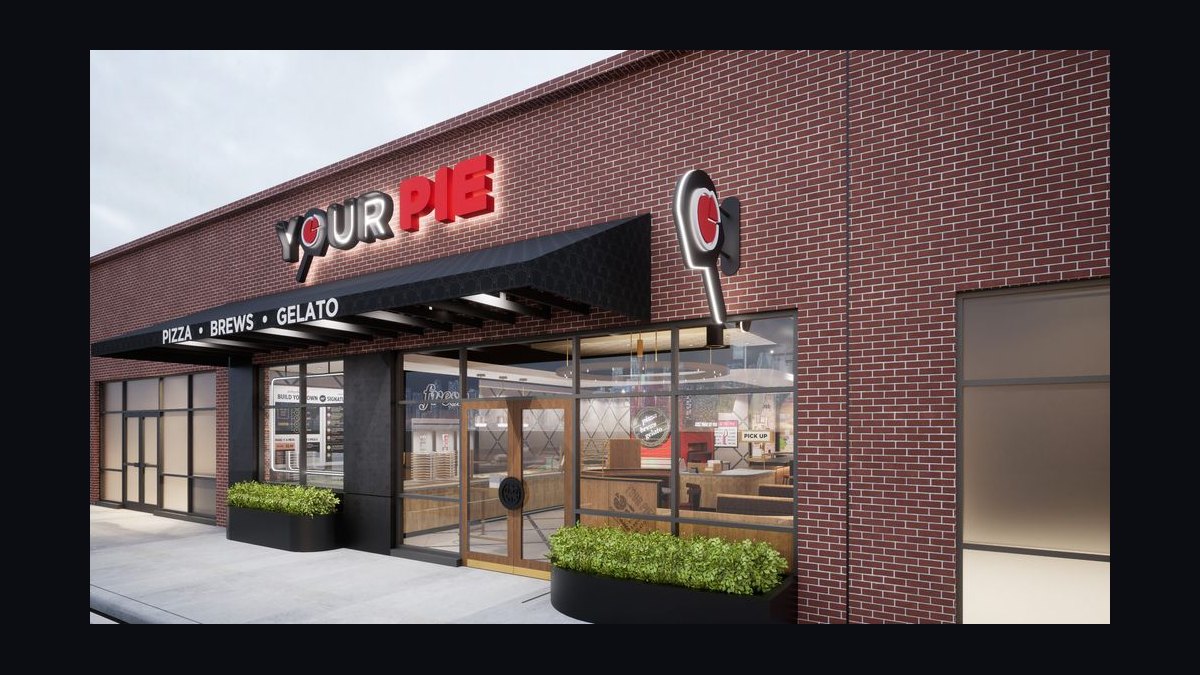
For most first-time operators in 2027, buying an existing Your Pie unit beats building new. A resale hands you proven sales, a trained crew, and revenue on day one at roughly 2.5–3.5× EBITDA, while a ground-up build costs $450,000–$850,000 and six to twelve months before your first sale. Open new only with a superior site and deep liquidity.
The two paths side by side
Anyone weighing a Your Pie franchise in 2027 is really choosing between two very different transactions that happen to share a logo, a supply chain, and a fee schedule. The first is a development deal: you sign with the franchisor, secure a territory, find a site, build it out, hire from scratch, and open a restaurant that has never served a customer. The second is an acquisition: you buy a unit from an existing franchisee who is ready to exit, and you inherit a lease, a payroll, a POS history, and whatever reputation the store has built locally.
A ground-up build is a construction and real-estate project wearing a restaurant costume. You negotiate a lease, hire an architect who works inside the brand prototype, order a brick oven and a refrigerated assembly line, and then wait through permitting, inspections, and utility hookups. Every dollar you spend before opening is a bet on assumptions: that the corner delivers the foot traffic your broker projected, that rent lands under 10% of sales, that you can staff a full team at $12–$18 an hour in your market. The reward is that you control everything — layout, culture, opening date — and you capture the honeymoon surge a genuinely new restaurant enjoys in its first eight to twelve weeks.

A resale inverts that profile. You can read twenty-four to thirty-six months of actual sales by daypart, real food cost, real labor percentage, and the service history on the oven. If a store grosses $1,050,000 at a 14% restaurant-level margin, that is roughly $147,000 of EBITDA, and at a 2.5–3.5× multiple the business prices near $370,000 to $515,000 — frequently less than a new build, with cash flow starting immediately. The catch is that strong units rarely come cheap, and the ones listed often carry a reason: a lease with three years left and no renewal options, a darkened anchor tenant next door, or a franchisee who stopped reinvesting and left $80,000 of deferred maintenance behind.
There is a third path that sits between them and deserves a name: buying a distressed or underperforming store at a discount and rebuilding it. A unit doing $620,000 at a 4% margin might trade near asset value, but you are buying a turnaround. In fast-casual pizza, turnarounds usually come down to throughput, consistency, and local marketing — three things a hands-on operator can fix and an absentee owner cannot. Always ask why the numbers sagged. "The owner was never there" is fixable. "A Blaze and a MOD opened within a mile" is not.

How to decide between them
The disciplined way to choose is to run both paths against three constraints: liquid capital, tolerance for a revenue-free ramp, and how much control you need over the physical space. A new build typically wants $150,000 to $280,000 liquid on top of financing, plus working capital of $40,000 to $110,000 to cover the first three months while payroll runs and sales stabilize. A resale usually requires a 20–30% down payment against an SBA 7(a) loan — for a $450,000 purchase, that is $90,000 to $135,000 down, with the goodwill portion often amortized over ten years.
Calendar matters just as much as capital. From signed agreement to open doors, a new Your Pie realistically takes six to twelve months, and the back half is dominated by things outside your control: municipal permitting, grease-trap requirements, ADA compliance in older retail bays, and equipment lead times that stretched in recent years and have not fully normalized. A resale can close in sixty to ninety days once franchisor approval, lease assignment, and financing align. If you are leaving a salaried job with a fixed runway, six extra months of personal burn is a line item in your model, not a footnote.

The control question often breaks the tie. Fast-casual pizza lives or dies on peak-hour throughput — moving a queue past the topping rail and through a brick oven in minutes without the line visibly stalling. That is partly training and partly geometry. A register in the wrong spot, a cramped assembly line, or a single oven where volume demands two will cap your lunch rush permanently. When you build, you fix that on paper for the cost of a design revision. When you buy, you inherit whatever the previous operator signed off on, and re-plumbing a line inside an occupied lease is expensive and closes you for days.
Territory cuts the other way. In a market where Your Pie has little or no presence, a new build gives you first pick of the best corner and a path to additional units under an area development agreement. In a market that already has two or three stores, the good corners are gone and buying one is the practical entry. Ask the franchisor directly how many units are open in your state, how many transferred or closed in the last three years, and how many signed development agreements remain unbuilt. Items 20 and 21 of the FDD give you the raw table; the conversation gives you the context.

Concrete numbers behind each path
Start with the build. The current FDD places total initial investment at roughly $450,000 to $850,000, and that spread is not random — it tracks three variables: square footage (typically 1,800 to 3,000), whether the space is a vanilla shell or a second-generation restaurant with usable infrastructure, and whether you add a full craft beer program. The franchise fee sits near $30,000. Buildout and leasehold improvements carry the widest range, roughly $200,000 to $480,000, and a second-generation space with an existing hood, grease trap, and plumbing can cut that by $100,000 or more. Equipment and POS run about $130,000 to $280,000, dominated by the brick oven and the refrigerated topping line. Signage and décor land in the $25,000 to $65,000 band because the brand prescribes the look. Opening inventory runs $10,000 to $25,000, grand-opening marketing $15,000 to $45,000, and training plus travel $8,000 to $22,000.
Now the operating model, because that determines whether either path works. On a mature unit grossing $800,000 to $1,400,000, food cost typically runs 28–32% of revenue. The build-your-own format genuinely helps here — guests assemble their own pies, so prep labor is lower than a full-service pizzeria — but it costs you on waste, because you must hold a wide rail of fresh toppings whether or not anyone orders the artichoke hearts. Labor is the bigger line: budget 28–34% of revenue all-in with payroll taxes and workers' comp, against hourly wages that have settled in the $12–$18 range depending on market. That is meaningfully better than the 35–40% a full-service pizza-and-beer concept absorbs and modestly worse than a narrow-menu counter-service QSR.

Occupancy is where site selection shows up in the math. A suburban strip-center bay usually runs 6–8% of revenue; a high-traffic urban or campus-adjacent site can push 8–12%. That four-point spread is roughly $40,000 a year on a million-dollar store — the difference between a good year and a mediocre one. Layer on the ~5% royalty and a marketing fee near 2%, and remaining operating expenses (utilities, insurance, repairs, supplies, card fees, third-party delivery commissions) typically consume another 12–14%. What survives is a restaurant-level margin in the 11–17% band, translating to roughly $80,000 to $200,000 of owner profit — and that assumes the owner works in the business as operator or GM. Go semi-absentee and hire a full-time GM at $55,000 to $75,000 plus bonus, and expect net profit to fall 20–30%.
For the resale, the arithmetic is more direct but demands more skepticism. Mature fast-casual restaurants trade at roughly 2.5–3.5× annual EBITDA, with the multiple driven by remaining lease term, equipment condition, sales trend, and how transferable the operation is. A unit at $1,000,000 revenue and 15% EBITDA carries an enterprise value near $375,000 to $525,000. Note what that implies: a healthy Your Pie is worth roughly what it costs to build one. The return therefore comes from cash flow, not appreciation — you are buying a job with an attached yield, not a growth asset. Model it that way and you will make better decisions. If $130,000 of annual owner earnings on $450,000 invested — a low-to-mid-20s cash-on-cash return before debt service — justifies your full-time attention, the deal works. If you were expecting a 3× equity multiple on exit, this is the wrong category.

Two adjustments people routinely forget. First, franchise agreements renew, usually at ten years, often with a renewal fee and a mandatory remodel that can run $75,000 to $200,000. If you buy a unit with two years left on its term, price that remodel into your offer. Second, craft beer and gelato add $3–$6 to average ticket in the right trade area but carry their own costs: liquor licensing (wildly variable by state and municipality, from a few hundred dollars to five figures), beer cost of goods around 20–25% on that revenue stream, gelato equipment, and more SKUs to manage. In a college town or affluent suburb those attachments carry their weight easily. In a price-sensitive family market they add complexity without lifting the check.
Implementation details and sequencing
Whichever path you pick, sequence matters more than effort. Most failed restaurant investments are not failures of hustle; they are failures of order — signing a lease before validating traffic, ordering equipment before permits, opening before the crew can hold the line at peak.

Days 1–15 belong to the document. Read the current FDD end to end, not a summary. Item 5 covers the initial fee, Item 6 every ongoing royalty and marketing charge, Item 7 the investment range with its footnotes, Item 19 whatever financial performance representation the franchisor chooses to publish, and Items 20 and 21 the unit counts, transfers, terminations, and the franchisor's own audited financials. Have a franchise attorney read it too — a $1,500 to $4,000 expense that routinely pays for itself.
Days 16–30 are for franchisee interviews, the highest-value diligence you will do. Item 20 lists current and former franchisees with contact details. Call at least eight, deliberately including former ones. Ask specifics: What is your actual AUV? What share of revenue is beer and gelato? What did your buildout really cost versus the FDD range? How long from signing to opening? How many field visits did you get last year? Would you sign again? The answer to that last question, across eight operators, tells you more than any market report.

Days 31–45 are trade-area work: real observation at real dayparts, plus a survey of every fast-casual pizza competitor within three miles and an honest count of quick lunch options already serving your target block. Sit in the parking lot at 11:45 a.m. on a Tuesday and 6:15 p.m. on a Thursday and count cars and people. Cross-reference daytime employment within a mile, campus enrollment if relevant, and the anchor tenants in the center.
Days 46–65 diverge. On the build path, this is site selection, letter of intent, and lease negotiation — and negotiate the tenant improvement allowance hard, because every dollar of TI is a dollar off your capital stack. On the buy path, this is diligence: two years of tax returns and P&Ls, POS data by daypart, the lease and any assignment conditions, equipment age and service history, employee roster and wage rates, and any open health-department items.

Days 66–100 are execution — construction and permitting on one path, franchisor approval and closing on the other — with training running two to four weeks at an existing location or corporate training center in both cases.
Then comes the phase nobody plans enough for: the first ninety days after opening. A new unit gets a honeymoon; the mistake is reading it as the run rate. Staff your peak generously, measure ticket times obsessively, and fix line bottlenecks in week two rather than month six, because habits harden. A typical shift runs 8–12 people — a GM, an assistant manager, four to six line builders, and one or two cashiers — and the difference between a crew that can push the lunch rush and one that stalls is almost entirely training on dough handling, topping placement, and oven timing. Expect field consultant visits two to four times a year; use them.

Months four through twelve are the attachment and local-marketing phase. Once throughput is reliable, growth levers are ticket and frequency: beer and gelato attach rates, catering for nearby offices, school and team partnerships, and a loyalty program you actually promote at the register. Track attach rate as a standing metric — it is the cheapest revenue in the building because the guest is already in line.
Year two is when you decide whether this is one restaurant or a small portfolio. Multi-unit economics are where franchise operators make real money: a second and third unit share a district manager, spread supplier leverage, and let you promote from within instead of hiring GMs cold. But expand only from a first unit that is genuinely stable — profitable, well-staffed, and running without you in it every day. Opening a second while the first still needs you is the most common way an otherwise good operator ends up with two mediocre stores instead of one strong one.
Related questions
How long until a new Your Pie breaks even?
Most fast-casual restaurants reach monthly cash-flow breakeven within six to twelve months of opening if the site is strong, and full payback on the initial investment in three to five years. Weak sites often never reach the range the FDD describes.
Can I run a Your Pie as a passive investment?
Not well during the ramp. Plan to be a full-time owner-operator for at least the first year. Semi-absentee ownership requires a competent GM at $55,000–$75,000 plus bonus and typically reduces net profit by 20–30%.
What financing is typically used?
SBA 7(a) loans are the standard route for restaurant franchises, generally requiring 20–30% down, personal guarantees, and often a lien on personal assets. Equipment leasing covers part of the oven and line. Seller financing sometimes bridges part of a resale.
Does a second-generation space really save money?
Yes, substantially. Existing hood, grease trap, plumbing, and electrical can reduce buildout by $100,000 or more and shorten permitting. The trade-off is inheriting a layout that may not suit a fast-casual line, so have the prototype designer review it before signing.
What should I look for in a resale's P&L?
Sales trend over 24 months by daypart, food cost, labor percentage, occupancy as a share of revenue, remaining lease term and options, equipment age, and deferred maintenance. A declining trend in a clean market usually means an operator problem, which is fixable.
FAQ
What is the total investment to open a Your Pie franchise?
The current FDD places total initial investment at roughly $450,000 to $850,000, including a franchise fee around $30,000. The spread depends on square footage, whether the space is a vanilla shell or second-generation restaurant, local construction costs, and whether you include a full craft beer program. Confirm the figures in the FDD in effect when you sign, since ranges are updated annually.
How much can a Your Pie franchise owner earn?
Mature units generally gross $800,000 to $1,400,000, with restaurant-level margins around 11–17% producing roughly $80,000 to $200,000 in owner profit. That assumes an active owner-operator. New units in secondary markets often start lower and grow toward the range over two to three years. Treat any single number as a scenario, not a promise.
What are the ongoing fees?
Expect a royalty around 5% of gross sales plus a marketing fee near 2%, typical for the fast-casual segment. Additional recurring costs include technology and POS fees, local advertising minimums, and periodic remodel obligations tied to renewal. Item 6 of the FDD lists every recurring charge — read it line by line rather than relying on the headline royalty.
Is buying an existing unit cheaper than opening a new one?
Often, yes. Mature fast-casual restaurants trade at roughly 2.5–3.5× EBITDA, so a $1,000,000-revenue unit at 15% EBITDA prices near $375,000–$525,000 — comparable to or below a new build, with revenue starting immediately. But you inherit the lease, layout, equipment condition, and crew, so diligence quality determines whether the discount is real.
How does Your Pie compare with Blaze, MOD, or Pieology?
The core build-your-own personal pizza model is similar. Your Pie differentiates on brick-oven bake, craft beer, and gelato, which can lift average ticket by roughly $3–$6 per guest in the right trade area. The trade-off is lower national brand recognition than the largest chains, so site quality and local marketing carry more weight in your results.
How long does it take to open?
Six to twelve months from signed franchise agreement to opening is a realistic planning window for a new build, driven mostly by site selection, lease negotiation, permitting, and construction. A resale can close in sixty to ninety days once franchisor approval, lease assignment, and financing align — one of the strongest practical arguments for the buy path.
Sources
- https://www.yourpie.com/franchise/
- https://www.entrepreneur.com/franchises/directory
- https://www.franchisebusinessreview.com/
- https://www.ftc.gov/business-guidance/resources/consumers-guide-buying-franchise
- https://www.sba.gov/funding-programs/loans/7a-loans
- https://www.franchise.org/
- https://www.restaurantbusinessonline.com/
- https://www.nrn.com/
- https://www.pmq.com/
- https://www.ibisworld.com/united-states/market-research-reports/pizza-restaurants-industry/
Related on PULSE
- [Best pizza franchises to buy in 2027](/knowledge/fr1110)
- [Should I open or buy an East of Chicago Pizza franchise in 2027?](/knowledge/fr0870)
- [Should I open or buy a Gatti's Pizza franchise in 2027?](/knowledge/fr0868)
- [Should I open or buy a Pizza Ranch franchise in 2027?](/knowledge/fr0867)
- [Should I open or buy a Snappy Tomato Pizza franchise in 2027?](/knowledge/fr0866)
- [Should I open or buy a Hunt Brothers Pizza franchise in 2027?](/knowledge/fr0865)
This page will be disappearing soon. Save it to your device for $1 — or read it free while it is here.
@Kory-White- · if Venmo asks, the last 4 of my number are 2012
 franchiseShould I open or buy a Popeyes franchise or open an independent sandwich shop in 2027?
 franchiseShould I open or buy a Krispy Krunchy Chicken franchise in 2027?
 franchiseShould I start a home-based franchise or buy an existing resale territory in 2027?
 franchiseShould I open or buy a Grease Monkey franchise in 2027?
 franchiseShould I open or buy an It's A Grind Coffee franchise in 2027?
 franchiseShould I choose an independent self-storage business or a franchise model in 2027?
 franchiseShould I open or buy a Church's Chicken franchise in 2027?
 franchiseShould I open or buy a Chipotle franchise in 2027?
 franchiseShould I open or buy a Bio-One franchise in 2027?
 franchiseShould I open or buy a Closets by Design franchise in 2027?