
Should I open or buy a The Human Bean franchise in 2027?
 Curated byKory White · Fractional CRO · Maryland
 PULSEKNOWLEDGE LIBRARY
Quality
Certified
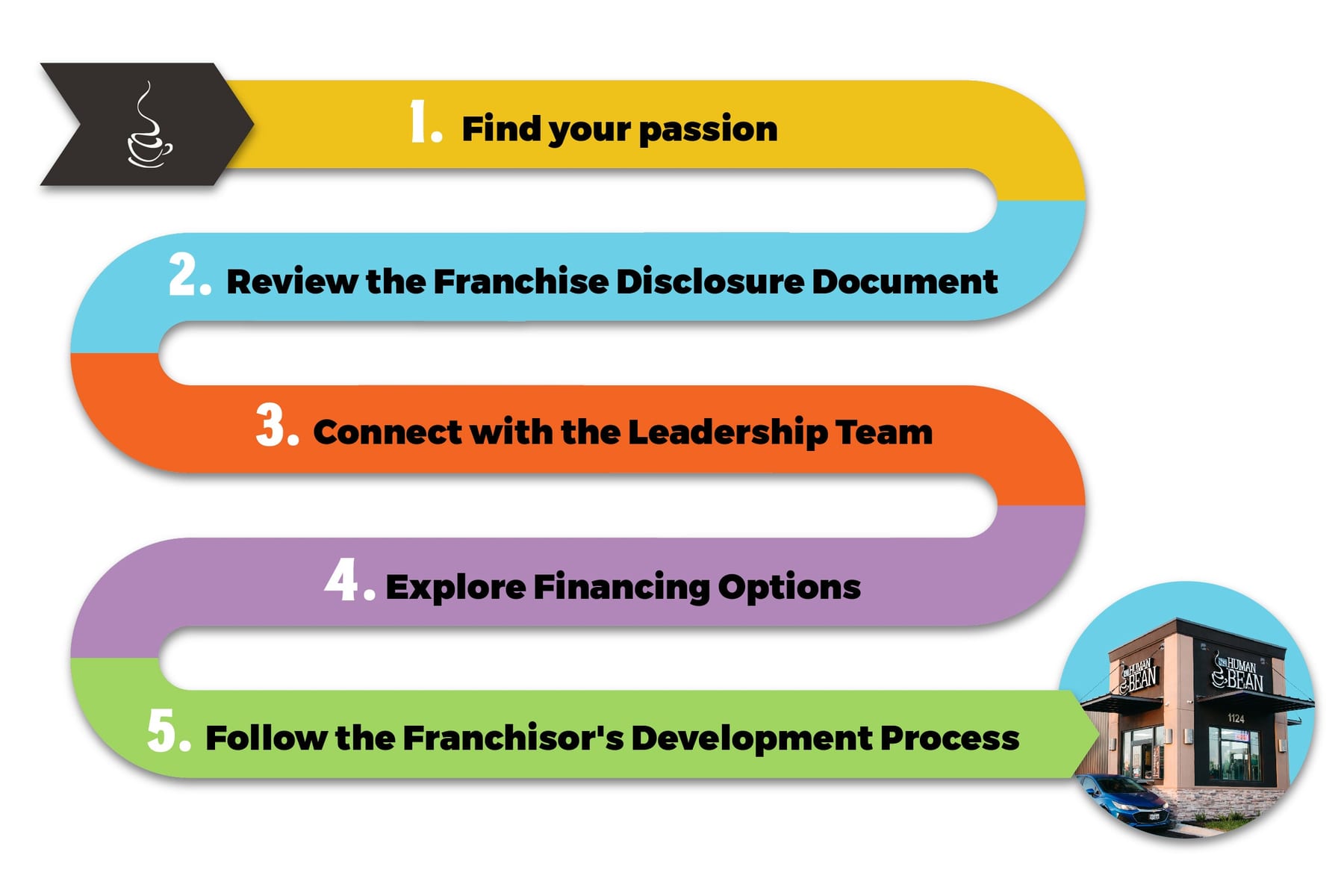
Open a The Human Bean only if you can secure a high-traffic double-sided drive-thru corridor and run it hands-on; buying an existing kiosk is safer if cash flow is verified. Building costs roughly $500,000–$1,100,000 with a ~$30,000 franchise fee and ~5% royalty, but a proven site removes the biggest variable: traffic.
Open new versus buy an existing kiosk
The two paths look similar on a spreadsheet and behave nothing alike in practice. Opening new means you control site selection, build quality, staffing culture, and opening date — and you absorb every unknown. Buying an existing Human Bean kiosk means you inherit a demonstrated revenue line, a trained crew, and a customer habit loop that took years to form — and you pay a premium for that certainty, plus whatever problems the seller has learned to live with.
Opening new. Your total investment lands in the roughly $500,000 to $1,100,000 band described in the franchise disclosure document, spread across the franchise fee (about $30,000), site work and kiosk construction, espresso and brewing equipment, POS, signage, opening inventory, grand-opening marketing, training and travel, and three months of working capital. The wide spread is almost entirely land and construction: a leased pad in a secondary market sits at the bottom of the range; a purchased parcel on a primary commuter artery in a Sun Belt metro sits at the top. What you buy for that money is a location chosen on your read of the traffic, not someone else's, and a clean operational slate.
Buying existing. Resale pricing in small-format quick-service coffee generally tracks a multiple of seller's discretionary earnings, and you should expect the seller and their broker to argue for the high end of whatever range comparable transactions support. The real work is not negotiating the multiple — it is verifying the earnings. A kiosk that "does $900,000" may be doing it on a lease with four years left, a manager who leaves when the owner does, or a road configuration that a pending municipal project is about to change. You also inherit deferred maintenance: espresso machines, refrigeration, and the drive-thru menu boards all have replacement horizons, and a seller preparing to exit rarely spends money on year-eight equipment.
The franchisor sits in the middle of both transactions. Any resale requires approval and typically triggers a transfer fee, a full remodel-to-current-standards review, and the same training requirement a new franchisee faces. Assume the brand will require you to bring the kiosk to current image standards within a defined window after closing — budget that as a real number, not a maybe, because it is frequently the difference between a resale that pencils and one that does not.
There is a third path worth naming: multi-unit development from the start. Coffee kiosks are the classic case for it because overhead scales badly at one unit and beautifully at three. A single kiosk cannot support a district manager, a dedicated hiring pipeline, or a maintenance contract at sensible rates. Three within a fifteen-minute drive can. Many operators who look at this segment and conclude the single-unit math is "fine but not exciting" are correctly reading a model that was never designed to stop at one.
How to decide between them
The decision is not a preference — it is a sequence of gates, and each one is disqualifying.

Gate one: liquidity and total capital. Opening new requires enough liquid capital to survive a construction overrun and a slow first six months simultaneously. Anyone financing 70–80% of a build with an SBA 7(a) loan is carrying meaningful monthly debt service before the first customer arrives. On a $700,000 loan at a blended cost of capital in the high single digits to low double digits over ten years, that service is a fixed cost that must be cleared every month regardless of weather, road construction, or a competitor opening across the street. If your liquidity only clears the minimum, buy an existing unit with proven cash flow instead — you need the revenue on day one.
Gate two: site availability. This is the gate most prospective franchisees fail without realizing it. The double-sided drive-thru format needs a specific parcel: enough depth for two stacking lanes, workable ingress and egress, and traffic counts on a commuter-direction road. If no such parcel exists in your target territory at a rent your model can absorb, opening new is not an option no matter how much capital you have. That is the moment to look at resales, or at an adjacent territory, or at a different format entirely.
Gate three: your own time. This system expects an owner-operator. The realistic commitment in year one is fifty to sixty hours a week, front-loaded into 5 AM opens and the hiring churn that defines quick-service coffee. If you are buying a job you want, that is fine. If you are buying passive income, you are in the wrong segment — and a resale with an established general manager who is contractually motivated to stay is the only version of this that comes close.
Gate four: competitive density. Count the drive-thru coffee lanes within a three-mile radius of your candidate site, including the ones under construction. Dutch Bros, Scooter's, 7 Brew, Starbucks, Black Rock, and every regional chain are pursuing the same corridors with the same traffic-count criteria. In a corridor that already has four drive-thru coffee lanes, a fifth is not entering a growing market — it is splitting a fixed one.
Concrete numbers behind each option
The build. Franchise fee around $30,000. Kiosk construction, whether prefabricated or stick-built, is the largest line and moves with local labor and permitting. Equipment — espresso machines, brewers, refrigeration, blenders, POS — is a substantial block on its own. Then signage and brand-prescribed decor, opening inventory of beans and dairy and syrups, grand-opening marketing, training and travel for you and your first crew, and working capital for the first quarter. The disclosure document's Item 7 range of roughly $500,000 to $1,100,000 covers all of it, and the honest planning move in 2027 is to add a 15–20% contingency on top. Construction and wage inflation have been persistently above the assumptions baked into older estimate ranges, and being undercapitalized in month five is the single most common way a viable location dies.
Ongoing fees. Royalty near 5% of gross sales, plus a marketing contribution. On $900,000 in sales that is roughly $45,000 in royalty and another meaningful line for marketing — before you have paid a barista or a landlord. This is normal for the segment and not a red flag, but it does mean the difference between a $700,000 kiosk and a $1,100,000 kiosk is roughly $20,000 a year in fees alone, which is why site quality dominates every other decision.
Revenue and the shape of the ramp. Mature kiosks in this format gross in the $600,000 to $1,500,000 range, with the spread driven almost entirely by throughput. A new location does not open at maturity. A realistic trajectory: year one well below the mature run rate while the corridor learns you exist, year two climbing as the morning-commute habit forms, year three approaching the location's actual ceiling. Owner earnings follow the same curve — thin but positive in year one for a well-sited unit, meaningfully better by year three, with the mature band landing somewhere around $90,000 to $280,000 depending on volume and how tightly you run labor.
The cost stack. Beverage cost of goods in specialty coffee typically runs in the low-to-mid twenties as a percentage of revenue — dairy and beans are the drivers, and dairy pricing is the volatile one. Labor is the bigger number and the harder one: 28–35% of revenue is a normal band for a barista-heavy drive-thru, and where you land inside it is a management outcome, not a market condition. Occupancy depends entirely on whether you bought or leased the parcel. Waste is a quiet killer — fresh dairy and prepped smoothie bases spoil, and sloppy par levels can push several points of COGS straight into the dumpster.
The resale math. When evaluating an existing kiosk, rebuild the seller's earnings from bank statements and POS exports, not from a summary spreadsheet. Add back only what is genuinely discretionary and genuinely non-recurring. Then subtract the things the seller's number ignores: a market-rate salary for the manager role the owner has been filling for free, the remodel the franchisor will require, the equipment nearing replacement, and any rent escalation in the remaining lease term. That adjusted figure is what you are actually buying. It is routinely 20–30% below the headline number, and a seller who will not provide the underlying documents has told you everything you need to know.
Break-even. For a single-unit operator opening new, full recovery of invested capital realistically lands somewhere in years three to five. A resale purchased at a defensible multiple of verified earnings can pay back faster in nominal terms, because you skip the ramp — but you paid for that ramp in the purchase price, so the difference is smaller than it first appears. What genuinely accelerates payback is unit count: an operator who opens a second and third kiosk within eighteen months spreads management, hiring, and maintenance overhead across three revenue lines and reaches meaningful personal income considerably sooner.
Operations, staffing, and the throughput lever
Everything in this model routes back to one number: cars per hour during the morning peak. The double-sided drive-thru exists specifically to raise it. Two ordering lanes converging on the service window let a well-drilled crew move substantially more vehicles per hour than a single-lane competitor, and that gap is the entire strategic argument for the format. At an average ticket in the mid-single-digit dollars, every additional car per hour across a 6–10 AM peak, five to seven days a week, compounds into real annual revenue.
Which means the operational discipline that protects throughput is not housekeeping — it is the business. Three things break it:
Staffing depth. A kiosk running roughly 6 AM to 8 PM needs enough trained baristas to double-staff the peak and single-staff the trough, which in practice means a roster in the eight-to-fifteen range depending on hours and market. Turnover in quick-service coffee routinely runs at or above 100% annually. Every departure is a throughput tax: a new hire is measurably slower on drink builds for weeks. Operators who cut turnover meaningfully do it with the same three levers — pay slightly above the local quick-service median, schedule with genuine consistency, and promote shift leads with real authority and a bonus tied to speed-of-service metrics.
Menu drag. Blended drinks and layered specialty builds carry higher tickets and slower build times. A menu tilted too far toward complexity raises average ticket and lowers cars per hour, and the net can go either way. Watch the trade explicitly rather than assuming more upsell is always better.
Inventory rhythm. Fresh dairy, beans, syrups, and smoothie bases all have shelf lives. Over-order and you throw away margin; under-order and you stock out mid-peak, which costs you both the sale and the customer's next four visits. Par levels tuned to actual day-of-week patterns — not to a monthly average — are the difference between a low-twenties COGS and a low-thirties one.
There is a broader lesson here that applies well beyond this brand. Every small-footprint drive-thru concept — coffee, drinks, quick-serve food — lives or dies on the same three variables: traffic count at the site, throughput per peak hour, and labor cost as a percentage of the revenue that throughput produces. If you are comparing The Human Bean against Scooter's, 7 Brew, Ziggi's, Aroma Joe's, or an independent build, run all of them through those three variables before you compare franchise fees. The fee difference is noise; the throughput difference is the business.
Implementation and sequencing
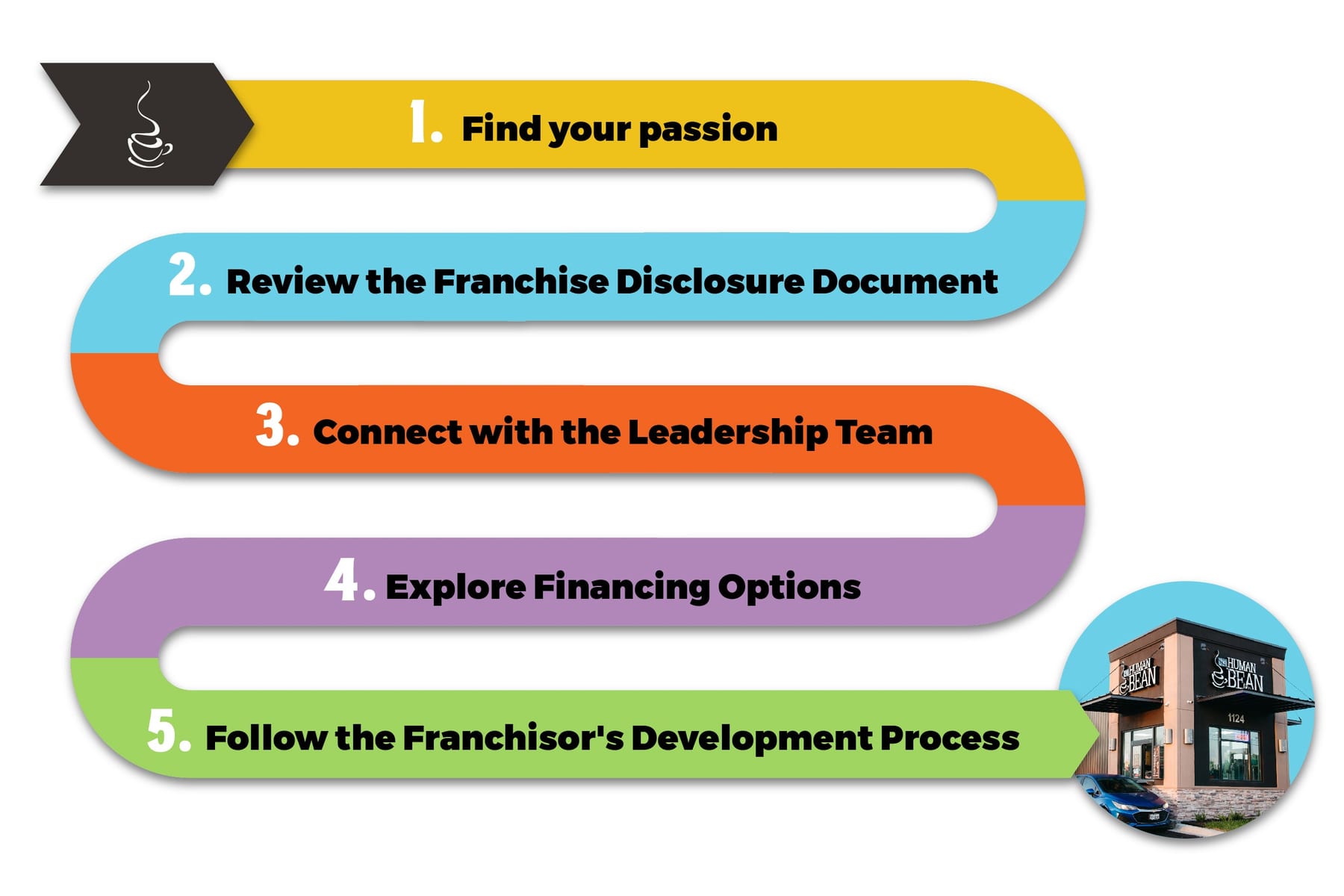
Whichever path you choose, the sequence matters more than the speed. The most expensive mistakes in this segment are made by people who signed a lease before they finished reading the disclosure document.
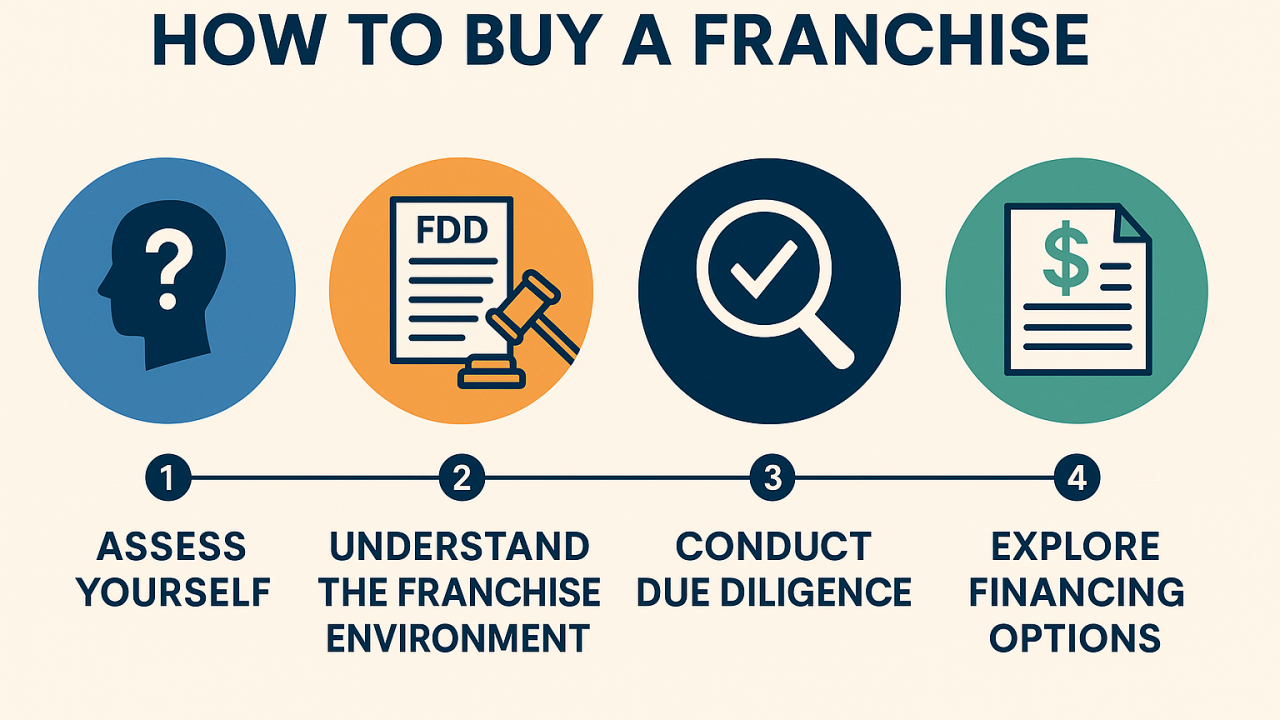
Weeks 1–3: read the FDD properly. Item 5 and Item 6 for fees, Item 7 for the investment range, Item 19 for whatever financial performance representation the franchisor chooses to make, and Item 20 for the outlet table — openings, closures, transfers, terminations by year. Item 20 is the single most informative page in the document and the one prospective franchisees most often skim. A brand with rising transfers and closures in a given state is telling you something about that state.
Weeks 3–6: call existing franchisees. The FDD lists current and former franchisees; call both. Ten conversations minimum, and ask specific questions: actual first-year sales versus expectation, actual labor percentage, what the build cost versus the estimate, how long approvals took, whether the franchisor's support showed up, and what they would do differently. Former franchisees will tell you things current ones will not.
Weeks 5–9: territory and site work, in parallel. Pull traffic counts, drive the corridor at 7 AM on a Tuesday and count cars yourself, and map every competing drive-thru coffee lane including permitted-but-unbuilt ones. If you are pursuing a resale instead, this is when you request the P&L, tax returns, POS exports, lease, and equipment list — and walk if they are not forthcoming.
Weeks 8–14: financing and approval. SBA 7(a) is the standard instrument for this size of deal and franchise brands on the SBA directory move faster through underwriting. Expect to document your liquidity, your net worth, and your operating plan. Run the loan approval and the franchisor's franchisee approval concurrently; both take longer than anyone tells you.
Weeks 12–24: build or close. New builds run through permitting, sitework, kiosk construction, equipment install, and inspection — and permitting is the step that slips. A resale closes faster but adds the transfer approval, the training requirement, and the remodel commitment.
Weeks 20–28: hire and train ahead of opening. Hire your shift leads first and give them real training time. A crew that is still learning drink builds on opening week converts a grand opening into a bad first impression on exactly the commuters you most need to convert into habit.
Related questions
Is buying an existing franchise always safer than opening new?
No. A resale removes ramp risk but adds inherited risk: short lease terms, aged equipment, a mandated remodel, and a crew loyal to the departing owner. It is safer only when you have verified earnings from primary documents and priced the remodel and equipment replacement into your offer.
How much does the double-sided drive-thru actually matter?
A great deal. It roughly doubles ordering capacity at the peak without requiring a larger parcel, and peak throughput is the ceiling on revenue in this format. It is the main structural reason the model competes with much larger coffee brands on a fraction of the footprint.
What happens if a competitor opens nearby after I sign?
Territory protection in this segment is typically a modest radius, and it does not protect you from other brands. Assume a competing drive-thru coffee lane will open in your corridor within a few years and stress-test your model at 15–20% below your base-case revenue.
Can I run this as an absentee owner?
Realistically, no — not in year one. The system expects owner-operator involvement, and the labor and throughput management that determine profitability are daily, on-site work. Absentee structures only become plausible once you have a proven general manager and, usually, more than one unit.
Does opening multiple units change the economics?
Substantially. Overhead that a single kiosk cannot support — a district manager, a hiring pipeline, negotiated maintenance contracts — becomes affordable across three. Most operators who make real money in small-format drive-thru coffee are multi-unit, not single-unit.
FAQ
What is the total investment to open a The Human Bean franchise?
The franchise disclosure document puts total initial investment in the range of roughly $500,000 to $1,100,000, including a franchise fee of about $30,000. The spread is driven mainly by land and construction costs, which vary enormously by market. In 2027, budget an additional 15–20% contingency above the stated range to absorb construction and wage inflation.
What are the ongoing fees?
A royalty of approximately 5% of gross sales, plus a marketing fee. Both are calculated on gross revenue, not profit, which means they are due in full during your slowest months. Confirm the exact current percentages in Items 5 and 6 of the most recent disclosure document rather than relying on any secondary summary.
What can an owner realistically earn?
Mature kiosks in this format gross roughly $600,000 to $1,500,000 annually, with owner earnings commonly landing in the $90,000 to $280,000 range. Where you fall depends overwhelmingly on peak-hour throughput and how tightly you control labor. A new unit should not be modeled at mature numbers in year one.
How does it compete with Dutch Bros, 7 Brew, and Starbucks?
Its structural edge is a focused, throughput-optimized double-sided drive-thru with no dine-in footprint, which keeps capital and operating costs lean. The competitive reality is that the drive-thru coffee segment is one of the most aggressively contested in franchising, and site quality — not brand preference — decides most head-to-head outcomes.
Is this a reasonable first franchise?
It can be, for someone who wants a hands-on operating business and will follow a system. It is a poor first franchise for anyone seeking passive income, anyone under-capitalized, or anyone who cannot secure a genuinely strong drive-thru site. The system is proven; the site selection is where first-timers lose money.
What should I check before buying an existing location?
Bank statements and POS exports rather than a summary P&L, the remaining lease term and escalation schedule, the age and condition of espresso and refrigeration equipment, the franchisor's transfer fee and remodel requirements, and whether the general manager intends to stay. Any seller unwilling to produce those documents has answered the question for you.
Sources
- https://www.sba.gov/funding-programs/loans/7a-loans
- https://www.ftc.gov/business-guidance/resources/franchise-rule-compliance-guide
- https://www.franchise.org/
- https://www.ncausa.org/
- https://www.bls.gov/oes/current/oes353023.htm
- https://www.ers.usda.gov/topics/animal-products/dairy/
- https://www.ibisworld.com/united-states/market-research-reports/coffee-shops-industry/
- https://www.nrn.com/
- https://www.restaurantbusinessonline.com/
- https://www.entrepreneur.com/franchises
Related on PULSE
This page will be disappearing soon. Save it to your device for $1 — or read it free while it is here.
@Kory-White- · if Venmo asks, the last 4 of my number are 2012
This page is gone.
This one is off the shelf now. $1 keeps it on your phone for good — the whole page, pictures and diagrams included.
 franchiseShould I open or buy a Garage Living franchise in 2027?
 franchiseShould I open or buy a Marble Slab Creamery franchise in 2027?
 franchiseShould I open or buy a CarePatrol franchise in 2027?
 franchiseShould I open or buy a Cooper's Hawk Winery & Restaurants franchise in 2027?
 franchiseShould I open or buy a Storm Guard Roofing franchise in 2027?
 franchiseShould I open or buy a Duck Donuts franchise in 2027?
 franchiseShould I open or buy a Charleys Cheesesteaks franchise in 2027?
 franchiseShould I open or buy a Dream Vacations franchise in 2027?
 franchiseShould I open or buy a Mellow Mushroom franchise in 2027?
 frShould I open or buy a McDonald's franchise in 2027?