
Should I open or buy a Tiger Sugar franchise in 2027?
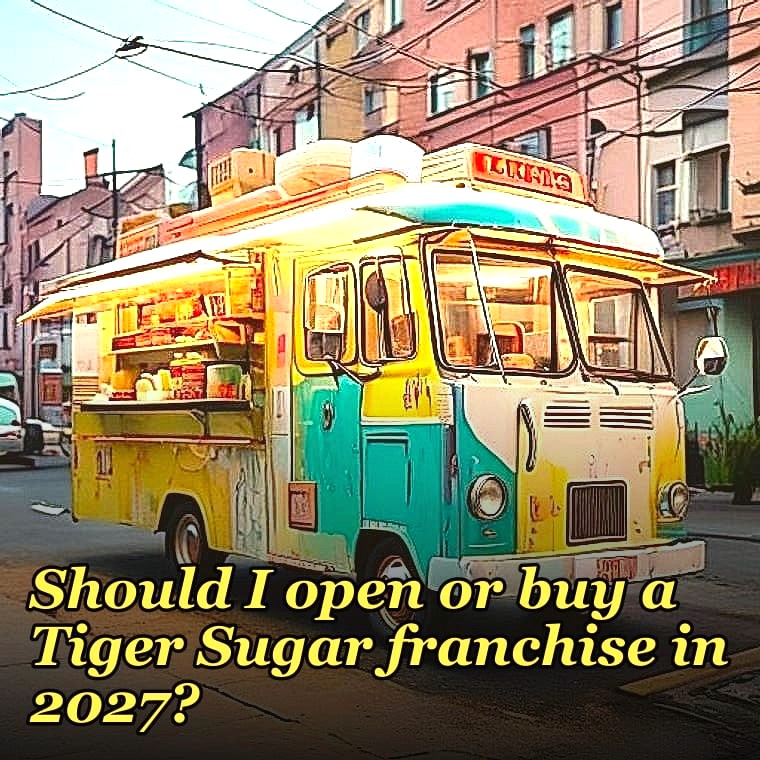
Yes for an operator who wants a premium, Instagram-famous brown-sugar boba brand in a trend-receptive market — Tiger Sugar built a global cult following on its signature tiger-stripe brown-sugar milk drinks. Tiger Sugar, founded in 2017 in Taiwan, franchises premium bubble-tea shops specializing in brown-sugar boba milk with its iconic caramelized "tiger stripe" presentation, expanding globally with a premium, social-media-driven positioning. The 2026 FDD/terms point to a franchise fee around $25,000-$40,000, total investment of roughly $200,000 to $500,000, a royalty near 6%, and a marketing fee. Mature shops gross $350,000-$800,000, with owners clearing $60,000-$180,000. Its edge is premium differentiation, a signature product, and strong social appeal; the challenge is a focused premium menu and dependence on young, trend-receptive, high-density markets in a competitive boba category.
The Real Numbers
A Tiger Sugar shop leases 600-1,400 sq ft with a boba kitchen optimized for its signature brown-sugar drinks. The premium positioning supports higher tickets than value boba, but the focused menu concentrates demand on the signature line.
| Line Item | Low | High | Notes |
|---|---|---|---|
| Franchise fee | $25,000 | $40,000 | Per terms |
| Buildout / leasehold | $90,000 | $240,000 | Premium boba shop |
| Equipment & POS | $55,000 | $140,000 | Tea, sealers, POS |
| Signage & decor | $15,000 | $50,000 | Premium brand decor |
| Initial inventory | $8,000 | $25,000 | Brown sugar, tea, tapioca |
| Initial marketing | $12,000 | $35,000 | Grand opening + social |
| Training & travel | $6,000 | $20,000 | Operator + staff |
| Working capital | $30,000 | $80,000 | First 3 months |
| Total investment | ~$200,000 | ~$500,000 | Premium boba |
| Royalty | ~6% of gross | ||
| Marketing fee | ~2% of gross |
Revenue reality: mature shops gross $350K-$800K, with premium pricing on signature brown-sugar drinks supporting higher tickets than value boba. After beverage cost (slightly higher for premium ingredients), labor (26%-32%), occupancy, the 6% royalty, and marketing, restaurant-level margins land 12%-20%, producing $60K-$180K owner profit. The premium differentiation and social-media draw support strong AUVs in trend-receptive markets; the focused premium menu concentrates risk on the signature line's continued appeal.
Who Wins With This Business
- Capital required: $200K-$500K, with $70,000-$170,000 liquid.
- Time commitment: full-time, hands-on operation; multi-unit-capable.
- Skills: beverage operations, quality/presentation, and social-media marketing.
- Geographic fit: young, dense, trend-receptive, high-foot-traffic markets.
- Lifestyle fit: hands-on, brand-engaged.
The winners are operators in trend-receptive markets who amplify the premium, photogenic product on social media.
Who Loses With This Business
- Operators in non-trend or low-density markets.
- Weak-location shops without young foot traffic.
- Owners who can't market the social-media angle.
- Those betting on a single signature trend without monitoring its longevity.
- Inconsistent presentation/quality in a premium category.
2027 Market Conditions
- Demand: bubble tea is booming, and premium/brown-sugar boba is a strong sub-segment.
- Differentiation: signature tiger-stripe brown-sugar drinks drive social appeal and premium pricing.
- Social media: photogenic product is a marketing asset for younger consumers.
- Competition: Vivi, CoCo, Chatime, Happy Lemon, and premium boba is intense.
- Market fit: young, dense, trend-receptive markets are essential.
The 90-Day Decision Tree
- Day 1-15: Read the franchise terms and confirm AUVs and premium-boba economics.
- Day 16-30: Interview owners; ask about AUV, signature-product demand, and net profit.
- Day 31-45: Validate a young, dense, trend-receptive market.
- Day 46-60: Secure a high-foot-traffic site.
- Day 61-90: Build out the premium boba shop.
- Open with strong social-media marketing of the photogenic product.
- Ongoing: amplify the premium signature line and monitor trend longevity.
Alternative Plays
- Vivi Bubble Tea / CoCo / Chatime — value/global boba brands.
- Happy Lemon — cheese-foam tea differentiation.
- Kung Fu Tea / Gong Cha / Sharetea — boba competitors (in the Pulse library).
- Smoothie/juice franchises — adjacent beverage formats (in the Pulse library).
- Independent premium boba — full control, but no brand or supply.
- Dessert franchises — adjacent young-market concepts.
Site Selection & Territory: The Make-or-Break of a Tiger Franchise
Tiger Sugar’s premium positioning means you cannot simply open anywhere and expect the iconic tiger-stripe drinks to sell themselves. The brand thrives in high-traffic, visually-driven environments where foot traffic skews young, affluent, and social-media-active. Ideal locations include college-adjacent retail corridors, downtown entertainment districts, indoor malls with strong food-court traffic, and dense urban neighborhoods with a proven bubble-tea culture.
Territory protection in the 2026 FDD typically grants a single-unit franchisee a 1- to 3-mile radius around your store, depending on population density. In Manhattan or downtown Los Angeles, that radius may shrink to 0.5 miles; in suburban strip centers, it could stretch to 3 miles. Franchisees report that co-tenancy with other premium food brands (e.g., Shake Shack, Din Tai Fung, or a local ramen shop) significantly boosts sales — sometimes by 20–40% compared to standalone locations.
Lease costs vary wildly: a 400–800 sq. ft. kiosk in a high-end mall can run $8,000–$20,000/month, while a 1,000–1,500 sq. ft. street-level store in a secondary market might be $3,000–$7,000/month. Build-out costs (included in the total investment range) typically account for $80,000–$150,000 of the initial spend, covering custom tiger-stripe branding, a visible drink-preparation station, and social-media-ready photo walls. Avoid strip malls with low foot traffic — Tiger Sugar’s model depends on impulse purchases and visual discovery, not destination dining.
Operational Realities: Labor, Supply Chain & Peak Hours
Running a Tiger Sugar franchise is not a passive investment. The signature brown-sugar boba requires daily on-site preparation — the tapioca pearls must be cooked fresh every 2–3 hours, and the caramelized brown-sugar syrup needs consistent quality control. Most franchisees operate with 3–5 employees per shift, including a shift lead, a drink maker, a cashier, and a boba prep person. Labor costs typically run 25–35% of gross sales, with wages ranging from $12–$18/hour depending on your state.
Supply chain is centralized through Tiger Sugar’s approved vendors for the proprietary brown-sugar syrup, tea leaves, and tapioca pearls. You cannot substitute cheaper alternatives — the brand’s consistency is its core asset. Expect food costs of 25–30% of sales, with the signature tiger-stripe drinks having a slightly lower cost (around 22–25%) due to higher margins on milk and sugar versus fruit-based teas. Peak hours cluster around 2–6 PM on weekdays (post-lunch and after-school rush) and 11 AM–8 PM on weekends. A well-run store can serve 150–300 drinks per day during peak season, with average ticket sizes of $6.50–$8.50.
Franchisee support includes a 2–3 week training program at a corporate location (travel and lodging on you, typically $3,000–$5,000), ongoing menu updates (2–4 seasonal drinks per year), and a field consultant who visits quarterly. Digital marketing support is provided but you are expected to run local Instagram and TikTok accounts — Tiger Sugar’s brand relies heavily on user-generated content. Franchisees who post 3–5 times per week see 15–30% higher foot traffic than those who don’t.
Exit Strategy & Resale Value: What Happens in 5 Years?
Franchise agreements for Tiger Sugar typically run 10 years, with one renewal option of another 5–10 years. If you plan to open in 2027, your initial term would expire around 2037. However, the bubble-tea market is notoriously fickle — trends shift, and a brand that’s hot today could cool by year five. Resale value for Tiger Sugar franchises in strong locations (college towns, high-traffic malls) has held at 2–3x annual net profit in secondary markets, per franchisee forums. In weaker locations (oversaturated cities or low-foot-traffic strips), resale can drop to 1–1.5x net profit or require a significant discount.
Key factors that protect resale value: a long lease (5+ years remaining), a proven sales history of $500,000+, and a location near a growing population center. Red flags for buyers: a lease with less than 3 years remaining, declining year-over-year sales, or a market where three other boba shops opened within a mile. Transfer fees from Tiger Sugar typically run $10,000–$20,000 when you sell the franchise to a new owner.
Alternative exit: If you choose not to renew, you can walk away after the 10-year term, but you cannot operate a competing boba shop within the same territory for 1–2 years (non-compete clause). Some franchisees convert their space to a different concept (e.g., a coffee shop or dessert bar) after the Tiger Sugar lease expires, but you’ll need to remove all branded signage and equipment. Plan for a 3–6 month wind-down if you decide to close, including inventory liquidation and lease termination costs (often 2–3 months’ rent).
FAQ
How much does a Tiger Sugar franchise cost? The franchise fee is typically $25,000 to $40,000, and the total investment (including build-out, equipment, and initial inventory) ranges from roughly $200,000 to $500,000. These figures come from recent FDD disclosures and can vary by location and market conditions.
What are the ongoing royalty and marketing fees? You’ll pay a royalty of about 6% of gross sales, plus a marketing fee that is usually 1% to 2%. Some agreements may also require local advertising contributions, so check your specific franchise agreement for exact terms.
How much profit can a Tiger Sugar franchise owner expect? Mature shops typically gross $350,000 to $800,000 annually, with owner net income (after royalties, COGS, and operating costs) ranging from $60,000 to $180,000. Actual profits depend heavily on location, foot traffic, and local labor costs.
What makes Tiger Sugar different from other boba franchises? Its signature brown-sugar boba milk with a caramelized “tiger stripe” presentation is highly Instagrammable and creates strong social-media buzz. The menu is focused and premium, which helps with brand consistency but also limits menu variety compared to competitors.
Where should I open a Tiger Sugar franchise for the best chance of success? High-density, trend-receptive urban areas with strong foot traffic—like college districts, shopping centers, or tourist zones—are ideal. The brand relies on young, social-media-active customers, so markets with a vibrant youth culture tend to perform best.
What are the biggest risks or challenges of owning a Tiger Sugar franchise? The premium, focused menu means you depend on a single product category, making you vulnerable to shifting trends or local competition. Additionally, high rent in prime locations and rising ingredient costs can squeeze margins, so careful site selection and cost management are critical.
Bottom Line
Open a Tiger Sugar if you want a premium, Instagram-famous brown-sugar boba brand in a young, dense, trend-receptive market and you'll amplify the photogenic product on social media. Its premium differentiation and signature line are genuine strengths in the booming boba category. Skip it if you're in a non-trend or low-density market, can't execute social marketing, or are wary of a focused premium menu's trend dependence. For trend-savvy operators in receptive markets, Tiger Sugar offers a differentiated, premium boba entry.
Sources
- Tiger Sugar Franchise Disclosure Document / franchise terms (2026) — fees, royalty, investment range
- Tiger Sugar official franchise materials — premium brown-sugar model
- Entrepreneur / beverage-franchise directories — Tiger Sugar
- Franchise Business Review — beverage-franchise satisfaction data
- IBISWorld — Bubble Tea & Specialty Beverage Shops in the US, 2026 industry report
- Technomic — premium bubble-tea-segment data 2026
- Statista — US and global bubble-tea market, 2025-2026
- International Franchise Association (IFA) — 2027 Franchise Economic Outlook
- Grand View Research — Bubble Tea market 2026
- US Census — urban/young-population demographic data, 2025-2026
Related on PULSE
- [Should I open or buy a Tiger Schulmann’s Martial Arts franchise in 2027?](/knowledge/fr0633)
- [How long does it take to open a franchise and break even in 2027?](/knowledge/fr1104)
- [Should I open or buy a Tommy Gun's Original Barbershop franchise in 2027?](/knowledge/fr1095)
 pulse-moviesTop 10 War Movies of All Time
 pulse-toolsHow Many Sales Reps Do I Need to Hire for My Window Replacement Company?
 tlHow Many Baristas Should I Schedule Each Shift at My Coffee Shop?
 tlHow Many Sales Reps Do I Need to Hire for My Merchant Services Company?
 pulse-skillsSkill Drill: Conflict Resolution for Insurance Sales
 pulse-moviesTop 10 Action Movies of All Time
 pulse-skillsSkill Drill: Giving Feedback for Steel and Metals
 pulse-skillsSkill Drill: Handling Rejection for IT Managed Services
 pulse-skillsSkill Drill: Handling Rejection for Roofing
 pulse-skillsSkill Drill: Running Effective Meetings for Automotive Dealerships