
Should I open or buy a Grease Monkey franchise in 2027?
 Curated byKory White · Fractional CRO · Maryland
 PULSEKNOWLEDGE LIBRARY
Quality
Certified
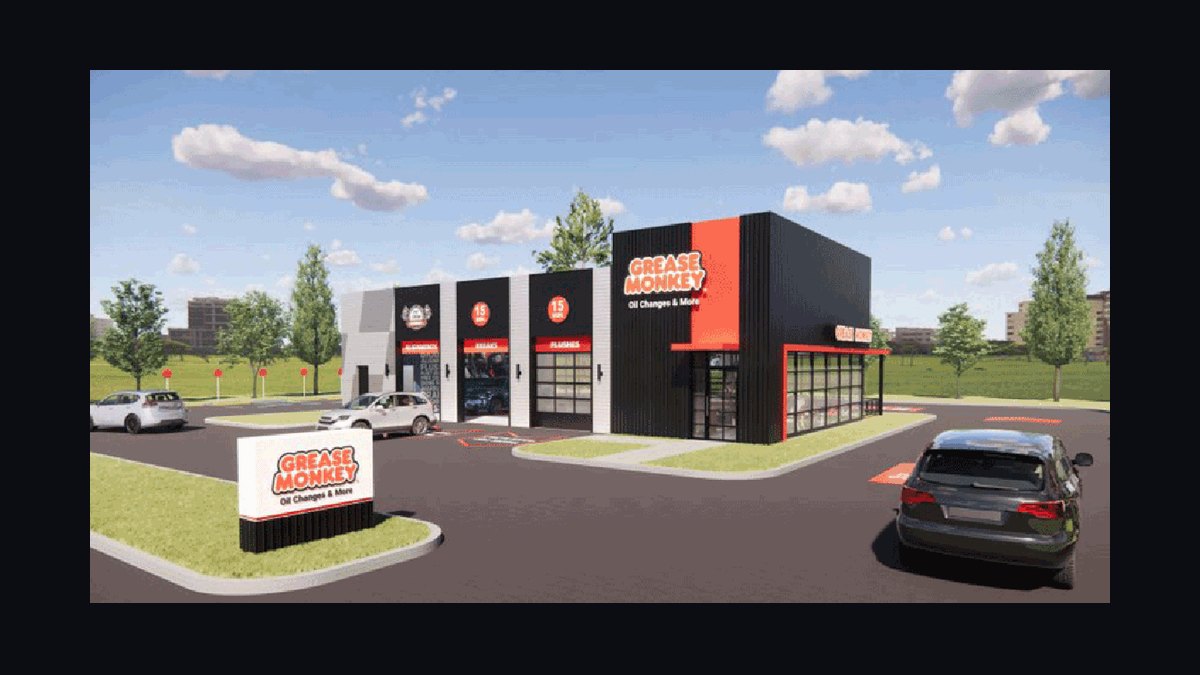
Yes, if you're well-capitalized and can secure a high-traffic corridor — Grease Monkey is a 1978-founded quick-lube franchise riding recession-resistant automotive-maintenance demand. The 2026 FDD lists a franchise fee near $40,000, total investment of $300,000-$1,200,000, and a 5% royalty. Mature centers gross $700,000-$1,800,000, with owners clearing $110,000-$320,000 in the right location.
The outcome you should expect
If you open a Grease Monkey in 2027 with adequate capitalization and a genuinely high-traffic site, the realistic outcome is a slow, capital-intensive ramp toward a stable, cash-flowing service business — not a fast payoff. Expect the first 12-18 months to be the hardest stretch: you're absorbing buildout debt service, building a technician bench from scratch, and trying to convert a cold customer base into a recurring one. Most new centers don't hit their mature-year revenue run rate (the $700,000-$1,800,000 gross band) until year three or later, once the local market has cycled through two or three oil-change intervals and word-of-mouth plus repeat visits have taken hold.
The upside case looks like this: you convert an existing service-bay building rather than building ground-up, which keeps your all-in investment closer to the $300,000-$600,000 end of the range; you land on an arterial road with strong commuter counts; and you retain a core group of two to four ASE-capable technicians through year one. In that scenario, throughput climbs steadily, your labor cost stays in the 25%-28% band instead of drifting toward 32%, and you're clearing meaningful owner profit by year two. This mirrors what plays out across the broader franchise-conversion category — a barbershop or a fitness studio taking over an existing built-out space almost always ramps faster than a from-scratch build, because the site's traffic pattern is already proven.
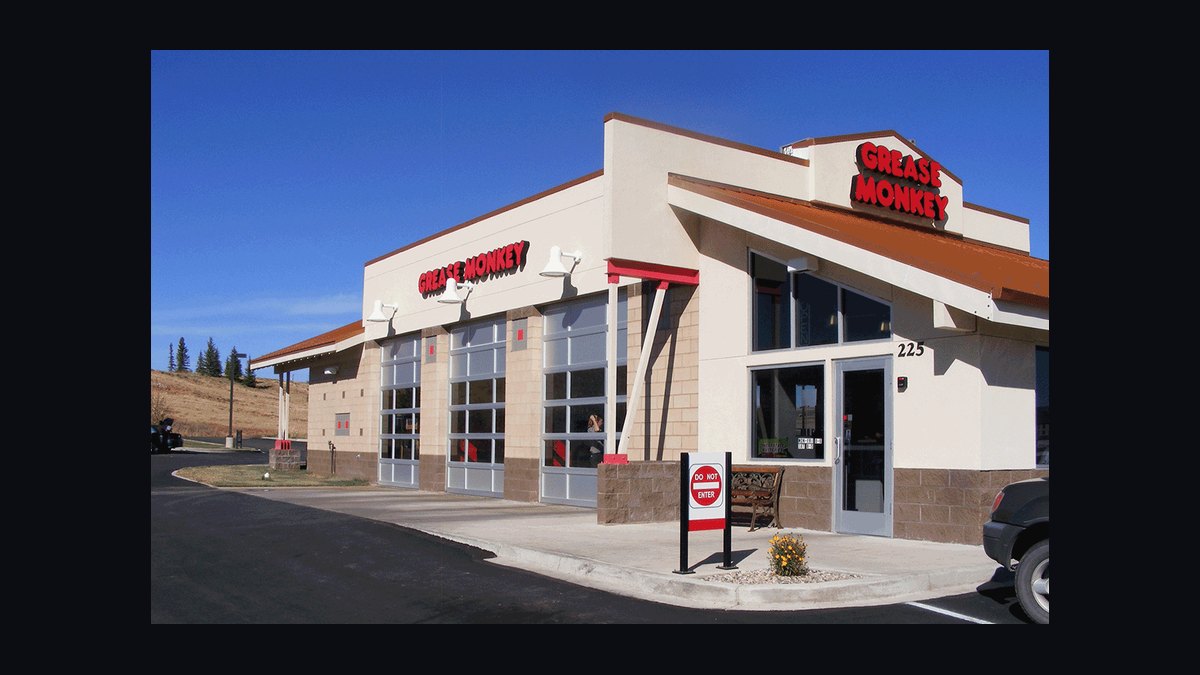
The downside case is just as real: a ground-up build eats $800,000-$1,200,000 in capital before you've turned a single oil filter, technician turnover forces you to lean on overtime and temp labor (which blows your labor percentage), and a saturated corridor with three competing quick-lubes within a mile caps your throughput no matter how good your marketing is. In that scenario, you can still break even, but the "recession-resistant" story only protects you from demand collapse — it does nothing to protect you from a bad site or thin staffing.
What almost every outcome has in common is that the business rewards volume and consistency far more than any single marketing tactic. A center that services 25-35 cars a day at a $65-$85 average ticket, with a disciplined reminder system driving repeat visits every 5,000-7,500 miles, will outperform a flashier location with erratic throughput. That's the single biggest lever an owner controls after the site is picked — and it's a lesson that transfers directly from other high-frequency, low-ticket service franchises like quick-serve car washes or mobile pet-grooming routes, where the entire economic model lives or dies on repeat-visit capture rather than one-time transactions.
What drives that outcome
Three forces determine whether a given Grease Monkey location lands in the strong-outcome band or the weak one: site quality (traffic count and visibility), labor stability (technician retention and scheduling discipline), and recurring-customer capture (whether you actually get the car back in 5,000-7,500 miles instead of losing it to a dealer or competitor). Site quality is fixed at open — you either picked a corridor with 25,000+ population within three miles or you didn't. Labor stability and recurring-customer capture are ongoing, and they compound: a center that keeps its technicians also keeps its customers, because returning drivers want a familiar face who remembers their car.
Notice that a strong site can still land you in the weak-outcome branch if labor and retention systems fail — and conversely, a modest site with excellent technician retention and a disciplined recurring-customer program can outperform expectations. That's why the franchisor's field-rep visits (quarterly in year one, semi-annual after) focus heavily on labor efficiency and P&L coaching rather than just brand compliance — those are the levers that actually move the needle once the site is locked in. This dynamic isn't unique to quick-lubes; it's the same pattern you see in any location-bound, appointment-light service franchise, from quick-serve restaurants to urgent-care clinics, where the physical site sets the ceiling but operational discipline determines how close you get to it.
Benchmarks and realistic ranges
Use these ranges to sanity-check any pro forma a broker or the franchisor hands you. The 2026 FDD Item 7 breaks total investment into roughly: franchise fee $40,000 flat; buildout/leasehold $150,000-$700,000 (conversion versus ground-up is the single biggest swing factor); equipment and technology $80,000-$250,000 for lifts, pits, and POS; signage and decor $25,000-$80,000; initial inventory $15,000-$45,000; initial marketing $20,000-$55,000; training and travel $8,000-$25,000; and working capital $40,000-$120,000 to cover the first three months before cash flow stabilizes.
On the revenue side, a mature center (year three or beyond, stabilized customer base) grosses $700,000-$1,800,000 annually. Against that, expect materials and oil to run roughly 28%-32% of gross, labor 25%-32%, occupancy around 8%-10%, the royalty at approximately 5%, and marketing/opex around 12%-16%. Net owner earnings after all of that typically land in the $110,000-$320,000 range — a wide band that mostly reflects the gap between a well-run, high-throughput center and a middling one on a mediocre site.

Financing terms matter more than most first-time buyers realize. A 10- to 15-year commercial lease is standard for a converted site, and SBA 7(a) loans commonly cover 70%-85% of the buildout and equipment cost, leaving you needing $120,000-$300,000 in genuinely liquid capital (not just net worth) to close. Underestimating this liquidity requirement is one of the most common reasons deals fall apart in due diligence — the same trap that sinks first-time buyers across nearly every brick-and-mortar franchise category, from fitness studios to quick-serve restaurants, where the sticker price on the FDD looks affordable until the actual cash-on-hand requirement surfaces mid-underwriting.
Territory protection typically runs 1.5 to 3 miles depending on population density, and the franchisor reserves the right to adjust boundaries if a new center wouldn't materially cannibalize your sales — read this clause closely, since it's the difference between a comfortable suburban radius and a tight urban squeeze. On the exit side, 15%-20% of franchise ownership turns over annually via resale, with mature, well-equipped centers fetching 3-4x annual EBITDA (often $350,000-$500,000) while a struggling location might only bring $100,000-$200,000.
Risks, edge cases, and failure modes
The most common failure mode isn't a bad brand or bad demand — it's under-capitalization meeting a ground-up build. An owner who stretches to the $40,000 franchise fee and assumes the rest will come from a loan often discovers mid-construction that permitting delays, environmental compliance (used-oil disposal, fluid containment, EPA rules — budget $5,000-$15,000 annually), or change orders have blown the working-capital cushion before the doors even open. That cushion exists specifically to survive the slow first six months; spend it on construction overruns and you're opening already thin.
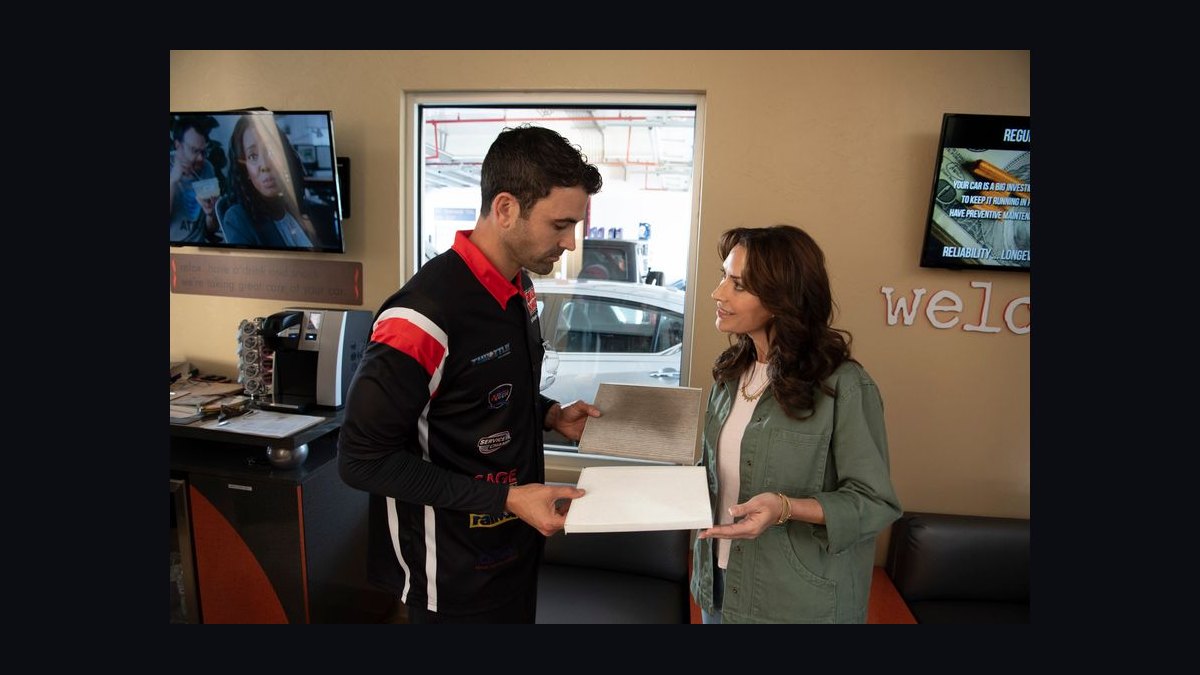
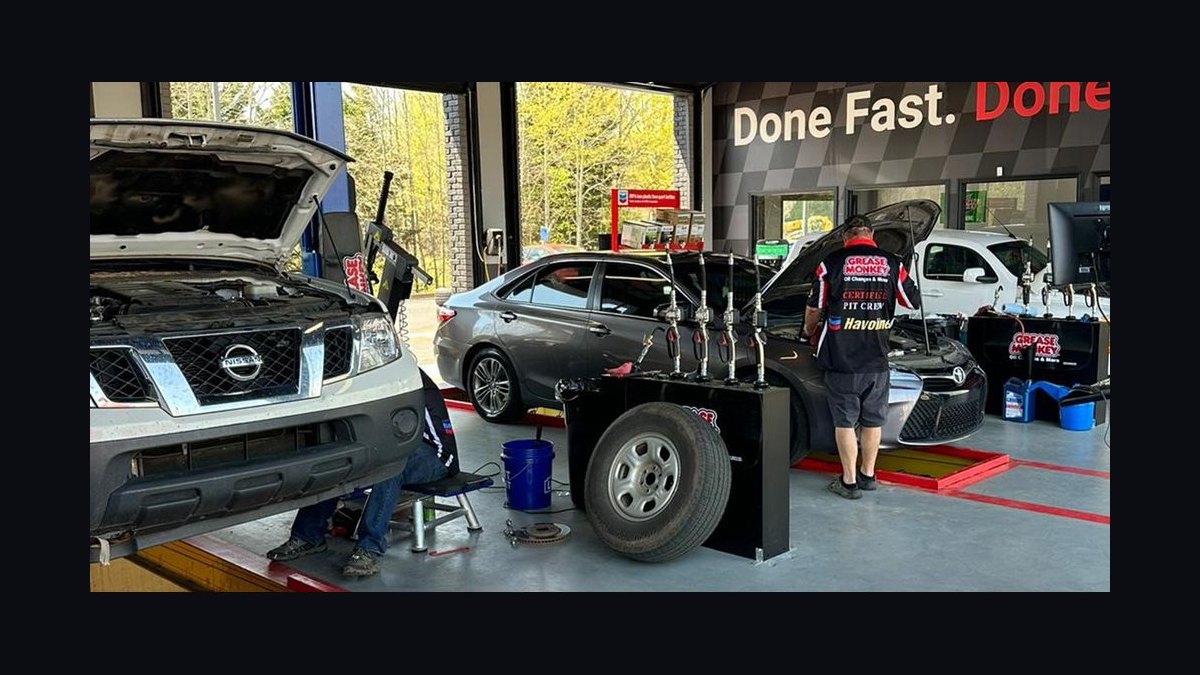
A second failure mode is technician turnover in a labor market where certified automotive techs have options at dealerships and independent shops that may pay better or offer steadier hours. A center that can't retain at least a core two to three technicians ends up cycling through hires, which degrades service speed, damages the recurring-customer relationship, and pushes labor cost from a healthy 25%-28% toward 32% or higher — eating directly into the owner-profit band.
A third, slower-moving risk is the EV transition. Electric vehicles need no oil changes, and while ICE and hybrid vehicles will dominate the national fleet well through 2027 and likely the following decade, an owner opening in a market with unusually fast EV adoption (parts of California, the Pacific Northwest) should model a longer runway and consider how the center's service mix might need to broaden toward tire rotations, brake service, and fluid work that EVs still require. This isn't a reason to skip the franchise in 2027, but it's a reason to avoid signing a 15-year ground-up lease in a market where EV penetration is already unusually high. It's a version of the same technology-shift risk that print-centric or film-processing franchises faced a generation earlier — the underlying service category doesn't vanish overnight, but the mix inside it drifts, and owners who plan for that drift early adapt without a crisis.
A fourth risk is competitive saturation — Jiffy Lube, Valvoline Instant Oil Change, Take 5, dealership service bays, and independent quick-lubes all compete for the same drive-up customer. A site that looked strong on traffic-count data alone can still underperform if three competitors already split that traffic. Finally, the franchisor's right of first refusal on any resale disciplines your exit price — you can't inflate the sale beyond what a reasonable buyer would pay, because the franchisor can simply match the offer and take the deal themselves, so plan your exit valuation conservatively rather than aspirationally.
A practical rollout plan
The path from signing to a stable, throughput-driven center runs roughly 140 days to open, followed by an ongoing phase focused entirely on retention and expansion. Treat the pre-open phase as due diligence you cannot skip, not paperwork to rush through.
In the first 20 days, read the full FDD line by line, not just Item 19 — confirm the actual AUV disclosures and cross-check them against what the sales team verbally promises. Days 21 through 45 should be spent calling at least eight existing franchisees, ideally a mix of conversion and ground-up openings, asking specifically about throughput volume, technician retention, and net profit after royalty — not just top-line revenue. Days 46 through 65 go to validating your specific corridor: traffic counts, competitor density, and population within a three-mile radius, then securing the site itself, which requires franchisor sign-off on their real estate criteria.
Days 66 through 100 cover financing and construction — this is where a conversion site saves you months and hundreds of thousands versus ground-up. Days 101 through 140 get you to opening day, where the immediate priority is throughput, not perfection: get cars in and out fast and get every customer's contact information for your reminder system. From opening onward, the ongoing work is entirely about recurring-customer capture — service-interval reminders, loyalty offers, and consistent quality that earns the next visit — because that recurring base, more than any single marketing campaign, is what separates a $110,000-profit center from a $320,000-profit one. Once the first unit is stable (typically year two or three), multi-unit development becomes the natural next step, since quick-lube economics reward area development and shared overhead across centers, much like other repeat-visit service franchises where a proven operator's second and third locations open faster and cheaper than the first because the playbook — hiring, training, marketing, vendor relationships — is already built.
Related questions
How long does it take to open a Grease Monkey franchise?
Realistically 140 days from signing to opening, though a ground-up build can push that to 6-9 months once permitting and construction delays are factored in. Conversion sites move faster.
Is a Grease Monkey conversion cheaper than building new?
Yes — converting an existing service-bay building typically runs $300,000-$600,000 versus $800,000-$1,200,000 for ground-up construction, mainly because you skip site prep and new structural bays.
How many technicians does a Grease Monkey center need?
Most centers run with two to four technicians to hit 25-35 cars a day; fewer than that creates bottlenecks that hurt both throughput and the recurring-customer experience.
Does the EV transition threaten quick-lube franchises?
Not through 2027 — ICE and hybrid vehicles still dominate the fleet — but owners in fast-EV-adoption markets should plan for a longer runway and a broader service mix over the life of the lease.
What's the biggest financial risk when opening this franchise?
Under-capitalizing a ground-up build. Construction overruns and permitting delays routinely eat into working capital before the center ever opens.
FAQ
What is the typical total investment to open a Grease Monkey franchise? The total investment ranges from roughly $300,000 to $1,200,000, depending on whether you convert an existing facility or build from the ground up. This includes the franchise fee of around $40,000, equipment, leasehold improvements, and initial inventory.
How much can I expect to earn as a Grease Monkey franchise owner? Mature centers typically generate annual gross revenue between $700,000 and $1,800,000, with owner earnings in the $110,000 to $320,000 range. Actual profits vary based on location, local competition, and operational efficiency.
What ongoing fees does Grease Monkey charge? The royalty fee is about 5% of gross sales, plus a marketing fee of roughly 2%-3%. These are standard for the quick-lube industry and fund brand marketing and franchisor operational support.
Is the quick-lube business recession-resistant? Yes, automotive maintenance is generally considered recession-resistant because car owners tend to keep vehicles longer and continue routine oil changes even during economic downturns, which stabilizes revenue compared to discretionary services.
What are the biggest challenges of owning a Grease Monkey franchise? Key challenges include the high initial capital requirement for buildout, finding and retaining skilled technicians, and competing with dealership service centers and other quick-lube chains. Effective labor management is critical to profitability.
Can I operate multiple Grease Monkey locations? Yes, multi-unit ownership is common and encouraged by the franchisor. Many successful operators open one unit, prove the model over two to three years, and then expand, benefiting from shared management overhead and supply-chain leverage across centers.
Sources
- https://www.greasemonkeyfranchise.com
- https://www.entrepreneur.com/franchises/directory
- https://franchisebusinessreview.com
- https://www.ibisworld.com
- https://www.statista.com
- https://www.franchise.org
- https://www.autocare.org
- https://www.census.gov
- https://www.sba.gov/funding-programs/loans/7a-loans
Related on PULSE
- [How long does it take to open a franchise and break even in 2027?](/knowledge/fr1104)
- [Should I open or buy a Tommy Gun's Original Barbershop franchise in 2027?](/knowledge/fr1095)
- [Should I open or buy a Painting with a Twist franchise in 2027?](/knowledge/fr1058)
This page will be disappearing soon. Save it to your device for $1 — or read it free while it is here.
@Kory-White- · if Venmo asks, the last 4 of my number are 2012
 franchiseShould I open or buy a Closets by Design franchise in 2027?
 franchiseShould I open or buy a Pizza Inn franchise in 2027?
 franchiseShould I open or buy a Twistee Treat franchise in 2027?
 franchiseShould I open or buy a Public Storage franchise in 2027?
 franchiseShould I open a storage franchise or a mobile storage business in 2027?
 franchiseShould I open or buy a BFT franchise in 2027?
 franchiseShould I open or buy a Maaco (re-do) franchise in 2027?
 franchiseShould I open a tree service business in 2027?
 franchiseShould I open or buy a Premier Garage franchise in 2027?
 franchiseShould I open or buy a Qdoba franchise in 2027?