

Should I open or buy a Line-X franchise in 2027?
 Curated byKory White · Fractional CRO · Maryland
Quality
Certified
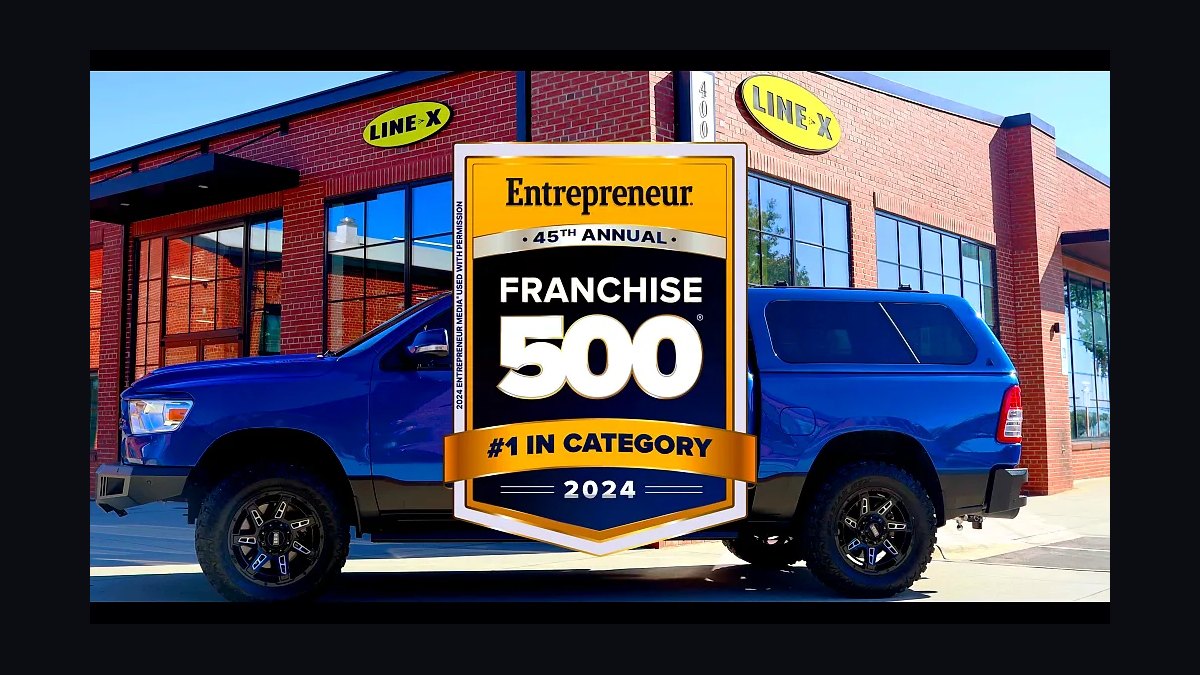
Yes, if you can fund a $200,000–$350,000 build, manage application quality daily, and drive both automotive and industrial sales — Line-X is a durable protective-coatings franchise with real diversification beyond truck bed liners. Skip it if you expect a passive investment, can't recruit skilled applicators, or have no plan to develop B2B industrial accounts alongside retail truck work.
The outcome you should expect
Open a Line-X franchise in 2027 and the realistic outcome unfolds over three to four years, not months. Year one is a ramp-up: revenue typically lands between $200,000 and $400,000 while you build local awareness, hire and train applicators, and work out early quality-control kinks. Most new owners either break even or post a small loss in year one once labor, rent, royalty, and marketing fees are subtracted from gross. That is not a red flag specific to Line-X — it is the standard curve for any service franchise requiring a skilled trade and local reputation-building.
By year two, most owners see revenue climb into the $400,000–$700,000 range as repeat truck customers, referrals, and early industrial accounts compound. Net profit in year two is usually modest — $30,000 to $80,000 — because the owner is still often paying market-rate wages to build a reliable applicator bench rather than drawing a full owner salary. Year three is where a well-run Line-X location becomes a genuinely attractive small business: revenue in the $600,000–$1,000,000 band with sustainable profit of $100,000–$200,000 is common among centers that have built a real mix of automotive and B2B revenue.
The outcome diverges sharply based on one variable: whether the owner treats the franchise as a truck-bed-liner shop or as a coatings company that happens to start with truck beds. Operators who only chase walk-in bed-liner jobs plateau lower, because that segment is seasonal and price-competitive. Operators who add accessories (tonneau covers, running boards, fender flares) and actively sell industrial/commercial coating contracts — agricultural equipment, construction fleets, marine trailers — reach the top of the revenue range and stay less exposed to a slow winter. The brand and the training get you in business; the outcome you actually get depends on how aggressively you build the non-bed-liner half of the revenue mix.
What drives that outcome
Three forces determine whether a given Line-X location tracks toward the top or bottom of its revenue range: application quality, sales mix, and local market composition. Application quality is the single biggest lever because a botched spray-on liner job is visible, expensive to redo, and reputation-destroying in a local market where word of mouth and online reviews drive most new customer acquisition. Line-X provides initial training, but real proficiency in applicators takes three to six months of hands-on work, and high turnover in that role is the most commonly cited operational headache among owners.
Sales mix is the second driver. A location that lets bed liners carry the whole business caps its own ceiling, because that segment is priced competitively against Rhino Linings and independent applicators, and it slows down every winter in cold-weather markets. A location that builds accessories revenue and, more importantly, a base of recurring industrial and commercial coating clients — construction fleets that need dump-truck-bed liners repaired annually, agricultural operations coating equipment ahead of each season — smooths out seasonality and lifts average ticket size well above the retail bed-liner average.
Local market composition is the third driver and the one owners have the least control over post-signing. A market with strong truck ownership, active construction and agricultural sectors, and limited direct competition from Rhino Linings or well-established independents will outperform a market that is truck-light or already saturated with coatings providers. This is why the franchise disclosure document interview stage — actually calling existing owners in comparable markets — matters more than reading marketing material.
Benchmarks and realistic ranges
The 2026 FDD lists a franchise fee around $30,000 and a total Item 7 investment of roughly $200,000 to $350,000, covering buildout and leasehold improvements ($60,000–$160,000 for retail space plus application bays), equipment and spray technology ($60,000–$140,000), signage ($15,000–$45,000), initial inventory ($15,000–$50,000), initial marketing ($12,000–$40,000), training and travel ($8,000–$22,000), and working capital ($25,000–$70,000). Ongoing fees run a royalty near 5% of gross plus a marketing fee near 2%.

Facility benchmarks matter as much as the FDD line items. Most locations operate from 2,000–4,000 square feet of industrial or commercial space with 14-foot-plus ceilings, drive-through bays, and dedicated ventilation. Lease costs range from $2,500–$8,000/month in secondary markets up to $12,000–$18,000/month in major metros. A spray booth alone runs $30,000–$60,000, and annual equipment maintenance should be budgeted at $5,000–$15,000. Staffing typically runs two to four people: one or two certified applicators, one sales/customer-service role (often the owner in early years), and a helper/prep technician, with fully loaded labor costs of $35,000–$55,000 per technician.
On revenue composition, a mature center generally breaks down as 55–65% from truck bed liners (average ticket $400–$800 on a standard short-bed pickup), 15–25% from accessories (average ticket $600–$2,500), 10–15% from industrial/commercial jobs (average ticket $1,500–$15,000), and 5–10% from specialty work like marine and flooring. Gross margins differ meaningfully by line: bed liners run 55–65%, accessories 35–45% because of wholesale product costs, industrial/commercial 50–70% because those customers are less price-sensitive, and flooring 60–75% given low material cost relative to job value.
A center generating $600,000 in annual revenue with $180,000 in cost of goods (30%) nets roughly $420,000 in gross profit; after labor (~$140,000), rent (~$60,000), royalty (~$30,000), marketing fee (~$12,000), insurance (~$12,000), maintenance (~$10,000), utilities (~$18,000), and miscellaneous costs (~$20,000), net profit before owner salary lands near $118,000. At $1,000,000 in revenue, the same structure yields roughly $250,000–$300,000 before owner compensation. Insurance runs $8,000–$18,000 annually for general liability, product liability, and workers' comp, with some states requiring environmental liability coverage for chemical handling. On exit, Line-X locations have generally traded at 2.5–4x annual EBITDA, meaning a center clearing $150,000 in EBITDA might sell in the $375,000–$600,000 range, subject to Line-X's approval of any transfer.
Risks, edge cases, and failure modes
The most common failure mode is treating this as a passive investment. It is not — it requires daily oversight of application quality, and owners who step back too early see quality slip and reviews turn. The second most common failure mode is under-capitalization: buyers who stretch to hit the low end of the $200,000–$350,000 range with little cushion often run out of working capital during the year-one ramp, precisely when revenue is lowest and hiring/training costs are highest. A realistic buyer should have $80,000–$130,000 in liquid capital beyond financing, not just enough to close.
A third risk is applicator turnover. Because proficiency takes three to six months to develop and skilled applicators are in short supply, losing your lead applicator mid-ramp can stall growth for a full season while a replacement gets up to speed — and a rushed, undertrained replacement is how bad jobs and bad reviews happen. A fourth risk is seasonality mismatch: demand peaks March through September as truck owners prepare for towing, hauling, and outdoor recreation, and owners in cold-climate markets who don't proactively fill winter capacity with industrial/commercial work or equipment maintenance can see cash flow swing hard.

An edge case worth flagging for 2027 specifically: the shift toward electric and hybrid trucks (F-150 Lightning-type platforms, aluminum and composite beds) requires different application techniques than traditional steel beds. Franchisees who don't stay current on Line-X's updated training for these substrates risk quality issues on a growing share of the truck population. Competitive risk is real and specific: Rhino Linings is the direct branded competitor, and in markets already dense with independent applicators and DIY spray-on kits, price competition on basic bed-liner work compresses margin on the segment that most new owners lean on hardest in year one. Finally, chemical inventory (polyurea, polyurethane, primers) has a shelf life — poor inventory discipline turns into pure write-off loss, a risk that's easy to underestimate before you're actually managing a coatings shop's back room.
A practical rollout plan
Days one through fifteen: read the 2026 FDD in full, focusing on Items 5, 6, 7, 19, and 20, and confirm the current automotive-plus-industrial coatings model matches what you're being sold in the sales process. Days sixteen through thirty: call at least eight existing owners, and don't just ask about revenue — ask specifically about their automotive-versus-industrial mix, how long it took to build a reliable applicator team, and what their real net profit looked like in years one through three. Days thirty-one through forty-five: validate that your target market has both strong truck ownership and a real industrial/commercial base (construction, agriculture, marine) rather than assuming demand — pull local truck registration data and identify at least a handful of realistic B2B prospects before signing anything.

Days forty-six through sixty-five: secure your site (2,000–4,000 sq ft with adequate ceiling height and ventilation) and begin owner and staff training on application technique, including the newer aluminum/composite-bed methods. Days sixty-six through ninety: complete buildout and open, launching with both automotive walk-in capability and at least an initial industrial sales push rather than waiting until the retail side is established. From opening onward, split marketing effort deliberately between driving automotive/accessory traffic and actively prospecting industrial and commercial accounts — the ongoing discipline of growing the B2B side is what separates centers that plateau at $500,000 from those that reach $1,000,000-plus.
Related questions
How long does it take a Line-X franchise to become profitable?
Most centers break even or post a small loss in year one, reach modest profit ($30,000–$80,000) in year two, and hit sustainable profit ($100,000–$200,000) by year three as the automotive and industrial mix matures.
Is Line-X better than Rhino Linings for a first-time franchisee?
Neither is objectively better; compare investment terms, territory availability, and local competitive density in your specific market before deciding between the two branded coatings franchises.
Do I need a coatings background to open a Line-X franchise?
No prior experience is required — Line-X trains owners and staff — but mechanical aptitude and a plan for recruiting and retaining skilled applicators matter more than your own spray experience.
Can a Line-X franchise survive in a cold-weather market?
Yes, but owners in cold climates should plan for slower winters by building industrial/commercial and indoor flooring work that doesn't depend on outdoor truck traffic.
FAQ

How much does it cost to open a Line-X franchise in 2027? Total investment typically falls between $200,000 and $350,000, including a franchise fee near $30,000. The range depends heavily on local real estate costs, buildout scope, and initial inventory needs.
What ongoing fees does a Line-X franchise owner pay? Owners pay a royalty of roughly 5% of gross sales plus a marketing fee near 2%, which fund brand advertising, ongoing training updates, and franchise support systems.
How much can a Line-X franchise owner realistically earn? Mature centers report annual gross revenue between $500,000 and $1,400,000, with owner net income generally between $90,000 and $250,000, depending heavily on sales mix and operational execution.
What's the biggest operational challenge in running a Line-X franchise? Recruiting and retaining skilled applicators is the most commonly cited challenge — proficiency takes three to six months, and turnover in that role directly threatens quality and reputation.
Who are Line-X's main competitors? Rhino Linings is the primary branded competitor, alongside local independent applicators and DIY spray-on kits that compete on price for basic bed-liner work.
Is the industrial/commercial side of Line-X worth building out? Yes — it diversifies revenue away from seasonal automotive demand, commands higher average tickets, and is a key differentiator between centers that plateau and those that reach the top of the revenue range.
Sources
- https://www.linex.com
- https://www.entrepreneur.com/franchises/directory
- https://www.franchisebusinessreview.com
- https://www.ibisworld.com
- https://www.statista.com
- https://www.franchise.org
- https://www.sema.org
- https://www.census.gov
- https://www.rhinolinings.com
Related on PULSE
This page will be disappearing soon. Save it to your device for $1 — or read it free while it is here.
@Kory-White- · if Venmo asks, the last 4 of my number are 2012
This page is gone.
This one is off the shelf now. $1 keeps it on your phone for good — the whole page, pictures and diagrams included.
 franchiseShould I open or buy a Five Guys franchise in 2027?
 franchiseShould I open or buy Duck Donuts franchise or open an independent sandwich shop in 2027?
 franchiseShould I open a solar installation business in 2027?
 franchiseShould I open or buy a SVS Vision franchise in 2027?
 franchiseShould I open or buy Cicis franchise or open an independent sandwich shop in 2027?
 franchiseShould I open or buy an OpenWorks franchise in 2027?
 franchiseShould I open a independent laundromat in 2027?
 franchiseShould I open or buy a Buffalo Wild Wings franchise or open an independent sandwich shop in 2027?
 franchiseShould I open or buy a Broken Yolk Cafe franchise in 2027?
 franchiseShould I open or buy an Another Broken Egg Cafe franchise in 2027?