


Should I open or buy a Biscuitville franchise in 2027?
Quality
Certified
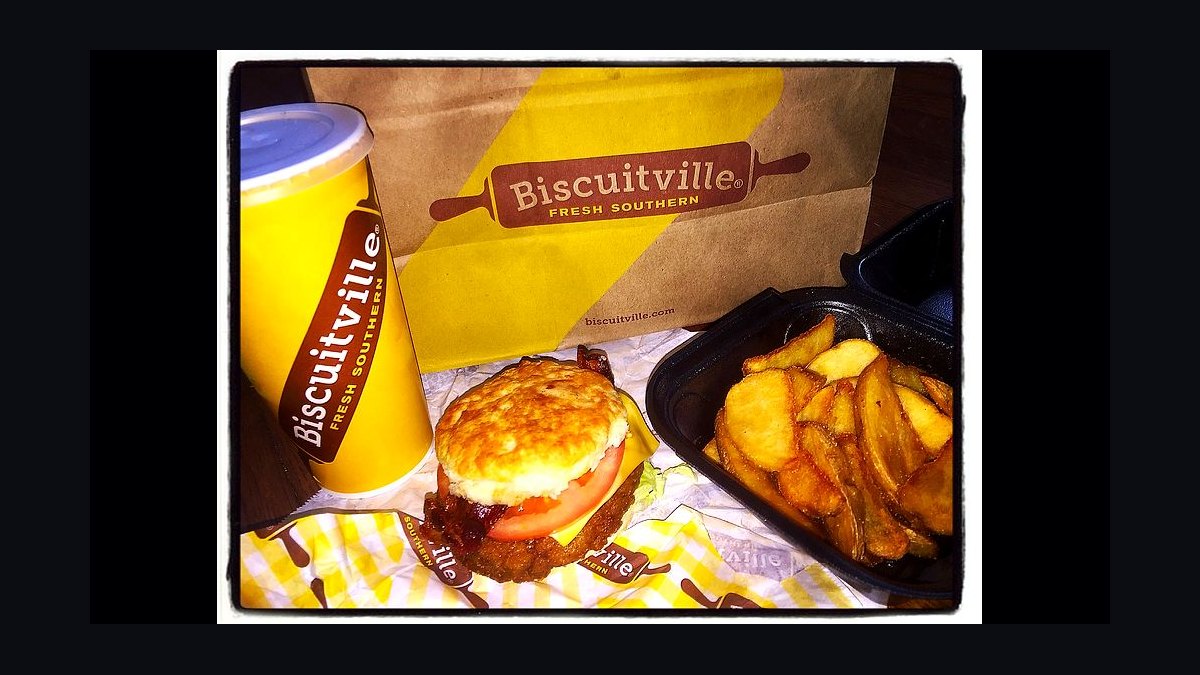
You cannot buy a Biscuitville franchise — the chain is family-owned, entirely company-operated, and has never licensed a single unit. Founded in 1966 and rooted in North Carolina, Biscuitville deliberately keeps every location in-house to protect its scratch-biscuit quality and regional supply chain. If Biscuitville is what inspired you to open a breakfast restaurant in 2027, your realistic paths are franchising a comparable brand (Another Broken Egg, Eggs Up Grill, The Toasted Yolk) or building an independent scratch-breakfast concept, each requiring $600,000–$2,500,000 depending on the route.
The outcome you should expect
Walk in expecting a Biscuitville franchise agreement and you will walk out with nothing — there is no franchise disclosure document, no franchisee application, no territory map to review, because the company has never built that infrastructure. Roughly 70 Biscuitville locations exist today, spread across North Carolina and Virginia, and every one of them is owned and operated by the company itself. Growth has been intentionally slow: two to four new stores a year, a pace that looks almost conservative next to fast-growing breakfast chains that add dozens of franchised units annually. That slowness is the point. Biscuitville's leadership has repeatedly framed its strategy as "protect the product, not the expansion rate," and a franchise system is structurally at odds with that goal because it hands day-to-day execution to independent owners who did not build the recipe, the supply relationships, or the culture.
So the outcome you should actually expect in 2027 is one of two things. First, if you franchise an adjacent breakfast brand, you should expect a defined, replicable system: a franchise disclosure document, a real estate site-selection process, a training program, an opening support team, and an ongoing royalty relationship — in exchange for giving up some creative control and paying that brand 5% of gross sales indefinitely. Second, if you build an independent scratch-biscuit concept in the spirit of Biscuitville, you should expect full creative control, no royalty payment, and no training wheels — you are responsible for every operational decision, and your first 12 to 18 months will likely run at breakeven or a slight loss while you build repeat traffic. Neither path is a Biscuitville franchise, and no amount of persistence, capital, or relationship-building changes that, because the constraint is structural, not financial. A buyer with $5 million in liquid capital has exactly as much access to a Biscuitville franchise as a buyer with $50,000: none.
What drives that outcome
Three forces explain why Biscuitville stays closed to franchising, and understanding them matters because they also tell you what you're actually buying into if you pick an alternative. The first driver is production complexity. Biscuitville's biscuits are made from scratch in-store multiple times a day, using North Carolina-milled flour and buttermilk, hand-rolled and cut by trained staff rather than shipped in frozen or par-baked. That process is difficult to standardize across a single company-run kitchen, let alone hundreds of independently owned ones — a franchisee in a different state, working with a different regional flour supplier and a staff that wasn't trained by the original team, would almost certainly produce a biscuit that tastes different from the flagship stores. For a brand whose entire identity rests on that one product being consistently excellent, that variance is an existential risk, not a minor inconsistency.
The second driver is supply chain fragility. Biscuitville sources its bacon from a North Carolina smokehouse, its grits from a South Carolina mill, and eggs from nearby farms — a genuinely regional supply chain that depends on relationships and proximity, not a national distribution contract. Franchising into new states would force a choice: either extend those regional relationships at rising logistics cost, or let franchisees substitute national suppliers, which would dilute exactly the local-sourcing story that differentiates the brand from national breakfast chains. Most franchise systems solve this by building a national commissary or approved-vendor list; Biscuitville has never needed to because it has stayed small enough to lean on regional partners directly.
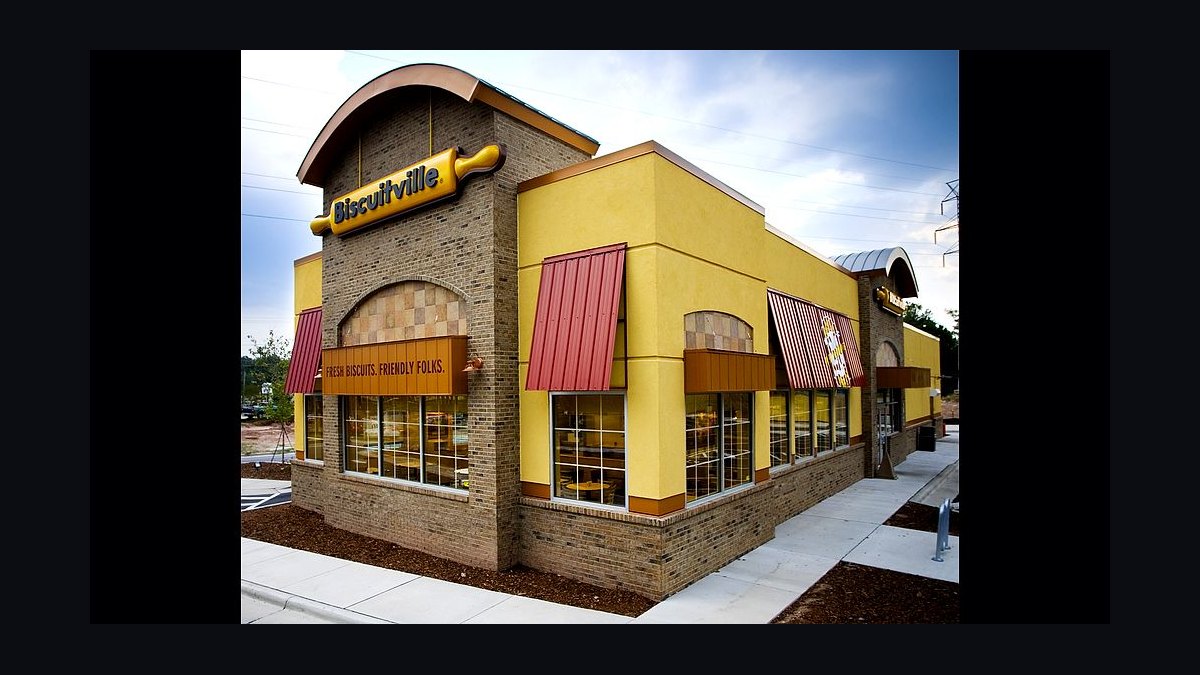
The third driver is capital discipline. Franchising is, among other things, a growth-financing strategy — it lets a brand expand using franchisees' capital instead of its own. A company that grows two to four units a year, entirely with its own balance sheet, has made a deliberate choice not to need that financing tool. That's a signal worth reading: Biscuitville's ownership is comfortable with slower, self-funded growth in exchange for keeping quality control, and that trade-off is unlikely to reverse just because franchise interest exists. None of this is a secret internal debate — it shows up consistently in how the company describes itself, and it's the reason your search for a Biscuitville franchise agreement in 2027 will end the same way it would have ended in 2020 or 2015.
Benchmarks and realistic ranges
Because the Biscuitville route is closed, the useful benchmarks in 2027 come from the two paths that are actually open: franchising a comparable breakfast brand, or building an independent scratch-breakfast restaurant.
On the franchise side, Another Broken Egg Cafe sits at the upper end of the investment range: total startup cost typically runs $1,200,000 to $2,500,000, with average unit volumes near $1,800,000, a $50,000 franchise fee, and a 5% royalty on gross sales. It requires a net worth of at least $1.5 million, reflecting both the higher buildout cost and the brand's positioning toward full-service, higher-check brunch. At the more accessible end, Eggs Up Grill runs $500,000 to $1,200,000 to open, with average gross sales around $1,100,000, a $40,000 franchise fee, 5% royalties, and a $750,000 net worth requirement — a system built around a neighborhood feel and scratch-style cooking that is philosophically closer to Biscuitville than the others. The Toasted Yolk lands in between: $900,000 to $2,000,000 to open, roughly $1,500,000 in average unit volume, a $45,000 franchise fee, 5% royalties, and a $1,000,000 net worth minimum. Across all three, plan on 28%–33% food cost and 30%–35% labor cost as the realistic operating bands for a full-service breakfast concept, with net margins settling into the 10%–16% range once a location matures past its first 18–24 months.

On the independent side, a 1,500–2,500 square foot scratch-breakfast restaurant in a mid-sized Southern city — Greensboro, Columbia, Chattanooga-type markets — typically costs $600,000 to $1,200,000 to open. That breaks down roughly as $200,000–$400,000 in leasehold improvements, $150,000–$300,000 in kitchen equipment (a hood system, grease trap, and biscuit-production capacity all add real cost here), $20,000–$40,000 in initial inventory, $5,000–$15,000 in permits and licensing, and $200,000–$400,000 in working capital to cover three to six months of operations before the location breaks even. Revenue for a well-run independent breakfast spot in a high-traffic location — near a college, hospital, or commuter corridor — realistically lands between $800,000 and $1,500,000 annually. With food costs around 28%–33% and labor at 30%–35%, net margins of 10%–15% after year two translate to owner take-home of roughly $80,000 to $225,000 per year, assuming the concept has found its footing. A blended, comparable-concept estimate for either route puts total investment at $600,000 to $1,500,000 and gross revenue at $1,000,000 to $2,200,000 once stabilized — useful as a sanity check regardless of which specific brand or independent concept you choose.
Risks, edge cases, and failure modes
The single most common failure mode is one you can avoid entirely just by reading this page: spending months researching a "Biscuitville franchise opportunity" that does not exist, delaying a real decision while chasing a dead end. Some prospective operators find outdated forum posts or speculative articles suggesting Biscuitville "might" franchise soon; there is no announced plan to do so, and betting a 2027 launch timeline on that possibility is a planning error, not a strategy.

Among operators who correctly pivot to a franchised peer brand, the most frequent failure is under-capitalization relative to the brand's stated range. A buyer who scrapes together the low end of a $1,200,000–$2,500,000 Another Broken Egg build, with no cushion for construction overruns or a slower-than-expected ramp, is exposed the moment opening is delayed by permitting or the first six months underperform pro forma — which happens more often than franchise marketing materials suggest. A related edge case is picking a brand whose format doesn't fit the available real estate: a full-service, higher-check concept like Another Broken Egg needs a different site profile (parking, visibility, dinner-adjacent hours in some markets) than a fast-casual, counter-service format, and forcing the wrong brand into the wrong site depresses volume from day one.
For the independent route, the dominant failure mode is menu overreach. Biscuitville's own success comes from doing a narrow menu extremely well — biscuits, a handful of proteins, coffee — not from breadth. Independent operators frequently try to compete with chains by adding complexity (an expanded lunch menu, specialty coffee drinks, weekend brunch cocktails) before the core scratch-biscuit product is dialed in, which strains a small kitchen team and increases both food cost and labor cost simultaneously. A second independent-route risk is underestimating labor intensity: scratch production multiple times a day requires either an experienced baker on staff from day one or a slow, expensive training ramp, and operators who assume a standard fast-casual crew can absorb scratch-biscuit production without additional training frequently see inconsistent product quality in their first year — the exact failure mode Biscuitville itself is structured to avoid by staying company-operated.
A broader edge case applies to both routes: breakfast/brunch is a strong daypart nationally, but that strength is not evenly distributed. A location that looks attractive on paper — good traffic counts, visible signage — can still underperform if the surrounding population skews toward dinner-oriented dining habits, has limited weekday commuter breakfast traffic, or already has an entrenched local favorite occupying the scratch-breakfast niche. Site selection deserves as much diligence as brand selection, and neither franchise brochures nor independent-concept enthusiasm substitute for actually observing traffic patterns at the specific address under consideration, at 7 a.m. and again at 10 a.m., on both a weekday and a Saturday.
A practical rollout plan

Start by fully accepting that Biscuitville is not available to buy, so you stop losing time on outreach that will never convert. From there, decide between the franchise route and the independent route based on how much you value a built system versus full creative control — this is the single decision that determines almost everything downstream. If you lean franchise, request franchise disclosure documents from two or three of the closest comparable brands (Another Broken Egg, Eggs Up Grill, The Toasted Yolk are the clearest matches) and compare not just the investment range but the net worth and liquidity requirements, since those often eliminate candidates before the economics even come into play. If you lean independent, spend the next 60 days defining a genuinely narrow menu — resist the urge to build a diner — and start scouting regional suppliers for flour, eggs, and coffee the way Biscuitville built its own local relationships, since that sourcing story becomes part of your differentiation from national chains.
Once the brand or concept is chosen, validate the specific market before signing anything: pull traffic-pattern data for the target daypart, confirm there isn't an entrenched scratch-breakfast competitor already serving the same customer, and stress-test the investment range against your actual available capital plus a real contingency buffer — 15%–20% on top of the high end of the range is a reasonable minimum given how often construction and permitting slip. Secure the site and financing together rather than sequentially, since a site held without confirmed financing frequently disappears to another tenant during the delay. Move into buildout with a realistic timeline (expect four to nine months from lease signing to opening day depending on how much construction the space needs), and treat the pre-opening marketing window — typically 30 to 45 days before opening — as the time to build the local following that will carry the first slow months, whether that's a franchise brand's national marketing fund supplementing local efforts or, for an independent concept, entirely grassroots community outreach. Finally, plan explicitly for a 12-to-18-month runway to profitability rather than assuming month-one success, and build your working capital reserve around that timeline instead of a more optimistic one.
Related questions

Is Biscuitville planning to franchise in the future? No franchise plans have been announced. Leadership has consistently emphasized company-operated growth to protect scratch-biscuit quality and its regional identity, so a franchise launch remains unlikely in the near term.
Which breakfast franchise is most similar to Biscuitville's philosophy? Eggs Up Grill is the closest match — a neighborhood-feel, scratch-leaning concept with a lower $500,000–$1,200,000 entry cost than the full-service alternatives, making it a reasonable stand-in for operators drawn to Biscuitville's approach.
How long does it take to open a franchise and break even in 2027? Most breakfast franchise buildouts take four to nine months from signing to opening, with breakeven typically following 12 to 18 months after that, depending on site strength and local competition.
Can I just copy Biscuitville's biscuit recipe for my own restaurant? There's no legal barrier to developing your own scratch-biscuit recipe and regional sourcing strategy — that's effectively the independent route — but you cannot use Biscuitville's name, branding, or proprietary formulas.
What's the biggest cost difference between franchising and going independent? Franchising adds a one-time fee ($40,000–$50,000) plus an ongoing 5% royalty on gross sales in exchange for a built system; independent concepts avoid both but carry all site-selection and training risk alone.
FAQ

Can I really not buy a Biscuitville franchise? Correct. Biscuitville is family-owned and company-operated, and it has never licensed a single unit. There is no franchise disclosure document or application process to pursue, regardless of your capital or experience.
What are the best breakfast franchise alternatives to Biscuitville? Another Broken Egg, Eggs Up Grill, and The Toasted Yolk all actively franchise, with buildout costs generally between $500,000 and $2,500,000 and average unit volumes of $1,100,000 to $1,800,000 depending on the brand.
How much does it cost to open an independent scratch-biscuit breakfast restaurant? Plan on $600,000 to $1,200,000 for a 1,500–2,500 square foot location in a mid-sized Southern market, covering leasehold improvements, kitchen equipment, initial inventory, permits, and several months of working capital.
What annual revenue can a breakfast restaurant like Biscuitville expect? A well-run comparable concept typically grosses $1,000,000 to $2,200,000 once stabilized, though actual results depend heavily on location, seating capacity, operating hours, and local demand for the breakfast daypart.
Does Biscuitville ever plan to franchise? No public plans exist. The company's leadership has repeatedly prioritized company-operated growth over expansion speed to protect product quality, so franchising remains unlikely to open up in 2027.
What's the first step if I want to open a breakfast restaurant inspired by Biscuitville? Decide between franchising a comparable brand or building an independent concept, then request franchise disclosure documents or begin market research accordingly, and consult a restaurant attorney before signing any lease or franchise agreement.
Sources
- https://www.biscuitville.com
- https://www.anotherbrokenegg.com
- https://www.eggsupgrill.com
- https://thetoastedyolk.com
- https://www.franchise.org
- https://www.technomic.com
- https://www.ibisworld.com
- https://www.statista.com
- https://www.nrn.com
- https://www.census.gov
Related on PULSE
This page will be disappearing soon. Save it to your device for $1 — or read it free while it is here.
@Kory-White- · if Venmo asks, the last 4 of my number are 2012
This page is gone.
This one is off the shelf now. $1 keeps it on your phone for good — the whole page, pictures and diagrams included.
 franchiseShould I open or buy a TruBlue Total House Care franchise in 2027?
 franchiseShould I open or buy a Bandana's Bar-B-Q franchise in 2027?
 franchiseShould I open or buy a Famous Dave's BBQ franchise in 2027?
 franchiseShould I open or buy a Quaker Steak & Lube franchise in 2027?
 franchiseShould I open or buy a Black Bear Diner franchise in 2027?
 franchiseShould I open a independent roofing business in 2027?
 franchiseShould I open or buy a Smart Style franchise in 2027?
 franchiseShould I open or buy a Paul Davis Restoration franchise in 2027?
 franchiseShould I open or buy a LunchBox Wax franchise in 2027?
 franchiseShould I open or buy a Play It Again Sports franchise in 2027?