
Should I open or buy a Sunright Tea Studio franchise in 2027?
 Curated byKory White · Fractional CRO · Maryland
 PULSEKNOWLEDGE LIBRARY
Quality
Certified

Only if you have $400K–$900K, a young high-foot-traffic site, and tolerance for a younger franchise system in a saturated boba category. Sunright Tea Studio's premium brown-sugar-and-cheese-foam positioning is genuinely differentiated, and mature units gross $600K–$1.3M. But location demographics decide the outcome more than the brand does.
What a tea studio actually is, and why the format matters
A Sunright Tea Studio is not a coffee shop with tapioca added. It is a beverage-forward retail format built around freshly brewed tea bases, hand-assembled brown-sugar boba, and cheese-foam toppings — a preparation model that carries labor and ingredient consequences most first-time franchise buyers underestimate until month four.
Start with the physical envelope. Units run roughly 800–2,000 square feet depending on whether the site is an inline retail bay, an end-cap, or a food-hall stall. That is small by restaurant standards, and the smallness is the point: there is no kitchen line, no hood system in most builds, no dishwashing pit of the sort a full-service concept demands. What replaces it is a beverage bar with tea brewers on timed cycles, boba cookers running batches on 20–40 minute rotations, sealing machines, blast chillers or ice systems, and a POS stack handling in-store, mobile, and third-party delivery orders simultaneously.
The operational rhythm is unlike quick-service food. Tapioca pearls have a hard shelf life — typically four to six hours after cooking before texture degrades to the point that a regular customer notices. That means you are cooking to a forecast all day, not prepping once at open. Under-cook and you stock out during the 2 p.m. campus rush; over-cook and you dump product. Brewed tea bases carry similar constraints. A studio that has not built a disciplined batch schedule bleeds two to four points of COGS to waste without ever seeing it as a line item, because the loss hides inside "ingredients used" rather than showing up as a dumpster charge.
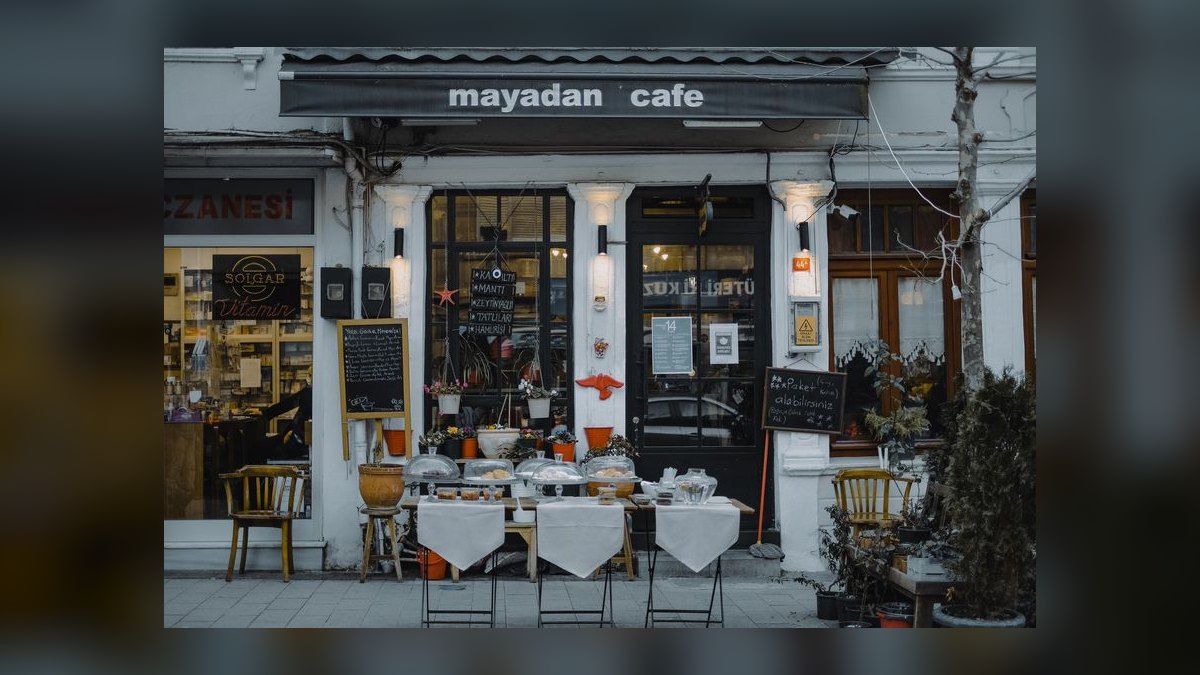
Why the premium positioning matters commercially: commodity boba competes on price and speed, which collapses into a race to the bottom in any market with three shops on the same block. A premium tea studio competes on product distinctiveness and atmosphere — the signature brown-sugar preparation, the visual presentation, the seating and lighting that make the space photographable. That earns a price point of a dollar or two above the commodity tier and, more importantly, earns *return visits from the same customer* rather than one-off convenience purchases. High-frequency beverage retail lives or dies on repeat rate. A customer who comes twice a week at $7.50 is worth roughly $780 a year; the same customer at monthly frequency is worth $90.
The adjacent context is worth holding in your head. The premium-beverage retail category — specialty coffee, boba, cold-pressed juice, and the newer energy-drink drive-thru formats — has converged on the same operating math: small footprint, high transaction count, low average ticket, brutal dependence on daypart traffic. Whether the cup contains espresso, tapioca, or a customized energy soda, the winning operator is doing the same three things: nailing site selection, controlling a perishable-heavy COGS line, and turning walk-ins into a loyalty file. If you are evaluating Sunright, you are really evaluating your fitness for that operating model — the brand is the wrapper.
One more structural note. Beverage retail scales differently from food retail. A second boba unit adds roughly 60–70% of the labor complexity of the first, not 100%, because a shared area manager and shared vendor relationships absorb a lot. That is why multi-unit is the realistic path to meaningful owner income in this category, and why single-unit owners often report the work-to-income ratio feels wrong in year one. Plan for two or three from the start, or accept that you are buying yourself a demanding job.
The step-by-step process from inquiry to open doors
The path from first inquiry to first sale runs six to twelve months, and the sequence matters more than the speed. Compressing it is the single most common way buyers overpay for a bad site.
Weeks 1–3: Get and actually read the FDD. The franchisor must deliver the Franchise Disclosure Document at least 14 calendar days before you sign anything or pay any money — that is a federal rule, not a courtesy. Read Item 5 (initial fees), Item 6 (ongoing fees), Item 7 (estimated initial investment), Item 12 (territory), Item 19 (financial performance representations, if any), and Item 20 (outlet counts and the franchisee contact list). Item 20 is the highest-value page in the document and the one most buyers skim. It tells you how many units opened, closed, transferred, and were terminated over three years. Closures and transfers are the tell.
Weeks 3–6: Validation calls. Item 20 gives you names and numbers of current and former franchisees. Call ten current owners and, critically, every former owner listed. Ask specific numbers, not sentiment: annual gross, COGS percentage, labor percentage, rent as a percentage of sales, months to cash-flow-positive, what the buildout actually cost versus the Item 7 estimate, and whether they would sign again. Former franchisees have no reason to protect the brand and will tell you what broke.
Weeks 6–10: Market and site work. Do your own competitive audit before you fall in love with a space. Walk a one-mile radius and count every boba shop, bubble tea kiosk, specialty coffee shop, and dessert concept. Then pull daypart traffic: is there a lunch rush, an after-school rush, an evening rush? Boba skews afternoon and evening, which means a site optimized for a 7 a.m. office coffee crowd is the wrong site.
Weeks 10–16: Lease and financing. Negotiate the lease with the franchise agreement in hand, not before. Push for a co-terminus term (lease length matching or exceeding the franchise term), a personal-guarantee burn-off, and a tenant improvement allowance. Financing for a first-time franchisee is usually an SBA 7(a) loan requiring roughly 10–30% equity injection plus liquid reserves.
Weeks 16–36: Build, train, open. Buildout is where timelines slip. Permitting, approved-vendor lead times, and inspection scheduling routinely add two to three months beyond plan. Budget carrying costs — rent often starts before you sell a cup.
Costs, timelines, and the ranges you should plan against
The headline number for a Sunright Tea Studio franchise falls in the $400,000 to $900,000 range for total initial investment. That spread is not noise — it is the difference between a second-generation beverage space in a mid-cost market and a ground-up buildout in coastal California. Here is how the money distributes and where it goes wrong.
Franchise fee: roughly $30,000–$40,000. Paid at signing, non-refundable in almost all cases. Multi-unit development agreements sometimes discount units two and three, but you commit to a development schedule with teeth.
Buildout and leasehold improvements: $200,000–$480,000. The single largest and most variable line. A second-generation space that already has plumbing, grease-capable drains, and adequate electrical service can cut this by 30–40%. A cold shell in a new mixed-use development is the top of the range. Watch for landlord work-letter ambiguity — who pays for HVAC capacity upgrades is a five-figure argument you want settled in writing.
Equipment: $110,000–$240,000. Tea brewers, boba cookers, sealers, refrigeration, ice machine, POS, and back-office hardware. Equipment financing is available and often preferable to burning cash reserves, but factor the debt service into your break-even model rather than treating it as free.
Signage, decor, and the photographable envelope: $20,000–$60,000. In a premium concept this is not vanity spend. The interior *is* the marketing channel for a Gen-Z customer base, and a cheap-looking room undercuts the price point you need to defend.
Opening inventory, initial marketing, training and travel: $32,000–$90,000 combined. Grand-opening spend is front-loaded and should not be trimmed — the first six weeks set your loyalty file.
Working capital: $35,000–$95,000. This is the line buyers shave and then regret. Three months of operating reserve is the floor. Six is safer given that most units take 12–18 months to reach stable cash flow.
Ongoing fees: roughly 6% royalty on gross sales plus an advertising fee in the low single digits. Budget an additional 2–4% of gross for local store marketing — campus tabling, influencer partnerships, loyalty program costs, and delivery-platform promotions. National ad funds build brand; they do not fill your specific store.

The operating P&L to model against: COGS typically runs 28–35%, higher than a coffee shop because dairy, imported syrups, and fruit purees cost more than roasted beans and spoil faster. Labor lands at 25–32% depending on market wage floors. Occupancy runs 12–18% of sales, and anything above 15% should make you nervous — high-rent sites need volume you may not get. Royalty and ad fees together take another 8% or so. Stack those and a $900,000 store leaves roughly $130,000–$150,000 in owner discretionary earnings before debt service and taxes. Subtract an SBA payment on a $600,000 loan and the take-home shrinks considerably in the early years.
Delivery platforms deserve their own note. Third-party delivery commissions of 15–30% on a beverage with a $7 ticket can turn incremental volume into negative-margin volume. Run the math per channel. Many beverage operators find that delivery is worth it purely as a customer-acquisition channel that they then convert to first-party pickup through their own app, and worth very little otherwise.
Where operators get this wrong
They buy the brand instead of the block. In high-frequency beverage retail, trade-area demographics explain more variance in unit performance than brand equity does. A strong site with a mediocre brand beats a strong brand on a mediocre site, consistently. Units near universities, dense office clusters, or transit nodes materially outperform suburban standalone locations on daily transaction count. If you have a site you love and a brand you are unsure about, that is a better position than the reverse.
They ignore territory language. Many beverage franchise agreements grant limited or no exclusive territory. Read Item 12 carefully and ask directly: how close can the franchisor place another unit, and what happens if a multi-unit developer takes the market next door? Negotiate a protected radius in writing if you can, and price the risk if you cannot. Encroachment is the most common source of franchisee-franchisor litigation in fast-growing beverage systems.
They underestimate saturation. The U.S. boba market added an enormous number of shops over the first half of the 2020s. In dense multicultural urban markets, three or more boba brands within a quarter-mile is normal. That does not automatically kill a store — beverage retail supports more density than people expect — but it does mean your differentiation has to be real and your operations have to be tight. Do the physical count yourself. Do not trust a franchisor's market study.
They treat waste as a fixed cost. Two to four points of COGS routinely disappear into over-cooked pearls and dumped tea bases. That is $18,000–$36,000 a year on a $900,000 store — real money, entirely controllable through batch scheduling and hourly par sheets. Track waste as its own line from week one.
They hire for open and then stop. Beverage retail turnover is high, especially with student staff. Building a bench — always training one more person than you need — is the difference between a manageable schedule and the owner working 70-hour weeks covering call-outs.
They skip the former-franchisee calls. Current owners have a resale interest in the brand looking healthy. Former owners do not. The Item 20 list of departed franchisees is the most honest research available to you and it is free.
They plan for one unit. As noted, the economics of this category reward density. A single unit in this investment range often produces owner income that a good general-manager job would match, without the capital risk. Go in with a multi-unit plan or go in clear-eyed about what one store returns.

A decision framework: buy, open, or walk
Three paths exist and they are not equivalent. Opening a new Sunright unit means full control of site selection but full exposure to buildout risk and 12–18 months of ramp. Buying an existing unit means paying a premium for proven cash flow and inheriting whatever the previous operator broke — a damaged local reputation is expensive to repair. Walking away and putting the same capital into an independent tea concept means no royalty, no ad fee, and no playbook, supply chain, or brand recognition.
Run the comparison honestly. A resale at 2.5–3.5x seller's discretionary earnings for a store doing $150,000 in SDE prices at roughly $375,000–$525,000 plus working capital — potentially less total capital than a new build, with immediate cash flow. Ask why the seller is selling, pull three years of P&Ls and tax returns, and verify the lease has enough term remaining to be financeable.
The framework's blunt version: if you cannot answer *why this specific corner, at this specific rent, serving this specific daytime population* in two sentences with numbers attached, you are not ready to sign. The brand question is downstream of that.
Related questions
How much liquid capital do I need beyond the total investment?
Plan on $140,000–$220,000 liquid on top of financed amounts. SBA lenders typically want 10–30% equity injection plus post-close reserves. Under-capitalized operators fail during the ramp period, not from bad concepts — they simply run out of runway before the store stabilizes.
Is a boba franchise better than an independent tea shop?
The franchise buys supply chain, playbook, and recognition for roughly 8% of gross in perpetuity. Independent keeps that 8% and all menu freedom but requires you to solve sourcing, branding, and operations yourself. Experienced beverage operators often go independent; first-timers usually should not.
How long until the store is cash-flow positive?
Typically 12–18 months for a new build in a validated site, faster for a resale with an existing customer base. A meaningful share of units in any growing beverage system sit at break-even through the first year — budget working capital for that reality rather than the optimistic case.
Does territory protection actually matter for beverage retail?
Yes, more than in most categories, because small-footprint beverage brands scale by density. Without a written protected radius, the franchisor can place a unit close enough to split your trade area. Read Item 12 and negotiate before signing, not after.
FAQ
What is the total investment range for a Sunright Tea Studio franchise in 2027?
Roughly $400,000 to $900,000 all-in, covering the franchise fee, buildout, equipment, signage, opening inventory, training, grand-opening marketing, and working capital. The low end assumes a second-generation space in a moderate-cost market; the high end reflects a cold-shell buildout in an expensive coastal metro. Verify current figures in Item 7 of the most recent FDD.
What do mature units actually earn?
Mature locations generally gross $600,000 to $1,300,000 annually, with owner discretionary earnings commonly landing in the $80,000 to $240,000 range before debt service and taxes. Median performance sits nearer the middle of both ranges. These are system-wide observations, not a promise — your site, rent, and labor market drive the outcome.
What are the ongoing fees?
Approximately 6% of gross sales as royalty plus an advertising fund contribution in the low single digits. Budget an additional 2–4% of gross for local store marketing, which the national fund does not cover. Delivery platform commissions of 15–30% on delivered orders are a separate and often underestimated cost.
How long does it take to open?
Six to twelve months from signing to opening in the typical case, split across site selection, lease negotiation, permitting, buildout, equipment installation, training, and inspection. Permitting and approved-vendor lead times are the usual sources of delay. Budget carrying costs for rent that starts before revenue does.
Is this a good fit for a first-time franchise owner?
It can be, given training and a defined playbook, but beverage retail is operationally demanding — perishable inventory, high staff turnover, and daypart-driven traffic. First-timers succeed most reliably when they work the counter themselves for the first year and have prior retail or food-service exposure. Absentee ownership is a poor fit for a single unit.
What differentiates Sunright from other boba brands?
Its premium, experiential positioning — signature brown-sugar boba, cheese-foam teas, fresh-brewed bases, and a designed, photographable interior — versus commodity boba shops competing on price. That supports a higher ticket and better repeat rate, but the system is younger than legacy chains, so validate support quality directly with existing franchisees.
Sources
- https://www.ftc.gov/business-guidance/resources/franchise-rule-compliance-guide
- https://www.sba.gov/funding-programs/loans/7a-loans
- https://www.franchise.org/
- https://www.ibisworld.com/united-states/market-research-reports/bubble-tea-stores-industry/
- https://www.entrepreneur.com/franchises
- https://www.nrn.com/
- https://www.qsrmagazine.com/
- https://www.franchisebusinessreview.com/
- https://www.restaurantbusinessonline.com/
- https://www.statista.com/
Related on PULSE
- Should I open or buy a Kung Fu Tea franchise in 2027?
- Should I open or buy a CoCo Fresh Tea & Juice franchise in 2027?
- Should I open or buy a Vivi Bubble Tea franchise in 2027?
- Should I open or buy a The Coffee Bean & Tea Leaf franchise in 2027?
- Should I open or buy a Perspire Sauna Studio franchise in 2027?
- Should I open or buy an Amazing Lash Studio franchise in 2027?
This page will be disappearing soon. Save it to your device for $1 — or read it free while it is here.
@Kory-White- · if Venmo asks, the last 4 of my number are 2012
This page is gone.
This one is off the shelf now. $1 keeps it on your phone for good — the whole page, pictures and diagrams included.
 franchiseShould I open or buy a Drama Kids franchise in 2027?
 franchiseShould I open or buy an Expedia Cruises franchise in 2027?
 franchiseShould I open or buy a Premier Martial Arts franchise in 2027?
 franchiseShould I open or buy a Maui Wowi franchise in 2027?
 franchiseShould I open or buy a Bibibop Asian Grill franchise in 2027?
 franchiseShould I open or buy a Bruster's Real Ice Cream franchise in 2027?
 franchiseShould I open or buy a Scooter's Coffee franchise in 2027?
 franchiseShould I open or buy a solidcore franchise in 2027?
 franchiseShould I open or buy a Round Table Pizza franchise in 2027?
 franchiseShould I open or buy a Roto-Rooter franchise in 2027?