
Should I open or buy a Blo Blow Dry Bar franchise in 2027?
 Curated byKory White · Fractional CRO · Maryland
 PULSEKNOWLEDGE LIBRARY
Quality
Certified
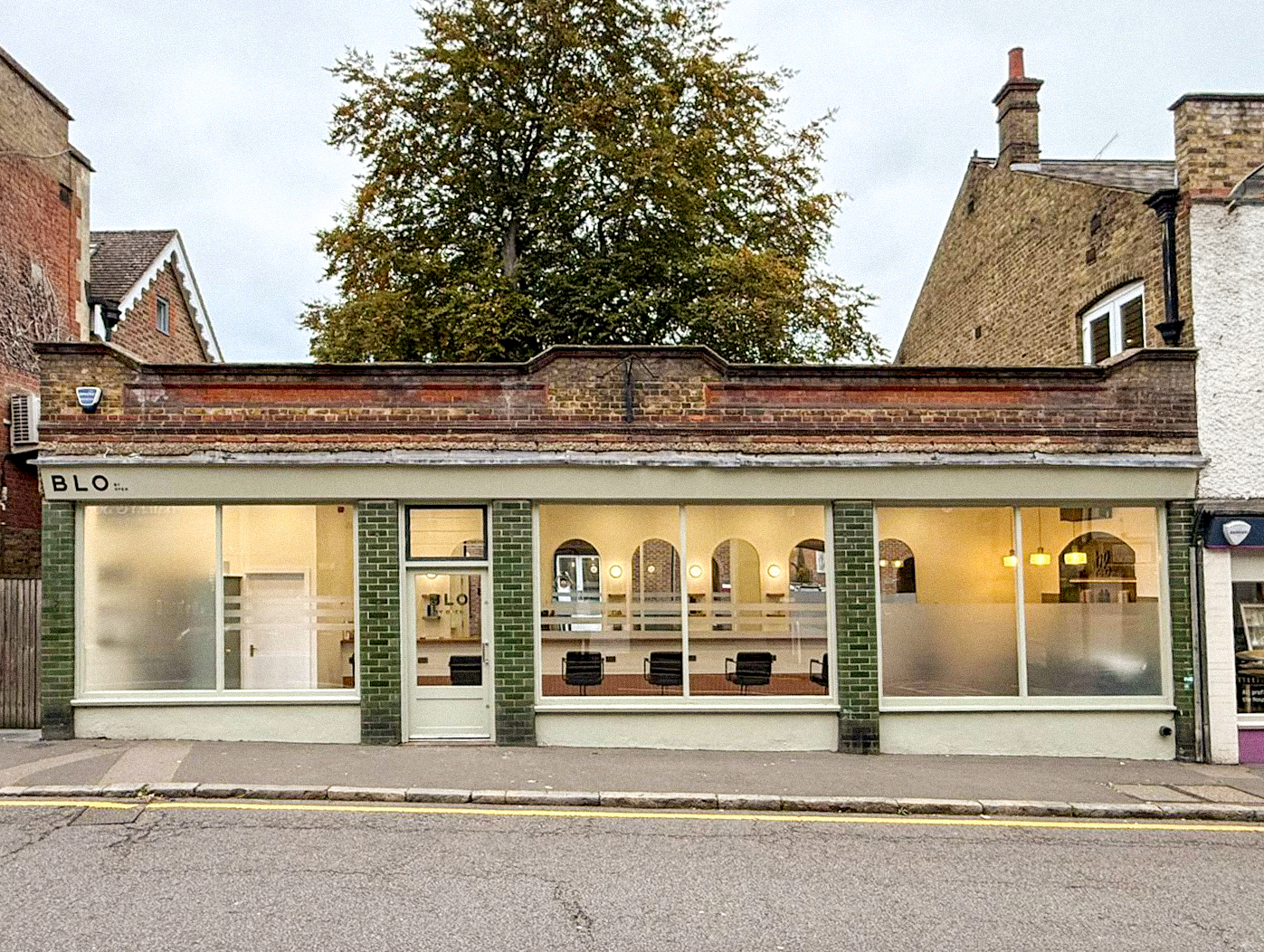
Blo Blow Dry Bar makes sense in 2027 for a hands-on operator with $200K–$450K who can recruit licensed stylists and sell memberships in an affluent, convenient trade area. Mature bars gross roughly $300K–$650K with owner earnings near $50K–$160K. Staffing and site quality decide the outcome — not the brand.
What a blow-dry-only bar actually is and why the model matters
Blo Blow Dry Bar, founded in 2007 in Canada, was one of the original blow-dry-bar franchises and built its entire operating system around a deliberate subtraction: no cuts, no color. That single constraint is the most important thing to understand before you evaluate a single financial line item, because it changes the labor model, the chemical-handling burden, the ticket structure, and the competitive set all at once.
A full-service salon has to schedule around a color service that occupies a chair for two to three hours, requires backbar chemical inventory, carries correction liability, and demands a stylist with deep technical training. A blow-dry bar runs 45-minute appointments at a fixed menu price, generally in the $40–$60 range depending on market, with add-ons layered on top: makeup application, updos, braiding, special-occasion and bridal styling. Throughput per station goes up, service-time variance goes down, and scheduling software can actually predict your day.

The strategic consequence is that your P&L stops being driven by "how good is my top colorist" and starts being driven by three things you can systematize: chair utilization, membership penetration, and average ticket with add-ons. That is genuinely a more manageable business than a full salon. It is also a business with a lower ceiling — you have voluntarily removed the highest-margin service in the hair industry from your menu.
The membership component is what converts an otherwise transactional service into something that resembles predictable revenue. A member paying a monthly fee in the $40–$60/month range for a set number of blowouts turns your Tuesday-morning dead zone into booked capacity and gives you a forecastable base. Operators who reach a few hundred active members have a meaningfully different business — and a meaningfully different resale conversation — than operators who run on walk-ins and Saturday brides.
Why this matters for a 2027 decision specifically: the blow-dry-bar category is no longer novel. When Blo and Drybar were expanding aggressively, the concept itself was the differentiator; a woman in a major metro had never seen a place that only did blowouts. In 2027 she has, and she likely has three options within driving distance plus a phone app that sends a stylist to her apartment. You are not buying category novelty anymore. You are buying an operating system, a brand, a supplier chain, a build-out playbook, and site-selection support — and you should price your enthusiasm accordingly.

The honest framing: this is a moderate-capital, moderate-return, high-operational-intensity service business in a resilient consumer category. It is not a passive investment, it is not a rocket ship, and anyone selling it to you as either is misrepresenting it.
The step-by-step process from first FDD to opening day
The path from "I'm interested" to "I'm open" runs six to twelve months for most franchisees, and the sequencing matters — mistakes made in the first sixty days are the expensive ones.
Days 1–20: Read the Franchise Disclosure Document properly. Not skim — read. The items that matter most are Item 5 (initial fee), Item 6 (ongoing royalty and marketing fees), Item 7 (the full estimated investment table), Item 19 (financial performance representations, if provided), and Item 20 (outlet counts, transfers, terminations, and — critically — the franchisee contact list). Item 20's turnover table is the single most underread page in franchise diligence. If a brand opened 20 units and closed or transferred 8 over three years, that tells you more than any brochure. Also read Item 11 to see exactly what support you are actually contracted to receive versus what a sales rep described verbally.
Days 21–40: Call operators — including the ones who left. Item 20 gives you names of current franchisees and, separately, franchisees who exited in the last fiscal year. Call both groups. Ask current owners: what were your first-year and third-year gross sales, what percentage of revenue is membership, how many stylists do you employ and what was your turnover last year, what was your actual build-out cost versus the Item 7 estimate, and what did you take home personally after paying yourself as an operator? Ask exited owners the only question that matters: what would you do differently? Ten calls is a reasonable floor. Fewer and you are guessing.

Days 41–60: Validate the trade area before you fall in love with a space. Blow-dry-bar demand skews toward higher-household-income, higher-density, convenience-driven trade areas with a female-professional and event-driven customer base. Map every competing blowout provider within a three-mile radius: other blow-dry bars, salons that heavily promote blowouts, and chain salons. Also account for mobile and on-demand styling services, which do not show up on a physical competitor map at all but absolutely show up in your booking calendar.
Days 61–100: Build out and hire simultaneously — not sequentially. The most common scheduling failure is treating hiring as a post-construction task. Licensed stylists give notice at their current employer, and the best ones are not sitting idle waiting for you. Begin recruiting the moment your lease is signed.
Days 101–130: Pre-sell memberships and open. Founding-member pricing during build-out does two jobs: it generates working capital before you have revenue, and it fills your opening-week schedule so your new stylists have hands in hair from day one instead of standing around.

Costs, timelines, and the ranges you should actually underwrite
The 2026 FDD puts the initial franchise fee in the $40,000–$50,000 range and total Item 7 investment at roughly $200,000 to $450,000, with a royalty near 6% of gross plus a marketing fee typically in the 2%–3% band. Here is how that total realistically decomposes for a 1,000–1,600 sq ft styling bar:
| Line item | Low | High | What drives the spread |
|---|---|---|---|
| Franchise fee | $40,000 | $50,000 | Single vs. multi-unit agreement |
| Build-out / leasehold | $80,000 | $200,000 | Second-generation space vs. raw shell; plumbing for wash stations |
| Equipment & styling stations | $40,000 | $100,000 | Station count (typically 6–10), chair and dryer quality |
| Signage & decor | $12,000 | $35,000 | Landlord sign criteria, storefront exposure |
| Initial inventory | $8,000 | $20,000 | Retail product depth at open |
| Initial marketing | $12,000 | $32,000 | Presale campaign intensity |
| Training & travel | $8,000 | $25,000 | Number of staff sent to brand training |
| Working capital | $25,000 | $60,000 | First 3–6 months of runway |
| Total | ~$200,000 | ~$450,000 | Per 2026 FDD |
Underwrite toward the high end, not the midpoint. The single most common Item 7 overrun is build-out, and the reason is structural: a blow-dry bar needs plumbing for wash stations, dedicated electrical capacity for simultaneous dryers, and ventilation. If you take a second-generation salon space you may land near the low end. If you take a raw shell in a new retail development, you will find the top of the range fast, and permitting will add weeks.

On revenue: mature bars gross $300,000–$650,000 annually, with owners clearing $50,000–$160,000. Note carefully that the owner number and the revenue number are not linearly related, because the cost structure is dominated by labor. A representative model at $480,000 gross:
- Stylist labor ~38% — roughly $182,000. This is the line that eats the business. In tight labor markets it runs higher.
- Rent, products, and backbar ~22% — roughly $106,000. Rent alone in a desirable retail corridor can be $35–$60+/sq ft annually.
- Royalty plus marketing fee ~8% — roughly $38,000, paid on gross, not on profit.
- Other operating expenses ~16% — roughly $77,000: insurance, POS and booking software, utilities, credit card processing, local marketing above the fee, supplies, repairs.
- Owner earnings ~$75,000 on that model.
That $75,000 assumes you are working in the business. If you hire a general manager at, say, $45,000–$55,000 to run it absentee, your owner earnings on a $480,000 bar compress to roughly $20,000–$30,000. This concept does not support absentee ownership at a single unit. The math only works if you are the operator, or if you run enough units that one management layer amortizes across three or four locations. That is why the serious money in this category is multi-unit, and why you should evaluate the concept from day one as a three-unit plan rather than a one-unit plan.

Timeline: expect 6–12 months from signed agreement to open door. Lease negotiation is typically 45–90 days, permitting 30–90 days depending on jurisdiction, and construction 60–120 days. Build a cash cushion for the gap between when rent starts and when revenue starts — landlords rarely grant free rent long enough to cover a full build-out.
Where operators get this wrong
They treat stylist recruiting as an HR chore instead of the core business risk. A typical bar needs 6–12 licensed stylists across shifts, and industry turnover routinely exceeds 50% annually. Every unfilled chair is capacity you paid to build and cannot sell. The operators who solve this pay above the local floor, then layer on structure: a bonus tied to membership signups, paid continuing education in bridal and advanced styling, predictable scheduling instead of on-call chaos, and a tiered commission that rewards stylists for building their own book. Budget a lead stylist or assistant manager at roughly $40,000–$55,000 to own scheduling and quality — trying to do that yourself while also selling memberships and managing the landlord is how first-year owners burn out. Build a pipeline with local cosmetology schools before you need it, not after someone quits.
They sign the lease based on rent per square foot instead of visibility and convenience. A blow-dry bar is a convenience purchase layered on a beauty purchase. If parking is a hassle, if the customer has to cross a mall, if the storefront is not visible from the road, your walk-in and impulse business evaporates and you are left carrying the entire revenue line on pre-booked appointments. A cheaper unit in a worse position is the most expensive mistake in this format.

They underestimate the competitive set because they only count blow-dry bars. Your real competition is every provider of a woman's blowout: full-service salons that promote blowouts, chain salons, independent stylists renting suites, on-demand mobile styling apps, and — genuinely — her own bathroom. Mobile and at-home services have taken real share in dense urban cores, where a stylist coming to the apartment beats parking and traffic on any rainy Friday. Count all of it. If you find three or more direct competitors inside a three-mile radius, model your revenue at the bottom of the $300K–$650K band and see whether the deal still works. If it only works at the top of the band, it does not work.
They open without a membership plan and then try to bolt one on. Membership penetration built in month one is dramatically easier than membership sold in month fourteen, because at open you have a founding-member story, scarcity, and a staff whose entire job that week is signing people up. Once you are running at partial capacity with a thin schedule, the conversation gets harder and the discounting gets deeper. Set a specific target — 200–300 active members is a reasonable ambition for a healthy single unit — and manage to it weekly.
They forget royalties are charged on gross. At 6% royalty plus 2%–3% marketing, roughly 8–9 cents of every dollar leaves before you pay a stylist. In a business where owner earnings are 10%–15% of revenue, the fee load is not a rounding error — it is a meaningful share of the profit pool, and you should model it explicitly rather than assuming it comes out of some other bucket.
They never plan the exit. Franchise agreements typically run 5–10 years with renewal options, and the resale market for blow-dry bars is thinner than for fitness or QSR concepts. Buyers price these on a multiple of earnings, and with owner earnings of $50K–$160K, a resale often lands well below what the owner originally invested. Two things protect exit value: a large, sticky membership base (recurring revenue is what a buyer is actually purchasing) and a lease with at least five years remaining at transfer. A short lease tail can gut your sale price, because the buyer inherits your renegotiation risk. Start thinking about lease term at signing, not at exit.
Decision framework: when to open, when to buy resale, when to walk
There are three distinct paths here and they suit different people. Opening new gives you site choice, a clean build, and no inherited reputation — at the cost of 6–12 months of pre-revenue burn and full ramp risk. Buying an existing unit gives you day-one revenue, an intact staff, and a real P&L to underwrite against — at the cost of inheriting whatever culture, deferred maintenance, and Google reviews came with it, plus a franchisor transfer approval and fee. Walking away is a legitimate outcome and you should hold it as a live option through the entire process.

Buy resale if the seller will show you three years of tax returns and a membership roster with churn data, if the lease has real term remaining, and if the price is a defensible multiple of actual earnings. A mature unit's value is heavily concentrated in recurring members — if the roster is thin or the churn is high, you are buying equipment and a sign.
Open new if the good trade areas in your market are unclaimed, if you can absorb the runway, and if you genuinely intend to build multiple units. Multi-unit is where the model gets interesting: one management layer, shared recruiting pipeline, shared marketing spend, and an exit that a larger buyer will actually pay a real multiple for.
Walk away if you cannot honestly answer yes to three questions: *Can I recruit and hold 6–12 licensed stylists in this specific labor market? Is my trade area affluent and convenient enough to support a $40–$60 discretionary service on repeat? Am I willing to be in the building?* Any no on those three is not a problem you fix with better marketing.
Related questions
How many stylists does one bar actually need?
Typically 6–12 licensed stylists across all shifts for a 1,000–1,600 sq ft bar, plus a lead stylist or assistant manager at roughly $40,000–$55,000. Peak demand is heavily weighted to Thursday through Saturday and event season, so scheduling depth matters more than headcount alone.
Do I need beauty industry experience to qualify?
No. Franchisors in this segment generally do not require cosmetology or salon background, and Blo provides initial training and ongoing operational support. Management, service-operations, or local-marketing experience is more predictive of success than industry tenure — you are managing stylists, not styling hair.
What percentage of revenue should come from memberships?
There is no published benchmark to cite, but operators consistently report that membership share is the strongest predictor of both cash-flow stability and resale value. Ask this question directly of ten franchisees during validation calls and build your own benchmark from their actual answers.
Is this better as a single unit or multi-unit?
Multi-unit, almost always. A single unit's owner earnings ($50K–$160K) largely disappear if you hire a general manager, so single-unit ownership requires you in the building. Three or more units let one management layer amortize and produce an exit a larger buyer will value.
How long before the bar reaches mature revenue?
Most service franchises in this capital range take 24–36 months to reach mature volumes, driven by membership base accumulation rather than by a single marketing event. Underwrite your working capital for a slow ramp; a founding-member presale accelerates the start but does not eliminate the curve.
FAQ
What is the typical total investment to open a Blo Blow Dry Bar?
Roughly $200,000 to $450,000 per the 2026 FDD, including a franchise fee of $40,000–$50,000, build-out, styling stations, signage, initial inventory, training, and working capital. The spread is driven mostly by build-out: a second-generation salon space with existing plumbing lands near the low end, while a raw shell requiring new wash-station plumbing, electrical capacity, and ventilation pushes toward the top.
How much can an owner expect to earn from a mature location?
Mature bars gross roughly $300,000–$650,000 annually, with owner earnings of about $50,000–$160,000. That earnings figure assumes an owner-operator. Insert a general manager at $45,000–$55,000 and single-unit owner earnings compress sharply, which is why serious operators in this category plan for multiple units rather than one.
What are the ongoing fees?
A royalty near 6% of gross sales plus a marketing fee typically in the 2%–3% range, and some territories carry additional local advertising obligations. Model roughly 8–9% of gross leaving before you pay a single stylist. Confirm the exact figures in Item 6 of the current FDD — never rely on a summary, including this one.
How long does it take from signing to opening?
Six to twelve months is the realistic range. Lease negotiation typically consumes 45–90 days, permitting 30–90 days depending on jurisdiction, and construction 60–120 days. Start stylist recruiting the day your lease is signed rather than after construction ends, since licensed stylists must give notice at their current employer.
Is prior salon experience required?
No. The franchisor provides initial training and ongoing support in operations, marketing, and stylist recruitment, and does not require beauty-industry background. Operational and people-management experience matters more. You will spend far more time on scheduling, hiring, retention, and local marketing than on anything happening at a styling station.
What is the single biggest risk with this concept?
Stylist recruiting and retention. Industry turnover routinely exceeds 50% annually, and every unstaffed chair is capacity you paid to build but cannot sell. Site quality is a close second — a blow-dry bar is a convenience purchase, and a cheaper space with poor visibility or difficult parking is the most expensive lease mistake available in this format.
Sources
- https://www.ftc.gov/business-guidance/resources/franchise-rule-compliance-guide
- https://www.bls.gov/ooh/personal-care-and-service/barbers-hairstylists-and-cosmetologists.htm
- https://www.sba.gov/funding-programs/loans/7a-loans
- https://www.franchise.org/
- https://www.entrepreneur.com/franchises/directory
- https://www.franchisebusinessreview.com/
- https://www.ibisworld.com/united-states/market-research-reports/hair-nail-skin-care-services-industry/
- https://www.census.gov/programs-surveys/acs
- https://www.ftc.gov/business-guidance/industry/franchises-business-opportunities
- https://www.probeauty.org/
Related on PULSE
- Should I open or buy a Sola Salon Studios franchise in 2027?
- Should I open or buy a Sugaring NYC franchise in 2027?
- Should I open or buy a Sugared + Bronzed franchise in 2027?
- Should I open or buy an Amazing Lash Studio franchise in 2027?
- Should I open or buy a Nekter Juice Bar franchise in 2027?
- Should I open or buy a The Bar Method franchise in 2027?
This page will be disappearing soon. Save it to your device for $1 — or read it free while it is here.
@Kory-White- · if Venmo asks, the last 4 of my number are 2012
This page is gone.
This one is off the shelf now. $1 keeps it on your phone for good — the whole page, pictures and diagrams included.
 franchiseShould I open or buy a BIGGBY Coffee franchise in 2027?
 franchiseShould I open or buy a Great American Cookies franchise in 2027?
 franchiseShould I open or buy a Jeremiah's Italian Ice franchise in 2027?
 franchiseShould I open or buy a Duck Donuts franchise in 2027?
 franchiseShould I open or buy a Charleys Cheesesteaks franchise in 2027?
 franchiseShould I open or buy a Salata Salad Kitchen franchise in 2027?
 franchiseShould I open or buy a Howard Hanna Real Estate franchise in 2027?
 franchiseShould I open or buy a 1-800-GOT-JUNK franchise in 2027?
 franchiseShould I open or buy an H&R Block franchise in 2027?
 franchiseShould I open or buy a Cooper's Hawk Winery & Restaurants franchise in 2027?