
Should I open or buy a Fox Pest Control franchise in 2027?
 Curated byKory White · Fractional CRO · Maryland
 PULSEKNOWLEDGE LIBRARY
Quality
Certified

Only if you are genuinely a salesperson. Fox Pest Control is a route-based recurring-revenue model with roughly $150,000–$400,000 total investment, a ~$50,000 franchise fee, and 7%–8% royalties. Mature units can gross seven figures, but revenue is built door-to-door. Weak closers stall; strong sales operators compound fast.
The operator who thought he was buying a service business
Picture a buyer we'll call the classic misfit for this concept. He spent eighteen years managing a regional distribution warehouse. He is organized, good with people, excellent at process, and he wants out of corporate. He looks at pest control and sees exactly what he wants: recurring quarterly service agreements, non-discretionary demand, trucks and routes and schedules. It reads like logistics with a chemical license. He has $180,000 liquid, an SBA pre-qual for the rest, and a suburban territory in a warm-climate metro.
He signs. Twelve months later he has 240 accounts and is bleeding cash.
What went wrong is not the model — the model works. What went wrong is that he bought the back half of the business and assumed the front half would show up on its own. In a recurring pest-control franchise, the operating side (routing, treating, retaining) is genuinely the easier half once you have volume. The hard half is that nobody comes to you. A homeowner does not wake up and search "quarterly pest treatment near me" the way they search for an emergency plumber. Pest control is a *sold* service, not a *shopped* service, and Fox in particular built its growth on aggressive outbound acquisition — summer sales teams, neighborhood canvassing, door hangers, and a closing culture that a warehouse manager has never had to build.
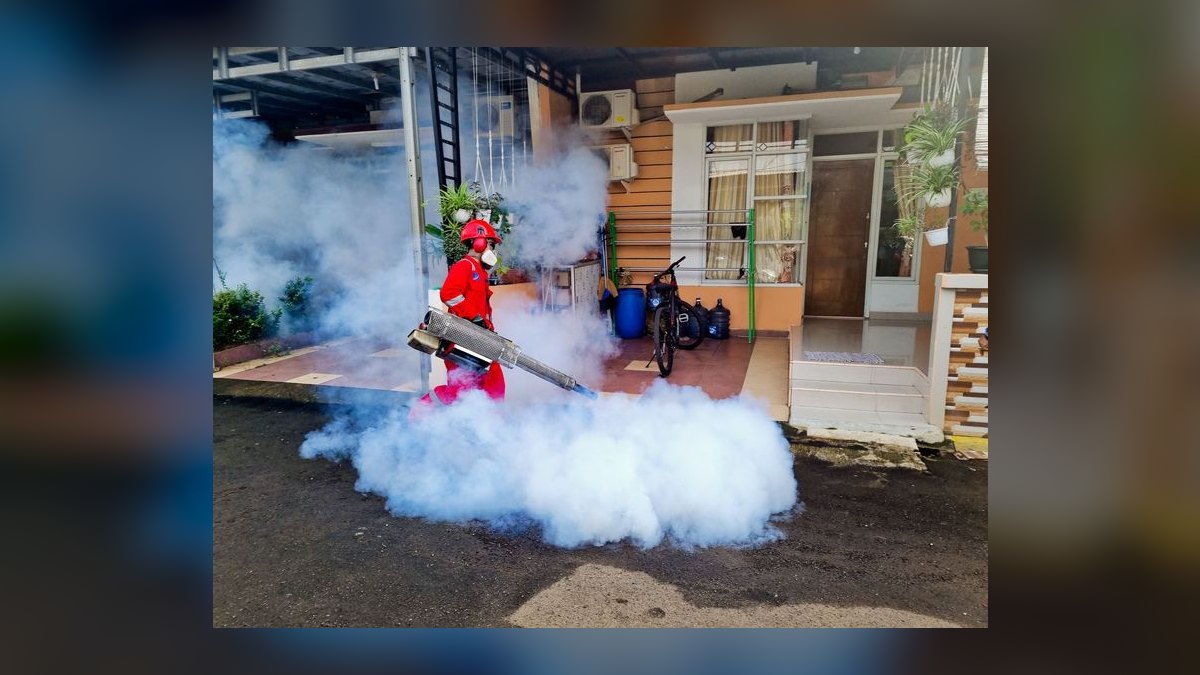
The math is brutal in year one because of how recurring revenue accrues. A quarterly agreement at, say, $110–$150 a service produces maybe $450–$600 of annual revenue per account. That means 240 accounts is roughly $110,000–$145,000 of annualized revenue against a cost base that already includes a wrapped truck, a licensed technician, insurance, a royalty on every dollar, and the owner's own living expenses. You do not reach a livable P&L at 240 accounts. You reach it at 900. And the only way from 240 to 900 is somebody knocking on a lot of doors.
Now flip the profile. Take a former medical-device rep or a guy who ran a solar sales team — someone who has recruited, trained, and quota'd a canvassing crew before. That person walks into the same territory, the same FDD, the same royalty rate, and gets to 900 accounts in the same twelve months because building a door-to-door org is a skill they already own. Same brand, same investment, completely different outcome.
That is the single most important thing to understand before writing a check for a Fox franchise: the variance in outcomes across franchisees in this category is driven overwhelmingly by the owner's sales capability, not by the territory, the brand, or the capital. Two operators forty miles apart with identical unit economics on paper can land $200,000 apart in owner earnings. Ask yourself honestly which of those two operators you are. If the answer requires a story about how you'd "learn sales," treat that as a no.
How a recurring pest route actually compounds
The mechanism that makes pest control attractive — and that makes the first eighteen months painful — is the same mechanism: recurring agreements stack, but they stack slowly, and they only become profitable once density collapses your cost-to-serve.

Here is the chain. You acquire a customer through outbound sales. That customer signs a service agreement, typically quarterly or bimonthly, often with an initial treatment priced higher than subsequent visits. That agreement generates revenue on a schedule whether or not anyone calls you. Each subsequent quarter, retained accounts carry forward and newly sold accounts layer on top. Revenue is therefore a function of *cumulative* sales minus churn, not of this month's sales — which is why the business feels like it's failing right up until the moment it obviously isn't.
The second half of the mechanism is route density, and this is where most operators underestimate the leverage. A technician's day is a fixed number of hours split between windshield time and treatment time. Treatment on a standard residential exterior perimeter is fast — often 20 to 35 minutes. Drive time between stops is the variable. If your accounts are clustered so that stops are three to five minutes apart, a technician might complete 14–18 stops a day. If the same accounts are scattered across a 30-mile radius with 15-minute hops, that same tech does 8–10. You just doubled your labor cost per account without changing a single line of your pricing.
This is why the sequencing of sales matters as much as the volume. Selling 100 accounts spread evenly across a whole county is materially worse than selling 100 accounts on eight contiguous streets — even though both look identical on a revenue report. Disciplined operators sell by neighborhood, saturate, then move the crew to the adjacent neighborhood. Undisciplined operators chase whoever says yes and end up with a route map that looks like buckshot.

The third element is churn, and it is the quiet killer. Recurring does not mean permanent. Customers cancel when they move, when they decide they no longer see bugs, when a technician misses an appointment, or when a competitor knocks on their door with a first-year discount. Every point of annual churn is an account your sales team has to re-sell just to stand still. At 900 accounts, even a modest cancellation rate means you are replacing a meaningful block of the base every year before you grow by one net account. This is why operators obsess over service quality and technician consistency — not out of sentiment, but because retention is cheaper than acquisition by a wide margin, and the sales cost of replacing a churned account is the single largest hidden expense in the model.
The upstream effect worth noting: this same compounding-plus-density mechanic is what makes *all* recurring home-service franchises behave alike. Lawn care, pool service, HVAC maintenance plans, window cleaning — they share the shape. If you understand the math here, you understand the whole category, and you should be comparison-shopping across it rather than fixating on one brand.
What the money actually looks like
Start with the investment. The 2026 FDD puts the franchise fee at approximately $50,000 and total Item 7 investment in the range of roughly $150,000 to $400,000. The spread is wide because the low end assumes a home-or-small-warehouse-based launch with one or two vehicles, and the high end assumes a larger territory, a bigger initial fleet, and a heavier front-loaded marketing spend. Royalty runs approximately 7%–8% of gross, plus a marketing fee.
Break the investment into what you actually write checks for:

- Franchise fee: ~$50,000, paid up front.
- Vehicles and equipment: roughly $40,000–$110,000. Trucks or vans, sprayers, tanks, ladders, safety gear, termite equipment if you offer it.
- Vehicle branding and wraps: roughly $5,000–$18,000. Not optional — wrapped trucks are a meaningful lead source in the neighborhoods you're saturating.
- Warehouse or office setup: roughly $8,000–$30,000, depending on whether you start out of a garage or lease chemical-compliant storage.
- Initial marketing and sales launch: roughly $25,000–$70,000. This is the line item buyers underestimate most, because it funds the acquisition engine, not brand awareness.
- Training and travel: roughly $10,000–$30,000 for you and your first hires.
- Licensing and insurance: roughly $10,000–$30,000. Applicator licensing, general liability, commercial auto, workers' comp.
- Working capital: roughly $30,000–$90,000. This funds payroll during the months when your account base does not yet cover it.
Liquidity requirements typically sit around $80,000–$150,000 in cash on top of financeable assets.
Now the revenue side. Mature units — meaning operations that have been running long enough to have a stacked account base, usually three years or more — gross in the $1,000,000–$5,000,000+ range, with owners clearing roughly $150,000–$600,000. That is an enormous spread, and the honest read is that the top of that range belongs to multi-unit operators or single operators with unusually strong sales orgs, while the bottom belongs to owner-operators still doing much of the work themselves.

A rough P&L shape at, say, $2.5M of gross revenue in a well-run operation:
- Labor (technicians, sales, admin): roughly a third of revenue.
- Vehicles, fuel, and materials: mid-teens percentage.
- Royalty plus marketing fee: roughly 9%–10% combined.
- Other operating expense (insurance, facility, software, licensing, bad debt): mid-teens percentage.
- Remainder to owner earnings.
Two things to internalize about that structure. First, the royalty is calculated on gross revenue, not profit. At $1.5M of gross, a 7%–8% royalty is $105,000–$120,000 leaving the business before you have paid a single technician. That is a real, permanent tax on the top line, and it is the core of the franchise-versus-independent decision. Second, labor is your dominant cost, and labor cost per account is a direct function of the route density discussed above — meaning your gross margin is not fixed by the brand, it is something you build.
On timeline: most operators in this category reach positive monthly cash flow somewhere in the range of nine to eighteen months, with full return of the initial investment more commonly in the 18–36 month range depending on how aggressively you reinvest into additional trucks and sales headcount. If you finance through an SBA 7(a) loan, expect a down payment typically in the 20%–30% range, and model your debt service honestly — interest expense on a $250,000 note is a five-figure annual line item that has to come out of owner earnings, not out of some separate pot.

One financing note worth broadening into: many buyers in this category over-index on the franchise fee and under-index on working capital. The fee is a one-time cost you know about. Running out of payroll float in month seven, with 300 accounts and a technician you cannot pay, is how otherwise-viable units die. If you have to choose between a bigger territory and a bigger cash reserve, take the reserve.
Fox versus the alternatives, including not franchising at all
The right comparison set is wider than most buyers draw it. There are four genuinely different paths, and the franchise-versus-franchise question is the least interesting of them.
Path one: buy into Fox or a comparable growth-stage pest franchise. You get a proven acquisition playbook, training infrastructure, brand recognition that helps at the door, vendor pricing, and route-management systems you don't have to build. You pay 7%–8% of gross forever, you accept territory restrictions, and you operate inside somebody else's system. The trade is real: the playbook is worth something, especially to a first-time operator, and 7%–8% is roughly what it costs.
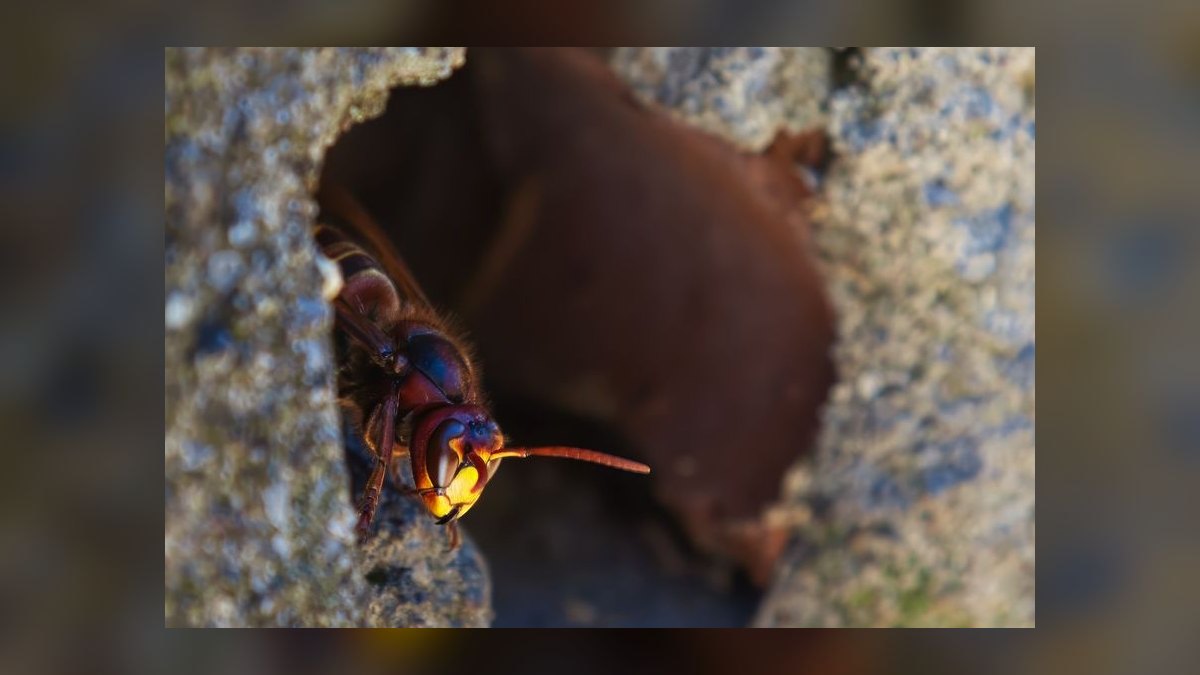
Path two: a legacy national pest brand. Terminix and Orkin have far deeper brand recall with consumers, which changes the acquisition mix — more inbound, less pure canvassing. That can suit an operator who is a better manager than closer. The trade-offs are typically a more rigid system, different fee structures, and less of the fast-growth upside that comes with a brand still expanding its footprint.
Path three: an independent pest-control company, either started or acquired. You keep the 7%–8%. You also build everything: licensing, branding, CRM and routing software, chemical vendor relationships, hiring pipeline, and — hardest — the sales system. For an operator who already knows pest control (a former branch manager, say, or a licensed applicator with a decade in), buying an existing independent book of business is frequently the better financial trade. You are buying accounts that already recur, at a multiple of revenue or EBITDA, instead of paying $50,000 for the right to go acquire accounts from zero. The catch is that acquiring an independent requires diligence skills most first-time buyers do not have, and a book of business can be worth far less than it looks if the retention or the technician team walks out the door with the seller.
Path four: an adjacent recurring home service. Lawn care, mosquito-only concepts, pool service, gutter and window cleaning, HVAC maintenance plans. Every one of these shares the recurring-agreement and route-density mechanics without necessarily requiring the same licensing burden. Mosquito-focused concepts in particular have lower technical complexity but heavy seasonality, which cuts against pest control's year-round demand. If your real motivation is "I want a recurring-revenue route business," you owe yourself a look across the whole category, not just at one brand.
A note on how to actually run that validation, because "read the FDD" is advice everyone gives and nobody executes well. Item 19 is the financial performance representation, and its value depends entirely on what it discloses and how. Read what population it covers — all units, or only units open a certain length of time? Does it report gross revenue only, or does it get down to unit-level profitability? Are the reported figures averages, medians, or quartiles? An average is inflated by top performers; a median tells you far more about what a typical operator experiences. Item 20 gives you the unit counts and, critically, the transfers, terminations, and non-renewals — a pattern of exits is the loudest signal in the entire document.
Then call operators. Not the three the franchisor hands you — pull the full list from Item 20 and call eight or more yourself, including at least two who left the system. Ask specific questions: what was your account count at month twelve, what is your annual cancellation rate, how many technicians did you hire and how many are still with you, what did you actually take home last year after debt service, and would you do it again. Vague answers to specific questions are answers.
Where operators lose the money
The failure modes in this business are consistent enough that you can plan around all of them.
Underestimating the sales intensity. Covered above, but it bears repeating in operational terms: budget for it. If you cannot personally build and run a canvassing crew, you need to hire someone who can, and that person is expensive — typically a base plus commission structure that has to be funded out of working capital before the accounts they sell have generated any revenue. Buyers routinely model marketing spend and forget to model the fully loaded cost of a sales manager for the twelve months before the account base pays for one.
Technician turnover. Pest control has meaningful turnover industry-wide, and every departure costs you twice: the recruiting and licensing cost of the replacement, and the retention hit from customers who liked the tech who left. The countermeasures are unglamorous — competitive pay, retention bonuses at 6 and 12 months, a real route ownership structure so techs feel accountable for their own customers, and a referral bonus that turns your existing techs into your recruiting pipeline. Expect to spend real hours per week on hiring, permanently. This is not a phase you graduate from.
Buying a territory that cannot support density. A large-sounding territory with low population density is worse than a small dense one. Before signing, map it: how many owner-occupied single-family households are inside it, how tightly are they clustered, and what is the drive time across the territory at 8 a.m. on a Tuesday? If the answer involves highways and 30-minute hops, the labor math will never work no matter how good your sales are. Equally, check how many existing units of the same brand operate nearby — a saturated adjacent territory means you are competing with your own brand for the same doors.
Ignoring seasonality in the cash plan. Pest pressure is year-round in warm climates and distinctly seasonal in cold ones. In a northern market, pest activity drops substantially for several months, which compresses your add-on revenue (mosquito, in particular) into a shorter window and makes the winter payroll question sharper. Warm-climate operators get a longer selling season and a longer service season. This is a real factor in the revenue-per-account gap between regions, and it should change how much working capital you hold, not just where you open.
Treating the licensing requirement as paperwork. Pesticide applicator licensing is state-regulated, requires testing, and often requires a certified applicator on staff before you can legally treat. Timelines vary by state and can run longer than buyers expect. Build the licensing path into your pre-opening schedule as a gating item, not a formality — a business that cannot legally spray is a business with a full payroll and no revenue.

Collections drift. Recurring agreements only produce recurring revenue if you collect. Card-on-file autopay at signup is the single highest-leverage administrative decision in the business. Operators who let customers pay by check on receipt end up with a receivables problem that grows linearly with their account base and quietly eats the working capital they were counting on.
Buying the brand story instead of the unit economics. Fast-growing franchise brands are genuinely attractive — momentum helps at the door and the system is usually still hungry and responsive. But growth in unit count is not the same as profitability in units. The only numbers that matter to you are the ones in Item 19 and the ones you hear from operators on the phone. A brand that has expanded quickly is a reason to look closely; it is not a reason to skip diligence.
The practical sequencing, if you decide to move forward: spend the first three weeks on the FDD, focused on Items 5, 6, 7, 19, and 20. Spend the next three weeks on operator calls. Spend the following three weeks on territory validation with actual household-density data and drive-time mapping. Only then commit capital — and once you do, run licensing and technician hiring in parallel with your pre-launch sales build, because whichever of those three finishes last determines your open date.
Related questions
How many accounts do I need before the business pays me?
It depends on your average annual revenue per account and your cost base, but the honest floor for a single-truck operation supporting an owner's salary is generally in the high hundreds of accounts. Model it yourself: divide your fixed cost base by annual revenue per account.
Is a fast-growing franchise brand better than an established one?
Different, not better. Growth brands offer more open territory and often more upside; established brands offer stronger consumer recall and more inbound lead flow. Choose based on whether your strength is outbound selling or operational management.
Can I run a pest control franchise semi-absentee?
Not in the first two to three years. The model requires an owner driving customer acquisition and technician retention daily. Semi-absentee becomes realistic only after a general manager is trained and the account base funds their salary.
Should I buy an existing franchise unit instead of opening a new one?
Often yes, if you can afford it. A resale comes with an existing recurring account base and trained technicians, which skips the hardest eighteen months. Diligence the retention rate and technician tenure carefully — both can evaporate post-sale.
Does route density matter more than territory size?
Yes, decisively. Density directly determines stops per technician per day, which drives your largest cost line. A small dense territory outperforms a large sparse one at the same account count.
FAQ
What is the typical initial investment for a Fox Pest Control franchise in 2027?
Per the 2026 FDD, total Item 7 investment runs roughly $150,000 to $400,000, including a franchise fee of approximately $50,000. Where you land in that range depends on territory size, fleet count, facility choice, and how heavily you fund the initial marketing and sales launch. Plan on roughly $80,000–$150,000 in liquid capital.
What ongoing fees does a Fox franchisee pay?
The royalty is approximately 7%–8% of gross revenue, plus a marketing fee. Both are calculated on gross, not on profit, which means they come out of the top line regardless of your margin. At $1.5M of gross revenue that is a six-figure annual obligation before any operating expense.
How much do owners actually earn?
Mature units gross roughly $1,000,000 to $5,000,000+, with owners clearing somewhere in the $150,000 to $600,000 range. That spread reflects real variance — multi-unit operators and strong sales organizations occupy the top, while owner-operators still doing much of the work themselves sit near the bottom. Verify against Item 19 and operator conversations rather than assuming a midpoint.
How long until the business is profitable?
Positive monthly cash flow typically arrives somewhere between nine and eighteen months, driven almost entirely by how fast you stack recurring accounts. Full return of the initial investment more often falls in the 18–36 month window. Debt service on an SBA loan pushes both timelines out and should be modeled explicitly.
Is pest control genuinely recession-resilient?
Largely yes. Infestations are non-discretionary problems and existing service agreements tend to persist through downturns, which is a meaningful advantage over discretionary consumer services. That said, recession-resilient means growth slows rather than stops — new-customer acquisition gets harder and cancellation rates tick up when household budgets tighten.
What is the single biggest reason franchisees underperform in this category?
Insufficient customer acquisition. The operating side of a route business is learnable; building an outbound sales engine is not, for most people. Franchisees who cannot personally sell, or cannot recruit and manage people who can, plateau at an account count that never covers their cost base.
Sources
- https://www.ftc.gov/business-guidance/resources/franchise-rule-compliance-guide
- https://www.sba.gov/funding-programs/loans/7a-loans
- https://www.npmapestworld.org/
- https://www.epa.gov/safepestcontrol
- https://www.bls.gov/ooh/building-and-grounds-cleaning/pest-control-workers.htm
- https://www.franchise.org/
- https://www.entrepreneur.com/franchises
- https://www.ibisworld.com/united-states/market-research-reports/pest-control-industry/
- https://www.franchisebusinessreview.com/
Related on PULSE
- [Should I open or buy an EcoShield Pest Solutions franchise in 2027?](/knowledge/fr0897)
- [Should I open or buy a Truly Nolen Pest Control franchise in 2027?](/knowledge/fr0277)
- [Should I open or buy an Orkin Pest Control franchise in 2027?](/knowledge/fr0275)
- [Should I open or buy a Critter Control franchise in 2027?](/knowledge/fr0281)
- [Should I open a independent pest control business in 2027?](/knowledge/fr0603)
- [Should I open or buy a Mosquito Joe franchise in 2027?](/knowledge/fr0899)
This page will be disappearing soon. Save it to your device for $1 — or read it free while it is here.
@Kory-White- · if Venmo asks, the last 4 of my number are 2012
This page is gone.
This one is off the shelf now. $1 keeps it on your phone for good — the whole page, pictures and diagrams included.
 franchiseShould I open or buy a Your Pie Pizza franchise in 2027?
 franchiseShould I open or buy PJ’s Coffee franchise or open an independent sandwich shop in 2027?
 franchiseShould I open or buy a Bad Axe Throwing franchise in 2027?
 franchiseShould I open or buy a Realty ONE Group franchise in 2027?
 franchiseShould I open or buy a Taco Bell franchise or open an independent sandwich shop in 2027?
 franchiseShould I open or buy a Rita's Italian Ice franchise in 2027?
 franchiseShould I open or buy an Anthony’s Coal Fired Pizza franchise in 2027?
 franchiseShould I open or buy a Bojangles franchise in 2027?
 franchiseShould I open or buy a Window Genie franchise in 2027?
 franchiseShould I open or buy a Carl's Jr franchise in 2027?