

Should I open or buy a PrimoHoagies franchise in 2027?
 Curated byKory White · Fractional CRO · Maryland
Quality
Certified
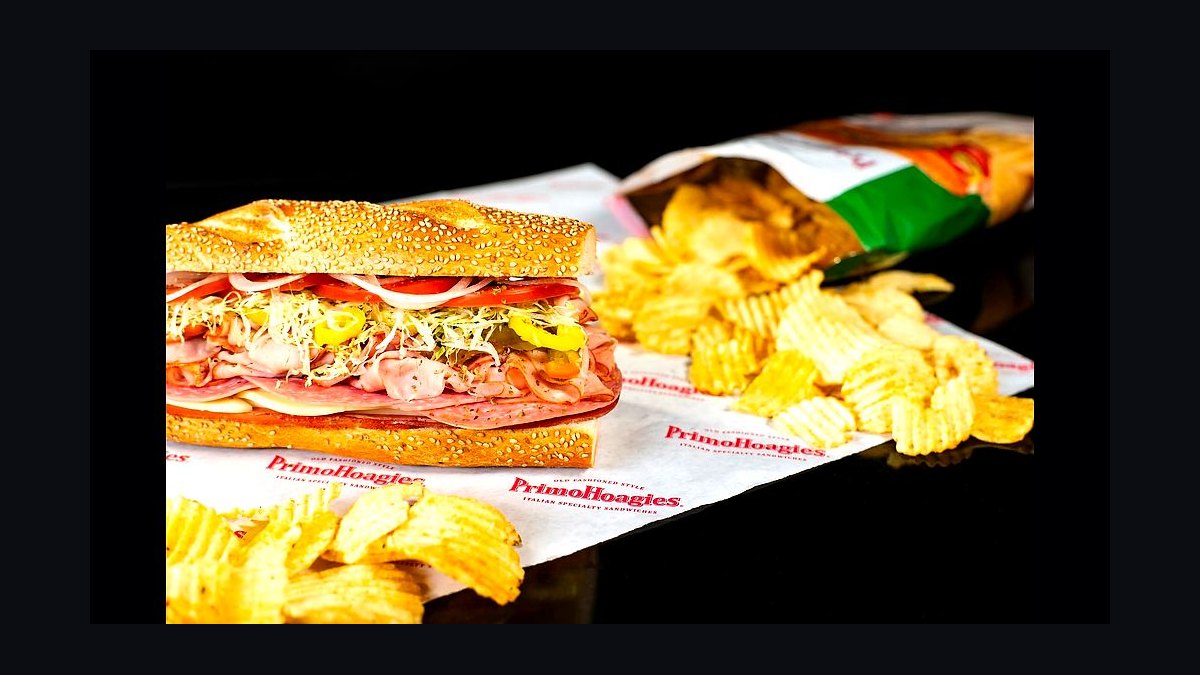
Open PrimoHoagies in 2027 if you can fund the $300,000-$600,000 investment, want a premium Italian-deli concept with strong AUVs ($700K-$1.5M) and can control food cost near 33%. The Northeast footprint helps but isn't required. Owners typically clear $100,000-$280,000 once mature. Skip it if you can't finance the premium build-out or manage 32-38% food cost.
The outcome you should expect
Franchisees who open a PrimoHoagies in 2027 should expect a multi-year ramp before the business performs at brand-average levels. In year one, most new units run at 60-75% of eventual mature-store volume while the location builds local awareness — this is especially true outside the Northeast core, where the brand still has limited recognition. A realistic first-year gross for a new unit falls between $450,000 and $850,000, climbing toward the mature range of $700,000-$1,500,000 by year three as catering relationships develop and repeat customers form habits around the shop.
The financial outcome hinges on three levers pulling in the franchisee's favor or against them: premium pricing power, catering penetration, and labor efficiency. PrimoHoagies charges more per sandwich than Subway, Jersey Mike's, or Jimmy John's because it markets on ingredient quality — Boar's Head-tier meats, sharp provolone, and fresh-baked seeded rolls. That pricing power translates to owner earnings of $100,000-$280,000 annually at maturity, but only if the operator avoids the trap of treating this like a value-menu sub shop. Franchisees who discount aggressively to compete on price erode the entire economic rationale of the brand and typically land in the bottom quartile of unit performance, often below $80,000 in owner earnings even at decent volume.
A second, quieter outcome to expect: catering becomes the profit engine, not the walk-in counter. Units that build catering to 20% or more of revenue consistently outperform units that treat catering as an afterthought, because catering orders carry 40-45% gross margins versus lower margins on individual counter transactions given the labor time per sandwich. Franchisees who open in 2027 without a deliberate catering sales plan — outreach to nearby offices, schools, and event venues in the first six months — leave meaningful money on the table for the life of the franchise.
What drives that outcome
Four variables explain most of the variance between a PrimoHoagies that clears $250,000 a year for its owner and one that struggles to clear $80,000: site selection, food cost discipline, catering mix, and labor scheduling. Site selection matters more here than at a value sub chain because PrimoHoagies depends on daytime population density and office/residential mix to hit its premium price points — a location needs enough disposable-income traffic to support a $12-$16 hoagie, not just foot traffic. Corporate development typically targets at least 25,000 people within a 2-mile radius with a healthy mix of office workers and residents.

Food cost is the single largest controllable expense and the most common reason franchisees underperform. Because the brand's entire value proposition rests on premium ingredients, franchisees cannot cut corners on meat or cheese quality without damaging the reason customers pay a premium in the first place — so cost control has to come from portion discipline, waste reduction, and vendor management rather than ingredient downgrades. A shop running food cost at 38% instead of a disciplined 32% is giving up roughly 6 percentage points of revenue directly to the bottom line, which on a $1,000,000 AUV location is $60,000 a year — often the difference between a good and mediocre outcome for the owner.
Labor is the second major driver. A typical PrimoHoagies runs with 8 to 12 employees, and skilled sandwich-making — proper slicing technique, correct assembly, consistent portioning — takes longer to train than at a fast-food counter, typically 2 to 4 weeks per new hire before they're fully productive. Franchisees who understaff during peak lunch windows lose throughput and create long lines that drive away walk-in customers, while those who overstaff during slow periods bleed labor dollars unnecessarily. Getting the weekly schedule to match the actual demand curve — heavy at lunch, light mid-afternoon, moderate at dinner — is a skill that separates operators clearing $200,000+ from those stuck near breakeven.
Benchmarks and realistic ranges

The 2026 FDD lists a franchise fee of roughly $35,000 and a total Item 7 investment range of $300,000 to $600,000, covering build-out, equipment, signage, initial inventory, training, and working capital. Within that range, build-out and leasehold improvements represent the largest line item at $160,000-$360,000, with the wide spread reflecting whether a franchisee is converting an existing restaurant space (cheaper, since plumbing and ventilation often already exist) or building out a raw shell (more expensive, often 30-50% higher). Equipment — slicers, proofing ovens for the fresh-baked rolls, walk-in coolers, and POS systems — runs $80,000 to $170,000.
Ongoing fees consume 7-9% of gross revenue: a royalty of roughly 6-7% plus a marketing fee near 1-2%. On a $1,000,000 AUV location, that's $70,000-$90,000 paid to the franchisor annually — a real cost that needs to be built into any financial projection rather than treated as an afterthought. Against that, mature units gross $700,000 to $1,500,000, with the bulk of established Northeast locations clustering in the $850,000-$1,100,000 range and top-performing catering-heavy units exceeding $1,300,000.
Financing benchmarks for 2027: most lenders want to see $100,000-$200,000 in liquid capital and a net worth of $500,000-$1,000,000 before approving an SBA 7(a) loan, which can cover up to 85% of startup costs for qualified borrowers. SBA loans generally require a 10-20% down payment, with 10-year terms on equipment and up to 25-year terms when real estate is involved, and interest rates in the 7-10% range as of early 2027. Break-even typically arrives 12-18 months after opening for a location hitting $55,000-$80,000 in monthly revenue. Cash-on-cash returns for well-run stores fall in the 15-30% range, meaning full recovery of the initial cash investment in 3-6 years for efficient operators, stretching to 5-8 years for heavily financed franchisees carrying larger debt service payments.
Risks, edge cases, and failure modes

The clearest failure mode is opening in a market with no existing PrimoHoagies brand recognition and underestimating how long it takes to build a customer base from zero. In the Northeast — Pennsylvania, New Jersey, Delaware — the brand has decades of word-of-mouth and loyal repeat customers. A franchisee opening in Texas, Florida, or the Carolinas in 2027 is essentially building brand awareness from scratch against entrenched local sandwich shops and national chains that already have mindshare, which typically extends the break-even timeline by 6-12 months beyond what a Northeast location would experience at similar investment levels.
A second failure mode is food cost creep going unnoticed until it's already damaged profitability. Because premium ingredients are the brand's core promise, franchisees can't respond to rising meat and cheese costs by downgrading suppliers the way a value chain might — doing so risks alienating the exact customer base paying premium prices. Franchisees who don't track food cost weekly, and instead check it monthly or quarterly, often discover a slow drift from 33% to 38% or higher only after several months of eroded margins, by which point recovering the lost profit requires sustained tightening rather than a single correction.

A third risk is over-reliance on a single location's foot traffic without developing catering, especially in a newer market where lunch counter traffic alone may not support the premium price point. Franchisees who treat catering as optional rather than core to the revenue plan are exposed if walk-in volume underperforms projections — there's no secondary revenue stream to fall back on. Related to this, third-party delivery dependence (Uber Eats, DoorDash) can quietly compress margins: delivery commissions of 15-30% per order eat into the premium pricing advantage the brand is built on, so franchisees who let delivery grow unchecked as a share of revenue without adjusting menu pricing for that channel can see gross margin erosion even as top-line revenue looks healthy.
Finally, undercapitalization is a recurring edge case. Franchisees who finance close to the maximum 85% loan-to-cost ratio and enter with minimal working capital reserves are vulnerable to any slow ramp period — a delayed opening, a slower-than-expected first six months, or an unexpected equipment repair can create a cash crunch that a better-capitalized franchisee would absorb without issue. Item 19 review with an accountant, and direct conversations with at least 5-10 existing franchisees about their actual first-year cash flow, is the standard risk-mitigation step before signing.
A practical rollout plan
A disciplined 90 to 130-day runway from decision to opening, followed by a structured first year, gives a new PrimoHoagies franchisee the best chance of hitting the benchmark ranges above rather than falling into the failure modes. The first 20 days should be spent entirely on document review: the 2026 or 2027 FDD, with particular attention to Item 19 (financial performance representations), Item 7 (investment ranges), and Item 20 (franchisee turnover and litigation history) — turnover data especially can reveal whether a territory has a pattern of struggling units.

Days 21-40 should focus on direct franchisee interviews — ideally 8-10 conversations with current owners, weighted toward operators in markets similar to the one being considered (Northeast-to-Northeast comparisons, or if opening outside the core, conversations with the few existing non-Northeast franchisees about their actual ramp timeline). Ask specifically about AUV by year, actual food cost percentage achieved, catering as a share of revenue, and net owner earnings after debt service — not just gross sales, which can be misleading without knowing the expense structure behind them.
Days 41-60 are for site validation: confirming the daytime population density, co-tenancy situation (complementary food concepts, not direct hoagie competitors), lease economics ($25-45/sq ft in new Sun Belt markets versus $15-25 in established Northeast territory), and negotiating a tenant improvement allowance of $30-60 per square foot where possible. Days 61-100 cover build-out and staffing — this is when the $160,000-$360,000 in leasehold work happens alongside hiring and the 2-4 week training process for the core team. Days 101-130 cover opening and the first month of operations, with catering outreach beginning immediately rather than after the location stabilizes — waiting until month three or four to start catering sales delays the higher-margin revenue stream that mature units depend on.
Related questions
How long does it take a PrimoHoagies to reach mature-store sales?
Most locations ramp over 24-36 months, starting at 60-75% of eventual volume in year one. Northeast locations with built-in brand awareness ramp faster than new-market openings, which can take an extra 6-12 months to build local recognition.
Is PrimoHoagies more profitable than Jersey Mike's or Jimmy John's?

PrimoHoagies targets higher AUVs through premium pricing but also carries higher food costs (32-38% vs. 28-32% for value chains). Net owner earnings are comparable at the high end, but PrimoHoagies requires tighter cost discipline to protect margin.
What's the biggest cost overrun risk when opening?
Build-out is the most variable line item, ranging from $160,000 for a restaurant conversion to $360,000 for ground-up construction. Franchisees underestimating this gap most often get surprised by scope creep once demolition reveals hidden plumbing or electrical issues.
Does PrimoHoagies require prior restaurant experience?
It's not formally required, but the brand's training program (2-4 weeks) assumes the operator will run hands-on food operations with precise portion control. Franchisees without prior food-service management experience typically lean harder on an experienced general manager.
FAQ
What is the total investment range for a PrimoHoagies franchise in 2027? The 2026 FDD shows a total Item 7 investment of roughly $300,000 to $600,000, covering the franchise fee, build-out, equipment, signage, inventory, training, and working capital. Actual cost depends heavily on whether the space is a conversion or new build and on local construction pricing.
How much can a PrimoHoagies owner realistically earn?

Mature units gross $700,000 to $1,500,000, with owner earnings typically landing between $100,000 and $280,000 after royalties, marketing fees, and operating expenses. New units in year one usually earn well below this range while the location ramps.
What are the ongoing fees after opening? Royalty runs approximately 6-7% of gross sales, plus a marketing fee near 1-2%, for a combined 7-9% of revenue paid to the franchisor. On a $1,000,000 AUV, that's $70,000-$90,000 annually that must be accounted for in cash flow projections.
Is it better to open a PrimoHoagies in the Northeast or a new market? The Northeast offers built-in brand recognition and faster ramp times, while newer Sun Belt markets offer less competition from hoagie-specific chains but require more local marketing investment and a longer runway to profitability, often 6-12 months longer.
How important is catering to overall profitability? Very important — catering carries 40-45% gross margins versus thinner margins on individual counter sales, and mature units with strong catering programs (20%+ of revenue) consistently outperform units that treat catering as secondary.
What's the single biggest mistake new franchisees make? Letting food cost drift upward without weekly tracking. Because the brand depends on premium ingredients, franchisees can't cut ingredient quality to control cost — the discipline has to come from portioning, waste reduction, and vendor management instead.
Sources
- https://www.primohoagies.com
- https://www.entrepreneur.com/franchises/directory
- https://www.franchise.org
- https://www.sba.gov/funding-programs/loans/7a-loans
- https://www.qsrmagazine.com
- https://www.nrn.com
- https://www.ibisworld.com
- https://www.statista.com
- https://www.franchisebusinessreview.com
- https://www.technomic.com
Related on PULSE
This page will be disappearing soon. Save it to your device for $1 — or read it free while it is here.
@Kory-White- · if Venmo asks, the last 4 of my number are 2012
This page is gone.
This one is off the shelf now. $1 keeps it on your phone for good — the whole page, pictures and diagrams included.
 franchiseShould I open or buy Duck Donuts franchise or open an independent sandwich shop in 2027?
 franchiseShould I open or buy a Smokey Bones BBQ franchise in 2027?
 franchiseShould I open or buy a Lenny's Grill & Subs franchise in 2027?
 franchiseShould I open or buy a Harvey's franchise in 2027?
 franchiseShould I open or buy a Buffalo Wild Wings franchise or open an independent sandwich shop in 2027?
 franchiseShould I open or buy a Sundek franchise in 2027?
 franchiseShould I open or buy a Broken Yolk Cafe franchise in 2027?
 franchiseShould I open or buy Jamba franchise or open an independent sandwich shop in 2027?
 franchiseShould I open or buy a Code Ninjas franchise in 2027?
 franchiseShould I open or buy an Uncle Maddio's franchise in 2027?