

How do you choose a location for a corporate retreat in 2027?

Choose a corporate retreat location in 2027 by working backward from the retreat's objective, then filtering candidate destinations against four hard constraints: total door-to-door travel time for your largest attendee cluster, all-in cost per person, venue capacity for your actual session formats, and date availability. Shortlist three, site-visit two, contract one.
The outcome you should expect
A well-chosen location does something narrow and measurable: it removes friction between the people you flew in and the work you flew them in to do. That is the whole job. It is not to impress anyone, not to reward anyone, and not to photograph well — those are byproducts at best and distractions at worst. When the location decision goes right, you should expect four specific results, and you should be able to state them before you sign anything.
First, attendance holds. If your invite list is 60 people and 57 show up for the full agenda, the location worked. Retreat attendance leaks in predictable places: a long connection on the outbound, a Sunday travel day nobody agreed to, a destination that requires a visa some of your team can't get in time, or a resort so remote that anyone with a childcare constraint quietly declines. Every one of those leaks is a location decision, made months earlier, showing up as an empty chair. If you're seeing 15–20% no-shows or partial attendance on a mandatory retreat, look at the itinerary before you look at the culture.
Second, the agenda runs on time. This sounds like a program problem and is usually a room problem. A location that forces a 25-minute shuttle between the hotel and the meeting space costs you roughly 50 minutes of agenda per day in transitions and stragglers — over three days, that's a full working afternoon deleted. A property with a single ballroom and no breakouts turns your planned four-track workshop into a plenary session with side conversations. A venue where the "meeting space" is a converted restaurant with a 2 p.m. hard-out reshapes your afternoon whether you like it or not. Choose the location and you have chosen most of the constraints your facilitator will fight.

Third, cost lands within about 10% of the number you approved. Retreat budgets rarely blow up on the headline room rate. They blow up on ground transfers, on F&B minimums you didn't hit or overshot, on AV that the venue insists must be theirs, on resort fees and service charges layered at 20–28% on top of every line, and on attrition penalties when your room block came in soft. A location chosen on room rate alone is a location chosen on maybe 40% of the true cost.
Fourth — and this is the one people forget — the location doesn't generate a second job for someone on your team. If choosing a place means one person spends six weeks negotiating with three separate vendors because the venue doesn't do catering, doesn't do AV, and doesn't do transport, you have converted a location decision into a hidden headcount cost. Integrated properties cost more per person on paper and frequently cost less in total once you price the coordination.
What you should *not* expect: that the destination itself creates energy or connection. It doesn't. A team that doesn't talk to each other in Cleveland will not talk to each other in Lisbon. The location's contribution is negative — it can ruin a good agenda, and it can't rescue a bad one. Treat the choice as risk removal, not as an upside play, and you will make better decisions and spend less money doing it.
What drives that outcome
The decision has a shape, and once you see it the sequencing becomes obvious. Objective determines format. Format determines the space you need. Space plus headcount plus dates determines the property type. Attendee geography determines the region. Region plus property type determines cost. Cost against budget kills or confirms the whole branch. Almost every bad retreat location I've seen came from someone starting at the wrong end of that chain — picking a destination they liked and reverse-engineering an agenda to fit it.
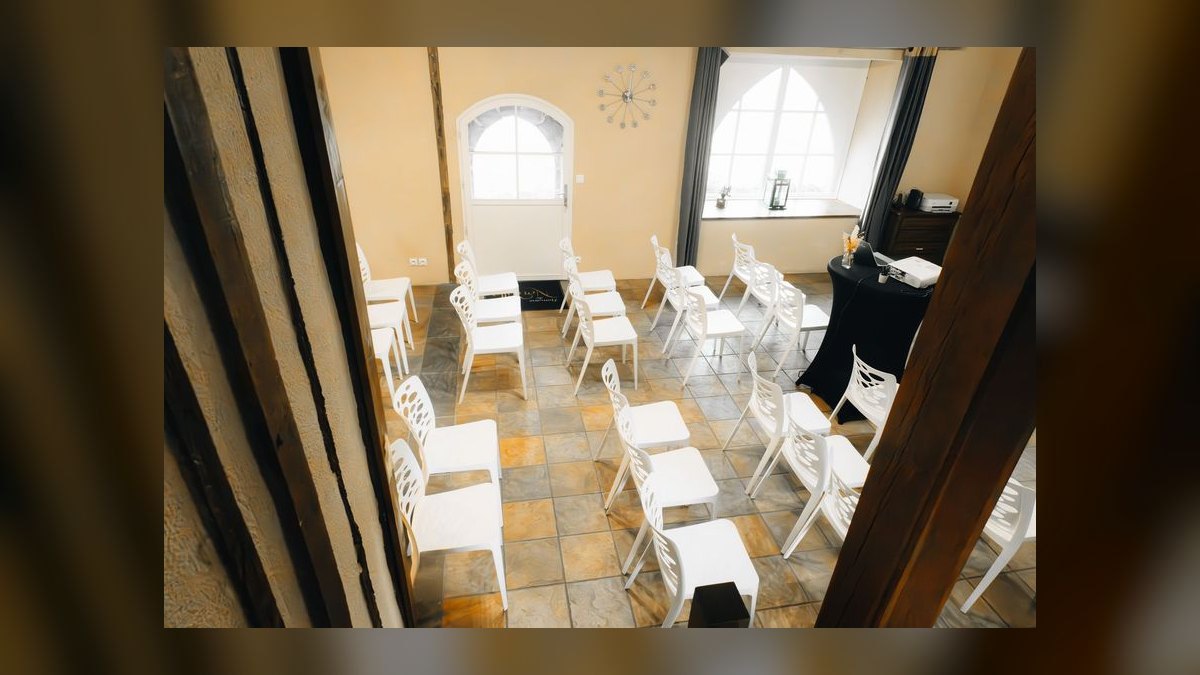
Start with the objective, and be honest about which of the four common ones you actually have. A strategy/planning retreat is heads-down work: it needs quiet, whiteboard-friendly rooms, natural light, and near-zero distraction. A team-building/culture retreat needs shared spaces, informal gathering areas, and a property where people bump into each other rather than disappearing into a 900-room tower. An all-hands/kickoff needs a general session room that seats everyone comfortably, real staging, and reliable AV. A client or advisory-board retreat is partly a hospitality event and the property quality genuinely matters. These four produce different shortlists from the same budget, and a property that's excellent for one is often mediocre for another.
Then map your people. Pull the actual home-airport distribution — not headquarters, not the org chart, the real geography. If 70% of attendees sit in one metro, the optimization is trivial: minimize travel for that cluster and eat the cost for the rest. If you're split across three continents with no dominant cluster, you're solving a different problem: pick the location that minimizes *worst-case* travel time rather than average, because the person on the 22-hour itinerary is the person who arrives useless on day one and dominates your post-event survey.
The single highest-leverage filter is the drive-versus-fly line. If you can find something within a two-to-three hour drive of your dominant cluster, you delete airfare, you delete airport transfers, you delete travel-day risk, and you typically convert a three-night event into a two-night event with the same working hours. The savings are not marginal — for a domestic US group, flights and transfers frequently run 30–45% of the all-in per-person cost. Teams reflexively skip this option because a drivable location feels less like a reward. If the objective is strategy work, that feeling is irrelevant.
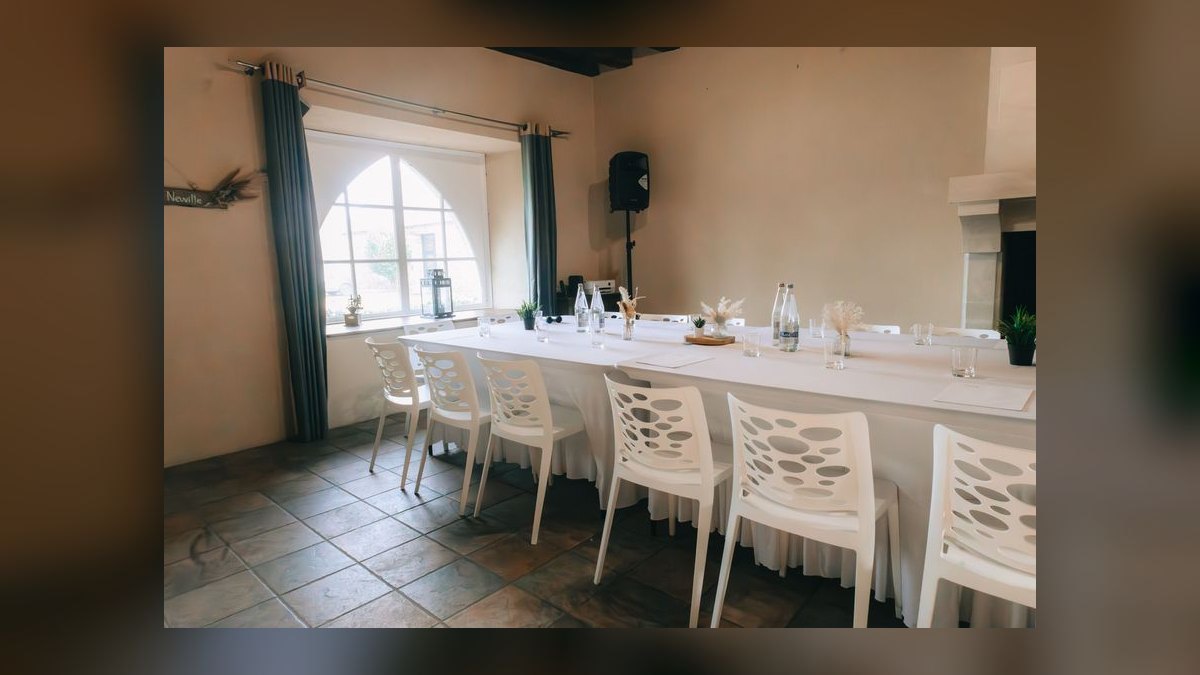
Below that, four filters do most of the remaining work. Air access: how many nonstop routes serve the destination from your top five origin airports, and is there more than one flight per day on each? A single daily nonstop is a single point of failure. Seasonality: you want shoulder season — the window just before or after peak, when rates drop meaningfully and the property still has full staffing. Capacity fit: you want to be a significant piece of the property's business, not a rounding error. A 60-person group at a 400-room resort gets whatever's left; the same group at a 90-room property gets the general manager's cell number. Buyout viability: if your headcount is under roughly 80 and your objective involves candor, a full property buyout changes the event more than any other single decision, and at some smaller properties in shoulder season it costs less than you'd guess.
The upstream input everyone underweights is dates. Location and date are not independent variables — they're one decision. Naming your dates before you've checked availability collapses your shortlist to whoever happens to be open, which is a selection process optimized for the wrong thing. Go to market with a date range (say, "three consecutive nights, Tuesday–Thursday, within this six-week window") and you will get materially better options and materially better pricing, because you've handed the venue the ability to fill a hole in its calendar.
Benchmarks and realistic ranges
Numbers here are directional and vary widely by market, season, and negotiating position — treat them as a way to sanity-check a proposal, not as a quote.
Lead time. For a group under 50 in a domestic market, 4–6 months is workable. For 50–200, plan 6–9 months. For anything international, anything over 200 people, or anything touching peak season, 9–12 months is the honest number, and 12–18 for a full buyout of a desirable property. Every month you compress lead time, you lose negotiating leverage and options in roughly equal measure. The corollary: if someone hands you a date eight weeks out for 120 people, the correct response is to renegotiate the scope, not to go find a venue.
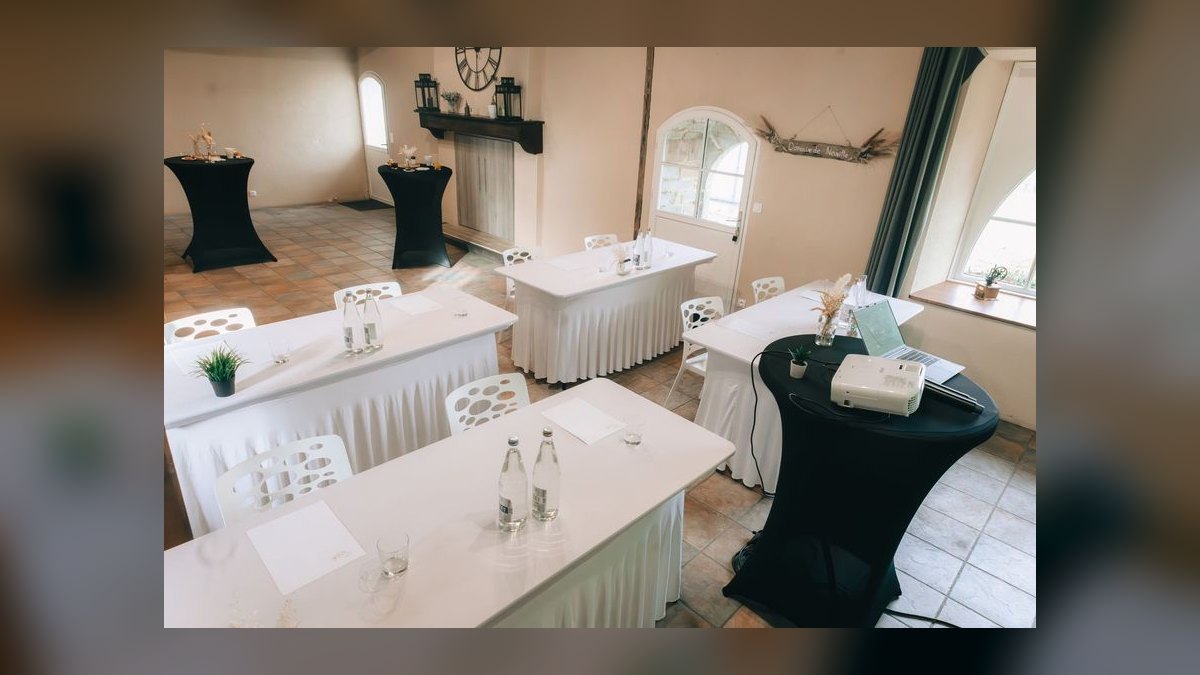
Cost structure. Think in four buckets rather than one number. Lodging is typically 30–40% of all-in. Food and beverage runs 20–30%. Travel — airfare plus ground — is 15–30% and swings hardest based on the drive-versus-fly decision. Meeting space, AV, and programming take the remaining 10–20%. If a proposal doesn't let you see all four, you can't compare it to anything.
The multipliers that get missed. Service charge and gratuity on F&B commonly run 20–26% and are frequently taxable on top. Resort or facility fees add a per-room-per-night charge that doesn't appear in the rate you were quoted. In-house AV is often 2–3× outside-vendor pricing, and many venues either prohibit outside AV or charge a fee that erases the savings. A $95 per-person dinner is realistically $120–130 landed. Build every budget on landed numbers or you will be wrong by a quarter.
Space math. Theater seating needs roughly 8–10 sq ft per person, classroom 15–18, crescent rounds 20–25, and a workshop format with movement and wall space needs 25–30 or more. A 60-person workshop wants somewhere around 1,500–1,800 sq ft of general session space plus breakouts. Venues quote maximum capacity, which is a theater-seating number with no stage, no aisles, and no room for a coffee station. Ask for the capacity chart in *your* setup, and ask what the room looks like once staging and catering are in it.
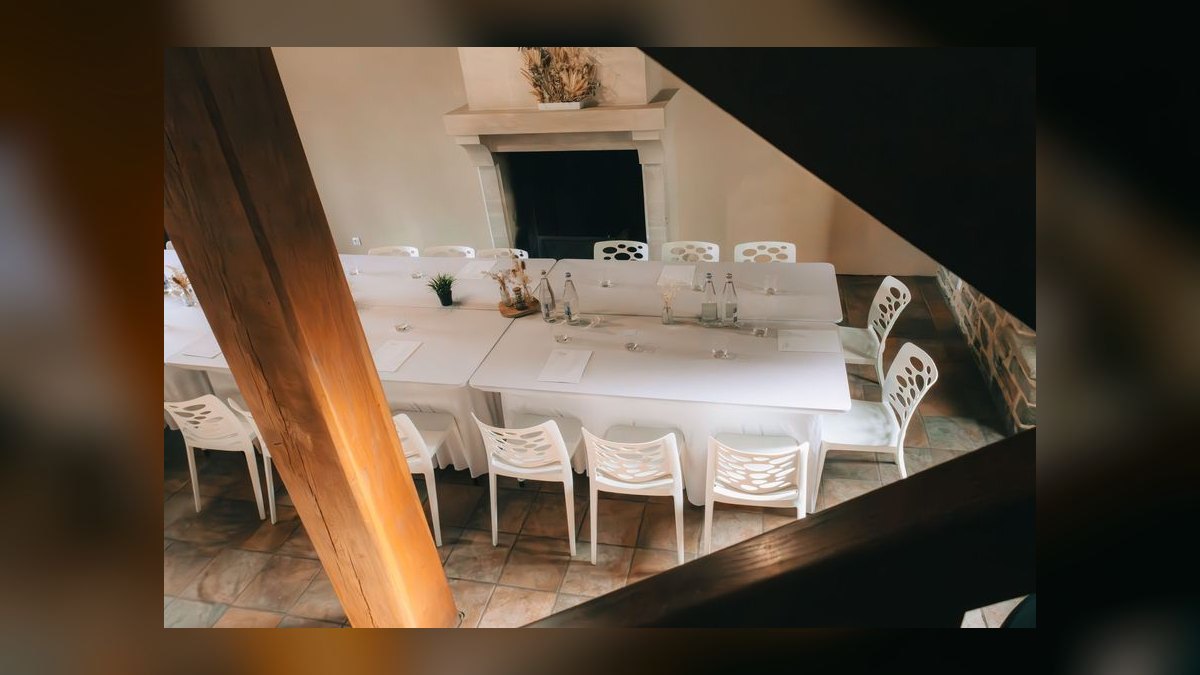
Room block and attrition. Standard contracts allow you to fall short of your blocked rooms by 10–20% without penalty; below that you pay for the empties. Block conservatively — around 85–90% of your expected count — and negotiate the right to add rooms at the same rate rather than blocking high and eating attrition. Also check the cutoff date, typically 30 days out, after which unsold rooms release back to the venue and your late registrants pay rack rate.
Agenda density. Five to six hours of structured content per day is the realistic ceiling; past that, retention falls off and the last session is theater. That means a three-day retreat is about 15–18 working hours, and it should reframe how you value travel time. Two hours of shuttle per day is more than 10% of your total working time.
Attendance and the travel-day tax. Expect 5–10% drop-off between invite and attendance on a voluntary retreat even when the location is easy, and considerably more when it isn't. Any itinerary requiring a Sunday departure or a red-eye should be assumed to cost you both bodies and cognitive capacity — a team arriving off overnight flights is not doing strategy work before noon on day two, whatever the agenda says.
Adjacent comparison. It's worth noting how differently this plays out for a sales kickoff versus a strategy retreat, because the same team often plans both. SKO optimizes for a large general session, staging, and hotel-block efficiency — a big-box convention property is genuinely the right answer. A 25-person leadership offsite optimizes for the opposite: intimacy, quiet, and the ability to control the space. Using a convention hotel for a leadership offsite is one of the most common and most expensive mismatches in corporate event planning, and it happens because someone reused last year's vendor relationship.
Risks, edge cases, and failure modes
Contract terms nobody reads until it matters. The force majeure clause deserves a genuine read — post-2020, many venue contracts narrowed it substantially, and "the event became inadvisable" is not the same standard as "performance became impossible." Look at what triggers relief, whether relief is mutual, and whether it produces a refund or a credit. Cancellation penalties are usually a sliding scale by days-out; know the cliff dates. And check the "no compete" or exclusivity language if you're a company for whom a competitor on-property in the same week would be a real problem.
The single-nonstop trap. A destination with exactly one daily flight from your biggest origin market is a coin flip. One cancellation and a meaningful slice of your attendees miss day one entirely, with no recovery option until the next day. Weight route redundancy heavily, especially for winter dates in weather-exposed hubs.
Under-specifying AV, then discovering the constraint on-site. Ask specific questions before contracting: Is there a hard ceiling-height or rigging limitation? Is there a house sound system or is everything a rental? What's the actual wireless bandwidth and is it a separate paid tier for the meeting space? Can you bring your own AV vendor and, if so, what's the patch-in fee? A hybrid or recorded session multiplies all of this.

Accessibility and dietary treated as an afterthought. Confirm step-free routes between lodging, general session, and dining — not just that the property is "ADA compliant," which is a legal floor and not a description of an experience. Confirm the kitchen can genuinely handle the dietary needs on your list, including at off-site meals and coffee breaks where the failure rate is highest. Getting this wrong is visible to everyone and reads as a statement about who the retreat was designed for.
International adds a category of risk, not a degree of it. Visa processing times vary enormously by passport and consulate and can run months for some routes; you must check against your *actual* team's citizenships before you commit to a country, not after. Then there's the piece almost nobody plans for: cross-border travel and per-diem spending can create tax and payroll-reporting obligations depending on jurisdiction and duration. Loop in finance and legal early — this is a real cost and a real compliance exposure, not a formality.
Remote-first companies get a genuinely different problem. If the retreat is the only in-person time all year, its value per hour is far higher, which argues for spending more on location quality and more on making travel easy — and for choosing somewhere unremarkable but frictionless over somewhere spectacular and hard to reach. It also argues for rotating regions year to year, so the same subset of employees doesn't absorb the long-haul burden every single time. Track who flies farthest across a multi-year window and treat it as an equity issue, because it is one.
The prestige-destination failure. A location chosen because it sounds impressive tends to produce a specific pattern: high cost, high travel burden, dispersed attendees, and an agenda that quietly loses ground to the destination itself. If the property's amenities are the reason people are excited, expect session attendance to sag after lunch. This isn't an argument against attractive locations — it's an argument for choosing them on the operational criteria and letting attractiveness be a tiebreaker rather than the thesis.

Weather and seasonality risk. Shoulder season saves real money and is usually the right call, but check what you're buying. Hurricane season overlaps with Caribbean and Gulf shoulder rates for a reason. Some mountain properties run reduced services between seasons — half the restaurants closed, limited staffing, no activities. Ask what specifically is open during your dates rather than assuming full operation.
Optics. In a year with budget pressure or a recent reduction in force, the location becomes a message whether you intend it or not. This is not a reason to make people miserable, but it is a reason to be able to explain the choice in one sentence that holds up when repeated out of context.
A practical rollout plan
Here is the sequence that actually works, with rough timing for a 60–120 person domestic retreat.

Weeks 1–2: define and constrain. Write the objective in one sentence and name the two or three outcomes you'd point to afterward as proof it worked. Lock the headcount range, the total budget, and the date *window* — a range, not fixed dates. Pull the home-airport distribution. Decide, explicitly, whether this is a drive-to or fly-to event; that single call restructures everything downstream. Get executive sign-off on the constraints now, because a constraint changed in week eight is expensive and a constraint changed in week two is free.
Weeks 3–4: source broadly. Send an RFP to 8–12 properties across at least two regions. Include headcount, date window, required meeting space by session type, F&B expectations, and the room-block size. Ask explicitly for all-in pricing including service charge, taxes, resort fees, and AV — most first-pass proposals omit these and comparing them is meaningless. Also ask what else is on their books those dates: a property hosting another large group simultaneously is a different experience than the one they're selling you.
Weeks 5–6: model and shortlist. Build a comparison on per-person landed cost, total travel time summed across all attendees, space fit against your actual session formats, and contract flexibility. Weight them — I'd suggest something near 30% cost, 25% travel burden, 30% space and program fit, 15% contract terms — and force yourself to score rather than argue. Shortlist three.
Weeks 7–8: site visits. Visit the top two. Do not skip this and do not accept a video walkthrough as a substitute. Walk the actual route from a guest room to the general session room and time it. Sit in the meeting space and listen for HVAC noise and bleed from the adjacent room. Check the sightlines from the back row and whether pillars will eat seats. Eat a meal from the banquet kitchen — not the à la carte restaurant, the banquet kitchen, because that's what your attendees will get. Ask to meet the person who will actually run your event, not just the salesperson.

Weeks 9–10: negotiate and contract. Negotiate concessions, not just rate: comped meeting space against an F&B minimum, complimentary rooms per number blocked, upgraded internet, waived resort fees, and a favorable attrition band. Push on force majeure and cancellation. Confirm the room-block cutoff date and your right to add inventory at the contracted rate. Then sign, and get the deposit schedule in writing.
Weeks 11 to event: operationalize. Publish travel guidance early — the earlier attendees book, the less it costs and the better the itineraries. Run a 30-day-out check on block pickup and extend the cutoff if needed. Do a detailed BEO (banquet event order) review two weeks out, line by line. Walk the space the day before with the AV lead and the venue contact together.
Close the loop. Survey within 48 hours while memory is fresh, and ask location-specific questions rather than general satisfaction: How long was your door-to-door travel? Was the meeting space comfortable for the full day? Did anything about the property get in the way of the work? Then reconcile actual spend against the proposal, line by line, and keep that reconciliation. Two or three cycles of this and you'll have your own benchmark data, which is worth more than any external range — including the ones in this article.
Related questions
How far in advance should we book a corporate retreat?
Four to six months for small domestic groups, six to nine for 50–200 people, and nine to twelve-plus for international, large, peak-season, or full-buyout events. Compressing lead time costs you options and negotiating leverage at roughly the same rate.
Is a resort or a dedicated conference center better?
Conference centers usually offer better meeting space, purpose-built AV, and simpler all-inclusive pricing — better for heads-down work. Resorts offer better lodging and downtime but often weaker meeting infrastructure and more distraction. Match to objective, not to preference.
Should we do a full property buyout?
Consider it under roughly 80 attendees when candor matters or confidentiality is a concern. Buyouts eliminate outside guests, give you the whole space, and simplify logistics. In shoulder season at a smaller property, the premium is often smaller than expected.
How do we handle a globally distributed team with no dominant location cluster?
Optimize for worst-case travel time rather than average, weight route redundancy heavily, and rotate regions across years so the same employees don't always absorb the long haul. Add a full recovery day for anyone crossing more than six time zones.
What's the biggest hidden cost in retreat budgeting?
The multipliers on food and beverage — service charge and gratuity commonly add 20–26% and are often taxed on top — combined with in-house AV pricing at two to three times outside-vendor rates. Always budget on landed numbers, never on quoted rates.
FAQ
How do you choose a location for a corporate retreat? Define the objective first, then derive session formats, then the meeting space you need. Map attendee home airports and decide drive-versus-fly. RFP 8–12 properties across two regions, score on landed cost, total travel burden, space fit, and contract terms, then site-visit your top two before signing.
What is the single most impactful decision in retreat location selection? Whether the event is drivable for your dominant attendee cluster. Going drive-to removes airfare, transfers, and travel-day risk, and typically converts three nights into two with the same working hours. For domestic groups, flights and ground transport often account for 30–45% of all-in cost.
How much should a corporate retreat cost per person? It varies too widely by market and format to give a single credible number, so budget by structure instead: lodging 30–40% of all-in, F&B 20–30%, travel 15–30%, and meeting space plus AV and programming 10–20%. Any proposal that doesn't break out all four can't be compared to anything.
Do we need a site visit if the venue provides photos and a virtual tour? Yes. Photos won't tell you about HVAC noise, sound bleed from the adjacent room, pillars eating sightlines, or the ten-minute walk between guest rooms and general session. Visit your top two, time the routes, sit in the room, and eat food from the banquet kitchen rather than the restaurant.
How does choosing a retreat location differ for a remote-first company? The stakes are higher because it may be the only in-person time all year, which justifies spending more on ease of travel and location quality. Favor frictionless over spectacular, and rotate regions annually so the same subset of employees isn't repeatedly absorbing long-haul travel.
What should we check in the venue contract before signing? Force majeure scope and whether relief is mutual, the cancellation penalty schedule and its cliff dates, the attrition band on your room block, the block cutoff date and your right to add rooms at the contracted rate, AV exclusivity and patch-in fees, and whether service charges are themselves taxable.
Sources
- https://www.gbta.org/
- https://www.eventmanagerblog.com/
- https://www.cvent.com/en/blog
- https://www.mpi.org/
- https://www.pcma.org/
- https://www.northstarmeetingsgroup.com/
- https://www.bizbash.com/
- https://travel.state.gov/content/travel/en/us-visas.html
- https://www.iccaworld.org/
- https://hbr.org/
Related on PULSE
- [How do you plan a sales kickoff agenda?](/knowledge.html)
- [How do you budget for a company offsite?](/knowledge.html)
- [How do you run an effective leadership offsite?](/knowledge.html)
- [How do you measure ROI on corporate events?](/knowledge.html)
- [How do you plan in-person time for a remote-first team?](/knowledge.html)
 pulse-recentWhat is the ideal length for a corporate retreat in 2027?
 pulse-recentWhat is the first step in organizing a corporate retreat in 2027?
 pulse-recentWhat are the concrete steps to planning a corporate retreat in 2027?
 pulse-recentThe 10 Best Outdoor Birthday Party Venues in the United States in 2027
 pulse-gatheringsTop 10 best Gatherings options in 2027
 pulse-gatheringsThe 10 Best Dallas Wedding Venues in 2027
 pulse-recentWhat is the most common mistake when booking a corporate retreat venue, and how do you avoid it in 2027?
 pulse-gatheringsThe 10 Best Savannah Wedding Venues in 2027
 pulse-gatheringsIs Gatherings worth it in 2027?
 gaWhat are the most common mistakes in Gatherings in 2027?