
How do you build a forestry management software go-to-market motion in 2027?
 Curated byKory White · Fractional CRO · Maryland
 PULSEKNOWLEDGE LIBRARY
Quality
Certified

The 2027 forestry management software go-to-market motion is Forest Operations-led, compliance-driven, and pilot-proven. You sell to a multi-stakeholder committee including the VP of Forest Operations, Chief Forester, CFO, Chief Sustainability Officer, and VP of IT/Geospatial. Price between $10,000 and $500,000 per organization per year with per-hectare or per-stand components. The category includes established players like Trimble Forestry, Esri ArcGIS, Remsoft, and Forsite, with newer entrants in AI-driven inventory (Treemetrics, DeepForest) and carbon MRV (Pachama, Sylvera). The winning motion compresses the 6-to-18-month sales cycle by leading with a 90-day pilot on one timber unit or carbon project that proves inventory accuracy, harvest planning efficiency, and audit readiness.
1. The Forestry Management Software Buyer

1.1 The Multi-Stakeholder Committee
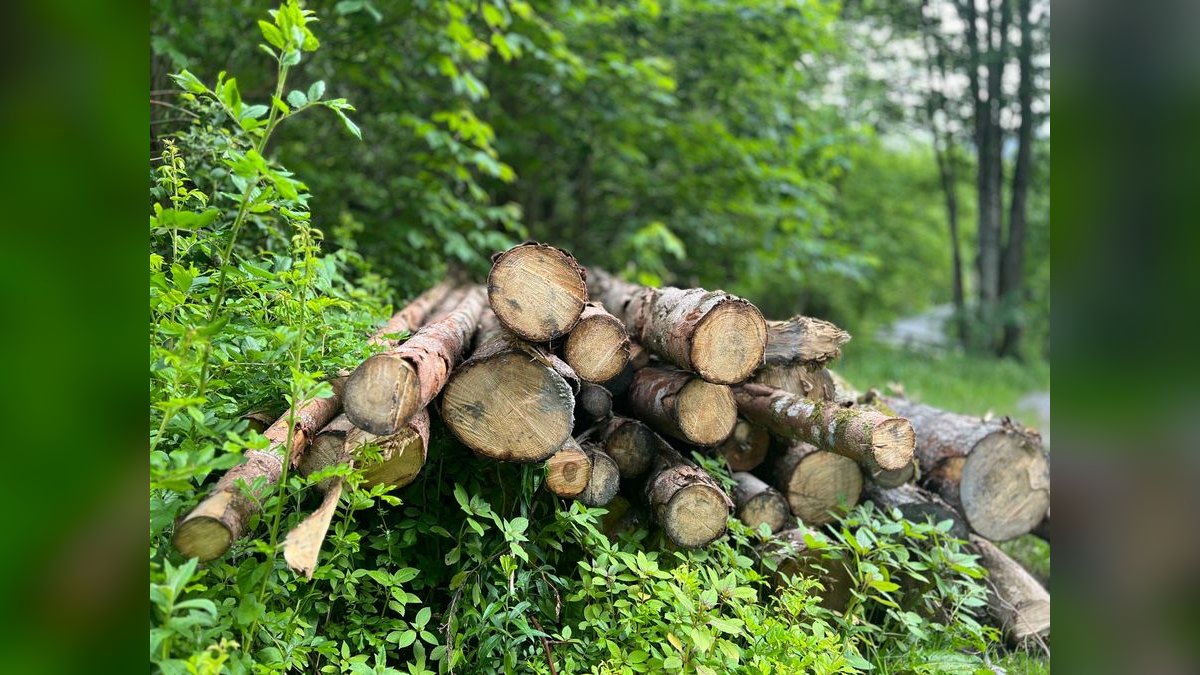
Forestry management software purchases typically involve 5 or more stakeholders for organizations with significant timberland holdings:
- VP Forest Operations / Forest Manager — owns the product decision and operational workflow
- Chief Forester / Silviculture Director — responsible for planting, thinning, harvest, and regeneration planning
- CFO / VP Procurement — oversees timber sales, log marketing, mill supply contracts, and carbon credit revenue
- Chief Sustainability Officer — manages FSC, SFI, PEFC certification, voluntary carbon market participation, and biodiversity reporting
- VP IT / Geospatial Lead — responsible for LiDAR, satellite imagery, UAV, GIS integration with Esri ArcGIS and Trimble Forestry
1.2 Market Tiers by Organization Size
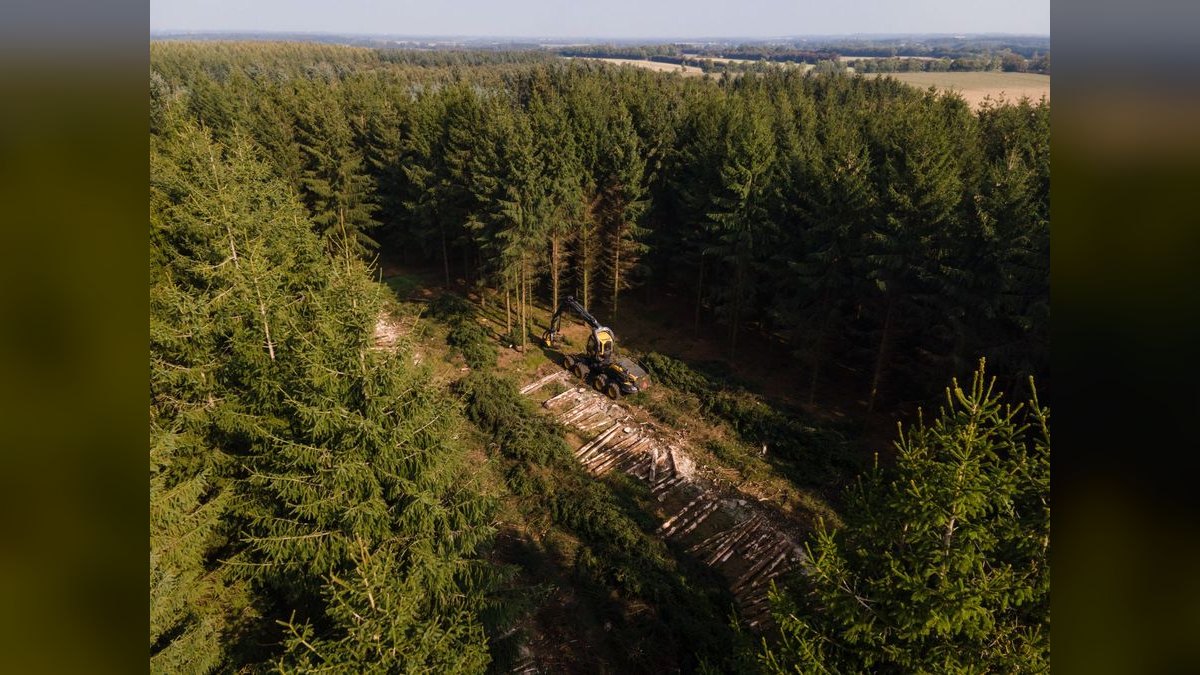
- Enterprise (Weyerhaeuser, International Paper, Stora Enso, UPM, Suzano): 9-18 months sales cycle, $200K-$2M+ ACV
- Mid-market (regional timber companies, large family forests): 3-9 months, $30K-$200K ACV
- SMB (small private forest owners, consulting foresters): 30-90 days, $5K-$30K ACV
2. The 2027 Competitive Landscape

2.1 Established Category Leaders
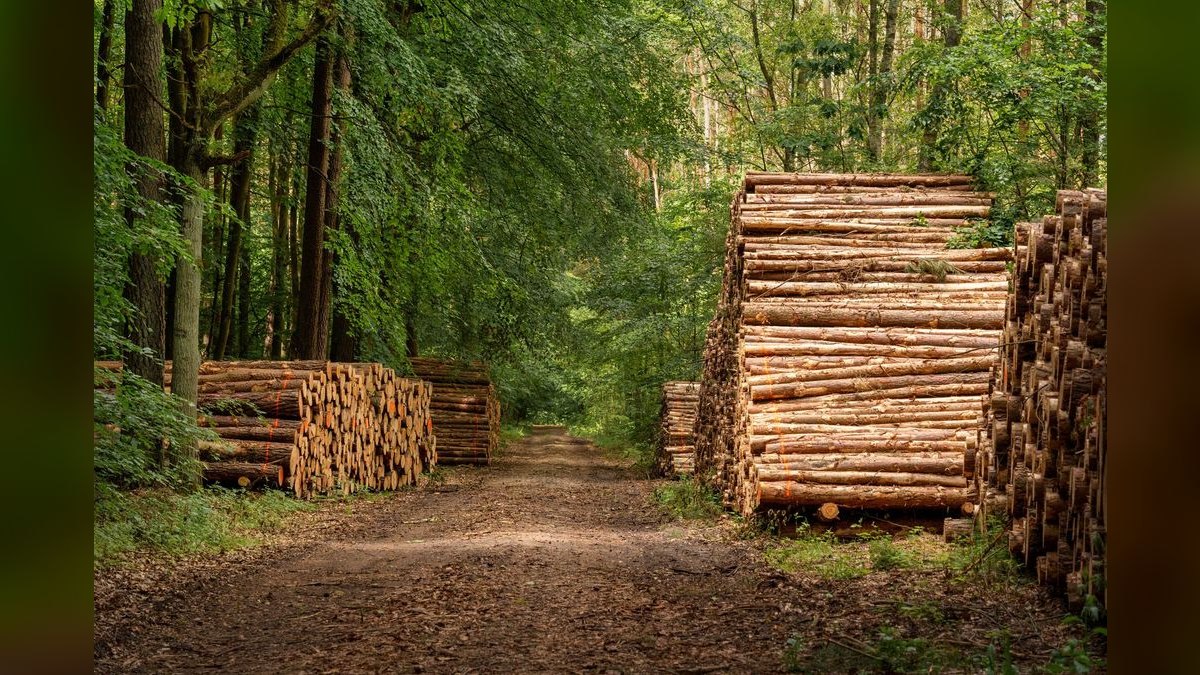
- Trimble Forestry — enterprise forestry GIS and harvest planning leader
- Esri ArcGIS Forestry — dominant GIS platform with forestry-specific extensions
- Remsoft — forest planning and supply chain optimization
- Forsite (Limelight) — Canadian forestry management software
- Pace Forestry Software — enterprise forestry management
2.2 Emerging AI and Carbon-Focused Players
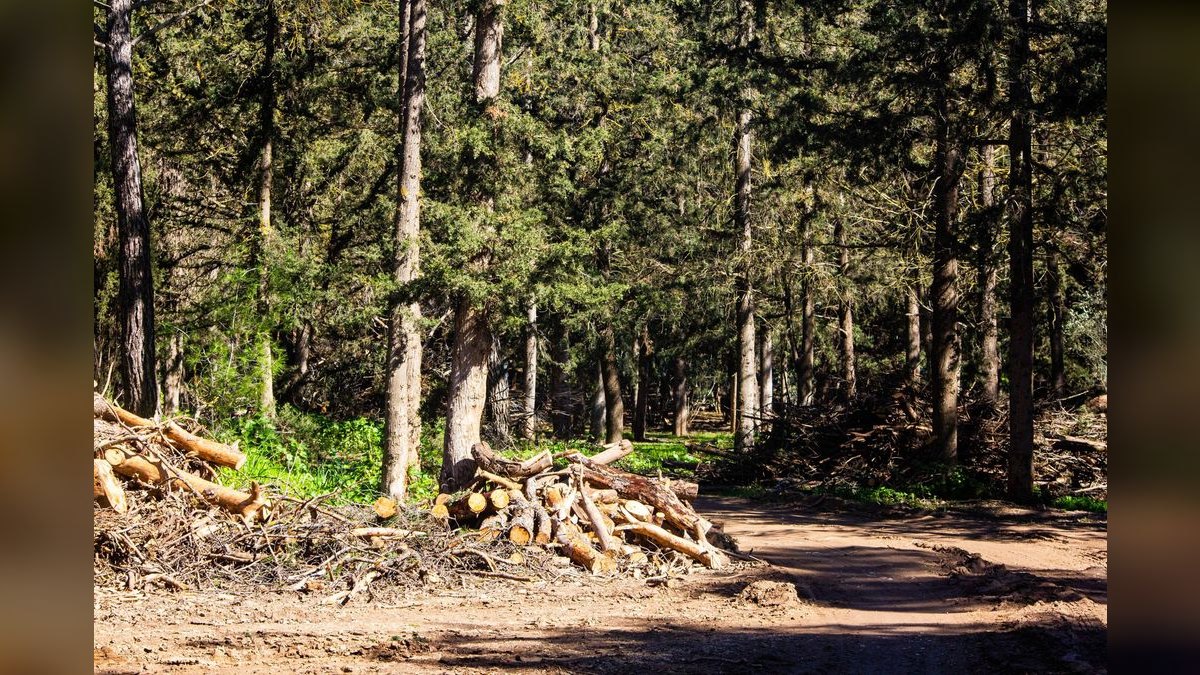
- Pachama — forest carbon monitoring, 75M+ acres tracked
- Sylvera — forest carbon ratings and MRV
- Treemetrics — AI tree-level inventory and LiDAR analytics
- DeepForest — AI-powered tree detection from aerial imagery
- NCX (Natural Capital Exchange) — forest carbon marketplace
2.3 The Winning Wedges

- AI tree-level inventory — direct accuracy improvement vs. traditional plot sampling
- Carbon MRV + EUDR compliance — addresses regulatory and voluntary market requirements
- 90-day pilot on one management unit — proves ROI to the full buying committee
3. The Sales Motion

3.1 Field-Sales-Heavy at Enterprise, Self-Serve at SMB

- SMB: Inside sales, self-serve demo, 30-day trial, 30-90 day close
- Mid-market: Field rep with champion, 3-9 month cycle
- Enterprise: Field executive with C-suite engagement, multi-team pilot, 9-18 month cycle
3.2 The 90-Day Pilot Structure

Run the pilot on one timber management unit or REDD+ project (10K-100K hectares) alongside the incumbent system. Measure:
- Inventory accuracy vs. ground-truth plots
- Harvest planning efficiency improvement
- Carbon credit MRV completeness
- FSC/SFI/PEFC audit readiness
3.3 Pricing Models
- Per-hectare per year: $1-$20 depending on features and tier
- Per-stand or per-mill per year: $10K-$100K for harvest and supply chain optimization
- Per-credit MRV fee: $0.10-$1 per verified tonne CO2e
- Module attach: AI inventory, EUDR compliance, biodiversity, carbon MRV at $20K-$200K/year each
- Enterprise platform fee: $200K-$2M+/year for large timberland owners and carbon developers
4. The Channel Mix
4.1 Inbound (25%)
Content marketing targeting forestry professionals through:
- Timber Harvesting magazine
- Forest Industry publications
- Forisk research and forecasts
- Forest Products Journal
- Sustainable Forestry Initiative resources
- American Forest Foundation network
SEO focus: "forestry management software," "Trimble Forestry alternative," "forest carbon MRV software"
4.2 Partner-Led (30%)
Strategic partnerships with:
- Large timberland owners: Weyerhaeuser, Domtar, PotlatchDeltic, Rayonier, International Paper, Georgia-Pacific
- Carbon registries: Verra, Gold Standard, ART TREES, Climate Action Reserve
- Certification bodies: FSC, SFI, PEFC
- GIS platform partners: Esri, Trimble
4.3 Outbound (35%)
Field sales representatives targeting:
- Global 2000 companies with forest holdings
- Regional timber companies
- Forest carbon project developers
- Government forestry agencies
4.4 Conference and Events (5%)
Key industry events:
- SAF National Convention (Society of American Foresters)
- FRA Forest Resources Association annual meeting
- IUFRO World Congress (International Union of Forest Research Organizations)
- Climate Week NYC
- COP UNFCCC conferences
- SFI Annual Conference
4.5 Existing Customer Expansion (5%)
Multi-team expansion within existing accounts:
- Move from one forest unit to entire portfolio
- Add modules (AI inventory, carbon MRV, biodiversity)
- Cross-sell to different departments (operations, sustainability, finance)
5. Hiring Sequencing
5.1 First 5 Hires
- Founder-led sales with forestry industry experience (ex-Trimble Forestry, ex-Remsoft)
- Subject matter expert AE — former forester or forest operations manager
- Field sales rep for target region
- Solutions Architect / Implementation lead — owns 90-day pilots
- Ecosystem partner lead — manages certification body and platform partner relationships
5.2 First 10 Hires
Add: 2 more field reps, inside SDR, partner manager, integration engineer, content marketer
5.3 First 25 Hires
Layer in: 8-12 field reps, VP Sales, VP Customer Success, 4-6 Solutions Architects, demand generation marketer, RevOps analyst
6. The Launch Playbook
6.1 Beachhead: Mid-Market in 2-3 Regions
Start with mid-market buyers (regional timber companies, large family forests) in 2-3 geographic regions. Inside sales + field hybrid model. Goal: 80 logos in 12 months.
6.2 Expansion: Mid-Market Multi-Team
Move to multi-team expansion within existing accounts. Hire 3-5 field reps. Win 20-40 mid-market accounts. ACV grows from $5K-$30K to $30K-$200K.
6.3 Adjacent: Enterprise
By year 5-7, target enterprise accounts (Weyerhaeuser, International Paper, Stora Enso, UPM, Suzano). Hire ex-Trimble and ex-Remsoft field executives. Pursue 5-10 enterprise logos at $200K-$2M+ ACV.
7. Common GTM Failure Modes
7.1 Voluntary Carbon Market Volatility
Carbon credit prices experienced significant volatility in 2023-2024. Buyer trust depends on transparent MRV, permanence guarantees, and leakage controls.
7.2 EUDR Implementation Uncertainty
The EU Deforestation Regulation faces ongoing implementation delays but will eventually require deforestation-free supply chain traceability. Software must support EUDR due diligence workflows.
7.3 GIS Platform Lock-In
Esri ArcGIS dominates forestry GIS. Without deep ArcGIS integration, forestry SaaS solutions fail on day-one demonstrations.
7.4 Remote Operations Connectivity
Forest operations occur in remote areas with limited connectivity. Mobile-first, offline-capable, and Starlink-compatible solutions are mandatory.
8. The 2027 Operating Cadence
- Daily: Platform uptime, integration health, key workflow queue monitoring
- Weekly: Pipeline review, pilot status updates
- Monthly: User adoption metrics, module attach rates, NRR cohort analysis
- Quarterly: Enterprise QBRs, multi-team expansion planning
- Annually: SAF National Convention pipeline generation, security penetration testing
FAQ
Q: What's the right starting price for a mid-market forestry organization? Baseline platform fee with per-hectare or per-user consumption pricing. One-year contracts preferred over multi-year for early-stage credibility.
Q: How do you compete against Trimble Forestry and Esri ArcGIS? Don't compete on breadth. Out-niche in specific areas: AI tree inventory, carbon MRV, EUDR compliance, or biodiversity tracking. Offer deeper integration with their platforms rather than replacement.
Q: What's the right CAC payback target? 12 to 30 months. Multi-year enterprise contracts and module attach smooth the payback curve.
Q: How long should the pilot be? 90 days on one management unit (10K-100K hectares). Long enough to test core workflows, integration, and ROI.
Q: What's typical net revenue retention for forestry management software? 108% to 122%. Driven by user expansion, module attach, and multi-team adoption.
Q: Which sub-verticals are most underserved in 2027? AI tree-level inventory, forest carbon MRV, biodiversity credit tracking, EUDR compliance, and restoration/reforestation project management.
Bottom Line
The 2027 forestry management software GTM is Forest Operations-led, compliance-driven, and pilot-proven. Win by out-niching established players in AI inventory, carbon MRV, and regulatory compliance. Key success factors: deep Esri/Trimble integration, mobile-offline capability, 90-day pilot structure, and ecosystem partner co-sell that delivers 108-122% net revenue retention on 12-30 month CAC payback.
Related on PULSE
- How do you build a livestock management software go-to-market motion in 2027?
- How do you build an EAM and CMMS software go-to-market motion in 2027?
- How do you build a construction tendering software go-to-market motion in 2027?
- How do you build a risk management software go-to-market motion in 2027?
- How do you build a fleet management software go-to-market motion in 2027?
Sources
- Society of American Foresters - SAF National Convention
- Trimble Forestry - Forest Management Solutions
- Esri ArcGIS - Forestry Solutions
- Pachama - Forest Carbon Monitoring
- Verra - Verified Carbon Standard
- Forest Stewardship Council (FSC)
- Sustainable Forestry Initiative (SFI)
- EU Deforestation Regulation - European Commission
- Remsoft - Forest Planning and Optimization
- Planet Labs - Satellite Imagery for Forestry
This page will be disappearing soon. Save it to your device for $1 — or read it free while it is here.
@Kory-White- · if Venmo asks, the last 4 of my number are 2012
This page is gone.
This one is off the shelf now. $1 keeps it on your phone for good — the whole page, pictures and diagrams included.
 gtm-playbookConsignment Shop GTM Playbook 2027 — In-Store + Buy-Outright + Poshmark + Mercari and the 85M Winmark Operator Path
 gtm-playbookHow do you build a distribution and wholesale ERP go-to-market motion in 2027?
 gtm-playbookGTM Playbook for AI Infrastructure — The Complete Operator Guide in 2027
 gtm-playbookHow do you build the GTM playbook for a driving school in 2027?
 gtm-playbookGTM Playbook for Liquor Stores in 2027
 gtm-playbookHow do you build an expense management go-to-market motion in 2027?
 gtm-playbookHow do you build the GTM playbook for a window cleaning service operator in 2027?
 gtm-playbookThrift Store Chain GTM Playbook 2027 — Donation Network + ShopGoodwill + AI-Augmented Sortation and the .4B Goodwill Operator Path
 gtm-playbookHow do you build a last-mile delivery software go-to-market motion in 2027?
 gtm-playbookHow do you build a vector databases (Pinecone / Weaviate) go-to-market motion in 2027?