
BBQ Restaurant GTM Playbook 2027 — Regional-Style Craft Moat, Wholesale Channel, and the $4.2M Operator Path
 Curated byKory White · Fractional CRO · Maryland
 PULSEKNOWLEDGE LIBRARY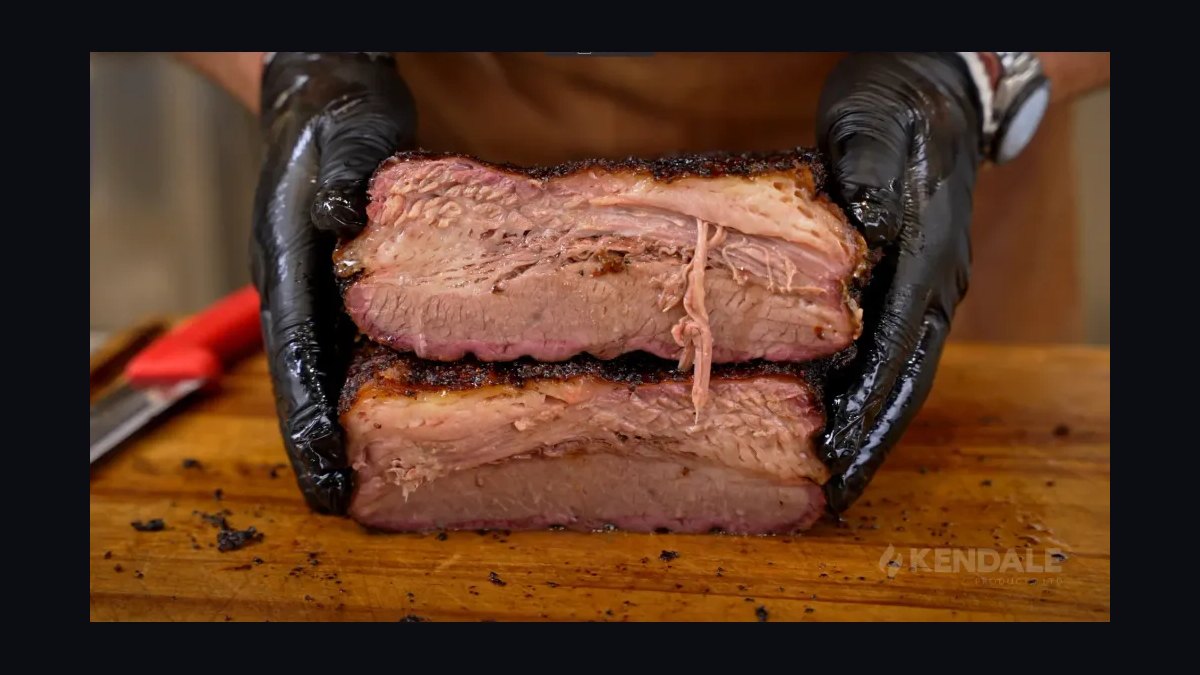
The 2027 GTM playbook for an independent BBQ restaurant is regional-style smoke specialization + a five-channel revenue stack: walk-up counter/dine-in, corporate catering, wholesale to grocery, merchandise/apparel, and third-party delivery. The craft operator's moat is the smoke itself — a defensible regional style (Central Texas brisket, Memphis ribs, Kansas City burnt ends, Carolina whole hog, Alabama white sauce) that chain BBQ cannot replicate at the same quality tier. The path from a roughly $1.4M single-location operator to a $4M+ multi-channel operator runs through layering catering and wholesale on top of the dine-in base, because those channels add revenue against largely fixed smoker capacity.
The five channels, with planning-model weightings you should validate against your own market:
- Counter + dine-in — typically the largest slice (~50%), driven by per-pound meat plus side/drink attach.
- Corporate catering — ~20-30%, the highest-AOV channel, with strong reorder behavior once an office adopts you.
- Wholesale to grocery/retail — ~8-14%, lower margin but additive against off-peak smoker capacity.
- Merchandise + apparel — ~4-8% of revenue at the highest gross margin in the business.
- Delivery — ~8-14%, useful for reach but margin-compressed by marketplace commissions.
Pricing logic (illustrative operator economics — treat as a model, not a quote): BBQ priced by the pound lets you tune margin by cut. Brisket carries a moderate gross margin because the raw cut is expensive and loses substantial weight in trim and cook. Pulled pork (cheap shoulder, high yield) carries the richest margin of the core meats. Sides — mac, slaw, beans, potato salad — and beverages carry the highest margins of anything on the board, which is why attach rate, not headline meat price, is the real profit lever. A disciplined operator who builds catering and wholesale layers can reasonably target a mid-teens-to-low-20s EBITDA margin by year three; you should pressure-test those figures against your own COGS, labor, and rent.
1. Market Sizing and 2027 Demand Drivers
The US barbecue-restaurant category is large and steadily growing; IBISWorld tracks it as a distinct industry segment, and the broader full-service and limited-service restaurant trends are reported annually by the National Restaurant Association. Rather than anchor on a single precise market figure (estimates vary widely by methodology), the more useful planning signal is mix shift: the craft/independent end of BBQ — operators smoking on premises with a defined regional style — has been growing faster than commodity chain BBQ for several years. Build your plan around *that* trend, and validate the dollar figures against the current IBISWorld and NRA releases before you raise or lease.
Demand Drivers in 2027
Craft brisket as the aspirational benchmark. Texas-style brisket craft — popularized publicly by operators like Franklin Barbecue and reinforced every cycle by *Texas Monthly*'s "Top 50 BBQ Joints" — has reset what customers expect from a serious BBQ joint. Aspiring operators benchmark against the playbook these places made famous: a defined regional style, a daily-sellout scarcity model, and a merchandise/cookbook layer. (Treat specific competitors' revenue, follower counts, and shipment volumes as private and unknown — public coverage tells you *what* they do, not their exact numbers.)
Wholesale + grocery channel growth. Premium grocers — Whole Foods, Wegmans, Erewhon, Bristol Farms, Central Market — increasingly stock packaged BBQ from recognizable regional operators. This is a real, growing channel; the right move is to confirm current buyer programs (e.g., Whole Foods' local/regional sourcing program) rather than rely on any one operator's reported store count.
Corporate catering recovery. Return-to-office has lifted demand for family-style, shareable catering formats, where BBQ is a natural fit. EZCater publishes corporate-catering trend data worth checking for current AOV and reorder benchmarks in your region.
Merchandise + apparel as a profit center. Branded tees, caps, aprons, sauces, rubs, and cookbooks are a small share of revenue at an outsized gross margin, and they turn customers into walking billboards. Most well-known craft operators run some version of this; size your own merch line conservatively and let demand pull it.
Short-form smoke content. Brisket-trim time-lapses, fire-building POV clips, and smoke-ring reveals consistently overperform generic restaurant content on TikTok and Instagram. Check Sprout Social and similar published social benchmarks for current engagement multiples before you set a content budget.
2. Channel Mix and Customer Acquisition
The independent BBQ operator acquires customers through five channels: national/regional BBQ press, Instagram + TikTok smoke content, Google Maps + Yelp local SEO, corporate catering BD, and wholesale BD.
Channel 1 — BBQ Press
*Texas Monthly*'s periodic "Top 50 BBQ Joints" list is the single highest-leverage press placement in the category, and national food media (Bon Appétit, Eater, *NYT*, Garden & Gun, Southern Living, Food & Wine) run regular BBQ coverage. A strong placement produces a real, documented traffic-and-revenue bump — plan operationally for it. Review-day discipline: smoke ahead, hold inventory for walk-ups, and never sub-cut portions when a critic may be in line.
Channel 2 — Instagram + TikTok Smoke Content
Accounts that lead with process — brisket-trim reels, post-oak fire-building, smoke-ring reveals, daily sellout calls — tend to grow faster than dish-only accounts. The leading craft operators all maintain large social followings; the takeaway is the *format*, not anyone's exact follower number.
Channel 3 — Google Maps + Yelp Local SEO
"BBQ near me" and "best brisket [city]" are high-intent local queries, and BBQ is unusually sensitive to real-time signals because craft joints famously sell out by early afternoon. Operational must-haves: complete Google Business and Yelp profiles, a strong photo set, current hours, and a clear way to publish "still serving / sold out" status so customers don't drive to a closed counter.

Channel 4 — Corporate Catering BD
EZCater is the dominant B2B catering marketplace; direct enterprise BD targets large local HQs and their preferred-vendor rosters. The format that wins: brisket + pulled pork + ribs by the pound, four to six sides, cornbread/buns, and sweet tea, priced per person. Catering is your highest-AOV channel and the one with the strongest repeat behavior — staff a named person to own it once you clear the first few accounts.
Channel 5 — Wholesale BD
Premium grocers source packaged BBQ from regional operators. Wholesale prices land well below dine-in per-pound pricing and the margin compresses, but the revenue stacks against smoker capacity you're already paying for during off-peak hours. Start with a regional/local-sourcing program (e.g., Whole Foods' regional forager track) and a single SKU before scaling.
3. Pricing Architecture
BBQ pricing uses a three-tier architecture: meat by the pound, plates and combos, and per-person catering bundles. The ranges below are illustrative planning figures — relative margin relationships hold across markets, but absolute dollars vary with local meat cost, labor, and rent. Build your menu off your *own* COGS sheet.
Tier 1 — Meat by the Pound (relative margin profile)
- Brisket (Choice) — moderate gross margin; expensive cut, heavy trim and cook loss.
- Brisket (Prime) — slightly lower margin than Choice, but supports premium pricing.
- Burnt ends — strong margin; a Kansas City specialty that justifies a premium per-pound price.
- Pulled pork — the richest margin of the core meats (cheap shoulder, high yield).
- Pork ribs (St. Louis / baby back) — solid margin; priced per pound or per half/full rack.
- Beef ribs (dino ribs) — premium prestige item; lower margin but a powerful menu anchor.
- Smoked turkey breast — strong margin and a lighter-option draw.
- Smoked sausage — strong margin, especially if house-made or sourced from a regional smokehouse.
- Whole hog (Carolina-style) — sold whole as an event item.

Tier 2 — Plates and Combos
- Single-meat plate (¼ lb + 2 sides)
- Two-meat plate (¼ lb each + 2 sides)
- Three-meat plate (¼ lb each + 2 sides)
- Family pack (brisket + pulled pork + ribs + sides)
Plates protect margin by bundling high-margin sides with the meat; the side-and-drink attach is where plate economics beat à-la-carte by-the-pound.
Tier 3 — Catering (per person)
- Basic — chicken + pulled pork + 3 sides + bread
- Premium — brisket + ribs + pulled pork + 4 sides + bread
- Ultra-premium — prime brisket + burnt ends + dino ribs + 5 sides + bread
- Whole-hog event — Carolina-style whole hog + sides + bread, priced per event
Bar (where licensed)
A focused beer-and-bourbon program (regional lagers, a short bourbon list, a single signature cocktail) carries beverage-tier margins and lifts dine-in check size without adding kitchen load.
4. Tech Stack and Operations
A BBQ operator runs a five-layer stack: POS/KDS, online ordering + catering, inventory + procurement, delivery + wholesale, and marketing + merchandise. Pricing on these tools changes frequently — confirm current rates on each vendor's site.

Core POS + KDS
- Toast POS — widely used in BBQ; handles counter, dine-in, and catering on one stack.
- Square for Restaurants — strong for counter-only joints.
- TouchBistro — common for table-service dine-in.
Online Ordering + Catering
- Toast Online Ordering — first-party ordering with low/no marketplace commission.
- EZCater (and ezCater Relish for enterprise employee-meal programs) — B2B catering reach.
- Olo — for multi-unit operators.
Inventory + Procurement
- MarginEdge — invoice capture and food-cost tracking.
- BlueCart — supplier ordering.
- Restaurant365 — multi-unit accounting + inventory.
Meat sourcing: build direct relationships with quality programs — Creekstone Farms, 44 Farms, Snake River Farms (beef), and Niman Ranch (heritage pork). Direct rancher relationships generally beat commodity distributors on consistency, fat cap, and marbling.
Delivery + Wholesale
- DoorDash Drive (white-label fulfillment) and the DoorDash / UberEats / Grubhub marketplaces (marketplace commission applies).
- UNFI and KeHe for grocery distribution; direct retailer accounts where you have the buyer relationship.

Marketing + Merchandise
- Shopify — merch, apparel, sauce/rub, and cookbook sales.
- Mailchimp or Klaviyo — email/SMS lifecycle.
- Square Loyalty / Toast Loyalty — repeat-customer flywheel.
Smokers + Wood
- Smokers: offset stick burners (Mill Scale, Workhorse Pits, Yoder) define Texas brisket craft and command premium pricing, at the cost of overnight labor; rotisserie/convection units (Old Hickory, Southern Pride) are easier to run and fit a value-tier concept. Choose this at concept inception — switching later is effectively a rebrand.
- Wood: post oak (Texas), hickory (Memphis/KC), pecan (Texas/Oklahoma), with apple/cherry as accents. Source seasoned wood from a regional supplier or sawmill direct.
5. Regional-Style Moat + Wholesale BD Motion
The two motions that separate a single-location operator from a multi-channel one are a defensible regional smoke-craft moat and a small portfolio of wholesale grocery accounts.
Regional-Style Moat
The five dominant regional positioning angles, with the operators publicly associated with each style:
- Central Texas brisket craft — post-oak offset smoker, salt-and-pepper rub, long overnight smoke. *Franklin Barbecue, Snow's, Louie Mueller, Kreuz Market.*
- Memphis ribs — dry-rubbed pork ribs, hickory, sauce on the side. *Charlie Vergos Rendezvous, Cozy Corner, Central BBQ.*
- Kansas City burnt ends — chopped brisket point, re-smoked and sauced. *Joe's KC, Arthur Bryant's, Gates BBQ.*
- Carolina whole hog — Eastern NC vinegar-pepper or SC mustard sauce. *Skylight Inn, Sam Jones BBQ, Buxton Hall.*
- Alabama white sauce — mayo-vinegar sauce on smoked chicken. *Big Bob Gibson, Saw's BBQ.*

Smoke craft is the moat. A long overnight stick-burner cook is expensive in labor and sleep, but it earns the reviews and the pricing power that convection-tier BBQ can't. A value-tier rotisserie concept is a legitimate business — it just plays a different game at a different price. The mistake is trying to charge craft prices on convection product. Pick the moat before you sign a lease.
Wholesale Channel BD — A Worked, Illustrative Model
Premium grocers source from regional operators, so a handful of accounts can become a meaningful revenue layer. As an illustrative model (your numbers will differ): if an operator lands four grocery accounts averaging roughly $480K each, that's about $1.9M of annual wholesale revenue; at a wholesale-tier gross margin in the low-30s percent, that's on the order of $600K of gross profit — earned largely on off-peak smoker capacity you already own. The point isn't the exact figure; it's that wholesale compounds on top of dine-in rather than competing with it.
Account-acquisition ladder:
- Tier 1 — Local/regional sourcing programs (e.g., Whole Foods' regional forager track) — relationship-driven, low setup.
- Tier 2 — Direct buyer outreach to Wegmans, Bristol Farms, Erewhon category/meat buyers via LinkedIn Sales Navigator.
- Tier 3 — Distributor relationships (UNFI, KeHe) for broader reach at a margin cut.
- Tier 4 — DTC e-commerce (Goldbelly, Crowd Cow) for nationwide shipping at a premium per order.
6. Unit Economics and 3-Year Financial Model
The model below is an illustrative planning P&L for a ~60-seat BBQ joint that layers catering, wholesale, and merch onto the dine-in base. It is a worked example to show the *shape* of the economics — replace every line with your own quotes before you commit capital.

Year 1 — Buildout + Ramp
- Buildout capex: roughly $285K–$985K depending on smokers, hood, walk-in, dining room, and retail space.
- Revenue mix (ramp year): counter/dine-in dominant (~50%), catering ramping (~20%), wholesale a thin slice (~7%), delivery (~11%), merch and bar small.
- Cost shape: COGS in the low-to-mid 30s percent, labor near a third of revenue, occupancy ~10%.
- EBITDA: typically thin in year one (roughly high-single-digit margin) as you build reputation and catering accounts.
Year 2 — Wholesale + Catering Scale
- Wholesale and catering both grow as named-account relationships compound.
- Merch settles into a small, high-margin share.
- EBITDA margin moves into the mid-teens as the added channels carry largely fixed smoker and brand costs.
Year 3 — Steady-State Operator
- Wholesale and catering each become a meaningful double-digit share of revenue.
- EBITDA margin can reach the high-teens to low-20s for a disciplined operator.
Why BBQ can outperform comparable casual concepts on three-year margin: the wholesale, catering, and merch layers stack on top of the dine-in base using capacity and brand you've already paid for. That's the structural advantage — not any single headline number. Validate it against current Toast, Square, and National Restaurant Association benchmark releases.
7. 30/60/90-Day Launch Plan
Days 1–30 — Pre-Open Foundation
- Lock the regional style (Central Texas, Memphis, KC, Carolina, or Alabama) and message it everywhere.
- Procure the smoker — offset stick burner for craft tier (long lead times on custom builds; used units shorten the wait), or rotisserie for value tier.
- Set standing meat orders with quality programs (Creekstone, 44 Farms, Snake River, Niman Ranch).
- Secure a seasoned-wood supplier (regional sawmill direct or a established wood vendor).
- Stand up the POS stack — POS, online ordering, loyalty, and a Shopify storefront for merch.

Days 31–60 — Soft Open + Brand Build
- Friends-and-family soft opens (several weekends at reduced capacity) to calibrate smoke and service.
- Start the smoke-content engine — trim reels, fire POV, smoke-ring reveals; build an early following.
- Pitch the first press with realistic lead time for visits.
- Enroll in EZCater and close the first few corporate orders.
- Complete Google, Yelp, and (if applicable) reservation profiles with a strong photo set.
Days 61–90 — Capacity Lock + Wholesale Ramp
- Push toward a near-daily sellout cadence as the brand's scarcity signal.
- Set a monthly catering target and staff an owner for the channel.
- Pitch the first wholesale account via a regional sourcing program or local premium grocer.
- Launch merch — tees, caps, aprons, sauce/rub at the counter and on Shopify.
- Land the first press hit (local critic or BBQ media) and plan operationally for the traffic bump.
Frequently Asked Questions
Should I open a counter-only BBQ joint or full-service dine-in?
For a first concept, counter-only walk-up usually wins. It carries lower buildout and labor cost (no server team), matches the BBQ tradition customers expect, and supports the daily-sellout scarcity model. Many of the most respected craft operators run counter-only. Full-service dine-in is a better fit for chain-style or higher-frequency casual BBQ, where table service and a bar program lift check size — but it raises your labor line and your breakeven.

Should I use an offset stick burner or a convection smoker?
It depends on the *price tier you're building for*, and you should decide before you sign a lease. An offset post-oak stick burner is effectively required to compete for craft-tier pricing and best-of-list recognition; it costs you overnight labor and consistency risk. A convection/rotisserie unit is easier to run and economically sensible for a value-tier concept, but it won't earn craft-tier reviews or prices. The error is buying convection and pricing like craft — switching later is essentially a rebrand.
What should my brisket COGS and pricing logic look like?
Brisket is your most expensive core meat and loses substantial weight in trim and cook, so its finished cost per pound is well above the raw wholesale price — model both. Because of that yield loss, brisket carries only a *moderate* gross margin even at premium menu prices. Choice is the workhorse; Prime and Wagyu-program beef push prestige and social virality at lower margin. Protect blended margin by pairing brisket with high-margin pulled pork, sides, and drinks rather than chasing the highest possible brisket price.
How should I think about the daily-sellout positioning?

A near-daily sellout is the genre's signature scarcity signal — it builds urgency, lines, and shareable moments, and it protects pricing power. Franklin Barbecue is the well-known public example of a joint that built its reputation partly on selling out. The operational counterpart is production discipline: forecast demand, smoke to roughly that number, and resist the urge to over-produce for all-day service, which dilutes both margin and the scarcity signal. Selling out is a feature *only* if your demand genuinely exceeds supply — manufacturing it with too-small batches frustrates customers.
Is merchandise and apparel actually worth it?
Yes, in proportion. Tees, caps, aprons, branded sauce and rub, and a cookbook are a small share of revenue but the highest-gross-margin line in the business, and every shirt is mobile advertising. Most well-known craft operators run a merch program. Keep it tight — a few strong SKUs sold at the counter and on Shopify — and let demand, not inventory ambition, pull the line wider.
What wholesale revenue mix should I target, and when?
Treat wholesale as a year-two-and-beyond layer, not a launch channel. A reasonable target is roughly 8–14% of revenue once you have spare smoker capacity and a repeatable, food-safe packaged SKU. The margin is lower than dine-in, but it's additive against fixed capacity and it diversifies you away from foot-traffic dependence. Start with one account and one SKU through a regional/local sourcing program, prove the unit economics and the operational load, and only then pursue distributor (UNFI/KeHe) or DTC (Goldbelly) expansion.
Sources
- IBISWorld — *Barbecue Restaurants in the US* industry reports (market size, growth, segmentation): https://www.ibisworld.com/united-states/
- National Restaurant Association — *State of the Restaurant Industry* (cost structure, labor, and demand trends): https://restaurant.org/research-and-media/research/
- Texas Monthly — *The Top 50 BBQ Joints in Texas* and ongoing BBQ coverage (regional craft benchmarks and press dynamics): https://www.texasmonthly.com/bbq/
- Toast — *Restaurant Success / Restaurant Industry* reports and POS pricing (operations and tech-stack benchmarks): https://pos.toasttab.com/resources
- Square — *Future of Restaurants* and restaurant benchmark research: https://squareup.com/us/en/townsquare/future-of-restaurants
- EZCater — corporate-catering trend and benchmark resources: https://www.ezcater.com/company/resources/
- Whole Foods Market — Local & Emerging Brands / regional supplier sourcing programs: https://www.wholefoodsmarket.com/local
Related on PULSE
- [Farmers Market Operator GTM Playbook 2027 — Vendor Curation, Corporate Sponsorships, and the $1.2M Operator Path](/knowledge/gp0196)
- [Butcher Shop GTM Playbook 2027 — Dry-Aged + Heritage Breed Moat, Wholesale Layer, and the $3.4M Operator Path](/knowledge/gp0193)
- [Donut Shop GTM Playbook 2027 — Morning Rush, Craft Premium, Wholesale Pivot, and the Coffee Attach Math](/knowledge/gp0183)
- [Reseller and VAR channel GTM playbook in 2027](/knowledge/gp0509)
- [What is the go-to-market playbook for a partner-led (channel) motion in 2027?](/knowledge/gp382)
- [Taco Shop GTM Playbook 2027 — Regional Authenticity Moat, Margarita Program, and the $2.8M Operator Path](/knowledge/gp0190)
Read it free — or make it yours for $1.
@Kory-White- · if Venmo asks, the last 4 of my number are 2012
 pulse-recentWhat are the concrete steps to build a GTM playbook for a dental practice in 2027?
 pulse-recentWhat are the concrete steps to build a GTM playbook for a nail salon in 2027?
 pulse-recentWhat go-to-market playbook works best for Telecom in 2027?
 pulse-recentWhat are the concrete steps to build a GTM playbook for a professional services firm in 2027?
 pulse-recentHow do you build the GTM playbook for a roll-off dumpster and junk removal operator in 2027?
 pulse-recentWhat go-to-market playbook works best for Security & Fire Systems in 2027?
 pulse-recentWhat go-to-market playbook works best for Physical Therapy & Chiropractic in 2027?
 pulse-recentWhat is the go-to-market playbook for mobile car detailing services in 2027?
 pulse-recentWhat go-to-market playbook works best for Aerospace & Defense in 2027?
 pulse-recentWhat are the concrete steps to build a GTM playbook for a trampoline park in 2027?