
GTM Playbook for Tutoring Centers in 2027

.png?width=760&height=550&name=Resource%20Center%20Promo%20(5).png)
A K-12 / SAT-ACT tutoring center in 2027 wins by treating itself as a subscription business with a seasonal test-prep surge — recurring $249-$549/mo memberships for math/reading, $1,500-$3,200 SAT/ACT packages layered on top, and a tutor pay model that holds gross margin at 48-55%. Acquisition runs on Google Local Service Ads ($28-$62/lead for the Learning Services category), PTA + counselor partnerships, and a referral bounty worth roughly one month of tuition. The operators who clear $340K-$450K per center (vs. the $294K Mathnasium median in the 2024 FDD) all do three boring things well: parent texting within 5 minutes of inquiry, a 6-week onboarding script that locks the membership, and a summer camp + AP cram offering that breaks the August revenue cliff.
1. Parent Acquisition That Actually Fills The Center

1.1 The Four-Channel Mix That Works In 2027
Tutoring is hyper-local — 94% of inquiries come from within a 5-mile radius per the Mathnasium 2024 FDD marketing disclosures. The channel split for a healthy single-location center looks like:
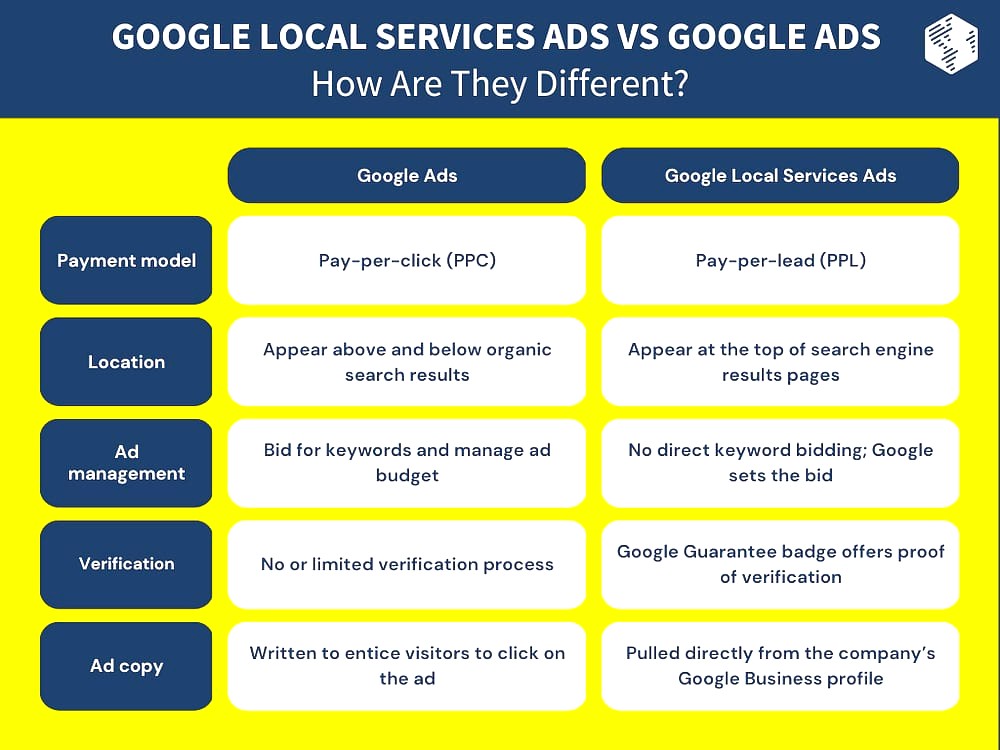
- Google Local Service Ads (Learning Services) — 35-45% of new leads. The Google guaranteed badge rolled out for tutoring in late 2024 and dominates the mobile parent search. Budget $1,200-$2,800/mo, expect $28-$62 per qualified lead, 22-30% lead-to-enrollment.
- Meta (Facebook + Instagram) parent-targeted ads — 20-30% of leads. Target mothers 35-54 in a 3-mile radius, interest stack: "SAT," "AP exams," "Common App," "dyslexia," "ADHD." Budget $600-$1,800/mo, $18-$45 cost-per-lead, but lower intent — needs faster follow-up.
- PTA + school counselor partnerships — 15-25% of leads, lowest CAC at roughly $40-$90 all-in. Sponsor the PTA fall fundraiser for $500-$1,500, run a free "SAT digital format" parent night at the high school, drop business cards in the counselor's office.
- Referrals — 15-25% of leads, near-zero hard CAC. Pay the referring family one free month ($249-$549 value) and the new family $100 off the first month. Mathnasium, Kumon, and Sylvan Learning all run nearly identical referral mechanics.
1.2 The 5-Minute Response Rule
Lead-to-enrollment rate doubles when the first call back happens inside 5 minutes vs. 30 minutes (per Harvard Business Review lead-response research that holds across services). For tutoring specifically, 47% of parents who fill out a web form contact a second center within 24 hours — speed is the moat. Run an after-hours answering service like Smith.ai ($255/mo for 100 calls) or Ruby Receptionists ($235/mo) so a real human picks up between 6pm-9pm when working parents are actually researching.
1.3 The SAT/ACT Seasonality Calendar You Plan Around
The digital SAT is now the mainstream format (College Board completed the US transition in March 2024), and the ACT went fully optional-science + shorter in April 2025. The cycle has three real spikes:
- August-October — fall SAT/ACT push, PSAT/NMSQT in October, juniors lock in 6-12 week packages.
- January-March — March SAT push, AP exam cram books in April.
- June-July — summer intensive boot camps, rising-senior application essay + SAT combo packages priced $2,500-$4,800.
Build the annual revenue plan with 40% from recurring tuition, 35% from test prep packages, 15% from summer camps, 10% from one-off hourly. Operators who run >50% on test prep get crushed every April-July.
2. Pricing — Hourly, Package, And The Membership That Compounds
2.1 The Three Pricing Tiers Operators Actually Run
Hourly drop-in — $45-$95/hr for group of 3, $75-$140/hr for 1:1 academic, $95-$250/hr for 1:1 test prep with a top tutor. Tutors.com 2026 data pegs the national SAT average at $70/hr with elite tutors $200-$1,000+. Hourly is the weakest LTV — only use it as a trial-week conversion tool.
Package pricing — the test-prep workhorse. Real 2026 benchmarks:
- Huntington Learning Center: $1,220 for 14 hours, $2,645 for 32 hours.
- ArborBridge (online): $235/hr premium tier, packages $3,500-$9,500.
- PrepMaven: $79-$349/hr with tiered tutors.
- Math Academy: $2,736 for 57 hours online, $3,590 for 57 hours in-person.
Price packages with a deadline (e.g., "$300 off if booked by Sept 15") to compress the buying decision.
2.2 Membership Is Where Centers Compound
Mathnasium, Best in Class Education, and Tutoring Club all moved hard to a monthly membership model between 2022-2025. Real 2027 ranges:
- 2x/week math or reading membership — $249-$349/mo
- 3x/week or combined math + reading — $379-$549/mo
- Unlimited drop-in (cap 16 hrs/mo) — $499-$699/mo
The median Mathnasium center charged $280-$340/mo per student in 2024 FDD Item 19 data, with 47-62 active memberships producing the $294K median AUV. The math is brutal but simple: 60 members × $325/mo × 12 = $234K before any test prep, summer camp, or hourly. Hit 75 members and you clear $292K before the seasonal layer.
2.3 The Discount Stack That Doesn't Erode Price
- Sibling discount — 15% off the second child, 25% off the third. Kumon FDD standard.
- Annual prepay — 8-10% off for a full 12-month commitment.
- Multi-subject — bundle math + reading for $50/mo less than buying separately.
- NEVER discount the headline price publicly — kills perceived value and trains parents to wait.
3. Tutor Hiring, Pay, And Retention

3.1 The 40-55% Pay Rule
The single biggest gross margin lever is tutor pay as % of session revenue. Industry benchmarks:
- W-2 part-time tutors (most centers): $22-$38/hr for general academic, $35-$65/hr for SAT/ACT specialists, $45-$95/hr for AP Physics, AP Calc BC, organic chemistry.
- 1099 contractor model (riskier, AB5-style states like CA, NJ, MA make this hard): $40-$70/hr.
- Target gross margin: 48-55% of session revenue after tutor pay. If you charge $95/hr and pay $45/hr, that's 53% — healthy.
3.2 The 90-Day Onboarding That Cuts Turnover
Tutor turnover at most independent centers is 45-70% annually — every churned tutor costs $1,800-$3,500 in recruiting + training. The retention playbook:
- Paid 8-hour training week one (curriculum, Mathnasium-style "teaching for understanding" framework, parent comms scripts).
- Pair every new tutor with a senior tutor for the first 20 sessions — shadow then co-teach.
- Monthly 1:1 with the center director, quarterly raise eligibility at $0.50-$1.50/hr increments.
- Quarterly stipend for AP/SAT specialists who pass a re-certification quiz ($200-$500).
3.3 Where To Source Tutors In 2027
- Local university education + STEM departments — post on the dept job board, $0 cost, highest fit.
- Wyzant, Varsity Tutors, Tutor.com marketplace tutors who want W-2 stability — 40-60% of incoming candidates.
- Retired teachers via NEA and state retired-educator associations — the gold standard for K-5 reading and elementary math.
- Indeed + ZipRecruiter — $150-$400/mo for sponsored job posts, 30-50 applicants per opening.
4. The Tech Stack Per Real 2027 Prices

The center-management stack is 6 tools and costs $180-$520/mo for a center doing $300K-$500K revenue.
4.1 Core Center Management
- TutorBird — $16.95/mo base + $4.95/mo per additional tutor. Best for 1-3 tutor solo operations, includes SMS reminders, invoicing, parent portal, website hosting.
- Teachworks — Starter $16.49/mo + $0.32/lesson, Growth $47.99/mo + $0.189/lesson, Premium $187.99/mo + $0.065/lesson with multi-branch support. Best for 3-15 tutor centers with packages + memberships.
- Oases Online — $99/mo for 25 active students, scales to $289/mo for 150+. Best for multi-location operators who need deep reporting and payroll integration.
- TutorPanel — $79-$199/mo depending on student count. Strong on homework tracking and parent app.
- MyMusicStaff — $14-$39/mo (originally music lessons, plenty of tutoring centers use it for the calendar + auto-charge combo).
4.2 Scheduling, Payments, Parent Comms
- Acuity Scheduling — $16-$49/mo, embeds in the website, handles the free assessment booking.
- Calendly — $10-$20/mo alternative if you want simpler routing.
- Stripe + TutorBird/Teachworks built-in payments — 2.9% + $0.30 per card, 0.8% capped at $5 for ACH (memberships should be ACH-first to save $15-$30/student/month in fees).
- Brevo (ex-Sendinblue) — $0-$25/mo for parent newsletters, drip nurture, and re-engagement.
- Mailchimp — $13-$50/mo alternative for centers already on it.
- OpenPhone — $15-$25/user/mo shared business line with SMS + call recording for the lead-response window.
4.3 The "AI Tutor" Question
Parents will ask about Khanmigo ($4/mo), MagicSchool, Synthesis Tutor, and ChatGPT Edu (Khan Academy disclosed in May 2026 that only ~15% of assigned students use Khanmigo). The honest center positioning in 2027:
- "AI is great for drill and practice — it's bad at noticing your kid checked out 4 weeks ago."
- Use Khanmigo or MagicSchool as a homework supplement between sessions (some centers license a classroom seat and bundle it in the membership).
- Lean on human accountability + structured curriculum as the differentiation. AI-only tutoring is a substitute for nothing — but parents need to hear it explicitly.
5. Retention And Referrals — The Real Profit Pool
5.1 The 6-Month Tenure Target
Mathnasium, Kumon, and Sylvan Learning internal benchmarks all sit at 7-11 months average active tenure. For an independent center, 6+ months is the break-even-on-CAC floor. With a $325/mo membership and $180 blended CAC, you recover in month 2 and everything after month 4 is contribution margin.
5.2 The Three Retention Levers
- Quarterly written progress report delivered in a 15-minute parent meeting — kills churn in months 4-7 when parents start to question value.
- Public goal-setting with the student — belt levels, mastery badges, leaderboard wall. Cheap, sticky, parents photograph it.
- Mid-tenure surprise: at month 5, free AP exam practice book or digital SAT diagnostic as a "we noticed your kid is ready for the next level" gift.
5.3 Referrals Engineered, Not Hoped For
- Ask at month 3 when satisfaction peaks — not at month 12.
- Use a named referral asset ("The Friends of Center Program") not "Tell a friend."
- Branded swag — Mathnasium-style t-shirts, stickers, water bottles at $8-$14/unit that turn students into walking ads.
- In-center "bring a friend day" quarterly with pizza + academic games — 30-40% conversion of friend-attendees into trial enrollments.
6. Failure Modes That Kill Centers
6.1 The Six Predictable Death Spirals
- Hiring tutors at >55% revenue share — center ends the year cash-negative on a P&L that looks fine on the surface.
- All-hourly pricing, no membership — predictable August + December cash crunches that wipe out reserves.
- One-tutor dependency — the AP Calc specialist quits, $45K of annual revenue walks out with them.
- Skipping the 5-min response rule — 30-40% of qualified leads enroll at the competitor across the strip mall.
- Lease too big — $8,000-$15,000/mo rent that requires >$420K AUV to support; better to start with 2,000 sqft at $3,500-$5,500/mo.
- No parent comms cadence — parents who don't hear from the center weekly assume nothing is happening. Churn spikes at month 4.
6.2 The Insurance + Compliance Baseline
- General liability + professional liability — $1,200-$2,400/yr through Hiscox or Next Insurance.
- Workers comp for W-2 tutors — varies by state, budget 0.8-1.4% of payroll.
- Background checks every hire — Checkr at $30-$55/check, non-negotiable for working with minors.
- State-specific tutoring registration — FL, TX, CA, NY have varying requirements; consult a local education attorney for $1,500-$3,500 one-time setup.
6.3 The ESA / Voucher Opportunity
Education Savings Accounts expanded materially in 2024-2026 — AZ, FL, IA, AR, TN, UT, WV, and OK now let families spend $5,000-$8,000/yr of state education dollars on approved private tutoring. If you operate in a voucher state, getting on the approved provider list (typically a $0-$500 application and a W-9 + insurance proof) can deliver 20-40 new memberships in year one. Florida's Step Up For Students alone reimbursed $1.2B+ in approved education services in 2024-2025.
7. The 30-60-90 Plan

7.1 Days 1-30 — Foundation
- Tech stack live: TutorBird or Teachworks + Acuity + Stripe + Brevo.
- Google Business Profile verified, LSA application submitted (takes 2-3 weeks to clear).
- Hire 2-3 W-2 tutors at $26-$38/hr, completed paid 8-hr onboarding.
- Pricing sheet locked: $249/$349/$549 membership tiers, 3 SAT packages at $1,495/$2,495/$3,495.
- Insurance + background checks complete.
7.2 Days 31-60 — Acquisition Engine
- Meta ads live at $40/day ($1,200/mo), LSA live at $60/day ($1,800/mo).
- First PTA partnership signed — sponsor a fall fundraiser for $500-$1,500.
- Smith.ai or Ruby answering service live for the 6pm-9pm parent window.
- 15 active memberships signed (target: $4,800/mo recurring).
- First 8 trial assessments delivered, conversion target 40-50%.
7.3 Days 61-90 — Retention And Layer
- Test prep package menu launched, first 6-8 packages sold to existing members + new leads.
- First quarterly progress report cycle complete for early members (drives referrals at the end of meeting).
- Referral program live — 1 free month for the referring family, $100 off the first month for the new.
- 30+ active memberships ($10K-$15K MRR), 8+ active test prep packages ($15K-$25K bookings).
- Run-rate trajectory: $210K-$280K year-1, scaling to $320K-$420K year-2 with mature referral engine and a summer camp layer.
FAQ
What is the typical monthly membership price for a tutoring center in 2027? Most centers charge between $249 and $549 per month for recurring math and reading memberships. The exact price depends on the number of sessions per week and local market rates, with higher-end centers offering additional support like homework help.
How much do SAT/ACT prep packages cost? Intensive test-prep packages typically range from $1,500 to $3,200. This covers a set number of sessions, practice tests, and materials, often sold as a separate add-on to the monthly membership.
What are the average customer acquisition costs for tutoring centers? Google Local Service Ads for the Learning Services category generate leads costing $28 to $62 each. Other channels like PTA partnerships and referral bounties (worth about one month of tuition) can lower this cost significantly.
What gross margins should a tutoring center expect? Healthy centers maintain gross margins between 48% and 55%. This is achieved by balancing tutor pay rates with membership and package pricing, while keeping overhead like rent and materials under control.
How much revenue can a single tutoring center generate? Top-performing centers clear $340,000 to $450,000 per year, compared to the Mathnasium median of $294,000 (based on 2024 FDD data). Revenue depends on location, pricing, and how well the center executes on enrollment and retention.
What are the key operational habits that drive success? Successful operators focus on three things: texting parents within 5 minutes of an inquiry, using a 6-week onboarding script to lock in memberships, and offering summer camps plus AP cram sessions to avoid the August revenue drop.
Bottom Line
A tutoring center in 2027 is a subscription business with a seasonal test-prep surge on top, not a per-hour service. Win acquisition with Google Local Service Ads, PTA partnerships, and a 5-minute response rule; price for membership compounding at $249-$549/mo with $1,500-$3,200 packages layered on; hold tutor pay at 48-55% of session revenue; engineer referrals at month-3 satisfaction peaks; and run the 6-tool tech stack at $180-$520/mo. Hit 60-75 active memberships and you're at the Mathnasium median of $294K AUV before the test-prep layer. Add a real summer camp and AP cram week and you're at $340K-$450K — the threshold where the owner-operator can afford a center director and start opening a second location.
Related on PULSE
- [GTM Playbook for Garden Centers and Nurseries in 2027](/knowledge/gp0306)
- [How do you build the GTM playbook for a K-12 tutoring center in 2027?](/knowledge/gp0149)
Sources
- Mathnasium 2024 Franchise Disclosure Document (Item 19) — $294K median AUV, $344K average, $419K avg for 6+ unit operators
- Sylvan Learning 2025 FDD — $375K median, $811K top quartile, 2024 performance year
- Kumon 2025 FDD — $173K-$300K revenue per center, 30% net margin estimate, no formal Item 19
- Huntington Learning Center — published SAT/ACT package prices: $1,220 / 14 hours, $2,645 / 32 hours
- EdSurge — 2024-2026 coverage of post-COVID learning loss spend and ESA voucher expansion
- Education Week — digital SAT rollout and ACT format change reporting (2024-2025)
- Tutors.com 2026 Tutoring Prices Report — $70/hr national SAT average, $45-$1,000+ range
- Capterra + GetApp 2026 vendor pages — TutorBird, Teachworks, Oases Online, TutorPanel pricing
- Franchise Chatter 2025 Mathnasium + Sylvan reviews — multi-year FDD trend data
- Step Up For Students (FL) — $1.2B+ ESA reimbursement for approved education services, 2024-2025
- Khan Academy / Khanmigo public statements (May 2026) — ~15% student engagement disclosure
 pulse-toolsWhat Service Fees Should a Law Firm Charge?
 tltl0015
 pulse-toolsHow Many Attendants Should I Schedule Each Day at My Car Wash?
 tlHow Many Sales Reps Do I Need to Hire for My Merchant Services Company?
 tlHow Many Sales Reps Do I Need to Hire for My Logistics Company?
 tlHow Many Baristas Should I Schedule Each Shift at My Coffee Shop?
 tlHow Many Sales Reps Do I Need to Hire for My SaaS Company to Hit Next Year''s Goal?
 tlHow Many Sales Reps Do I Need to Hire for My Landscaping Company This Year?
 tlHow Many Membership Sales Reps Do I Need to Hire for My Gym?
 tlHow Many Sales Reps Do I Need to Hire for My Manufacturing Company?