
GTM Playbook for Dance Studios in 2027
 Curated byKory White · Fractional CRO · Maryland
 PULSEKNOWLEDGE LIBRARY
A dance studio GTM Playbook in 2027 treats the studio as a recurring-revenue subscription with a competition-team upsell layered on top. Segment by parent buying stage, win the August open-house window, hold annual churn under 18%, run auto-pay through Jackrabbit Class or DanceStudio-Pro, and defend recital ticket revenue as the highest-margin line.
Segment and ICP first
Most dance studio marketing fails because it treats "parents" as one audience. In practice a kids studio serves four distinct buyer segments with different price tolerance, different churn behavior, and different acquisition costs. Getting these separated is the first real work of the playbook, because every downstream decision — ad copy, class schedule, tuition ladder, instructor hiring — depends on which segment you are actually building for.
Segment 1: the first-timer family (ages 3-6). The parent is buying an activity, not a discipline. They want a 45-minute once-weekly class, a cute recital costume, and a low-friction trial. They convert on price and convenience, they are highly sensitive to drive time (a 5-mile radius is the practical ceiling), and they churn at the highest rate — roughly one in five will not return the following fall. This is where paid social earns its keep, at a $22-$38 cost per lead and a $95-$140 fully-loaded CAC per enrollment. Do not over-invest in retention tooling for this segment; invest in volume and in the age-7 handoff.
Segment 2: the committed recreational family (ages 7-13). The child has decided dance is "their thing" but the family has not committed to competition. They buy 2-4 hours per week at $160-$275/month. This is the margin backbone of the studio and the segment most often lost through neglect — they get no special attention because they are neither new nor elite. The single highest-leverage retention move in the entire business is a structured placement conversation with these families each spring that maps a concrete three-year plan.

Segment 3: the competition family (ages 9-18). Once a family commits to competition team, annual churn drops from roughly 22% to under 6%. They pay $285-$350/month in tuition plus $2,400-$4,800/year in entry fees, costumes, travel, and choreography. They are not price-sensitive in the normal sense — they are sensitive to *perceived competitive outcome*. They leave when they believe another studio wins more, not when tuition rises 4%. Your GTM to this segment is results, faculty credibility, and convention exposure — not ads.
Segment 4: the adult drop-in student. Distinct buyer, distinct economics. They pay $22-$30 per class or roughly $160/month unlimited, they fill dead hours (12-2pm weekdays, 8-10pm weeknights), and they carry 70%+ contribution margin because the rent is already sunk. In a 2,500-4,000 sq ft space, programming adult ballet, barre, contemporary, and hip-hop into off-peak slots can add $28K-$55K of annual revenue with zero incremental fixed cost. Treat adults as a margin layer, never as the growth engine.
The ICP you build the studio around should be Segment 2 converting into Segment 3. That is the path that produces a defensible business: recreational volume feeding a competition flywheel, with adults absorbing the dead hours. Studios that build primarily around Segment 1 stay on a treadmill of re-acquiring the same families every August. Studios that build only around Segment 3 have no feeder pipeline and collapse when one strong graduating class leaves.
Geography matters more than most owners admit. In competitive metros — DFW, Phoenix, Nashville, Orlando, the Inland Empire — there may be six studios inside a 15-minute drive, and differentiation has to be explicit: a pre-professional ballet track, a hip-hop-forward identity, a "no-drama, no-pressure" recreational positioning. In a smaller market, the studio can be the generalist and win on being the only credible option, which changes the playbook toward broad enrollment and away from segment specialization.

The motion that fits that segment
The acquisition motion is seasonal, not continuous. Roughly 60% of the year's enrollment decisions are made in a six-week window between mid-July and Labor Day. That single fact should reorganize the entire marketing calendar: you are not running a steady-state demand-gen program, you are running one large campaign, one medium campaign, and a maintenance drip.
The primary campaign is the fall open house (July 15 - September 10). The pattern that works: two open-house weekends in mid-to-late August, a free trial class with a 15-minute parent sit-in, and a $45 registration fee that is fully credited toward September tuition. The credited fee is doing real work — it converts a casual "maybe" into a committed slot without feeling like a charge. Studios running this well book 70-80% of recreational seats before Labor Day. Studios that miss the window spend the rest of the year backfilling at three to four times the CAC, because off-season demand is thin and the ad auction is no cheaper.
Channel allocation. Meta ads targeting parents within a 5-mile radius remain the workhorse paid channel for Segment 1, running $40-$80/day through the July-August window for a total of $1,200-$2,400. Google Search on "dance classes near me" and "kids ballet [city]" costs roughly $3.50-$7.20 per click with a high-single-digit to low-teens conversion rate to trial booking — genuinely worth it while you are under 150 students and have unfilled capacity, and marginal once the fall cohort is full. Organic short-form video is the strongest unpaid channel: recital clips, behind-the-scenes choreography, and instructor personality content. Studios that post consistently three times a week build local followings that eventually drive a meaningful share of trial bookings at zero incremental spend, but this compounds over 12-24 months and cannot be switched on in July.

Referral is the best channel by LTV-to-CAC, and it is chronically under-run. A $50 tuition credit per referred-and-enrolled family produces roughly a 6:1 ratio against about 2.5:1 for paid social. It requires almost no infrastructure — an email to current families in June, a physical card at the front desk, and a tracked field in your studio software. The reason it underperforms in most studios is not that parents won't refer; it is that nobody ever explicitly asks them during the window when their friends are actually deciding.
The school-partnership motion is the highest-leverage underused play. Approach three to five local elementary schools in June about after-school enrichment dance — 45-minute sessions, roughly $15/student/session, running in eight-week blocks. Each school produces a funnel of 25-50 trial students per year, and the conversion to studio enrollment the following fall is far higher than any cold channel because the child has already had ten hours of instruction and the parent already trusts the instructor. Both Jackrabbit Class and Studio Director support roster import, so converting enrichment kids into studio enrollments is a mechanical step rather than a manual re-entry project.
The second campaign is the March recital ticket push. This is a revenue campaign, not an acquisition campaign, and it is the one most owners under-manage. Recital fees sit at roughly $165-$295 per dancer in 2027 — up from a $135-$240 band a few years earlier — covering costume, tights, a photo session, and one parent ticket. Additional tickets at $22-$35 are the single highest-margin line item in the business. A studio with 200 dancers running three ticketed shows can clear $28K-$45K on ticket sales alone, but only if the push starts six weeks out with a countdown email sequence, in-studio signage, and a clear "grandparents need tickets too" message.

Maintenance drip covers everything else. A monthly newsletter through Mailchimp or Constant Contact at $25-$95/month, weekly social posting, and a January "second semester" mini-campaign for the small population of families who missed fall. Do not spend real ad budget in October through February; the demand is not there and you are bidding against your own future dollars.
Unit economics and benchmarks
The economics of a kids dance studio are unusually good when run correctly, which is exactly why so many undercapitalized operators enter and fail — the model tolerates a lot of mistakes right up until it doesn't.
Revenue per student. A dancer generates roughly $1,200-$1,800 in annual revenue when you count tuition, recital fee, costume markup, and merchandise. With average enrollment tenure in the range of four years, lifetime value lands around $5,000-$7,600. Against a blended CAC of $110-$140 across paid and organic channels, the LTV:CAC ratio is extraordinary by consumer-services standards. The strategic implication is that you should be willing to spend far more aggressively on acquisition than most studio owners are comfortable with — the constraint is not payback, it is studio capacity and instructor availability.
The tuition ladder. The defensible 2027 structure runs roughly: once-weekly recreational at $95-$120/month; twice-weekly at $160-$200; a mini-comp or pre-team track at 3-4 hours for $220-$275; junior and teen competition at 5-7 hours for $285-$350; and a senior elite or unlimited tier at $385-$475 with a hard cap to protect margin. The cap matters — uncapped unlimited pricing on a dancer taking 14 hours a week converts your best families into your worst-margin families.

Discount discipline. The standard stack is 15% off the second sibling and 10% off each additional class beyond the first. Going deeper — 20-25% — is where margin quietly disappears. On a 150-student studio, an over-generous discount stack costs something in the range of $8K-$14K of annual revenue for no measurable retention gain, because families who would leave over a 15% versus 25% sibling discount were leaving anyway.
Price increases. A 3-5% annual increase announced in April for the August season is absorbed with essentially no churn signal. The failure pattern is skipping increases for two consecutive years and then jumping 8-12% — that is what produces the spring resignation wave. Small and predictable beats large and apologetic.
Cost structure. Rent should stay under 22% of revenue; 30%+ is a structural death spiral that no marketing can outrun. Instructor wages run $28-$36/hour for recreational classes, $45-$72/hour for competition choreographers, and $85-$150/hour for visiting master-class teachers. Full-time W-2 studio instructor wages land roughly $48K-$68K. Payment processing is 2.9% + $0.30 per card transaction versus roughly 0.8% for ACH — which is why migrating families to ACH auto-pay saves something like $18-$32 per student per year and why a $10/month twelve-month discount to force that migration pays back inside six months.

Owner take-home. At 180-260 active enrollments with rent under control and a second lead instructor on payroll, owner take-home of $95K-$165K is realistic, at margins in the mid-thirties. Below roughly 120 enrollments, the owner is buying themselves a job with worse hours than employment. Above roughly 400, you need a real administrative layer and the margin profile changes again.
Retention benchmarks. Under 18% annual churn is a healthy recreational program. Competition families should churn under 6%. Three age breakpoints drive nearly all attrition: the age 6-7 transition where the child decides whether dance is their identity, the age 11-12 specialization point where the kid chooses between dance, a sport, and theater, and the age 14-15 academic overload. Each has a specific structural fix — a placement evaluation and three-year plan at seven, a flexible one-day-a-week rec track at eleven so families never face an all-or-nothing choice, and an evening-only senior schedule at fourteen rather than forcing 4pm classes against homework and jobs.
Common misfires
Misfire one: lease overreach. Signing a five-year lease on 3,500+ sq ft at $11K-$22K/month before proving you can fill it is the most common terminal mistake. The right sequence is to prove enrollment in a smaller space, then expand with a shorter initial term and a renewal option. Rent is the one cost you cannot renegotiate mid-crisis.
Misfire two: the owner is the only senior instructor. If every advanced class and every competition routine depends on the owner personally, the business has no resilience and no exit value. The operator burns out somewhere in year three or four, cannot take a vacation, and cannot survive an illness or a pregnancy. Hiring a #2 lead instructor by year two costs $28K-$42K in margin and is the single best insurance policy in the model.
Misfire three: running on spreadsheets and peer-to-peer payment apps. Studios still on Excel and manual collection leak something like 8-12% of revenue to uncollected tuition, missed costume orders, and unwinnable parent disputes. Moving to a real studio platform with reliable auto-pay typically lifts collected revenue by high single digits to low double digits in the first year, which by itself pays for every other system in the stack many times over.
Misfire four: the recital becomes a cost center. Performing arts center rental runs $3,500-$9,500 per show before stagehand and union fees. If recital fees are underpriced or ticket sales are soft, what should be the year's largest profit event turns into an $8K-$22K annual loss. The fix is arithmetic done in October, not March: know your break-even paid-ticket count per show, and design the fee structure and marketing push against it.
Misfire five: costume vendor chaos. Rotating between vendors annually without locking a late-September order deadline reliably produces a meaningful share of costumes arriving after dress rehearsal. That triggers refund demands and, worse, the kind of parent-network reputational damage that suppresses next fall's enrollment. Pick a vendor, lock the deadline in writing, and build the order calendar backward from dress rehearsal.
Misfire six: neglecting insurance and background checks. A $2M general liability policy with an abuse-and-molestation rider runs roughly $2,400-$4,800/year for a 150-250 student studio. Background checks on every instructor cost $28-$65 per hire. Skipping either is not a cost saving — most studio landlords now require proof of coverage in the lease, and one incident without a rider ends the business.
Misfire seven: choosing platform by price alone. Studio management platforms cluster around $59-$169/month for owner-operators in the 100-400 student range, with adult-fitness-oriented platforms running considerably higher and fitting poorly because they are architected for per-class booking rather than nine-month enrollment. The differentiator is not monthly price, it is whether the recital, costume, and competition-team modules match how you actually operate. A $60/month difference is irrelevant against a costume module that saves twenty hours in February.
Misfire eight: treating instructors as interchangeable hourly labor. The talent market is tight, and studios lose candidates to slightly better-paying competitors twenty minutes away. Three levers retain instructors: guaranteed minimum weekly hours instead of pure per-class pay, choreography stipends of $150-$450 per competition routine paid separately from teaching time, and an annual convention or master-class budget of $800-$1,500 per instructor. The best hiring pipeline is your own alumni — senior dancers who assistant-teach for two years before graduating into lead slots.
Operating model and cadence
The playbook only works if it becomes a calendar. Dance Studios that run this well have converted the strategy into a fixed annual rhythm that survives staff turnover.
Days 1-30: foundation. Move every family onto ACH auto-pay, using a $10/month discount held for twelve months to force the migration — it pays back in roughly six months on processing savings alone and permanently reduces collection friction. Pull last year's churn broken out by age cohort and find your specific cliff; almost every studio has one, and it is usually the 11-12 specialization point. Choose your platform based on whether you run a competition team, and announce the 3-5% increase effective August 1 so families have four months of notice.
Days 31-60: fall funnel. Build the open-house campaign end to end: ad creative and budget, a landing page whose only job is booking a trial class, and a referral email to current families. Contact three to five elementary schools about fall enrichment while administrators are still reachable in June. Lock costume vendor orders with a late-September deadline written into the order calendar.
Days 61-90: team build. Hire the #2 lead instructor at $32-$38/hour with 15+ guaranteed hours — the guarantee is what closes the candidate, not the rate. Schedule May competition tryouts with a $45 audition fee and a mandatory parent information session where the full annual cost is stated plainly; hidden competition costs are the leading cause of mid-season Segment 3 departures. Launch adult drop-in classes in three off-peak slots.

The steady-state weekly cadence. Monday: review last week's trial bookings, no-shows, and payment failures. Wednesday: post social content and answer inbound inquiries within four hours — response time is the single strongest predictor of trial-booking conversion. Friday: front-desk review of at-risk families (two or more absences in a month) with a personal outreach from an instructor, not an automated email.
Monthly cadence. First week: reconcile failed payments and chase them personally, since a failed card left unaddressed for thirty days becomes a churned family. Second week: newsletter. Third week: instructor one-on-ones during the school year, ten minutes each. Fourth week: review enrollment against the same month last year, by cohort.
Annual cadence. April: announce pricing, open early-bird re-enrollment. May: competition tryouts and placement conversations for Segment 2. June: school outreach and instructor contracts for the coming year. July-August: the open-house campaign, which is the year. September: costume orders locked. October: recital venue contracted and break-even ticket math done. January: mid-year cohort review and the small second-semester campaign. March: recital ticket push. This cadence, not any individual tactic, is what separates the Dance studio that grows revenue predictably from the one that has a good year followed by a bad one.
Related questions
How many students does a dance studio need to be profitable?
Meaningful owner income generally starts around 120-150 active enrollments and reaches the $95K-$165K range at 180-260, assuming rent stays under 22% of revenue and a second lead instructor is on payroll. Below 120, the owner is effectively self-employed at low hourly value.
Is competition team worth the operational overhead?
Yes, primarily for retention. Competition families churn under 6% annually versus 18-22% for recreational, pay $285-$350/month plus $2,400-$4,800 in annual fees, and provide schedule stability. The overhead is real — choreography, travel, parent management — but it is the flywheel that makes the model defensible.
When should a studio raise prices?
Announce in April for an August effective date, at 3-5% annually. Predictable small increases are absorbed without churn. Skipping two years then raising 8-12% reliably triggers a spring resignation wave and costs more than the deferred increases ever earned.
What is the fastest way to fill an underenrolled fall?
There isn't a fast fix after Labor Day — off-season backfill costs three to four times the CAC. The realistic move is to add adult off-peak classes for immediate margin, launch school enrichment for next fall's pipeline, and treat the following July as the real recovery window.
FAQ
What is the typical monthly tuition range for recreational dance classes in 2027?
Most studios charge roughly $110-$185/month for recreational classes, with once-weekly sitting at $95-$120 and twice-weekly at $160-$200. The range varies with market, class length, and instructor experience, but studios that discount below the once-weekly floor generally find the volume does not compensate for the lost margin.
How much does competition team cost a family per year?
Tuition runs $285-$350/month, and on top of that families typically spend $2,400-$4,800 annually on entry fees, costumes, travel, and choreography. State the full number at the tryout parent meeting — undisclosed costs discovered in January are the leading cause of mid-season competition-team departures.
What annual churn rate should a studio target?
Under 18% for recreational and under 6% for competition team. Churn concentrates at three ages — 6-7, 11-12, and 14-15 — so measure it by cohort rather than as one blended number. A studio with 20% blended churn may have a 35% cliff at one age and healthy retention everywhere else.
Which studio management platform should a 200-student studio choose?
Choose based on complexity rather than price, since the realistic options cluster around $59-$169/month at that size. If you run a competition team with multi-show recitals and costume management, pick the platform with the strongest recital and competition modules. Avoid adult-fitness platforms built for per-class booking rather than nine-month enrollment.
How much should a studio spend on fall acquisition advertising?
Roughly $1,200-$2,400 across July and August, or $40-$80/day through the window. Because 60% of enrollment decisions happen in that six-week period, concentrating the budget there materially outperforms spreading the same spend evenly across twelve months.
Is the recital a profit center or a cost center?
It should be a profit center — a 200-dancer studio running three ticketed shows can clear $28K-$45K on tickets alone. It becomes a cost center when venue fees of $3,500-$9,500 per show meet underpriced recital fees or soft ticket sales. Do the break-even paid-ticket math in October, not March.
Sources
- https://www.bls.gov/ooh/entertainment-and-sports/dancers-and-choreographers.htm
- https://www.sba.gov/business-guide/manage-your-business/marketing-sales
- https://www.jackrabbitclass.com/
- https://www.dancestudio-pro.com/
- https://stripe.com/pricing
- https://www.ziprecruiter.com/Salaries/Dance-Teacher-Salary
- https://www.payscale.com/research/US/Job=Dance_Teacher/Hourly_Rate
- https://www.capterra.com/dance-studio-software/
- https://www.irs.gov/businesses/small-businesses-self-employed
- https://www.consumer.ftc.gov/articles/negotiating-commercial-lease
Related on PULSE
- [GTM Playbook for Dance Schools (Adult) in 2027](/knowledge/gp0371)
- [How do you build the GTM playbook for a dance and performing arts studio in 2027?](/knowledge/gp0151)
- [GTM Playbook for Yoga Studios in 2027](/knowledge/gp0275)
- [GTM Playbook for Boutique Fitness Studios in 2027](/knowledge/gp0266)
- [GTM Playbook for Photography Studios in 2027](/knowledge/gp0289)
- [GTM Playbook for Tattoo Studios in 2027](/knowledge/gp0329)
This page will be disappearing soon. Save it to your device for $1 — or read it free while it is here.
@Kory-White- · if Venmo asks, the last 4 of my number are 2012
 gtm-playbookHow do you build the GTM playbook for a dance and performing arts studio in 2027?
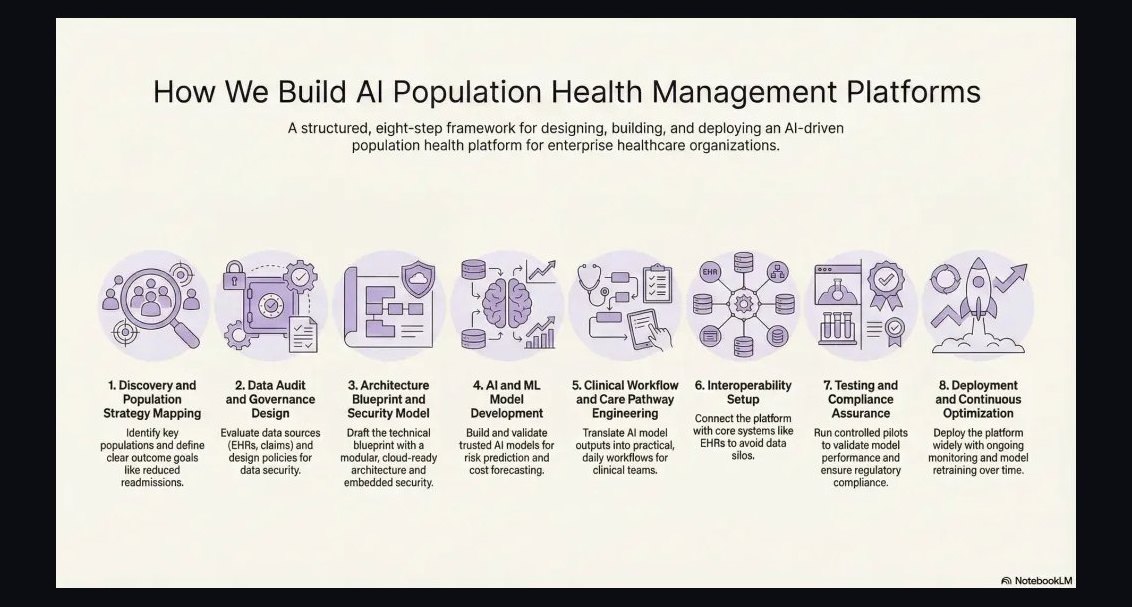 gtm-playbookHow do you build a population health platforms (Arcadia / Innovaccer) go-to-market motion in 2027?
 pulse-recentWhat are the concrete steps to recruit and sign your first 10 channel partners in 2027?
 pulse-recentWhat go-to-market playbook works best for Events & Venues in 2027?
 pulse-recentWhat are the concrete steps to build a GTM playbook for an ideal SDR in 2027?
 gtm-playbookHow do you build the GTM playbook for a convenience-store (C-store) operator in 2027?
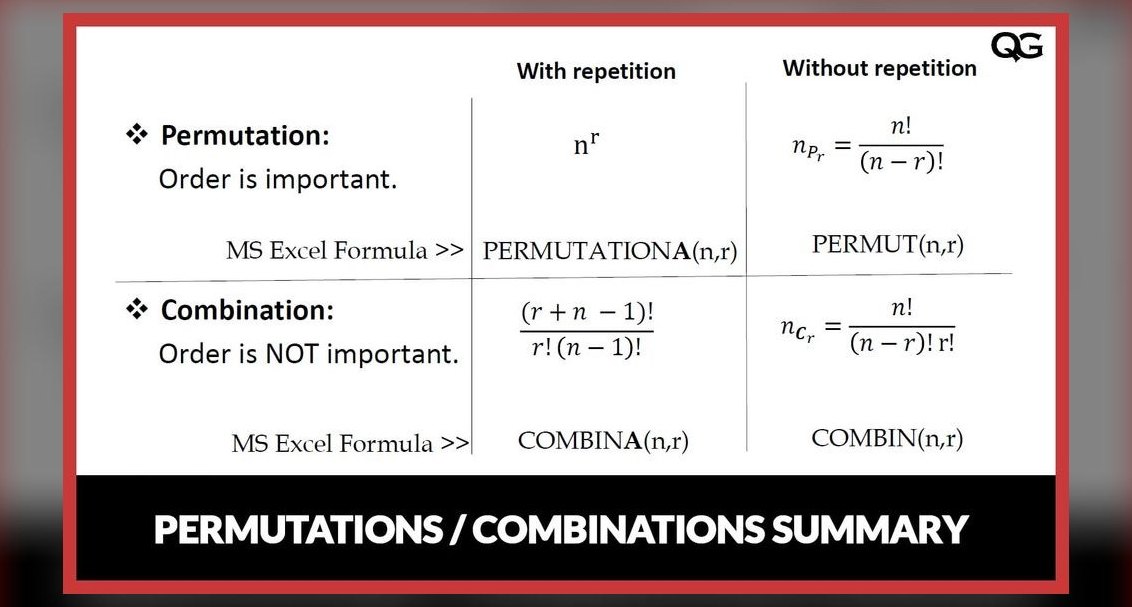 pulse-recentTop 10 go-to-market channel combinations for a B2B SaaS product in 2027
 pulse-recentWhat margin do you have to offer channel resellers before they'll actively sell your product in 2027?
 pulse-recentWhat are the top 10 go-to-market channels for a B2B SaaS company in 2027?
 pulse-recentWhat are the concrete steps to build a channel partner program from scratch in 2027?