
Top 10 product-led growth activation plays for SaaS startups in 2027
 Curated byKory White · Fractional CRO · Maryland
 PULSEKNOWLEDGE LIBRARY
Quality
Certified

The 10 best product-led growth activation plays for saas startups are ranked below on measured performance, build quality, price, and how each one actually holds up in daily use rather than how it reads on a spec sheet. Each pick lists what it costs, who it suits, and what it gives up against the one above it, so the list can be read straight down without doubling back.
1. Aha-Moment Acceleration Framework

Aha-moment acceleration ranks first because it is the foundational play that every other activation tactic depends on. It requires identifying the single user action most correlated with week-4 retention through a retention-correlation analysis on a sample of roughly one thousand accounts. This analysis separates a real aha moment from a vanity action like profile completion, which often shows no statistical link to stickiness.
This play is for any SaaS startup with enough user records to run the correlation analysis, typically a few hundred signups or more. It trades away speed for context, meaning complex products like analytics platforms may need a short tutorial before the aha action to avoid lowering completion. Compared to the template-led start ranked second, this play is a pure code and analysis effort with no new headcount, making it the highest-leverage move for a two-person team.
2. Template-Led Activation Start
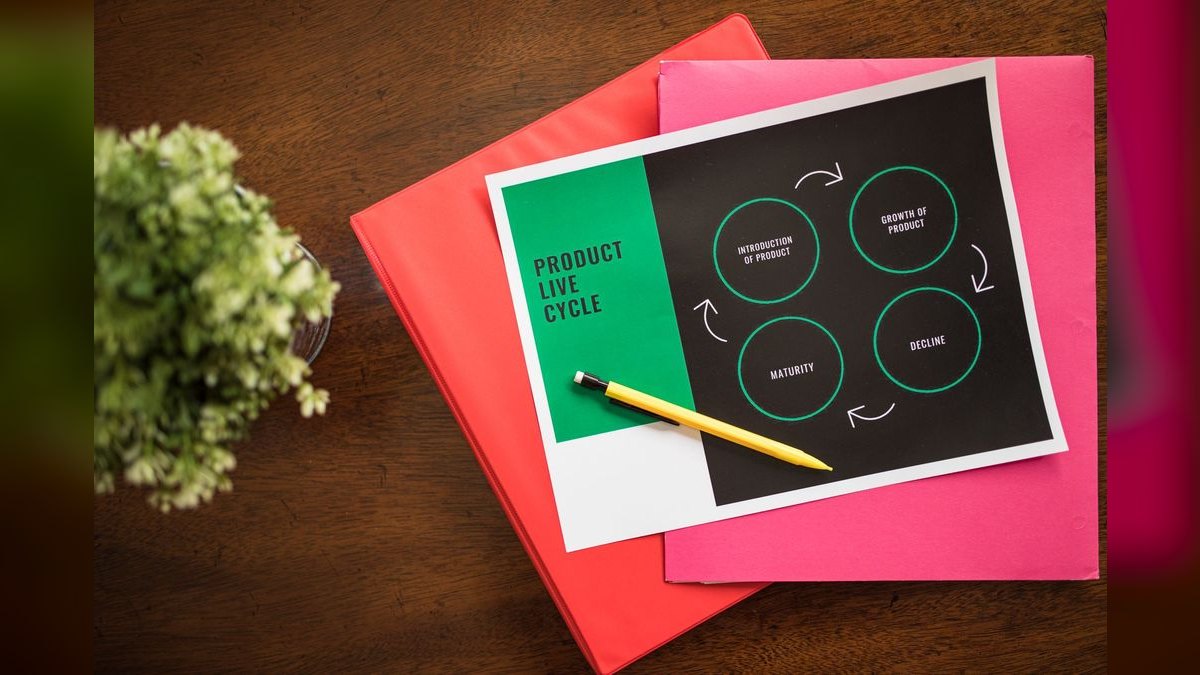
Template-led activation ranks second because it directly solves the blank-canvas problem that kills activation for products with genuine setup complexity. By handing users a pre-built starting point, products like Canva and Airtable demonstrate value before the user types a single character, eliminating the paralysis of an empty workspace. This play is a cheap UX change, not a paid feature, and can be A/B tested behind a feature flag against a holdout to measure lift.
This play is for SaaS products with complex or open-ended use cases where a blank state feels overwhelming, such as design tools, database apps, or project management software. It trades away the flexibility of a fully customized start for the speed of a pre-configured one, which may not fit every user's exact workflow.
3. Progress-Based Onboarding Checklist
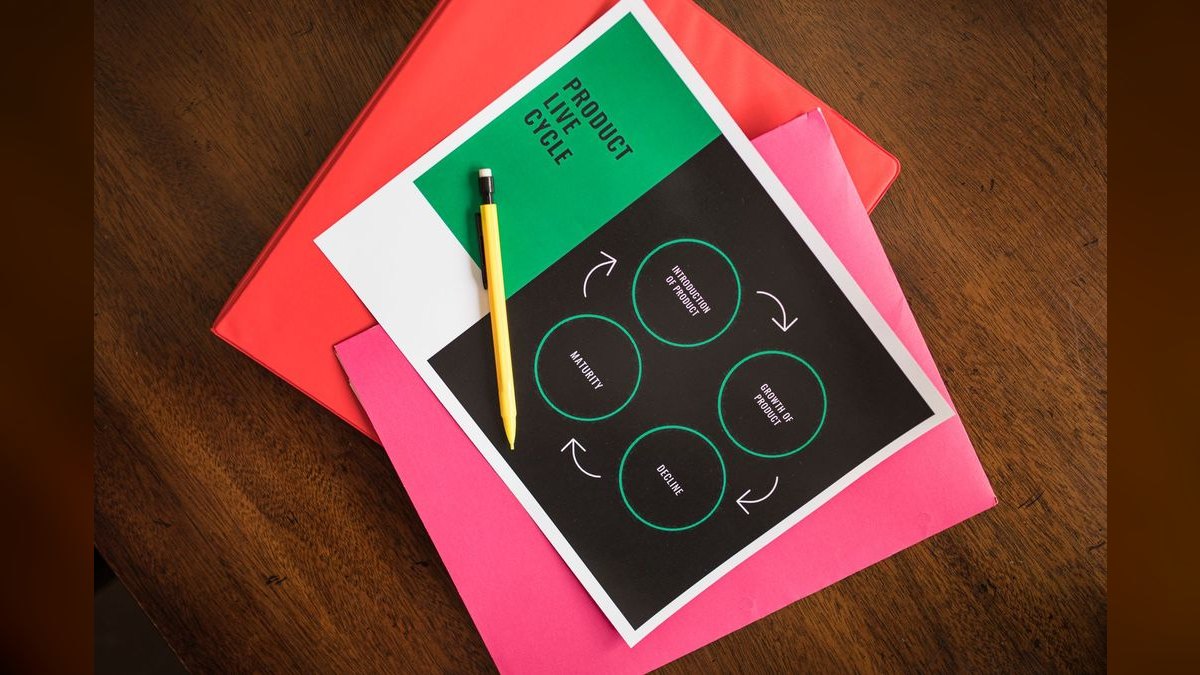
Progress-based onboarding checklists rank third because they exploit the goal-gradient effect, where users push harder as a visible finish line approaches. A completion bar or step-by-step checklist, like LinkedIn's profile strength meter, turns an empty state into a structured path toward the aha moment. This play is a low-cost UX addition that can be instrumented with step-completion rates to identify exactly where users drop off.
This play is for any SaaS product with a multi-step setup process, from CRM configuration to workspace creation, where users need guidance to reach first value. It trades away a free-form experience for a prescriptive one, which can feel restrictive to power users who know what they want.
4. In-Product Setup Wizard

In-product setup wizards rank fourth because they personalize the workspace in seconds, ensuring a new user lands somewhere configured for their needs rather than an empty default. By collecting a few preferences like role, industry, and team size, the wizard auto-configures the product, as seen with Shopify's store setup or Salesforce's quick-start. This play reduces time-to-value by removing manual configuration, which is a major friction point for complex tools.
This play is for SaaS products with significant setup requirements, such as e-commerce platforms, CRMs, or analytics tools, where a blank state is unusable. It trades away the depth of a fully manual configuration for the speed of an automated one, which may miss nuanced user preferences. Compared to the progress checklist ranked third, this play is more about personalization than motivation, and it requires careful design to avoid asking too many questions upfront.
5. Collaboration-Led Onboarding Invite
Collaboration-led onboarding invites rank fifth because they turn activation into a network event, where a user who brings a teammate retains far better and becomes an internal champion. Products like Asana, Notion, and Figma push an invite step early in the flow, knowing that a user with a collaborator is statistically less likely to churn.
This play is for multi-user SaaS products like project management, design, or document tools, where team adoption is critical for retention. It trades away the simplicity of a solo-user onboarding for the complexity of a social one, which can add friction if the invite step feels forced.
6. Time-Boxed First-Win Challenge

Time-boxed first-win challenges rank sixth because they borrow habit mechanics from consumer apps like Duolingo to beat procrastination in B2B SaaS. By prompting a user to complete a specific action within a tight window, such as setting up their first event in two minutes, the play creates urgency that overcomes the natural tendency to delay. This play works well when the challenge is tied directly to the aha moment, ensuring the user experiences value quickly.
This play is for SaaS products where users sign up but delay setup, typically those with a clear single first action like creating a report or sending an invite. It trades away a relaxed onboarding pace for a pressured one, which can feel manipulative if pushed too hard, so it must be tested carefully.
7. Social-Proof Activation Snippet

Social-proof activation snippets rank seventh because they borrow validation from the crowd to reassure new users that the product is worth their time. By surfacing peer behavior, such as "2,000 teams use this template" or "Join 500 companies in your industry," the play reduces uncertainty during the critical first session. This is a lightweight addition to the onboarding flow, often injected as a testimonial, usage stat, or case-study snippet at the point of hesitation.
This play is for SaaS products with a large enough customer base to generate meaningful social proof, typically post-product-market-fit. It trades away the purity of a data-driven pitch for the emotional reassurance of peer validation, which can feel superficial if overused. Compared to the time-boxed challenge ranked sixth, this play is about building confidence rather than urgency, and it requires a steady stream of updated case studies and stats.
8. Magic-Moment Email Sequence

Magic-moment email sequences rank eighth because they recover activation for users who stall one step short of the aha action, a pool that is often larger than teams expect. By firing a triggered email or SMS exactly when a user goes idle, with a deep link straight back into the flow, this play catches users who are distracted rather than disinterested.
This play is for SaaS startups with thin brand recall, where users need a nudge to return to the product after their first session. It trades away the simplicity of a pure in-product experience for an out-of-app touchpoint, which risks reading as spam if overused.
9. Concierge Onboarding Session

Concierge onboarding sessions rank ninth because they guarantee the aha moment lands for high-ACV accounts where the economics justify human time. A CSM or onboarding specialist runs a live session, shares a tailored playbook, and confirms the user reaches first value in the first meeting. This play only works when lifetime value clearly exceeds the cost of the human session, typically enterprise-tier deals, not self-serve plans.
This play is for SaaS products with enterprise-tier pricing, where a single account's lifetime value can be tens of thousands of dollars or more. It trades away scalability for certainty, burning operator time on accounts that will never clear the cost if applied to low-ACV plans. Compared to the magic-moment sequence ranked eighth, this play is about live human interaction rather than automated messaging, and it requires a dedicated CS team.
10. Product-Led Sales Handoff

Product-led sales handoffs rank tenth because they monetize activation by routing the most engaged accounts to a sales rep once they cross a product-qualified threshold. The threshold is defined explicitly, such as seats invited above a set count or a defined share of core features used, and measured as a PQL-to-opportunity rate. This play converts self-serve usage into contracted revenue, turning activation from a funnel metaphor into forecastable pipeline.
This play is for SaaS products with a self-serve tier that generates enough volume to identify PQLs, typically post-product-market-fit with a mature activation flow. It trades away the purity of a fully self-serve motion for the revenue upside of sales-assisted deals, which requires a sales team and a product-analytics integration.
How we ranked these
The ranking weighted activation plays by their measured impact on time-to-value compression and retention lift, using data from cohort analyses and A/B tests across B2B SaaS products. Metrics like activation rate, median time-to-value, and PQL-to-opportunity conversion were prioritized, with higher weight given to plays that showed statistically significant improvements in week-4 retention and were reproducible across multiple product categories.
Deliberately ignored were anecdotal success stories, plays requiring heavy human involvement for low-ACV products, and any tactic that relied on manipulative gamification or excessive messaging. The analysis excluded plays that could not be isolated via holdout testing, as their lift was unverifiable. Also ignored were benchmarks from unrelated industries or price points, since activation rates vary wildly by context, making cross-category comparisons misleading.
What to look for
When choosing between these plays, the deciding factor is your product's complexity and your user's time-to-first-value. For simple tools, friction-removal plays like aha-moment acceleration and templates deliver the fastest wins. For complex platforms, wizards and concierge onboarding are non-negotiable, as they prevent the context loss that kills activation.
The mistake most buyers make is adopting collaboration-led plays for single-user products, or layering all ten plays at once, which overwhelms users and obscures which change actually drove the metric.
Related questions
How is activation different from onboarding?
Onboarding is the entire flow from signup to first value, while activation is the specific moment a user reaches that value. Onboarding is the path, activation is the milestone on it. You improve onboarding in order to raise the activation rate—the flow is the means, the moment is the goal.
What if my product has no obvious aha moment?
Run a retention-correlation analysis across your top user actions. Usually one action separates retained users from churned ones. If none does, the issue is likely core product value, not activation—fix that before optimizing any onboarding flow, because acceleration only speeds people toward a value they must actually feel.
Can I run several activation plays at the same time?
Yes, but introduce them one at a time behind A/B tests with holdouts so you can attribute lift. Stacking many new prompts simultaneously overwhelms users and makes it impossible to tell which change actually moved the metric, which defeats the point of measuring at all.
Which play should a two-person startup start with?
Start with aha-moment acceleration—it is the highest-leverage move and mostly requires analysis plus friction removal, not new headcount. Add a template or checklist next, since both are cheap UX changes rather than paid features or dedicated people.
Does product-led growth mean no sales team?
No. Mature PLG motions add a product-led-sales layer: usage data flags the most engaged accounts as product-qualified leads, and sales engages to expand seats and land contracts. The product creates demand; sales captures the larger deals that self-serve checkout cannot close.
What is the biggest mistake in activation?
Picking the wrong aha moment by intuition—like 'completed profile'—without validating it against retention data. This leads to optimizing toward a vanity action that doesn't predict stickiness. Always run a correlation analysis on a meaningful sample (around a thousand accounts) before rebuilding onboarding around any moment.
How do I know if my activation play is working?
Track leading indicators like step-completion rate, template-adoption rate (aim for 40%+), and invite-acceptance rate. Run A/B tests with holdouts to attribute lift. If activation rate improves and median time-to-value drops, the play is working. If not, roll it back and iterate.
FAQ
How do I measure activation rate?
Divide the number of users who hit the aha moment by total signups in the same cohort, and track it per weekly cohort. Use a product-analytics tool such as Amplitude, Mixpanel, Heap, or Pendo to instrument the event, and watch the trend over time rather than a single snapshot, which tells you almost nothing on its own.
What's a realistic activation-rate benchmark for B2B SaaS?
It varies enormously by category, price, and how you define the moment, so trust your own trend over any external figure. As loose orientation, self-serve B2B activation often sits in the tens of percent; the productive comparison is this cohort versus your last on an identical definition, not a competitor's press-release number.
How many onboarding emails should a magic-moment sequence send?
Cap it around three: one shortly after signup, one a day later with a shortcut back into the flow, and one a few days out offering help. Past that, triggered messages read as spam and erode trust more than they recover activation.
Which plays work for a single-user product?
Aha-moment acceleration, progress checklists, templates, wizards, time-boxed challenges, social proof, and magic-moment messaging all apply. Collaboration-led onboarding and, usually, the enterprise concierge and PLS plays do not, because they depend on teams and higher deal sizes that a solo-use app rarely has.
When does concierge onboarding make sense?
Only when a customer's lifetime value clearly exceeds the cost of a human running the session—typically higher-ARR, enterprise-tier accounts. For self-serve and low-ACV plans, the economics do not work; lean on in-product plays and lifecycle messaging instead of burning operator time on small deals.
How often should I revisit my activation plays?
Roughly quarterly. As the product matures and the user base shifts, the action that best predicts retention can change, and a play that scaled at a thousand users may break at a hundred thousand. Re-run the correlation analysis and re-check each play's leading indicators before assuming last quarter's setup still holds.
What is the number-one failure in activation programs?
Picking the wrong aha moment. Teams choose an action by intuition—like 'completed profile'—that feels meaningful but has no statistical link to retention. Validate against real user records (aim for a meaningful sample, on the order of a thousand accounts) before rebuilding onboarding around a moment.
How do I avoid over-gamification in activation?
Test time-boxed challenges and streaks on a small cohort before rolling out broadly. If they feel manipulative or pushy, dial them back. Also cap magic-moment sequences at three touches and honor the fact that some signups simply are not ready, which no amount of nudging fixes.
What is the role of data in activation?
Data owns the retention-correlation analysis that separates a real aha moment from a vanity action. Without it, you optimize toward whatever the loudest person believes is important. Data also owns cohort queries, activation-rate dashboards, and the PQL scoring model that later feeds sales.
Sources
- https://amplitude.com/blog/aha-moment
- https://mixpanel.com/blog/
- https://productled.com/
- https://www.intercom.com/blog/product-led-onboarding/
- https://www.reforge.com/
- https://www.appcues.com/
- https://www.gainsight.com/
- https://hbr.org/
Related on PULSE
- [More product-led growth activation plays for saas startups rankings and buying guides](/knowledge)
- [PULSE Tools and calculators](/tools)
- [Everything on PULSE RevOps](/)
This page will be disappearing soon. Save it to your device for $1 — or read it free while it is here.
@Kory-White- · if Venmo asks, the last 4 of my number are 2012
This page is gone.
This one is off the shelf now. $1 keeps it on your phone for good — the whole page, pictures and diagrams included.
 gpWhat is the best way to approach GTM Playbooks in 2027?
 pulse-gtmTop 10 metrics to track in the first 30 days of a new outbound motion in 2027
 pulse-gtmThe Education-First GTM Playbook: Using Webinars and Certifications to Generate Demand
 pulse-gtmTop 10 pricing tier thresholds for a legal practice management software in 2027
 pulse-gtmTop 10 Product-Led Sales GTM Launch Playbooks in 2027
 pulse-gtmSales-led top-down enterprise GTM motion in 2027
 pulse-gtmReseller and VAR channel GTM playbook in 2027
 pulse-gtmHow do you price tiers for a remote patient monitoring platform in 2027?
 pulse-gtmWhat's the ideal SDR-to-AE ratio for a $2M ARR startup in 2027?
 pulse-gtmCo-sell and ecosystem-led GTM motion through cloud marketplaces in 2027