
Top 10 Sales KPIs for Mobile Forklift & Material Handling Equipment Service in 2027
 Curated byKory White · Fractional CRO · Maryland
 PULSEKNOWLEDGE LIBRARY
Quality
Certified

The key sales KPIs for the Mobile Forklift & Material Handling Equipment Service industry in 2027 are service-contract attach rate, first-time-fix rate, technician billable utilization, mean time to repair, parts gross margin, service revenue per truck under contract, days sales outstanding, national-account renewal rate, and telematics-driven predictive-maintenance conversion. Track them weekly.
The outcome you should expect
When these nine numbers are instrumented and reviewed on a fixed cadence, the P&L stops behaving like a project-services business and starts compounding. A dealer that pushes contract attach past 65% converts a volatile time-and-materials book into predictable recurring revenue. A 5,000-truck installed base at a $3,200 average annual preventive-maintenance contract represents roughly $16M of recurring service revenue before a single reactive call is booked, and every additional attach point adds about $160K to the top line.
The second-order effect is margin stability. Contract revenue at 40-55% gross margin drags parts pull-through with it, and parts are the highest-margin line in the entire P&L at 35-50% wholesale-to-invoice markup. A well-run regional Material Handling dealer with 8,000 trucks under contract at $4,500 per truck lands around $36M of recurring service revenue at $15-19M gross profit. Compare that to a time-and-materials shop billing $475-$925 per commercial ticket: higher per-ticket margin, zero compounding, and a fresh start every quarter with no annuity underneath it.
The third outcome is defensibility. Once you can prove 94%+ mean-time-to-repair SLA compliance across a rolling 24 months and surface OSHA 1910.178 documentation for any truck in under four hours, national accounts stop shopping you on price. That combination — recurring revenue, protected parts margin, and a compliance moat — is what separates a service business that survives an RFP cycle from one that loses a 50-DC account and never recovers the route density.
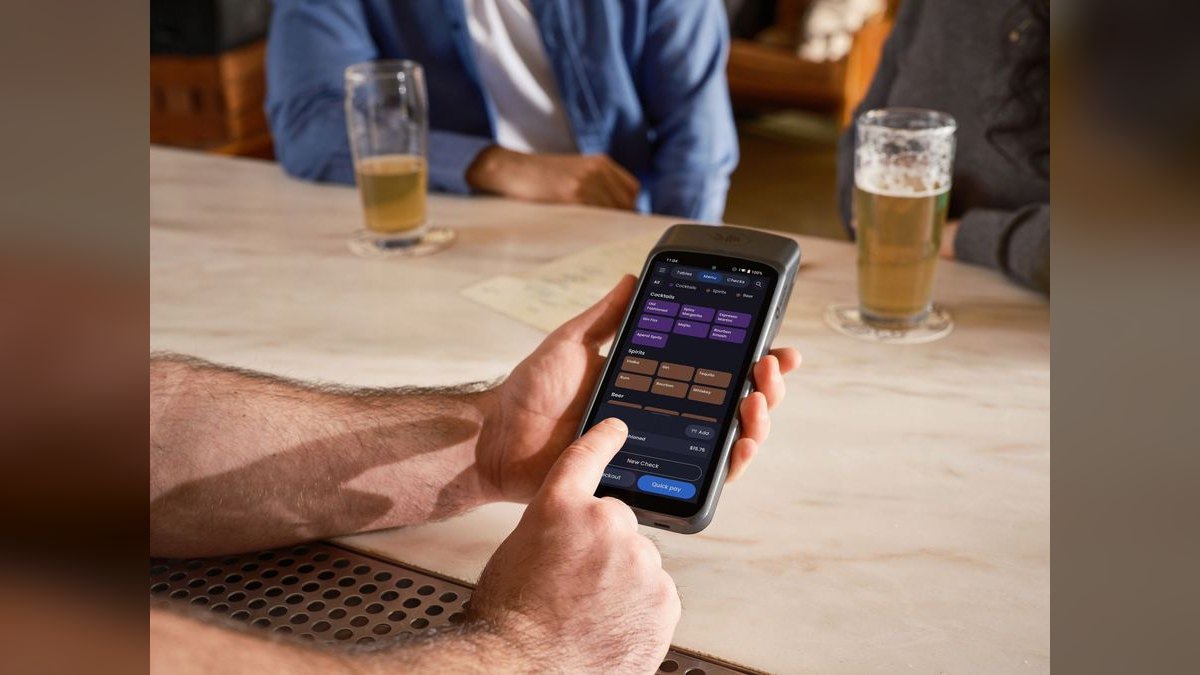
The economics are unusual because the real asset is the technician, not the van. A Class IV/V counterbalance technician certified on the Equipment and signed off on OSHA 1910.178 bills $145-$195 per hour at 70-85% billable utilization, or roughly $215K-$345K of recoverable annual revenue. Lose one and you lose a P&L line, so retention (industry average ~65%, best-in-class 78-88%) is itself a leading indicator of every downstream metric.
What drives that outcome
The nine KPIs are not independent — they form a dependency chain, and the highest-leverage inputs sit at the top. Contract attach feeds service revenue per truck and parts margin because a truck on contract pulls scheduled parts automatically. First-time-fix and billable utilization jointly drive mean time to repair: a technician who arrives with the right hydraulic seal kit for a Toyota 8FGCU resolves on the first visit instead of driving 90 minutes back for a backordered part. Telematics conversion sits upstream of both attach and first-time-fix, because a fault code delivered to the dispatch screen before the truck fails converts a reactive emergency into a scheduled event.
Two structural levers dominate. The first is dispatch geography. Six trucks within 90 minutes of drive time bill 6.5 hours; two trucks across the same 90 minutes bill 2 hours — identical labor cost, triple the revenue. Route density, not raw technical skill, is the single biggest margin lever after attach. The second is telematics coverage: Toyota T-Matics, Crown InfoLink, Raymond iWAREHOUSE Gateway, and Hyster-Yale Telematics push fault codes that cut mean time to repair 35-50% versus reactive dispatch. A Forklift fleet wired for predictive alerts simply generates fewer 2 a.m. emergencies and more planned morning appointments.
The chain explains why sequencing matters. Chasing renewal rate directly is futile if mean time to repair is missing SLA; fixing mean time to repair is futile if the van parts kit is wrong. You work the graph from the top: activate telematics, drive attach, stock the van, then let renewal follow. Dealers who jump straight to the renewal conversation without the underlying scorecard find they have nothing quantitative to defend price with, and the account reverts to a pure cost comparison they usually lose.
Benchmarks and realistic ranges
Each metric has a defensible band drawn from OEM-captive dealers, large independents, and regional operators. Treat these as the 2027 practitioner benchmarks.

Service contract attach rate. Healthy regional dealer 65-78% of the serviceable installed base; OEM-captive dealers (Crown direct, Raymond direct, Toyota Material Handling regional operations) reach 80-88% because the contract bundles at point of sale; independent groups like Equipment Depot target 60-70%. Below 50% and the business is effectively a break-fix shop.
First-time-fix rate. 78-88% commercial. Below 75% signals wrong van inventory, dispatch misdiagnosis, or a technician mix short on specialty certification (narrow-aisle, AGV, lithium-ion battery). Telematics-integrated fleets see 84-90%. Each one-point gain trims mean time to repair by roughly 0.4 hours and lifts renewal about 1.5 points.
Technician billable utilization. 70-85%; best-in-class regional dealers hit 82-87%. Below 70% means geographic-spaghetti routing. Above 88% is a warning, not a win — technicians need 40-60 hours a year off the truck for ITA, OEM, and OSHA recertification, and starving that pipeline erodes retention and, eventually, first-time-fix.
Mean time to repair. 4-8 hours commercial counterbalance; 6-14 hours narrow-aisle and reach; 12-36 hours specialty and AGV. Tier-1 sites often carry 4-hour response and 8-hour resolution SLAs. Miss twice inside a quarter and the account typically goes to RFP.

Parts gross margin. 35-50% wholesale-to-end markup; specialty parts (lithium-ion cells, AGV navigation sensors, hydraulic cylinders) run 45-55%. Quality remanufactured parts and cooperative purchasing (Sourcewell) can lift margin 4-7 points. Protect this line from erosion — it is the richest metric in the P&L.
Service revenue per truck under contract. $3,400-$6,800 commercial, $5,200-$11,500 specialty. OEM-captive dealers run 15-25% higher because warranty and extended-service plans flow through the same figure.
Days sales outstanding. 35-55 days commercial; national accounts often dictate 60-90 net. A 10-day improvement on a $40M service P&L frees roughly $1.1M of working capital — enough to fund 6-10 additional service vans and their parts inventory.
National-account renewal rate. 88-94% best-in-class; OEM-captives 92-96%. Lifetime value on multi-DC accounts runs $50K-$500K annually over 5-8 year tenure, or $300K-$3M lifetime. A four-point renewal swing on a 40-account book is a $4-6M revenue swing per cycle.

Telematics-driven PM conversion. 18-32% of flagged fault codes converting to a billable event before failure. This metric did not exist before 2022 and is the fastest-growing line as OEM IoT penetration climbs from ~35% toward a projected 70%+ by 2030.
One structural shift moves several bands at once: electrification. Electric forklifts are now 55-65% of new sales and heading toward ~75% by 2030, with lithium-ion at 25-35% of that mix today. Battery service displaces hydraulic and transmission work, first-time-fix improves because lithium diagnostics are software-driven, and service revenue per truck can fall 8-12% as electric trucks need fewer PM cycles — which is why leading dealers reprice to flat per-truck-per-month rather than billing hours of service.
Risks, edge cases, and failure modes
Four failure modes account for most blown P&Ls, ranked by how often they surface in operator post-mortems.
Dispatch geography collapse. A dealer wins a 50-DC national account without auditing drive-time density. Six months in, three regions run at 45% billable utilization, SLA misses stack, and the contract goes back to RFP. The fix is procedural: any new account over five sites requires a drive-time density model (Geotab or Samsara routing) before the ink dries, and low-density routes get priced to reflect the real labor recovery.

Van parts misalignment. A technician reaches a distribution center for a scheduled event, discovers the seal kit is on backorder, and drives 90 minutes back. First-time-fix drops from 84% to 71% and mean time to repair doubles. Fix: telematics-driven van replenishment plus a minimum parts-on-van standard — roughly $45K of inventory for commercial technicians, $65K for specialty.
Technician retention drift. Losing 4 of 18 technicians in a quarter can vaporize ~$1.3M of recoverable revenue and cost ~$45K in recertification to backfill. Fix: budget ITA and OEM recertification at 2-3% of technician compensation and publish a documented ladder (Tier 1 commercial → Tier 2 specialty → Tier 3 master/AGV) so the career path is legible before a recruiter calls.
Compliance-reporting failure. Large accounts require OSHA 1910.178 documentation reachable within four hours of an inspection. A vendor who delivers flawless wrench time but cannot produce the daily-inspection log loses the account at renewal regardless of mean-time-to-repair performance. OSHA serious violations run $15,625-$156,259 per instance, so the customer's safety officer treats the compliance dashboard as part of the service, not a nicety. Fix: an integrated dashboard tied to ServiceTitan, ServiceMax, or Salesforce Field Service, refreshed daily and accessible to the customer.
The edge cases worth naming: rental-adjacent operators (Sunbelt, United Rentals) blur the attach metric because service bundles into rental utilization; automation pure-plays (Symbotic, Daifuku, Dematic) approach 100% attach because conveyors and AS/RS stop the whole facility when service stops, so their KPI is uptime SLA rather than per-PM conversion. Do not benchmark a counterbalance service book against an automation uptime book — the denominators differ, and forcing one dealer's targets onto the other manufactures false alarms.
A practical rollout plan
Move in three 30-day waves so instrumentation precedes action and renewals close before they expire.

Days 1-30 — instrument and benchmark. Stand up the nine KPIs in ServiceTitan, ServiceMax, or Salesforce Field Service. Pull 12 months of dispatch records, ticket-level revenue, parts movement, and renewal history, then set a baseline for each metric by region, by technician, and by named account. Audit telematics coverage — below 35% of the contracted base actively pushing fault codes means the next wave prioritizes activation over new-contract sales. Pull DSO aging and get a named billing manager on the phone with the 12 largest payment laggards.
Days 31-60 — fix geography and parts. Run the drive-time density model across every named account, re-bid or reprice the three lowest-density routes, and rebuild the standard van kit against the last 90 days of first-time-fix failures. Ship the OSHA 1910.178 dashboard to the top 10 national accounts' safety officers. Trigger a named outreach call for every fault code that hasn't converted to an event within 72 hours. Target a five-point first-time-fix lift and a 10% telematics-conversion lift.
Days 61-90 — lock renewals and expand attach. Open renewal conversations 90 days ahead of every Tier-1 expiration, armed with the mean-time-to-repair, first-time-fix, and compliance scorecard plus a multi-year offer with locked escalators. Launch an attach campaign on every off-contract truck in the base, bundling first-year PM at a 10-15% discount for a 36-month commitment. Close comp gaps for any technician below the 75th percentile of their tier. By day 90 expect attach +3 points, first-time-fix +5, billable utilization +4, and a documented renewal commitment from each Tier-1 account.
The cadence that sustains it: a daily dispatch huddle on first-time-fix, SLA clocks, and parts stock-outs; a weekly review of billable utilization, attach pipeline, and DSO aging; a monthly look at service revenue per truck, parts margin, and renewal pipeline; and quarterly national-account QBRs with the full scorecard and rebate true-ups. Weekly is the floor for the leading indicators — anything slower and a drifting metric is already a lost account by the time it surfaces.
Related questions
What tech-to-truck ratio should a regional dealer target?
About 1 commercial technician per 180-280 trucks under contract in dense urban and suburban areas, 1 per 110-160 in dispersed rural territory. Specialty technicians (narrow-aisle, AGV, lithium-ion) carry 60-110 trucks each because diagnostic time per ticket runs 2-3x commercial.
Which KPI should a struggling dealer fix first?
Contract attach rate, because every other metric flows from it. But if attach is already healthy and renewals are slipping, root-cause mean time to repair and compliance reporting first — those decide RFP outcomes more than price does.
How does electrification change the metrics?
Battery service replaces hydraulic and transmission work, first-time-fix improves on software-driven lithium diagnostics, and service revenue per truck can fall 8-12% because electric trucks need fewer PM cycles. Reprice to flat per-truck-per-month rather than billing hours of service.
Do rental-bundled service books use the same KPIs?
Partly. Attach rate blurs when service rides on rental utilization, so operators like Sunbelt and United Rentals lean on uptime SLA and revenue-per-unit metrics instead of a clean per-PM attach percentage.
What resolution SLA do Tier-1 warehouses actually demand?
Most Tier-1 distribution centers write 4-hour response and 8-hour resolution for commercial counterbalance trucks, with penalty credits for repeated misses. Specialty and AGV assets carry looser 12-36 hour windows but stricter documentation and root-cause reporting requirements.
FAQ
What is the single most important KPI for a 2027 forklift service dealer? Service contract attach rate. A dealer at 75% attach is a compounding business with predictable cash flow, parts pull-through, and renewal momentum; a dealer at 45% is a project-services shop with quarterly volatility. Moving from 45% to 75% is a 24-30 month campaign of bundling first-year PM at sale, converting repeat T&M customers, and using telematics fault codes as the outreach trigger.
How does telematics actually change the service P&L? It shifts the business from reactive to predictive. Fault codes reach dispatch before the customer calls, so the dealer pre-stages parts, sends the right technician, and turns a six-hour emergency into a scheduled morning appointment. Typical lifts: first-time-fix +6 to +9 points, mean time to repair -35 to -50%, parts margin +3 to +5 points, and telematics conversion into the 22-28% band.
How do national accounts award these contracts? Through a formal RFP every 3-5 years, scored on SLA compliance, compliance-reporting capability, geographic coverage, parts availability, certification depth, and price. Above a coverage threshold, price rarely decides it — SLA compliance and documentation do. Vendors without OEM telematics integration are increasingly disqualified at the technical-evaluation stage.
What is the LTV math on a Tier-1 account? $50K-$500K annual revenue across a multi-DC footprint, 5-8 year tenure, renewal 88-94% best-in-class — a $300K-$3M lifetime value. Acquisition cost (9-18 month sales cycle, named account executive, RFP response) runs $80K-$220K, so payback lands inside 18-30 months at 3-12x ROI.
Why is parts gross margin worth protecting above all other lines? Because it is the richest recurring line and it rides on attach. A contracted truck pulls scheduled parts at 35-50% markup automatically, so every point of attach compounds into parts revenue. Discounting parts to win a T&M ticket trades the highest-margin dollars in the P&L for one-time volume.
How often should each metric be reviewed? Daily for first-time-fix, SLA clocks, and stock-outs; weekly for billable utilization, attach pipeline, and DSO; monthly for revenue per truck, parts margin, and renewal pipeline; quarterly for national-account QBRs, telematics conversion, and retention. Weekly is the floor for the leading indicators.
Sources
- https://www.indtrk.org/ — Industrial Truck Association (ITA) industry statistics
- https://www.mmh.com/ — Modern Materials Handling, Top 20 Lift Truck Suppliers
- https://www.osha.gov/laws-regs/regulations/standardnumber/1910/1910.178 — OSHA 1910.178 Powered Industrial Trucks
- https://www.toyota-industries.com/ — Toyota Industries Corporation investor reports
- https://www.kiongroup.com/ — KION Group annual reports and capital markets data
- https://www.hyster-yale.com/ — Hyster-Yale Materials Handling investor filings
- https://www.crown.com/ — Crown Equipment / Crown InSite telematics
- https://www.raymondcorp.com/ — Raymond Corporation iWAREHOUSE Gateway
- https://www.mheda.org/ — Material Handling Equipment Distributors Association benchmarks
- https://www.bls.gov/ — US Bureau of Labor Statistics field-service labor data
Related on PULSE
- What are the key sales KPIs for the Commercial Material Handling Equipment Dealership industry in 2027?
- What are the key sales KPIs for the Grain Elevator & Bulk Grain Handling industry in 2027?
- What are the key sales KPIs for the Mobile Mining & Quarry Fleet Tire Service industry in 2027?
- What are the key sales KPIs for the Commercial Dock Leveler & Loading Equipment Service industry in 2027?
- What are the key sales KPIs for the Mobile Crushing & Screening Equipment Rental industry in 2027?
This page will be disappearing soon. Save it to your device for $1 — or read it free while it is here.
@Kory-White- · if Venmo asks, the last 4 of my number are 2012
This page is gone.
This one is off the shelf now. $1 keeps it on your phone for good — the whole page, pictures and diagrams included.
 pulse-industry-kpisTop 10 Sales KPIs for Department Store in 2027
 pulse-industry-kpisTop 10 Sales KPIs for Shopify Plus Merchant in 2027
 pulse-industry-kpisTop 10 Sales KPIs for Commercial Modular & Prefabricated Building Manufacturing in 2027
 pulse-industry-kpisTop 10 Sales KPIs for Hotel Brand Operations in 2027
 pulse-industry-kpisTop 10 Sales KPIs for Athletic Apparel and Footwear in 2027
 pulse-industry-kpisTop 10 Sales KPIs for Casino and Gaming Resort Operations in 2027
 pulse-industry-kpisTop 10 Sales KPIs for Fire Protection and Life Safety Systems in 2027
 pulse-industry-kpisTop 10 Sales KPIs for Streaming / Media in 2027
 pulse-industry-kpisTop 10 Sales KPIs for Biotech Therapeutics in 2027
 pulse-industry-kpisTop 10 Sales KPIs for Vector Database in 2027