


What does a great RevOps 30-60-90 day plan look like for a new VP or Director in 2027?
Quality
Certified

A great RevOps 30-60-90 day plan for a new VP or Director moves through three disciplined phases: days 1-30 listen and audit (1:1s with every GTM leader plus 12-20 ICs, a written five-pillar audit), days 31-60 pilot one or two highest-leverage quick wins on a single segment, and days 61-90 commit to a 12-month roadmap with tooling, hiring, OKRs, and locked budget.
What the 30-60-90 Plan Is and Why It Matters
A 30-60-90 day plan is the operating contract a new RevOps Vice President or Director writes with the executive team during their first quarter. It is not a to-do list and it is not a project plan; it is a sequenced argument that moves from evidence to experiment to commitment. The reason it matters so much in revenue operations specifically is that RevOps sits at the intersection of Sales, Marketing, Customer Success, and Finance, and every one of those functions has a different definition of truth. A new leader who starts changing definitions, fields, dashboards, or comp mechanics before earning trust will trigger resistance from all four directions at once. The plan is the mechanism that converts a stranger into a trusted operator in roughly 90 days.
The stakes are higher than they look. Most RevOps leaders are hired because something is visibly broken: forecast accuracy has drifted, pipeline coverage is opaque, the CRM is a swamp, or the MQL-to-SQL handoff has collapsed into finger-pointing. The hiring executive usually has a number in their head, and that number is almost always aggressive. If the new VP or Director walks in and promises to hit that number in week two, they inherit a commitment they cannot yet validate. If they instead spend 30 days producing a written audit, they arrive at day 90 with a plan that is defensible in front of a CFO, which is the only audience that ultimately matters for budget.
There is also a career dimension. A RevOps leader's first 90 days set the ceiling for the next two years. Leaders who over-promise early spend months defending a number instead of fixing root causes. Leaders who under-deliver in the pilot phase get labeled as analysts rather than operators. The narrow path between those two failures is a plan with hard phase gates: no changes in days 1-30, no org-wide rollouts in days 31-60, and no roadmap presentation until there is a measurable pilot result to point at.
Finally, the plan matters because RevOps is a trust function. Sales leaders will only adopt a forecast process they believe in. Marketing will only accept an SLA they helped write. Finance will only fund tooling that has a documented cost of inaction. None of that trust exists on day one, and none of it can be purchased with a title. It has to be earned through a visible sequence of listening, small wins, and a credible roadmap.

The Step-by-Step Process
Days 1-30: Listen and Audit
The first thirty days are for evidence, not action. The single most common failure mode for a new RevOps VP or Director is walking in with a playbook from the last company and trying to install it before learning where this company actually is. In month one the only deliverable is a written audit, and the only currency is questions.
Book the executive 1:1s first. In the first two weeks, meet every GTM leader: CRO, VP Sales, VP Marketing, VP Customer Success, VP Finance, head of enablement, and the product leader if PLG motion matters. Come with a fixed question set so answers are comparable across functions: What decision do you make weekly that you do not trust the data for? Where does the handoff to the next team break? What would you fix first if you owned RevOps? What did the last RevOps leader get wrong? That last question is uncomfortable and produces the most useful answers.
Then go a layer deeper than most new leaders do. Run 12-20 individual contributor 1:1s with frontline AEs, SDRs, CSMs, and any existing RevOps analysts. ICs will tell you the truth about the CRM, the forecast call, the comp plan, and which dashboards everyone secretly ignores. A CRO will say the CRM "works fine." An SDR will tell you there are 47 custom fields nobody fills in and that lead routing sends enterprise accounts to the wrong rep every Monday. Both statements are true at different altitudes, and the IC version is the one you can act on.
Run a five-pillar audit in parallel. The five pillars are consistent across almost every company:
- Forecast accuracy versus actuals for the last four to eight quarters, by segment and by rep. Compute the average absolute variance, not the average bias. A team that is always 15% optimistic is a different problem from a team that swings plus or minus 30%.
- CRM data hygiene. Field fill rate on the fields that actually drive reporting, stage definitions versus observed behavior, ownership and territory integrity, and duplicate or orphaned records.
- Pipeline coverage trends. Coverage ratio by quarter, by segment, and by stage conversion. Look for the quarter where coverage looked healthy in week 6 and collapsed by week 12.
- Comp plan integrity. Whether the plan is calculable from CRM data, whether crediting rules match the actual sales motion, and whether the plan has been changed mid-period.
- GTM tech stack. Line-item spend, seat utilization, contract renewal dates, and overlap. Most companies at 100-500 employees are paying for 8-12 tools with meaningful functional overlap.
What not to do in month one. Do not promise an overhaul to the CRO in week two; the moment you commit, you are anchored to a plan built on incomplete information. Do not change a Salesforce field, dashboard, or stage definition. Do not fire anyone. Do not buy anything. Do not send a "here's what I'd fix" email, even informally, because it will be forwarded and treated as a commitment.
The month-one artifact is one document. A 10-15 page written audit covering findings only, ranked by impact, with specific examples and the evidence behind each. "Forecast accuracy averaged 62% against a target of 85% over the last six quarters" is a finding. "The forecast process feels loose" is an opinion, and opinions do not survive a CFO review.
Days 31-60: Pilot the Highest-Leverage Initiatives
Month two is where the new leader moves from witness to operator, carefully. Action is allowed, but only on one or two small pilots, never an org-wide change. The job is to put visible wins on the board so that when month three arrives and budget and headcount are requested, the organization already trusts the person asking.
Pick three highest-leverage initiatives from the audit, then pilot two. Nine times out of ten the same three surface: cleaning up the most-broken CRM data (opportunity stage and close-date hygiene), redesigning the forecast cadence, and documenting the MQL-to-SQL handoff with an SLA and disposition tracking. These are universal quick wins because they cost almost nothing, produce measurable lift inside a single quarter, and generate the trust capital spent in month three.
Forecast cadence redesign is usually the highest-value pilot. The typical redesign includes a fixed weekly submission deadline, a standardized commit/best-case/pipeline categorization with written definitions, a rep-level inspection of every commit deal above a threshold, and a manager roll-up that happens before the executive call rather than during it. Teams that run this consistently often see forecast accuracy improve by 5-10 percentage points within one quarter, and the executive forecast call gets materially shorter because the debate moves upstream.
MQL-to-SQL SLA with disposition tracking is the second reliable pilot. The design is simple: marketing commits to a lead quality standard, sales commits to a follow-up window (commonly 24-48 hours for inbound), every rejected lead requires a disposition reason, and both teams review the disposition data monthly. The first month usually reveals that a meaningful share of "bad leads" were never contacted, which reframes the entire conversation.

A pipeline coverage dashboard executives actually trust is the third. It should show coverage by segment and by stage, with historical conversion rates applied rather than flat multipliers, and it should be refreshed on a schedule the CRO can rely on. When the QBR runs off a dashboard the CRO trusts, the meeting changes character entirely.
Pilot on one segment or region, never the whole org. A pilot has to be able to fail privately. If the pilot is rolled out org-wide and it underperforms, the new leader has spent credibility instead of earning it.
What not to do in month two. Do not start a Salesforce overhaul; that is a four-to-six month project disguised as a quick win and it will swallow the entire 90 days. Do not buy tooling yet — process and data come first, and once those are fixed the tooling decision often makes itself. Do not roll a pilot org-wide before it has produced a measurable result. Do not run four pilots at once; dilution is the most common cause of a pilot that produces no defensible number.
Days 61-90: Commit to the 12-Month Roadmap
Month three is the commitment moment. There is evidence, there are one or two quick wins in flight, and there is the organization's attention. Now the leader delivers the plan they were hired to deliver.
Present a 12-month roadmap to the CRO and CFO together. Presenting to both simultaneously prevents the classic failure where the CRO endorses a plan the CFO then quietly defunds. The roadmap should contain five components:
- Three to five process changes the leader will personally own, translated directly from the audit's biggest findings. Each one should have a named owner, a start date, and a success metric.
- A tooling decision — consolidate, replace, or expand — with line-item ROI math. The math should include the cost of inaction, not just the cost of the tool.
- A hiring plan with seat-by-seat justification. At growth stage this is typically two to four hires: a senior analyst, a CRM admin, a deal desk lead, and possibly an enablement partner.
- OKRs the leader will own for the next four quarters, written so that a board member could read them without translation.
- A locked budget ask with a specific number and a specific quarter in which it lands.
The 90-day report becomes the appendix. The audit findings, the pilot results, and the methodology all live behind the roadmap as supporting evidence. The roadmap itself should be short enough to present in 30 minutes and detailed enough to survive a follow-up review.
By end of day 90, the target state is explicit. Written buy-in from CRO and CFO, a locked budget in next quarter's plan, and the first hire posted or already in pipeline. If any of those three is missing, the plan is not finished, regardless of how good the roadmap deck looks.
A concrete illustration. A new VP RevOps at a $40M ARR Series C company followed this arc. By day 30 they had a written audit with 17 findings. By day 60 they had run a forecast cadence pilot in one region that improved accuracy from roughly plus-or-minus 18% to plus-or-minus 9%. By day 90 they had CRO and CFO buy-in for a tech stack consolidation plus three hires: a senior analyst, a CRM admin, and a deal desk lead. The CRO described the 90-day report as the clearest GTM document she had seen in three years. The pattern is repeatable; the specific numbers are not, and should not be copied blindly.
Costs, Timelines, and Typical Ranges
A 30-60-90 plan is mostly time, not money, but the money shows up at day 90 and it is worth knowing the ranges before the roadmap conversation.
Time investment. The listening phase consumes the majority of the leader's calendar in month one. Expect 20-30 hours of 1:1s across executives and ICs, plus 40-60 hours of audit work spread across data pulls, interviews, and writing. The written audit itself typically takes 8-12 hours to draft and 3-4 hours to revise after a review pass with the CRO. Month two is roughly 50% pilot execution and 50% continued discovery. Month three is roughly 60% roadmap construction and 40% stakeholder alignment.
Pilot cost. The three reliable quick wins are close to free in cash terms. Forecast cadence redesign costs meeting time and one analyst's attention. An MQL-to-SQL SLA costs a shared document and a monthly review. A pipeline coverage dashboard costs analyst hours, and possibly a BI seat if none exists. Budget $0-$10K for the pilot phase in most companies, and treat any pilot that requires a purchase order as a red flag.
Tooling ranges at day 90. The tooling ask varies enormously by company stage. A seed or Series A company consolidating from three tools to two might ask for $20K-$60K annually. A growth-stage company at 100-500 employees consolidating from 8-12 overlapping tools typically lands in the $150K-$500K annual range, though consolidation often nets savings rather than new spend. An enterprise with multiple CRMs and fragmented data architecture can be looking at a multi-quarter, seven-figure program, which is exactly why it should not be attempted in the first 90 days.
Hiring ranges. The first RevOps hire under a new VP or Director is usually a senior analyst or a CRM admin, with fully loaded costs commonly in the $120K-$180K range depending on market and seniority. A deal desk lead or enablement partner typically lands higher. At enterprise scale, a full team build-out across four quarters can run into the high six figures or more in fully loaded personnel cost.
Timeline expectations for results. CRM hygiene improvements are usually visible within 4-6 weeks. Forecast accuracy improvements typically show up in the first full quarter after cadence redesign, and stabilize over two to three quarters. MQL-to-SQL trust rebuilds take one to two quarters of consistent disposition data before marketing and sales stop arguing about it. Tooling consolidation projects run 3-9 months depending on scope. Any roadmap that promises forecast accuracy improvement in 30 days is not credible.
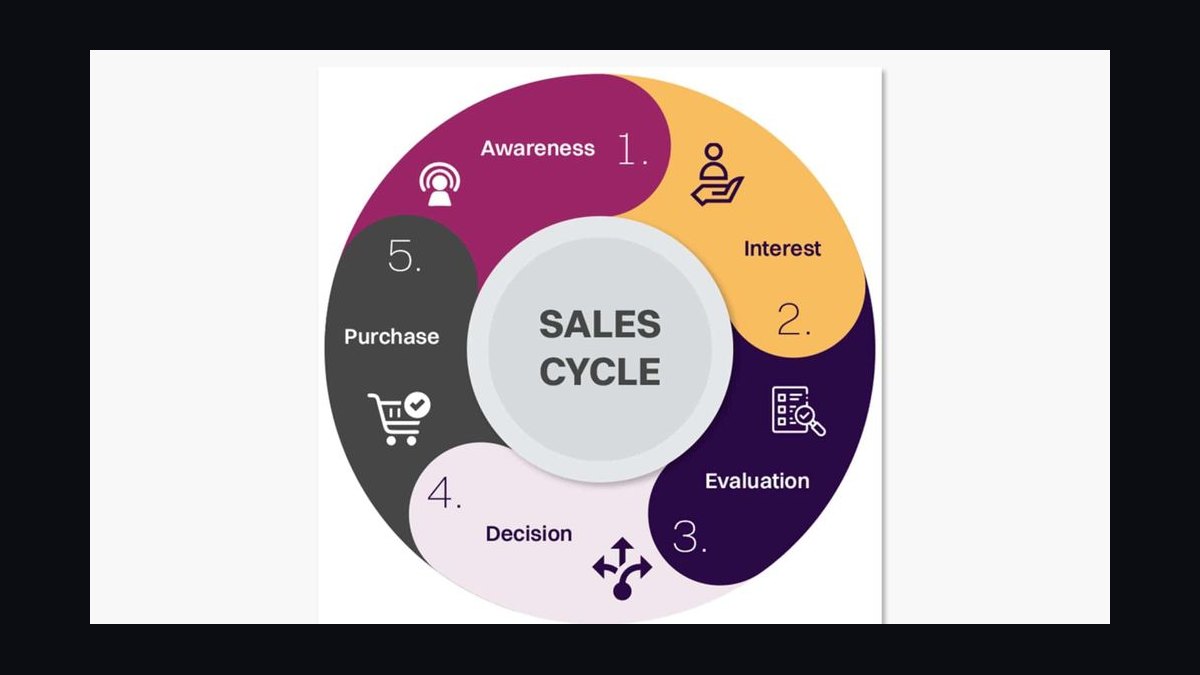
The cost of getting the sequence wrong. A leader who buys tooling in month one typically spends $50K-$200K on a platform that then sits underutilized because the underlying process was never fixed. A leader who launches an org-wide CRM overhaul in month two typically burns an entire quarter and delivers nothing measurable. Both failures are more expensive than the entire listening phase they were trying to skip.
Where Teams Get It Wrong
Even a well-structured plan fails when leaders fall into predictable traps. The five most common are worth naming explicitly because they recur across company stages.
Over-promising in the first 30 days. Committing to specific pipeline targets, tool implementations, or headcount before understanding data quality and team capacity is the single most damaging early move. A VP or Director who promises a 20% increase in lead conversion during week two will spend months defending that number rather than fixing root causes. The fix is a hard rule: no commitments until the day-90 roadmap presentation.
Auditing in a vacuum. If the 1:1s cover only executives and skip the SDRs, BDRs, and RevOps analysts who touch the systems daily, the audit misses operational reality. The CRM "works" according to the CRO, but the SDR team has 47 custom fields they ignore because the fields are irrelevant to their job. The fix is 12-20 IC interviews, minimum, before the audit is written.
Trying to fix everything at once. Launching CRM cleanup, forecast redesign, comp plan changes, and a new lead scoring model simultaneously dilutes impact to zero. None of them stick, and the organization concludes that RevOps initiatives do not work. The fix is one or two pilots with clear success metrics and a four-to-six week deadline.
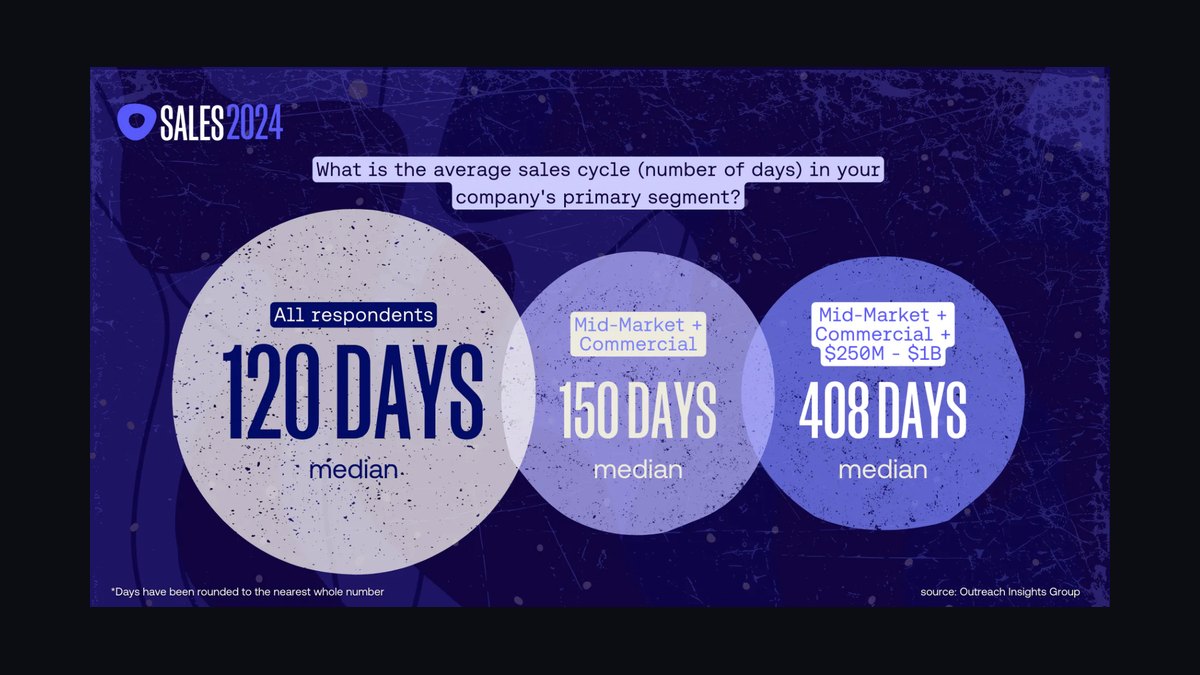
Picking the wrong first project. A Salesforce overhaul is the most seductive wrong first project because it feels like real work. It is a four-to-six month effort disguised as a quick win, and it will consume the entire 90 days without producing a number anyone can point at. Save it for month four or later, once trust exists.
Ignoring the political market. RevOps sits between Sales, Marketing, and Finance, each with competing priorities. A Director who aligns solely with the CRO may find the CFO blocking budget requests, or marketing refusing to change lead definitions. Great plans include a stakeholder mapping exercise in the first 30 days: who has veto power, who will resist, who will champion. Without that map, even a technically perfect plan stalls at the approval stage.
Buying tooling before fixing process. Tooling purchases made in the first 60 days almost always encode the broken process into a new system, which makes the underlying problem harder to fix later. Fix process and data first; the tooling decision becomes obvious and much smaller.
Skipping the written artifact. Leaders who keep the audit in their head, or deliver it verbally, lose the ability to reference it later. The written audit is what makes the day-90 roadmap defensible, because every recommendation traces back to a documented finding.
Related questions
How many individual contributor interviews should a new RevOps leader run in the first 30 days?
Twelve to twenty is the working range. Fewer than twelve and the audit misses operational reality; more than twenty and the leader runs out of time to synthesize findings. Prioritize frontline AEs, SDRs, CSMs, and existing RevOps analysts, since they touch the systems daily and surface the specific friction executives cannot see.
What is the single highest-leverage pilot for days 31-60?
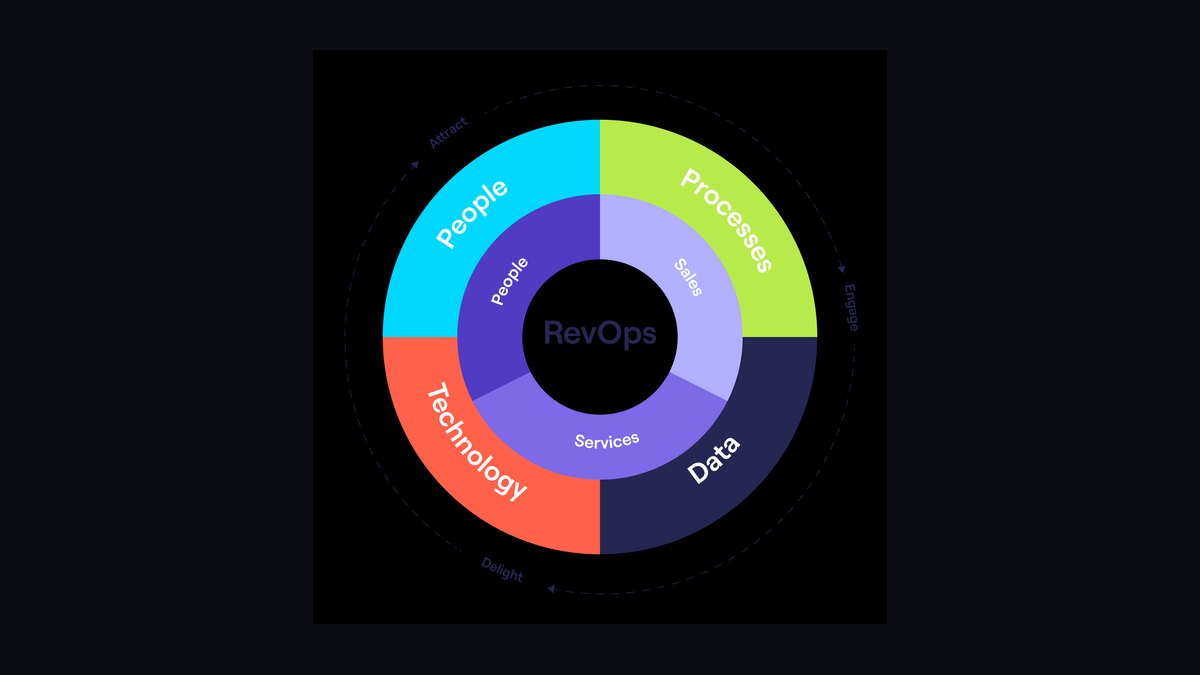
Forecast cadence redesign, in most companies. It costs almost nothing, produces a measurable accuracy number inside one quarter, and changes how the executive forecast call runs. A close second is the MQL-to-SQL SLA with disposition tracking, which rebuilds marketing-to-sales trust and generates data that ends the "bad leads" argument.
Should the 12-month roadmap go to the board or just the CRO and CFO?
CRO and CFO first, always. Present to both together in days 61-90 to prevent the failure mode where the CRO endorses a plan the CFO quietly defunds. Only take it to the board after budget alignment and executive sponsorship are locked. A premature board presentation can get the plan killed by stakeholders who were never prepped.
How should the plan change at a seed-stage versus an enterprise company?
At seed or Series A, days 1-30 focus on building foundations: basic CRM hygiene, a simple forecast process, lead routing rules. At enterprise scale, the same phase focuses on governance: who owns data quality, how decisions get made, where the friction points sit. The phase structure holds; the content shifts from building to aligning.
What if the CRO demands results in the first two weeks?
Deliver a short "state of the union" memo by day 14 containing observations only, no recommendations, then hold the full 30-day audit line. Explain that a wrong move in week two costs months of rework. The memo demonstrates momentum without creating commitments the leader cannot yet validate.
FAQ
How long should the listening phase really take? Thirty days is the standard, and it is close to non-negotiable. Rushing past it to "show value" backfires because the leader misses political landmines and data quality issues that later invalidate the roadmap. Most successful VPs spend at least 20 hours in 1:1s before proposing any change, and the written audit takes another 8-12 hours to produce.

What if I inherit a toxic team culture alongside the process problems? The 30-60-90 plan must include intentional team-building, not just process fixes. Schedule weekly skip-levels and anonymous pulse checks starting in month one. If culture is ignored for the first 60 days, the best people leave before the roadmap is finished, and the plan loses the operators who would have executed it.
How many pilots should run in days 31-60? Exactly one or two, never more. Trying to fix CRM hygiene, forecast cadence, and the MQL-to-SQL handoff simultaneously dilutes focus and produces no defensible number. Pick the single highest-leverage initiative, usually forecast accuracy, prove the needle moves, then expand in the next quarter.
How do I handle a legacy tech stack that is clearly broken? Do not rip and replace in the first 90 days. Document the pain points and the cost of inaction in the audit, then propose a phased migration starting in month four as part of the 12-month roadmap. Quick tech changes made without trust often get reversed within a quarter, wasting both budget and credibility.
What does a good day-90 outcome actually look like? Written buy-in from both CRO and CFO, a locked budget in next quarter's plan, and the first hire posted or already in pipeline. Plus one or two pilot results with real numbers attached. If any of those four is missing, the plan is not finished, no matter how polished the roadmap deck looks.
Should the audit findings be shared broadly or kept close? Share the findings broadly once the audit is complete, but never share draft findings mid-process. Draft findings get forwarded, quoted out of context, and treated as commitments. The finished audit is a trust-building artifact; leaked fragments are a liability.
Sources
- Michael Watkins, *The First 90 Days*, Harvard Business Review Press — https://hbr.org/books
- Harvard Business Review, "The First 90 Days" collection — https://hbr.org/topic
- Gartner, Sales and Revenue Operations research — https://www.gartner.com/en/sales
- McKinsey & Company, People and Organizational Performance — https://www.mckinsey.com/capabilities/people-and-organizational-performance
- Pavilion, Revenue Operations community and research — https://www.joinpavilion.com
- RevOps Co-op, community playbooks and templates — https://www.revopscoop.com
- Salesforce, Sales Operations and CRM best practices — https://www.salesforce.com/resources
- HubSpot, Sales Operations and RevOps guides — https://blog.hubspot.com/sales
Related on PULSE
- What is a RevOps Manager — and how is the role different from RevOps Analyst, Director, or VP?
- Should I Hire a Fractional CRO If I Need a 30-60-90 Plan Before a Board Meeting?
- What does a modern RevOps data warehouse and reverse-ETL stack look like in 2027?
- What does your RevOps first-hire profile look like in 2027?
- What does a RevOps job description look like — and what skills do you actually need?
- What does AI conversation coaching for AEs actually look like in 2027?
This page will be disappearing soon. Save it to your device for $1 — or read it free while it is here.
@Kory-White- · if Venmo asks, the last 4 of my number are 2012
This page is gone.
This one is off the shelf now. $1 keeps it on your phone for good — the whole page, pictures and diagrams included.
 revopsHow should a 2027 sales enablement team run content audits at scale?
 revopsHow should a 2027 startup run a founder-shadow program for the first AE?
 revopsShould 2027 RevOps report to finance or to the CRO?
 revopsHow should a 2027 sales org distinguish ICP fit vs intent vs need?
 revopsWhat are Kansas Jayhawks men's basketball's 2027 NIL needs and strategy?
 revopsHow should a 2027 CS team respond to a coordinated customer revolt?
 revopsHow should a 2027 sales org structure deal review templates?
 revopsWhat are Tennessee Volunteers football's 2027 NIL needs and strategy?
 revopsWhat capacity-planning models do SaaS sales teams use in 2027?
 revopsHow should a 2027 sales org run the crisis playbook for a botched product launch?