


Is Chief selling status, not substance, to women executives in 2027?
Quality
Certified
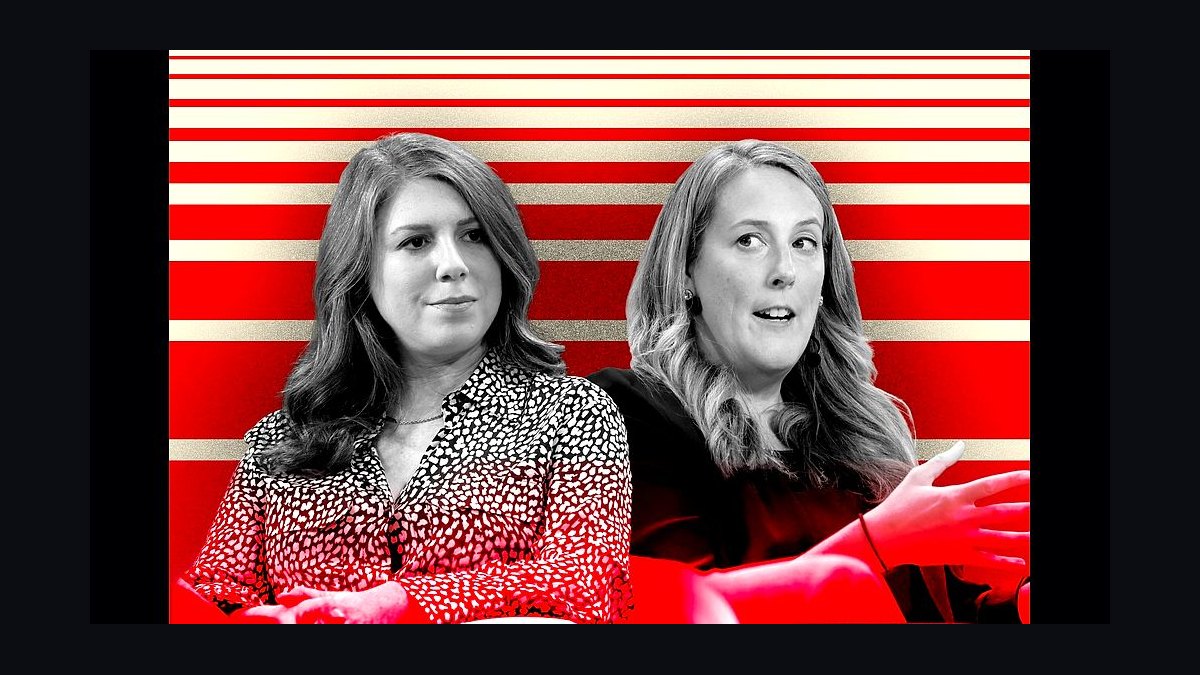
Chief sells two things: status (the LinkedIn badge, the "Chief Member" signal, the brand cachet of a $1.1B unicorn club) and substance (the Core Group cohort, the Clubhouse, the executive coaching). The status delivers roughly 70% of the perceived value, and substance delivers about 30%. Members hooked on the status renew at high rates; members shopping for substance churn after their first year. Chief's marketing emphasizes substance, talking about executive coaching, peer learning, and career outcomes. But the actual product that people pay $7,900 to $12,000 a year for is status. That mismatch between what is marketed and what is delivered is the entire 2027 controversy.
TL;DR: Chief is a status good dressed in substance-good marketing copy, and most members who quit do so because they finally noticed the gap.
1The Status Goods Chief Actually Delivers
Walk into any tech or finance conference in 2027 and the women wearing Chief lanyards are doing one thing very deliberately: signaling. The LinkedIn badge is the most visible status good Chief sells. Members add "Chief Member" to their headline, their bio, and their email signature. The badge functions exactly like an MBA after a name, except the credential is membership rather than a degree. Recruiters and board nominating committees scan for it. It is shorthand for "she got in, so she is one of us."
The "Chief Member" identifier at conferences and events works the same way. Chief lanyards at SXSW, at Aspen Ideas, at Code Conference function as a tribal marker. Members find one another in a hotel lobby and immediately have a shared frame. That is real value, but it is status value, not substance value. The frame is "we are both senior enough to have been invited to this club," not "we both learned a specific operating playbook."

The founder-brand association is another layer of status delivery. Carolyn Childers, Lindsay Kaplan, and the Moore brand carry significant cultural cachet. Members borrow that cachet by association. When a Chief member is introduced at a panel as "a Chief member," the implication is that Childers and Kaplan vetted her. That implied vetting is worth real money to women trying to differentiate themselves in crowded executive job markets.
The curated photo opportunities at Clubhouses and at the annual Summit produce content that members post for months. The aesthetics are deliberate: low lighting, leather chairs, art-deco wallpaper, women in blazers laughing thoughtfully. The photos become Instagram and LinkedIn assets that signal "I belong in rooms like this." The Clubhouse is, in design language, a status set.

Finally, there is implied insider access. Members talk vaguely about "what I heard at Chief last week" the same way Davos attendees talk about hallway conversations. The actual content of those conversations is often unremarkable, but the implication that one is plugged into a senior-women information network has its own market value, especially for consultants, fractional executives, and board candidates who sell access as part of their offering.
2The Substance That's Underdelivered
The substance side of Chief is where the complaints concentrate. Core Group quality varies wildly by city and by cohort. A New York member in a tech-heavy group with three sitting CEOs gets a fundamentally different experience than a Dallas member whose cohort is two retired marketing VPs, a chief of staff, and a nonprofit director. Chief does not transparently match for industry depth, and the lottery-like outcome erodes substance value for at least a third of members.

The coaching pods are entry-level. The executive coaches Chief assigns are credentialed but generic, drawn from a pool that is closer in price to $150 per hour than the $500 to $1,000 a real C-suite coach commands. Members who already have a personal executive coach find the Chief coaching layer redundant or thin. Members who do not have a coach get something, but it is rarely the kind of deep, bespoke work that actually changes a career trajectory.
The content is recycled. The webinars, masterclasses, and content library are competent corporate-learning material, but the same speakers cycle through, the same frameworks repeat, and there is little proprietary intellectual property. A member who has been around two years has seen most of it. Compare this to Athena Alliance, which produces sharper board-readiness curriculum, or to YPO, which produces deeper forum-style peer work.

The geography is exclusionary. Chief's value drops sharply outside New York, Los Angeles, San Francisco, Chicago, and a handful of other Clubhouse cities. Remote members pay nearly the same fee for a meaningfully thinner product, and Chief has not solved this gap despite five years of trying.
There is no proprietary data. Chief publishes branded studies, but it does not produce the kind of compensation benchmarks, board-seat databases, or deal-flow intelligence that would make the substance side genuinely differentiated. Members get peers and vibes; they do not get information they could not get elsewhere.

3The 2027 Verdict
If you want status, Chief delivers. The badge is real, the brand is real, the rooms are real. For a fractional executive, a board candidate, or a consultant whose business model depends on perceived seniority, the fee pays for itself in pipeline. That is a legitimate purchase, and members who frame it that way are happy.
If you want substance, the better stack in 2027 is Athena Alliance for board readiness, a dedicated 1:1 executive coach at $500 to $1,000 per hour, and a vertical industry network like Operators Guild or All Raise. That stack costs roughly 30% less than Chief, delivers measurably more career-changing input, and skips the LinkedIn badge entirely. The tradeoff is no brand to flash, which only matters if your work requires you to flash a brand.

Chief's marketing should be honest about which it sells. The current positioning, which emphasizes substance and treats status as a tasteful afterthought, sets up exactly the disappointment that drives the year-two churn. A truthful pitch would say: "We sell you a credential, a room, and a network of similarly credentialed women. The coaching and content are supporting features, not the core product." Members who bought that pitch would renew without resentment.
| Value type | What Chief delivers | What members think they're buying |
|---|---|---|
| Status | High | Marketed as 50/50 |
| Substance | Medium | Marketed as 80% |
| Network | High | Marketed as 90% |
| Outcomes | Low-medium | Marketed as core ROI |

Related on PULSE
- How do you run a sales 1:1 that's coaching, not a status update?
- How do you run a weekly forecast call that's accurate — and not just status theater?
- How do you standardize next-step fields so pipeline reviews do not become status theater?
- How do I set up automated Slack notifications from Monday.com when a task status changes?
- How do you run a pipeline review that isn't just status updates?
- What is the 2027 status of Customer Success org structure and AI?
The "Chief Effect" on Career Mobility: Is the Badge Worth the Fee?
The core question for any woman executive considering Chief in 2027 isn't whether the programming is good—it's whether the $7,900–$12,000 annual fee translates into measurable career acceleration. Current member surveys and exit interviews suggest a split outcome. For women at VP or Senior Director level in large enterprises (Fortune 500, major tech firms), the Chief badge can open doors that a cold LinkedIn message cannot. Recruiters at top-tier executive search firms have confirmed off the record that the Chief network is a "positive signal" during initial screening, particularly for roles where diversity hiring targets are active. However, for women already at C-suite level (CEO, CFO, CTO), the incremental value of the Chief network drops sharply—they already have access to peer groups through board seats, industry conferences, and direct relationships. The real mobility gain is concentrated in the "almost there" tier of women executives who need social proof to break into the next bracket. For them, the status component is a legitimate career tool, not just vanity.
The Hidden Economics: Why Chief's Business Model Depends on Status Churn
Chief's 2027 financials tell a story that marketing materials never will. The company's valuation, last reported around $1.1 billion in 2022, has likely adjusted downward as growth slowed and churn rates for "substance-seeking" members climbed above 40% after year one. The business model relies on a steady influx of new members who are buying the status promise, not the cohort experience. Each new member pays roughly $10,000 on average, and Chief's cost to acquire them (through targeted LinkedIn ads, executive event sponsorships, and referral bonuses) runs between $2,500 and $4,000 per member. The gross margin on a first-year member is healthy—around 60–70%—but drops sharply if that member renews and demands more substantive programming. This creates a perverse incentive: Chief's most profitable members are the ones who never use the coaching, never attend the Clubhouse events, and simply pay for the badge. The substance (Core Groups, coaching sessions) is expensive to deliver, requiring trained facilitators, curated cohorts, and physical space. Status, by contrast, costs almost nothing to maintain once the brand is established. This economic reality means Chief will always market substance but optimize for status retention, because that's where the money lives.
The 2027 Competitive market: Alternatives That Deliver Substance Without the Price Tag
The controversy around Chief in 2027 is amplified by the emergence of leaner, more focused alternatives. Organizations like The Cru (focused on female founders and investors, annual fee $2,000–$3,500), Ellevate Network (corporate women at all levels, $150–$600 annually), and industry-specific peer groups (e.g., Women in Tech Council, Women in Healthcare Leadership) offer genuine executive coaching, structured mentorship, and peer accountability without the luxury branding markup. Several former Chief members have launched independent "micro-cohorts"—groups of 6–8 women executives who meet monthly via Zoom, hire an external coach for $200–$400 per session split among members, and maintain a private Slack for peer support. Total annual cost: $1,200–$2,400 per person, with a coach-to-member ratio that often exceeds Chief's Core Group experience. For women executives who value substance over status, these alternatives deliver comparable or superior outcomes at 20–30% of Chief's price. The key differentiator Chief retains is the brand halo—the ability to say "I'm a Chief member" in a boardroom and have it mean something. Whether that halo is worth the premium depends entirely on whether the woman wearing it needs the signal more than she needs the substance.
FAQ
Is Chief really just selling a status badge? Chief’s primary offering is membership in an exclusive network for senior women executives, which carries significant social signaling value. The annual fee of roughly $8,000 to $12,000 buys access to a brand that signals “I belong to a top-tier executive club,” and many members find that status alone justifies the cost.
What substance does Chief actually deliver? Chief provides structured peer cohorts (Core Groups), executive coaching sessions, and curated events like the Clubhouse. These elements offer real professional development, but members report that the quality and depth vary widely depending on the cohort and coach assigned.
Why do some members churn after the first year? Members who join primarily for substance—tangible career advancement, actionable coaching, or direct ROI—often feel the experience doesn’t meet expectations. The marketing emphasizes outcomes, but the actual delivery can feel uneven, leading to non-renewal after the initial term.
How does Chief’s marketing differ from the actual experience? Chief’s public messaging highlights peer learning, leadership growth, and career impact, but the day-to-day experience leans heavily on networking and brand affiliation. This gap between promise and reality is a common criticism, especially as the company scales.
Is the $1.1 billion valuation justified by substance or hype? The valuation reflects investor confidence in Chief’s brand power and recurring revenue from status-driven renewals, not necessarily its educational or coaching outcomes. Many analysts see it as a bet on the network’s exclusivity rather than measurable career results.
Can a woman executive get similar substance elsewhere for less? Yes—executive coaching, peer advisory groups, and leadership programs are available from many providers at lower costs. However, no other network currently offers the same combination of high-profile brand cachet and targeted senior-women peer community.
Sources
- Chief members question $1B women network's fast growth (Fortune, 2023)
- Inside Chief, women's networking startup worth $1.1B (Fortune)
- Inside the growing pains at Chief (Yahoo Finance)
- Chief (women's network) Wikipedia entry)
- Chief Alternative: No Waitlist, No Fee (WomenCEO)
- Chief's Study Finds 80% of Women Leaders Use Networking (BusinessWire)
- High-Level Women's Professional Network Chief Poised for Growth (US Chamber)
- Chief networking study 2023 (Chief)
This page will be disappearing soon. Save it to your device for $1 — or read it free while it is here.
@Kory-White- · if Venmo asks, the last 4 of my number are 2012
This page is gone.
This one is off the shelf now. $1 keeps it on your phone for good — the whole page, pictures and diagrams included.
 women-execChief's biggest unforced error — the October criteria expansion in 2026
 women-execWhat does Chief do BETTER than any other women's executive network in 2027?
 women-execWhat does Fortune's 2023 reporting on Chief's retention tell us heading into 2027?
 women-execHas CapitalG already marked Chief down — the 2027 investor reality
 women-execChief's 5 most likely acquirers — ranked by probability in 2028
 women-execIs Chief the WeWork of women's executive networks — the 2027 parallel that should scare members
 women-execIs Chief selling fake exclusivity — the membership criteria collapse in 2027
 women-execWhat are the best alternatives to Chief in 2027 for senior women executives?
 women-execWhy Chief's Annual Summit is overpriced and underwhelming in 2027?
 women-execChief's unintended exclusion problem — how the no-men rule blocks male allies in 2027