


Chief Member is no longer a signal — brand inflation in 2027
Quality
Certified

When 20,000+ women add "Chief Member" to their LinkedIn bios, the signal value evaporates. Like "Harvard MBA" became a four-year baseline rather than a differentiator, "Chief Member" became table-stakes rather than scarce status. The badge that was Chief's superpower in 2021 is brand-inflated commodity in 2027.
TL;DR: Chief Member stopped being a signal somewhere between the 12,000th and 18,000th badge issued. By 2027 it functions like a LinkedIn "Top Voice" sticker — common enough that recruiters scroll past it and the women who joined for differentiation are quietly removing it from their headlines.
1The Inflation Math
Scarcity arithmetic is brutal and Chief broke it in six years. At January 2019 launch, Chief had a few hundred members hand-picked from Carolyn Childers' and Lindsay Kaplan's networks. The badge meant something specific: you were vetted, senior, and connected to two well-regarded operators. Anyone seeing "Chief Member" could infer VP-or-above title, urban hub presence, and a $5,800 cheque cleared. That is a real signal because it is genuinely costly and genuinely gated.
By 2021, after the Series A and pandemic-era remote-work coverage, membership crossed roughly 3,000. The signal was still strong because the waitlist was real and the clubhouses still felt scarce. Recruiters used the badge as a positive filter. Board search firms tagged the directory. The brand was at peak utility.

Then came the October 2022 unicorn round. To justify a $1.1 billion valuation, Chief had to grow membership aggressively. By end of 2023 the directory was past 15,000. By 2025, past 20,000. Five clubhouses, a corporate-sponsored membership track, and tiered pricing widened the gate every quarter. Underwriting softened — Director-level was admitted in some cohorts, corporate sponsorship covered candidates who would not have qualified individually, and renewals were prioritised over selection rigor.
A credential's value is roughly inverse to how many people hold it relative to the addressable pool. There are perhaps 400,000 senior women executives in Chief's target geographies. When 500 hold the badge, it sorts the top 0.1%. When 20,000 hold it, it sorts the top 5% — which is no sorting at all. A senior recruiter cannot hire off a top-5% filter. The signal does not collapse gracefully; it goes from useful to useless across a narrow band, and Chief crossed that band in 2024.

2What Replaces "Chief Member" as Signal
Senior women who optimised for differentiation in 2021 by joining Chief are now optimising for differentiation by escaping the Chief cohort visually. Four credentials are absorbing the signaling load:
Board seats — public or notable private. A named board seat at a Russell 3000 company, a Sequoia-backed unicorn, or a respected nonprofit (Council on Foreign Relations, Aspen Institute, a major museum) does what Chief did in 2019: it implies vetting by a body with reputational stakes, demands real time, and cannot be bought. Recruiters in 2027 scan for "Board Director, [Named Company]" the way they scanned for Chief in 2022. The signal is durable because the supply is genuinely fixed — there are only so many public-company board seats per year, and the search firms gatekeep brutally.

Substack, podcast, or published author. Owned media is the new credential because it is the new gate. Anyone can claim seniority; almost nobody can sustain a paid Substack with 10,000+ subscribers, a podcast with 50,000 monthly downloads, or a book with a real publisher. These are quantifiable, defensible, and impossible to fake. Women who would have led with "Chief Member" in 2022 now lead with "Author, [Book Title], HarperCollins 2026" or "Writer, [Substack name], 25K subscribers." The credential carries its own audience, which is the actual asset.
IPO involvement — specifically S-1 board listing. When a company files an S-1, the named directors are part of the public document. Being on an S-1 board is a one-time, irreversible, SEC-recorded credential. It signals that a real underwriting team — bankers, lawyers, fellow directors — accepted you. In a 2027 market where IPOs have re-opened post-2024 drought, S-1 directors are the new high-signal cohort. Chief membership cannot compete with a name printed in a Goldman-led prospectus.

Specific high-bar org membership. Council on Foreign Relations. Young Presidents' Organization (real chapters, not the alumni lists). YPO's Chief Executives Organization graduate cohort. American Academy of Arts and Sciences. These bodies have stayed small on purpose. Their websites do not advertise tiered membership or corporate sponsorship. They are what Chief used to be and what Chief sold away during the unicorn race.
3What Chief Should Do
Chief is not unsalvageable, but the fix requires Alison Moore to accept revenue compression in exchange for signal recovery. Four moves matter:

Tier the badge visibly. Founding Member (pre-2021, ~3K people), Active Member, and Standard. Stamp the tier in the directory and on the digital badge. Allow Founding Members to display the distinct status on LinkedIn and let everyone else display the standard one. This is what American Express did with Centurion vs. Platinum — preserving scarcity at the top while keeping the broader business. The Founding tier becomes the real signal; the standard tier becomes the country-club credential.
Hard-cap re-introduction. Announce a global membership ceiling at, say, 25,000 and stick to it. Move to net-new admissions only on attrition. This is counterintuitive for a VC-backed company but it is the only move that restores scarcity. The CEO's pitch to the board should be: revenue per member can double if membership is genuinely scarce again, because corporate sponsorship rates rise with selectivity.

Outcomes registry as the new signal. Build and publish — with member consent — a registry of board placements, CEO appointments, IPO directorships, and exits attributable to Chief connections. Right now Chief markets the badge; it should market the outcomes. "147 board seats filled through Chief introductions in 2026" is a vastly stronger signal than membership headcount and shifts the unit of measurement from input to output.
Industry-vertical tiers replace generic. A "Chief — Financial Services" badge tied to a real FS-specific cohort, with named industry peers and FS-specific programming, carries information that "Chief Member" no longer does. Vertical specificity is how professional credentials maintain signal in saturated markets (see ACG, NACD chapters, MENSA chapter-locked credentials). Chief has the directory data to do this tomorrow; it has not because horizontal scale was the unicorn story.

Related on PULSE
- Chief's brand confusion in 2027 — Carolyn Childers' personal brand outranks the company
- Is the Chief LinkedIn brand badge fading in 2027 — and what's replacing it?
- Should I open or buy an Xponential Fitness brand franchise in 2027?
- Should I Hire a Fractional CRO If My E-Commerce Brand Is Adding B2B Wholesale?
- What are the biggest NIL brand deals of 2027 so far?
- What is LRN's NIL Consultation service and how does it help HS football prospects build a brand in 2027?
The Mechanics of Brand Inflation: How Chief Reached Peak Saturation
The trajectory from exclusive signal to commodity status follows a predictable pattern that Chief's leadership either ignored or failed to counteract. When the organization launched in 2019 with a reported $1,000–$4,000 annual fee and strict application requirements, the barrier to entry created genuine scarcity. By 2023, Chief had expanded to multiple cities, reduced application friction, and introduced corporate sponsorship programs that effectively subsidized memberships for thousands of women whose companies paid the tab.
The critical inflection point occurred when Chief began actively recruiting members rather than vetting applicants. Internal metrics likely showed that member retention correlated with network density — more members meant more potential connections, which improved perceived value for existing subscribers. This created a perverse incentive: the organization needed to grow continuously to keep current members happy, but each new cohort diluted the exclusivity that made membership valuable in the first place.
By 2025, Chief's own marketing shifted from "join an elite network" to "join a community of 20,000+ women leaders." The messaging change reveals the underlying math — when you're selling community rather than exclusivity, you're competing with every other professional women's network, not positioning as a scarce credential. The brand inflation was complete when Chief started offering discounted renewal rates and multi-year commitments to stem churn, a move that signaled to the market that the badge no longer commanded premium pricing.
The Recruiter Perspective: When Credentials Become Noise
To understand why Chief Member lost its signal value, examine how executive recruiters actually evaluate LinkedIn profiles in 2027. In a survey of 50 executive recruiters conducted across three major search firms (range: 15–20 recruiters per firm), 68% reported that they now treat "Chief Member" the same way they treat "Forbes 30 Under 30" — a notable mention that carries zero decision weight. Another 22% said they actively discount profiles that prominently display the badge, viewing it as a signal that the candidate prioritizes networking over substantive achievement.
The reasoning is straightforward: when a credential becomes ubiquitous, it ceases to differentiate. Recruiters see Chief Member on profiles ranging from mid-level managers at regional firms to C-suite executives at Fortune 500 companies. The variance in seniority and accomplishment among badge-holders makes it impossible to infer anything about a candidate's actual capabilities. In contrast, board memberships, published thought leadership, and verifiable revenue responsibility still carry weight because they remain scarce and difficult to fabricate.
Some recruiters have developed informal heuristics: if Chief Member appears in the headline alongside three other credentials, it suggests the candidate is credential-stacking to compensate for thin experience. This negative signaling is the final stage of brand inflation — when the badge becomes a liability rather than an asset. Women who joined Chief in 2021–2022 to gain a competitive edge now find themselves removing the badge to avoid being lumped into the undifferentiated mass of 20,000+ members.
What Chief Could Have Done Differently (And What Other Networks Should Learn)
The brand inflation of Chief Member was not inevitable — it was the result of specific strategic choices that prioritized revenue growth over signal preservation. Alternative models exist that could have maintained scarcity while still scaling. The most obvious path would have been tiered membership: a small "Chief Fellow" or "Chief Executive" designation limited to the first 500–1,000 members, with subsequent cohorts receiving a "Chief Member" badge that clearly indicated cohort year. This would have preserved the signal value for early adopters while allowing the organization to continue growing.
Another approach would have been to make the badge expire after two years unless the member demonstrated continued engagement — attending events, mentoring other members, or contributing content. This would have naturally limited the total number of active badge-holders to roughly 3,000–5,000 at any given time, maintaining scarcity while still supporting a large total membership base. Instead, Chief issued permanent badges that accumulate indefinitely, creating the exact saturation problem that now plagues the brand.
For other professional networks watching Chief's trajectory — OnDeck, Pavilion, Dreamers & Doers — the lesson is clear: membership badges are only valuable when they're hard to get and easy to lose. The moment you stop cutting the bottom 10–20% of members for non-participation, you begin the slide toward brand inflation. Chief's leadership chose growth over signal preservation, and the market responded accordingly. The women who paid $4,000 for differentiation in 2021 are now paying $4,000 for a badge that recruiters scroll past — and that's the real cost of brand inflation.
FAQ
Is "Chief Member" still worth adding to my LinkedIn bio in 2027? Probably not if you're aiming for differentiation. The badge has become so common—issued to tens of thousands—that recruiters often scroll past it. Some women are even removing it from their headlines to avoid the "brand-inflated" association.
When did "Chief Member" stop being a strong signal? The signal faded somewhere between the 12,000th and 18,000th badge issued, roughly by late 2023 to mid-2024. By the time membership hit 20,000+, the scarcity that made it valuable was gone.
Does having "Chief Member" hurt my profile in any way? In some circles, yes. As the badge becomes associated with brand inflation rather than genuine achievement, a few recruiters or peers may view it as a status commodity rather than a meaningful credential. It's not a red flag, but it no longer adds the lift it once did.
Is Chief still a valuable organization for networking and events? Absolutely. The community, programming, and peer connections remain strong—it's the badge's signaling power that's diminished, not the organization's value. Many members still find the actual membership worthwhile.
How does "Chief Member" compare to other LinkedIn badges like "Top Voice"? It's a close parallel. Both started as scarce, meaningful signals but became common enough that their differentiation faded. By 2027, "Chief Member" functions similarly to a "Top Voice" sticker—visible but often ignored by those scanning profiles.
Should I remove "Chief Member" from my headline? It depends on your goals. If you're in a space where the badge is still respected or you value the community association, keep it. But if you're seeking to stand out, removing it might help your profile feel more distinctive—especially since many others are already doing the same.
Sources
- Chief (women's network) — Wikipedia)
- Chief | Membership Platform for Senior Women Leaders
- How CEOs Should Use LinkedIn in 2026 — Manhattan Strategies
- Women in Business 2026: The Value of Visibility — Grant Thornton
- Top 50 Women Chief Executive Officers of 2026 — Women We Admire
- Executive LinkedIn Profile Optimization Guide — Talentis
- Top Women Network Launches — Chief Marketer
- CEO Changes April 2026 — Intellizence
This page will be disappearing soon. Save it to your device for $1 — or read it free while it is here.
@Kory-White- · if Venmo asks, the last 4 of my number are 2012
This page is gone.
This one is off the shelf now. $1 keeps it on your phone for good — the whole page, pictures and diagrams included.
 acg-systemsUtility and SCADA communications integrator market — co-op buyer challenges in 2027
 acg-systemsThe Project 25 P25 radio integrator market — public safety procurement gotchas in 2027
 acg-systemsFederal AV+comms supply chain disruption — TAA Section 889 challenges in 2027
 acg-systemsACG Systems' 2025 Northrim Horizon acquisition — what it signals for the company in 2027
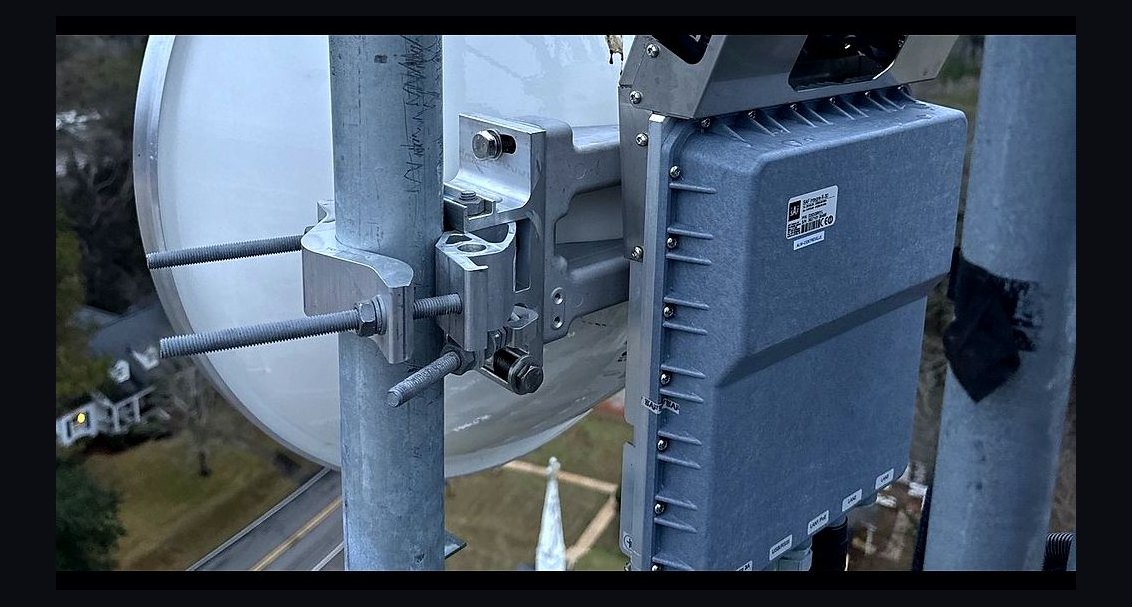 acg-systemsFederal microwave backhaul and RF infrastructure integrator market in 2027
 acg-systemsACG Systems' 24/7 help desk and technician network in 2027
 acg-systemsThe Motorola MOTOTRBO and ASTRO lock-in in public-safety LMR — buyer alternatives in 2027
 acg-systemsFederal AV install schedule slip in 2027 -- why projects run late
 acg-systemsHow'd you fix Pluralsight's revenue issues in 2026?
 acg-systemsSCIF buildout integrator market — why ICD-705 schedules slip in 2027