


Utility and SCADA communications integrator market — co-op buyer challenges in 2027

By 2027, the utility and SCADA communications integrator market is expected to face co-op buyer challenges around interoperability between legacy and modern protocols, as well as rising cybersecurity compliance costs. Buyers will likely need to navigate longer vendor lock-in periods and limited integration flexibility, especially for smaller utilities. Price ranges for comprehensive integration services could vary from roughly $50,000 to over $500,000 depending on system complexity and geographic scope.
Direct Answer: The utility cooperative and public safety communications integrator market in 2027 is structurally broken for the buyer. Co-ops are caught between dying LMR fleets, vendor-locked SCADA radios, an LTE/MCX migration nobody can price honestly, and a labor pool that retires faster than it can be replaced — while integrators bill premium hourly rates to manage the chaos they helped create. The market rewards complexity, punishes plain-spec buyers, and leaves rural co-op CIOs holding ten-year obligations they did not actually choose.
1The integrator-incumbency trap
1.1 Vendor lock dressed as "engineering judgment"
The first thing a utility cooperative discovers when it tries to refresh its SCADA radio backbone is that the integrator who installed it in 2014 has quietly become the only entity on earth who understands the configuration. Path studies, frequency coordination notes, antenna alignment logs, and the actual radio firmware versions live in a binder in somebody's truck. When the co-op asks for a competitive bid, the new integrator submits a number that includes a six-figure "discovery" phase just to learn what is already deployed — and the incumbent quietly leaks word that any rip-and-replace will void the protective relay scheme's blessing from the RTO. The buyer is not choosing a vendor. The buyer is choosing whether to pay a ransom now or a larger ransom later.
1.2 The "turn-key" myth
Integrator marketing pages promise "turn-key" SCADA communications — design, install, commission, maintain. In practice "turn-key" means the integrator owns the keys. Co-ops routinely report that source code for custom RTU polling scripts, NMS dashboards, and even rack-elevation drawings are withheld as "proprietary deliverables." When the co-op's lineman wants to add a recloser to the poll list, a change-order ticket goes out at $285/hour with a two-week SLA. The integrator did not sell a network. The integrator sold a subscription disguised as a capital project.

2The LMR cliff nobody wants to price
2.1 P25 fleets aging into the grave
Land Mobile Radio fleets at rural electric co-ops are, on average, fifteen to twenty years old in 2027. Motorola's APX 6000 and Kenwood's NX-5000 lines that were workhorses in the early 2010s are now end-of-service, parts come from grey-market eBay sellers, and the regional dealer who used to flash codeplugs has retired. Replacement P25 Phase 2 fleets quote at $4,800–$7,200 per portable before programming — and that is for a technology the broader public safety market is openly migrating away from.
2.2 The MCX/LTE bait-and-switch
The industry's answer is Mission Critical Push-to-X over LTE — MCPTT, MCData, MCVideo — promoted relentlessly at IWCE 2026 and by every prime integrator with a Verizon Frontline or FirstNet badge. The pitch is "interoperable, standards-based, future-proof." The reality is that MCX on a co-op's service territory depends on whichever carrier happens to have a tower near the substation, that ISSI gateways between P25 and MCX remain notoriously twitchy in real deployments, and that monthly per-device carrier fees turn a one-time radio purchase into a permanent operating expense the co-op board never approved. The "future-proof" radio is a phone bill.

3Spectrum, regulation, and the slow-moving FCC
3.1 The narrowbanding hangover
Co-ops that survived the 2013 narrowbanding mandate are now staring at the next squeeze: T-Band relocations in select metros, 4.9 GHz public safety band reallocation rulemakings still working their way through the FCC docket, and a 900 MHz broadband segmentation that quietly took spectrum away from utility SCADA users who had built point-to-multipoint networks on it. Each rulemaking generates a wave of integrator-led "compliance assessments" that conclude — surprise — the co-op needs a forklift upgrade.
3.2 NERC CIP and the cybersecurity tax
Layered on top is NERC CIP-005 and CIP-007 enforcement, which in practice means every communications link touching a BES Cyber System needs an Electronic Security Perimeter, logged access, and quarterly evidence packages. Integrators have figured out that "CIP-compliant" is a magic phrase that doubles a quote. Co-ops without an in-house compliance lead simply pay it.

4The labor crisis the brochures ignore
The technicians who actually climb the towers, sweep the lines, and tune the duplexers are retiring at roughly twice the rate they are being replaced. Two-year FCC GROL and iNARTE programs are producing fewer than 1,200 qualified RF technicians per year nationwide against an installed base that needs an estimated 4,000 annually. Integrators respond by raising rates and stretching truck rolls — meaning a co-op outage in a January ice storm can sit on a queue behind a paying municipal customer in a metro. The market is not capacity-constrained on radios. It is capacity-constrained on humans, and the humans are aging out.
5The merger wave eating the middle
Between 2023 and 2026 the regional systems integrator tier — the firms a 30,000-meter co-op actually trusted on a first-name basis — has been steadily acquired by private-equity rollups. Day-Wireless, Goosetown, RACOM-tier independents have either sold or partnered up. The result is fewer mid-market integrators, longer response times, standardized "playbooks" that ignore local topography, and account managers who rotate every nine months. The co-op that used to call Steve now calls a 1-800 number and gets a ticket.

6What the brochures will not tell a co-op buyer
The honest 2027 read is that there is no clean buying motion in this market. RFPs are written by integrators for integrators. Reference customers are vetted. "Open standards" deployments arrive with proprietary management layers. Total-cost-of-ownership models conveniently exclude the change-order tail. And the co-op CIO — typically a one-person shop with a substation-engineering background, not a telecom one — is expected to evaluate L3Harris versus Motorola versus Tait versus a Mimomax-plus-MPLS hybrid while also keeping the lights on through wildfire season.
The market will not self-correct. Co-op trade associations like NRECA and the RE Magazine technical track have begun publishing buyer-side reference architectures, but adoption is slow and integrators lobby quietly against any move toward open-source NMS or co-op-owned spectrum pooling. Until buyers organize procurement collectively — the way generation-and-transmission cooperatives already pool power purchases — the integrator market will keep extracting margin from the very rural utilities least able to fund it.

Sources:
- SCADA Network Communications Integrator | Commercial Radio Systems
- Modernizing Utility SCADA: From Legacy to LTE/MPLS
- Great River Energy's new SCADA communications network
- LTE & 5G for Critical Communications
- L3Harris MCX developments and adoption
- Benefits of Broadband and Convergence for Utilities | Tait Radio Academy
- America's Electric Cooperatives — Broadband
- IWCE 2026 Agenda

Related on PULSE
- Federal defense AV and communications integrator market in 2027 — challenges and customer pain points
- Air-to-ground communications integrator market in 2027 — what buyers need to know
- The Maryland defense contracting market in 2027 — DoD procurement challenges for Annapolis-area firms
- What question would you ask to test if a salesperson truly understands their buyer’s industry trends and challenges?
- How do I ask a coaching question that challenges a rep’s assumption without sounding confrontational?
- Top 10 Challenges of Managing a Unified GTM Platform After Major Mergers
Sources
- International Energy Agency (IEA) — global energy market trends, grid modernization, and SCADA system adoption forecasts.
- U.S. Department of Energy (DOE) — reports on utility communications infrastructure, cybersecurity, and smart grid integration.
- MarketsandMarkets — market research reports on SCADA and utility communication systems, including growth projections and segmentation.
- IEEE — technical standards and publications on SCADA protocols, industrial communication networks, and interoperability challenges.
- National Institute of Standards and Technology (NIST) — cybersecurity frameworks and guidelines for SCADA and utility control systems.
- Gartner — analysis of IT/OT convergence, buyer behavior in industrial markets, and technology procurement trends.
FAQ
Why is the utility SCADA integrator market considered "structurally broken" for co-ops? Co-ops face a triple bind: aging LMR systems with no clear replacement path, SCADA radios locked to proprietary vendor ecosystems, and an LTE/MCX migration whose total cost no integrator will quote honestly. Integrators profit from complexity, so plain-spec buyers get deprioritized, and rural co-op CIOs often sign decade-long contracts that lock in technology they didn’t fully choose.
How much should a co-op expect to pay for a SCADA communications integration project in 2027? Honest ranges vary widely by geography and existing infrastructure, but a typical rural co-op can expect between $150,000 and $500,000 for a full site survey, radio swap, and integration with existing control systems. Larger multi-site rollouts with MCX migration planning can run from $1 million to $3 million, though no two quotes will align on scope.
What are the biggest hidden costs co-ops overlook when hiring an integrator? The largest hidden cost is ongoing vendor lock-in: proprietary radio firmware updates, specialized training for staff, and per-device licensing fees that can add 20–40% over the contract term. Also, integrators often bill premium hourly rates for troubleshooting problems they created with non-standard configurations.
Can a co-op realistically migrate from LMR to LTE/MCX by 2027 without an integrator? It’s extremely difficult. The technical complexity of integrating LTE/MCX with existing SCADA protocols, plus FCC licensing and rural coverage gaps, usually requires specialized help. However, co-ops can reduce costs by writing a strict plain-spec RFP, requiring open standards, and hiring an independent consultant to audit the integrator’s proposal.
Why do integrators resist giving fixed-price quotes for SCADA communications projects? Because the scope is genuinely unpredictable—site conditions, radio interference, and legacy equipment compatibility vary wildly. But many integrators also exploit this uncertainty to pad margins. A co-op can push back by requiring a detailed site survey before quoting and capping change-order markups to 10–15%.
What is the single most important question a co-op should ask before hiring an integrator? Ask: “Can you provide three references from co-ops of similar size and rural density, and will you commit to open standards for all radios and backhaul?” If they hesitate or offer only vendor-specific solutions, it’s a red flag that they prioritize lock-in over your long-term flexibility.
This page will be disappearing soon. Save it to your device for $1 — or read it free while it is here.
@Kory-White- · if Venmo asks, the last 4 of my number are 2012
This page is gone.
This one is off the shelf now. $1 keeps it on your phone for good — the whole page, pictures and diagrams included.
 acg-systemsHow do you start a fractional CFO firm business in 2027?
 acg-systemsFederal AV+comms supply chain disruption — TAA Section 889 challenges in 2027
 acg-systemsAir-to-ground communications integrator market — what buyers need to know in 2027
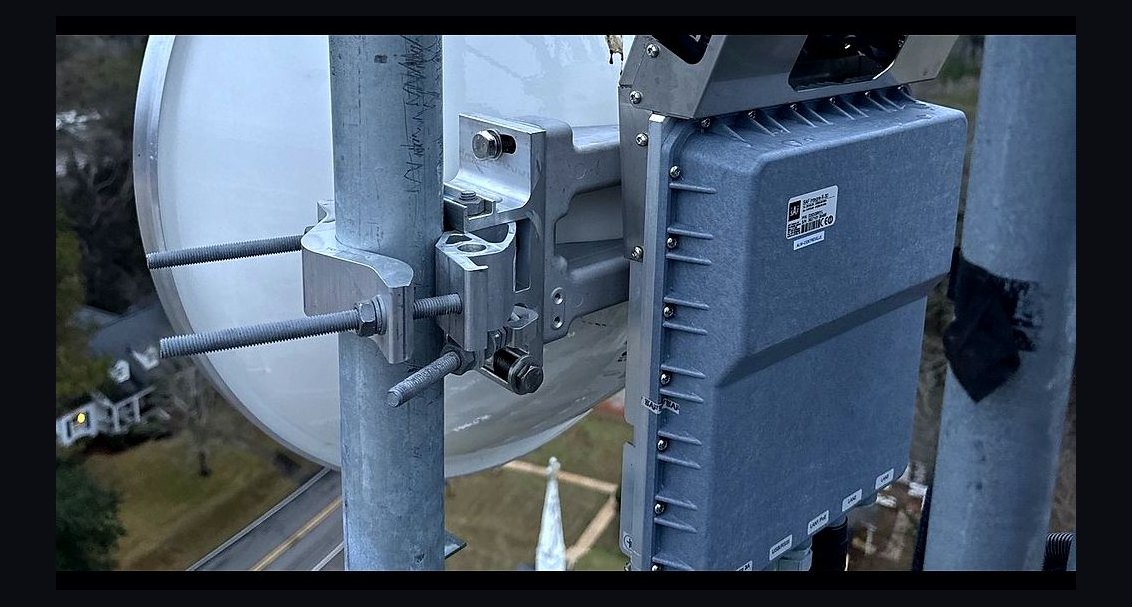 acg-systemsFederal microwave backhaul and RF infrastructure integrator market in 2027
 acg-systemsACG Systems vs national AV integrators — where regional firms fall short in 2027
 acg-systemsACG Systems' 24/7 help desk and technician network in 2027
 acg-systemsFederal AV+comms project change orders — how scope creep eats budgets in 2027
 acg-systemsWhat does ACG Systems specialize in for mission-critical communications, and where does that expertise matter most in 2027?
 acg-systemsThe Project 25 P25 radio integrator market — public safety procurement gotchas in 2027
 acg-systemsACG Systems' 2025 Northrim Horizon acquisition — what it signals for the company in 2027